
A submersible sewage pump is designed to move wastewater, sewage, and other liquids containing suspended solids from one location to another. Unlike many conventional pumps...
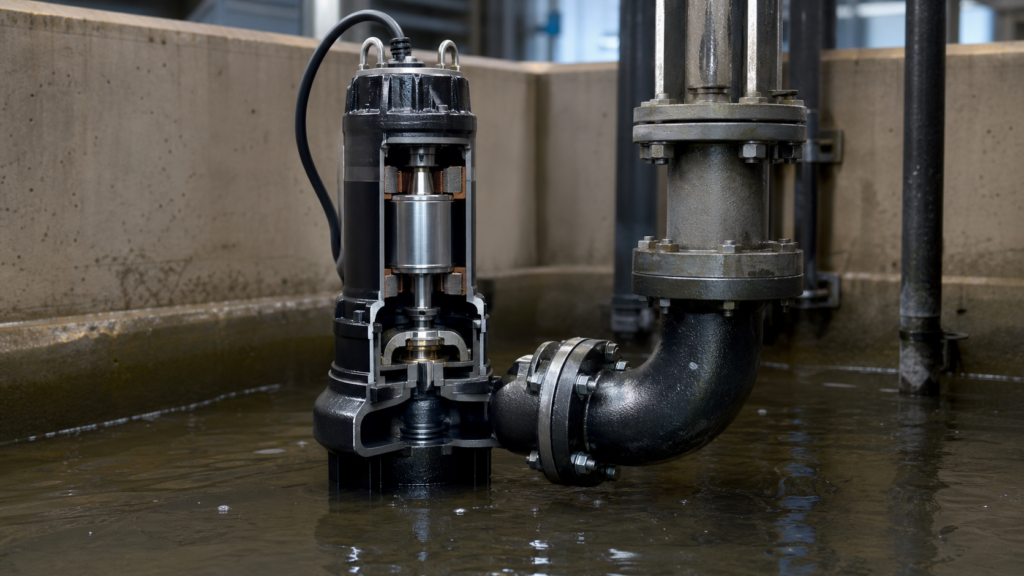
A submersible sewage pump is designed to move wastewater, sewage, and other liquids containing suspended solids from one location to another. Unlike many conventional pumps that operate outside the liquid, a submersible model works while fully or partially submerged in the pumping fluid. This design makes it useful for residential sewage systems, commercial buildings, municipal wastewater facilities, drainage stations, septic applications, and industrial environments.
Choosing the right sewage pump is important because wastewater can contain solids, fibers, debris, and other materials that may cause blockages or damage ordinary pumps. A properly selected pump can provide reliable wastewater movement while reducing the risk of clogging, excessive maintenance, and premature equipment failure.
What Is a Submersible Sewage Pump?
A submersible sewage pump is an electrically powered pump designed specifically for handling wastewater and sewage. Its motor and pumping components are housed in a sealed body that allows the unit to operate underwater.
The pump draws wastewater through an inlet and pushes it through a discharge pipe to a sewer line, treatment system, drainage point, or elevated location. Depending on its design, it can handle liquids containing different sizes and concentrations of suspended solids.
These pumps are commonly installed inside sump pits, sewage tanks, lift stations, and wastewater collection chambers. A float switch, level sensor, or control system can activate the pump when the wastewater reaches a predetermined level.
How Does a Submersible Sewage Pump Work?
The operating principle is relatively straightforward.
When the pump receives power, its electric motor rotates an impeller. The impeller creates pressure that draws wastewater into the pump and forces it through the discharge outlet.
The sealed motor housing protects the electrical components from contact with water. Mechanical seals help prevent wastewater from entering the motor compartment.
A typical pumping cycle includes several steps:
- Wastewater collects in a tank, pit, or sump.
- The liquid level rises to a predetermined point.
- A float switch or control system activates the pump.
- The motor rotates the impeller.
- Wastewater enters through the pump inlet.
- The impeller moves the wastewater into the discharge line.
- The liquid level falls.
- The control system switches the pump off when the appropriate level is reached.
This automatic operation allows wastewater to be transferred without requiring someone to manually start and stop the pump.
Main Components of a Submersible Sewage Pump
Understanding the major components can make it easier to select, install, and maintain the right equipment.
Electric Motor
The motor provides the power needed to rotate the impeller. Because the motor operates in a wet environment, it must have appropriate sealing and protection.
Motor power is usually expressed in horsepower or kilowatts. The required power depends on factors such as flow rate, pumping height, pipe size, and system resistance.
Impeller
The impeller is one of the most important components. It moves the wastewater through the pump.
Sewage pumps often use impeller designs that provide a larger passage for solids. Some models use vortex-style impellers, while others use non-clog or channel designs.
The correct impeller design depends on the type of wastewater and the size of solids that need to pass through the pump.
Pump Casing
The casing surrounds the hydraulic components and directs wastewater toward the discharge outlet. It needs to withstand the operating conditions of the application.
Durable materials can help the pump withstand corrosion, abrasion, and repeated operation.
Mechanical Seal
The mechanical seal helps prevent water and wastewater from entering the motor housing. Seal failure can allow moisture into the motor compartment and eventually cause electrical or mechanical problems.
Discharge Outlet
The discharge outlet connects the pump to the piping system. Its size and configuration should match the requirements of the installation.
A discharge line that is too small can increase friction losses and affect pump performance.
Float Switch or Level Sensor
Many sewage pumps use a float switch to automatically control operation. As the wastewater level rises, the float moves and activates the pump.
More advanced systems may use electronic level sensors and control panels for greater monitoring and control.
Where Are Submersible Sewage Pumps Used?
These pumps are suitable for many wastewater applications.
Residential Properties
Homes located below the main sewer level may need a sewage pumping system to move wastewater upward into the sewer network.
They can also be used in basement bathrooms, laundry areas, and other locations where gravity drainage is not practical.
Commercial Buildings
Restaurants, offices, shopping facilities, hotels, and other commercial buildings may use sewage pumps to transport wastewater from collection points to the main drainage system.
Commercial systems can require larger pumps because they may handle higher volumes of wastewater.
Municipal Wastewater Systems
Municipal lift stations commonly use submersible pumps to transport sewage through different stages of a wastewater collection network.
These applications often require durable equipment capable of handling continuous or frequent operation.
Industrial Facilities
Factories and processing facilities may generate wastewater containing suspended solids and other materials. Specialized sewage or wastewater pumps can be used when the liquid characteristics are suitable for the pump design.
Construction and Drainage Applications
Submersible pumps are also useful for temporary water and wastewater removal at construction sites and other locations where liquids accumulate below the desired discharge level.
Benefits of Using a Submersible Sewage Pump
A properly selected pump offers several practical advantages.
Space-Saving Design
Because the pump is installed inside the collection tank or sump, it does not require a large external pump room.
This can be especially useful where installation space is limited.
Efficient Wastewater Handling
The pump is positioned directly in the liquid, allowing it to move wastewater without requiring a long suction arrangement.
This can simplify the overall system design.
Automatic Operation
With a suitable float switch or control system, the pump can start and stop automatically based on the wastewater level.
This reduces the need for manual operation.
Reduced Noise
Since the pump operates below the liquid surface, operating noise can be less noticeable than with some above-ground pumping arrangements.
Effective Solids Handling
Purpose-built sewage pumps are designed to handle suspended solids better than many standard water pumps. The appropriate model can reduce the risk of clogging when used within its specified limits.
How to Choose the Right Submersible Sewage Pump
Selecting a pump based only on motor power can lead to poor performance. Several factors should be considered.
Determine the Required Flow Rate
Flow rate describes how much wastewater the pump needs to move over a specific period.
It may be expressed in liters per minute, liters per second, gallons per minute, or cubic meters per hour.
A pump should provide enough flow for the application’s expected wastewater volume without being unnecessarily oversized.
Calculate Total Head
Total head refers to the resistance the pump must overcome to move wastewater from the collection point to the discharge location.
It includes vertical lifting height as well as losses caused by pipes, elbows, valves, fittings, and other components.
A pump with insufficient head capacity may fail to deliver the required flow.
Consider Solid Size
The maximum solid size the pump can pass is an important specification.
If wastewater contains larger solids, a pump with a small passage may clog more frequently.
Always compare the expected solids with the pump’s rated solids-handling capability.
Check the Liquid Characteristics
Not all wastewater is the same.
The temperature, chemical composition, concentration of solids, fibers, grease, and other characteristics can affect pump selection.
If the wastewater contains aggressive chemicals or unusual contaminants, the pump’s materials and seals must be compatible with the application.
Select the Appropriate Motor Power
Motor power should match the required flow and head.
Choosing a motor that is too small can result in overload and poor performance. Choosing an unnecessarily large motor can increase energy consumption and equipment costs.
The best choice is based on the pump curve and actual system requirements.
Installation Considerations
Correct installation is essential for reliable operation.
Position the Pump Correctly
The pump should sit securely at the bottom of the collection area without being placed where debris can easily obstruct the inlet.
Some installations use a guide rail or lifting system that allows the pump to be removed without entering the wet well.
Use Suitable Discharge Piping
The discharge pipe should be properly sized and securely supported.
Avoid unnecessary bends because excessive fittings can increase resistance in the system.
A check valve may also be required to prevent wastewater from flowing backward after the pump stops.
Install Proper Level Controls
Float switches should have enough room to move freely.
If the float becomes trapped against a wall, pipe, cable, or other object, the pump may fail to start or may continue running after the liquid level falls.
Provide Electrical Protection
Electrical installation should be completed according to applicable electrical requirements.
Depending on the system, protection may include overload protection, appropriate circuit breakers, grounding, and suitable control equipment.
Electrical connections should remain properly protected from moisture.
Common Problems With Sewage Pumps
Even a quality pump can experience problems if it is incorrectly selected, installed, or maintained.
Pump Does Not Start
A pump that does not start may have an electrical issue, a faulty float switch, a control problem, or an overloaded motor.
The first step is to identify whether the problem is electrical or mechanical before attempting repairs.
Pump Runs but Does Not Move Enough Wastewater
Possible causes include a blocked inlet, clogged impeller, restricted discharge pipe, incorrect pump selection, or excessive system head.
Checking the entire flow path can help identify the problem.
Frequent Clogging
Frequent blockages may occur when unsuitable materials enter the sewage system or when the pump does not have adequate solids-handling capacity.
The pump design and operating conditions should be reviewed if clogging becomes a recurring issue.
Excessive Noise or Vibration
Unusual vibration can result from debris, worn components, bearing problems, damaged impellers, or improper installation.
Ignoring unusual vibration can lead to more serious mechanical damage.
Motor Overheating
Overheating may result from excessive cycling, blocked flow, electrical problems, damaged bearings, or operation outside the pump’s intended conditions.
A motor that repeatedly overheats should be inspected rather than continually restarted.
Submersible Sewage Pump Maintenance Tips
Regular maintenance can help identify problems before they become expensive failures.
Inspect the Pump Regularly
Check the pump, discharge connection, cable, control system, and surrounding area for signs of damage or abnormal operation.
The inspection frequency should match the application and operating conditions.
Check for Blockages
Accumulated debris can affect pump performance. Where appropriate, inspect the inlet and impeller area for materials that may restrict flow.
Always follow safe isolation procedures before inspecting or handling the equipment.
Monitor Pump Performance
Changes in pumping speed, flow, noise, vibration, or operating time can indicate developing problems.
For example, a pump that normally empties a tank quickly but suddenly takes much longer may have a restriction or mechanical issue.
Inspect Seals and Cables
Damaged seals or electrical cables can create serious reliability and safety concerns.
Inspection should be performed by appropriately qualified personnel when electrical components or sealed motor compartments are involved.
Avoid Dry Running
Many submersible pumps rely on the surrounding liquid for cooling. Operating outside the manufacturer’s specified minimum liquid level can cause overheating or premature wear.
Level controls should be configured correctly to prevent unsuitable operation.
How to Improve Pump Efficiency
Efficiency depends on both the pump and the overall system.
Use piping that is correctly sized for the required flow. Avoid unnecessary bends, restrictions, and poorly selected valves.
Select a pump that operates near the appropriate part of its performance range rather than choosing an oversized unit simply because it has a larger motor.
Regular maintenance also matters. A partially blocked impeller or damaged component can reduce hydraulic performance and increase energy consumption.
Proper cycling is another consideration. A pump that starts and stops excessively may experience greater mechanical and electrical stress.
Sewage Pump vs. Sump Pump
Although these pumps can look similar, they are designed for different applications.
A sump pump generally handles relatively clean or lightly contaminated water, such as groundwater collected around a building.
A sewage pump is specifically designed to move wastewater containing suspended solids.
Using a standard sump pump for sewage can result in clogging, damage, or inadequate performance. The pump should always match the liquid being handled.
Sewage Pump vs. Grinder Pump
A grinder pump is designed to cut or grind certain solids into smaller particles before pumping them through a discharge line.
A conventional sewage pump generally relies on its impeller and passage design to move solids without necessarily grinding them.
Grinder pumps can be useful in systems where smaller-diameter discharge piping or specific wastewater conditions require grinding, but they are not automatically the best option for every sewage application.
Safety Considerations
Working with sewage pumping equipment requires careful attention to safety.
Wastewater can contain harmful biological contaminants, while pump systems also involve electrical equipment.
Never enter a sewage pit or confined space without proper training, equipment, procedures, and authorization.
Before servicing a pump, isolate the electrical supply and follow appropriate lockout procedures.
Do not lift a pump by its electrical cable. Use the designated lifting point or approved handling equipment.
If a pump develops an electrical fault, repeated overload, or significant mechanical problem, qualified personnel should inspect it.
Signs That a Pump May Need Replacement
Repair is not always the best long-term solution.
A pump may need replacement when it experiences repeated failures, severe corrosion, major seal problems, excessive wear, or consistently poor performance despite proper maintenance.
Frequent repair costs can also indicate that the pump is not well matched to the application.
Before replacing it, verify the actual flow, head, solids requirements, operating cycle, and wastewater characteristics. Installing another pump with the same incorrect specifications may simply repeat the problem.
Final Tips for Getting Better Pump Performance
Start with accurate system requirements instead of choosing equipment based only on price or motor size.
Consider the expected flow rate, total head, solids size, wastewater characteristics, operating frequency, and installation environment.
Use suitable level controls and properly sized discharge piping. Keep the pump maintained and investigate changes in performance early.
Most importantly, choose equipment designed specifically for the type of wastewater being handled. A pump that matches the application can provide more dependable service and reduce avoidable operating problems.
Conclusion
A submersible sewage pump can provide an effective solution for moving wastewater where gravity drainage is not sufficient. Its submerged design, automatic operation, solids-handling capabilities, and space-saving installation make it suitable for residential, commercial, municipal, and industrial applications. The best results depend on selecting the correct flow rate, head capacity, solids-handling design, materials, motor size, and control system. Proper installation and regular maintenance are equally important. By matching the pump to actual operating conditions and addressing problems early, users can improve reliability, reduce unnecessary downtime frequency depends on how often the pump operates and the characteristics of the wastewater. Regular inspections can help identify blockages, unusual vibration, electrical issues, andquent clogging can result from unsuitable materials entering the wastewater system, an inadequate solids passage, debris around the inlet, or an unsuitable the required flow rate, total head, discharge-pipe size, solids-handling capacity, wastewater characteristics, motor power, operating cycle, and installation conditions. These factors should be evaluated, and maintain a more effective wastewater pumping system.
6. FAQs
What is a submersible sewage pump?
A submersible sewage pump is a wastewater pump designed to operate while submerged in sewage or wastewater. It moves liquid from a collection tank, sump, or lift station to another discharge point.
How does a submersible sewage pump work?
The pump uses an electric motor to rotate an impeller. The impeller draws wastewater through the inlet and forces it through a discharge pipe. A float switch or level-control system can automatically start and stop the pump.
Can a submersible sewage pump handle solid waste?
Yes. Sewage pumps are designed to handle suspended solids, but the maximum solid size varies by model. The pump should be selected according to the size and type of solids expected in the wastewater.
How often should a submersible sewage pump be maintained?
Maintenance frequency depends on how often the pump operates and the characteristics of the wastewater. Regular inspections can help identify blockages, unusual vibration, electrical issues, and component wear before they become major problems.
What is the difference between a sewage pump and a sump pump?
A sewage pump is designed to handle wastewater containing suspended solids, while a sump pump is generally intended for relatively clean groundwater or drainage water. They should not automatically be used interchangeably.
Why does a submersible sewage pump keep clogging?
Frequent clogging can result from unsuitable materials entering the wastewater system, an inadequate solids passage, debris around the inlet, or an unsuitable pump design. Reviewing the pump specifications and wastewater conditions can help identify the cause.
Can a submersible sewage pump run continuously?
Some models are designed for continuous operation, while others are intended for intermittent duty. The pump’s duty rating and operating conditions should always be checked before allowing continuous operation.
How do I choose the right submersible sewage pump?
Consider the required flow rate, total head, discharge-pipe size, solids-handling capacity, wastewater characteristics, motor power, operating cycle, and installation conditions. These factors should be evaluated together rather than choosing a pump based only on horsepower.