
Tight tolerance CNC machining services are essential for industries that demand extreme accuracy, repeatability, and superior surface finishes. These specialized services routinely hold tolerances as...
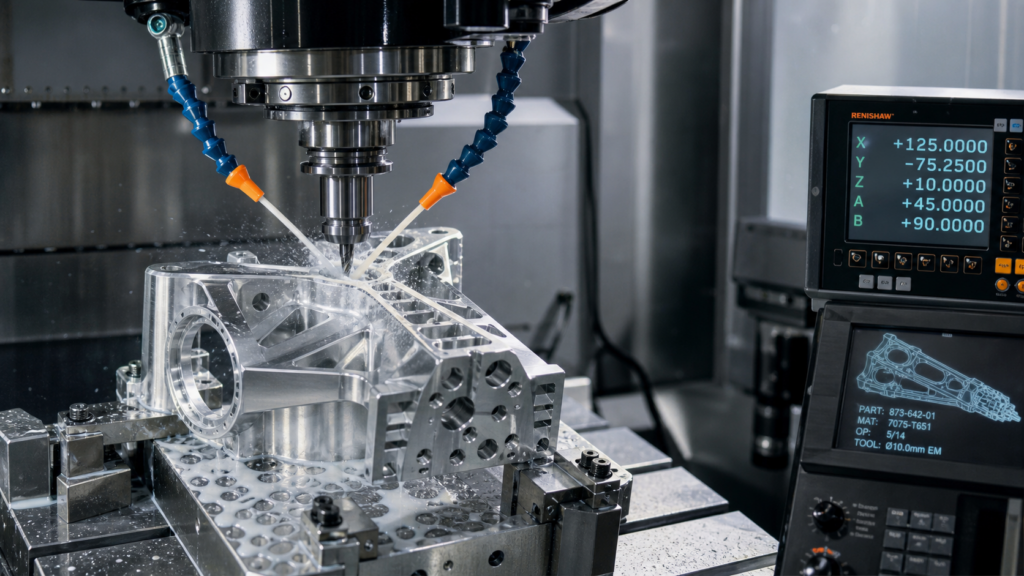
Tight tolerance CNC machining services are essential for industries that demand extreme accuracy, repeatability, and superior surface finishes. These specialized services routinely hold tolerances as tight as ±0.0005 inches (0.0127 mm) or better, producing complex components for aerospace, medical devices, defense, automotive, and semiconductor applications. When precision is non-negotiable, partnering with an experienced provider of tight tolerance CNC machining services ensures parts meet the highest quality standards while maintaining efficient production.
What Is Tight Tolerance CNC Machining?
Tight tolerance CNC machining refers to computer numerical control machining processes that consistently achieve very narrow dimensional tolerances. This level of precision requires advanced multi-axis machines, rigid tooling setups, temperature-controlled environments, and highly skilled programmers and machinists. The process often involves multiple quality checkpoints using CMM (Coordinate Measuring Machines) and other metrology equipment to verify every critical dimension.
Key Industries That Rely on Tight Tolerance CNC Machining Services
Several sectors depend heavily on tight tolerance CNC machining:
- Aerospace & Defense: Turbine blades, housings, and structural components
- Medical Devices: Implants, surgical instruments, and diagnostic equipment
- Semiconductor: Precision chambers, manifolds, and wafer handling parts
- Automotive: High-performance engine and transmission components
- Robotics & Automation: Complex gears, joints, and motion control parts
These industries cannot accept variation — even microscopic deviations can lead to product failure or safety issues.
7 Major Benefits of Tight Tolerance CNC Machining Services
- Exceptional Accuracy — Consistent production of complex geometries with minimal deviation.
- Superior Repeatability — Every part matches the first one, critical for assembly and performance.
- Reduced Assembly Time — Precision parts fit together perfectly, lowering labor costs.
- Extended Product Lifespan — Tighter tolerances often result in less wear and better performance.
- Material Versatility — Capable of machining exotic alloys, titanium, stainless steel, plastics, and composites.
- Faster Time-to-Market — High-precision prototypes can move quickly into production.
- Lower Overall Costs — Fewer rejected parts, less rework, and improved product reliability.
Materials Commonly Used in Tight Tolerance Machining
Experienced providers of tight tolerance CNC machining services work with a broad range of materials, including:
- Aluminum (especially 7075 and 6061)
- Stainless Steel (17-4, 316, 304)
- Titanium (Grade 5 and Grade 2)
- Inconel and other superalloys
- Engineering plastics (PEEK, Delrin, Torlon)
- Carbon fiber composites
Material selection significantly impacts final tolerance capability, surface finish, and cost.
Quality Control in Tight Tolerance CNC Machining
Top-tier providers maintain strict quality systems, including:
- ISO 9001 and AS9100 certification
- In-process and final inspection using CMM and optical comparators
- Detailed documentation and material traceability
- Climate-controlled inspection rooms
- Statistical process control (SPC)
These measures ensure every part meets or exceeds customer specifications.
How to Choose the Right Tight Tolerance CNC Machining Partner
When selecting a provider, evaluate their experience with your specific industry, machine capabilities (especially 5-axis and mill-turn centers), quality certifications, and track record with tight tolerance work. Request sample parts, visit the facility if possible, and discuss their inspection processes in detail. The best partners act as an extension of your engineering team.
Frequently Asked Questions
What is considered tight tolerance in CNC machining?
Tolerances of ±0.001″ are standard, while ±0.0005″ or tighter is generally considered tight tolerance machining. Some applications require tolerances as precise as ±0.0002″.
Which industries need tight tolerance CNC machining services the most?
Aerospace, medical devices, semiconductor, defense, and high-performance automotive industries have the strictest tolerance requirements.
How much do tight tolerance CNC machining services cost?
Pricing varies widely based on material, complexity, quantity, and tolerance requirements. Low-volume, ultra-precision parts can range from $50 to several hundred dollars per piece.
Can tight tolerance CNC machining be used for prototypes?
Yes. Many companies specialize in rapid prototyping with tight tolerances to help validate designs before moving into production.
What materials are hardest to machine to tight tolerances?
Titanium, Inconel, and certain hardened steels are challenging due to their hardness and thermal properties, requiring specialized tooling and techniques.
How do you maintain tight tolerances during CNC machining?
Critical factors include temperature control, rigid machine tools, high-quality fixtures, proper tool selection, and experienced programmers who understand material behavior.
Conclusion
Tight tolerance CNC machining services play a vital role in modern manufacturing by delivering components that meet the most demanding specifications for accuracy, reliability, and performance. Whether you need low-volume prototypes or high-volume production runs, working with a qualified provider ensures consistent quality and on-time delivery. By understanding the capabilities, materials, and quality standards involved, you can make informed decisions that support your product’s success and maintain a competitive edge in your industry.