
Construction accounting platforms help contractors connect project activity with financial data. Instead of managing budgets, invoices, change orders, payroll, and reports across separate spreadsheets or...
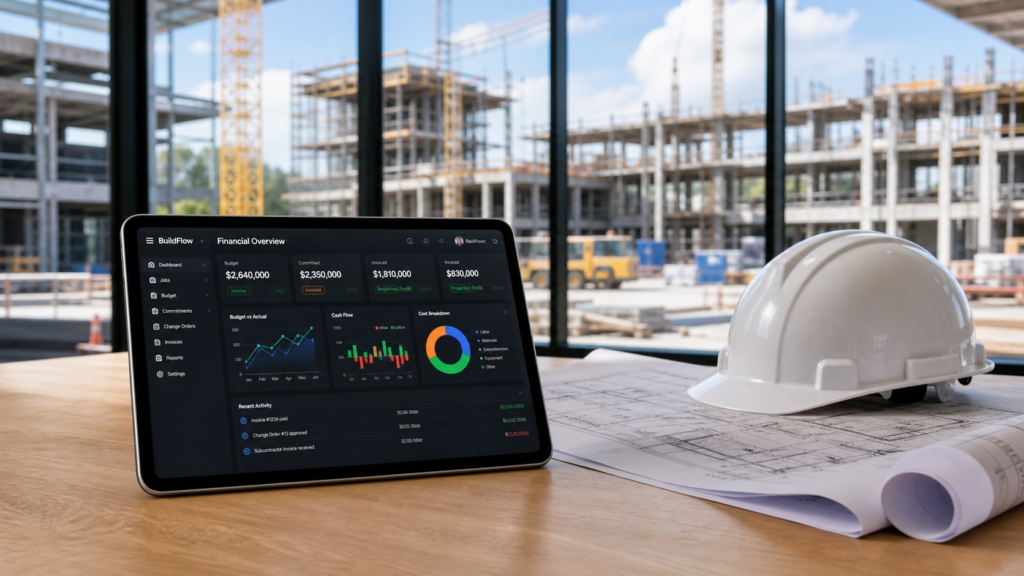
Construction accounting platforms help contractors connect project activity with financial data. Instead of managing budgets, invoices, change orders, payroll, and reports across separate spreadsheets or disconnected tools, these systems give teams a clearer view of job costs and cash flow.
This list compares seven platforms used across construction accounting, project control, document management, and preconstruction workflows. Some are built specifically for construction finance, while others support broader project coordination.
The goal is to help contractors understand which tools may fit their reporting needs, project size, and day-to-day operations.
- Premier Construction Software
Premier Construction Software is a cloud-based construction accounting platform that connects accounting, job costing, project management, and reporting in one system. Its accounting features support accounts payable, accounts receivable, billing, change orders, budget tracking, and financial reporting.
The platform is especially useful for construction teams that need financial data tied directly to project activity.
By connecting cost records with field and office workflows, teams can reduce duplicate entry, improve budget visibility, and track project profitability with more confidence.
Key Features and Capabilities
The accounting tools support job costing, invoice management, accounts payable, accounts receivable, and financial reporting. Teams can track costs by project, cost code, or phase, which helps compare estimated costs against actual spending.
The system also supports change order tracking and budget updates, helping teams monitor cost changes as work progresses. Reporting tools give finance and operations teams a clearer view of revenue, margins, work in progress, and project performance.
Best For
This platform is best suited for general contractors, finance teams, and project managers who need accounting and project data in one place. It is a strong fit for firms managing multiple active projects and looking for better control over job costs, billing, and cash flow.
Pros
- Connects accounting and project management data
- Supports detailed job costing and budget tracking
- Helps reduce manual reconciliation between systems
- Improves visibility into project profitability
- Provides reporting for finance and project teams
- RedTeam Go
RedTeam Go, formerly known as Paskr, is a cloud-based construction management platform with tools for scheduling, billing, document control, and team coordination.
It is often used by contractors who need structured project workflows alongside accounting integrations.
Key Features and Capabilities
Scheduling is one of the platform’s main strengths. Teams can manage timelines, assign responsibilities, and receive updates when schedules change. Billing tools support AIA-style billing, lien waivers, and schedules of values.
The platform also helps teams organize daily logs, photos, diagrams, and project records in one place. Integrations with accounting tools such as QuickBooks, Sage, and Foundation can help contractors keep existing finance workflows connected.
Mobile access allows field teams to update daily logs, punch lists, and time records without returning to the office.
Best For
RedTeam Go is a good fit for small and midsize contractors that need help coordinating schedules, subcontractors, billing, and project documentation.
Pros
- Strong scheduling and project coordination tools
- Supports billing, lien waivers, and subcontractor workflows
- Useful mobile access for field teams
- Integrates with several accounting systems
- Helps centralize project documentation
- JOBPOWER
JOBPOWER is construction accounting software built for contractors that need job costing, payroll, billing, and financial management in one system.
It is designed for firms that want construction-specific accounting without relying heavily on separate add-ons.
Key Features and Capabilities
JOBPOWER supports job costing, payroll, general ledger, accounts payable, accounts receivable, and billing. Its payroll tools can support certified payroll, union deductions, multiple jurisdictions, and contractor-specific payroll needs.
The job costing system connects costs, purchase orders, subcontracts, and change orders to individual projects. This helps teams track project performance and reduce manual accounting work.
The platform also supports AIA-style billing, time-and-material invoicing, document management, and financial reporting.
Best For
JOBPOWER is best for small and midsize contractors, including general contractors and specialty trade firms, that need construction accounting, payroll, and job costing in one platform.
Pros
- Built specifically for construction accounting
- Supports job costing, payroll, and billing
- Handles complex payroll requirements
- Provides construction-focused financial reports
- Helps reduce duplicate data entry
- Prolog
Prolog, from Trimble, is a construction project management system designed to help teams manage project information, documents, costs, and field activity.
It is more project-management focused than pure accounting software, but it can support financial control through cost tracking and reporting.
Key Features and Capabilities
Prolog gives teams access to project information from desktop, web, and mobile interfaces. It supports document control, field administration, cost control, purchasing, collaboration, and reporting.
Workflow automation helps route documents for review and approval. Role-based access allows teams to control who sees specific project information.
Reporting tools help project teams review costs, documents, purchasing activity, and project status.
The platform can also support teams working in locations with inconsistent internet access, since some workflows can be handled online or offline.
Best For
Prolog is a good fit for contractors, project managers, engineering firms, and owners who need structured project controls and document management across active jobs.
Pros
- Supports office and field project management
- Provides document control and reporting tools
- Helps standardize approval workflows
- Useful for cost control and project visibility
- Supports mobile access for field teams
- ConstructConnect
ConstructConnect focuses on preconstruction, project discovery, bid management, and market intelligence.
It is not a traditional accounting platform, but it helps contractors improve financial control earlier in the project lifecycle by finding, tracking, and qualifying bid opportunities.
Key Features and Capabilities
The platform provides access to public and private construction project opportunities, plan details, bidder information, and project contacts. Contractors can use it to identify potential work, manage bid pipelines, and track opportunities across markets.
ConstructConnect also connects with takeoff and estimating tools, including On-Screen Takeoff, PlanSwift, QuoteSoft, and related products. This can help preconstruction teams move from project discovery to estimating with fewer workflow gaps.
Market analytics can help contractors understand regional demand, project types, and potential growth areas.
Best For
ConstructConnect is best for general contractors, subcontractors, and preconstruction teams that need better project visibility and a more organized bidding process.
Pros
- Strong project discovery and bid management tools
- Useful for tracking public and private project opportunities
- Integrates with estimating and takeoff workflows
- Helps contractors manage preconstruction pipelines
- Supports market research and planning
- Oracle Aconex
Oracle Aconex is a construction document management and project collaboration platform.
It is often used on large projects where multiple stakeholders need controlled access to documents, communications, models, and approvals.
Key Features and Capabilities
Aconex uses a project-wide collaboration model that allows each organization to manage its own information while sharing approved documents with other stakeholders. This helps reduce confusion over document versions, access, and responsibility.
The platform supports document control, mail, models, workflows, inspections, and audit trails. Version control helps teams track revisions and maintain a clear record of project communication.
Aconex can also connect with Oracle Primavera Cloud, making it useful for teams that need document and schedule coordination.
Best For
Aconex is best for contractors, owners, architects, and project engineers working on complex projects with many stakeholders and large volumes of documentation.
Pros
- Strong document control and audit trail features
- Helps reduce version confusion
- Supports complex approval workflows
- Useful for large, multi-party projects
- Provides mobile access to documents and inspections
- Asite
Asite is a construction project management and common data environment platform.
It helps teams centralize project documents, workflows, forms, models, and field information.
Key Features and Capabilities
Asite’s common data environment gives project teams one controlled place to manage documents and project information. It supports many file types, 2D and 3D markup, BIM collaboration, workflow automation, and field reporting.
The platform also helps teams sync project emails and attachments into a centralized record. This can reduce scattered communication and help maintain a more complete project history.
Mobile tools allow site teams to access drawings, track issues, and update records from the field.
Best For
Asite is best for document controllers, project managers, site teams, and organizations that need a common data environment for construction collaboration.
Pros
- Strong document management and CDE functionality
- Supports BIM and markup workflows
- Helps centralize project emails and files
- Useful for field issue tracking
- Provides configurable workflows and reports
Conclusion
Construction accounting and project control platforms vary widely in focus. Some are built for job costing, billing, payroll, and financial reporting, while others support scheduling, document control, bidding, or collaboration.
The best choice depends on how a contractor manages projects, how much financial detail the team needs, and whether accounting should be built into the same system as project operations.
For firms that want accounting connected directly with project workflows, a construction-specific platform can provide clearer reporting and better cost visibility.
Comparing each tool by use case, integrations, and reporting depth helps contractors choose software that supports both daily execution and long-term financial control.