
Effective trade show promotional materials give exhibitors practical tools to attract attention, explain products, reinforce branding and continue conversations after an event. They can include booth graphics,...
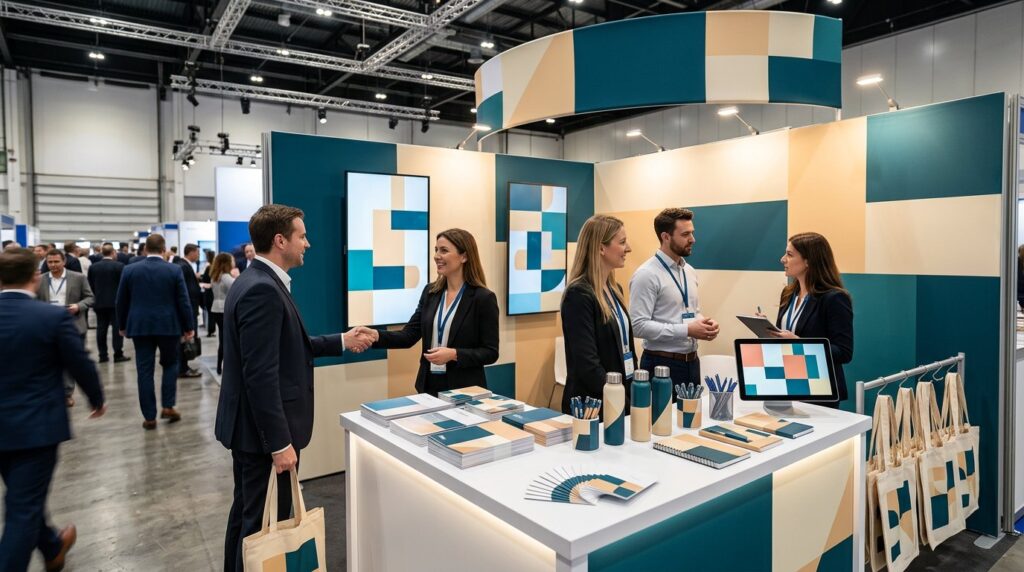
Effective trade show promotional materials give exhibitors practical tools to attract attention, explain products, reinforce branding and continue conversations after an event. They can include booth graphics, brochures, product samples, business cards, branded merchandise, demonstration materials, QR codes and digital assets. The most useful items are not necessarily the most expensive or unusual. Successful event marketing starts by defining the audience, campaign goal and follow up process, then selecting promotional materials that support those objectives without creating unnecessary cost or waste.
What Are Trade Show Promotional Materials?
Trade show promotional materials are physical or digital assets businesses use to communicate and promote their brands during exhibitions, conventions, conferences and industry events.
Some materials are designed primarily for visibility. Large booth graphics, backdrops and hanging signs can help attendees identify an exhibitor from across an exhibition hall.
Other materials provide information. Brochures, specification sheets, catalogs and digital resources can explain products in greater depth.
Promotional merchandise performs another role by giving visitors a branded item they can take away.
The best trade show strategy usually combines these functions instead of treating every promotional item as a giveaway.
Why Trade Show Promotional Materials Matter
Exhibition halls contain many competing visual and commercial messages.
Visitors may have limited time and cannot engage deeply with every booth.
Clear branding and concise messaging can help attendees quickly understand who an exhibitor is, what it provides and why a conversation might be relevant.
Promotional materials can also extend the interaction beyond the exhibition itself.
A useful brochure, product sample or digital resource can remind a visitor of the conversation after returning to work.
9 Powerful Trade Show Promotional Materials Ideas
The right mix depends on the industry, audience, event format and budget. These nine categories provide a practical starting point.
1. Branded Trade Show Banners
Banners are among the most visible exhibition marketing assets.
They can display a company name, logo, core message, major product benefit or other important visual information.
Avoid filling banners with paragraphs of text.
Attendees viewing a booth from a distance need information they can understand quickly.
Designing Banners as Trade Show Promotional Materials
Use strong visual hierarchy and sufficient contrast between text and background.
Prioritize One Primary Message
Trying to display every product feature on one banner creates clutter. Communicate the most important idea first and use other materials for details.
2. Printed Brochures and Product Literature
Printed literature remains useful when visitors need information they can review later.
Depending on the business, this may include company brochures, product catalogs, data sheets, application guides, case studies or service summaries.
Content should be specific enough to provide genuine value.
Generic marketing phrases are easy to forget.
Include clear contact information and a next action where appropriate.
3. Branded Promotional Giveaways
Promotional products can increase brand exposure after an exhibition when recipients actually keep and use them.
Common options include notebooks, pens, reusable drinkware, tote bags, charging accessories and other practical items.
Choosing Trade Show Promotional Materials People Keep
Consider how the intended audience works and travels.
Utility Usually Beats Novelty
A practical item that remains on a customer’s desk can deliver more repeated brand exposure than a gimmick discarded before the attendee leaves the venue.
4. Product Samples
When practical, a physical sample provides direct experience that printed descriptions cannot reproduce.
Food products, cosmetics, materials, components and certain consumer goods can particularly benefit from sampling.
Samples should be representative, correctly labeled and distributed according to applicable event and product regulations.
Businesses should also consider packaging and transportation requirements before bringing large quantities to a venue.
5. Business Cards and Contact Materials
Digital networking has reduced dependence on traditional business cards, but cards can still be useful at face to face events.
They provide a fast exchange method when phones, internet access or scanning technology is inconvenient.
Modern Business Cards for Trade Shows
A card can include standard contact information alongside a short URL or QR code.
Keep the Destination Useful
A QR code should lead to a mobile friendly resource relevant to the event, such as a product page, meeting scheduler, digital catalog or dedicated landing page.
6. Reusable Tote Bags
Trade show attendees often collect brochures, samples and other materials throughout the day.
A well designed tote can solve an immediate problem by giving visitors somewhere to carry those items.
The large print area can also provide significant visual exposure around the venue.
Material quality matters.
A bag that can be reused after the event has greater potential value than one likely to fail or be discarded immediately.
7. Branded Apparel
Staff clothing can make booth representatives easier to identify.
Polo shirts, jackets, T shirts or other appropriate garments can create a coordinated presentation.
Branded apparel can also be offered as premium merchandise for selected customers or campaign participants.
Sizing, comfort and event conditions should be considered before ordering.
8. Digital Promotional Materials
Not every trade show asset needs to be printed.
Interactive demonstrations, tablets, videos, digital catalogs and landing pages can provide detailed information without requiring visitors to carry additional paper.
Digital Trade Show Promotional Materials
Digital resources can also be updated more easily than large quantities of printed literature.
Design for Real Exhibition Conditions
Venue WiFi can be inconsistent. Important demonstrations and presentations should have an appropriate offline fallback where feasible.
9. Premium Gifts for High Value Prospects
Not every visitor needs to receive the same promotional item.
A low cost giveaway can suit general booth traffic, while more valuable materials may be reserved for qualified prospects, strategic partners or existing customers.
This tiered approach can help control spending.
Any gifts provided in regulated industries or to public officials, healthcare professionals, procurement personnel or other restricted recipients should comply with applicable laws and organizational gift policies.
How to Choose Trade Show Promotional Materials
Start with a specific objective.
A business trying to build broad brand awareness has different requirements from one seeking ten meetings with enterprise buyers.
Objectives can include increasing qualified booth conversations, launching a product, collecting appropriate leads, scheduling demonstrations or strengthening existing customer relationships.
Once the objective is clear, evaluate each proposed promotional item against it.
Know Your Trade Show Audience
Audience relevance should guide merchandise selection.
An audience of software executives may respond differently to promotional items than construction contractors, healthcare professionals or retail buyers.
Consider the Attendee’s Daily Environment
Ask where the promotional item will actually be used.
Select Materials With Practical Relevance
An item connected naturally to the audience’s work can make the brand association stronger without requiring excessive novelty.
Trade Show Booth Graphics
Booth graphics need to communicate at several distances.
From across the hall, attendees primarily need to recognize the company and understand its broad relevance.
Closer to the stand, secondary messages can explain products or benefits.
Detailed technical information belongs in brochures, digital resources or conversations rather than being placed entirely on a wall.
Backdrop Design
A booth backdrop creates a visual anchor.
Keep critical wording within visible areas that will not be blocked by furniture, products or staff.
Retractable Banners
Retractable banner stands can be portable and reusable.
Design for Reuse
Avoid printing temporary dates or event specific information on expensive assets when the design could otherwise be reused at future exhibitions.
Promotional Giveaways for Trade Shows
Giveaways should have a defined purpose.
Some exhibitors distribute merchandise to everyone passing the booth. Others use it as an incentive for a product demonstration, survey or qualified conversation.
Neither model is automatically better.
The correct approach depends on unit cost, expected attendance and campaign goals.
Low Cost Trade Show Giveaways
Pens, stickers, notepads and simple accessories can be economical for broad distribution.
Low cost should not mean low quality.
Poorly manufactured merchandise can create a negative association with the brand.
Premium Promotional Products
Higher value items can be appropriate for smaller, carefully selected groups.
Match Value to the Relationship
Premium merchandise may make sense for an established customer or valuable prospect.
Avoid Incentivizing Unqualified Leads
Expensive gifts offered simply for providing contact information can attract people interested primarily in the gift rather than the business.
Eco Friendly Trade Show Promotional Materials
Sustainability considerations are becoming increasingly relevant to exhibition planning.
Large events can generate substantial material waste through disposable signage, packaging, printed literature and promotional merchandise.
Businesses can reduce unnecessary waste by ordering realistic quantities, designing reusable displays and choosing durable products.
Sustainable Material Choices
Depending on availability and application, exhibitors may consider recycled, recyclable or responsibly sourced materials.
Environmental claims should be accurate and supportable.
Avoid Vague Green Claims
Terms such as eco friendly can be misleading when they lack context.
Use Specific Sustainability Information
Where verified, explain whether an item uses recycled content, is reusable, has reduced packaging or carries a recognized certification rather than making broad unsupported claims.
Printed Trade Show Promotional Materials
Print remains valuable where audiences want information they can annotate, compare or pass to colleagues.
A clear hierarchy improves usability.
Start with the problem, product or service and then provide evidence supporting the main message.
Brochures
Brochures work well for high level brand and product information.
Product Data Sheets
Technical buyers may prefer concise specification sheets.
Case Studies
A genuine case study can demonstrate how a product has been used in a relevant setting.
Verify Performance Claims
Only publish results that can be substantiated, and obtain appropriate permission before identifying customers or disclosing confidential information.
QR Codes on Trade Show Materials
QR codes can connect physical booths with digital resources.
They are especially useful for content that would be expensive or impractical to print.
However, codes need context.
A visitor is more likely to scan when the destination and benefit are clear.
QR Code Landing Pages
Create destination pages that load well on smartphones.
The page can provide a digital brochure, product video, booking tool or other relevant resource.
Track QR Code Performance
Campaign specific links can help measure scans and subsequent activity.
Test Before Printing
Test every code on multiple devices before ordering signage or brochures. A QR code linking to a broken or inaccessible page can make thousands of printed items ineffective.
Trade Show Swag and Brand Visibility
Swag is informal terminology for promotional merchandise distributed at events.
The goal is often sustained brand recognition.
Logo size is not the only factor determining whether merchandise succeeds.
People may avoid using products that feel overly promotional.
A more subtle design can sometimes encourage longer term use.
Trade Show Materials for B2B Companies
B2B exhibitions often involve longer sales cycles.
Attendees may need technical information, pricing discussions, product demonstrations and approval from colleagues who did not attend the event.
For this reason, B2B materials should help internal information sharing after the show.
B2B Sales Collateral
Useful assets may include:
• Capability brochures
• Technical data sheets
• Customer case studies
• Implementation guides
• Comparison sheets
• Product samples
• Digital catalogs
• Contact cards
• Meeting booking links
These materials should align with the sales process rather than functioning as isolated marketing pieces.
Trade Show Promotional Materials for Product Launches
Exhibitions can provide an opportunity to introduce a new product to a concentrated industry audience.
Launch materials should explain what is genuinely new.
Avoid phrases such as revolutionary or industry changing unless evidence supports them.
Demonstrations, samples and concise comparison materials can often communicate innovation more convincingly than exaggerated claims.
Demonstration Materials
A good demonstration focuses on how the product addresses a real customer need.
Prepare for Repeated Use
Trade show products and demonstration units may be handled hundreds of times.
Bring Backup Equipment
Where practical, bring spare cables, chargers, samples and critical demonstration components so one failure does not disrupt an entire event.
Planning Promotional Material Quantities
Ordering too few items can create shortages before the event ends.
Ordering far too many can waste budget and create storage problems.
Use expected attendance, booth traffic estimates, prior event data and distribution strategy to establish quantities.
Separate General and Qualified Prospect Materials
Broad distribution items may require higher quantities.
Premium materials can be reserved for smaller segments.
Keep a Reserve
Avoid displaying all stock simultaneously.
Monitor Inventory During the Show
Regular checks make it easier to adjust distribution if supplies are being consumed faster than expected.
Budgeting for Trade Show Promotional Materials
The real cost extends beyond printing or product manufacturing.
Budgeting may need to include artwork, samples, setup fees, freight, storage, venue handling, taxes and rush production.
Shipping to exhibition venues can be particularly expensive.
Calculate Cost per Useful Interaction
A cheap giveaway is not necessarily cost effective if it contributes nothing to business objectives.
Consider Reusability
Durable signage and evergreen booth graphics can distribute their cost across multiple events.
Avoid Date-Specific Designs Where Possible
Temporary campaign assets have their place, but long term materials should remain usable when the next event begins.
Branding Trade Show Promotional Materials
Consistency makes a booth easier to recognize.
Use an established visual system for color, typography, imagery and logo treatment.
Consistency should not come at the expense of readability.
Logo Placement
Logos should be visible without overwhelming the usefulness of the item.
Brand Guidelines
Provide suppliers with correct artwork and production specifications.
Check Proofs Carefully
Review colors, dimensions, spelling, QR codes, phone numbers, web addresses and product claims before approving mass production.
Ordering Custom Promotional Materials
Production lead times vary according to products, printing processes, customization and quantity.
International manufacturing can add freight and customs considerations.
Place orders early enough to allow time for samples, revisions and unforeseen delays.
Request Samples
Samples help businesses evaluate materials, colors, print quality and usability.
Color Matching
Colors can appear different across screens and physical materials.
Specify Color Requirements Clearly
Where color consistency matters, use the printing or manufacturing standards appropriate to the production method rather than relying solely on how a color appears on a monitor.
Measuring Trade Show Promotional Material ROI
Return on investment cannot always be attributed to one brochure or giveaway.
Trade shows contain multiple interacting activities.
Still, businesses can measure the wider campaign.
Track qualified leads, meetings, opportunities, sales and appropriate post event engagement.
Useful Trade Show Metrics
Relevant measures can include:
• Booth conversations
• Qualified leads
• Demonstrations completed
• Meetings scheduled
• QR code scans
• Content downloads
• Sales opportunities created
• Pipeline value
• Customers acquired
• Revenue influenced
Raw giveaway counts provide little information about business impact.
Following Up After the Trade Show
Promotional materials are most effective when supported by timely follow up.
Sales teams should know what a prospect discussed at the booth and which products attracted interest.
Generic messages sent to every scanned badge can weaken an otherwise strong interaction.
Segment Trade Show Leads
Prioritize follow up based on relevance and demonstrated interest.
Add Context to CRM Records
Notes about requirements, timing and next steps make subsequent communication more useful.
Respect Marketing Preferences
Contact and email practices should comply with applicable privacy, consent and electronic marketing laws in relevant jurisdictions.
Common Trade Show Promotional Materials Mistakes
A common mistake is ordering merchandise before defining the campaign objective.
Another is printing excessive information on visual displays.
Businesses can also waste money by giving expensive items to unqualified visitors or ordering huge quantities solely to reduce unit cost.
Poor proofreading is especially avoidable.
Incorrect contact details or broken QR codes can compromise an entire production run.
GEO and SEO Value Beyond the Exhibition
Trade show campaigns can also create useful digital content.
A dedicated event page can answer attendee questions, present products and provide resources that remain accessible after the exhibition.
Clear factual information makes this content easier for both conventional search engines and AI powered discovery systems to interpret.
Create Useful Digital Resources
Publish specifications, demonstrations, FAQs and verified company information where they provide genuine customer value.
Keep Event Information Current
Outdated dates and offers can confuse search users.
Preserve Evergreen Resources
Where possible, separate long term product information from temporary event promotions so valuable content remains useful after the show.
Frequently Asked Questions
What are trade show promotional materials?
Trade show promotional materials are branded physical or digital assets used to attract attendees, explain offerings, generate leads and reinforce a company after an exhibition.
What are the best trade show promotional materials?
The best materials depend on audience and objectives, but useful options include booth graphics, brochures, samples, practical giveaways, business cards and digital resources.
What promotional giveaways work well at trade shows?
Practical products such as reusable bags, notebooks, pens and drinkware can work well when they are relevant, durable and appropriate for the target audience.
How many trade show promotional materials should I order?
Estimate quantities using expected booth traffic, event attendance, historical data and distribution strategy, while keeping a reasonable reserve for unexpected demand.
Are printed brochures still useful at trade shows?
Yes. Printed brochures and data sheets remain useful when attendees need product information to review later or share with colleagues, especially in B2B environments.
How can I measure the success of trade show materials?
Track qualified conversations, leads, meetings, QR scans, opportunities and resulting revenue rather than measuring success only by how many promotional items were distributed.
Conclusion
Trade show promotional materials work best when every item has a clear role in the wider exhibition strategy. Strong booth graphics can attract attention, informative collateral can support buying decisions, and useful merchandise can extend brand exposure after the event. Businesses should prioritize audience relevance, accurate messaging, responsible quantities and measurable follow up over simply distributing the greatest amount of swag. With thoughtful planning, promotional materials can support stronger conversations and more valuable post event sales opportunities.