
A Travel eSIM can make international connectivity considerably easier by allowing compatible phones and other supported devices to activate a mobile plan digitally rather than requiring travellers...
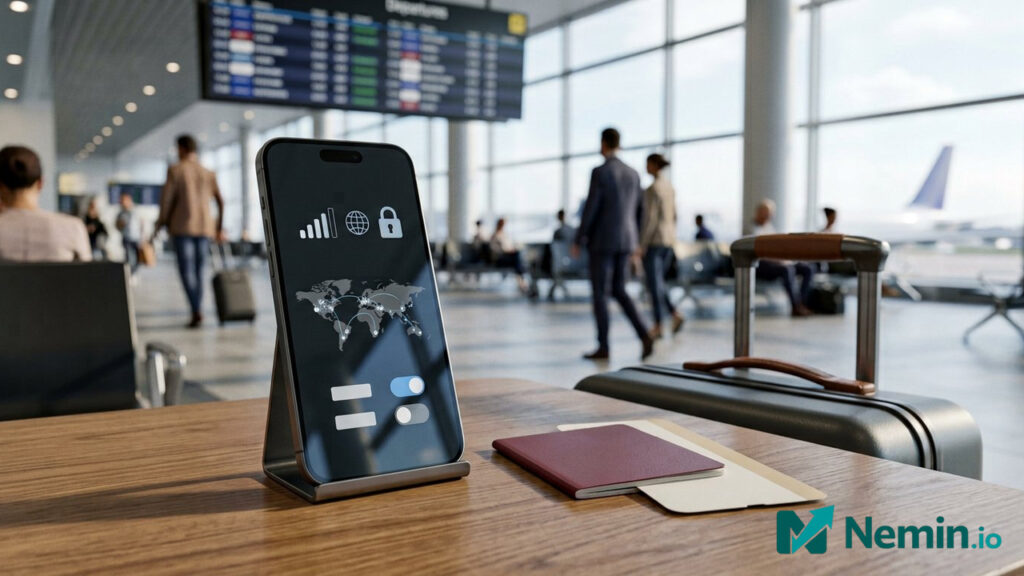
A Travel eSIM can make international connectivity considerably easier by allowing compatible phones and other supported devices to activate a mobile plan digitally rather than requiring travellers to replace a physical SIM card after arrival. Depending on the provider and destination, travel eSIM plans may offer local, regional or multi-country data packages, helping users access maps, transport apps, messaging services and online bookings without relying entirely on public Wi-Fi or standard international roaming. The technology is convenient, but choosing the right plan requires checking device compatibility, network coverage, data allowances, validity periods, hotspot rules and whether the package includes calls and SMS or provides mobile data only.
International mobile connectivity used to involve a fairly predictable set of choices. Travellers could activate their home carrier’s roaming plan, purchase a physical SIM card at the destination or depend heavily on hotel and café Wi-Fi. Embedded SIM technology adds another option that can often be arranged before departure.
Convenience is only part of the decision. A cheap data plan is not particularly useful if coverage is poor where you are travelling, while an unlimited package may have speed or fair-use conditions that make it less generous than the headline suggests.
This guide explains how a Travel eSIM works, how to install one, how it compares with roaming and physical SIM cards, and what to examine before purchasing a plan for your next international trip.
What Is a Travel eSIM?
A Travel eSIM is a digital mobile service profile designed primarily to provide connectivity while travelling. Instead of inserting a removable SIM card, users install an eSIM profile on a compatible device and select it within the device’s mobile or cellular settings.
The eSIM itself should be distinguished from the travel plan. Embedded SIM technology is built into supported hardware, while a provider supplies the digital profile and mobile service that operates through partner networks.
Travel packages vary widely. Some cover a single country, others operate across a region such as Europe or Asia, and certain products cover numerous countries under one plan. For travelers heading to Japan, providers such as Journey Japan eSIM offer a convenient way to arrange mobile connectivity through a travel eSIM before or during their trip.
How Does a Travel eSIM Work?
After purchasing a plan, the provider normally gives activation instructions. Installation may involve scanning a QR code, following a provider app workflow or entering activation information manually.
Once installed, the Travel eSIM appears among the device’s mobile plans. Travellers can usually select which line handles mobile data while retaining another SIM or eSIM for different purposes where the device supports dual-SIM functionality.
The exact menus differ among phone manufacturers and operating-system versions, so provider-specific instructions and device documentation should take priority over generic online tutorials.
Travel eSIM Versus a Physical SIM
The major distinction is how the mobile subscription is provisioned. A physical SIM requires a removable card, while an eSIM profile is installed electronically on supported hardware.
| Feature | Travel eSIM | Physical Travel SIM |
|---|---|---|
| Installation | Digital activation | Physical card insertion |
| Purchase timing | Often possible before departure | Online in advance or after arrival |
| SIM tray required | No for the eSIM profile | Yes |
| Risk of losing home SIM | Reduced if it remains installed | Possible when swapping cards |
| Device compatibility | Requires eSIM-capable hardware | Requires compatible SIM slot |
| Switching plans | Often managed through settings | May require changing cards |
| Calls and SMS | Depends on plan | Depends on plan |
| Data service | Commonly available | Commonly available |
| Local number | Not always included | More common with some local SIMs |
Neither option is universally better. Device support, price and destination determine which is more practical.
9 Benefits of Using a Travel eSIM
International eSIM services have become popular because they remove several points of friction from traditional travel connectivity. They can be particularly useful for travellers who need data immediately after landing.
The main benefits involve convenience, flexibility, easier multi-country travel, preservation of a home SIM, quick plan purchases, less dependence on public Wi-Fi, digital management, easier comparison and potential savings compared with some roaming options.
1. A Travel eSIM Can Be Installed Before Departure
Being able to arrange connectivity from home is one of the strongest practical advantages.
Travellers can potentially install the profile while they still have reliable internet access, then activate or begin using it according to the provider’s instructions. This can eliminate the need to search for a mobile shop immediately after a long flight.
Activation timing matters, however. Some plans begin when installed, some when activated and others when first connected to a supported network. Verify the provider’s rules before setting anything up.
2. Keep Your Primary SIM Available
Many compatible devices can maintain more than one mobile line, allowing travellers to keep their normal number configured while using a Travel eSIM for data.
This can be useful for receiving important messages or maintaining access to services associated with a home number.
Be careful with roaming settings on the primary line. Receiving or making calls, using SMS or allowing unintended data usage can potentially generate carrier charges depending on your home plan.
3. Immediate Data Can Simplify Arrivals
Mobile data is particularly useful during the first hour in an unfamiliar destination.
Maps, rideshare or taxi information, public transport apps, hotel messages and digital reservations may all be needed before reaching accommodation.
A properly activated Travel eSIM can make these services available without first finding trustworthy public Wi-Fi.
4. Regional Plans Can Simplify Multi-Country Trips
Travelling across several countries can make local physical SIM cards inconvenient.
Regional eSIM plans may provide coverage across multiple destinations under one package, allowing travellers to cross borders without purchasing another plan at every stop.
Always read the actual country list. Terms such as Europe, Asia or global do not necessarily mean every country in that region is included.
5. Plans Can Often Be Purchased Digitally
If a traveller uses more data than expected, some providers allow additional packages to be bought online.
Whether a specific eSIM can be topped up or requires a new profile depends on the provider.
Do not wait until all data is exhausted if purchasing additional service requires an internet connection. Check the remaining allowance periodically when using a limited plan.
6. Less Reliance on Public Wi-Fi
Airport, café and hotel networks can be convenient, but travellers may prefer mobile data for routine connectivity.
A Travel eSIM allows the device to connect through a cellular network instead of depending on Wi-Fi availability.
Mobile connectivity is not automatically risk-free, so normal cybersecurity precautions still apply. Keep devices updated and use secure websites and apps.
7. Travel eSIM Plans Are Easy to Compare Online
Travellers can compare several providers before leaving home rather than making a quick decision at an airport kiosk.
Plan size, validity, supported networks and destination coverage can all be reviewed in advance.
Price should not be the only comparison point. A slightly more expensive plan may offer better terms for the itinerary.
8. No Tiny Card to Handle
Physical SIM swapping can be inconvenient, especially while travelling with luggage or moving through airports.
An eSIM profile removes the need to handle and store a tiny card.
It also reduces the risk of misplacing a primary physical SIM while abroad, although travellers still need to protect their phones and account credentials.
9. A Travel eSIM Can Potentially Reduce Roaming Costs
Depending on the home carrier and destination, a Travel eSIM may cost less than conventional international roaming.
That is not universally true. Some mobile contracts already include roaming in particular destinations, while other carriers offer competitively priced travel passes.
Compare the complete cost before purchasing an additional plan.
How to Check Travel eSIM Compatibility
Device compatibility should be checked before buying anything.
A phone can support eSIM hardware while still having restrictions related to carrier locking, regional model differences or the number of profiles that can be active simultaneously.
Check the exact model rather than assuming all versions of a popular phone support identical features.
Your Phone Usually Needs to Be Unlocked
A carrier-locked phone may prevent the use of another provider’s eSIM.
Contact the carrier if you are uncertain about lock status. Eligibility to unlock a device can depend on contract terms, payment status and carrier policies.
Do this well before departure because resolving account restrictions from another country can be inconvenient.
Travel eSIM Compatibility Checklist
| Compatibility Check | What to Confirm |
|---|---|
| eSIM support | Exact device model supports eSIM |
| Carrier lock | Device can use another provider |
| Operating system | Software version supports required functionality |
| Active SIM limits | Number of lines that can operate simultaneously |
| Destination bands | Device supports relevant cellular technology |
| QR installation | Device can scan or manually install the profile |
| Dual-SIM behaviour | Home line and Travel eSIM can coexist as intended |
| Hotspot support | Provider permits tethering if required |
Provider compatibility lists are useful, but manufacturer documentation can also help confirm hardware support.
How to Install a Travel eSIM
Installation is usually straightforward, but completing it before travelling can reduce stress.
You normally need internet access to download and install the profile. Keep the provider’s instructions available on another device or in a format accessible offline.
Do not delete an eSIM simply because it does not immediately connect before arrival. Some travel profiles are designed to connect only within supported destinations.
Travel eSIM Installation Process
A typical setup follows these stages:
- Confirm that the device supports eSIM and is appropriately unlocked.
- Purchase a plan covering the correct destination and travel dates.
- Read the provider’s activation policy before installation.
- Connect to reliable internet access.
- Scan the supplied QR code or use the provider’s installation method.
- Give the new line a recognisable label such as Travel.
- Choose the Travel eSIM for mobile data when appropriate.
- Configure data roaming according to the travel provider’s instructions.
- Prevent unintended data use through the home line.
- Test connectivity after reaching the supported destination.
Specific settings vary, so these steps should be treated as a framework rather than universal instructions.
Why Data Roaming May Need to Be Enabled
Some Travel eSIM providers connect customers through partner networks. As a result, their setup instructions may require data roaming to be switched on for the travel line.
This can sound counterintuitive because travellers are commonly told to disable roaming to avoid unexpected charges.
The important distinction is which line has roaming enabled. Follow the Travel eSIM provider’s instructions carefully while controlling roaming on the primary carrier line separately.
Label Your Travel eSIM Clearly
Modern phones can contain several SIM profiles, and names such as Primary, Secondary and Business quickly become confusing.
Rename the travel profile after installation if the operating system permits it.
A simple label such as Italy Data or Europe Trip can make it easier to select the correct line and avoid accidental use of the wrong mobile plan.
Choosing the Right Travel eSIM Plan
A good plan matches actual travel behaviour rather than offering the largest headline allowance.
Consider destination coverage, trip duration, expected data consumption and whether tethering, voice calls or SMS are needed.
A solo traveller checking maps and messages has very different requirements from a remote worker joining video conferences every day.
Country, Regional or Global Travel eSIM?
Single-country plans are useful for trips that remain in one destination. Regional plans can simplify itineraries crossing several neighbouring countries, while global products may suit frequent international travel.
| Plan Type | Best For | Main Consideration |
|---|---|---|
| Single-country | One-destination holidays | Often focused on local coverage |
| Regional | Multi-country trips in one region | Verify every destination is included |
| Global | Frequent or widely distributed travel | Coverage quality can vary significantly |
| Fixed-data | Predictable moderate use | Monitor remaining allowance |
| Unlimited-style | Heavy data users | Check fair-use and speed policies |
| Voice and data | Travellers needing a mobile number | Often less widely available |
| Data-only | Maps, messaging apps and browsing | Traditional calls and SMS may not be included |
Do not buy a global product solely because the name sounds comprehensive. Check the precise coverage list and network arrangements.
How Much Travel eSIM Data Do You Need?
Data consumption varies dramatically.
Messaging and basic maps can consume relatively little, while high-resolution video streaming, cloud backups, social media uploads and video meetings can use much more.
Phone settings also influence usage because background applications may transfer data without obvious user activity.
Approximate Usage Categories
Rather than relying on universal gigabyte estimates, think about your behaviour.
| Traveller Type | Typical Activities | Data Priority |
|---|---|---|
| Light user | Messaging, maps and occasional browsing | Small allowance may be sufficient |
| Standard tourist | Maps, social media, bookings and regular browsing | Moderate allowance |
| Content-heavy traveller | Frequent photo and video uploads | Larger allowance |
| Remote worker | Cloud tools and video meetings | High allowance and strong network quality |
| Family hotspot user | Multiple connected devices | Large allowance plus tethering permission |
| Long-term traveller | Continuous navigation and online services | Larger or renewable plan |
Check your existing phone’s historical mobile-data statistics for a more personalised estimate.
Reduce Data Consumption Abroad
Download offline maps before leaving reliable Wi-Fi. Streaming services may also support legitimate offline downloads depending on the platform and subscription.
Disable automatic app updates and consider pausing cloud photo or video backups on mobile data.
These small changes can significantly extend a limited Travel eSIM allowance.
Travel eSIM Unlimited Data Plans
The word unlimited requires careful interpretation.
Some plans provide unlimited total usage but reduce speeds after a daily or overall high-speed threshold. Others apply fair-use policies or restrict activities such as tethering.
Read the detailed plan conditions rather than relying only on the product title.
Check High-Speed Data Limits
Ask how much data is available at full advertised network capability and what happens after the threshold.
Reduced speed may still be sufficient for messages and basic maps while becoming frustrating for video or large downloads.
A clearly defined fixed-data plan can sometimes be preferable to an unlimited package with restrictive conditions.
Travel eSIM Versus International Roaming
International roaming is convenient because travellers continue using their existing carrier. There is no new profile to configure and a home number remains fully integrated.
The disadvantage can be cost, depending on the carrier and destination.
A Travel eSIM separates travel data from the main mobile contract and may provide a more predictable data allowance.
Which Is Better?
| Factor | Travel eSIM | Home-Carrier Roaming |
|---|---|---|
| Setup | Requires profile installation | Usually already configured |
| Home number | Can often remain active separately | Fully retained |
| Data price | Can be competitive | Depends heavily on carrier |
| Multi-country use | Strong with regional plans | Depends on roaming zones |
| Local calls | Often not included | Usually available under carrier terms |
| Billing | Prepaid plans are common | May appear on regular bill |
| Flexibility | Easy to compare providers | Limited to carrier’s offers |
| Convenience | High after setup | Extremely high |
Always compare the actual roaming plan attached to your existing contract before deciding.
Travel eSIM Versus Local SIM Cards
Local physical SIMs can remain an excellent option, particularly for longer stays or travellers who need a local telephone number.
They may offer generous data packages depending on the country.
A Travel eSIM is often more convenient because it can be arranged before arrival and does not require visiting a shop.
When a Local SIM May Be Better
A local SIM can make sense for an extended stay, frequent local calls or access to plans unavailable through international eSIM providers.
Some destinations also have registration requirements for local mobile service.
Research current rules before travelling.
When a Travel eSIM Is Better
Short holidays, multi-country itineraries and travellers prioritising immediate data access are strong use cases.
A Travel eSIM can also be helpful when retaining the primary physical SIM is important for receiving authentication messages.
Whether those messages can be received abroad without cost depends on the home carrier.
Calls and SMS With a Travel eSIM
Many travel eSIM products are data-only.
That means they do not necessarily provide a traditional telephone number capable of receiving ordinary calls or SMS messages.
Internet-based messaging and calling applications can still function through mobile data where legally available and supported.
Check Before Assuming You Get a Phone Number
If local voice calls are important, select a plan that explicitly includes them.
Business travellers may need ordinary calls for clients, hotels or local service providers.
Data-only users can often contact accommodation through apps, email or internet calling, but this should be planned in advance.
Travel eSIM and Two-Factor Authentication
Keeping a primary SIM active can be useful when banks or other services send authentication codes by SMS.
However, receiving SMS while roaming depends on the home carrier and account settings.
Financial institutions may also use app-based authentication or other verification systems.
Prepare Authentication Before Travelling
Check critical services before departure.
Make sure banking, email and password-manager access works and that recovery methods are current. Where available and appropriate, authenticator apps can reduce reliance on mobile network delivery.
Never share one-time security codes with someone claiming to provide eSIM technical support.
Is a Travel eSIM Secure?
Cellular connectivity avoids some risks associated with unknown public Wi-Fi, but an eSIM does not make the phone immune to cyber threats.
Phishing, malicious websites, stolen credentials and unsafe apps remain possible.
Travel security should therefore combine mobile connectivity with ordinary device protection.
Travel eSIM Security Tips
Use a strong screen lock and keep the operating system updated. Enable device-finding functions where appropriate and protect important accounts with suitable multi-factor authentication.
Avoid purchasing eSIM plans through suspicious links or unverified sellers. Account credentials, QR codes and activation details should be treated carefully.
An eSIM QR code can contain information needed to install a profile and should not be posted publicly.
Using a Travel eSIM for Hotspot and Tethering
Some travellers want to share mobile data with a laptop, tablet or another person’s phone.
Whether this is permitted depends on the plan.
Even when tethering works technically, provider policies may place limits on hotspot data.
Remote Workers Should Check More Than Data Volume
Connection stability and network coverage are particularly important for remote work.
A huge allowance is of little value if local network performance is unsuitable for video meetings.
Consider accommodation Wi-Fi as a primary or backup connection and treat the Travel eSIM as one part of a broader connectivity plan for critical work.
Travel eSIM Network Speeds
Marketing may reference 4G, LTE or 5G availability, but actual performance varies.
Network congestion, location, terrain, building construction, device capability and roaming agreements can all affect speed.
A plan advertising access to 5G does not guarantee that every location will provide a 5G connection.
Check the Underlying Network
Some providers disclose which local operators their eSIM uses.
This information can be helpful when travelling beyond major cities because local carriers may have different coverage footprints.
Search recent destination-specific user experiences while recognising that one person’s speed test does not guarantee identical performance.
Travel eSIM for Europe
Europe is a popular use case for regional eSIMs because many trips cross several national borders.
A regional Travel eSIM can reduce the need to manage separate packages at every stop.
Coverage lists remain essential because geographic Europe and the countries included in a provider’s commercial region are not always identical.
European Roaming Rules and Visitors
European roaming arrangements can benefit subscribers to qualifying mobile services, but international visitors should not assume their home plans automatically receive the same conditions.
Rules also evolve.
Check your existing carrier’s current roaming terms before purchasing another plan because you may already have useful coverage.
Travel eSIM for Asia
Asia includes highly diverse mobile markets, and a regional plan may connect through different operators in each destination.
For an itinerary involving several countries, compare regional coverage with buying separate country-specific eSIMs.
The regional option is more convenient, but individual plans may sometimes provide different pricing or network access.
Research Restrictions and Local Conditions
Internet services and communication apps can be subject to local laws or restrictions.
A Travel eSIM does not exempt travellers from local regulations.
Research destination-specific connectivity requirements through reliable current sources before travelling.
Travel eSIM for the United States
International visitors to the United States can use travel eSIM services where their devices support the necessary technology and network bands.
Coverage can vary significantly between densely populated cities and remote regions.
Road trips therefore require more careful network research than short urban visits.
Offline Maps Still Matter
Even with a generous Travel eSIM plan, download essential maps offline before travelling through remote areas.
No mobile provider has perfect coverage everywhere.
Offline navigation provides useful redundancy when cellular service disappears.
Travel eSIM for Cruises and Flights
Travellers should be particularly careful around maritime and airborne mobile networks.
A normal terrestrial Travel eSIM plan may not include shipboard cellular service or inflight connectivity.
Connecting to specialised networks can involve different arrangements or charges, particularly through a primary roaming SIM.
Use Airplane Mode Intentionally
On flights, follow airline instructions regarding device use.
At sea, review the cruise operator’s connectivity information before enabling roaming services. Ship Wi-Fi and maritime cellular networks operate differently from ordinary land-based service.
Do not assume a regional Travel eSIM covers international waters.
Common Travel eSIM Problems
Most problems involve installation, incorrect line selection, roaming settings or unavailable network coverage.
Do not immediately delete the eSIM when troubleshooting. Some profiles cannot simply be reinstalled using the original QR code.
Follow the provider’s support process first.
Travel eSIM Troubleshooting Guide
| Problem | Possible Issue | First Check |
|---|---|---|
| No connection | Wrong data line selected | Confirm Travel eSIM is selected for data |
| Signal but no internet | Roaming or APN configuration | Follow provider settings |
| eSIM not installing | Device incompatibility or lock | Verify model and carrier status |
| Unexpected home-carrier data | Data switching or roaming enabled | Review primary SIM settings |
| Slow speeds | Congestion or plan limitation | Check fair-use terms and network |
| Hotspot unavailable | Provider restriction | Review tethering policy |
| Plan appears expired | Validity may have started earlier | Check activation terms |
| Cannot reinstall | QR code may be single-use | Contact provider before deleting |
Screenshots of provider instructions can be useful when support is needed without reliable internet access.
Travel eSIM Mistakes to Avoid
One of the biggest mistakes is purchasing before checking whether the phone is unlocked. Another is assuming every unlimited plan provides unrestricted high-speed data.
Travellers also sometimes activate plans too early, causing part of the validity period to expire before the trip begins.
Read activation rules carefully.
Avoid Accidental Roaming Charges
A dual-SIM phone can still use the primary carrier under certain settings.
Review mobile data switching, default voice line and roaming configuration before departure. If you want the Travel eSIM to handle all mobile data, make that selection explicit.
Your home carrier can explain which activities may generate roaming charges.
How Much Does a Travel eSIM Cost?
There is no useful universal price because costs depend on destination, allowance, validity, network access and provider.
Prices also change frequently as providers compete and update plans.
Comparing cost per gigabyte can be useful for fixed-data plans, but it does not account for coverage or service quality.
Compare Total Value
| Cost Factor | Why It Matters |
|---|---|
| Data allowance | Determines usable volume |
| Validity | Must cover the actual trip |
| Destination coverage | Prevents purchasing unnecessary regions |
| High-speed allowance | Important for unlimited-style plans |
| Network access | Can affect practical coverage |
| Hotspot policy | Essential for shared connections |
| Voice and SMS | Adds value only if needed |
| Top-up support | Useful if usage is uncertain |
| Customer support | Important during setup problems |
| Refund policy | Matters when activation fails or plans change |
The cheapest Travel eSIM is not necessarily the best-value option.
Choosing a Reliable Travel eSIM Provider
The market contains numerous providers, so focus on transparency.
A trustworthy service should clearly describe destination coverage, data limits, validity, activation procedures and customer-support options.
Cancellation and refund policies should also be accessible before purchase.
What to Check Before Buying
Look for clear answers to several questions:
- Which countries are included?
- Which local networks can be used?
- How much high-speed data is available?
- When does validity begin?
- Is the phone required to be unlocked?
- Does the plan include voice or SMS?
- Is hotspot use permitted?
- Can the plan be topped up?
- What happens if installation fails?
- Is customer support available during your trip?
- What refund conditions apply?
These details matter more than promotional language about effortless global connectivity.
Travel eSIM for Families
Families can purchase separate eSIM plans for compatible devices or use hotspot sharing where the plan permits it.
Separate plans provide independence, while tethering can reduce the number of packages required.
The better option depends on how frequently family members separate during the trip.
Give Independent Travellers Their Own Data
Older children or adults exploring separately may benefit from independent connectivity for maps and communication.
Do not depend entirely on one person’s hotspot if the group regularly separates.
Agree on offline meeting points as well because batteries, phones and mobile networks can fail.
Travel eSIM for Business Travellers
Business travel places greater emphasis on reliability than casual browsing.
Email, messaging, cloud documents and navigation can all be important immediately after arrival.
A Travel eSIM can serve as primary mobile data or as backup connectivity when hotel Wi-Fi is unreliable.
Keep Redundancy for Critical Work
For important calls or presentations, avoid depending on one connection method.
Hotel Wi-Fi, cellular data and offline copies of essential documents can provide useful redundancy.
Business travellers should also follow employer cybersecurity policies when accessing organisational systems abroad.
When a Travel eSIM Is Not the Best Choice
Despite its convenience, eSIM technology is not ideal for every traveller.
An incompatible or carrier-locked device immediately rules it out. A long-term visitor requiring extensive local calls may also find a local mobile plan more appropriate.
Travellers whose home contracts already provide affordable destination roaming may gain little by purchasing another service.
Compare Before You Switch
Use a simple decision process.
| Traveller Situation | Option Worth Comparing First |
|---|---|
| Short international holiday | Travel eSIM and carrier roaming |
| Multi-country trip | Regional Travel eSIM |
| Long-term stay | Local SIM or local eSIM |
| Need for local phone number | Local plan or voice-enabled eSIM |
| Heavy laptop use | High-data plan with hotspot support |
| Locked phone | Existing carrier options |
| Existing inclusive roaming | Current home plan |
| Remote road trip | Network-specific coverage options |
The right choice is the service that matches the actual journey, not whichever technology is newest.
How to Prepare Your Travel eSIM Before Departure
Do most of the setup while you still have reliable home internet.
Save the provider’s activation information, support contact details and plan terms. Check that your phone is updated and understand which line will handle calls and data.
Downloading offline essentials adds another level of protection.
Pre-Departure Travel eSIM Checklist
Before leaving, confirm that the profile is installed correctly according to provider instructions and that you know when validity begins. Download offline maps, airline details, hotel addresses and important booking documents.
Also check your primary carrier’s roaming settings and pricing. Preventing accidental charges is easier before boarding a flight than after receiving a bill.
The Future of Travel eSIM Technology
eSIM technology is increasingly integrated into mobile devices and enables telecommunications providers to deliver plans without distributing a physical card.
For travellers, this can increase choice and make switching between temporary data services easier.
The market will continue evolving, so current provider terms matter more than assumptions based on past experiences.
Why Travel eSIM Is Becoming Part of Modern Trip Planning
Mobile data now supports many basic travel tasks.
Boarding information, translation, transportation, restaurant reservations, digital tickets and accommodation communication can all depend on connectivity.
A Travel eSIM moves mobile access into the planning stage alongside flights, accommodation and insurance rather than leaving it as an arrival-day problem.
FAQ’s
What is a Travel eSIM?
A Travel eSIM is a digital mobile plan installed on an eSIM-compatible device, allowing travellers to access supported cellular networks abroad without inserting a new physical SIM card.
Does a Travel eSIM give me a phone number?
Not always. Many Travel eSIM plans provide data only, while some include a telephone number, calls or SMS. Check the plan specifications before purchasing.
Can I use a Travel eSIM and my normal SIM together?
Many compatible phones support dual-SIM operation, allowing a Travel eSIM to handle data while the primary line remains available. Exact capabilities depend on the device and carrier.
When should I install my Travel eSIM?
Installation before departure is often convenient, but activation rules differ. Check whether validity begins at installation, activation or first connection to a supported destination network.
Is a Travel eSIM cheaper than roaming?
It can be, but not always. Compare the Travel eSIM price and allowance with your home carrier’s current international roaming options before choosing.
Can I use a hotspot with a Travel eSIM?
Many plans allow tethering, while others restrict it or impose separate limits. Verify the provider’s hotspot policy if you need to connect laptops or additional devices.
Conclusion
A Travel eSIM can remove much of the inconvenience traditionally associated with getting mobile data abroad. Installation can often be completed before departure, regional plans simplify multi-country journeys and dual-SIM functionality may allow travellers to retain their primary number while using a dedicated plan for data.
The best Travel eSIM is not simply the cheapest or the one advertising the most data. Check device compatibility, activation timing, destinations, underlying networks, high-speed limits, hotspot rules and voice capabilities before purchasing. With those details confirmed and offline backups prepared, a Travel eSIM can become a simple and practical part of staying connected throughout an international trip.