
Warehouses and industrial sites combine vehicles, people, machinery, elevated storage, loading docks, electrical equipment, repetitive handling, and constantly changing inventory. That mixture can create serious...
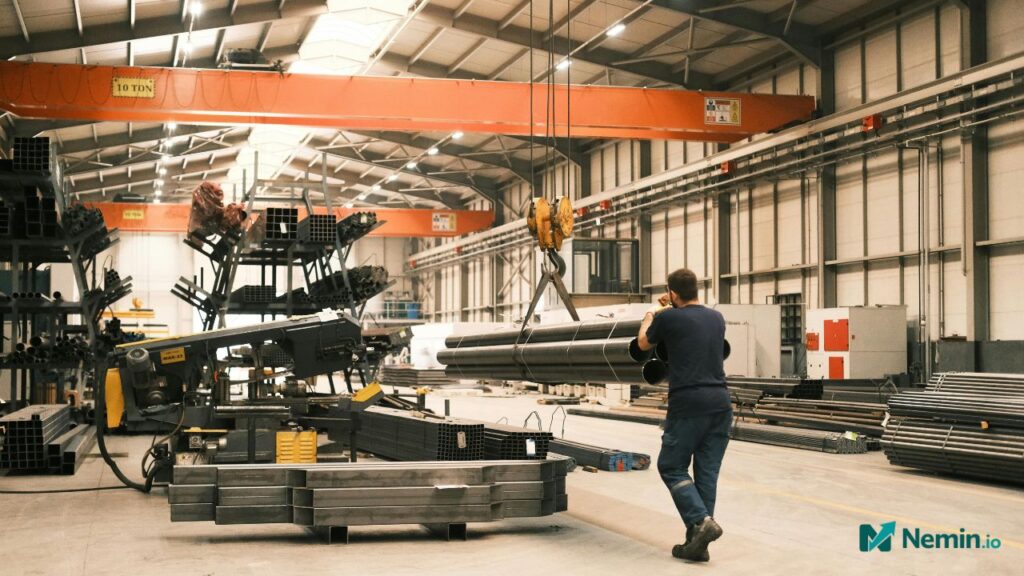
Warehouses and industrial sites combine vehicles, people, machinery, elevated storage, loading docks, electrical equipment, repetitive handling, and constantly changing inventory. That mixture can create serious hazards when risks are poorly controlled. Warehouse & Industrial Safety is the systematic process of identifying these hazards, evaluating risk, applying appropriate controls, training workers, maintaining equipment, and reviewing operations as conditions change.
Effective Warehouse & Industrial Safety is not achieved by simply providing hard hats, putting signs on walls, or holding an annual training session. Safer operations depend on engineering controls, clear traffic systems, properly designed storage, machine safeguards, competent supervision, reporting, maintenance, emergency planning, and employee participation. Legal requirements vary by jurisdiction and industry, so organizations should apply the regulations and recognized standards relevant to their facilities.
What Is Warehouse & Industrial Safety?
Warehouse & Industrial Safety covers the policies, equipment, procedures, training, engineering controls, and management practices used to protect people and property in warehouses, factories, distribution centers, workshops, manufacturing plants, fulfillment operations, and related industrial environments.
The specific hazards vary from one facility to another.
A small parts warehouse using hand carts has different risks from a distribution center operating dozens of powered industrial trucks. Similarly, a manufacturing facility with automated equipment requires controls that may not apply to a conventional storage building.
Why Warehouse & Industrial Safety Matters
Workplace injuries can affect employees, families, colleagues, production schedules, customer service, insurance, equipment, and organizational performance.
Serious incidents can also result in regulatory investigations and significant financial consequences.
Warehouse & Industrial Safety should therefore be treated as an operating requirement rather than an administrative project separate from productivity.
Common Warehouse & Industrial Safety Hazards
| Hazard | Typical exposure | Potential control areas |
|---|---|---|
| Forklifts | Vehicle and pedestrian interaction | Separation, training and traffic design |
| Pallet racking | Falling goods or structural damage | Inspection, protection and load management |
| Loading docks | Falls, trailers and moving vehicles | Barriers, procedures and communication |
| Machinery | Moving or energized components | Guarding and energy control |
| Manual handling | Lifting and repetitive movement | Ergonomics and mechanical assistance |
| Slips and trips | Spills and obstructed routes | Housekeeping and floor maintenance |
| Fire | Combustibles and ignition sources | Prevention and emergency systems |
| Chemicals | Exposure and incompatible storage | Hazard communication and controls |
| Electrical systems | Shock and arc hazards | Maintenance and qualified work |
| Working at height | Platforms, ladders and elevated tasks | Fall prevention and suitable equipment |
A workplace risk assessment should determine which controls are appropriate for the actual operation.
Warehouse & Industrial Safety Starts With Risk Assessment
An effective safety program begins by understanding what can realistically harm workers.
Risk assessment should consider routine operations as well as unusual tasks such as maintenance, clearing jams, inventory work, cleaning, equipment breakdowns, and contractor activities.
Identify Hazards Systematically
Supervisors and safety teams can walk through the facility and examine processes from receiving through storage, picking, production, packaging, and shipping.
Employees who perform the work should be involved where appropriate because they often understand practical hazards that are less visible during a management inspection.
Warehouse & Industrial Safety improves when risk information comes from actual work rather than paperwork alone.
Evaluate Who Could Be Harmed
Risk assessments should account for operators, pedestrians, maintenance staff, cleaners, visitors, delivery drivers, contractors, temporary workers, and others who may enter operational areas.
New workers can require particular attention because they may be unfamiliar with traffic patterns and equipment.
Review Risk After Workplace Changes
Installing machinery, rearranging racking, increasing inventory, changing shifts, adding automation, or introducing a new chemical can alter existing hazards.
Warehouse & Industrial Safety assessments should therefore be reviewed when material operational changes occur and at other appropriate intervals.
Warehouse & Industrial Safety and the Hierarchy of Controls
Personal protective equipment is important in many industrial settings, but safety should not begin and end with PPE.
Occupational safety professionals often use a hierarchy of controls to prioritize risk reduction.
Remove Hazards Where Practical
Elimination removes a hazard, while substitution replaces it with something presenting lower risk where feasible.
Engineering controls physically separate people from hazards.
Administrative controls use procedures, scheduling, signage, training, and work practices.
PPE provides protection worn by the worker.
Control Approach Comparison
| Control level | Warehouse example |
|---|---|
| Elimination | Remove unnecessary pedestrian exposure to vehicle lanes |
| Substitution | Replace a hazardous product where a suitable safer alternative exists |
| Engineering | Install physical barriers between forklifts and pedestrians |
| Administrative | Implement traffic rules and authorized routes |
| PPE | Use task-appropriate protective equipment |
The precise hierarchy and terminology can vary among safety frameworks, but the principle is to prioritize controls that reduce reliance solely on individual behavior.
Warehouse & Industrial Safety for Forklifts
Powered industrial trucks are essential in many warehouses, but they create significant collision, crushing, tip-over, and falling-load hazards.
Only appropriately trained and authorized personnel should operate applicable equipment under local rules.
Separate Forklifts and Pedestrians
Physical separation is often stronger than relying only on painted floor lines.
Where practical, Warehouse & Industrial Safety design can incorporate barriers, designated crossings, pedestrian gates, mirrors, warning systems, and clearly defined traffic lanes.
Intersection visibility deserves particular attention.
Manage Forklift Speed
Facility conditions determine an appropriate safe operating speed.
Corners, pedestrians, blind aisles, floor conditions, load stability, stopping distance, and congestion all matter.
Businesses should establish operating rules appropriate to their equipment and environment rather than relying on a generic speed number.
Forklift Safety Priorities
| Area | Key consideration |
|---|---|
| Operator | Appropriate training and authorization |
| Equipment | Inspection and maintenance |
| Pedestrians | Separation and crossing control |
| Speed | Suitable for facility conditions |
| Loads | Stable and within equipment limits |
| Visibility | Clear travel path or appropriate procedures |
| Parking | Controlled and safe positioning |
| Charging | Designated battery or fuel procedures |
Manufacturer instructions and applicable regulations should guide specific equipment operation.
Warehouse & Industrial Safety for Pallet Racking
Racking can store substantial weight above employees and equipment.
Damage to uprights, beams, connectors, anchors, or protective systems should not be ignored simply because the rack remains standing.
Protect Rack Structures
Forklift impacts are a common concern in storage aisles.
Suitable rack protection can reduce some impact exposure, but it does not make structural damage harmless.
Employees should know how to report observed damage promptly.
Respect Rack Load Limits
Storage systems should be designed and used within applicable load limits.
Changes in pallet weight, beam configuration, rack layout, or storage method can alter structural requirements.
Warehouse & Industrial Safety procedures should prevent unauthorized rack modifications.
Use Competent Rack Inspection
Routine employee observations can identify obvious damage.
More detailed inspection may require competent personnel familiar with the specific racking system, applicable standards, and structural considerations.
Loading Dock Warehouse & Industrial Safety
Loading docks bring trailers, forklifts, workers, edges, and vehicle movement together in a small area.
Clear dock procedures are therefore essential.
Prevent Unexpected Trailer Movement
Facilities can use appropriate restraint systems, wheel controls, communication procedures, and other measures depending on dock design and applicable requirements.
Workers should understand when a trailer is considered safe to enter.
Protect Open Dock Edges
An unprotected dock edge can create a fall hazard.
Barriers, doors, visual controls, and operating procedures should reflect the specific facility.
Inspect Dock Equipment
Dock levelers, restraints, doors, lights, bumpers, and other systems require maintenance.
Damaged equipment should be handled according to established lockout, repair, and reporting procedures.
Warehouse & Industrial Safety Around Conveyors
Conveyors improve material movement but introduce pinch points, nip points, entanglement hazards, and unexpected movement.
Appropriate guarding and emergency controls are important.
Keep Guards in Place
Employees should not remove or bypass guards to increase production speed.
A recurring need to bypass a safeguard may indicate a process or equipment design problem requiring engineering attention.
Control Hazardous Energy
Maintenance and clearing certain jams can expose employees to stored or unexpected energy.
Applicable lockout and energy-control procedures should be developed for the equipment and jurisdiction.
Restart Equipment Carefully
After maintenance or jam clearing, the area should be inspected and personnel accounted for before restart according to established procedures.
Warehouse & Industrial Safety depends on consistent restart discipline, particularly on automated lines.
Machinery and Warehouse & Industrial Safety
Industrial machinery can create crushing, cutting, drawing-in, impact, thermal, pressure, and electrical hazards.
Machine-specific assessments are essential.
Guard Hazardous Moving Parts
Guards and protective devices should prevent inappropriate access to dangerous machine areas while allowing intended operation and maintenance.
The design must reflect the actual machinery and relevant safety requirements.
Never Defeat Safety Interlocks
Bypassing an interlock can expose workers to hazards the machine was specifically designed to isolate.
Defective safeguards should be reported and addressed rather than circumvented.
Warehouse & Industrial Safety and Manual Material Handling
Musculoskeletal strain can develop through heavy lifting, awkward postures, repetitive tasks, pushing, pulling, and extended work.
There is no single universally safe lifting weight for every worker and situation.
Redesign the Task Where Possible
Mechanical lifting aids, conveyors, lift tables, pallet positioners, carts, adjustable work surfaces, and process changes can reduce physical demands.
Warehouse & Industrial Safety should focus on job design instead of depending entirely on employees remembering a lifting technique.
Place Frequently Used Items Strategically
Repeated reaching above shoulder height or bending to floor level can increase physical demand.
Slotting commonly handled products within more accessible zones can improve both ergonomics and picking efficiency.
Consider Frequency and Distance
A moderate load repeatedly handled across a long shift can present different ergonomic demands from the same load moved once.
Assess the whole task.
Warehouse & Industrial Safety for Slips, Trips, and Falls
Simple housekeeping problems can create significant risk in fast-moving workplaces.
Stretch wrap, broken pallets, spills, loose straps, cables, damaged flooring, and misplaced inventory can obstruct walking routes.
Create Rapid Spill Response
Employees should know how to isolate and report a spill and who is responsible for cleaning it.
Hazardous substances may require specialized procedures beyond ordinary housekeeping.
Keep Emergency Routes Clear
Production pressure should never justify storing pallets, carts, or equipment in designated emergency exits and routes.
Warehouse & Industrial Safety inspections should include these areas routinely.
Warehouse & Industrial Safety at Height
Warehouses frequently require access to elevated products, equipment, lighting, roofs, mezzanines, and maintenance locations.
Improvised access creates unnecessary risk.
Use Suitable Access Equipment
Ladders, mobile platforms, lifts, scaffolding, and other systems have different applications.
Selection should reflect task duration, height, tools, environment, and applicable rules.
Never Use Forks as an Improvised Work Platform
Personnel lifting should use equipment designed and approved for that purpose under applicable requirements.
Employees should not stand directly on forks or ordinary pallets to reach elevated locations.
Inspect Access Equipment
Damaged ladders and elevated work equipment should be removed from service or managed according to appropriate repair procedures.
PPE in Warehouse & Industrial Safety
PPE requirements should come from hazard assessment.
Not every warehouse employee needs identical protective equipment.
Match PPE to the Task
Possible equipment can include safety footwear, high-visibility clothing, gloves, eye protection, hearing protection, respiratory protection, helmets, and specialized protective clothing.
Selection should account for the actual hazard.
PPE Needs Correct Fit and Training
Protective equipment can fail to provide intended protection when it does not fit, is damaged, or is used incorrectly.
Some PPE programs, including respiratory protection in certain jurisdictions and circumstances, have additional regulatory requirements.
Warehouse & Industrial Safety for Hazardous Chemicals
Warehouses may store cleaning products, maintenance chemicals, fuels, aerosols, batteries, manufacturing materials, or other substances with hazardous properties.
Maintain Hazard Information
Employees need appropriate access to safety information and training required by applicable hazard communication rules.
Containers should be labeled as required.
Check Storage Compatibility
Some chemicals should not be stored together because leakage or mixing can create additional hazards.
Storage arrangements should use reliable chemical compatibility information.
Prepare for Spills
The appropriate spill procedure depends on the substance and quantity.
Employees should know when they can safely respond and when specialized emergency assistance is required.
Fire Prevention and Warehouse & Industrial Safety
Warehouses can contain significant combustible loads including packaging, pallets, plastics, products, and stored materials.
Storage arrangements can affect fire protection system performance.
Maintain Required Clearances
Sprinkler and storage requirements are technical and depend on building design, commodity classification, rack configuration, storage height, and applicable fire codes.
Do not use a generic clearance from an article as a substitute for a professional fire protection assessment.
Control Ignition Sources
Electrical faults, hot work, charging areas, heating equipment, smoking, and industrial processes can create ignition risks.
Hot-work permit procedures may be appropriate for welding, cutting, or similar operations.
Battery Charging and Warehouse & Industrial Safety
Electric forklifts and other equipment increasingly depend on batteries.
Charging areas can introduce electrical, fire, chemical, and handling hazards depending on battery chemistry and equipment.
Follow Battery Specific Procedures
Lead-acid and lithium-based battery systems have different characteristics.
Use manufacturer guidance and applicable facility safety requirements.
Prepare for Damaged Batteries
Swelling, overheating, unusual odors, smoke, visible damage, or other abnormalities should be handled according to emergency procedures appropriate to the battery type.
Employees should not improvise a response to a potentially unstable battery.
Warehouse & Industrial Safety Training
Training should correspond to actual tasks and hazards.
Generic safety presentations have limited value when employees do not learn procedures relevant to their work.
Train Before Hazardous Work
Workers should receive required training and authorization before operating machinery or equipment where regulations or company procedures require it.
Temporary and transferred employees should not be overlooked.
Confirm Understanding
Attendance alone does not establish competence.
Practical demonstrations, observation, assessments, and supervisor follow-up can help determine whether employees understand safe work procedures.
Refresher Training Has a Purpose
Additional training can be appropriate after incidents, observed unsafe practices, process changes, new equipment, or when applicable regulations require it.
Warehouse & Industrial Safety Inspections
Routine inspections can identify hazards before an incident occurs.
The inspection program should cover both physical conditions and operating practices.
Create Actionable Findings
Writing down a hazard is only the beginning.
Each significant issue should have an owner, corrective action, priority, and expected completion date.
Verify Corrections
Warehouse & Industrial Safety teams should check that corrective actions actually resolved the problem.
A closed work order does not prove a hazard has been adequately controlled.
Near Miss Reporting in Warehouse & Industrial Safety
A near miss is an event that could have caused harm but did not.
These events can provide valuable information about control weaknesses without waiting for an injury.
Encourage Reporting
Employees may avoid reporting near misses if they expect automatic punishment.
Organizations can focus on learning while still maintaining accountability for deliberate or reckless behavior as appropriate.
Look for Patterns
Several seemingly minor forklift near misses at one intersection can indicate a layout or visibility problem.
Warehouse & Industrial Safety data becomes more useful when recurring patterns are analyzed together.
Warehouse & Industrial Safety for Contractors and Visitors
People unfamiliar with the site may not understand traffic routes, alarms, restricted areas, or protective equipment requirements.
Provide Site Orientation
The level of orientation should reflect the visitor’s activities and exposure.
A visitor staying in an office requires different information from a contractor repairing machinery in an active production area.
Coordinate Contractor Work
Maintenance, construction, electrical work, roof access, and hot work can introduce temporary hazards.
Businesses and contractors should clearly establish responsibilities before work begins.
Emergency Planning for Warehouse & Industrial Safety
Warehouses should prepare for foreseeable emergencies relevant to their location and operations.
These might include fire, severe weather, chemical releases, medical emergencies, power failures, or other incidents.
Define Roles and Communication
Employees should know how to raise an alarm, evacuate or shelter when directed, and reach designated assembly areas.
Responsibilities need to remain practical across different shifts.
Practice Emergency Procedures
Drills can identify confusing routes, communication failures, accountability problems, or accessibility issues.
Lessons from exercises should feed into plan improvements.
Warehouse & Industrial Safety and Automation
Robotics, automated storage systems, autonomous mobile robots, conveyors, and other technologies can reduce some forms of manual handling while introducing new interaction risks.
Assess Human and Robot Interaction
Operating zones, speed, sensors, barriers, access controls, maintenance tasks, and failure modes need assessment.
Automation should not be assumed safe simply because workers normally do not touch it.
Maintenance Requires Special Attention
Technicians can face different hazards from operators because they enter areas or interact with equipment during abnormal states.
Warehouse & Industrial Safety assessments should specifically cover maintenance activities.
Warehouse & Industrial Safety Metrics
Safety performance cannot be understood from one number alone.
Injury rates provide important information but are lagging indicators because harm has already occurred.
Combine Leading and Lagging Measures
| Measure type | Examples |
|---|---|
| Lagging | Injuries and lost-time events |
| Leading | Hazard corrections completed |
| Leading | Preventive maintenance completion |
| Leading | Safety observations |
| Leading | Training and competency checks |
| Leading | Near miss reporting |
| Process | Inspection closure time |
| Process | Corrective action effectiveness |
Metrics should support safer behavior rather than encourage underreporting.
Common Warehouse & Industrial Safety Mistakes
One mistake is treating PPE as the primary control for every hazard.
Another is painting pedestrian lines without assessing whether physical vehicle separation is practical.
Businesses can also fail by allowing damaged racking to remain in use, ignoring near misses, blocking emergency routes, or allowing safety devices to be bypassed.
Warehouse & Industrial Safety also suffers when production targets unintentionally reward shortcuts.
Building a Strong Warehouse & Industrial Safety Culture
Safety culture develops through everyday management decisions.
Employees quickly notice whether supervisors stop unsafe work, repair hazards, listen to reports, and follow the same rules expected of everyone else.
Leadership Should Be Visible
Managers do not need to personally solve every technical safety problem.
They do need to allocate appropriate resources and hold people accountable for agreed controls.
Workers Need a Voice
Employees performing the work often identify practical improvements.
Consultation can make safety procedures more realistic and improve acceptance.
Safety and Productivity Can Support Each Other
Good housekeeping, reliable equipment, organized traffic, ergonomic workstations, and clear procedures can improve operational flow while reducing hazards.
The relationship should still be evaluated rather than assuming every safety intervention automatically increases productivity.
Creating a Warehouse & Industrial Safety Checklist
A checklist should be customized to the facility.
A useful starting framework includes:
| Area | Safety question |
|---|---|
| Traffic | Are vehicles and pedestrians appropriately separated? |
| Racking | Is damage identified and managed? |
| Docks | Are edges and trailers controlled? |
| Machinery | Are safeguards functioning? |
| Energy | Are isolation procedures appropriate? |
| Floors | Are routes clear and maintained? |
| Chemicals | Are products labeled and stored correctly? |
| PPE | Is equipment based on hazard assessment? |
| Fire | Are exits and protection systems unobstructed? |
| Ergonomics | Can high-risk handling be reduced? |
| Training | Are workers competent for assigned tasks? |
| Emergency | Do workers know current procedures? |
Use applicable regulations and competent professional guidance to expand this checklist.
FAQ’s
What is Warehouse & Industrial Safety?
Warehouse & Industrial Safety involves identifying workplace hazards and applying engineering controls, procedures, training, maintenance, PPE, and management systems to reduce risk.
What are the biggest Warehouse & Industrial Safety hazards?
Important hazards can include forklifts, machinery, loading docks, damaged racking, manual handling, falls, chemicals, electricity, fire, and poor housekeeping.
How can Warehouse & Industrial Safety improve forklift operations?
Separate vehicles and pedestrians where practical, use trained operators, maintain equipment, control intersections, inspect loads, and establish site-specific traffic procedures.
Why is training important for Warehouse & Industrial Safety?
Training helps employees understand hazards, equipment, emergency procedures, and safe work methods, while competency checks confirm that required knowledge can be applied.
How often should Warehouse & Industrial Safety inspections happen?
Frequency should reflect hazards, operations, legal requirements, equipment, and previous findings. High-risk or rapidly changing areas may require more frequent inspection.
Can automation improve Warehouse & Industrial Safety?
Automation can reduce some manual exposures, but it can introduce machinery, energy, maintenance, and human-interaction hazards that require their own risk controls.
Conclusion
Warehouse & Industrial Safety works best as an operating system rather than a collection of signs, PPE, and occasional training. Effective programs identify hazards, prioritize stronger controls, separate vehicles and people where practical, maintain racking and machinery, improve ergonomics, protect loading areas, prepare for emergencies, and involve employees in continuous improvement.
Strong Warehouse & Industrial Safety also requires organizations to adapt as equipment, inventory, automation, staffing, and processes change. By combining competent risk assessment, preventive maintenance, effective training, incident learning, and applicable regulatory requirements, warehouses and industrial facilities can build safer operations without separating safety from the way productive work is actually performed.
Pingback: IXIA CCMS 7 Powerful Benefits for Enterprise Content Teams