
Whether someone is preparing for a first ballet lesson or replacing performance footwear after years of training, a good dance store can offer more than a collection...
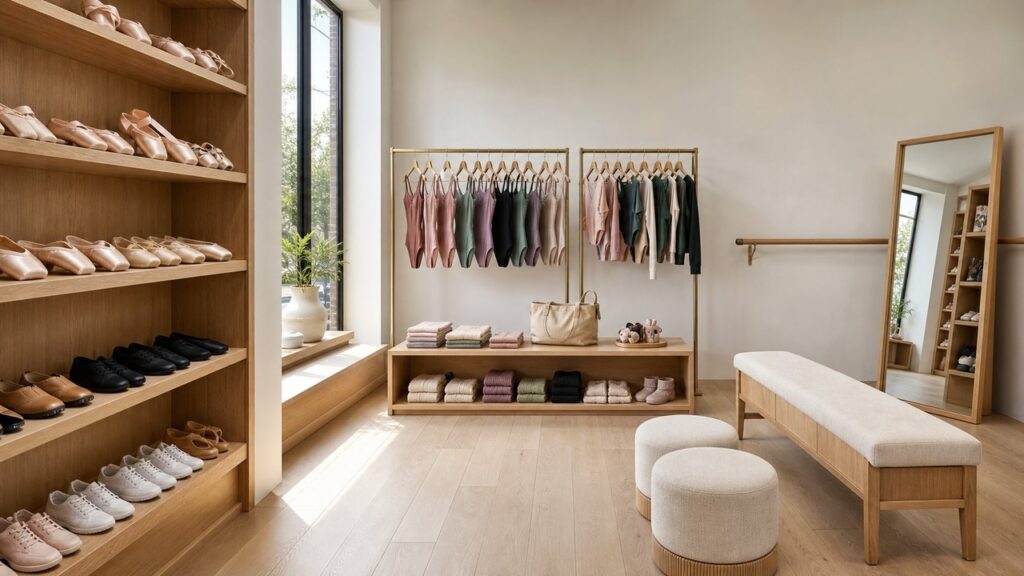
Whether someone is preparing for a first ballet lesson or replacing performance footwear after years of training, a good dance store can offer more than a collection of attractive products. Dancewear and footwear need to suit the dancer’s discipline, level, teacher or studio requirements, individual measurements, and intended use. Specialized retailers can make those choices easier by offering relevant sizing information, fitting services, and products designed for different forms of dance. Knowing what to check before shopping helps dancers and parents avoid buying unsuitable shoes, unnecessary accessories, or clothing that does not meet class requirements.
Dance products are often highly specialized. Ballet slippers and pointe shoes may look related but serve very different purposes, just as tap shoes, jazz shoes, character shoes, and dance sneakers are constructed for different movement demands.
The same applies to apparel. A studio may specify particular leotard colors, tights, skirts, uniforms, or footwear according to level. Checking these requirements before purchasing is one of the simplest ways to shop efficiently.
What Is a Dance Store?
A dance store is a specialist retailer focused on footwear, clothing, accessories, and supplies used across dance disciplines.
Depending on the retailer, inventory may cover ballet, contemporary dance, jazz, tap, ballroom, Latin dance, musical theatre, gymnastics related apparel, or other performance activities.
Specialist stores can operate from physical locations, online, or through a combination of both.
The main difference from a general sports or fashion retailer is specialization. Staff may have experience with dance product categories and fitting considerations, although expertise varies between individual businesses and employees.
Why Choose a Dance Store Instead of a General Retailer?
Specialist retailers typically carry products developed for dance rather than footwear and clothing merely inspired by dance aesthetics.
That distinction is important.
Fashion ballet flats, for example, are not necessarily constructed as ballet slippers for training. Similarly, ordinary trainers should not automatically be assumed suitable where a dance class requires specific footwear.
A specialist retailer can also offer a wider range of sizes, widths, sole constructions, fabrics, and discipline specific accessories.
How a Dance Store Can Support Different Dance Styles
Each discipline creates different footwear and clothing requirements.
Ballet training commonly involves slippers, leotards, tights, and potentially pointe shoes for appropriately trained students under qualified instruction. Tap requires footwear fitted with metal taps. Jazz dancers may use flexible jazz shoes, while ballroom footwear has characteristics designed around its particular activity.
Requirements also vary between teachers and schools.
Always prioritize the instructor’s specifications over a generic shopping checklist.
9 Dance Store Shopping Tips for Dancers and Parents
A little preparation can make dance shopping considerably more efficient. These nine principles apply whether purchasing in person or online.
1. Visit a Dance Store With Your Studio Requirements
Before buying anything, check your class uniform or dress code.
Some dance schools specify exact colors, garment styles, footwear types, or even approved products for examinations and performances. Buying first and asking later can result in unnecessary returns.
Take a screenshot, printed list, or link to the studio requirements when visiting a retailer.
If instructions are unclear, contact the teacher before substituting products.
This is particularly important for examination uniforms and stage costumes, where consistency may matter.
2. Use a Dance Store for Proper Shoe Sizing
Dance footwear should not automatically be purchased using ordinary street shoe size.
Sizing systems can vary between manufacturers, models, age groups, and shoe types. Some dance shoes are designed to fit more closely than everyday footwear.
Consult the manufacturer specific size guidance and, where useful, obtain an in person fitting.
Children’s footwear also deserves careful attention. Buying shoes excessively large with the expectation that a child will eventually grow into them can interfere with fit and function.
The appropriate amount of growing room depends on the footwear and intended activity.
3. Choose a Dance Store That Offers Specialist Fittings
A fitting service is particularly valuable for specialized footwear.
Staff may examine length, width, shape, heel security, movement in the shoe, and other model specific considerations.
However, dancers should communicate what they feel.
Pain, pressure, slipping, bunching, and instability should not be ignored simply because a numerical size appears correct.
For persistent pain, injury, or medical foot concerns, seek advice from an appropriately qualified healthcare professional rather than expecting retail fitting to diagnose the problem.
4. Compare Dance Store Apparel for Fit and Movement
Dance clothing needs to accommodate movement while satisfying class requirements.
Leotards vary in neckline, back design, sleeve length, leg line, fabric, lining, and compression. Tights also differ in construction and intended use.
Try moving naturally when assessing clothing.
Raise the arms, bend, sit, and perform simple movements appropriate to the fitting environment to check whether the garment shifts or restricts movement.
For children, confirm studio policies before choosing decorative or highly styled garments.
5. Ask the Dance Store About Materials and Care
Fabric composition affects feel, stretch, drying, appearance, and washing requirements.
Dancewear may incorporate cotton, nylon, polyester, elastane, microfiber, mesh, or other materials.
Follow the manufacturer’s care instructions.
Heat, aggressive washing, or unsuitable drying methods can damage elastic fibers, trims, finishes, or shoe materials.
Sweaty clothing should be allowed to dry appropriately rather than remaining sealed in a dance bag for long periods.
6. Shop at a Dance Store for Discipline Specific Accessories
Accessories can be genuinely useful, but dancers do not need every item displayed beside the checkout.
A ballet student may need hair supplies and an appropriate dance bag. Other dancers might require shoe brushes, replacement laces, garment covers, or performance specific products.
Ask the teacher what is necessary.
Avoid purchasing products designed to address pain, injuries, or biomechanical concerns without appropriate guidance. Accessories should not be used to conceal symptoms that warrant professional assessment.
7. Check Dance Store Return Policies Before Buying
Return policies are particularly important for footwear, tights, undergarments, customized products, and performance items.
Hygiene or condition requirements may limit which products can be returned after opening or trying them on.
Online shoppers should read policies before ordering multiple sizes with the intention of returning most of them.
Check deadlines, return shipping costs, original packaging requirements, and exclusions.
For customized or specially ordered merchandise, cancellation rights may differ according to local consumer law and the nature of the product.
8. Evaluate Dance Store Product Quality Carefully
A higher price does not automatically guarantee that an item is right for a particular dancer.
Look at construction, materials, stitching, fastenings, sole attachment, fabric recovery, and intended use.
For shoes, examine them as a pair.
Small differences in handmade or partly handmade products can occur, but significant construction concerns should be discussed with the retailer before use.
Quality should be evaluated relative to how often the product will be worn and the demands placed on it.
9. Choose a Dance Store With Reliable Customer Support
Helpful service matters when sizing or product requirements become complicated.
A good retailer should be able to explain its products without making unsupported promises. Online shops should provide clear contact details, delivery information, sizing resources, return policies, and secure checkout.
Customer reviews can provide additional context but should not replace checking policies directly.
For expensive specialist footwear, ongoing access to fitting support may be worth considering alongside price.
Dance Store Ballet Shoes: What Should You Look For?
Ballet slippers are foundational training footwear in many ballet classes.
They may use leather, canvas, satin, or other materials depending on design and purpose. Soles can be full sole or split sole.
A teacher may specify which type students should wear.
Getting Ballet Shoes Fitted at a Dance Store
A ballet slipper normally needs to follow the foot without excessive loose material, but exact fitting expectations differ according to shoe construction and dancer needs.
Toes should not be painfully compressed.
Elastic placement and drawstrings, where present, also require appropriate adjustment.
Young dancers should not automatically size up dramatically for growth. A poorly fitting slipper can create excess material and make it harder for teachers to observe the foot accurately.
Questions to Ask a Dance Store About Ballet Shoes
Ask whether the teacher requires a particular color, material, sole type, or style.
Check whether elastic arrives pre sewn or needs to be attached at home. For younger students, clarify whether shoes should be suitable for bare feet, socks, or tights according to class requirements.
Also ask about exchanges before sewing elastics, writing names inside, or wearing shoes during class.
Modifications can affect return eligibility.
Dance Store Pointe Shoes Require Specialist Attention
Pointe shoes are not ordinary ballet slippers.
Students should begin pointe work only when their qualified ballet teacher determines they are appropriately prepared. Age alone should not be treated as the deciding factor.
Training history, technique, strength, development, and teacher assessment are relevant.
Why a Dance Store Pointe Shoe Fitting Matters
Pointe shoes vary significantly in box shape, width, vamp, shank characteristics, profile, heel, and other construction details.
A model that suits one dancer may be completely unsuitable for another.
An experienced fitter can evaluate multiple options while the dancer provides feedback and demonstrates movements appropriate to the fitting.
The teacher may also have specific recommendations.
Pointe shoes should never be selected purely because a particular model is fashionable or used by another dancer.
Dance Store Pointe Accessories and Safety
Toe pads, spacers, ribbons, elastic, and other pointe related accessories should be selected according to individual and teacher guidance.
More padding is not automatically safer.
Excessive padding can alter fit and sensation inside the shoe.
Dancers experiencing persistent pain, numbness, injury, skin problems, or other concerning symptoms should seek appropriate professional advice rather than relying solely on padding or accessories.
Dance Store Options for Jazz and Contemporary Dancers
Jazz footwear is usually designed to permit flexibility and articulation while providing a suitable surface for the discipline.
Models can differ in sole, heel, upper material, closure, and fit.
Contemporary classes may use bare feet, socks designed for dance, foot coverings, or other footwear depending on the teacher and choreography.
Selecting Jazz Shoes at a Dance Store
Follow the class specification first.
A slip on jazz shoe and a lace up design can fit differently, even when labelled with the same size. Check heel security and whether excess material develops around the foot during basic movement.
Avoid relying solely on reviews that say a model “runs small” or “runs large.”
Sizing experiences vary between wearers. Manufacturer guidance and actual fitting provide more useful information.
Dance Store Tap Shoes and Sound Considerations
Tap shoes combine footwear with metal taps that create sound through contact with the floor.
Different shoes can vary in upper construction, heel, sole rigidity, tap design, and fastening.
Beginners do not necessarily need the most expensive professional model available.
Fitting Tap Shoes at a Dance Store
Tap footwear should feel secure enough for controlled movement without painful compression.
Check the heel, width, toe area, and closure.
Because children grow, regular fit checks can be useful.
Tap shoes should also be used on surfaces suitable for tap dancing. Metal taps can damage ordinary residential flooring, and inappropriate surfaces can create unwanted slipping or wear.
Follow studio instructions regarding practice surfaces.
Dance Store Apparel for Classes and Rehearsals
Dance clothing often needs to balance freedom of movement with the teacher’s need to observe alignment and technique.
This is one reason many schools use relatively fitted uniforms.
Dress requirements can become more flexible for adult recreational classes or certain contemporary settings.
Choosing Leotards at a Dance Store
Start with studio approved color and style.
Then evaluate fit around the shoulders, torso, leg openings, and neckline. A leotard should remain appropriately positioned through normal class movements.
Sizing can vary across manufacturers, so measurements are more useful than age labels alone.
When ordering children’s dancewear online, compare current measurements against the product’s specific sizing chart.
Choosing Tights at a Dance Store
Dance tights may include footed, footless, stirrup, or convertible designs.
The correct type depends on dance discipline and studio requirements.
Color can also be prescribed.
Review washing instructions carefully and consider keeping a spare pair for performances or examinations where a damaged pair could create unnecessary last minute stress.
Dance Store Shopping for Performances and Competitions
Performance shopping requires more planning than ordinary class purchases.
Costumes, tights, footwear, hair accessories, and makeup where required may need to comply with school or production specifications.
Do not modify costumes without permission from the relevant teacher or costume coordinator.
Create a Dance Store Checklist Before Performance Day
Confirm every required item early enough to handle stock shortages or sizing exchanges.
Try on costumes and footwear according to teacher instructions before the performance date.
Label personal belongings where appropriate.
A compact performance kit can include permitted spare tights, hair supplies, basic sewing items under adult supervision where relevant, and other teacher approved essentials.
Dance Store Purchases to Avoid at the Last Minute
Specialist shoes should ideally not be purchased moments before an important performance when fitting and adjustment are required.
Pointe shoes are an especially clear example because preparation practices vary and should follow dancer, fitter, and teacher guidance.
Costumes and uniforms can also take time to exchange.
Shopping early provides room to correct ordinary sizing and availability problems without unnecessary pressure.
Online Dance Store Shopping: What to Check
Online retail provides access to products that may not be stocked locally.
The tradeoff is that customers cannot assess fit physically before ordering.
Detailed measurements and clear policies therefore become especially important.
How to Choose a Reliable Online Dance Store
Look for a secure website, clear business contact information, detailed product pages, brand specific sizing charts, delivery terms, and transparent return policies.
Check whether products are described accurately and whether stock status appears current.
Be cautious of websites using stolen imagery, implausibly low prices, unclear business identities, or payment methods offering little consumer protection.
Where relevant, verify that a retailer is an authorized seller of branded products.
Dance Store Size Charts for Online Orders
Measure according to the retailer’s instructions rather than guessing.
Dancewear charts may use chest, waist, hips, girth, height, and inseam, depending on the garment.
Footwear sizing can be more complicated.
If buying an unfamiliar specialist shoe for the first time, in person fitting may offer advantages over repeatedly ordering different sizes online.
Dance Store Delivery and Returns for Online Shoppers
Before payment, check delivery estimates and whether the product is actually in stock.
If an item is needed for an examination or performance, leave a buffer for delays and exchanges.
Preserve packaging and avoid wearing shoes outside while evaluating fit.
Always follow the retailer’s specific return conditions, since marked soles, sewn elastics, customized merchandise, or removed hygiene protection can affect eligibility.
Dance Store Products for Beginners
Beginners often need fewer items than retail displays suggest.
The essentials depend on the class.
A teacher may require only suitable clothing, specific shoes, and a few basic accessories. Additional equipment can be purchased later if it becomes useful.
What to Ask a Dance Store as a Beginner
Tell staff the dance discipline, level, age where relevant, and studio requirements.
If you do not have a uniform list, contact the teacher rather than asking the retailer to predict the school’s rules.
Focus initial spending on necessary products.
As experience develops, dancers can make more informed choices about preferred fabrics, shoe models, bags, warm ups, and other accessories.
Dance Store Care Tips for Shoes and Clothing
Proper care can help dance products remain usable for longer.
Different materials require different treatment, so follow product instructions.
Do not automatically place specialist dance shoes in a washing machine.
Keeping Dance Store Footwear in Good Condition
Remove shoes from sealed dance bags after training when appropriate and allow moisture to dissipate according to material care guidance.
Keep footwear away from unnecessary heat and damp conditions.
Check shoes periodically for excessive wear, loose components, or changes in fit.
For tap shoes, inspect taps and attachments according to manufacturer or teacher guidance. For specialized footwear, do not attempt modifications that could compromise function.
Washing Dance Store Apparel Correctly
Read each garment’s care label.
Some fabrics and embellishments require cool washing, gentle cycles, hand washing, or air drying.
Separate colors where dye transfer is possible.
Performance costumes may have substantially different care requirements from ordinary leotards and tights, particularly when they include sequins, mesh, adhesives, feathers, or delicate trims.
How a Dance Store Can Serve Different Age Groups
Children, teenagers, and adults often have different shopping priorities.
Children may need regular size checks because of growth, while adults may prioritize comfort, durability, and fit across a wider range of body shapes.
An inclusive retailer should provide useful sizing information without assuming every dancer has the same proportions.
Dance Store Shopping for Growing Children
Regularly reassess footwear and clothing.
Shoes that fitted earlier in the season may become restrictive, while oversized garments can interfere with movement or violate uniform requirements.
Avoid buying excessively large sizes solely to extend wear.
Balanced sizing should allow the product to perform its intended function while accommodating reasonable growth where appropriate.
Frequently Asked Questions
What should I buy from a dance store for my first class?
Check your teacher’s requirements first. Typical essentials may include appropriate dancewear and discipline specific footwear, but uniforms vary considerably between studios.
Should I visit a dance store for pointe shoe fitting?
Yes. Pointe shoes require specialist fitting, and pointe work should begin only with appropriate teacher approval and instruction rather than through independent purchase.
Are dance store shoe sizes the same as regular shoes?
Not necessarily. Dance footwear sizing varies by manufacturer and model, so use product specific guidance and professional fitting when appropriate.
Can I buy dance shoes from an online dance store?
Yes, but sizing can be difficult for unfamiliar models. Check measurements, manufacturer guidance, fitting information, delivery times, and return conditions before ordering.
What makes a good dance store?
A good retailer offers appropriate specialist products, clear sizing information, knowledgeable assistance, transparent policies, reliable customer service, and fitting support where relevant.
How should I care for products bought from a dance store?
Follow the manufacturer’s instructions for each material. Allow damp items to dry appropriately, wash apparel as directed, and inspect footwear regularly for wear.
Conclusion
A specialist dance store can make buying footwear, apparel, and accessories considerably easier when products need to meet the demands of a particular dance discipline. The best shopping decisions begin with studio requirements, accurate measurements, appropriate fittings, and a realistic understanding of what the dancer actually needs. Online and physical retailers can both provide useful options when sizing, policies, and product information are checked carefully. With thoughtful selection and proper care, dancers can focus their budget on equipment that supports training, rehearsals, and performances effectively.