
Choosing CSM training starts with checking the instructor, course format, schedule, total cost, included exam attempts, and post-course support. Scrum Alliance requires candidates to complete...
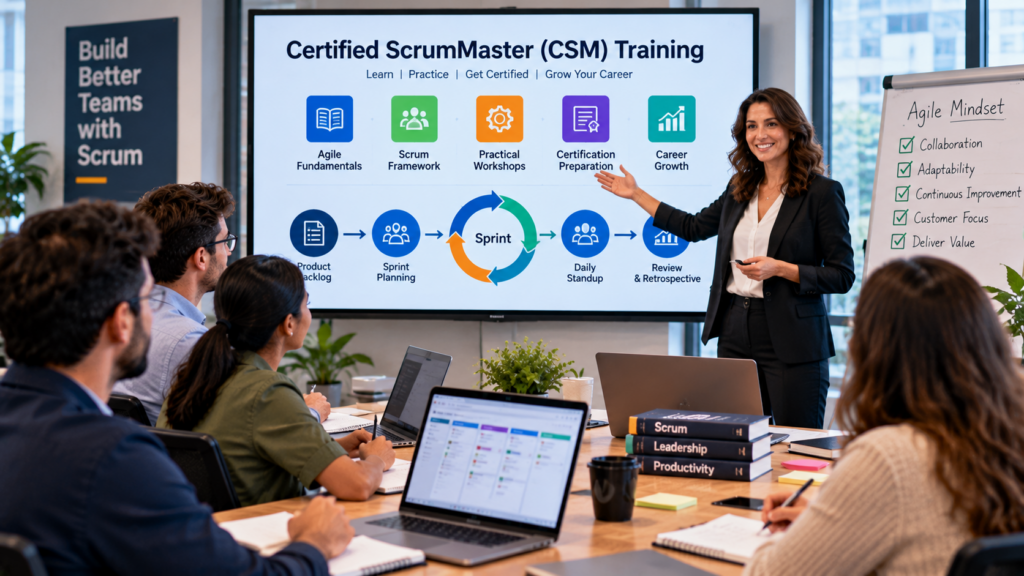
Choosing CSM training starts with checking the instructor, course format, schedule, total cost, included exam attempts, and post-course support. Scrum Alliance requires candidates to complete a course with an approved trainer before taking the certification test. This article profiles StarAgile as one example; it is not a side-by-side provider ranking. Verify current trainer status, course dates, fees, and refund terms on the official Scrum Alliance and provider pages before enrolling.
Why the Course You Choose Matters So Much
To earn Scrum Alliance’s Certified ScrumMaster (CSM) certification, candidates must complete a 16-hour course taught by a Certified Scrum Trainer (CST); prior experience cannot replace the course. After training, candidates take an online test with 50 multiple-choice questions in 60 minutes and need at least 74% to pass. The course fee includes two attempts within 90 days; each later attempt costs US$25. Check the current Scrum Alliance rules before booking.
This guide uses StarAgile as one provider example, not as a ranked or independently reviewed recommendation. Before enrolling, verify the specific class and trainer in Scrum Alliance’s course search, and compare the total price, schedule, class size, included test attempts, and written refund terms with other available courses.
Five Features of the Best Course
Real trainers, not presenters: For each class, check the named instructor’s CST status in Scrum Alliance’s member search and ask about their relevant coaching experience. Verify who will teach the specific date you plan to attend.
Honest, all-in pricing: Ask for an itemized total that identifies the class fee, membership, test attempts, taxes, and any continuing-education credits or other extras. StarAgile advertises certain items as bundled; confirm the current class listing and what the fee includes.
Practical content: Review the course outline for hands-on work such as facilitation practice, retrospectives, sprint planning, and team scenarios. Compare the outline for the exact class because activities and materials can vary by trainer.
A safety net: StarAgile advertises a refund policy for candidates who do not pass after two attempts. Read the current written terms carefully, including eligibility, deadlines, and exclusions, before treating a refund as guaranteed.
Flexibility: Check the listed class dates, time zone, daily hours, and attendance requirements; schedules vary by course and can change.
What Melbourne Employers Look For
Hiring criteria vary by employer, industry, and experience. The CSM credential can demonstrate training, but it does not guarantee a role or salary; employers also assess facilitation, communication, and practical team experience. Check current Melbourne job listings for locally relevant requirements and pay information.
Practical exercises can help learners rehearse facilitation, retrospectives, and sprint discussions. Ask how much class time is interactive and whether the trainer provides feedback; these details are more useful to compare than a general promise of job readiness.
Studying From Australia
For candidates in Melbourne, compare the course time zone, start and finish times, attendance rules, and whether the class is live online or in person. Confirm the instructor and included materials for the exact class; do not assume every date offers identical delivery or benefits.
What Happens on Exam Day
After the two-day course, candidates receive access to the online CSM test. Scrum Alliance’s current policy includes two attempts within 90 days at no additional charge; later attempts, or attempts after 90 days, cost US$25 each. Check Scrum Alliance’s official test guidance for the latest rules. StarAgile says its course materials remain available for review.
Who Should Take the Course
Scrum Alliance says the CSM course is open to people from a range of roles and industries. Check the current course listing for prerequisites, teaching format, materials access, and any limits on post-course resources. The credential can support learning, but it does not substitute for practical team experience.
Choosing the Best Institute for CSM Training
When comparing institutes, test each against the same short checklist. Is the provider a verified Licensed Training Partner on the Scrum Alliance directory? Who will teach your batch, and how many cohorts have they led? What exactly is included in the fee? What happens if you do not pass? Can you speak to former learners?
Use the checklist above to compare StarAgile with other courses. Confirm the listed trainer is a Certified Scrum Trainer, check the exact class details in Scrum Alliance’s course search, and request written confirmation of everything included in the fee and any refund conditions.
After You Qualify
After earning the certification, look for opportunities to practice facilitation and team support, and keep your knowledge current through relevant learning. Choose any next credential based on your role and goals; no single provider is required for future development.
Final Thoughts
Choose a course based on verified trainer eligibility, a schedule you can attend, transparent total cost, hands-on learning, and clear post-course support. Compare current listings and read all terms before paying; course features and prices can change.