
The restaurant industry is experiencing one of the most consequential technology transitions in its modern history. For years, restaurants of all sizes relied on generic point-of-sale systems,...
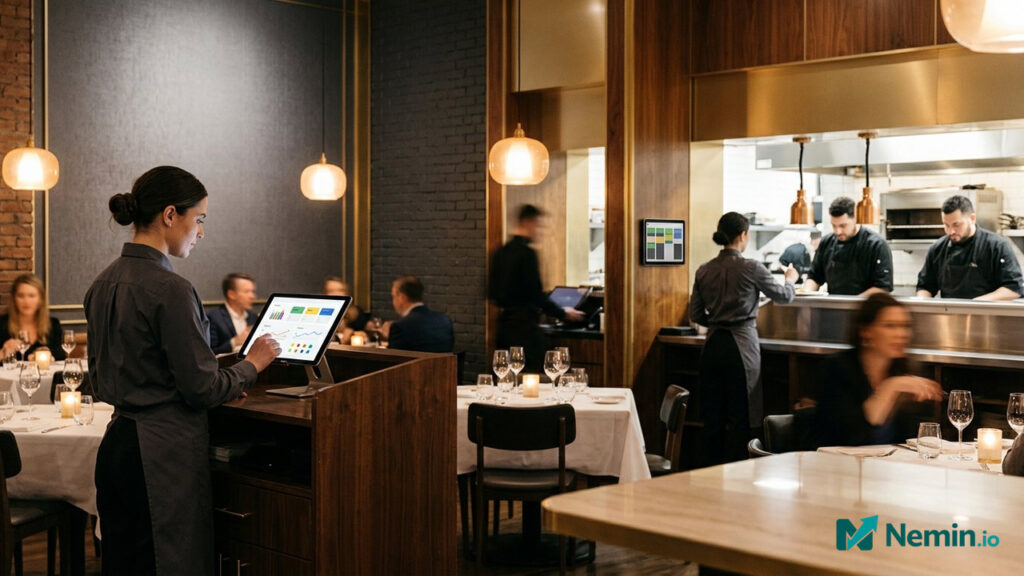
The restaurant industry is experiencing one of the most consequential technology transitions in its modern history. For years, restaurants of all sizes relied on generic point-of-sale systems, off-the-shelf inventory management applications, and third-party delivery platforms that promised convenience but consistently delivered compromise. These tools were built for the broadest possible market, which meant they were optimized for no restaurant in particular.
Today, a growing number of restaurant operators, from independent fine dining establishments to regional fast casual chains and multi-location hospitality groups, are making a deliberate and strategically significant choice to move away from generic applications and invest in custom software built around their specific operational requirements, brand identity, and guest experience vision.
This shift is not driven by technology enthusiasm. It is driven by the recognition that in a Restaurant Industry where margins are razor-thin, competition is intense, and guest expectations are higher than ever, the operational precision and competitive differentiation that custom software delivers is becoming the difference between restaurants that thrive and those that struggle to survive.
The Limitations of Generic Restaurant Industry Apps That Are Driving the Shift
To understand why the restaurant industry is moving toward custom software, it is essential to understand the specific ways in which generic applications consistently fall short of what modern restaurant operations require.
Generic restaurant management applications are built around the lowest common denominator of restaurant operations. They include features that most restaurants need in some form, such as order taking, payment processing, basic inventory tracking, and simple reporting, but they implement these features in standardized ways that rarely align perfectly with how any individual restaurant actually operates.
The practical consequences of this misalignment are significant. Staff spend time working around system limitations rather than serving guests. Integration between different operational systems, such as the point-of-sale, the kitchen display system, the reservation platform, and the inventory management tool, is often incomplete or requires expensive third-party middleware that introduces additional complexity and cost. Reporting capabilities reflect what the software developers assumed operators would want to measure rather than the specific metrics that matter to a particular restaurant’s business model.
For restaurant groups that have invested years in developing distinctive service models, operational workflows, and brand experiences, the frustration of forcing those carefully developed practices into the rigid structure of a generic application is not merely an inconvenience. It is a genuine competitive liability that erodes the operational advantage they have worked to build.
7 Reasons the Restaurant Industry Is Building Custom Software in 2026
1. Operational Workflows That Actually Match How the Restaurant Works
Every restaurant develops operational workflows that reflect its specific service model, kitchen configuration, staffing structure, and menu complexity. A fast casual concept with a linear assembly line model operates fundamentally differently from a full-service restaurant with complex coursed tasting menus. A ghost kitchen operating multiple virtual brands from a single production facility has operational requirements that bear little resemblance to those of a traditional dine-in establishment.
Generic software forces all of these fundamentally different operations into the same structural framework, requiring operators to adapt their workflows to the software rather than building software that serves their workflows. Custom software development inverts this relationship. The software is designed around the restaurant’s actual operational model, supporting the specific sequence of tasks, communication pathways, and decision points that the team has developed and refined over years of practical experience.
The productivity gains from this alignment are measurable and significant. Staff training time decreases because the software reflects familiar operational logic rather than introducing an alien structure that must be learned separately. Error rates fall because the system supports natural workflow rather than requiring staff to mentally translate between how they work and how the software expects them to work.
2. Integrated Data That Connects Every Operational Domain
One of the most persistent pain points for restaurant operators using generic applications is the fragmentation of operational data across multiple disconnected systems. Sales data lives in the point-of-sale. Inventory data lives in a separate management application. Labor data lives in a scheduling tool. Guest data lives in the reservation platform. These systems rarely communicate effectively with each other, creating information silos that prevent operators from seeing the complete operational picture they need to make informed decisions.
Custom software for the restaurant industry can be built with a unified data architecture that connects all operational domains from the outset. Sales data flows automatically into inventory depletion calculations. Labor scheduling is informed by real-time sales forecasting. Guest behavior patterns from the reservation and ordering systems feed into marketing and menu development decisions. This integrated data environment transforms management from reactive problem-solving into proactive operational intelligence.
Restaurant groups that have made this transition report fundamentally different management conversations because their leadership teams are working from complete, real-time operational data rather than assembling a partial picture from disconnected reports generated by systems that do not communicate with each other.
3. Guest Experience Technology That Reflects Brand Identity
The guest experience in a restaurant is shaped by dozens of touchpoints, including reservation booking, pre-arrival communication, arrival and seating, ordering and service interaction, payment, and post-visit follow-up. Generic applications handle each of these touchpoints in standardized ways that are functionally adequate but brand-neutral at best and actively dissonant with carefully crafted brand identities at worst.
A luxury dining establishment that has invested substantially in creating a distinctive, elevated guest experience cannot afford to have that experience mediated by the same generic online reservation interface used by thousands of other restaurants. A fast casual brand with a strong, distinctive personality cannot communicate that personality through a standard white-label ordering application that looks identical to its competitors.
Custom software allows restaurants to build guest-facing technology that is an authentic expression of their brand identity. Every interaction the guest has with the restaurant’s digital systems, from the visual design and language of the reservation interface to the personalization of the ordering experience and the design of digital receipts and follow-up communications, can be crafted to reinforce the brand experience rather than diluting it.
4. Ownership of Guest Data and Relationship Management
Third-party platforms including delivery aggregators, reservation systems, and online ordering applications have one characteristic in common that represents a fundamental strategic problem for the restaurant industry. They own the relationship with the guest. When a diner books through a third-party reservation platform or orders through a delivery aggregator, the data generated by that interaction belongs to the platform, not the restaurant. The restaurant fulfills the transaction but cannot leverage the guest data to build a direct relationship, develop personalized marketing, or understand the behavioral patterns that would inform better business decisions.
Custom software built for a restaurant’s direct channels changes this relationship entirely. Every booking made through the restaurant’s own reservation system, every order placed through the restaurant’s own digital ordering platform, and every loyalty interaction generates data that belongs to the restaurant and can be used to build the kind of direct guest relationships that reduce dependency on expensive third-party platforms and create the foundation for sustainable revenue growth.
This data ownership advantage compounds over time. Restaurants that build substantial first-party guest data assets gain increasingly precise understanding of their customer base, enabling more effective marketing, more relevant menu development, and more personalized service delivery that third-party platform-dependent competitors cannot replicate.
5. Menu and Pricing Flexibility That Responds to Real-Time Conditions
Dynamic menu management is an increasingly important operational capability for restaurants navigating supply chain variability, ingredient cost fluctuations, and demand pattern shifts. Generic restaurant applications typically treat the menu as a relatively static structure with limited ability to implement dynamic changes quickly or to connect menu decisions to the real-time data that should inform them.
Custom software can build menu management capabilities that allow operators to adjust pricing, modify availability, introduce limited time offerings, and implement channel-specific menu variations with the speed and precision that dynamic market conditions require. When integrated with real-time inventory data, a custom system can automatically flag or remove items when key ingredients fall below threshold quantities, preventing the guest experience failure of ordering items that the kitchen cannot produce.
For restaurant groups operating across multiple locations with different local market conditions, custom software enables the menu differentiation and localization that generic platforms make prohibitively complex, allowing each location to reflect its specific market context while operating within a coherent brand and operational framework.
6. Scalability That Matches the Restaurant Group’s Growth Trajectory
Generic restaurant software is designed to be scalable in a generic sense, accommodating more users, more locations, and more transactions as the business grows. What it cannot do is scale in ways that reflect the specific growth trajectory, organizational structure, and operational evolution of a particular restaurant group.
A restaurant group expanding from three to fifteen locations does not simply need more of the same software. It needs software that evolves to support the management structures, reporting hierarchies, cross-location operational coordination, and brand consistency requirements that come with that scale of growth. Custom software can be built with this specific growth trajectory in mind, incorporating the architectural decisions that will support the organization as it evolves rather than requiring a disruptive platform migration every time the business reaches a scale that the current generic solution cannot adequately support.
7. Competitive Differentiation Through Technology That Cannot Be Replicated
When a restaurant uses the same generic software as thousands of competitors, technology cannot be a source of competitive differentiation. The operational experience it creates, the guest experience it enables, and the insights it generates are available to any operator willing to pay the same subscription fee.
Custom software creates a proprietary operational capability that competitors cannot simply purchase access to. The specific ways in which a restaurant’s custom system supports its service model, manages its guest relationships, and generates the operational intelligence that informs its decisions are unique to that organization. This proprietary technology advantage is particularly valuable in competitive markets where brand differentiation is increasingly difficult to sustain through product and service alone.
What the Restaurant Industry Should Consider Before Building Custom Software
The decision to invest in custom software is not appropriate for every Restaurant Industry at every stage of development. The investment required in development, implementation, training, and ongoing maintenance is substantial, and the benefits are most clearly realized by restaurant groups that have developed sufficiently distinctive operational models and sufficient scale to justify and absorb that investment.
Restaurants considering custom software development should begin with a thorough operational audit that identifies the specific gaps and friction points in their current technology stack. The business case for custom development should be grounded in quantified estimates of the value that resolving those gaps would deliver, whether through labor efficiency gains, increased guest spending, improved retention, reduced third-party platform fees, or other measurable outcomes.
Selecting a development partner with genuine restaurant industry expertise, rather than a generalist software development firm, significantly increases the likelihood of a successful outcome. The technical requirements of restaurant software are domain-specific in ways that require familiarity with the operational realities of food service businesses.
Conclusion
The restaurant industry move toward custom software is not a technology trend driven by novelty. It is a strategic response to the demonstrated limitations of generic applications in an operating environment that demands precision, differentiation, and the kind of integrated operational intelligence that standardized tools are structurally incapable of delivering. Restaurants that build custom software gain proprietary operational capabilities, authentic brand-aligned guest experiences, and a foundation of first-party data that compounds in value over time.
Those that remain dependent on generic applications will find themselves constrained by tools built for the average restaurant in a competitive environment that increasingly rewards the exceptional one. The investment in custom software is substantial, but for restaurant groups with the scale and operational sophistication to leverage it fully, the return on that investment is measurable, strategic, and enduring.
Frequently Asked Questions
Q1. Why is the restaurant industry moving away from generic apps toward custom software?
Generic apps force Restaurant Industry to adapt their workflows to standardized systems, while custom software is built around a restaurant’s specific operational model, delivering better efficiency, guest experience, and competitive differentiation.
Q2. What are the main advantages of custom software for restaurant operations?
Key advantages include integrated operational data, brand-aligned guest experience technology, ownership of guest relationship data, dynamic menu management, and scalability that matches specific growth trajectories.
Q3. Is custom restaurant software only suitable for large chains and groups?
While the investment is most clearly justified for established groups with distinctive operational models, independent restaurants with sufficient scale and complexity can also benefit from purpose-built software solutions.
Q4. How does custom software help Restaurant Industry own their guest data?
Custom software built for direct booking and ordering channels ensures that all guest interaction data is captured and owned by the restaurant rather than by third-party platforms that use that data for their own commercial purposes.
Q5. What is the biggest challenge restaurants face when building custom software?
The primary challenges include the significant upfront investment in development and implementation, the importance of selecting a development partner with genuine restaurant industry expertise, and the change management required to transition staff from familiar generic tools.
Q6. How does custom software create competitive differentiation in the restaurant industry?
Unlike generic software available to any operator, custom software creates proprietary operational capabilities and guest experience technology that Restaurant Industry competitors cannot replicate simply by purchasing the same platform.
Pingback: Dog Probiotic Powder: 7 Proven Ways to End Dog Tummy Trouble