
A wardrobe filled with clothing does not necessarily make getting dressed easier. The real advantage comes from knowing what works for your body, lifestyle, preferences,...
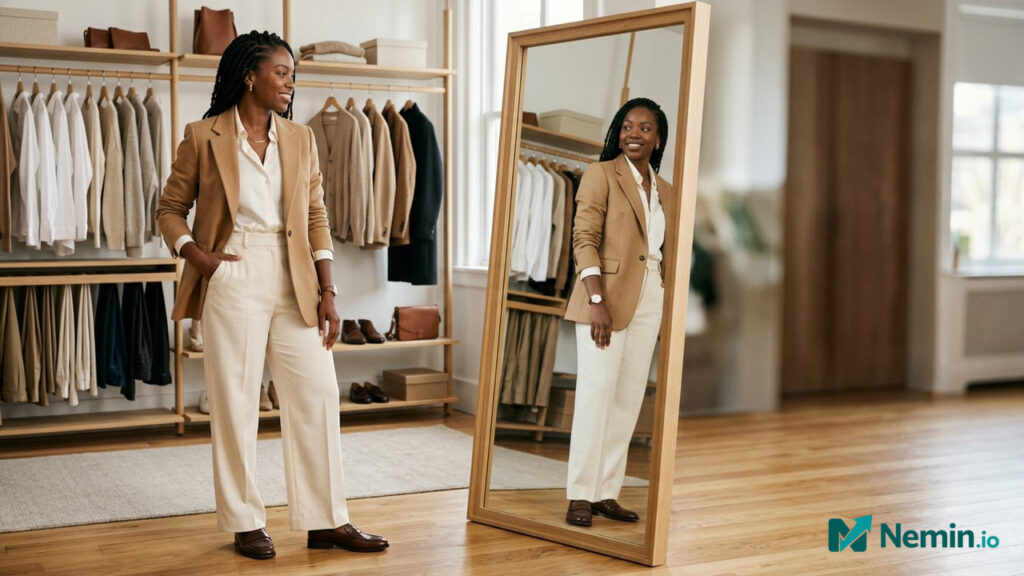
A wardrobe filled with clothing does not necessarily make getting dressed easier. The real advantage comes from knowing what works for your body, lifestyle, preferences, and daily responsibilities. If you want to boost your confidence through personal style, the goal does not need to be chasing every new trend or purchasing expensive labels. A timeless wardrobe is usually built through deliberate choices: dependable fits, coherent colors, versatile layers, appropriate fabrics, comfortable shoes, selective accessories, and enough personality to prevent the result from feeling generic.
Style can influence confidence in a practical way. When clothing fits comfortably, suits the setting, and reflects how you want to present yourself, there may be fewer distractions competing for your attention. You are not continually adjusting a waistband, worrying about an inappropriate outfit, or wondering whether everything coordinates.
Clothing, however, is not a cure for low self-esteem or anxiety.
Personal style is better understood as one controllable part of self-presentation. It can support confidence by improving preparedness and reducing wardrobe uncertainty, but lasting self-confidence also comes from competence, relationships, health, values, experience, and other dimensions of life.
The useful question is therefore not, “Which outfit will make me confident?”
It is:
“How can I create a wardrobe that consistently helps me feel comfortable, appropriate, recognizable, and prepared?”
That is where timeless personal style becomes valuable.
What Does It Mean to Boost Your Confidence Through Personal Style?
Using clothing to support confidence means creating an external presentation that feels aligned with your preferences and circumstances.
That alignment matters because style functions partly as communication.
A structured blazer can communicate formality. A clean T-shirt and tailored trousers can communicate simplicity. A distinctive pair of glasses can become recognizable. Color can make an outfit feel energetic or restrained.
None of those messages is universal, and clothing norms vary between cultures, workplaces, generations, and communities.
Timeless personal style is therefore not one prescribed aesthetic.
Boost Your Confidence: The Quick Answer
Build your style around five fundamentals:
Fit → clothes sit comfortably and intentionally on your body.
Function → outfits work for your actual activities and climate.
Consistency → recurring colors, silhouettes, and details create coherence.
Versatility → individual pieces work in multiple combinations.
Personality → the wardrobe still feels recognizably yours.
When those five elements align, getting dressed becomes less about solving a daily problem and more about using a system you already understand.
What Is Timeless Personal Style?
Timeless style generally refers to a wardrobe that remains useful beyond one trend cycle.
It often incorporates straightforward silhouettes, useful colors, familiar garment categories, considered proportions, and materials suitable for repeated wear.
That does not require dressing conservatively.
A timeless wardrobe can be colorful, artistic, minimalist, tailored, casual, vintage-influenced, or eclectic.
The timeless part comes from choosing clothing because it genuinely suits you rather than purchasing it only because it is temporarily fashionable.
Timeless Does Not Mean Trend-Free
Fashion always influences what is available.
Trouser shapes change. Jacket proportions evolve. Shoes become broader or narrower. Colors move in and out of prominence.
Attempting to avoid trends completely can become another form of trend obsession.
Instead, use trends selectively.
Ask whether a new silhouette complements your existing wardrobe and whether you would still enjoy wearing it if social media stopped showing it tomorrow.
That question filters novelty through personal taste.
1. Boost Your Confidence by Prioritizing Fit Before Brand Names
A well-fitting inexpensive garment can look more intentional than an expensive designer item in the wrong proportions.
Fit affects the entire visual structure of an outfit.
It determines where shoulder seams sit, how trousers break over shoes, whether a shirt pulls across the torso, how a jacket closes, and whether clothing remains comfortable while sitting or moving.
Fit Does Not Mean Tight
“Fitted” is often confused with “close to the body.”
That is incorrect.
Oversized clothing can fit intentionally.
Wide-leg trousers can fit beautifully.
Relaxed tailoring can be precise.
A good fit means the garment behaves as intended and its proportions work with the wearer.
Boost Your Confidence by Learning Your Preferred Proportions
Pay attention to garments you repeatedly enjoy wearing.
Do you prefer trousers sitting higher on the waist?
Do longer jackets feel more balanced?
Do cropped tops work better with your preferred trousers?
Do you like straight, wide, tapered, or relaxed silhouettes?
The answers form a personal fit profile.
Once you know it, shopping becomes easier because you are no longer judging every garment from zero.
Consider Alterations
Ready-to-wear clothing is manufactured to standardized dimensions, while real bodies have much more variation.
A tailor may be able to adjust features such as:
Trouser length
Waist fit
Sleeve length
Shirt shaping
Jacket sleeves
Dress length
Simple alterations can make useful garments work substantially better.
Complex alterations may be uneconomical or technically difficult, so it is often preferable to purchase clothing that already fits the shoulders, rise, and other structurally difficult areas reasonably well.
Test Clothes While Moving
A fitting-room mirror shows only a stationary moment.
Sit.
Walk.
Reach forward.
Raise your arms.
Try the shoes and outerwear you expect to pair with the garment.
Comfort during real movement is part of good fit.
2. Boost Your Confidence With a Personal Color Palette
A coherent wardrobe does not require wearing black, white, beige, and navy forever.
It requires enough compatibility that individual garments can work together.
Developing a personal palette can dramatically increase that compatibility.
Start With Foundation Colors
Choose a few colors you are comfortable using repeatedly.
Examples could include:
Navy
Black
Charcoal
Brown
Cream
White
Olive
Denim blue
These are examples, not rules.
Someone whose wardrobe revolves around burgundy, forest green, and cream can create an equally coherent system.
Add Signature Colors
Once foundation colors are established, add shades that create individuality.
A signature color might appear in knitwear, shirts, dresses, scarves, shoes, bags, jewelry, or eyewear.
Repeating it periodically can give otherwise varied outfits visual continuity.
Boost Your Confidence by Choosing Colors You Actually Wear
Color-analysis systems can be interesting, but they should not become rigid rules.
Complex claims that certain colors objectively make everyone within a category look younger, healthier, or more attractive should be treated cautiously.
Lighting, contrast, hair, cosmetics, fabric finish, personal preference, and cultural context all influence how color is perceived.
The most useful test is practical:
Do you like seeing yourself in the color?
Does it coordinate with several pieces you own?
Will you actually wear it?
If the answer is yes, the color has a legitimate place in your wardrobe.
3. Boost Your Confidence by Building Reliable Outfit Formulas
People with recognizable personal style rarely invent an entirely new aesthetic every morning.
They often repeat structures.
An outfit formula is a combination that reliably works while allowing individual pieces to change.
For example:
T-shirt + tailored trousers + structured jacket + clean sneakers.
Shirt + straight jeans + loafers + simple belt.
Fine knit + midi skirt + boots + long coat.
Dress + understated jewelry + structured bag.
These formulas reduce decision fatigue.
Why Outfit Formulas Work
Suppose you know that a fitted knit, wide-leg trousers, and a cropped jacket consistently create proportions you like.
You can own several versions of each component.
The colors and textures can change while the structure remains familiar.
This creates variety without chaos.
Boost Your Confidence With Three Reliable Looks
A useful starting point is to create at least three dependable formulas:
Everyday casual
Work or professional
Social or evening
The exact categories should match your life.
Someone working remotely may need a polished video-call formula instead of traditional office tailoring.
Someone attending frequent formal events may need more sophisticated evening options.
A wardrobe should reflect the calendar of the person wearing it.
Photograph Successful Outfits
When an outfit works particularly well, photograph it.
Create a private album on your phone.
After several months, patterns often emerge.
You may discover that the outfits you love share the same trouser silhouette, neckline, jacket length, footwear type, or color combination.
That evidence is more useful than a generic list of “10 wardrobe essentials.”
4. Boost Your Confidence by Creating a Modern Capsule Wardrobe
The capsule wardrobe concept is often presented as a strict numerical challenge: own exactly a certain number of pieces and eliminate everything else.
That is unnecessary.
A useful capsule is simply a group of compatible garments capable of producing many appropriate outfits.
Your Capsule Should Reflect Your Life
Before buying anything, examine how you actually spend a typical month.
You might divide your clothing needs conceptually into:
Work
Casual days
Exercise
Social occasions
Formal events
Travel
Weather-specific clothing
If 70% of your time is casual, building 70% of the wardrobe around formal office clothing would be inefficient.
Style needs to match reality.
Timeless Capsule Categories
Depending on lifestyle, useful categories might include:
- Well-fitting T-shirts and shirts
- Jeans or other casual trousers
- Tailored trousers
- Knitwear
- A versatile blazer
- Weather-appropriate outerwear
- A simple dress or equivalent one-piece option where relevant
- Comfortable everyday shoes
- Smarter footwear
- Functional bag
- Carefully selected accessories
This is not a universal shopping list.
Someone living in Singapore, Cape Town, Toronto, Dubai, or London has different climate requirements.
Boost Your Confidence With Outfit Compatibility
Before purchasing a new garment, identify at least three realistic ways you can wear it with existing clothes.
The “three outfits” rule is not scientifically important; it is simply a useful shopping filter.
If an item requires a new jacket, shoes, trousers, bag, and underwear before it works, its true cost is much larger than its price tag.
5. Boost Your Confidence by Understanding Fabric and Construction
A garment’s photograph tells only part of the story.
Fabric affects drape, temperature regulation, durability, maintenance, movement, and how formal an item appears.
Understanding basic materials can make shopping more deliberate.
Natural and Synthetic Fibers Both Have Advantages
Cotton can be comfortable and breathable but varies significantly in quality.
Wool can provide warmth, drape, and temperature regulation, although care requirements vary.
Linen is valued in warm conditions but creases readily—a characteristic some people appreciate.
Polyester can offer durability, wrinkle resistance, affordability, and technical performance, depending on construction.
Nylon is useful in many performance garments.
Elastane adds stretch.
There is no credible rule that natural fibers are always superior or synthetics always poor.
Fabric quality depends on fiber, yarn, weave or knit, finishing, garment construction, and intended use.
Inspect Construction Before Buying
Look at:
Seams
Buttons
Zippers
Hems
Linings
Pattern alignment
Fabric opacity
Stretch recovery
Pocket construction
Loose threads
How the garment hangs
Price is not a guarantee of construction quality.
Learning to inspect clothing can improve purchasing decisions at almost any budget.
Boost Your Confidence by Understanding Maintenance
An expensive garment that requires care you are unwilling to provide may be a poor purchase.
Check the care label.
Ask yourself whether you will realistically:
Hand wash it.
Dry clean it.
Steam it.
Iron it.
Remove pills.
Polish the shoes.
Store it correctly.
Maintenance requirements form part of the real cost of ownership.
6. Boost Your Confidence With Intentional Accessories
Accessories can create identity without forcing the entire wardrobe to become complicated.
A simple outfit can change considerably through shoes, jewelry, belts, eyewear, bags, watches, scarves, or other details.
Choose a Signature Element
Some people become associated with a specific style detail.
It could be:
Distinctive glasses
Silver jewelry
Gold jewelry
Scarves
Vintage watches
Colorful socks
Structured bags
Minimal sneakers
Bold earrings
A particular type of hat
A signature does not need to be expensive.
Its value comes from repetition.
Avoid Accessory Overload
When every piece is competing for attention, the overall effect can become visually confusing.
That may be exactly what a maximalist dresser wants.
For someone trying to develop a quieter timeless style, however, hierarchy helps.
Choose where you want attention to go.
A strong necklace may work better with restrained earrings.
Statement shoes may not require an equally dramatic bag.
These are design principles rather than fixed fashion laws.
Boost Your Confidence With Functional Accessories
The best accessories often solve a practical problem while improving the outfit.
A bag can carry what you genuinely need.
A belt can improve trouser proportion.
Eyewear can provide necessary vision correction while becoming part of personal style.
A scarf can add warmth.
A watch can provide utility and visual detail.
Function makes repeated use more likely.
7. Boost Your Confidence Through Good Grooming and Clothing Care
Style does not stop when an outfit is purchased.
A simple garment that is clean, pressed appropriately, and maintained can look more polished than an expensive item that is stained, stretched, heavily pilled, or badly wrinkled.
Clothing Care Protects Your Wardrobe
Follow individual care labels because materials differ.
Useful maintenance habits can include:
Washing only when appropriate
Using suitable wash temperatures
Air drying when recommended
Removing stains promptly
Debobbling knitwear
Repairing loose buttons
Polishing or cleaning footwear
Steaming or ironing where appropriate
Storing clothing correctly
These habits also extend the useful life of garments, reducing the need for unnecessary replacement.
Grooming Should Match Your Preferences
Hair, facial hair, nails, skincare, and fragrance can contribute to presentation, but there is no universal grooming standard beyond basic hygiene and context-specific expectations.
Timeless style should not require everyone to look identical.
The objective is intentionality.
A deliberately tousled hairstyle and a precisely tailored suit can coexist. So can natural hair, minimal makeup, and formal clothing.
Personal style works when individual choices feel coherent.
8. Boost Your Confidence by Dressing for Context Without Losing Yourself
One of the most useful style skills is contextual adaptation.
A person can maintain a recognizable identity while dressing differently for a wedding, workplace, weekend, flight, date, or formal dinner.
Learn the Level of Formality
Dress codes are imperfect but useful signals.
Casual, smart casual, business casual, cocktail, black tie, and other labels communicate broad expectations.
Interpretation can vary by culture and event.
When uncertain, ask the host or organizer.
Being appropriately dressed can reduce avoidable self-consciousness.
Keep One Element Consistent
When entering an unfamiliar dress environment, preserve an element that feels like you.
For example, someone who normally dresses minimally might choose a clean, unembellished formal outfit.
A person who loves color might select a richly colored but contextually appropriate suit or dress.
Someone known for distinctive jewelry can retain that detail even when the clothing becomes more formal.
This is how personal style survives dress codes.
Boost Your Confidence Without Dressing for Approval
Context matters, but style does not need to become a constant attempt to obtain praise.
If every outfit is designed around what other people might approve of, personal style becomes unstable because external reactions are unpredictable.
Use feedback selectively.
Then prioritize comfort, function, aesthetics, and appropriateness according to your own goals.
9. Boost Your Confidence by Buying Less but Choosing Better
“Buy less, buy better” does not mean everyone needs luxury clothing.
Better can mean better for you.
A useful $60 garment worn 80 times may offer more value than a fashionable $200 item worn twice.
Cost per wear is an imperfect but useful concept.
Calculate Value Beyond Purchase Price
Consider:
How often will I wear it?
Does it work with my existing wardrobe?
Is it comfortable?
Can I maintain it?
Does the fabric suit my climate?
Can it be repaired or altered?
Do I already own something similar?
Would I buy it without the discount?
Sales can encourage people to evaluate savings rather than usefulness.
A 50% discount on something you never wear is still unnecessary spending.
Avoid the Fantasy-Self Wardrobe
A common shopping pattern involves buying clothes for a life you imagine rather than the one you actually live.
High heels for someone who always walks.
Formal jackets for a fully remote workplace.
Resort clothing for rare vacations.
Delicate garments for someone who dislikes special care.
None of those purchases is inherently wrong.
The problem arises when fantasy clothes dominate while everyday needs remain unsolved.
Boost Your Confidence With Fewer Wardrobe Failures
The aim is not necessarily minimalism.
It is increasing the percentage of your wardrobe that genuinely works.
When most items fit, coordinate, suit your schedule, and feel comfortable, choosing an outfit becomes easier.
That reliability is one of the practical ways personal style can support confidence.
How to Find Your Personal Style From Scratch
Start with observation rather than shopping.
Review your current wardrobe.
Identify five to ten pieces you genuinely enjoy wearing.
Do not choose items because they were expensive or because you think you should like them.
Choose the clothing you actually reach for.
Then ask what those pieces have in common.
Look for patterns in:
Color
Fit
Fabric
Silhouette
Formality
Necklines
Trouser rise
Length
Shoes
Accessories
You are reverse-engineering your existing preferences.
Create a Visual Style Reference
Collect images of outfits you realistically want to wear.
Pinterest, saved social-media posts, magazines, films, street photography, and retailer imagery can all provide inspiration.
After collecting enough examples, examine recurring patterns.
Perhaps you repeatedly save:
Straight trousers
Oversized shirts
Long coats
Minimal sneakers
Monochrome outfits
Soft tailoring
Vintage accessories
Earth tones
Those patterns describe your taste more reliably than choosing a label such as “old money,” “quiet luxury,” “Scandinavian,” or another temporary online aesthetic.
How to Boost Your Confidence Without Buying New Clothes
A style reset does not need to start with spending.
First, reorganize your existing wardrobe.
Try unfamiliar combinations.
Tuck shirts differently.
Roll sleeves.
Change footwear.
Add or remove a belt.
Layer garments.
Have appropriate items altered.
Repair neglected clothing.
Clean shoes.
Remove pieces from your daily wardrobe that no longer fit or function.
Then identify genuine gaps.
You may discover you do not need ten new outfits. You need one pair of trousers that coordinates with five tops you already own.
That is a more efficient way to build style.
Boost Your Confidence With a Wardrobe Audit
A wardrobe audit turns vague dissatisfaction into specific information.
Take out each major category and evaluate what you own.
Create conceptual groups:
Wear regularly
Needs repair or alteration
Seasonal
Occasion-specific
Does not currently fit
No longer suits your life
Uncertain
Avoid throwing away everything in one afternoon simply because a decluttering trend says you should.
Some clothing serves infrequent but legitimate purposes.
A funeral outfit may be worn rarely but remains useful.
Cold-weather clothing may appear unnecessary in summer.
The objective is understanding the wardrobe rather than minimizing it for its own sake.
Building Timeless Style on a Budget
Timeless personal style does not require designer prices.
Budget-conscious strategies include:
Prioritizing fit
Using alterations selectively
Shopping secondhand
Waiting for genuine wardrobe needs
Comparing fabric and construction
Maintaining existing clothes
Buying versatile colors
Avoiding duplicate items
Selecting footwear carefully
Using accessories to vary simple outfits
Secondhand shopping can be especially useful for coats, tailoring, denim, bags, and other categories where high-quality pieces may retain significant useful life.
Inspect condition carefully.
Sustainable Style and Better Wardrobe Decisions
No wardrobe is impact-free.
Clothing production uses materials, energy, labor, transport, and packaging.
One practical sustainability strategy is extending the useful life of clothing.
Wear garments repeatedly.
Repair them.
Wash appropriately.
Purchase secondhand where practical.
Avoid buying solely for one photograph or one microtrend.
When a garment no longer serves you, consider resale, alteration, donation, textile recycling where genuinely available, or responsible disposal according to its condition.
Claims that any particular fabric or brand is automatically “sustainable” should be evaluated carefully because environmental impacts are multidimensional.
Timeless Style for Different Ages
There is no age at which someone needs to stop wearing a particular color, silhouette, denim cut, or accessory merely because a magazine declares it inappropriate.
Style can evolve because bodies, careers, preferences, activities, and comfort needs change.
Those are useful reasons to update a wardrobe.
Age-based rules are often arbitrary.
Instead ask:
Does it fit?
Is it comfortable?
Do I like it?
Does it suit the setting?
Does it work with the rest of my wardrobe?
Those questions remain useful at almost any age.
Timeless Style for Different Body Types
There is no single silhouette that every person with a particular body category must wear.
Traditional fashion advice often focuses on “correcting” or hiding bodies to create one idealized proportion.
A more flexible approach is deciding what visual effect you personally prefer.
You might want to emphasize:
Waist definition
Long vertical lines
Volume
Structure
Shoulders
Legs
Color contrast
Texture
Or none of these.
Clothing should serve the wearer, rather than making the wearer feel obligated to redesign their body visually.
Can Personal Style Really Boost Your Confidence?
It can support confidence, but causal claims should remain modest.
Research in areas such as clothing, self-perception, social signaling, and what is sometimes described as “enclothed cognition” suggests clothing can interact with psychological processes and social context. However, effects depend on meaning, circumstances, expectations, and the individual.
There is no scientifically validated “confidence outfit” guaranteed to work for everyone.
The more dependable benefit is practical.
When you know your clothing fits, suits the event, reflects your preferences, and feels comfortable, you remove several sources of avoidable uncertainty.
That can leave more attention available for whatever you are actually there to do.
How Social Media Can Help—and Hurt—Personal Style
Social platforms provide almost unlimited fashion inspiration.
They also accelerate microtrends.
An item can appear indispensable for several weeks and disappear almost immediately.
Use social media as a discovery tool rather than a purchasing instruction feed.
When you see something you like, save it.
Wait.
Then revisit it.
If the idea still appeals after the novelty has faded, determine whether you already own something capable of creating the same effect.
This delay can separate genuine preference from algorithmic repetition.
Boost Your Confidence With a Signature Style
A signature style develops when recurring elements become recognizable.
Think in categories rather than uniforms.
For example:
Preferred silhouette → relaxed tailoring.
Core palette → navy, cream, charcoal.
Accent → burgundy.
Shoes → loafers and minimal sneakers.
Accessory → silver watch.
Outerwear → long structured coats.
These repeated decisions create consistency.
Other people may eventually recognize the style, but that should be a side effect rather than the primary goal.
The real benefit is that you know what works.
Common Personal Style Mistakes
One common mistake is shopping before understanding your wardrobe.
Another is buying for a fictional lifestyle.
Another is keeping uncomfortable clothing simply because it was expensive.
Some people chase flattering rules so aggressively that they eliminate personal preference.
Others assume timeless style means owning only neutral basics.
Another mistake is treating every trend as an emergency wardrobe update.
Perhaps the most expensive mistake is buying individual “beautiful pieces” without considering whether they form useful outfits.
Style lives in combinations, not isolated garments.
A 30-Day Plan to Boost Your Confidence Through Style
During the first week, observe.
Photograph daily outfits and record what felt comfortable or annoying.
During the second week, identify recurring colors, silhouettes, and successful combinations.
During the third week, create several outfit formulas from existing clothing and repair or alter useful pieces.
During the fourth week, identify genuine gaps.
Only then consider purchasing anything.
This produces a wardrobe plan based on your actual behavior rather than aspirational shopping.
At the end of 30 days, you should understand your wardrobe better even if you have purchased nothing.
Current Fashion Data and Trend Information in 2026
Fashion trends change too quickly for an evergreen personal-style article to pretend that a specific 2026 color, sneaker, trouser shape, or handbag is permanently “in.”
For genuinely current fashion information, use recent runway collections, major retailer assortments, reputable fashion-industry publications, search-trend platforms, and current consumer data.
For sustainability claims, seek transparent methodology and authoritative research rather than accepting environmental language in marketing copy.
For clothing-care information, prioritize the garment’s own care label because fabric blends and construction can differ even between visually similar items.
Timeless style works precisely because it does not depend on predicting which microtrend will dominate next month.
FAQs
1. Can better personal style really boost your confidence?
Personal style can support confidence by making you feel prepared, comfortable, and appropriately dressed, although clothing alone cannot create lasting self-esteem or treat anxiety.
2. How can I boost my confidence if I do not know my personal style?
Start with clothes you already enjoy wearing. Identify recurring colors, fits, silhouettes, shoes, and accessories, then build future choices around those patterns.
3. Do I need expensive clothes to boost your confidence through style?
No. Fit, coordination, comfort, condition, and suitability generally matter more to a functional personal wardrobe than luxury branding.
4. What makes a wardrobe timeless?
A timeless wardrobe emphasizes pieces that suit your body, lifestyle, climate, and long-term preferences rather than depending primarily on short-lived trends.
5. How many clothes do I need for timeless personal style?
There is no ideal number. Own enough clothing to support your real activities and laundry schedule while keeping enough compatibility that most pieces can be worn regularly.
6. What is the fastest way to boost your confidence with clothing?
Create several reliable outfit formulas from clothes you already own, improve fit where necessary, maintain garments properly, and keep a photo reference of combinations that consistently work.
Conclusion
The most reliable way to boost your confidence through personal style is not to chase a perfect wardrobe but to create one that consistently works for your real life. Start with fit, identify colors and silhouettes you enjoy repeating, build dependable outfit formulas, learn enough about fabric and construction to shop intelligently, and use accessories to create individuality without making every outfit complicated. Timeless style also requires selective consumption: maintaining useful clothing, altering good pieces, avoiding purchases for a fantasy lifestyle, and allowing trends into your wardrobe only when they genuinely match your preferences. Most importantly, style should reduce unnecessary self-consciousness rather than create another standard you feel obligated to satisfy.
When your wardrobe is comfortable, coherent, practical, and recognizably yours, getting dressed becomes easier—and that everyday certainty can help boost your confidence while giving your personal style enough consistency to outlast any single fashion season.
Pingback: Hair Transplant in Palm Beach: 11 Powerful Facts for Better Results in 2026
Pingback: Elegant Wedding Venues: 9 Stunning Reasons to Choose
Pingback: The Nail Debate: 7 Stunning Oval vs Almond Differences
Pingback: Ladies Leather Outfits: 7 Best Styles for Timeless Elegance
Pingback: Wetsuit Boots 7 Powerful Benefits for Better Water Adventures