
Hair transplantation can create a lasting cosmetic improvement for appropriately selected patients, but the quality of the result depends on far more than the number...
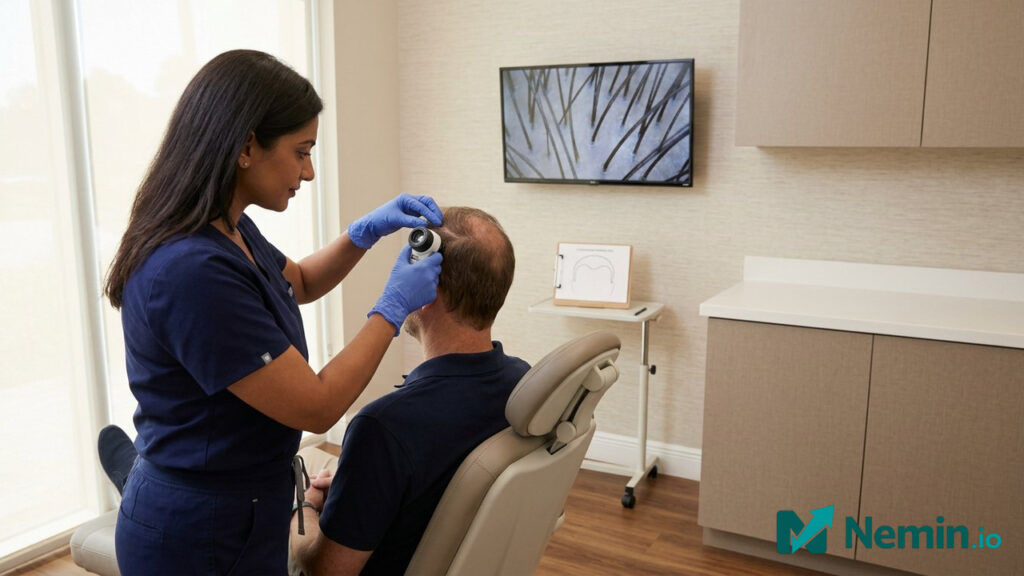
Hair transplantation can create a lasting cosmetic improvement for appropriately selected patients, but the quality of the result depends on far more than the number of grafts moved during surgery. Anyone considering a hair transplant in Palm Beach should understand the cause of their hair loss, donor-area limitations, hairline design, surgical technique, surgeon credentials, long-term progression of non-transplanted hair, recovery, and the realistic density that transplantation can provide. A successful procedure should look appropriate not only several months after surgery but years later as the patient’s natural hair continues to change.
The basic principle of hair transplantation is redistribution rather than creation. Follicular units are taken from areas of the scalp selected for their greater resistance to androgenetic hair loss and relocated into thinning or bald areas. The surgeon therefore works with a limited biological resource: the patient’s available donor hair.
This makes long-term planning particularly important. A 28-year-old with early recession may eventually lose considerably more native hair, while a poorly designed low hairline can consume grafts that might later be needed elsewhere. A conservative plan can sometimes provide a more natural and sustainable result than pursuing maximum density immediately.
Palm Beach County offers access to cosmetic and medical services, but location alone does not determine surgical quality. Prospective patients should evaluate who actually performs the procedure, which tasks are delegated, how candidacy is assessed, what technique is recommended and why, and whether the clinic can show consistent results in people with similar hair characteristics.
This guide explains 11 critical facts patients should know before proceeding with hair restoration surgery, including FUE, FUT, graft planning, cost, recovery, medications, risks, and how to compare clinics responsibly.
Medical information notice: This article provides general educational information and is not individualized medical advice. Hair loss can have multiple causes, and surgery is not appropriate for every condition. Seek an evaluation from an appropriately qualified healthcare professional before choosing treatment.
What Is a Hair Transplant in Palm Beach?
A hair transplant in Palm Beach is a surgical hair-restoration procedure performed in Palm Beach County or the surrounding South Florida market. The treatment generally involves harvesting viable follicular units from a donor area and transplanting them to selected recipient areas affected by hair loss.
Modern hair transplantation is primarily associated with follicular unit transplantation approaches. The two commonly discussed harvesting techniques are follicular unit excision, usually called FUE, and strip-based follicular unit transplantation, commonly called FUT.
Both approaches can potentially produce natural-looking results when used appropriately. The important differences involve how follicular units are harvested, the resulting donor scars, donor management, recovery, graft requirements, and the patient’s individual circumstances.
Why Diagnosis Comes Before a Hair Transplant in Palm Beach
Not every type of hair loss is appropriately treated with transplantation. Androgenetic alopecia, commonly called male-pattern or female-pattern hair loss, is a frequent reason for hair transplantation, but other conditions can require entirely different management.
Alopecia areata, active scarring alopecia, telogen effluvium, traction alopecia, nutritional deficiencies, thyroid disorders, medication-related shedding, and inflammatory scalp conditions can all produce thinning or loss. Implanting grafts without correctly identifying the underlying condition can provide poor results or delay needed treatment.
A responsible hair transplant in Palm Beach consultation should therefore begin with medical history and scalp assessment rather than immediately discussing the largest graft package available.
1. Hair Transplant in Palm Beach Results Depend on Correct Candidacy
Candidacy is more complicated than having visible hair loss. The surgeon needs to determine whether transplantation can produce a useful cosmetic result without exhausting or damaging the donor area.
Important factors can include diagnosis, age, pattern of hair loss, donor density, hair shaft diameter, scalp characteristics, hair-to-skin color contrast, previous surgery, medical history, expectations, and the likelihood of future progression.
Someone with relatively limited donor supply and extensive baldness may not be able to achieve dense coverage over every desired area. The conversation should focus on how available grafts can be distributed for the greatest long-term visual benefit.
Donor Hair Is Finite
The donor area is not an unlimited bank of follicles. Once follicles are surgically moved, they do not regenerate in the original extraction site as an entirely new supply of replacement follicles.
This is why aggressive harvesting can create visible thinning or irregularity in the donor region. A good hair transplant in Palm Beach plan considers donor appearance after harvesting, not just recipient coverage.
The surgeon should also think ahead. A patient who may need another procedure years later benefits from preserving appropriate donor resources rather than using everything during the first operation.
Hair Characteristics Affect Visual Density
Two patients receiving the same graft count can achieve noticeably different cosmetic coverage. Coarser hair can create greater apparent density than very fine hair, while curl and wave can influence coverage.
The contrast between hair and scalp also matters. Dark straight hair against a light scalp can reveal spacing differently from hair with lower color contrast.
This is why graft-count advertising without clinical context has limited value.
2. Hair Transplant in Palm Beach FUE and FUT Are Different Techniques
FUE and FUT are both methods of obtaining follicular units from the donor region. Neither technique automatically produces better results for every patient.
FUE removes individual follicular units using small punch-based extraction methods. FUT removes a strip of donor scalp, after which follicular units are carefully dissected and the donor incision is surgically closed.
The recipient portion of the procedure still requires thoughtful design, site creation, graft handling, and placement regardless of harvesting method.
FUE Hair Transplant in Palm Beach
FUE does not create one continuous linear donor scar, which can make it appealing to patients who prefer shorter hairstyles. It does, however, create numerous small extraction sites across the donor region.
Those sites can leave small scars. Claims that FUE is completely “scarless” are therefore inaccurate.
Overharvesting is another concern. Removing too many follicles or extracting them in an irregular pattern can leave the donor area looking moth-eaten or visibly thin.
FUT Hair Transplant in Palm Beach
FUT produces a linear donor scar where the strip was removed. The final scar’s appearance depends on surgical technique, healing biology, tension, hairstyle, and other factors.
For suitable patients, FUT can provide efficient graft harvesting while preserving areas of the broader donor zone for future use. Some patients with substantial graft requirements may therefore reasonably consider it.
A surgeon offering both methods can explain the trade-offs more neutrally than a clinic built entirely around marketing one technique as universally superior.
3. Hair Transplant in Palm Beach Hairline Design Requires Long-Term Thinking
Hairline design is one of the most visible artistic components of transplantation. A technically surviving transplant can still look unnatural if the hairline’s shape, height, density, angles, or irregularities do not suit the individual.
The goal should not necessarily be recreating the exact hairline someone had at 17. A mature design can often remain more believable as the patient ages and can preserve grafts for future loss.
Natural hairlines are also not perfectly straight rows. They contain irregularity and changing density, and the direction of emerging hairs influences the final appearance.
Hair Direction Matters
Follicles need to be placed at angles and orientations that make sense for the region being reconstructed. Hair at the frontal hairline behaves differently from hair in the crown.
Crown restoration is particularly complex because natural growth can form whorl patterns. Ignoring these patterns can make a result visually artificial even when graft survival is good.
Ask the surgeon to explain the design before surgery rather than waiting until the hairline is marked on the morning of the procedure.
Avoid Overly Aggressive Hairlines
An unusually low or dense frontal design can consume a large number of grafts. If native hair later recedes behind the transplant, additional procedures may become necessary to prevent isolated transplanted hair from looking unnatural.
A responsible hair transplant in Palm Beach clinic should discuss what happens if hair loss continues. Long-term planning is as important as the first postoperative photograph.
4. Hair Transplant in Palm Beach Graft Numbers Should Be Individualized
Clinics frequently discuss surgery using graft counts, but patients should understand what a graft actually represents. A follicular unit can contain one, two, three, or sometimes more hairs, so graft number and hair number are not identical.
Single-hair grafts can be particularly useful around portions of the hairline, while multi-hair follicular units can contribute density behind it. Distribution is therefore at least as important as the headline total.
A patient should be skeptical of a graft recommendation made from one photograph without a proper donor assessment. The number should follow from recipient area, donor capacity, hair characteristics, design, and future planning.
More Grafts Are Not Automatically Better
Increasing graft count can increase coverage only when the donor can safely support harvesting and the recipient area can be appropriately treated.
Excessive implantation density can create problems involving blood supply or graft survival, while aggressive donor harvesting can create permanent visible thinning.
The correct objective is an appropriate number of well-managed grafts, not winning a numerical competition between clinics.
5. Hair Transplant in Palm Beach Surgeon Selection Matters More Than Marketing
Hair transplantation combines medicine, surgery, technical execution, and aesthetic planning. Choosing the people performing the procedure is therefore more important than choosing the clinic with the strongest advertising campaign.
Patients should establish who is medically responsible and which parts of the procedure that person performs personally. Different jurisdictions and practices can allow different delegation, but patients deserve transparent answers.
Ask specifically who designs the hairline, administers anesthesia, performs donor harvesting, creates recipient sites, handles grafts, places grafts, and manages complications.
Verify Florida Medical Credentials
Patients considering a hair transplant in Palm Beach should independently verify physician licensure and disciplinary information through the appropriate Florida regulatory resources rather than relying solely on website biographies.
Board certification can also be relevant, but consumers should understand exactly which board granted it and whether it reflects a recognized medical specialty. Marketing phrases such as “board-certified hair transplant specialist” deserve verification.
Professional organizations focused on hair restoration can provide educational information and directories, but membership alone should not substitute for examining actual surgical training, results, and medical credentials.
Look at Comparable Results
Ask to see cases involving patients with similar hair loss, donor characteristics, hair texture, age, and goals.
Before-and-after photography should be reasonably consistent in lighting, angle, hairstyle, hair length, and wet/dry state. Dramatically different lighting can create the illusion of much greater density.
Video and close-up images can sometimes reveal details that carefully selected photographs conceal.
6. Hair Transplant in Palm Beach Cost Depends on More Than Grafts
Pricing can be structured per graft, per session, or as a procedure package. The cheapest advertised per-graft number does not necessarily represent the final amount a patient will pay.
Costs can reflect surgeon involvement, staffing, procedure length, FUE or FUT technique, graft count, facility, medications, follow-up, location, and additional services. Corrective procedures can also be substantially more complex than first-time transplantation.
For current 2026 pricing, obtain personalized written estimates from reputable Palm Beach-area practices. Static online averages can become outdated and often fail to distinguish between very different procedures.
What a Written Hair Transplant in Palm Beach Quote Should Clarify
A useful quote should identify the planned procedure, estimated graft range, what is included, payment schedule, postoperative visits, and how unexpected changes are handled.
Patients should also ask whether medications, postoperative products, platelet-rich plasma, sedation, or other adjuncts cost extra. Additional procedures should have a clear clinical rationale rather than being automatically bundled.
Financing can make a large procedure appear inexpensive through a monthly payment. Review APR, fees, repayment term, deferred-interest conditions, and total repayment before signing.
7. Hair Transplant in Palm Beach Recovery Happens in Stages
A hair transplant is surgery, even when patients go home the same day. The scalp needs time to heal, and the cosmetic appearance changes substantially before final growth becomes assessable.
Temporary swelling, redness, crusting, tenderness, altered sensation, and visible short transplanted hairs can occur during early recovery. Individual experiences vary, and the clinic should provide written aftercare instructions.
Patients should follow those instructions rather than mixing advice from several internet forums. Different surgical techniques and patient circumstances can justify different postoperative protocols.
Transplanted Hairs Can Shed Initially
Many transplanted hair shafts shed during the weeks following surgery. This can alarm patients who interpret the shedding as transplant failure.
The follicles can remain in place while the visible shafts shed and later enter new growth cycles. New visible growth develops gradually rather than appearing immediately after surgery.
Final cosmetic maturation takes months, and crown results can evolve differently from frontal areas. A clinic promising an instant final result is not describing normal hair biology.
Return to Work Depends on the Job
Someone working remotely may return to routine earlier than a person performing dusty, physically demanding outdoor work. Appearance-related concerns can also influence how long a patient prefers to remain away from public-facing work.
Exercise restrictions depend on the surgeon’s protocol and the stage of healing. Ask for specific guidance regarding walking, gym training, running, swimming, hats, helmets, and sun exposure.
Do not assume feeling physically well means every postoperative restriction is no longer necessary.
8. Hair Transplant in Palm Beach Aftercare Can Influence Healing
The early postoperative period requires protecting both donor and recipient areas according to the surgical team’s instructions. Rubbing, scratching, aggressive washing, or subjecting the scalp to inappropriate pressure can interfere with healing.
Clinics commonly provide specific washing instructions, sleeping guidance, and information about medications. Follow the exact plan provided for your surgery.
If instructions seem unclear, contact the clinic rather than experimenting with online remedies, oils, supplements, or scalp treatments.
South Florida Sun Exposure Matters
Palm Beach’s climate makes ultraviolet exposure particularly relevant. Recently treated scalp skin may be more vulnerable, and the surgeon may advise avoiding direct sun or using approved protection during recovery.
Do not immediately place a tight hat over the recipient region unless the surgical team says it is appropriate. Timing, hat design, and contact with grafts matter.
Later, sun protection remains generally sensible for scalp health, particularly in thinning areas with limited natural coverage.
Swimming and Ocean Water
South Florida makes pools and beaches easy to access, but patients should not assume swimming is safe immediately after surgery. Chlorinated pool water, seawater, microorganisms, sun exposure, and physical contact can all be relevant during healing.
Follow the surgeon’s timeline for returning to swimming. The correct interval depends on wound healing and procedure-specific guidance.
9. Hair Transplant in Palm Beach Does Not Stop Future Hair Loss
Transplantation redistributes selected follicles. It does not automatically stop androgenetic alopecia from continuing in existing non-transplanted hair.
This is one of the most important facts for younger patients. A strong result can become less balanced years later if surrounding native hair progressively miniaturizes.
A long-term management plan may therefore include established medical treatments where suitable. Treatment decisions require individualized discussion because benefits, contraindications, adverse effects, and reproductive considerations can vary.
Medical Therapy and Hair Transplant in Palm Beach
Topical minoxidil is an established treatment for certain forms of pattern hair loss. Other therapies, including prescription medications, can be considered for appropriate patients under medical supervision.
Finasteride is commonly associated with male-pattern hair loss management but has potential adverse effects and specific considerations that should be discussed with a clinician. Oral minoxidil is also used in some clinical settings and requires medical assessment because systemic effects are possible.
Do not begin, stop, or change prescription medication solely to prepare for a transplant without appropriate medical guidance.
10. Hair Transplant in Palm Beach Risks Should Be Discussed Before Surgery
No surgical procedure is risk-free. Hair transplantation is generally performed electively, which makes informed consideration of potential complications particularly important.
Possible risks can include bleeding, infection, swelling, scarring, numbness or altered sensation, folliculitis, poor graft growth, unnatural appearance, donor thinning, visible scarring, and the need for corrective procedures. Individual risk varies.
Temporary shedding of existing hair around treated areas can also occur in some situations. The surgeon should explain likely temporary effects separately from complications requiring attention.
Corrective Hair Transplant Surgery Can Be Difficult
Poorly placed grafts, unnatural hairlines, depleted donor areas, plug-like appearance from older procedures, or visible scarring can require corrective planning.
A second surgeon cannot necessarily restore every lost donor follicle. Repair may involve graft removal, redistribution, camouflage, scar treatment, or additional surgery depending on the problem.
Choosing conservatively the first time is significantly easier than correcting avoidable damage later.
11. Hair Transplant in Palm Beach Results Should Be Judged Realistically
Hair transplantation can create impressive cosmetic improvement, but it cannot reproduce the density of a full adolescent scalp over an unlimited area when donor hair is finite.
The strongest results use available grafts strategically. Frontal framing can often produce substantial cosmetic benefit because the hairline strongly influences how the face is perceived.
Crown restoration may consume many grafts because the area can be large and the whorl pattern distributes hair in several directions. Priorities therefore need to be discussed.
Density Is an Optical Result as Well as a Numerical One
Apparent density depends on hair shaft thickness, curl, color contrast, styling, length, light, scalp visibility, and graft distribution.
This is why photographs taken under favorable lighting can be misleading. Ask to see results in more than one lighting environment where possible.
The objective is a natural appearance during ordinary life, not only under perfect clinic photography.
Hair Transplant in Palm Beach: FUE vs. FUT Comparison
Both methods can be appropriate, and the choice should emerge from patient characteristics rather than a clinic slogan.
| Consideration | FUE | FUT |
|---|---|---|
| Harvest method | Individual follicular-unit extraction | Strip removal followed by follicular-unit dissection |
| Donor scarring | Many small extraction scars | Linear surgical scar |
| Short hairstyles | Can make donor scarring less conspicuous in suitable cases | Very short hair may reveal linear scar |
| Graft harvesting | Can cover broad donor areas | Concentrated within strip area |
| Recovery | Different donor-healing profile | Incision requires healing |
| Future planning | Requires careful avoidance of overharvesting | Can preserve broader donor zones depending on planning |
| Best choice | Patient-specific | Patient-specific |
The table simplifies a complex surgical decision. Surgeon expertise, donor anatomy, previous surgery, scarring tendencies, graft goals, and hairstyle preferences all influence selection.
What About “DHI” Hair Transplant in Palm Beach?
DHI is widely used as a marketing term around implantation using implanter devices. It should not automatically be understood as a completely separate biological form of hair transplantation from FUE or FUT harvesting.
A clinic can extract follicles using FUE and implant them with an implanter device. The important questions remain who performs the work, how recipient sites are planned, how grafts are handled, and whether the technique suits the patient’s needs.
Do not select a clinic because one acronym sounds more advanced. Ask what practically changes in the operation and what evidence supports the recommendation.
Technology should support surgical planning rather than replace it.
Robotic Hair Transplant in Palm Beach
Robotic or automated systems can assist with particular stages of some transplantation workflows. Their availability and capabilities depend on the technology being used.
Automation does not eliminate the importance of diagnosis, donor planning, hairline design, recipient-site strategy, graft management, and medical oversight.
A machine does not independently decide what a person’s hairline should look like at age 55. Those are clinical and aesthetic decisions.
Ask exactly which parts of the procedure are automated and which are performed by the surgeon or team.
Hair Transplant in Palm Beach for Men
Male-pattern hair loss frequently affects the hairline, temples, frontal scalp, mid-scalp, and crown in recognizable patterns. The amount and speed of progression vary significantly.
Younger men need particularly careful planning because future loss can be difficult to predict precisely. A low dense hairline consuming substantial donor supply may be less appropriate when significant progression is likely.
Medical stabilization can sometimes be discussed before or alongside surgery where clinically appropriate.
The strongest plan considers what happens to the entire scalp rather than treating the current recession as an isolated shape.
Hair Transplant in Palm Beach for Women
Women can also be candidates, but female hair loss requires careful diagnosis. Diffuse thinning can affect donor regions as well as recipient areas, potentially reducing transplantation suitability.
Medical history can be important because nutritional, hormonal, thyroid, medication, postpartum, autoimmune, and other factors can contribute to hair changes depending on the individual.
Women with stable pattern hair loss and appropriate donor characteristics may be considered for surgery after professional assessment.
The decision should never be based solely on a widened part seen in a photograph.
Hair Transplant in Palm Beach for Curly and Afro-Textured Hair
Curly and tightly curled hair can provide strong visual coverage, but follicular curvature beneath the skin can make extraction technically demanding.
Surgeon experience with the patient’s actual hair type matters. Reviewing comparable cases is therefore particularly important.
A clinic producing excellent straight-hair results does not automatically have equivalent experience with tightly curled follicles.
Ask directly how frequently the surgeon performs procedures on similar hair characteristics and request representative results.
Hair Transplant in Palm Beach for the Crown
Crown work deserves careful planning because the area can consume substantial graft numbers. The natural whorl also requires accurate direction.
Patients with simultaneous frontal and crown loss may need to prioritize where limited donor resources will create the greatest cosmetic value.
For many people, frontal restoration provides more visual framing than adding the same number of grafts to a large crown.
That does not mean the crown should never be treated. It means the donor budget should be considered strategically.
Hair Transplant in Palm Beach for a Receding Hairline
Hairline recession is one of the most common reasons people investigate transplantation. Early assessment should determine whether the recession represents stable mature change or progressive androgenetic alopecia.
The surgeon should design a hairline compatible with facial structure, donor availability, age, and anticipated progression.
Single-hair follicular units are frequently important around the frontal edge because thick multi-hair grafts placed too aggressively at the front can look unnatural.
Fine details distinguish a surgical hairline from a convincing natural one.
Hair Transplant in Palm Beach for Previous Transplant Repair
Repair cases are more complicated because the surgeon is working with previous surgical decisions. Donor reserves may already be reduced, and scar tissue or incorrectly angled grafts can limit options.
A repair consultation should document what was previously done and estimate remaining donor capacity.
Possible strategies can include adding density, softening an unnatural hairline, redistributing grafts, removing selected grafts, or addressing scars.
Expectations should be particularly conservative when previous surgery has significantly depleted donor resources.
Hair Transplant in Palm Beach vs. PRP
Platelet-rich plasma and hair transplantation are fundamentally different interventions. PRP uses an autologous blood-derived preparation injected into the scalp, while transplantation physically relocates follicles.
PRP has been studied for conditions such as androgenetic alopecia and may improve certain hair measures in selected patients, but it cannot physically redistribute follicles into a longstanding bald area the way surgery can.
Some clinics combine the treatments. Patients should ask what evidence supports the proposed combination and whether the additional procedure materially changes the plan.
Do not assume that every transplant needs PRP simply because the clinic offers it.
Hair Transplant in Palm Beach vs. Scalp Micropigmentation
Scalp micropigmentation creates the visual impression of greater density or a closely shaved hair pattern by depositing pigment in the scalp.
It does not grow hair. This makes it fundamentally different from transplantation.
Micropigmentation can sometimes complement transplantation by reducing visible scalp contrast or camouflage certain scars.
Technique, pigment stability, practitioner skill, and long-term color changes deserve careful consideration.
Hair Transplant in Palm Beach vs. Hair Systems
Hair systems can provide immediate cosmetic density without surgery and can work even when donor hair is inadequate for transplantation.
They require ongoing maintenance, attachment, replacement, and styling considerations.
Hair transplantation uses the patient’s own follicles but requires surgery and months of growth.
Neither option is universally superior. Personal preference, budget, donor availability, lifestyle, and desired density determine the better fit.
When a Hair Transplant in Palm Beach May Not Be Appropriate
Surgery can be inappropriate when the diagnosis is uncertain, hair loss is actively inflammatory, donor capacity is inadequate, expectations are unrealistic, or an underlying condition should be treated first.
Very young patients with rapidly progressing androgenetic alopecia may sometimes benefit from additional observation or medical management before committing donor follicles.
Individuals with certain medical conditions may require clearance or may not be appropriate surgical candidates.
A responsible consultation should be capable of ending with “not yet” or “not recommended.”
Hair Transplant in Palm Beach Consultation Checklist
A useful consultation should address the whole long-term problem rather than just the next operation.
Questions worth asking include:
- What type of hair loss do I have?
- Is it stable enough for transplantation?
- What is my estimated donor capacity?
- Which technique do you recommend and why?
- Who performs each surgical step?
- How many grafts are proposed?
- Why is this hairline appropriate long term?
- What if my native hair continues thinning?
- What scars should I expect?
- What are the main risks?
- What happens if growth is poor?
- Are medications recommended?
- How are complications managed?
- What is included in the quoted price?
- How long will you personally follow my progress?
Do not be pressured to pay a large non-refundable deposit before receiving answers to important clinical questions.
Hair Transplant in Palm Beach Red Flags
Be cautious when a clinic guarantees 100% graft survival or a specific final density before examining the patient properly. Biology does not support perfect guarantees.
Be cautious if the surgeon is barely involved in the consultation or if staff avoid explaining who performs harvesting and recipient-site creation.
Other warning signs include extremely aggressive hairlines, unlimited-graft claims, high-pressure discounts expiring the same day, unclear medical credentials, and before-and-after images with dramatically different lighting.
A luxury clinic interior is not evidence of surgical quality.
How Much Does a Hair Transplant in Palm Beach Cost in 2026?
The exact amount depends on the clinic, surgeon, technique, graft requirement, complexity, and included services. Current local consultations provide more useful pricing than a generalized national average.
Patients should budget beyond the surgical invoice. Travel, medications, time away from work, follow-up, and future treatment can create additional costs.
A cheaper procedure that later needs corrective surgery may ultimately cost considerably more than careful initial treatment.
Price is important, but it should be evaluated alongside surgeon quality and long-term planning.
Can Insurance Cover a Hair Transplant in Palm Beach?
Cosmetic hair transplantation for pattern hair loss is generally treated differently from medically necessary reconstructive procedures. Conventional health insurance often does not cover elective cosmetic restoration.
However, unusual circumstances involving trauma, burns, reconstructive needs, or medical conditions can involve different coverage considerations.
Patients should contact their insurer directly for current policy information rather than relying on a clinic’s assumption.
Financing is not insurance and should be evaluated as borrowing.
Hair Transplant in Palm Beach Timeline
The transplant process extends well beyond surgery day. A simplified progression can include consultation and planning, surgery, early wound healing, temporary shedding, gradual early regrowth, increasing density, and later maturation.
There is substantial individual variation, so exact month-by-month promises should be avoided.
Patients should expect improvement to be gradual enough that day-to-day change can be difficult to notice. Standardized photographs are more useful than repeatedly checking the mirror.
The final result should be evaluated at the time recommended by the surgeon for the specific treatment area.
Hair Transplant in Palm Beach Before-and-After Photos
Photographs can be valuable when captured honestly. Comparable lighting, angle, hair length, styling, and camera settings improve credibility.
Wet hair should not be used in one image and carefully blow-dried hair in another unless that difference is clearly explained.
Also check whether the patient used medication, fibres, scalp micropigmentation, or additional surgery between photographs.
A result should be attributed accurately rather than automatically credited to one procedure.
Hair Transplant in Palm Beach and Florida Climate
South Florida’s warmth, humidity, sunlight, and outdoor lifestyle can influence postoperative planning. Sweating, beach exposure, pools, and direct sun may need temporary restrictions.
Patients travelling into Palm Beach for surgery should also plan a calm recovery period rather than treating the procedure as part of a normal beach vacation.
Follow specific clinical advice regarding hats, exercise, swimming, sun, and scalp washing.
Protecting the healing scalp is more important than maintaining a vacation itinerary.
Traveling for a Hair Transplant in Palm Beach
Medical tourism also occurs domestically. Patients may travel to Palm Beach County from elsewhere in Florida or from another state for treatment.
Clarify how postoperative problems will be managed once you return home. Ask whether follow-up can occur virtually and what symptoms would require an in-person examination.
Do not book an inflexible return journey immediately after the procedure without discussing the plan with the clinic.
Keep all medications and postoperative instructions accessible while travelling.
Hair Transplant in Palm Beach and Maintenance Treatment
Surgery addresses the hair transplanted during the operation. Maintaining surrounding native hair can remain an ongoing objective.
A physician may discuss medical therapy based on diagnosis, age, sex, health, reproductive considerations, and treatment preferences.
Long-term photographs can help determine whether the surrounding hair remains stable.
A good transplant should be considered within a broader hair-loss management strategy rather than as an isolated one-day event.
Real-Time Hair Transplant in Palm Beach Information for 2026
Medical credentials, clinic ownership, pricing, technologies, staff, and available procedures can change. Patients should verify important information immediately before scheduling.
Current sources to check can include:
- Florida physician licensing records
- Current clinic physician information
- Procedure and staffing details
- Written price quotation
- Current consent documents
- Current FUE/FUT options
- Facility accreditation where relevant
- Professional board certification claims
- Written workmanship or follow-up policies
- Medication instructions
- Financing terms
- Recent comparable before-and-after cases
For medical evidence, use peer-reviewed dermatology and hair-restoration literature alongside qualified professional advice. Marketing claims should not substitute for clinical evidence.
FAQ’s
1. How much does a hair transplant in Palm Beach cost?
A hair transplant in Palm Beach can vary considerably according to surgeon, graft requirement, FUE or FUT technique, procedure complexity, and included services. Obtain a current personalized written estimate.
2. Is a hair transplant in Palm Beach permanent?
Transplanted follicles selected from appropriate donor regions can provide long-lasting growth, but surrounding non-transplanted hair can continue thinning. Long-term planning and medical management may therefore remain important.
3. Is FUE the best hair transplant in Palm Beach technique?
FUE can be excellent for suitable patients, but it is not universally better than FUT. Donor characteristics, hairstyle, graft requirements, previous surgery, scarring, and future planning should guide the choice.
4. How long does recovery from a hair transplant in Palm Beach take?
Early scalp healing occurs over the initial postoperative period, while cosmetic growth develops over many months. Work, exercise, washing, swimming, and sun restrictions depend on the surgeon’s protocol.
5. How do I choose a surgeon for a hair transplant in Palm Beach?
Verify the physician’s Florida license, relevant training, role during surgery, experience with your hair type, comparable results, donor planning, complication management, and willingness to discuss alternatives and long-term hair loss.
6. Can a hair transplant in Palm Beach restore full original density?
A hair transplant in Palm Beach redistributes a finite supply of donor follicles and normally cannot recreate unlimited natural density across extensive baldness. Skilled planning aims to maximize natural-looking visual coverage.
Conclusion
A hair transplant in Palm Beach can provide a substantial and long-lasting cosmetic improvement for a properly selected patient, but the quality of the result begins with diagnosis and planning rather than the surgical technique advertised most aggressively. FUE and FUT are both established harvesting approaches with different trade-offs, while donor capacity, hair characteristics, hairline design, graft distribution, surgeon skill, and anticipated future hair loss determine what can realistically be achieved. The best hair transplant in Palm Beach should preserve donor resources while creating a result capable of aging naturally as the patient’s appearance and native hair continue to change.
Patients should independently verify medical credentials, establish who performs each stage of surgery, review comparable results, understand the proposed graft count, and obtain transparent information about risks, recovery, costs, and long-term maintenance before paying a deposit. South Florida’s climate also makes postoperative sun, exercise, pool, and beach restrictions particularly relevant during early healing. Most importantly, a hair transplant in Palm Beach should never be treated as a method of manufacturing unlimited hair or permanently stopping androgenetic alopecia.