
Few manicure decisions look simpler than choosing a nail shape until you actually have to make one. The Nail Debate between oval and almond nails continues because...
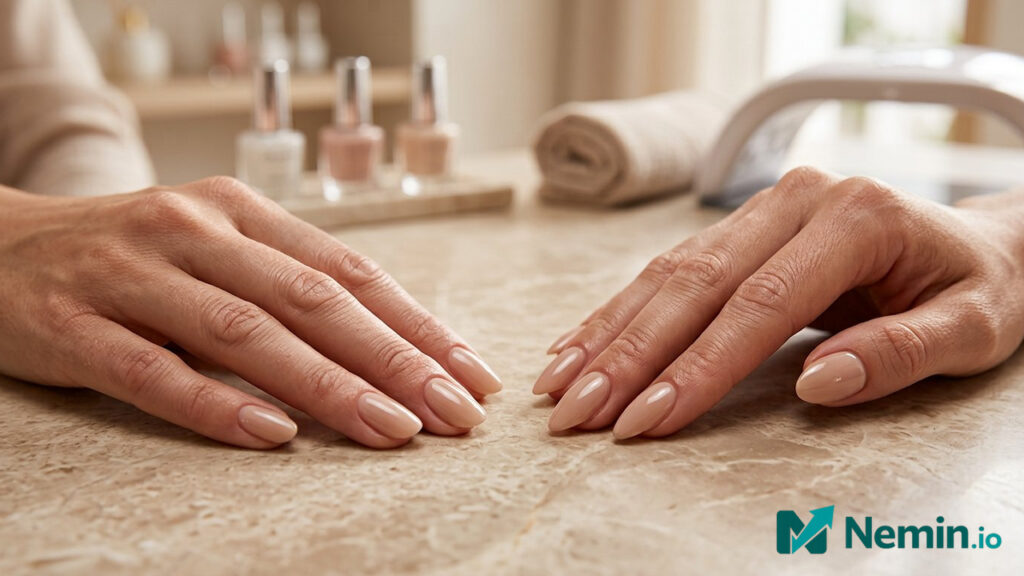
Few manicure decisions look simpler than choosing a nail shape until you actually have to make one. The Nail Debate between oval and almond nails continues because the two silhouettes share an elegant, rounded appearance while creating noticeably different results on the hand. Oval nails follow a smooth curved outline with rounded sides and a softly finished tip, while almond nails taper more deliberately toward a narrower rounded point. Neither shape is universally more flattering or more fashionable. The better choice depends on natural nail width, available length, lifestyle, desired visual effect and how much maintenance you are prepared to give your manicure.
At first glance, the distinction can be surprisingly subtle. A short almond manicure may look almost oval, while an elongated oval can begin to resemble a softly tapered almond. The clearest difference lies in the sidewalls and tip. Oval nails retain more width through the upper portion of the nail, whereas almond nails narrow progressively toward the free edge.
That difference affects far more than appearance. The amount of taper influences how much natural nail length is needed, how easily the shape can be maintained and whether extensions might be preferable. Everyday activities can also make one silhouette more practical than another.
This guide settles The Nail Debate by comparing oval and almond nails across shape, length, styling, durability and maintenance, while explaining how to choose a manicure that suits your actual hands rather than simply following a photograph.
What Is The Nail Debate Between Oval and Almond Nails?
The Nail Debate focuses on two of the most popular rounded manicure silhouettes. Both avoid the sharp corners associated with square nails, and both can visually create a softer, elongated appearance. However, their structure is different enough that the finished manicure can communicate a distinctly different style.
Oval is a rounded shape with gently curved sides and a smooth semicircular tip. Almond narrows more noticeably along both sides before ending in a soft point rather than a sharp stiletto tip.
A useful way to distinguish them is to look at the nail from directly above. If the sides maintain more width and transition gradually into a rounded end, the shape is likely oval. If the sides visibly converge toward a narrower centre point, it is closer to almond.
The Nail Debate at a Glance
| Feature | Oval Nails | Almond Nails |
|---|---|---|
| Overall shape | Rounded and softly elongated | Tapered with a rounded point |
| Side profile | Gentle curvature | More pronounced taper |
| Tip | Broadly rounded | Narrow and softly pointed |
| Length needed | Works at moderate lengths | Usually benefits from greater length |
| Visual effect | Soft and balanced | Elongated and refined |
| Natural nail suitability | Often easier at shorter lengths | Depends more on available free edge |
| Extensions | Optional | Often useful when natural length is limited |
| Maintenance | Relatively straightforward | Taper needs careful upkeep |
| Style impression | Classic and versatile | Sleek and more dramatic |
These descriptions are general because nail technicians can customise the degree of taper and length to suit each client.
7 Key Differences in The Nail Debate
The easiest way to decide between oval and almond nails is to stop treating shape as purely aesthetic. A manicure needs to work with the physical nail plate, desired length and everyday routine.
Seven differences are particularly useful: sidewall taper, tip shape, length requirements, visual elongation, structural considerations, maintenance and overall styling character.
1. The Nail Debate Begins With Taper
Taper is the most important distinction.
Oval nails curve inward gradually but retain more width as they approach the tip. Almond nails begin narrowing more noticeably along the upper sidewalls and continue toward a defined central point.
This stronger taper is what gives almond nails their recognisable silhouette.
If a technician removes too little from the sides, an intended almond may look oval. If too much is removed from a natural nail, unnecessary weakening can occur, which is why shaping technique matters.
2. Oval Nails Have a Rounder Tip
The oval tip resembles a smooth continuous curve. It does not attempt to create an obvious point.
Almond nails end in a narrow, rounded peak. The point should normally look soft rather than needle-like, otherwise the manicure begins moving toward a stiletto silhouette.
The Nail Debate is often easiest to resolve by deciding whether you prefer a clearly rounded end or a tapered centre.
3. Almond Usually Requires More Length
A convincing almond shape needs enough nail beyond the fingertip to create the taper.
Very short nails offer limited room to narrow both sides before reaching the centre. Attempting a pronounced almond shape on insufficient natural length can require removing too much sidewall.
Oval is generally more adaptable when the available free edge is modest.
4. Almond Creates Stronger Visual Elongation
Both shapes can make fingers appear visually longer because neither creates the broad horizontal line associated with a straight square tip.
Almond usually produces a stronger elongating effect because its sides converge toward the centre.
This is an optical impression rather than a physical change to the fingers, but it can strongly influence how the final manicure looks.
5. Oval Can Be More Forgiving for Natural Nails
Because oval shaping usually requires less aggressive side taper, it can be practical for clients maintaining their natural nails at moderate lengths.
That does not mean oval nails cannot break. Nail strength depends on natural nail condition, length, exposure to water or chemicals, habits and how the manicure is maintained.
The Nail Debate should therefore avoid blanket claims that one shape is impossible to break.
6. Almond Requires More Precise Maintenance
As almond nails grow, the narrow centre point can shift visually if the sides are not maintained evenly.
Filing must preserve symmetry. Uneven taper becomes more noticeable than it often does on a softer oval shape.
Professional reshaping can be worthwhile when wearing enhancements or when you are unsure how much sidewall can safely be filed.
7. The Two Shapes Create Different Style Personalities
Oval nails tend to feel classic, soft and adaptable. They work comfortably with understated polish, traditional red, French designs and detailed nail art.
Almond nails can feel more sculpted and fashion-forward while remaining considerably softer than stiletto nails.
Neither style is restricted to a particular age, season or aesthetic.
Oval Nails Explained in The Nail Debate
Oval nails have a long history in manicure styling because their shape follows a natural curved visual language.
The sidewalls gently narrow before meeting a rounded tip, creating a silhouette that feels polished without becoming particularly sharp or angular.
Oval can work on natural nails and enhancements, depending on the desired length.
Who May Prefer Oval Nails?
Oval can be a strong choice for someone who likes rounded manicures but does not want a pronounced point.
It is also worth considering when natural nails are not currently long enough to form a convincing almond silhouette.
Clients who type frequently or prefer moderate nail length may find oval easier to integrate into everyday routines, although comfort is highly individual.
Advantages of Oval Nails
Oval’s strongest advantage is versatility. It can look elegant at moderate lengths and works with an enormous range of colours and designs.
The softer taper can also make reshaping more straightforward for natural nails. Rounded tips have no sharp corners, although the free edge still requires normal care.
For The Nail Debate, oval is often the practical middle ground between round nails and more dramatically tapered almond nails.
Almond Nails Explained in The Nail Debate
Almond nails take their name from the elongated outline of an almond.
The shape narrows toward the centre but stops at a rounded point. Proper symmetry is essential because even small differences between the two sides can become visually apparent.
Almond is particularly popular at medium and longer lengths, including manicures created with gel or other enhancement systems.
Who May Prefer Almond Nails?
Almond suits clients who want stronger visual elongation and a more defined silhouette.
It can be especially attractive for nail art because the tapered shape guides the eye from the cuticle toward the centre of the tip.
Clients with limited natural nail length can discuss appropriate enhancement options with a qualified nail professional rather than excessively filing the sides of short natural nails.
Advantages of Almond Nails
The primary aesthetic advantage is elegance through taper.
Almond can make the entire manicure appear longer and more streamlined without the very sharp tip of stiletto nails.
It also works particularly well with gradient designs, French tips, chrome finishes, fine-line art and understated single colours.
The Nail Debate for Different Finger Shapes
There is no scientific rule assigning one nail shape to a particular hand.
Beauty advice often claims specific shapes “correct” broad or short fingers, but this language can make personal features sound like problems requiring correction. A better approach is to think about the visual effect you personally prefer.
Both oval and almond can create an elongated appearance, with almond generally creating the stronger taper.
Shorter-Looking Fingers
If the goal is to create an illusion of additional length, either shape can work.
Almond offers a more dramatic visual narrowing toward the tip, while oval provides a softer version of the same general effect.
Nail length and polish design also influence the result.
Long Fingers
Long fingers can wear either silhouette successfully.
Oval can emphasise softness, while almond can extend the long vertical line even further.
The best choice remains aesthetic preference rather than a mandatory beauty rule.
Wider Nail Plates
People with wider nail plates may enjoy how tapered shapes visually narrow toward the tip.
However, natural nail structure should not be compromised purely to force a fashionable silhouette.
A technician can customise an oval or soft almond shape according to the width and available length of the nail.
The Nail Debate for Short Natural Nails
Short nails introduce a practical limitation into The Nail Debate.
Oval can usually be formed with less free edge because the shape does not require a long taper. Almond generally needs additional length to create its characteristic narrowing without over-filing.
A very short “almond” may consequently look closer to oval.
Can Short Nails Be Almond-Shaped?
A subtle tapered shape may be possible depending on the natural nail.
For a clearly defined almond silhouette, extensions or overlays may be considered where appropriate.
A professional technician can assess the nail rather than applying the same filing pattern to every client.
Oval Is Not a Compromise
Choosing oval because natural nails are short does not mean accepting an inferior style.
Short and medium oval nails can look deliberate, elegant and contemporary.
The Nail Debate is not a competition in which the most dramatic shape automatically wins.
The Nail Debate for Long Nails
Greater length provides more room for shaping.
Both oval and almond silhouettes become more defined when the free edge extends farther from the fingertip.
Length also increases leverage on the nail, meaning long natural nails can require additional care regardless of shape.
Long Oval Nails
Long oval nails create an elegant shape without an obvious point.
They can suit bold colours, detailed art and modern French manicures while maintaining a softer outline.
As length increases, check regularly for cracks or damage rather than filing around structural problems.
Long Almond Nails
Long almond nails create one of the most recognisable tapered manicure styles.
The additional length gives technicians room to build smooth side lines leading toward the centre.
If very long nails interfere with everyday activities, reducing length can be more practical than continually adapting routine tasks around the manicure.
Natural Nails Versus Extensions in The Nail Debate
Both oval and almond designs can be created on natural nails when sufficient length and suitable nail condition are present.
Enhancements can provide greater control over length and architecture but introduce their own maintenance requirements.
The choice between natural nails and enhancements is separate from the choice between oval and almond shape.
Natural Nail Considerations
Natural nails should be shaped conservatively.
Repeatedly filing deeply into the sidewalls to force a narrow almond silhouette can be counterproductive.
If the desired shape does not suit current length, allowing more growth or discussing enhancement options can be preferable.
Extension Considerations
Nail enhancements can include several systems, and terminology varies among salons.
Professional application and removal matter. Picking or forcibly peeling product from the natural nail can cause damage.
Clients with allergies, skin reactions or nail disorders should seek appropriate professional or medical advice rather than simply covering the issue with another product.
Which Shape Is Stronger in The Nail Debate?
This question does not have a universal answer.
Rounded profiles avoid the distinct corners found on square nails, but overall durability depends on nail length, architecture, natural nail condition, material and lifestyle.
A very long oval nail can be less practical than a shorter almond enhancement, while a heavily tapered natural almond can be more vulnerable than a moderate oval.
Nail Strength Factors
| Factor | Why It Matters |
|---|---|
| Nail length | Longer nails experience greater leverage |
| Natural nail condition | Thin or damaged nails behave differently |
| Sidewall integrity | Excessive filing can reduce structural support |
| Enhancement material | Different systems have different characteristics |
| Nail architecture | Correct shaping helps distribute stress |
| Daily activities | Repeated impact increases breakage risk |
| Maintenance | Growth changes balance over time |
| Removal method | Improper removal can damage natural nails |
The Nail Debate therefore cannot be settled with a simple claim that one silhouette never breaks.
Oval Versus Almond for Everyday Life
Lifestyle deserves more attention than trend photographs.
Someone who works extensively with their hands may have different priorities from a person comfortable wearing long enhancements. Typing, childcare, sports, instruments and professional requirements can all influence preferred length.
Shape matters, but length usually has an even larger effect on everyday practicality.
Typing With Oval and Almond Nails
Moderate lengths of either shape can work for many keyboard users.
Very long nails may change hand position and typing technique regardless of whether the tip is oval or almond.
If typing becomes uncomfortable, reducing nail length is a more sensible solution than forcing an awkward hand posture.
Household Tasks
Nails should not be used as tools for opening tins, scraping labels or prying objects.
Wear suitable gloves when handling cleaning products where recommended, and follow product safety instructions.
Everyday habits often influence manicure longevity more than choosing between two rounded shapes.
The Nail Debate for French Manicures
French manicures work beautifully on both oval and almond nails, but the tip design creates different visual effects.
An oval French tip follows a broader rounded edge. An almond French design can taper the white or coloured tip toward the sides, reinforcing the pointed silhouette.
Micro-French designs can provide a subtler alternative on shorter nails.
Classic Oval French
Oval French nails suit people who want a traditional, understated manicure.
The broader tip provides room for a clean curved line.
Cream, nude, pink and transparent bases can keep the design soft, while coloured tips make it more contemporary.
Almond French
Almond French nails often appear more dramatic because the design can accentuate the taper.
A deep V-shaped interpretation makes the almond effect stronger, while a thin curved edge keeps it understated.
The Nail Debate ultimately comes down to how strongly you want the shape itself to become part of the design.
The Nail Debate for Nail Art
Nail art can alter how the eye interprets nail shape.
Vertical lines and central motifs can emphasise length, while designs concentrated across the width create a different visual balance.
Both oval and almond shapes provide useful surfaces for creative manicures.
Nail Art That Works Well on Oval Nails
Oval nails suit minimalist dots, florals, traditional French styles, negative space, solid colour and fine-line designs.
The rounded outline is neutral enough that complex art does not have to compete with a strong silhouette.
This versatility makes oval particularly useful for someone who changes nail style frequently.
Nail Art That Works Well on Almond Nails
Almond nails naturally complement designs that follow their taper.
Gradients, central gems, fine lines, chrome effects and directional French tips can accentuate the shape.
Avoid assuming that every almond manicure needs elaborate art. A single sheer neutral colour can highlight the silhouette effectively.
Best Colours in The Nail Debate
There is no colour that belongs exclusively to one nail shape.
Skin tone, wardrobe, season and personal taste are more useful considerations than rules assigning particular shades to oval or almond nails.
Both shapes can handle understated and bold colours.
Colour Ideas by Desired Effect
| Desired Style | Oval Nails | Almond Nails |
|---|---|---|
| Minimal | Sheer pink or nude | Sheer neutral or milky tone |
| Classic | Red or deep burgundy | Red or wine |
| Modern | Grey, taupe or muted green | Chrome or glazed neutrals |
| Bold | Bright blue or contrasting French | Jewel tones or metallics |
| Romantic | Soft pink or floral details | Blush tones and delicate art |
| Dramatic | Dark plum or black | Deep shades with high-gloss finish |
| Summer | Coral or bright pastels | Vibrant gradients |
| Winter | Navy or burgundy | Dark metallic and rich neutrals |
These are styling suggestions rather than rules. The Best colour is the one the wearer enjoys.
The Nail Debate and Manicure Maintenance
Every manicure changes as the nail grows.
Natural nail shaping may require periodic filing, while enhancements generally require professional maintenance according to the system used and the condition of the nails.
Almond’s taper can reveal uneven growth or filing sooner because symmetry is so visually important.
Maintaining Oval Nails
Use a suitable nail file and avoid aggressive sawing that damages the edge.
Follow the natural curve while maintaining consistent length across the hand.
If the nail begins splitting or peeling substantially, address the condition rather than filing repeatedly to hide it.
Maintaining Almond Nails
Preserve the centre line.
When one side is filed more heavily than the other, the point can visibly lean. Looking at the nail directly from above can help identify asymmetry.
With enhancements, follow professional maintenance advice and avoid excessive home reshaping that could disturb the structure.
The Nail Debate and Cuticle Care
A polished manicure includes more than the free edge.
Healthy-looking surrounding skin can influence the appearance of either shape. Moisturising products can help reduce dryness, while careful manicure practices avoid unnecessary injury.
Cuticles have a protective biological role, so aggressive cutting is not required for every manicure.
Avoid Over-Manipulating Skin
Do not pull or bite hangnails.
If redness, swelling, pain, pus or other signs of infection develop around a nail, seek appropriate medical advice when necessary.
Cosmetic products should not be used to conceal a condition requiring treatment.
Oval and Almond Nails for Weddings
Both shapes are popular for bridal manicures because they create elegant, rounded silhouettes that work with understated designs.
Oval provides a classic appearance, while almond offers stronger visual elongation.
Wedding manicure choices should consider jewellery, dress style and how comfortable the wearer is with nail length.
The Nail Debate for Bridal Nail Art
Sheer neutrals, French tips, delicate shimmer and subtle designs can suit both shapes.
A trial manicure can be helpful if changing significantly from usual nail length or shape.
Comfort matters because the wedding day is not an ideal time to discover that a dramatic nail length interferes with clothing fasteners, jewellery or other routine tasks.
Professional Settings and The Nail Debate
Workplace expectations vary widely.
Some employers have specific requirements relating to nail length, polish or artificial nails, particularly in healthcare, food preparation or environments where hygiene and safety standards apply.
Check professional policies before investing in extensions.
Short Oval Nails for Conservative Environments
Short oval nails can provide a neat appearance while keeping length relatively practical.
Neutral polish can make the manicure understated where workplace norms favour a conservative style.
This is an aesthetic observation rather than a hygiene guarantee.
Soft Almond Nails for Professional Style
A shorter, softly tapered almond can also look polished without becoming highly dramatic.
Whether it is practical depends on available natural length and workplace requirements.
The Nail Debate should always be secondary to applicable health, safety and professional policies.
The Nail Debate by Maintenance Level
Not everyone wants to visit a salon frequently or spend time reshaping nails.
Oval is generally easier to maintain when working with moderate natural length, while precise almond shaping can require more attention.
Enhancements add another maintenance commitment regardless of silhouette.
Low-Maintenance Preference
Consider moderate oval nails with a simple polish or natural finish.
The rounded silhouette remains recognisable even as small amounts of growth occur.
A neutral shade can also make regrowth less visually obvious than certain highly contrasting designs.
High-Impact Preference
Medium or long almond nails provide a stronger silhouette and more room for directional nail art.
This style may justify professional shaping to maintain balance.
Choose it because you enjoy the look, not because social media presents it as mandatory.
The Nail Debate: Oval, Almond, Round or Stiletto?
Understanding neighbouring shapes helps clarify the choice.
Round nails follow the fingertip more closely and generally require less length. Oval stretches the round shape vertically. Almond adds stronger taper, while stiletto takes that taper into a much sharper point.
| Shape | Side Taper | Tip | Typical Length Needed |
|---|---|---|---|
| Round | Minimal | Rounded | Short |
| Oval | Gentle | Smooth rounded | Short to medium or longer |
| Almond | Noticeable | Soft point | Usually medium to long |
| Stiletto | Strong | Sharp point | Usually long |
| Square | Minimal | Straight | Any practical length |
| Squoval | Mild | Soft square | Short to long |
These categories overlap at the boundaries because technicians can customise shapes.
How to Explain Your Choice to a Nail Technician
Photographs are helpful, but use them as references rather than demanding an identical result.
Natural nail proportions differ between people, and an experienced technician may recommend adjusting length or taper.
Discuss the shape before significant filing begins.
Useful Questions at the Salon
You can ask:
- Is my current natural length suitable for almond?
- Would oval require less sidewall filing?
- What length suits my normal activities?
- Can the taper be kept soft rather than dramatic?
- Which enhancement system is appropriate if I need additional length?
- How should I maintain the shape at home?
- What removal process is recommended?
- When should the manicure be professionally maintained?
Good consultation turns The Nail Debate into a personalised decision rather than a generic trend choice.
DIY Shaping in The Nail Debate
Natural nails can often be shaped at home with an appropriate nail file, patience and conservative technique.
Avoid removing large amounts from the sidewalls in one attempt.
Small adjustments are easier to correct.
How to Shape Oval Nails
Begin with a manageable length and gently create a smooth curve through the free edge. Keep the sides balanced and inspect the hand from several angles.
Do not chase perfect symmetry so aggressively that the nails become much shorter than intended.
Finish according to your normal manicure routine.
How to Shape Almond Nails
Almond requires a clear centre reference.
Gently taper both sides toward that centre before softening the tip. Work gradually and compare each side frequently.
If the natural nail is too short to create the taper safely, wait for additional growth or seek professional advice about appropriate enhancements.
The Nail Debate Should Never Encourage Over-Filing
More filing does not automatically produce a better almond shape.
Removing excessive material from the sides can weaken the natural nail and leave a shape that is difficult to maintain.
Preserving healthy nail structure is more important than reproducing a photograph exactly.
How to Decide The Nail Debate for Yourself
Ignore trend rankings for a moment and consider your own routine.
Decide how long you want the nails, whether you prefer a rounded or tapered tip and how frequently you are prepared to maintain the manicure. Then assess whether your current natural nail length can create the intended shape.
The answer often becomes obvious once these practical questions are addressed.
Quick Oval Versus Almond Decision Guide
| Your Priority | Shape to Consider |
|---|---|
| Moderate natural length | Oval |
| Strong visual elongation | Almond |
| Softer rounded outline | Oval |
| Defined taper | Almond |
| Easier natural-nail shaping | Oval |
| Dramatic nail art silhouette | Almond |
| Minimal point | Oval |
| Soft central point | Almond |
| Limited free edge | Usually oval |
| Willing to use extensions | Either, including defined almond |
These suggestions are starting points rather than beauty rules.
Mistakes That Complicate The Nail Debate
A common mistake is choosing almond when the natural nail is too short and then filing heavily into the sidewalls.
Another is assuming oval means simply rounding the two corners of a square nail. A true oval has a continuous elongated curve.
People also sometimes select shapes based entirely on someone else’s hand.
Avoid These Nail Shape Errors
When resolving The Nail Debate, avoid:
- Filing natural sidewalls excessively
- Assuming oval and almond are identical
- Creating a sharp point and calling it almond
- Ignoring natural nail length
- Choosing very long nails despite an incompatible routine
- Peeling off enhancements
- Using nails as tools
- Ignoring persistent nail or skin problems
- Expecting one shape to permanently change finger appearance
- Copying a reference image without adapting it to your nails
Good shaping works with the hand rather than against it.
Which Side Wins The Nail Debate?
There is no objective winner because the two shapes solve different styling preferences.
Oval wins for someone who wants a softer curve, greater flexibility at moderate natural lengths and relatively straightforward maintenance. Almond wins for someone seeking stronger taper, more obvious elongation and a sculpted silhouette.
The better question is not which shape is universally superior but which one fits your desired length and daily routine.
When Oval Is the Better Choice
Choose oval when you like rounded tips, want to preserve more width through the nail and prefer moderate natural length.
Oval also provides a versatile foundation for frequently changing nail colours and designs.
Its understated geometry is part of its appeal.
When Almond Is the Better Choice
Choose almond when a visible taper is central to the look you want.
Medium and longer lengths generally provide enough room for the shape to develop elegantly.
If natural nails cannot currently support that silhouette, professionally applied extensions may offer an alternative where appropriate.
FAQ’s
What is The Nail Debate between oval and almond nails?
The Nail Debate compares two rounded nail shapes. Oval nails have gently curved sides and a broad rounded tip, while almond nails taper more strongly toward a soft central point.
Which shape looks longer in The Nail Debate?
Both can visually elongate the hand, but almond generally creates a stronger lengthening effect because its sides taper more noticeably toward the centre.
Which option in The Nail Debate is better for short nails?
Oval is generally easier to create on short or moderate natural nails. A clearly defined almond usually needs enough free edge to form its characteristic taper safely.
Are almond nails stronger than oval nails?
Not automatically. Durability depends on length, natural nail condition, sidewall integrity, enhancement construction and daily activities rather than shape alone.
Which side of The Nail Debate is easier to maintain?
Oval can be simpler to maintain on natural nails because the shape is softly curved. Almond requires careful symmetry so its tapered centre does not become uneven.
Can I switch from oval to almond nails?
Yes, provided there is enough length to create the additional taper. If natural nails are too short, growing them longer or discussing appropriate enhancements with a professional may be preferable.
Conclusion
The Nail Debate between oval and almond nails is ultimately a choice between two elegant shapes with different levels of taper. Oval keeps a softer, broader curve and adapts well to moderate natural lengths, while almond narrows toward a distinctive rounded point that creates a stronger elongated appearance.
To settle The Nail Debate for your own manicure, consider nail length, natural structure, lifestyle and maintenance before following a trend. Choose oval for versatile softness or almond for a more sculpted silhouette, and allow the shape to work with your natural nails rather than forcing them into an unsuitable form.
Pingback: Planning a Celebration: 9 Stunning Marquee Party Ideas
Pingback: Discolouration: 9 Powerful Ways to Restore Skin Confidence
Pingback: Chanel White Bags: 9 Stunning Styles for Timeless Luxury