
A successful British garden has to do considerably more than look attractive during a few weeks of summer. UK home garden design needs to respond to changing...
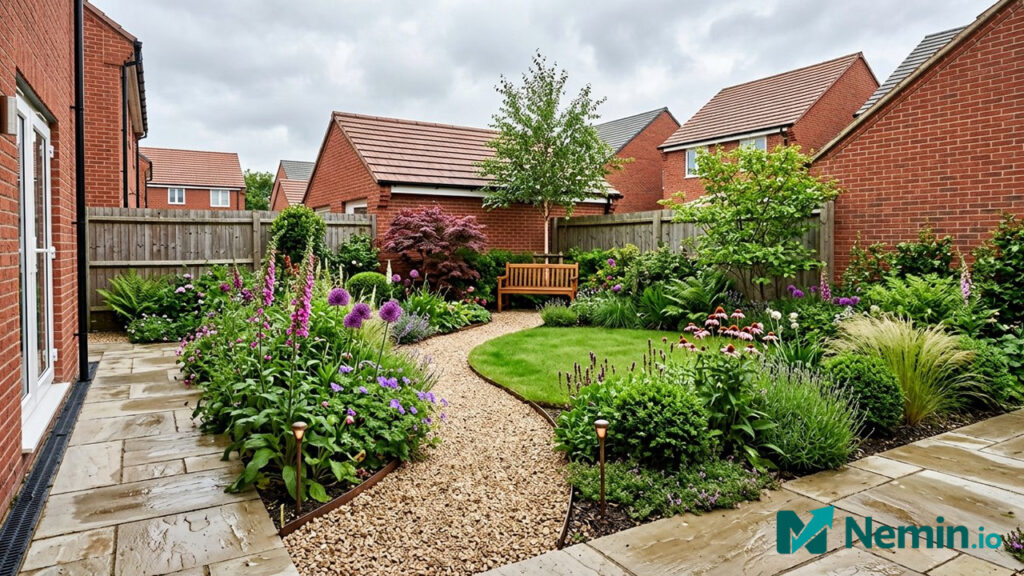
A successful British garden has to do considerably more than look attractive during a few weeks of summer. UK home garden design needs to respond to changing seasons, regular rainfall, periods of heat or drought, limited urban space, privacy, drainage, soil conditions, wildlife, maintenance, and the way a household genuinely uses its outdoor area. The strongest design brings those requirements together so the garden works as an extension of the home rather than becoming a collection of unrelated plants and paving.
That can mean creating somewhere comfortable to eat outdoors, establishing safe space for children, improving biodiversity, screening neighbouring windows, growing herbs or vegetables, reducing lawn maintenance, or simply creating a calmer view from the kitchen. Most gardens need to perform several of these functions simultaneously, which makes layout more important than buying plants immediately.
The UK’s climate also creates both opportunities and constraints. Rain supports a huge variety of planting, but poorly planned hard landscaping can create drainage problems. Mature trees can give character and shade, but their roots and legal status may affect proposed works. Small gardens benefit from careful use of vertical space, while larger plots can become surprisingly difficult to manage if every square metre requires intensive maintenance.
Good design therefore begins with the site rather than with trends. Observe the sun, shade, wind, existing vegetation, soil, water movement, access, boundaries, and views before deciding where a patio or flower bed belongs. A fashionable layout that ignores these fundamentals can become expensive to correct later.
This guide explains 11 practical ideas for improving British residential gardens in 2026, from zoning and planting to drainage, lighting, wildlife, privacy, planning considerations, and realistic budgeting.
Current-information note: planning rules, permitted development, tree protections, paving requirements, drainage expectations, contractor costs, product prices, and local authority policies vary throughout the UK and can change. Verify requirements with the relevant planning authority, GOV.UK or appropriate devolved-government resources, product manufacturers, and qualified professionals before undertaking regulated or structural work.
Why UK Home Garden Design Should Start With the Site
Garden design often begins on social media with a saved image of somebody else’s finished space. Inspiration is useful, but that garden may have a different orientation, soil, climate, budget, plot shape, architecture, and maintenance regime.
Start by measuring the existing garden accurately. Record doors, windows, drains, inspection covers, trees, sheds, boundaries, steps, slopes, existing paving, utilities where known, and anything else that could influence the layout.
Observe sunlight at different times of day. A patio beside the house may be convenient but permanently shaded, while the far corner of the garden could receive evening sunshine and deserve a small seating area.
UK Home Garden Design Needs a Clear Brief
Before drawing paths, list what the garden actually needs to do. A family with young children has different priorities from a couple interested primarily in entertaining, while an enthusiastic gardener may happily maintain borders that another household would find overwhelming.
Useful requirements can include dining, lounging, play, storage, composting, vegetable growing, wildlife habitat, washing-line space, bicycle storage, pets, accessible routes, or a home-office garden building where appropriate.
Separate requirements from preferences. Secure storage may be necessary, while an outdoor kitchen might simply be desirable. This distinction becomes important when the budget inevitably requires compromises.
1. UK Home Garden Design Works Better When the Space Is Divided Into Zones
Even a relatively small garden can perform several functions when the layout uses clear zones. Instead of treating the whole plot as one lawn surrounded by narrow borders, consider where different activities naturally belong.
A zone does not require walls or fences. Changes in planting, paving, furniture orientation, path direction, levels, or overhead structure can create subtle distinctions without making the garden feel fragmented.
For example, an area near the kitchen can serve dining, a sunnier corner can become informal seating, and a planted rear section can provide wildlife habitat or visual depth.
Zoning Small UK Home Garden Design
In compact gardens, avoid dividing the plot into too many tiny areas. Three useful zones usually feel more coherent than seven spaces, each too small to use comfortably.
Sightlines are important. Allowing the eye to travel diagonally or toward a focal tree, sculpture, seat, or planting composition can make a small garden feel deeper.
Do not automatically push every feature against the boundary. A carefully positioned planting bed or small tree within the garden can create depth by partially screening what lies behind it.
Zoning Larger Gardens
Larger plots often benefit from stronger structure because otherwise everything can feel disconnected. Hedges, trees, broad borders, paths, and changes in mowing can create “rooms” while preserving circulation.
Allow enough scale. A narrow one-metre border can look insignificant beside a large lawn, while more generous planting can visually balance the space.
Design maintenance access from the beginning. Beautiful deep borders are less enjoyable when nobody can reach their centres for pruning or weeding.
2. UK Home Garden Design Should Prioritise Soil Before Plants
Healthy planting begins below ground. Soil determines drainage, nutrient availability, root development, and which plants are likely to thrive without constant intervention.
UK gardens can contain clay, loam, sand, chalky soils, imported topsoil, builders’ rubble, compacted subsoil, or combinations created through previous construction. Two gardens on the same street can behave differently after extensions and landscaping.
Before purchasing an expensive planting scheme, investigate what is actually present. Soil texture, drainage, compaction, organic matter, and pH can all influence plant choice.
Clay Soil in UK Home Garden Design
Heavy clay can hold nutrients well but may become waterlogged during wet periods and hard during dry weather. Repeatedly walking or working it when saturated can damage soil structure.
Plant selection should respond to those conditions rather than assuming every garden needs to be engineered into identical soil. Many plants tolerate or prefer heavier ground when it is managed appropriately.
Organic matter can improve soil structure over time, but drainage problems caused by broader site conditions require more careful investigation than simply adding compost.
Sandy and Free-Draining Soil
Sandy soil can drain rapidly and may need greater attention to organic matter and moisture retention. Plants adapted to free-draining conditions can reduce the need for constant irrigation.
Understanding soil saves money because plants suited to the site require fewer corrective interventions later.
A sustainable UK home garden design works with the ground where practical instead of fighting it indefinitely.
3. UK Home Garden Design Needs Planting for All Four Seasons
A garden designed entirely around summer flowers can look empty for much of the year. Year-round planting considers structure as well as bloom.
Evergreen shrubs, ornamental grasses, trees with interesting bark, seed heads, winter stems, bulbs, spring blossom, summer perennials, and autumn foliage can overlap to create changing interest.
This does not require every plant to perform throughout the year. The planting scheme performs throughout the year because different plants take turns.
Build Layers in UK Home Garden Design
A useful planting composition can contain canopy, structural shrubs, medium-height perennials, lower groundcover, climbers, bulbs, and seasonal details. Not every border needs every layer, but variation creates depth.
Repeat selected plants through the garden rather than buying one of everything. Repetition creates visual coherence and often looks more intentional than a collection of unrelated specimens.
Plant spacing also matters. Overcrowding can create rapid impact but potentially poor airflow and future maintenance, while planting too sparsely can make the border look unfinished for years.
Choose Plants for Conditions, Not Just Appearance
Check mature height and spread, soil preference, exposure, hardiness, moisture needs, and sun requirements. A shade-loving plant placed against a hot south-facing wall may struggle regardless of how attractive it looked at the garden centre.
The Royal Horticultural Society and reputable nurseries can provide useful plant information. Use botanical names where possible because common names can refer to different plants.
Avoid planting known invasive species and check current UK restrictions where relevant.
4. UK Home Garden Design Can Create Privacy Without Building a Fortress
Privacy is a major concern in suburban and urban gardens, particularly where neighbouring windows overlook a small plot. The instinctive solution is often installing the tallest possible fence.
That can make the garden feel enclosed and may be restricted by planning or boundary rules. Layered screening can produce a softer result.
Small trees, pleached forms, hedging, climbers, pergolas, trellis, and carefully positioned shrubs can interrupt sightlines without creating one continuous opaque barrier.
Think About Specific Sightlines
Stand where privacy matters most: perhaps the dining table, hot tub, patio doors, or lounge window. Identify exactly which neighbouring viewpoint creates the issue.
A strategically placed small tree may solve that one sightline without needing to screen the entire boundary.
This can preserve light and make planting feel integrated into the design rather than added defensively.
UK Home Garden Design and Boundary Rules
Fence and wall rules can depend on height, location, roads, listed status, conservation areas, covenants, and other circumstances. Trees may also be protected by Tree Preservation Orders or conservation-area requirements.
Check current planning rules before construction or significant tree work. Do not assume that because a neighbouring property has a particular structure, you can automatically install the same one.
Boundary ownership can also become contentious, so verify responsibilities rather than guessing from fence appearance.
5. UK Home Garden Design Needs Smarter Patio Planning
A patio should be sized around actual furniture and circulation rather than simply filling whatever area remains beside the house. Draw or physically mark the proposed furniture footprint before laying expensive stone or porcelain.
Allow enough room to pull chairs away from the table, move around seated guests, access doors, and reach the rest of the garden. A beautifully paved dining area becomes frustrating when every chair hits a wall or border.
Material choice should consider appearance, slip resistance, frost performance, maintenance, installation system, and relationship with the home’s architecture.
Natural Stone in UK Home Garden Design
Sandstone, limestone, slate, granite, and other stones offer different colours, textures, porosities, and maintenance requirements. Natural variation is part of their character.
Some stones can stain or weather more visibly than others. Surface finish also affects slip characteristics, particularly when wet.
Ask suppliers for suitability information for the intended exterior use and climate.
Porcelain Paving
Exterior porcelain has become popular because it can provide a consistent contemporary appearance and relatively low porosity. Installation requires appropriate construction, cutting equipment, and bonding methods.
A high-quality porcelain tile badly installed can still fail. Base preparation, drainage, levels, joints, and detailing remain essential.
Choose material and workmanship together rather than spending the whole budget on the visible slab.
6. UK Home Garden Design Must Take Drainage Seriously
Rainwater has to go somewhere. Replacing lawns and planting beds with large areas of impermeable paving can change how water behaves across a property.
Poorly planned levels can direct water toward the house, create standing puddles, overwhelm drainage, or shift problems toward neighbouring land.
Before hard landscaping, observe what happens during heavy rain. Existing puddles, damp walls, saturated soil, or overflowing drains deserve investigation.
Sustainable Drainage in UK Home Garden Design
Options can include permeable surfaces, planting beds, gravel, rain gardens, soakaways where suitable, and other sustainable drainage approaches. The correct solution depends on soil infiltration, groundwater, building proximity, existing drainage, and local requirements.
A soakaway should not simply be installed wherever space exists. Its design and location require proper consideration of ground conditions and nearby structures.
For complicated drainage, use appropriately qualified advice rather than relying on a landscaper’s assumption that “the water will find somewhere to go.”
Front Gardens Need Particular Attention
In England, planning rules can apply to paving front gardens with impermeable materials above particular areas unless drainage is directed appropriately to a permeable surface or similar arrangement. Requirements can differ elsewhere in the UK.
Check current government and local-authority guidance before replacing a front lawn with a driveway.
Reducing flood risk is part of good design, not simply a planning inconvenience.
7. UK Home Garden Design Can Support Wildlife Without Looking Untidy
Wildlife-friendly gardening does not require turning every garden into unmanaged wilderness. A designed garden can provide food, shelter, water, and habitat while remaining visually structured.
Flowering plants can support pollinators when selected appropriately, while shrubs and trees provide nesting opportunities and cover. Seed heads can be left through winter in selected areas instead of cutting everything down immediately.
A small pond can create substantial ecological value, although safety requires careful consideration where young children or vulnerable visitors use the garden.
Plant Diversity Matters
Aim for flowers across different periods rather than one short burst. A sequence of spring, summer, and autumn nectar sources can support insects for longer.
Native species can be valuable, but garden wildlife can also use many non-native plants that provide suitable food or habitat and are not invasive.
Avoid simplistic claims that every non-native plant is ecologically useless. Plant function, management, local conditions, and species matter.
Reduce Pesticide Dependence
Routine broad-spectrum pesticide use can affect non-target organisms. Integrated pest management starts by tolerating some damage, monitoring problems, using physical or cultural controls, and intervening proportionately.
A garden containing insects will also attract some predators that feed on them. Perfect leaves are not necessarily a sign of a healthier ecosystem.
UK home garden design can therefore combine aesthetic standards with more realistic ecological expectations.
8. UK Home Garden Design Can Make Small Gardens Feel Larger
Small British gardens often need to accommodate dining, storage, bins, bicycles, planting, and privacy within a narrow footprint. Trying to hide every requirement usually wastes space.
Integration works better. A bench can incorporate storage, a boundary can support climbers, steps can become seating, and a shed can form part of the visual composition rather than being hidden awkwardly at the end.
Use fewer materials and repeat them. Too many paving types, fence colours, pots, and edging styles can visually fragment an already limited area.
Use Vertical Space
Walls, fences, trellis, pergolas, and arches create planting space without consuming much ground area. Climbers can add seasonal interest while softening hard boundaries.
Check the mature size and support requirements of climbing plants. A vigorous climber placed on a weak fence can become a maintenance problem.
Green walls and intensive vertical systems require irrigation and maintenance. Simple climbers may achieve the desired result with much less infrastructure.
Create Depth
Avoid making every boundary immediately visible. Partial screening can encourage the eye to imagine more space beyond.
Diagonal paths, offset planting, staggered focal points, and varied heights can create depth while keeping circulation functional.
Do not sacrifice usability purely for visual tricks. A path still needs to reach its destination comfortably.
9. UK Home Garden Design Needs Lighting for Function and Atmosphere
Garden lighting works best when it helps people navigate safely and highlights selected features. Lighting every tree and boundary can create glare, waste energy, disturb wildlife, and make a garden feel more commercial than residential.
Start with function. Steps, level changes, entrances, dining areas, and routes may require illumination, while feature lighting can then be added selectively.
Warm, restrained lighting generally creates a calmer residential atmosphere than extremely bright cool-white floodlighting, though product choice depends on the application.
Avoid Light Pollution
Outdoor lighting can affect neighbours, nocturnal wildlife, and views of the night sky. Position fittings carefully and direct light only where needed.
Timers, sensors, zoning, and lower output can reduce unnecessary operating time. More lumens do not automatically produce a better garden.
For permanent mains-voltage installations, use appropriately qualified electrical professionals and equipment suitable for exterior conditions.
Solar Lighting in UK Home Garden Design
Solar lights can work well for decorative or low-level applications when they receive adequate daylight for charging. Performance can become weaker during shorter, darker winter days.
Do not depend on cheap decorative solar lights for safety-critical stairs or access routes.
Choose the technology according to the importance of the lighting task.
10. UK Home Garden Design Should Be Built Around Realistic Maintenance
A low-maintenance garden does not mean no maintenance. Plants grow, weeds appear, paving becomes dirty, timber weathers, leaves fall, and drainage needs to remain clear.
The key is matching maintenance to the amount of time the household genuinely wants to spend outside working.
If gardening is a hobby, large borders and productive areas can be enjoyable. If not, simplify the plant palette, reduce demanding features, and use long-lived structural planting.
Lawns Are Not Automatically Low Maintenance
A conventional lawn requires mowing, edging, and potentially feeding, aeration, repair, or irrigation depending on expectations. Reducing lawn can lower one type of work while increasing another if it is replaced with complicated borders.
The most manageable design uses a balanced combination of surfaces.
Artificial grass also requires maintenance and carries environmental, drainage, heat, and end-of-life considerations. It should not automatically be considered the universal low-maintenance solution.
Choose Plants for Mature Size
One common maintenance problem begins at purchase when small nursery plants are placed too close to paths, windows, or one another.
Check mature dimensions. A shrub reaching three metres does not become a one-metre shrub permanently because the design requires it.
Repeated severe pruning creates unnecessary work and can damage natural plant form.
11. UK Home Garden Design Should Have a Realistic Budget
A complete garden transformation can involve significant construction. Excavation, waste removal, drainage, retaining walls, paving, timber, plants, lighting, soil, machinery, access, and skilled labour can all contribute to cost.
Small gardens are not always cheap because contractors still need mobilization, equipment, delivery, waste removal, and detailed cutting. Restricted access can increase manual labour considerably.
The strongest budgets prioritize invisible infrastructure first. Proper drainage and sub-base construction are more important than purchasing premium paving that later settles.
Where UK Home Garden Design Money Goes
| Cost Area | What It Can Include |
|---|---|
| Groundworks | Excavation, grading, machinery and labour |
| Waste | Skips, haulage and disposal |
| Drainage | Channels, pipework, soakaway-related work where suitable |
| Hard landscaping | Paving, sub-base, edging, walls and steps |
| Timber/structures | Fencing, pergolas, screens and decking |
| Planting | Soil improvement, trees, shrubs, perennials and bulbs |
| Lighting | Fittings, cabling, controls and electrician |
| Design | Survey, plans, specifications and planting design |
| Access | Additional manual handling or specialist equipment |
| Contingency | Unforeseen ground or construction conditions |
Exact UK home garden design costs depend on location and scope, so current contractor quotations are more useful than a generic national cost-per-square-metre figure.
Phase the Project If Necessary
A well-designed garden can be installed in stages when budget is limited. Complete drainage, levels, structural elements, and major hard landscaping first, then expand planting or furniture later.
Plan the final scheme from the beginning even when installation is phased. This prevents later work from requiring expensive demolition of earlier decisions.
Planting can also improve over time. Buying every specimen at maximum mature size is not necessary.
UK Home Garden Design for Terraced Houses
Terraced gardens often have long narrow proportions and limited side access. This affects everything from machinery to waste removal.
Avoid emphasizing the tunnel shape with one straight central lawn and narrow identical borders. Offset zones, diagonal lines, larger planting areas, or changes in width can make the plot more interesting.
Privacy is often particularly important because several neighbouring homes can overlook the same space. Small trees and layered planting can provide softer screening than continuously increasing fence height.
Access requirements should be discussed with contractors early because materials may need to travel through the house.
UK Home Garden Design for Semi-Detached Homes
Semi-detached properties can provide side access and broader plots, creating more flexibility for storage, planting, and construction logistics.
Side passages can handle bins, bicycles, sheds, utility equipment, and garden access without dominating the main view.
However, do not neglect these transitional areas. Good paving, planting, lighting, and storage can turn the side of a house into functional space rather than an unattractive corridor.
Consider how the garden relates to extensions and rear doors. The layout should feel connected to the home’s circulation.
UK Home Garden Design for New-Build Properties
New-build gardens can begin with limited planting, compacted ground, developer-installed lawns, or simple boundaries. This creates a blank canvas but may also require significant soil improvement.
Before landscaping, investigate drainage and soil structure. Construction traffic can leave compaction, while the depth and quality of topsoil can vary.
Planting trees early can be valuable because structure takes time to develop. Choose species suited to available root space and eventual scale.
Avoid filling a new garden entirely with hard surfaces simply because mature planting is not yet available. The garden needs time to become established.
UK Home Garden Design for North-Facing Gardens
North-facing does not automatically mean the whole garden is permanently dark. Sun exposure depends on garden depth, surrounding buildings, season, walls, and neighbouring vegetation.
Map sunlight instead of relying solely on compass direction. The far end may receive excellent summer sun while the area immediately behind the house remains shaded.
Choose planting according to actual light. Many ferns, woodland plants, shrubs, and perennials perform well in partial or full shade when soil conditions suit them.
Use lighter surfaces thoughtfully if you want to increase perceived brightness, but avoid creating uncomfortable glare.
UK Home Garden Design for South-Facing Gardens
South-facing plots can receive substantial sun, creating excellent opportunities for many flowering and productive plants. They can also become hot and dry during summer periods.
Shade can therefore be a design feature rather than an obstacle. Trees, pergolas, parasols, and planting can make seating areas more comfortable.
Plant selection should account for sun and soil moisture. Water-demanding plants in exposed dry areas may require regular irrigation.
Mulching and appropriate soil management can help reduce moisture loss.
UK Home Garden Design With Raised Beds
Raised beds can provide defined planting areas, improve accessibility for some users, and create additional soil depth where existing ground is poor.
They still require construction, soil, drainage, and maintenance. Very tall beds need substantial quantities of fill and must be structurally suitable.
Avoid filling deep beds entirely with premium compost when lower layers can be designed more economically and appropriately.
For edible growing, use materials suitable for the intended application and follow current horticultural guidance.
UK Home Garden Design With Outdoor Kitchens
Outdoor kitchens have become increasingly prominent in luxury garden design, but the British climate requires practical planning.
Shelter, drainage, ventilation, weatherproof materials, fuel safety, storage, electrical installation, and winter protection can matter as much as appearance.
Position cooking areas so smoke and heat do not create problems for doors, windows, neighbours, or combustible structures.
Gas and electrical work should be completed by appropriately qualified professionals where required.
UK Home Garden Design With Garden Rooms
Garden offices and rooms can create useful additional space, but they consume substantial garden area and may affect neighbours, drainage, trees, and access.
Some outbuildings can fall within permitted development rules when specific requirements are met, while others require planning permission or building-regulation consideration.
Rules depend on dimensions, placement, use, property status, and jurisdiction. Verify current requirements rather than relying on a shed retailer’s general statement.
Plan the surrounding landscape simultaneously so the building feels integrated rather than dropped onto the end of the garden.
UK Home Garden Design for Children
Children need usable space, but that does not mean the entire garden must become permanent play equipment.
Flexible lawns, hard surfaces for wheeled toys, sand or sensory areas, and integrated storage can adapt as children grow.
Avoid toxic plants where ingestion risk is relevant and assess ponds, steps, retaining walls, tools, gates, and other hazards according to the household.
A garden can remain attractive to adults while supporting play through thoughtful zoning.
UK Home Garden Design for Dogs
Dogs can alter plant and surface choices. Heavy traffic creates worn lawn routes, while digging and urine can affect planting.
Create practical paths where the dog naturally moves instead of insisting on delicate planting in predictable running lines.
Check plant toxicity using authoritative veterinary sources, particularly for dogs likely to chew vegetation.
Secure boundaries are more important than decorative screening when escape is a concern.
UK Home Garden Design for Wildlife
A wildlife-supportive garden can combine ornamental planting with practical habitat. Trees, shrubs, flowering perennials, climbers, water, deadwood in appropriate locations, and less intensive maintenance can increase ecological complexity.
Avoid excessively tidying every corner. Some leaf litter and hollow stems provide habitat, though this can be balanced with the desired appearance around primary seating areas.
Hedgehog access between suitable gardens can be valuable where safe and agreed, while bird boxes and insect habitats should be positioned according to species needs rather than decorative convenience.
Wildlife design works best when integrated into the whole garden rather than confined to one token “wild corner.”
Planning Permission and UK Home Garden Design
Many ordinary gardening activities do not require planning permission, but certain structures and works can.
Potentially relevant areas include:
- Walls and fences
- Outbuildings
- Raised structures
- Decking
- Front-garden paving
- Listed buildings
- Conservation areas
- Protected trees
- Major level changes
- Certain engineering works
- Changes affecting drainage or access
Rules differ across England, Scotland, Wales, and Northern Ireland and can be affected by local conditions. Consult the correct authority for the property’s location.
Do not begin expensive construction based solely on the contractor saying planning permission is unnecessary.
Trees and UK Home Garden Design
Existing mature trees can be among a garden’s most valuable features. They provide scale, shade, habitat, seasonal interest, and visual screening that would take new planting years to reproduce.
Before removing a tree, determine whether a Tree Preservation Order, conservation-area status, covenant, or other restriction applies.
Tree roots also influence patios, walls, buildings, drainage, and excavation. Qualified arboricultural advice may be necessary where construction occurs near significant trees.
Designing around a good tree can produce a more established garden than starting again from bare ground.
Real-Time UK Home Garden Design Information in 2026
Garden trends change, but regulations and technical details matter more than trends for major work. Verify current information before committing to construction.
Check:
- Local planning requirements
- Permitted development rules
- Tree protection
- Conservation-area restrictions
- Drainage requirements
- Front-garden paving rules
- Building regulations where relevant
- Electrical requirements
- Party or boundary issues where applicable
- Contractor insurance
- Current material costs
- Plant availability and restrictions
- Current water-use guidance during drought conditions
Use GOV.UK, relevant devolved-government resources, local councils, RHS information, product manufacturers, and appropriately qualified landscape, drainage, tree, building, or electrical professionals.
Common UK Home Garden Design Mistakes
One common mistake is choosing paving before establishing drainage and levels. Another is buying plants before understanding soil and light.
Homeowners can also underestimate mature plant size, create patios too small for furniture, install excessive hard landscaping, overlook privacy sightlines, or build outdoor structures without checking requirements.
Another expensive mistake is designing from a photograph without considering how the household actually lives. A pristine outdoor kitchen is poor value for someone who rarely cooks outside.
A garden should solve the owner’s problems rather than recreate somebody else’s lifestyle.
Building a Sustainable UK Home Garden Design
Sustainability is more complex than adding several pollinator plants. Material choice, longevity, drainage, soil health, biodiversity, water use, maintenance, transport, lighting, and waste all contribute.
Retaining functioning paving, trees, walls, or other existing features can sometimes have lower environmental impact than demolishing everything for a completely new aesthetic.
Use durable materials appropriate to the site and design construction so components can be maintained or repaired.
A garden that remains useful for decades is generally preferable to one rebuilt every time a social-media trend changes.
FAQ’s
1. How do I start a UK home garden design?
Begin a UK home garden design by measuring the plot, observing sunlight and drainage, assessing soil, identifying important views and boundaries, and listing how the household needs to use the space before selecting materials or plants.
2. How much does UK home garden design cost?
UK home garden design costs vary enormously according to size, groundworks, access, paving, drainage, walls, structures, lighting, plants, labour, waste, and location. Current itemised contractor quotes provide the best estimate.
3. What plants work best in UK home garden design?
The best plants depend on soil, sunlight, moisture, exposure, mature size, and local climate. Select plants for the site’s actual conditions and combine structural planting with seasonal flowers for year-round interest.
4. How can UK home garden design improve privacy?
UK home garden design can improve privacy through carefully positioned trees, hedges, climbers, trellis, pergolas, shrubs, and changes in seating position rather than relying exclusively on taller fences.
5. Does UK home garden design require planning permission?
Many garden improvements do not, but structures, fences, front paving, listed properties, conservation areas, protected trees, and certain engineering works can trigger requirements. Check current local rules before construction.
6. How can I make UK home garden design low maintenance?
Simplify the material and plant palette, choose plants suited to their conditions and mature size, avoid unnecessary lawn or complex features, use good soil preparation, and design easy access for routine maintenance.
Conclusion
UK home garden design works best when the garden is planned as a living part of the property rather than decorated as an isolated outdoor room. The layout should begin with sunlight, soil, drainage, access, boundaries, architecture, existing trees, and the household’s real priorities before attention moves to paving, furniture, or fashionable planting. Thoughtful zoning can make even a compact plot serve several purposes, while layered planting, privacy screening, wildlife habitat, and restrained lighting can create a garden that changes attractively throughout the year instead of reaching its peak for only a few summer weeks.
The most durable UK home garden design also invests in what cannot easily be seen after completion: proper levels, drainage, soil improvement, sub-bases, safe electrical work, and plants given enough space to mature. Homeowners should verify current planning, tree, drainage, outbuilding, and front-paving rules before beginning significant construction, particularly because requirements differ across the UK and between local authorities. With a realistic maintenance plan and budget, UK home garden design can create an outdoor space that supports dining, relaxation, play, biodiversity, privacy, and everyday views from inside the house while becoming more established and valuable to the people using it as the years pass.
Pingback: Thermal Living Room Curtains: 7 Powerful Comfort Benefits