
The Himalayas can take travellers from warm valleys and forest trails to exposed passes, snow-covered landscapes, freezing nights, strong ultraviolet radiation, rain, wind, and thin...
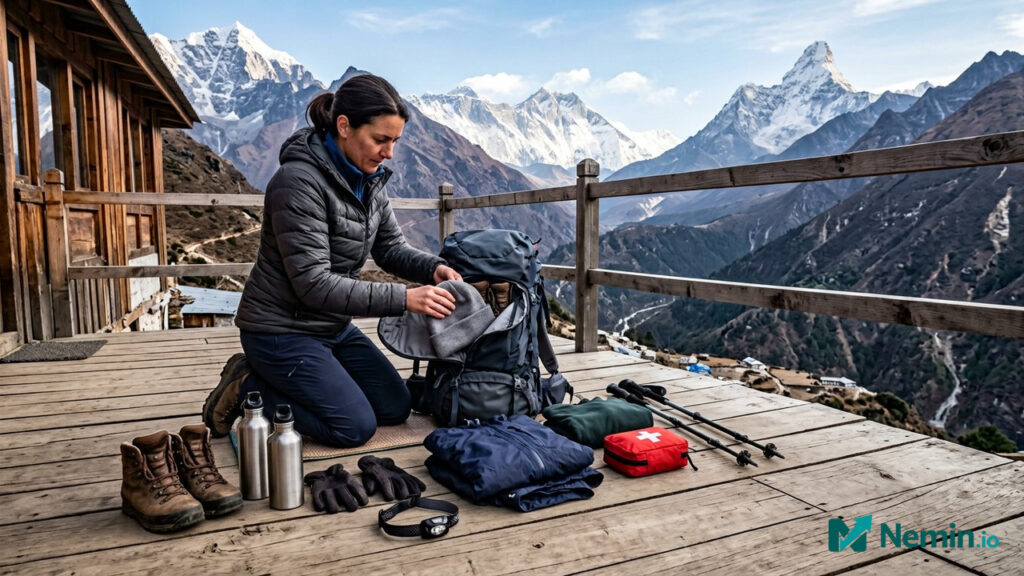
The Himalayas can take travellers from warm valleys and forest trails to exposed passes, snow-covered landscapes, freezing nights, strong ultraviolet radiation, rain, wind, and thin high-altitude air within a single trip. Packing for Himalayas therefore requires more than fitting hiking clothes into a backpack. A useful packing system must account for route, maximum altitude, season, accommodation, remoteness, expected weather, access to electricity and safe water, medical needs, and how much weight the traveller can realistically carry for consecutive days.
There is also no single universal Himalayan packing list. Someone staying in established teahouses on a popular Nepal trekking route has different requirements from a trekker camping in a remote region of India. A winter journey demands different insulation from a lower-altitude spring trek, while technical mountaineering requires specialist equipment far beyond ordinary trekking gear.
Weight makes every decision more important. Adding equipment “just in case” can eventually produce a backpack that is exhausting to carry, while removing too much can leave a traveller inadequately prepared when weather deteriorates. The objective is not minimalism for its own sake; it is carrying enough appropriate equipment without unnecessary duplication.
Altitude creates another dimension. No jacket, expensive boot, or ultralight backpack can prevent acute mountain sickness simply because the equipment is premium. Safe ascent planning, acclimatisation, hydration, awareness of symptoms, and willingness to descend when necessary remain essential.
This guide covers clothing, footwear, sleeping systems, hydration, electronics, hygiene, first aid, documents, sun protection, backpack organisation, and the mistakes that commonly make Himalayan trips harder than they need to be.
Medical and safety note: High-altitude travel can cause serious illness, including acute mountain sickness and potentially life-threatening high-altitude cerebral or pulmonary oedema. This article is general preparation information rather than individualized medical advice. Travellers should obtain current route-specific guidance and appropriate medical advice, especially when they have underlying health conditions.
Why Packing for Himalayas Requires Route-Specific Planning
The Himalayas extend across multiple countries and contain enormous variation in climate, elevation, infrastructure, and terrain. Saying someone is “going to the Himalayas” provides far less packing information than knowing the exact route, month, duration, and highest sleeping altitude.
A trek may involve comfortable lodges and food every few hours, or it may pass through remote terrain where the group needs to carry camping equipment and substantial supplies. Some routes have established charging, mobile coverage, shops, and medical facilities, while others have limited infrastructure.
Before buying equipment, write down the basic trip profile. Include the starting elevation, maximum elevation, highest sleeping elevation, trekking days, expected daily distance, accommodation type, whether a porter or pack animal is being used, and the expected conditions for the exact season.
Packing for Himalayas Starts With the Trek Operator’s List
If travelling with a reputable trekking company, compare any general online packing guide with the operator’s route-specific equipment list. The local provider should understand the accommodation, water arrangements, temperatures, luggage limits, and technical requirements of the particular itinerary.
Do not automatically buy every item listed without asking what the company supplies. Some operators provide sleeping bags, duffel bags, crampon-style traction equipment, tents, or group medical kits, while others expect participants to bring their own.
Clarify whether rental equipment is available and inspect rented safety-critical equipment carefully. For technical climbing gear, suitability, certification, condition, and correct use deserve specialist attention.
1. Packing for Himalayas Begins With an Effective Layering System
Mountain clothing works best as a system rather than one exceptionally thick jacket. Layers allow trekkers to adjust insulation as temperature, wind, altitude, sunlight, and physical effort change throughout the day.
A practical system usually contains moisture-managing base layers, insulating mid-layers, a more substantial insulation layer when conditions require it, and an outer shell designed to protect against wind and precipitation. Exact insulation depends on season and elevation.
The benefit of layering becomes obvious while walking uphill. A trekker may feel cold while standing outside the lodge in the morning but become hot within 20 minutes of climbing. Being able to remove a layer prevents excessive sweating, which can later contribute to discomfort when activity stops.
Base Layers for Packing for Himalayas
Base layers sit directly against the skin and should manage moisture effectively. Synthetic fabrics and merino wool are common choices, each offering different balances of drying speed, odour management, feel, durability, and cost.
Cotton is generally a poor choice for cold mountain trekking because it can retain substantial moisture and dry slowly. A wet cotton shirt that felt comfortable in a warm valley can become unpleasant when temperatures fall.
Carry enough base layers to maintain reasonable hygiene without bringing a clean outfit for every trekking day. Rewearing appropriate technical clothing is normal on multi-day treks where laundry and drying opportunities are limited.
Insulating Layers for Packing for Himalayas
Fleece and synthetic insulation can provide useful mid-layer warmth. Down offers excellent warmth relative to weight but requires careful moisture management, while synthetic insulation can retain useful thermal performance when damp.
The appropriate jacket depends on expected temperatures rather than whether down or synthetic insulation is universally “better.” High-altitude or cold-season trekking may justify substantially more insulation than a moderate lower-altitude route.
Ask the local operator about realistic nighttime and early-morning conditions at the highest camps or lodges. Historical averages help with planning but cannot predict the exact weather of your trip.
2. Packing for Himalayas Requires Reliable Rain and Wind Protection
Mountain weather can change quickly, and waterproof protection is valuable even when the forecast looks favorable. A shell layer also provides wind protection, which can substantially improve comfort on exposed ridges and passes.
A waterproof-breathable jacket should fit over the insulating layers you expect to use beneath it. Trying the complete layering system at home is more informative than testing each garment separately.
Waterproof trousers can also be valuable in sustained rain, wet snow, or severe wind. Full-length side zips or other ventilation features may make them easier to put on over trekking boots, depending on the design.
Keep Critical Gear Dry
A waterproof backpack cover can provide useful external protection but should not be the only method of keeping critical equipment dry. Wind can displace covers, and water can enter around shoulder straps or seams.
A stronger system uses internal dry bags, waterproof stuff sacks, or heavy-duty liners for essential items. Sleeping bags, insulation, electronics, documents, and dry nighttime clothing deserve particular protection.
This redundancy adds little weight when implemented efficiently. Arriving at a high lodge with wet spare clothing creates a much larger problem than carrying a simple waterproof liner.
3. Packing for Himalayas Means Choosing Footwear Before the Last Minute
Footwear can influence almost every hour of a trek. Poorly fitting boots or shoes can create blisters, bruised toes, pressure points, and instability that become progressively more difficult to manage over several days.
Buy or select footwear early enough to test it on real walks. A short stroll around a shop cannot reveal how boots behave after several hours of descending, when feet can swell and toes move forward.
The ideal footwear depends on terrain, load, weather, ankle preference, and trekking style. Some established trails can suit supportive trekking shoes, while colder, rougher, wetter, or snowier routes may justify more substantial boots.
Socks Matter When Packing for Himalayas
Good trekking socks help manage moisture and reduce friction. Carry several pairs rather than attempting to bring enough for a fresh pair every few hours.
Some trekkers prefer liner socks beneath thicker hiking socks, while others find one well-fitting sock more comfortable. Test the system before travelling rather than experimenting at altitude.
Keep at least one pair of dry socks reserved for evenings or sleeping when conditions are cold. That simple distinction can substantially improve comfort after a wet trekking day.
Camp or Lodge Footwear
After wearing trekking boots for many hours, changing into lightweight alternative footwear can allow feet to rest. Sandals or light shoes may work at lower elevations, while colder routes require something warmer and more protective.
Avoid carrying heavy second footwear without a clear purpose. Every item should justify the weight it adds.
4. Packing for Himalayas Needs Serious Sun Protection
High-altitude sunlight can be intense, and snow can reflect radiation upward toward the face and eyes. Sun protection should therefore be treated as essential equipment rather than an optional cosmetic item.
Carry broad-spectrum sunscreen appropriate to your needs and reapply according to its instructions. Lips are also easily affected by cold, wind, and sun, making an appropriate lip balm with sun protection useful.
Covering skin reduces reliance on sunscreen alone. A sun hat, long sleeves, neck protection, and suitable trousers can provide physical barriers while also helping manage exposure.
Sunglasses Are Essential When Packing for Himalayas
Quality sunglasses become particularly important at high altitude and around snow. Eyewear should provide appropriate ultraviolet protection and sufficient coverage for the conditions.
For snow-intensive trekking or mountaineering, glacier-style protection may be appropriate depending on route and exposure. Snow blindness is a genuine injury caused by ultraviolet exposure and should not be dismissed as temporary eye discomfort.
Carry a protective case. Breaking the only pair of suitable sunglasses several days from the road can become more than an inconvenience.
5. Packing for Himalayas Requires a Thoughtful Hydration System
Hydration becomes particularly important during prolonged physical activity and altitude exposure. Dehydration can also produce symptoms that overlap with other mountain problems, making normal hydration habits valuable.
Most trekkers benefit from carrying more than one water container or having both a bottle and hydration reservoir, depending on temperatures and personal preference. Bottles are often easier to manage when hoses freeze in very cold conditions.
Water availability and treatment differ by route. Ask how the trekking company or accommodation providers handle drinking water before deciding which purification equipment to bring.
Water Treatment When Packing for Himalayas
Potential treatment methods include filters, purification tablets, boiling, ultraviolet systems, or combinations, depending on the water source and microbial risk. Not every method removes every type of contaminant.
A filter effective against bacteria and protozoa may not necessarily remove viruses or chemical contamination. Route-specific guidance is therefore more useful than choosing one filtration device from a generic gear list.
Buying repeated single-use plastic bottles can also create substantial waste in remote mountain environments. Refillable systems are often preferable where safe treated water is available.
6. Packing for Himalayas Means Taking Altitude Seriously
Altitude illness is not prevented by fitness. Strong runners and experienced athletes can still develop symptoms if they ascend too quickly or respond poorly to elevation.
Acute mountain sickness commonly involves symptoms such as headache combined with other problems including nausea, dizziness, fatigue, or sleep disturbance after gaining altitude. More severe high-altitude conditions can become life-threatening.
The most important response to significant altitude illness is not a piece of equipment hidden in the backpack. Safe ascent decisions and descent when necessary can be critical.
Medication and Packing for Himalayas
Some travellers discuss acetazolamide and other altitude-related medication with healthcare professionals before high-altitude trips. These medicines have indications, contraindications, side effects, and dosing considerations that require individualized advice.
Do not take prescription medication simply because another trekker uses it. Likewise, carrying medication should never create a false belief that aggressive ascent schedules become safe.
Tell your guide promptly when symptoms develop. Hiding symptoms to avoid slowing down the group can increase risk.
Pulse Oximeters
Some travellers carry compact pulse oximeters. Readings can provide additional information, but oxygen saturation at altitude varies and consumer devices have measurement limitations.
A number should never override symptoms or experienced medical assessment. Someone who appears severely ill needs attention regardless of whether a small device displays a reassuring value.
7. Packing for Himalayas Requires the Right Sleeping System
Sleep influences recovery, mood, judgment, and physical performance. Cold nights become especially challenging if the sleeping system is inadequate for the actual conditions.
If sleeping in teahouses, bedding may be available, but trekkers often still use personal sleeping bags for warmth and hygiene. Camping routes require a more complete system that can include an insulated sleeping mat as well as the bag.
Temperature ratings need careful interpretation. “Comfort,” “limit,” and “extreme” ratings can mean very different things under standardized sleeping-bag tests, and individual cold tolerance varies.
Sleeping Bag Selection for Packing for Himalayas
Choose a sleeping bag according to anticipated nighttime temperatures and sleeping conditions. A bag that is appropriate for a mild lodge trek may be inadequate for a high-altitude camping route.
Down provides excellent compressibility and warmth-to-weight performance but needs protection from moisture. Synthetic bags can be bulkier while offering different moisture characteristics.
Whatever the insulation, keep the sleeping bag protected inside the pack or duffel. It is one of the items that should remain dry even if everything else becomes wet.
8. Packing for Himalayas Requires a Well-Fitted Backpack
Backpack volume depends on whether the traveller carries everything personally or uses a porter or pack animal. A fully independent trekker requires substantially more capacity than someone carrying only daily essentials.
Fit matters more than headline volume. A well-fitted pack transfers load appropriately and reduces unnecessary pressure on shoulders and other areas.
Load the backpack with realistic weight before the trip and walk with it. Discovering that a hip belt rubs badly is much easier to solve at home than on the third day of a trek.
Daypack Packing for Himalayas
Even when a porter carries the main duffel, the trekker normally keeps daily essentials personally accessible. These can include water, snacks, rain protection, insulation, sun protection, medication, documents, camera, and other critical equipment.
Never send essential medication entirely in a separate porter bag. Delays, weather, or logistical separation can occur.
Keep the day’s weather layers near the top rather than burying them beneath items that will not be needed until evening.
Use Packing Bags Without Over-Organising
Lightweight dry bags or packing sacks can divide clothing, electronics, hygiene products, and sleeping equipment. This keeps the bag organized while providing additional weather protection.
Avoid bringing many heavy organizational cases. The packaging itself can become unnecessary weight.
A simple color system can make items easy to locate without opening every bag.
9. Packing for Himalayas Should Include a Practical First-Aid Kit
A personal first-aid kit should complement rather than automatically duplicate the group medical kit. Ask the tour operator what emergency equipment and medications are already carried.
Common personal items can include blister care, simple dressings, adhesive tape, personal medications, and any other items recommended by an appropriate healthcare professional for the route and individual.
Bring enough prescription medicine for the trip plus a reasonable contingency for delays. Keep essential medicine protected from moisture and, where required, inappropriate temperatures.
Blister Prevention
Hot spots should be addressed early. Waiting until skin develops a significant blister makes the next several walking days harder.
Carry the blister treatment you already know how to use. Test tapes and dressings beforehand because adhesives can behave differently on sweaty skin.
Good footwear, dry socks, appropriate lacing, and early response can reduce the likelihood of major problems.
Personal Medical Information
Travellers with allergies, chronic conditions, or important medications should consider carrying relevant medical information in a form companions or professionals can access during an emergency.
Travel insurance details and emergency assistance numbers should also be available offline. Mobile data cannot be assumed in remote terrain.
10. Packing for Himalayas Requires Careful Electronics Planning
Mountain travel creates unusual demands on electronics. Cold can reduce apparent battery performance, charging can be limited or expensive, and electrical supply can become less reliable as routes become more remote.
Carry only electronics that justify their weight. A smartphone can serve as camera, offline map, book, notebook, clock, and communication device, reducing the need for several separate gadgets.
Power banks can provide useful backup, but airline regulations generally restrict how lithium batteries are transported. Check current airline and aviation-authority requirements before flying.
Protect Batteries From Cold
Lithium batteries can lose usable performance in low temperatures. Keeping cameras, phones, and spare batteries relatively warm can help.
At night, some trekkers keep small electronics inside insulated areas rather than leaving them exposed to freezing temperatures. Follow manufacturer guidance, particularly around charging.
Never charge a lithium battery that is outside its permitted charging temperature range. Damaged, swollen, or overheating batteries should not continue to be used casually.
Offline Navigation
Download route maps before leaving reliable internet coverage. Offline maps can supplement guide knowledge and physical navigation tools.
A smartphone should not be treated as the sole emergency navigation system in terrain where battery failure would create serious risk. The appropriate backup depends on trek difficulty and remoteness.
11. Packing for Himalayas Should Include Documents and Emergency Preparation
Equipment gets substantial attention, but administrative preparation can determine whether a trip happens at all. Passports, visas, trekking permits, park permissions, identification, insurance, and other requirements vary by route and country.
Check current official government and trekking-authority information. Permit rules can change, and requirements in Nepal are not automatically the same as those in India, Bhutan, Pakistan, or other Himalayan regions.
Keep digital copies of essential documents securely backed up, along with paper copies where useful. Avoid storing the only copy of everything on one phone.
Travel Insurance for Packing for Himalayas
Standard travel insurance may not cover high-altitude trekking, mountaineering, helicopter evacuation, or activities above specified elevations. Read the policy rather than assuming the word “adventure” provides sufficient coverage.
Check the maximum covered altitude against the actual itinerary. Also review exclusions involving climbing equipment, technical mountaineering, solo trekking, pre-existing conditions, rescue, and specific regions.
Emergency evacuation from remote mountains can be extremely expensive. Appropriate coverage deserves attention before departure, not after an incident occurs.
Packing for Himalayas: Clothing Checklist
The quantities depend on trip length and expected conditions, but a typical trekking wardrobe can be organized around functional categories rather than one outfit for every day.
Useful clothing categories can include:
- Moisture-managing base-layer tops
- Appropriate base-layer bottoms for cold conditions
- Trekking trousers
- Insulating fleece or mid-layer
- Insulated jacket appropriate to temperature
- Waterproof shell jacket
- Waterproof trousers where conditions justify them
- Hiking socks
- Warm evening socks
- Underwear
- Warm hat
- Sun hat
- Gloves or mittens
- Neck gaiter or buff-style covering
- Suitable trekking footwear
- Lightweight lodge or camp footwear where useful
Avoid unnecessary duplicates. Clothing should combine into a complete system capable of handling the coldest realistic conditions expected on the route.
Packing for Himalayas: Gear Checklist
Equipment choices should support the itinerary rather than imitate a mountaineering expedition that the trek does not require.
Common trekking equipment can include:
- Backpack or daypack
- Waterproof pack liner
- Sleeping bag if required
- Trekking poles
- Headlamp
- Spare batteries where appropriate
- Water containers
- Route-appropriate water treatment
- Sunglasses
- Sunscreen
- Lip protection
- First-aid kit
- Blister care
- Personal medication
- Power bank
- Charging cables
- Offline navigation
- Toiletries
- Quick-dry towel where needed
- Trekking documents
- Cash appropriate to the route
Technical gear such as crampons, ice axes, harnesses, ropes, helmets, or avalanche equipment should only be added when the route requires them and the user has appropriate instruction or professional guidance.
Packing for Himalayas in Spring
Spring can bring increasingly mild lower-elevation conditions while high passes remain cold or snowy. Conditions vary greatly with altitude and location, so seasonal labels alone are insufficient.
Layering remains important because warm sunlight can coexist with freezing mornings. Waterproof protection should remain available because weather can change.
Check current snow conditions for high passes shortly before the trek. Historical seasonal expectations should not substitute for current route reports.
Packing for Himalayas During Monsoon
Monsoon conditions can bring sustained rain, high humidity, slippery trails, cloud, leeches in certain regions and elevations, and increased landslide or transport disruption depending on route.
Waterproofing becomes central. Fast-drying clothing and internal pack protection are especially useful, while footwear needs good traction appropriate to wet conditions.
Some Himalayan regions lie in rain shadows and have different summer trekking conditions. The Himalayas are too large for one “monsoon packing list” to apply everywhere.
Packing for Himalayas in Autumn
Autumn is popular on several trekking routes because conditions can provide clearer mountain views and relatively stable weather during certain periods.
Popular does not mean warm. Higher elevations can still experience freezing temperatures, snow, and rapidly changing weather.
Crowded routes can also affect accommodation availability. Booking arrangements and sleeping equipment should reflect the specific destination.
Packing for Himalayas in Winter
Winter demands a substantially more conservative approach to insulation. Temperatures can become severe, daylight is shorter, snow can block passes, and some lodges or services may close.
A winter packing list may require warmer sleeping systems, heavier insulation, more substantial gloves, appropriate footwear, and route-specific snow or traction equipment.
Winter Himalayan trekking should not be treated as the same journey with one additional jacket. Route feasibility and emergency logistics can change materially.
Packing for Himalayas for a Teahouse Trek
Teahouse trekking can reduce carried weight because accommodation and meals are available along established routes. Travellers generally do not need to carry tents, cooking equipment, or the full food supply when those services are reliably provided.
A sleeping bag can still be useful because rooms at high altitude may not be heated overnight. Personal hygiene items, electronics, medication, snacks, and daily trekking equipment remain necessary.
Carry cash where electronic payment cannot be relied upon. Verify the current situation for the particular route, since infrastructure changes over time.
Packing for Himalayas With a Porter
Using a porter does not mean ignoring weight. Operators commonly impose luggage limits designed around safe and fair working conditions.
Respect those limits. Do not assume another person should carry unlimited unnecessary belongings merely because porter service has been purchased.
Carry essentials personally, including medication, water, rain protection, insulation, documents, and valuables. The porter may walk at a different pace or take a different logistics route.
Ethical treatment of mountain workers should be part of responsible trekking preparation.
Packing for Himalayas Without a Porter
Every unnecessary item becomes noticeable when carried uphill for several consecutive days. Weigh the fully packed backpack before travel rather than estimating.
Look for duplication first. Three heavy fleeces probably solve the same problem poorly compared with a coordinated layering system.
Reduce packaging and oversized toiletries, but do not remove genuine safety equipment simply to achieve an impressive ultralight number. The appropriate pack weight depends on route and conditions.
Packing for Himalayas: Food and Snacks
On lodge-based treks, meals may be widely available, reducing the need to carry extensive food. Familiar snacks can still be useful during long walking days.
Consider energy-dense foods that tolerate transport and temperatures. Dietary restrictions should be discussed with the operator in advance, particularly in remote areas with limited menu flexibility.
Do not bring excessive food merely from anxiety about availability. Ask for accurate route information first.
Packing for Himalayas: Hygiene Essentials
Multi-day trekking changes hygiene expectations. Showers may be unavailable, expensive, cold, or impractical at higher elevations.
Carry compact toiletries and avoid strongly scented unnecessary products. Hand hygiene is particularly important because gastrointestinal illness can significantly disrupt a trek.
Toilet paper or tissues may need to be carried on some routes, together with appropriate waste practices. Follow local and operator guidance regarding disposal.
Do not leave wipes or hygiene products on the trail simply because they are marketed as biodegradable.
Packing for Himalayas for Women
Most core equipment requirements are not gender-specific. Fit, warmth, hygiene, medication, and personal comfort are more useful considerations than creating an entirely separate generic women’s gear list.
Menstrual products should be packed in sufficient quantity for the trip and potential delays. Disposal options can be limited in remote environments, so carry appropriate sealable waste bags where necessary.
Women travelling in unfamiliar cultural environments may also want route-specific advice concerning local expectations around clothing. Local trekking operators can provide practical guidance without requiring inappropriate assumptions.
Packing for Himalayas for First-Time Trekkers
First-time trekkers often overpack clothing and underprepare physically for carrying it. Training should include walking for consecutive days, preferably with the backpack and footwear that will be used.
Practice drinking, layering, using trekking poles, and accessing rain gear without unpacking the entire bag. Familiarity makes equipment more useful.
Do not bring technical gear you do not know how to use simply because a packing video recommended it. Training and judgment matter as much as ownership.
Common Packing for Himalayas Mistakes
Overpacking is one obvious mistake, but underpacking essential weather protection can be more serious. Another common problem is bringing new boots directly to the trek without testing them.
Travellers may also rely completely on one water-treatment method without understanding its limitations, forget sun protection, bring insufficient battery capacity, or send crucial medication in a porter bag.
Another mistake is using an equipment list as a substitute for route research. A perfectly packed bag cannot compensate for an unrealistic itinerary or unsafe acclimatisation schedule.
What Not to Carry When Packing for Himalayas
Avoid excessive duplicate clothing, large toiletries, unnecessary electronics, multiple heavy books, oversized cosmetic kits, and gear included only because it looks adventurous.
Luxury luggage is rarely useful on the trail. Choose practical, durable baggage compatible with the operator’s transport arrangements.
Drones require special attention because rules can involve aviation restrictions, protected areas, permits, border sensitivity, privacy, and local community expectations. Never assume drone use is permitted simply because other travellers posted aerial footage.
How to Organise a Backpack When Packing for Himalayas
Keep dense, heavier items close to the body and arrange weight so the pack remains balanced. Exact positioning can depend on pack design and terrain.
Items needed during the day should remain accessible. These commonly include shell jacket, insulation, water, snacks, sunscreen, gloves, navigation, and first aid.
Sleeping equipment and evening clothing can sit deeper in the bag because they are unlikely to be required while walking. Keep liquids and leak-prone toiletries separated from critical insulation or electronics.
Packing for Himalayas and Weight Limits
Airlines have their own baggage allowances, and domestic mountain flights may impose substantially different weight limits. Helicopter and small-aircraft operations can also have strict restrictions.
Check every transport segment, not simply the international flight. Paying for a 23-kilogram airline bag does not mean a remote domestic flight will accept the same baggage allocation.
Tour operators should provide current route-specific luggage limits. Treat them as actual constraints during packing.
Technology to Consider When Packing for Himalayas
Useful technology can include a smartphone, power bank, camera, headlamp, smartwatch, satellite communication device, or other equipment appropriate to the route.
A satellite communicator can provide an additional communication option in remote regions when supported by local regulations, subscriptions, and satellite coverage. It is not a substitute for good route planning.
Check whether satellite devices require registration or face restrictions in the country being visited. International legality should never be assumed.
Leave No Trace When Packing for Himalayas
Mountain ecosystems and remote communities can struggle with waste generated by tourism. Carry reusable items where practical and avoid unnecessary packaging.
Take responsibility for batteries, electronics, plastic wrappers, hygiene products, and other non-biodegradable waste. Follow route-specific waste systems rather than improvising disposal.
Respect water sources and local sanitation practices. A spectacular mountain environment should not become the final destination for a trekker’s rubbish.
Current Data to Verify Before Packing for Himalayas in 2026
Mountain conditions and regulations change too quickly for a static packing article to answer every logistical question. Travellers should verify current information shortly before departure.
Check:
- Current route conditions and closures
- Weather forecasts
- Snow conditions at high passes
- Trekking and national-park permits
- Visa requirements
- Restricted-area rules
- Guide requirements where applicable
- Domestic flight baggage limits
- Travel-insurance altitude coverage
- Accommodation availability
- Water availability and treatment
- Charging availability
- Current rescue arrangements
- Local communications coverage
Use government tourism or immigration sources where relevant, national-park or trekking authorities, reputable local operators, meteorological services, and current airline documentation. Social-media posts can provide observations but should not replace authoritative safety information.
FAQ’s
1. What is most important when Packing for Himalayas?
Packing for Himalayas should prioritize an effective layering system, weather protection, tested footwear, hydration, sun protection, essential medication, a suitable sleeping system, and equipment matched to the exact route and altitude.
2. How heavy should my bag be when Packing for Himalayas?
There is no universal ideal weight. Packing for Himalayas should respect operator or transport limits while remaining light enough to carry comfortably without removing essential safety and weather equipment.
3. What clothes should I take when Packing for Himalayas?
Packing for Himalayas usually requires moisture-managing base layers, trekking trousers, insulating layers, an appropriate warm jacket, waterproof shell, warm hat, gloves, hiking socks, and route-specific cold-weather clothing.
4. Do I need a sleeping bag when Packing for Himalayas?
Many Himalayan treks benefit from a suitable sleeping bag even when lodges provide blankets. Temperature requirements depend on season, route, altitude, accommodation, and individual cold tolerance.
5. What should I avoid when Packing for Himalayas?
Avoid excessive duplicate clothing, untested footwear, unnecessary heavy electronics, oversized toiletries, and technical equipment you do not know how to use. Do not remove genuine safety gear merely to reduce pack weight.
6. How should beginners approach Packing for Himalayas?
Beginners should start with the exact itinerary, follow route-specific operator advice, test every important item before travel, train with their backpack and footwear, and research altitude, permits, insurance, weather, and emergency procedures.
Conclusion
Packing for Himalayas is successful when every important item has a clear purpose connected to the actual journey. A reliable layering system manages changing temperatures, waterproof protection helps when mountain weather deteriorates, tested footwear protects the feet over consecutive walking days, and a well-organised backpack keeps essential insulation, water, medication, navigation, and sun protection immediately accessible. Sleeping equipment, first aid, electronics, toiletries, and documents should then be selected according to route infrastructure rather than copied blindly from another trekker’s list.
The most important preparation also extends beyond the backpack. Packing for Himalayas cannot compensate for ascending too quickly, ignoring altitude symptoms, travelling without appropriate insurance, or relying on outdated route information. Verify current permits, weather, accommodation, guide requirements, domestic transport limits, water availability, and rescue arrangements before departure. Test footwear and packs at home, protect critical equipment from water, respect porter luggage limits, and avoid carrying unnecessary duplicates. When Packing for Himalayas is approached as a route-specific safety and logistics exercise rather than a shopping list, travellers can carry less unnecessary weight while remaining better prepared for the cold, sun, wind, rain, altitude, and extraordinary mountain environments that make a Himalayan journey memorable.
Pingback: Island Peak Climbing: 11 Powerful Tips for a Safe and Successful Himalayan Expedition
Pingback: Everest Trekking: 11 Powerful Tips for an Incredible and Safer Himalayan Adventure
Pingback: UK Home Garden Design: 11 Inspiring Ideas for a Beautiful Year-Round Garden in 2026
Pingback: Savudrija, Istria: 9 Irresistible Reasons Luxury Travel Meets Smart Real Estate Living
Pingback: Bento Lunch Box for Kids: 7 Proven Reasons It Beats Traditional Lunch Boxes
Pingback: Simple and Clean Space: 7 Amazing Siquijor Hotel Benefits