
A reliable air conditioner makes a noticeable difference during hot weather, but cooling performance depends on more than the equipment itself. Dirty filters, restricted airflow,...
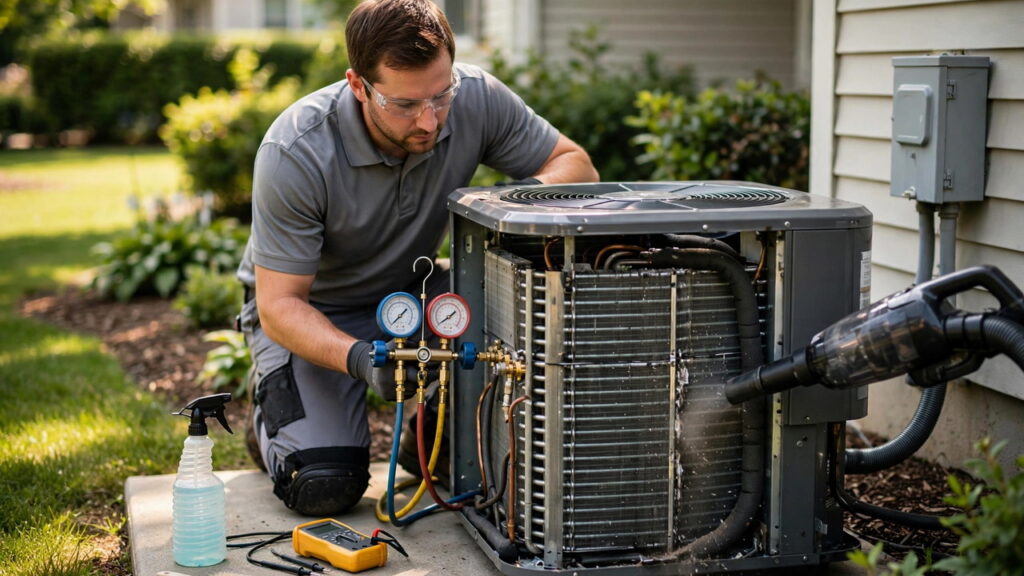
A reliable air conditioner makes a noticeable difference during hot weather, but cooling performance depends on more than the equipment itself. Dirty filters, restricted airflow, clogged drains, and neglected components can reduce comfort and contribute to unnecessary energy consumption. Regular AC Maintenance helps homeowners identify these issues, maintain efficient operation, and reduce the likelihood of unexpected cooling problems.
However, maintaining an air conditioner does not mean every task should be handled without professional assistance. Some basic activities are suitable for homeowners, while electrical testing, refrigerant work, and internal equipment repairs require qualified technicians. Understanding the difference helps you create a practical maintenance routine that supports comfort, safety, and long-term equipment performance.
What Is AC Maintenance?
AC Maintenance is the routine inspection, cleaning, testing, and servicing of an air conditioning system to help maintain proper cooling performance and identify developing problems.
It includes tasks such as replacing air filters, checking airflow, cleaning accessible components, inspecting condensate drainage, and evaluating the condition of electrical and mechanical equipment.
Professional AC Maintenance may also involve checking operating temperatures, measuring electrical performance, inspecting refrigerant-system conditions, and verifying that safety controls function appropriately.
The exact work depends on the air conditioner’s design, age, condition, and manufacturer recommendations.
A central air conditioner, ductless mini-split, packaged unit, and window air conditioner do not all require identical maintenance procedures.
Why Regular AC Maintenance Matters
Air conditioning systems move heat from indoor spaces to the outdoors.
For this process to work efficiently, the equipment must maintain suitable airflow and heat transfer.
Dirt accumulation, mechanical wear, and blocked airflow can interfere with these functions.
Routine AC Maintenance helps identify conditions that may reduce cooling capacity or increase operating costs.
It can also reveal problems before they cause complete equipment failure.
However, maintenance does not guarantee that an air conditioner will never break down.
Even properly maintained equipment can experience component failures, electrical problems, or damage from external conditions.
How an Air Conditioning System Works
Understanding basic air conditioner operation makes AC Maintenance easier to understand.
Most conventional residential air conditioners use a refrigeration cycle to transfer heat from indoor air to the outdoors.
The system contains components that work together to move refrigerant, absorb indoor heat, and release that heat outside.
Evaporator Coil
The indoor evaporator coil absorbs heat from air passing through the air-handling equipment.
As refrigerant moves through the coil, heat transfers from the indoor air into the refrigerant.
The cooling process can also remove moisture from humid indoor air.
AC Maintenance helps ensure that airflow through the evaporator coil is not unnecessarily restricted.
Dirty filters or contaminated coils can reduce heat transfer and contribute to operating problems.
Condenser Coil
The outdoor condenser coil releases heat collected from the indoor environment.
An outdoor fan moves air across the coil to support heat rejection.
When dirt, leaves, or other debris restrict airflow, the system may operate less efficiently.
AC Maintenance includes evaluating the outdoor unit’s condition and keeping appropriate airflow pathways clear.
Coil cleaning methods should follow manufacturer instructions.
Compressor
The compressor circulates refrigerant through the cooling system by increasing its pressure.
It is a critical component of many air conditioning systems.
AC Maintenance cannot prevent every compressor failure, but identifying abnormal operating conditions may help reduce unnecessary strain.
Compressor diagnosis and repair require professional expertise.
Homeowners should not open refrigerant lines or attempt internal compressor repairs.
Thermostat and Controls
The thermostat monitors indoor temperature and communicates cooling demands to the equipment.
Modern systems may include programmable thermostats, smart controls, and additional sensors.
AC Maintenance should include checking whether controls operate as intended.
Incorrect thermostat settings can create comfort problems even when the air conditioner itself is functioning normally.
Benefits of Regular AC Maintenance
A consistent maintenance routine supports several aspects of air conditioner operation.
The actual benefits depend on the equipment’s condition, installation, climate, and usage patterns.
Better Cooling Performance
Airflow restrictions can prevent conditioned air from reaching occupied rooms effectively.
Dirty filters, blocked vents, and contaminated coils may contribute to uneven temperatures.
AC Maintenance helps identify these restrictions.
When airflow and heat transfer improve, the system may be better able to maintain the desired indoor temperature.
Improved Energy Efficiency
An air conditioner may use additional electricity when it operates under unfavorable conditions.
For example, restricted airflow or dirty condenser surfaces can affect system performance.
AC Maintenance can help restore efficiency lost because of certain maintenance-related problems.
However, energy savings vary.
A system that is already operating correctly may show little measurable improvement after routine servicing.
Reduced Risk of Unexpected Breakdowns
Equipment problems sometimes develop gradually.
Loose electrical connections, worn components, drainage problems, and abnormal operating conditions may be detected during professional servicing.
AC Maintenance provides opportunities to identify these issues.
It does not eliminate all failure risks, but it can help reduce the likelihood that certain problems remain unnoticed.
Better Indoor Comfort
A properly functioning cooling system helps maintain indoor temperature and, under suitable conditions, manage humidity.
Poor airflow or inadequate operation can cause discomfort.
AC Maintenance supports consistent performance by keeping relevant components in suitable working condition.
However, comfort problems can also result from insulation deficiencies, duct design, air leakage, or an improperly sized system.
These issues may require solutions beyond maintenance.
Longer Equipment Service Life
Air conditioner lifespan depends on manufacturing quality, installation, climate, operating hours, maintenance, and other factors.
Regular AC Maintenance can reduce certain avoidable stresses on equipment.
However, there is no universal guarantee that maintenance will extend a particular system’s life by a specific number of years.
The most useful approach is to follow manufacturer recommendations and address problems promptly.
Essential AC Maintenance Tasks Every Homeowner Should Know
Some maintenance activities are simple enough for homeowners to perform safely.
Others require specialized training and equipment.
The following nine practices provide a practical foundation for maintaining residential cooling systems.
1. Check and Replace Air Filters
Air filters collect airborne particles as air moves through the HVAC system.
Over time, accumulated debris can restrict airflow.
Filter inspection is one of the most important basic AC Maintenance tasks.
The replacement interval depends on filter type, household conditions, equipment design, and operating hours.
Homes with pets, high dust levels, or frequent air conditioner use may require more frequent inspection.
Follow the filter manufacturer’s instructions and the HVAC system’s specifications.
A filter with a higher efficiency rating is not automatically suitable for every system.
Excessive airflow resistance can create operating problems.
2. Keep Outdoor Units Free From Debris
Outdoor condenser units need adequate airflow.
Leaves, grass clippings, vegetation, and other debris can restrict air movement around the equipment.
AC Maintenance should include checking the surrounding area periodically.
Keep the clearances recommended by the equipment manufacturer.
Avoid placing storage items, furniture, or dense landscaping immediately against the unit.
Do not attempt to clean internal electrical or mechanical components while the system is energized.
3. Inspect Supply and Return Air Vents
Supply registers deliver conditioned air into rooms.
Return grilles allow air to flow back toward the cooling equipment.
Blocked vents can contribute to airflow imbalance and discomfort.
During routine AC Maintenance, check that accessible vents are not obstructed by furniture, rugs, or stored belongings.
Do not assume that closing multiple supply vents will reduce energy costs.
Some ducted systems can experience increased pressure and reduced airflow when too many vents are closed.
4. Review Thermostat Settings
Incorrect thermostat settings can create unnecessary cooling demand.
AC Maintenance includes checking schedules, operating modes, and temperature settings.
A programmable thermostat can help manage cooling when the building is unoccupied.
However, the most efficient settings depend on household schedules, climate, and equipment type.
If a thermostat uses batteries, replace them according to manufacturer guidance.
Persistent control problems should be evaluated by a qualified technician.
5. Monitor Condensate Drainage
Air conditioners can produce condensate as moisture is removed from indoor air.
This water normally drains through a designated collection and drainage system.
Blocked condensate lines can cause water to overflow and damage nearby materials.
AC Maintenance should include observing accessible drainage areas for leaks, standing water, or unusual odors.
Some systems include condensate overflow safety switches.
If a drain becomes blocked, cleaning procedures should follow equipment instructions.
Professional assistance is appropriate when the blockage is inaccessible or repeated.
6. Watch for Unusual Noises
Air conditioners produce normal operating sounds, including fan movement and compressor operation.
However, sudden grinding, rattling, buzzing, or other unusual noises may indicate a problem.
AC Maintenance involves paying attention to changes in equipment behavior.
A loose panel can create noise, but abnormal sounds may also result from electrical or mechanical defects.
Do not reach into operating equipment to investigate.
If a noise suggests serious damage, turn the system off and arrange professional inspection.
7. Check for Water Leaks
Water around indoor cooling equipment may indicate a blocked condensate drain, damaged drain pan, frozen coil, or another problem.
AC Maintenance includes monitoring for visible moisture.
Water leaks should not be ignored because they can damage flooring, drywall, and nearby belongings.
However, not every leak originates from the air conditioner.
Plumbing failures and other moisture sources may produce similar symptoms.
A technician can help identify the cause.
8. Inspect Visible Refrigerant Lines
Many split air conditioning systems have refrigerant lines connecting indoor and outdoor equipment.
The larger suction line is commonly insulated.
Damaged or missing insulation can affect performance and contribute to condensation problems.
AC Maintenance may include visually checking accessible line insulation.
Homeowners should not loosen fittings, open refrigerant lines, or attempt to add refrigerant.
Refrigerant handling requires appropriate qualifications and compliance with applicable regulations.
9. Schedule Professional AC Maintenance
Homeowner inspections cannot replace specialized equipment servicing.
A qualified technician can evaluate electrical connections, controls, airflow, coil condition, and other operating characteristics.
Professional AC Maintenance is commonly scheduled before the primary cooling season.
The appropriate interval depends on manufacturer instructions, equipment condition, and usage.
Systems serving demanding environments may need additional attention.
Professional AC Maintenance Checklist
A professional service visit should involve more than a quick visual inspection.
The exact checklist varies by equipment type and condition.
However, a qualified HVAC technician may evaluate several important areas.
Electrical System Inspection
Air conditioning systems contain electrical components that operate motors, compressors, and control equipment.
Professional AC Maintenance may include checking accessible connections, contactors, capacitors, wiring condition, and protective devices.
Electrical testing must be performed using appropriate safety procedures.
Even when equipment is disconnected, capacitors can retain hazardous electrical energy.
Homeowners should not attempt internal electrical testing.
Coil Inspection and Cleaning
Evaporator and condenser coils need suitable airflow for effective heat transfer.
Dirt accumulation may reduce performance.
During AC Maintenance, technicians assess whether cleaning is necessary.
Cleaning products and techniques should be compatible with the coil materials and manufacturer instructions.
Improper chemicals or excessive water pressure can damage equipment.
Refrigerant System Evaluation
Refrigerant carries heat through the cooling system.
A properly installed and sealed system should not require routine refrigerant additions as a normal maintenance task.
Professional AC Maintenance may involve evaluating operating conditions and investigating symptoms of incorrect refrigerant charge.
Adding refrigerant without diagnosing the underlying issue can be inappropriate.
Refrigerant leaks should be addressed according to applicable regulations and sound service practices.
Airflow Assessment
Correct airflow is essential for cooling performance.
Technicians may evaluate filters, blower operation, duct restrictions, and system pressure conditions.
AC Maintenance can identify airflow issues that contribute to discomfort or reduced efficiency.
However, some airflow problems originate from poor duct design or installation.
Those issues may require modifications rather than cleaning alone.
Condensate System Inspection
Technicians may inspect condensate pans, drains, and overflow protection devices.
AC Maintenance should address visible blockages or deterioration.
Persistent drainage problems may require correcting drain slope, piping configuration, or other installation details.
Simply clearing a recurring blockage may not resolve the underlying issue.
How Often Should AC Maintenance Be Performed?
The ideal schedule depends on the equipment and operating environment.
A common approach is to arrange professional AC Maintenance before the cooling season.
Heat pump systems used for both heating and cooling may benefit from inspections aligned with their year-round operation.
However, manufacturer guidance should take priority over a generic schedule.
Monthly Maintenance Activities
Homeowners can inspect air filters and check for obvious airflow restrictions.
Outdoor equipment can also be observed for debris and vegetation growth.
Monthly AC Maintenance does not necessarily mean replacing every filter each month.
Replacement should depend on its condition and the manufacturer’s recommendations.
Seasonal Maintenance Activities
Before hot weather begins, review thermostat settings, inspect accessible vents, and check the outdoor unit.
Arrange professional AC Maintenance when recommended.
During the cooling season, monitor unusual noises, reduced airflow, drainage problems, and performance changes.
Address developing issues rather than waiting for complete failure.
Annual Professional Inspection
Many homeowners schedule professional AC Maintenance approximately once a year for cooling-only equipment.
However, service intervals vary.
A qualified technician can recommend an appropriate schedule based on equipment specifications and condition.
Annual servicing should not be presented as a guarantee against breakdowns.
AC Maintenance for Different Air Conditioning Systems
Not all cooling systems have the same components or maintenance requirements.
Understanding the system type helps homeowners avoid unsuitable procedures.
Central Air Conditioning
Central air conditioners usually distribute cooled air through ductwork.
AC Maintenance commonly involves filters, indoor coils, outdoor equipment, airflow, and condensate drainage.
The condition of ducts and air-handling components may also affect performance.
Ductless Mini-Split Systems
Ductless systems use indoor units connected to outdoor equipment.
Their filters, coils, and condensate arrangements differ from many central systems.
AC Maintenance should follow the specific manufacturer’s cleaning instructions.
Some indoor units contain delicate components that can be damaged by improper cleaning.
Window Air Conditioners
Window units combine multiple cooling components in one housing.
AC Maintenance may include cleaning accessible filters, checking drainage, and keeping airflow openings clear.
Users should follow the manufacturer’s instructions before removing covers or cleaning internal components.
Packaged Air Conditioning Units
Packaged systems contain major cooling components within a single cabinet.
They may be installed outdoors or on rooftops.
Professional AC Maintenance is especially important when equipment access involves elevated locations or complex commercial installations.
Rooftop access should be limited to properly trained personnel.
Signs Your Air Conditioner Needs Maintenance
Air conditioners often display warning signs before a major problem becomes obvious.
Recognizing these symptoms can help homeowners arrange timely inspections.
Weak Airflow
Reduced airflow may result from clogged filters, blower problems, duct restrictions, or other conditions.
AC Maintenance can help identify the cause.
However, weak airflow does not automatically mean the system needs refrigerant.
Refrigerant issues and airflow restrictions are different problems.
Warm Air From Vents
If the system runs but does not cool effectively, several causes are possible.
Thermostat settings, outdoor unit problems, electrical faults, and refrigerant-system issues may contribute.
Professional AC Maintenance can include diagnostic testing.
Avoid repeatedly operating equipment that is making abnormal noises or showing signs of serious malfunction.
Frequent Cycling
An air conditioner that starts and stops unusually often may have control, airflow, sizing, or other problems.
AC Maintenance may identify certain contributing factors.
However, short cycling can also result from an incorrectly sized system.
Proper diagnosis is necessary before recommending repairs.
Unusual Odors
Musty odors may indicate moisture-related problems.
Burning smells can suggest electrical or mechanical hazards.
AC Maintenance should include investigating persistent abnormal odors.
If a burning odor is present, turn the system off when safe and seek professional assistance.
Unexpected Energy Bills
Higher electricity bills may result from increased cooling demand, utility rate changes, equipment problems, or household behavior.
AC Maintenance can help evaluate whether the cooling system is operating inefficiently.
However, a bill increase alone does not establish that the air conditioner is defective.
Compare usage patterns and weather conditions before drawing conclusions.
AC Maintenance and Energy Efficiency
Air conditioning can represent a significant portion of household electricity use in warm climates.
Improving cooling efficiency can help manage energy consumption.
However, results depend on equipment performance, building conditions, and thermostat settings.
Clean Filters and Efficient Airflow
A dirty filter can increase airflow resistance.
Restricted airflow may reduce cooling performance and contribute to equipment problems.
Routine AC Maintenance helps prevent excessive filter loading.
The U.S. Department of Energy provides consumer guidance on air conditioner maintenance, including filter care.
Proper Thermostat Management
Avoid setting the thermostat unnecessarily low.
For conventional air conditioners, a lower indoor temperature generally increases the cooling work required under otherwise similar conditions.
AC Maintenance should be combined with sensible thermostat scheduling.
Comfort needs vary, so there is no single ideal temperature for every household.
Improve Building Efficiency
Insulation, air sealing, window shading, and duct condition influence cooling demand.
Even excellent AC Maintenance cannot fully compensate for major building envelope problems.
Homeowners may benefit from considering both equipment servicing and whole-home efficiency improvements.
The most effective combination depends on the property’s characteristics.
How Much Does AC Maintenance Cost?
AC Maintenance pricing varies by location, equipment type, service provider, and the work included.
A basic inspection may cost less than a visit requiring coil cleaning, electrical repairs, or replacement components.
Some contractors offer maintenance agreements covering scheduled inspections.
Others charge separately for each visit.
Factors Affecting AC Maintenance Pricing
Several variables influence costs.
System type: Central air conditioners, mini-splits, and commercial units have different service requirements.
Equipment accessibility: Difficult-to-reach equipment may require additional labor.
System condition: Heavily contaminated or damaged equipment may need more extensive work.
Service scope: A basic inspection differs from detailed cleaning and testing.
Replacement parts: Failed components add material and labor costs.
Scheduling: Emergency or after-hours visits may carry additional charges.
Location: Labor rates and business operating costs vary by region.
A written estimate should explain what the service includes.
Are AC Maintenance Plans Worth It?
Maintenance plans can provide convenience by scheduling regular service visits.
Some agreements include discounts, priority scheduling, or other benefits.
However, terms vary.
Before purchasing an AC Maintenance plan, compare the included services with the manufacturer’s recommendations.
Check exclusions, cancellation terms, and whether repairs are billed separately.
The value depends on the actual services provided and the homeowner’s needs.
DIY AC Maintenance vs Professional Servicing
Some AC Maintenance tasks are suitable for homeowners.
Others involve hazardous electrical systems, refrigerants, or specialized diagnostic procedures.
Understanding the distinction is essential.
Safe DIY Maintenance
Homeowners can often replace accessible air filters, check thermostat settings, and remove loose debris from around outdoor equipment.
They can also monitor unusual sounds and visible water leaks.
Before performing AC Maintenance, follow the manufacturer’s instructions.
Turn off equipment when required.
Do not remove protective panels or access internal components without appropriate training.
Tasks Best Left to Professionals
Electrical testing, refrigerant work, compressor repairs, and internal component replacement should be performed by qualified technicians.
Certain coil cleaning tasks may also require professional equipment.
Professional AC Maintenance is advisable when a system repeatedly trips breakers, freezes, leaks refrigerant, or fails to cool properly.
Unqualified repairs can create safety hazards and cause additional damage.
AC Maintenance and Refrigerant Leaks
Refrigerant is essential to conventional vapor-compression cooling systems.
A refrigerant leak can reduce performance and affect system operation.
However, low cooling output does not automatically indicate low refrigerant.
Common Refrigerant Leak Symptoms
Potential symptoms include reduced cooling capacity, abnormal operating conditions, or visible oil residue near certain refrigerant connections.
Ice formation may occur under some conditions.
However, frozen coils can also result from airflow problems.
AC Maintenance should involve proper diagnosis rather than assumptions.
Why Refrigerant Should Not Be Added Routinely
Refrigerant is not normally consumed during system operation.
If a system repeatedly requires additional refrigerant, the underlying cause should be investigated.
Professional AC Maintenance should address leaks and follow applicable handling requirements.
In the United States, EPA Section 608 requirements apply to covered refrigerant handling activities.
Homeowners should not attempt refrigerant servicing without appropriate qualifications.
AC Maintenance and Frozen Evaporator Coils
Ice formation on an indoor coil can indicate an operating problem.
Potential causes include restricted airflow, refrigerant-system issues, or certain control failures.
Continuing to operate a frozen system can contribute to additional problems.
What to Do When the AC Freezes
If ice is visible, turn off cooling and arrange appropriate troubleshooting.
Follow manufacturer guidance regarding fan operation and thawing.
Do not chip ice from coils or apply uncontrolled heat.
AC Maintenance should identify the cause before normal cooling operation resumes.
Simply allowing the ice to melt may not solve the problem.
Preventing Repeated Freezing
Regular filter inspections and suitable airflow help reduce certain freezing risks.
Professional AC Maintenance can evaluate blower operation, coil condition, and refrigerant-system performance.
Repeated freezing should be investigated rather than treated as normal behavior.
AC Maintenance and Indoor Air Quality
Air conditioning systems influence indoor comfort and air movement.
However, standard cooling equipment is not a substitute for a comprehensive indoor air quality strategy.
Air Filters and Particle Control
HVAC filters can capture certain airborne particles.
Their effectiveness depends on filter design, efficiency, fit, and system airflow.
AC Maintenance helps ensure filters are installed correctly and replaced when needed.
The U.S. Environmental Protection Agency provides guidance on selecting air cleaners and filters for indoor environments.
Higher-efficiency filtration may require checking system compatibility.
Humidity Management
Air conditioners often remove moisture while cooling.
However, humidity control depends on equipment sizing, runtime, airflow, and indoor conditions.
AC Maintenance helps keep relevant components functioning.
Persistent high indoor humidity may require additional evaluation.
Oversized equipment, moisture intrusion, or ventilation problems can contribute to humidity concerns.
Duct Cleanliness
Duct systems may accumulate dust over time.
However, routine duct cleaning is not universally necessary for every home.
AC Maintenance should focus on actual conditions.
The EPA advises homeowners to consider duct cleaning based on specific circumstances rather than assuming regular cleaning always improves indoor air quality.
Choosing a Reliable AC Maintenance Company
The quality of maintenance depends partly on technician training and diagnostic practices.
A dependable HVAC company should explain its findings and recommend work based on observed conditions.
Verify Qualifications
Licensing requirements vary by jurisdiction.
Ask whether the contractor holds applicable HVAC licenses and insurance.
Technicians handling regulated refrigerants in the United States may need EPA Section 608 certification.
AC Maintenance providers should have qualifications appropriate to the services they perform.
Ask About the Service Checklist
A contractor should explain which components will be inspected and tested.
AC Maintenance packages can differ significantly.
A short inspection may not include extensive cleaning or diagnostic work.
Clarify the scope before scheduling service.
Review Repair Recommendations
Ask for explanations of any recommended repairs.
A qualified technician should describe the problem and why the proposed work is necessary.
AC Maintenance should not automatically lead to replacing components that have not been shown to be defective.
For expensive repairs, a second opinion may be useful.
Understand Warranties
Some equipment manufacturers specify maintenance responsibilities within warranty documentation.
Review the actual warranty terms.
AC Maintenance records may be helpful when discussing service history.
However, contractors should not make unsupported claims that skipping one particular service automatically voids every warranty.
AC Maintenance Mistakes to Avoid
Certain habits can undermine cooling performance or create unnecessary costs.
Avoiding these mistakes is part of a sound maintenance strategy.
Ignoring Dirty Air Filters
Leaving heavily loaded filters in place may restrict airflow.
Regular inspection is a straightforward AC Maintenance practice.
The correct replacement interval depends on conditions rather than a fixed universal schedule.
Blocking the Outdoor Unit
Dense vegetation and stored objects can restrict outdoor airflow.
Maintain manufacturer-recommended clearance.
AC Maintenance should also address debris accumulation around the condenser.
Using Incorrect Cleaning Chemicals
Some cleaners can damage coil coatings, metals, seals, or surrounding materials.
Do not apply household chemicals indiscriminately.
Professional AC Maintenance should use suitable products and methods.
Ignoring Repeated Breaker Trips
Repeated breaker trips may indicate electrical faults or equipment problems.
Do not install a larger breaker to stop nuisance tripping.
AC Maintenance should include qualified diagnosis of the cause.
Electrical protection must remain appropriate for the circuit.
Delaying Necessary Repairs
Small defects can sometimes develop into larger problems.
For example, an unresolved condensate blockage may damage nearby building materials.
AC Maintenance is most useful when identified problems receive appropriate follow-up.
AC Maintenance Before and After Summer
Seasonal planning can help homeowners maintain reliable cooling.
Before Summer
Inspect filters, review thermostat programming, and clear debris around outdoor equipment.
Schedule professional AC Maintenance if recommended by the manufacturer or service provider.
Address known cooling problems before periods of heavy use.
During Summer
Monitor airflow, cooling performance, condensate drainage, and unusual noises.
Inspect filters according to operating conditions.
AC Maintenance during hot weather should focus on keeping the system operating correctly without unnecessary interruptions.
After Summer
Review any problems experienced during the cooling season.
Inspect accessible equipment for visible deterioration.
For systems that also provide heating, follow the relevant heating-season maintenance schedule.
Document completed AC Maintenance and recommended follow-up work.
When to Repair or Replace an Air Conditioner
Maintenance cannot correct every problem.
At some point, major repairs or replacement may become more practical.
The decision depends on equipment condition, repair costs, efficiency, age, and household needs.
When Repairs Make Sense
A relatively minor component failure may be repairable.
If the equipment is otherwise in good condition, repair can be reasonable.
AC Maintenance records may help the technician understand the system’s operating history.
However, repair feasibility should be evaluated case by case.
When Replacement May Be Better
Replacement may deserve consideration when repairs are extensive, major components have failed, or the equipment no longer meets cooling requirements.
A new system should be correctly sized and installed.
Oversizing can create comfort and humidity problems.
AC Maintenance remains important even after replacement because new equipment still requires routine care.
FAQ’s
1. How often should AC Maintenance be performed?
Inspect filters regularly and arrange professional AC Maintenance according to manufacturer guidance. Many cooling systems receive a professional inspection before summer.
2. What is included in professional AC Maintenance?
Professional AC Maintenance may include electrical checks, coil inspection, airflow assessment, condensate drainage inspection, and evaluation of cooling performance.
3. Can AC Maintenance reduce electricity bills?
AC Maintenance can help restore efficiency when dirty filters, restricted airflow, or other maintenance-related problems increase energy use. Actual savings vary.
4. How much does AC Maintenance cost?
Costs depend on location, system type, service scope, equipment condition, and necessary repairs. Request a written estimate explaining what is included.
5. Can I perform AC Maintenance myself?
Homeowners can usually inspect filters, check thermostat settings, and clear outdoor debris. Electrical testing, refrigerant work, and internal repairs require qualified professionals.
6. Does AC Maintenance prevent breakdowns?
Regular AC Maintenance can identify certain developing problems and reduce avoidable equipment stress, but it cannot guarantee that breakdowns will never occur.
Conclusion
AC Maintenance is an important part of keeping residential cooling systems reliable, efficient, and comfortable. Routine filter care, suitable airflow, clean equipment, proper drainage, and professional inspections can help identify problems before they become more serious. The most effective maintenance approach follows manufacturer instructions and accounts for the system’s age, design, and operating conditions.
By combining safe homeowner tasks with qualified HVAC servicing, you can make better decisions about repairs, energy use, and equipment care. Consistent AC Maintenance cannot eliminate every breakdown, but it can support dependable cooling performance and help protect your investment over time.