
Influencer marketing can give businesses access to recognizable personalities, established communities, and creator-led storytelling, but relying too heavily on external creators can introduce scheduling constraints,...
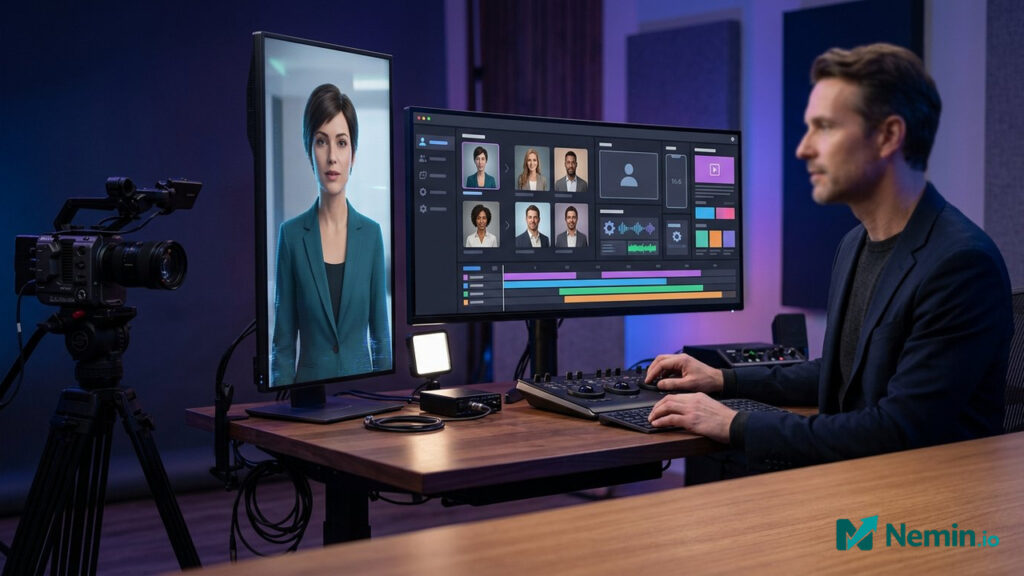
Influencer marketing can give businesses access to recognizable personalities, established communities, and creator-led storytelling, but relying too heavily on external creators can introduce scheduling constraints, unpredictable costs, approval delays, inconsistent messaging, and reputational dependencies. An AI avatar generator offers brands another production option by creating synthetic presenters or digital characters for videos, advertisements, explainers, training materials, product demonstrations, and localized campaigns. Used responsibly, this technology can reduce dependence on influencers without pretending that artificial personalities provide everything a trusted human creator can offer.
The distinction is important. AI avatars and influencers solve overlapping but different marketing problems.
Influencers can bring established audiences, cultural relevance, personal credibility, and authentic communities. An AI-generated spokesperson generally does not arrive with those assets. What it can offer is greater production control, repeatability, localization, rapid iteration, and the ability to create presenter-led content without negotiating every piece with an independent personality.
For many businesses, the most practical strategy is therefore not “AI versus influencers.” It is deciding which content requires real creator relationships and which content can be produced efficiently using brand-controlled digital presenters.
In 2026, as generative video, synthetic speech, digital humans, and multimodal AI continue developing, that distinction is becoming increasingly useful for marketing teams.
This guide explains seven ways AI-generated avatars can reduce excessive influencer dependency, where they add genuine business value, what limitations marketers need to understand, and how to implement synthetic presenters transparently and responsibly.
Current-data note: generative AI platforms, pricing, model capabilities, advertising policies, and synthetic-media regulations change quickly. Rather than inventing “real-time” statistics, this article uses durable information and identifies areas where marketers should consult current vendor documentation, platform policies, and applicable law before deployment.
What Is an AI Avatar Generator?
An AI avatar generator is a software system that creates or animates a digital representation of a person or character using artificial intelligence.
Depending on the platform, users may be able to generate a synthetic presenter from text instructions, select a stock avatar, create an authorized custom avatar, transform a script into presenter-led video, synthesize speech, translate dialogue, or adapt content for different languages and formats.
The underlying technology varies by provider. Modern systems may combine generative video models, computer vision, text-to-speech technology, natural language processing, facial animation, lip synchronization, and other machine-learning techniques.
The output can range from a stylized character to a highly realistic virtual person.
How an AI Avatar Generator Differs From an Influencer
An influencer is generally a real creator or public personality whose value includes access to an audience and the relationship that person has developed with followers.
A synthetic avatar is fundamentally different.
It does not independently possess human experience, personal product preferences, or genuine lived testimony. It may be designed to represent a brand, explain information, deliver a script, or provide a consistent on-screen identity.
This creates a straightforward division:
Human influencer → audience relationship, personality, lived experience, social credibility, community.
AI avatar → controllable production, repeatability, scalability, localization, rapid creative adaptation.
A company that recognizes this difference can use each resource more appropriately.
Why an AI Avatar Generator Matters to Brands in 2026
Brands have historically needed an on-camera person whenever they wanted presenter-led video.
That might involve an employee, actor, spokesperson, customer, creator, or influencer. Each option involves practical requirements such as availability, filming, equipment, location, contracts, editing, usage rights, or reshoots.
Synthetic-media technology can change parts of this workflow.
After an appropriate avatar and production process are established, teams can potentially transform approved scripts into presenter-led videos without organizing a traditional shoot for every update.
That can be especially attractive for repeatable content such as product tutorials, onboarding videos, educational explainers, multilingual communication, internal training, and variations of advertising creative.
1. An AI Avatar Generator Gives Brands Greater Creative Control
One reason businesses become dependent on influencers is that the creator becomes part of the production infrastructure.
The brand may provide a brief, but the creator determines or influences delivery, appearance, scheduling, filming style, and revisions. This independence is often precisely what makes influencer content engaging. It can also create operational limitations.
A brand-controlled virtual presenter changes that relationship.
Control Scripts With an AI Avatar Generator
Synthetic presenters can generally work from an approved script.
This allows a business to establish the wording before production and check product claims, terminology, pricing, calls to action, and other important details.
For industries where messaging requires careful review, this can make production workflows easier to standardize.
It does not remove the need for compliance.
If an approved script contains a misleading claim, an avatar will simply deliver the misleading claim consistently. Human review therefore remains essential.
Update Content Without Rebooking a Creator
Imagine a software business publishes 30 tutorial videos and later changes part of its interface.
With traditionally filmed content, some videos might require a presenter to return for new footage.
With a suitable synthetic-presenter workflow, the company may be able to update affected scripts and regenerate relevant segments more efficiently, depending on the platform and project.
The same principle can apply when:
A price changes.
A product name changes.
A call to action is updated.
A disclaimer needs revision.
A new feature launches.
A campaign moves into another market.
This repeatability is one of the strongest operational arguments for virtual presenters.
AI Avatar Generator Consistency Across Campaigns
Human presenters naturally change over time. Wardrobe, location, lighting, vocal delivery, equipment, and availability may vary between recording sessions.
A digital presenter can provide greater visual and vocal consistency.
That can be useful for recurring explainers, onboarding libraries, educational content, and standardized brand communication.
Consistency should not become monotony, however. Audiences can still tire of an identical presentation format.
Brands need creative variation regardless of who—or what—is presenting.
Where AI Avatar Generator Control Becomes a Limitation
Total control can remove spontaneity.
Successful creators often understand how to make a message feel natural for their community. Their deviations from a corporate script may make the content more persuasive, not less.
A digital presenter cannot automatically reproduce genuine personal experience or creator-audience relationships.
Brands should therefore avoid treating control as synonymous with effectiveness.
2. An AI Avatar Generator Can Reduce Recurring Production Bottlenecks
Influencer campaigns involve coordination.
Brands may need to identify creators, contact them, negotiate terms, establish deliverables, approve concepts, wait for production, request revisions, and coordinate publication dates.
These steps are not inherently bad. They are part of working with independent creative professionals.
But not every piece of content requires that process.
Produce Repeatable Content With an AI Avatar Generator
A digital avatar can be particularly useful when the content is repeatable and informational.
Potential applications include:
- Product walkthroughs and feature explainers
- Frequently asked question videos
- Internal employee communications
- Learning and development material
- Customer onboarding
- Simple advertising variations
- Localized instructional content
- Event or campaign announcements
These formats often depend more on clear information than on the presenter’s independent audience.
This is where reducing influencer dependency can make operational sense.
Paying for creator access may be unnecessary when the purpose is simply to explain how a feature works.
Reduce the Need for Repeated Shoots
Traditional video production can involve cameras, microphones, lighting, locations, talent, makeup, crew, travel, post-production, and scheduling.
Not every project requires all of these elements, and high-quality human production can create results synthetic media cannot match. Nevertheless, AI avatars can reduce some production requirements for suitable use cases.
A marketer can prepare a script, generate a draft, review it, make corrections, and create another version without reconstructing a physical shoot each time.
The precise savings depend on the tool, video quality, organization, approval process, and alternative production method.
Therefore, claims that avatars universally reduce video costs by a specific percentage should be treated cautiously unless supported by data from the actual workflow.
An AI Avatar Generator Is Not Automatically Cheaper
AI has its own costs.
Businesses may pay subscriptions, generation fees, enterprise licensing, API charges, storage, localization costs, staff time, review costs, and custom-avatar fees.
High-quality outputs may require repeated generation and manual editing.
The right comparison is therefore total production cost per useful approved asset—not simply the price displayed on a vendor’s subscription page.
Measure Production Efficiency Accurately
Organizations can evaluate an avatar workflow by measuring:
Time from script to approved asset
Average revision cycles
Cost per completed video
Human editing time
Localization time
Error rate
Viewer engagement
Business outcomes associated with the content
These internal measurements provide more useful real-world evidence than generic claims that “AI is faster.”
3. An AI Avatar Generator Makes Localization More Scalable
International campaigns create another influencer dependency problem.
A creator who is effective in one country may not speak the language or understand the cultural expectations of another.
Brands often need new talent for each market.
Synthetic presenters can make localization more scalable, particularly when platforms support multilingual text-to-speech, dubbing, translation, or lip synchronization.
Localize an AI Avatar Generator Campaign
Suppose a company produces an English product explainer.
A localization workflow might involve translating the script, having a native or qualified reviewer check it, adapting cultural references, generating localized narration, reviewing pronunciation, and producing the new video.
When the system supports the target language effectively, the same visual presenter may be used across multiple versions.
This can create stronger consistency across markets.
The important word is “localization,” not merely “translation.”
Literal translation can produce awkward or inappropriate communication.
Why Human Language Review Still Matters
AI translation has improved significantly, but marketers should not assume every generated sentence is natural, culturally appropriate, or technically correct.
Human reviewers can catch problems involving:
Idiomatic language
Local terminology
Formality
Product names
Legal requirements
Cultural references
Pronunciation
Regional differences
An avatar might pronounce a technically valid translation incorrectly or deliver emotionally sensitive content in an unnatural manner.
Qualified local review remains valuable.
AI Avatar Generator Localization vs. Local Influencers
There are situations where a local influencer remains the better option.
If a company needs local cultural credibility, community engagement, original creator storytelling, or access to a specific regional audience, a digital presenter cannot automatically replace those benefits.
For instance, if a brand is expanding into the British market and requires authentic storytelling, hiring local UK UGC creators provides immediate cultural nuances, recognizable regional accents, and relatable home settings that resonate deeply with local shoppers.
If the objective is instead to deliver a standardized product explanation in several languages, the avatar approach may be more efficient.
Matching the production method to the objective is more useful than treating either technology as universally superior.
4. An AI Avatar Generator Helps Brands Create Always-Available Spokespeople
Human talent has schedules.
Influencers work with other businesses, travel, take breaks, negotiate contracts, and may be unavailable when a company needs an urgent campaign update.
A brand-owned or properly licensed synthetic presenter does not have the same scheduling limitations.
This is particularly useful for businesses producing frequent informational content.
Build a Recognizable AI Avatar Generator Character
Some brands may choose to create a recurring virtual spokesperson with consistent visual characteristics, tone, and purpose.
The character can become part of the company’s content system.
For example, one digital presenter might specialize in product education while another handles technical tutorials.
Consistency can make content recognizable, but companies should decide carefully whether the avatar represents a fictional character, an AI-generated presenter, or a digital likeness based on an actual person.
Those distinctions have legal and ethical consequences.
Ownership and Licensing Matter
Creating a digital character does not automatically give a company unrestricted rights to every component involved.
Businesses should review current vendor terms related to generated assets, commercial usage, custom avatars, voice cloning, model training, licensing, and termination.
If the avatar resembles a real person, consent and likeness rights become especially important.
Never clone an individual’s face or voice without appropriate authorization.
The same principle applies to celebrities and influencers.
An AI avatar generator should not become a shortcut for simulating an endorsement that never happened.
Avoid Fake Influencer Endorsements
A synthetic presenter saying, “This product transformed my life,” can create a misleading impression if the supposed person has no real experience at all.
Brands should distinguish scripted brand communication from genuine testimonials.
A virtual spokesperson can explain features or deliver approved marketing copy. It should not be portrayed as having human experiences it never had.
Transparency becomes more important as synthetic people become visually convincing.
AI Avatar Generator Disclosure Builds Clarity
Disclosure obligations vary by jurisdiction, platform, content type, and the way synthetic media is used.
Some platforms have policies specifically covering altered or synthetic media, particularly when realistic content could mislead audiences. Laws and regulatory requirements are also evolving.
Organizations should check the latest rules applicable to their market and channel.
Even where a particular disclosure is not legally mandatory, clearly communicating that a realistic fictional presenter is synthetic can help prevent audience confusion.
5. An AI Avatar Generator Enables Faster Creative Testing
Influencer content can be difficult to test systematically because every variation may require another recording, edit, approval, or creator deliverable.
Generative production lowers the friction involved in creating variations.
This makes AI avatars potentially valuable for creative experimentation.
Test Messaging With an AI Avatar Generator
A marketer might keep the presenter and core visual composition constant while testing different:
Opening hooks
Problem statements
Value propositions
Calls to action
Video lengths
Product demonstrations
Explanations
Offers
This can make it easier to explore which communication strategies deserve additional investment.
However, generating 50 versions does not mean a business should launch 50 versions at once.
Testing capacity depends on audience size, advertising budget, experimental design, and campaign objectives.
Change One Meaningful Hypothesis at a Time
Suppose a business wants to understand whether customers respond more strongly to convenience or affordability.
Two avatar videos could use similar production while emphasizing different benefits.
That creates a relatively interpretable comparison.
If one video changes the avatar, background, script, offer, music, length, opening shot, and call to action simultaneously, the marketer may know which creative won but not which factor contributed to the difference.
Generative AI makes production easier; it does not remove the principles of experimentation.
AI Avatar Generator Data Should Guide Iteration
Performance information can inform the next creative cycle.
Depending on the campaign goal, teams may evaluate indicators such as video retention, completion rate, click-through rate, qualified lead rate, conversion rate, cost per acquisition, or revenue-related measures.
No single metric establishes universal creative quality.
For example, a sensational opening might produce high video engagement but attract poorly qualified clicks.
The metric should therefore align with the actual business objective.
6. An AI Avatar Generator Can Lower Influencer Concentration Risk
Influencer dependency is not only a production issue. It can also become a business risk.
If a significant share of a brand’s communication depends on one personality, the company becomes exposed to factors it cannot fully control.
A creator could stop working with the business, increase rates, change direction, lose audience relevance, become unavailable, or experience a public controversy.
Diversification can reduce this concentration.
Build Owned Content Capabilities With an AI Avatar Generator
An AI avatar can become one part of a company’s owned-media production capability.
The company controls its website, customer education, email, product pages, help center, and its own social accounts. Using a consistent virtual presenter within these channels can reduce the need to rent another person’s distribution for every video.
This does not reproduce the reach of an influencer.
Instead, it shifts some communication into channels where the brand controls the production process and audience relationship more directly.
That difference can support a healthier marketing mix.
Influencer Relationships Still Have Strategic Value
Reducing dependency should not be confused with eliminating influencer marketing.
Real creators can provide something a synthetic presenter fundamentally lacks: their own community.
A trusted creator can demonstrate a product, answer followers’ questions, provide genuine opinions, create culturally relevant storytelling, and expose a brand to an audience it might struggle to reach through its own channels.
For relevant campaigns, those capabilities are highly valuable.
The stronger approach is diversification.
Brands can use influencers where creator credibility and distribution matter, employees or experts where human expertise matters, customers where authentic experiences matter, and virtual presenters where consistency and scalable production matter.
AI Avatar Generator vs. Influencer: Choose by Objective
For product tutorials, a synthetic presenter may be efficient.
For genuine testimonials, real customers are more appropriate.
For access to a creator’s community, hire the creator.
For internal training, a virtual presenter may provide useful consistency.
For an executive statement during a sensitive event, a real executive may be much more appropriate.
For localized versions of a standardized explainer, synthetic presenters can be practical.
There is no reason one method needs to replace all the others.
7. An AI Avatar Generator Can Improve Long-Term Content Scalability
Content requirements tend to multiply.
A business may initially need one product video. Later it needs separate versions for different markets, formats, audiences, product updates, onboarding stages, landing pages, sales presentations, and support articles.
Traditional production can struggle as the content library expands.
Synthetic production can make certain categories easier to maintain.
Create Modular Content With an AI Avatar Generator
Rather than generating completely new videos every time, teams can design modular scripts.
For example:
Introduction → audience-specific problem → feature explanation → proof or evidence → call to action.
Each component can be updated independently.
A software company might maintain several opening sections for different industries while using the same accurate feature demonstration in the middle.
This approach supports efficient personalization without requiring every video to begin from zero.
Maintain a Source of Truth
Scalable generation makes content governance more important.
If 100 videos mention a feature and that feature changes, the company needs to know which assets are affected.
A centralized source of truth can contain:
Approved product descriptions
Current pricing
Feature specifications
Offers
Brand terminology
Legal language
Disclaimers
Pronunciation guidance
Audience definitions
Expired claims
Generation should reference this approved material rather than rely on a model’s general knowledge.
This reduces the chance that outdated or invented information enters customer-facing content.
Version Control for AI Avatar Generator Content
Businesses should track generated assets much like other production materials.
Useful metadata includes creation date, script version, model or platform used, language, market, owner, approval status, expiration date, and usage rights.
This becomes increasingly valuable as the content library grows.
An obsolete avatar video can be just as misleading as an obsolete webpage.
AI Avatar Generator vs. Influencer Marketing: What Actually Changes?
The key difference is ownership of the production mechanism and relationship with the audience.
Influencer marketing generally depends on external human creators whose identities, audiences, and credibility exist independently of the brand.
Avatar-based marketing creates a synthetic communication asset that may be more directly controlled by the business, subject to vendor terms and relevant rights.
This produces different strengths.
An influencer may offer reach, authentic personality, independent opinion, established trust, community engagement, and cultural relevance.
A virtual avatar may offer rapid revisions, multilingual production, consistent appearance, repeatability, availability, controlled messaging, and scalable video production.
Neither category is inherently better.
The appropriate choice depends on what the campaign needs.
How to Implement an AI Avatar Generator Responsibly
Businesses considering avatar technology should begin with a specific production problem.
Do not start with “We need AI avatars because everyone is using AI.”
Start with something measurable:
“Our tutorial videos take too long to update.”
“We need educational videos in six languages.”
“We are relying on expensive creator production for simple product explainers.”
“We need more creative variants for testing.”
Once the use case is defined, compare avatar production against the current workflow.
Evaluate quality, time, total cost, viewer response, localization requirements, accessibility, security, commercial rights, and review processes.
A sensible implementation sequence is:
Use case → provider evaluation → rights review → avatar design → approved source material → script → generation → human quality assurance → disclosure review → publication → measurement → iteration.
This keeps the technology subordinate to the business objective.
Choosing an AI Avatar Generator
There is no single best platform for every organization.
Different tools specialize in different areas, such as photorealistic presenters, stylized characters, multilingual speech, video translation, custom avatars, enterprise controls, APIs, or advertising production.
Evaluate a provider using requirements relevant to your actual workflow.
Video quality matters, but so do licensing and governance.
Investigate commercial-use rights, consent mechanisms, privacy protections, data retention, security controls, custom-avatar policies, voice-cloning safeguards, export quality, language coverage, API availability, collaboration features, and support.
Pricing should be verified directly from the vendor because subscription plans and usage limits can change.
Test an AI Avatar Generator Before Scaling
A controlled pilot is more informative than a long feature comparison.
Choose several representative scripts.
Generate the content.
Have relevant employees review factual accuracy, visual quality, pronunciation, timing, brand suitability, and editing requirements.
Then compare the completed assets with your current production approach.
The question is not whether the technology produces an impressive demonstration.
The question is whether it improves your actual workflow.
AI Avatar Generator Risks Brands Should Understand
Synthetic media creates risks that conventional video teams may not face in exactly the same way.
One is impersonation.
Realistic voice and facial generation can be abused to imitate real people. Organizations need strict consent procedures and should avoid creating unauthorized likenesses.
Another is deception.
A fictional presenter should not be framed as a real customer who personally experienced a product when that experience never occurred.
Another concern is bias and representation.
Teams should review generated people and narratives for stereotypes, inappropriate representations, or unintended cultural signals.
Intellectual property also requires attention.
Commercial rights and generated-content terms differ between providers and jurisdictions. Businesses should review the applicable rules rather than assume anything produced by software is automatically free of rights concerns.
Security and privacy matter as well.
Uploading an employee’s image, voice, confidential script, or unreleased product information to an external platform may have implications depending on the service’s data practices.
AI Avatar Generator Transparency and Trust
One of the biggest strategic mistakes would be using increasingly realistic avatars primarily to trick customers into believing they are watching independent human creators.
That approach can undermine the very trust brands hope to create.
Synthetic presenters work best when their role is legitimate and understandable.
An avatar can be a virtual brand presenter.
It can explain a product.
It can guide users through an interface.
It can introduce training material.
It can communicate standardized information across languages.
None of those tasks requires pretending that the character has a human biography or personal product experience.
Clear positioning lets brands benefit from synthetic media without manufacturing false authenticity.
How AI Avatar Generator Technology Changes Creator Economics
Generative avatars can change which parts of content production require paid human talent, but they do not eliminate the creator economy.
Instead, they can shift where human value is concentrated.
When basic presenter-led production becomes easier to automate, genuinely distinctive human contributions may become more important: original ideas, community relationships, humor, taste, subject-matter expertise, lived experience, performance, storytelling, and trust.
This suggests an important future distinction.
Commodity presentation can become easier to generate.
Human credibility cannot simply be generated in the same way.
Brands should therefore automate repetitive communication carefully while continuing to invest in genuine human relationships where authenticity is central to the objective.
Measuring Whether an AI Avatar Generator Actually Reduces Dependency
The business case should be measured rather than assumed.
First, establish the baseline.
How many influencer or presenter-led assets does the organization currently commission? How long does production take? What does each approved asset cost? How often are updates delayed because talent is unavailable? Which content actually requires access to an influencer’s audience?
After introducing synthetic presenters, compare equivalent content categories.
Useful indicators can include production turnaround time, cost per approved asset, number of revisions, localization speed, creative-testing capacity, content freshness, viewer retention, conversion metrics, and the percentage of presenter content requiring external talent.
The analysis should also capture quality.
If production costs fall while customer trust or conversion performance deteriorates significantly, reducing creator expenditure may not represent a net improvement.
Efficiency needs to be evaluated alongside effectiveness.
Real-Time AI Avatar Generator Data in 2026
Because this technology category evolves rapidly, current purchasing decisions require live verification.
Before selecting a platform, check the provider’s official website for current pricing, generation limits, supported languages, custom-avatar options, voice features, API access, commercial licensing, privacy terms, and security documentation.
Also review current policies for every distribution channel you use.
Major social and advertising platforms can maintain requirements concerning synthetic or manipulated media, disclosures, political content, impersonation, and deceptive practices. These policies can change faster than evergreen marketing articles can be updated.
For legal or regulatory questions, consult the applicable authority or qualified professional in the relevant jurisdiction.
This source-first approach is more reliable than using outdated market statistics as though they were real-time data.
The Future of AI Avatar Generator Marketing
Synthetic presenters are likely to become one component of broader generative-media workflows.
Text, speech, image, animation, translation, video generation, personalization, and analytics can increasingly interact within the same production pipeline.
For marketers, this can shorten the distance between an idea and a finished campaign.
It can also dramatically increase the amount of content organizations are capable of producing.
That makes judgment more important.
The competitive advantage will not necessarily belong to the company generating the most avatar videos. Excess low-quality content can become noise.
The stronger advantage may belong to organizations that know which messages deserve production, which should be delivered by an AI presenter, which require a genuine human voice, and how to evaluate the outcome accurately.
FAQs
1. What is an AI avatar generator?
An AI avatar generator uses artificial intelligence to create or animate digital characters or synthetic presenters for applications such as marketing, training, explainers, localization, and video production.
2. Can an AI avatar generator replace influencers?
It can replace some routine presenter-led production, but it does not automatically replace an influencer’s audience, personal credibility, human experience, creative voice, or community relationship.
3. How does an AI avatar generator reduce influencer dependency?
It allows brands to produce certain presenter-led videos internally, make revisions more quickly, create localized versions, maintain consistent characters, and test creative without booking a creator for every asset.
4. Is using an AI avatar generator legal?
Legality depends on the content, likeness, voice, consent, jurisdiction, platform, and use case. Businesses should verify current intellectual-property, privacy, advertising, and synthetic-media requirements relevant to their operations.
5. Should brands disclose an AI avatar generator character?
Disclosure requirements vary, but brands should avoid misleading audiences about realistic synthetic media. Check current platform policies and applicable laws, and use clear disclosure where required or needed to prevent confusion.
6. Is an AI avatar generator cheaper than hiring influencers?
It can reduce production costs for some repeatable content, but savings are not guaranteed. Compare total costs—including subscriptions, generation, editing, review, licensing, and staff time—with the value influencers provide through production and audience access.
Conclusion
An AI avatar generator can reduce dependency on influencers by giving brands a scalable option for presenter-led content that does not require an external creator for every script, revision, market, or creative variation. The strongest use cases are typically repeatable tasks such as product education, onboarding, localization, standardized explainers, and creative testing. That does not make human influencers obsolete: creators still provide audiences, lived experience, cultural relevance, independent personality, and relationships that a synthetic character cannot authentically reproduce. A sustainable strategy is therefore based on diversification rather than wholesale replacement.
Use an AI avatar generator where consistency, speed, localization, and production control matter; use real creators where human trust and community genuinely drive the value. With transparent synthetic-media practices, proper consent, strong quality assurance, accurate claims, and current policy compliance, brands can reduce unnecessary influencer dependency while preserving the human relationships that still make influencer marketing valuable.