
Well-designed Bespoke artificial planters provide a practical way to introduce realistic greenery into spaces where standard containers, fixed sizes, or living plants may not be...
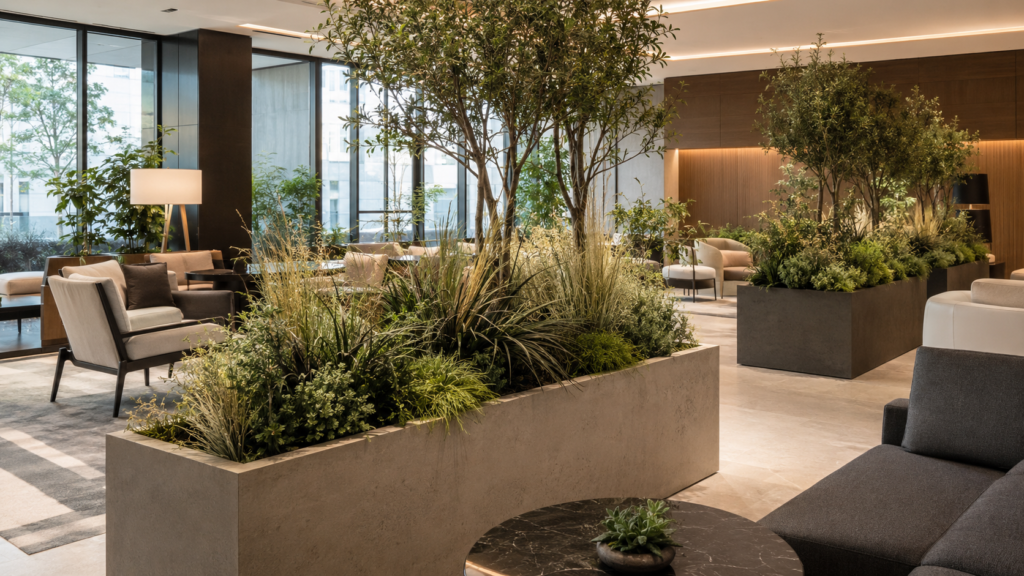
Well-designed Bespoke artificial planters provide a practical way to introduce realistic greenery into spaces where standard containers, fixed sizes, or living plants may not be suitable. Instead of adapting a design around an off-the-shelf planter, property owners and designers can choose dimensions, finishes, planting styles, and arrangements that fit the available space. The result can be more balanced, purposeful, and visually consistent with the surrounding interior or exterior.
Greenery can soften architectural lines, define seating areas, improve privacy, and make an entrance feel more welcoming. However, maintaining living plants can be difficult in buildings with limited daylight, irregular watering schedules, changing temperatures, or heavy daily footfall. Artificial planting offers an alternative that maintains its intended appearance without watering, pruning, feeding, or seasonal replacement.
This guide explains how custom artificial planters work, where they can be used, which design elements should be considered, and how to plan an arrangement that looks natural while meeting practical requirements.
What Are Bespoke Artificial Planters?
Bespoke artificial planters are made-to-order containers and planting arrangements designed around the measurements, appearance, and functional needs of a particular space. They may contain artificial trees, grasses, flowers, ferns, topiary, trailing foliage, or mixed greenery.
A bespoke project can involve a single statement planter or a coordinated series of displays for several rooms, floors, entrances, or business locations. The planter’s size, shape, colour, material, planting density, and artificial foliage can be selected to support the surrounding design.
Common formats include:
- Long artificial trough planters
- Tall planters for entrances and reception areas
- Artificial tree planters
- Low rectangular divider planters
- Decorative flower arrangements
- Window and terrace planters
- Freestanding privacy screens
- Coordinated office planting displays
- Large commercial feature planters
- Compact planters for restricted spaces
Unlike a standard product selected only by appearance, a made-to-measure planter should consider access, weight, visibility, safety, maintenance, and how people use the surrounding area.
Why Standard Planters Do Not Always Work
Ready-made planters can be suitable for simple projects, but their fixed dimensions may create problems in unusual or carefully designed spaces. A container may be too wide for a walkway, too short to screen a seating area, or too heavy to move through restricted access.
Standard artificial planting may also look disconnected from the architecture. For example, a small round pot can appear visually weak in a wide hotel entrance, while a dense planter may overwhelm a narrow office corridor.
Common limitations of standard planters include:
- Incorrect length, width, or height
- Limited colour and finish options
- Poor fit around furniture
- Insufficient planting density
- Inappropriate weight
- Restricted delivery access
- Unsuitable materials for outdoor use
- Inconsistent styles across multiple locations
- Inadequate screening or separation
- A planting arrangement that does not match the space
Bespoke artificial planters address these issues by beginning with the location and purpose rather than forcing a standard product into an unsuitable position.
Main Benefits of Bespoke Artificial Planters
Custom artificial planting offers both visual and operational benefits. The exact value depends on the design quality, materials, installation, and intended environment.
Made to Fit the Available Space
Made-to-measure planters can be designed around specific architectural features, furniture layouts, walkways, walls, windows, and boundaries. This allows the display to look integrated rather than added as an afterthought.
A long trough can follow the edge of a terrace, while a narrow planter can introduce greenery without restricting movement through a reception area. Similarly, several matching units can create a consistent design across a large workplace.
Low Routine Maintenance
Artificial plants do not require watering, feeding, pruning, soil replacement, or scheduled horticultural visits. They still need occasional cleaning and inspection, but their routine care is generally more predictable than that of living plants.
This can be useful for commercial properties where staff may not have time to maintain greenery or where professional plant-care visits would create an ongoing expense.
Consistent Appearance Throughout the Year
Living plants respond to light, temperature, watering, pests, and seasonal conditions. Their shape, colour, and condition may change over time. Artificial planting maintains a more consistent visual presentation when it is selected appropriately and cared for properly.
This consistency is particularly useful in reception areas, restaurants, hotels, retail spaces, and event venues where the appearance of the environment contributes to the customer experience.
Suitable for Low-Light Areas
Some indoor spaces receive very little natural light. Corridors, internal offices, basements, windowless reception areas, and shopping-centre units may not provide suitable conditions for living plants.
Artificial foliage can bring visual greenery into these areas without depending on sunlight. However, designers should still consider how the plants look under the building’s existing artificial lighting.
Flexible Style and Scale
Bespoke artificial planters can be created in different shapes, heights, colours, and planting styles. A project might require structured topiary for a formal entrance, tall grasses for a modern office, or mixed foliage for a relaxed hospitality interior.
This flexibility helps the planting support the design concept rather than compete with it.
Where Bespoke Artificial Planters Can Be Used
Custom planters can support residential, commercial, hospitality, retail, and outdoor projects. Their design should reflect the way each environment operates.
Offices and Corporate Workplaces
Offices often contain open-plan desks, breakout areas, meeting spaces, reception desks, and shared walkways. Bespoke artificial planters can help divide these zones without installing permanent walls.
Long trough planters can be positioned between workstations, while taller arrangements may soften empty corners or create a welcoming reception feature. Artificial greenery can also be coordinated with company colours and interior finishes without requiring staff to manage daily plant care.
Hotels and Guest Accommodation
Hotels need decorative features that remain presentable despite frequent use. Artificial planters can frame entrances, soften reception areas, define lounge seating, and add greenery to corridors or dining spaces.
A coordinated design can also help create visual continuity between the entrance, lobby, restaurant, and guest areas. However, materials, positioning, and fire-safety requirements must be considered for the specific property.
Restaurants, Cafés, and Bars
Hospitality venues frequently use planting to create atmosphere and separate tables. Bespoke troughs can provide visual boundaries without making guests feel enclosed.
Trailing plants may suit relaxed interiors, while artificial olive trees, palms, grasses, or flower arrangements can support a specific design theme. The planters should not obstruct service routes, emergency access, sightlines, or customer movement.
Retail Stores and Shopping Centres
Retail greenery can soften display areas, improve entrances, and create attractive visual zones. Artificial plants are especially practical where frequent watering could introduce moisture near merchandise, flooring, or electrical equipment.
Custom dimensions allow planters to fit around counters, seating, window displays, and promotional areas. For multi-location retailers, a repeatable bespoke design can help maintain consistency between branches.
Salons, Spas, and Wellness Spaces
Greenery is often associated with calm, nature-inspired interiors. Bespoke artificial planters can support that atmosphere in salons, treatment rooms, waiting areas, and spa receptions without adding complicated maintenance.
The foliage should complement the lighting, wall colours, furniture, and overall level of visual simplicity.
Residential Interiors
Homeowners can use artificial planters in living rooms, conservatories, kitchens, hallways, and home offices. A custom design may be helpful when a room contains an awkward recess, a wide empty wall, or limited natural light.
Artificial tree planters can provide height, while compact foliage displays can soften shelves, cabinets, or unused corners.
Patios, Balconies, and Terraces
Outdoor areas may benefit from artificial planting where watering, drainage, seasonal replacement, or exposure makes living plants impractical.
Outdoor bespoke artificial planters can define seating, decorate entrances, add privacy, or create a greener view from interior windows. Materials and foliage should be selected for outdoor conditions rather than assuming every artificial plant is suitable for prolonged exterior exposure.
Popular Styles of Bespoke Artificial Planters
Different planter styles serve different visual and functional purposes.
Bespoke Trough Planters
Trough planters are long, rectangular containers that work well beside walls, between seating areas, along terraces, or in front of windows. They can contain grasses, flowers, foliage, topiary, or mixed planting.
Their linear shape makes them useful for creating boundaries. However, the height and planting density should be chosen carefully. A low arrangement preserves visibility, while a taller display creates stronger separation.
Artificial Tree Planters
Artificial trees add height and structure to a room. They can be used as individual statement pieces or combined with smaller foliage for a layered arrangement.
Popular styles may include artificial olive trees, palms, ficus trees, bamboo, bay trees, or shaped topiary. The size of the planter must visually support the tree so the arrangement appears stable and proportionate.
Artificial Flower Planters
Flower displays introduce colour without seasonal planting or regular replacement. They can be designed around a specific palette, brand interior, event theme, or surrounding décor.
A natural-looking arrangement usually benefits from variation in flower size, height, foliage, and spacing. Overly symmetrical placement can make artificial flowers appear less realistic.
Tall Entrance Planters
Tall planters can frame doorways, reception desks, signs, and building entrances. They are particularly effective when the architecture requires vertical emphasis.
The planter should not obstruct opening doors, pedestrian movement, visibility, or accessibility. Outdoor entrance planters also need appropriate stability for their location.
Artificial Privacy Planters
Privacy planters combine a trough or container with taller artificial grasses, bamboo, hedging, or leafy plants. They can help screen restaurant tables, office desks, terraces, balconies, and neighbouring views.
The design should balance privacy with safety and openness. A display that is too dense or tall may block important sightlines or make a small area feel restricted.
How to Choose the Right Size
Accurate measurements are essential when planning bespoke artificial planters. A few centimetres can affect access, alignment, furniture placement, and the finished visual balance.
Measure:
- The maximum available length
- The desired planter width
- The container height
- The total height including plants
- Distance from nearby doors
- Walking clearance
- Distance from furniture
- Lift, stairway, and doorway access
- Outdoor boundary dimensions
- Available loading and installation space
The total planted height matters as much as the planter itself. A 60-centimetre container filled with tall grasses or trees may create a much higher visual barrier than expected.
It is also helpful to photograph the space from several angles. Images allow the designer to understand wall colours, furniture proportions, lighting, architectural features, and potential access restrictions.
Choosing Materials and Finishes
The planter material affects appearance, weight, durability, cost, and suitability for the installation.
Possible options may include:
- Powder-coated metal
- Steel
- Fibreglass
- Composite materials
- Lightweight constructed containers
- Decorative liners
- Wood-effect finishes
- Stone-effect surfaces
- Matte or gloss finishes
- Custom-painted finishes
A commercial entrance may need a durable, easily cleaned surface, while an office interior may prioritise lightweight construction and colour matching. Outdoor settings require materials and finishes selected for exterior exposure.
Planter colour should support the surrounding design. Neutral black, white, grey, and stone shades often work in modern interiors, while warmer metallic or wood-effect finishes may suit hospitality and residential spaces.
The finish should also be considered under actual lighting. A highly reflective surface may appear attractive in a showroom but produce distracting glare under strong interior lights.
Selecting Realistic Artificial Plants
The quality of the planting arrangement is determined by more than the individual plants. Scale, texture, colour, density, and positioning all influence realism.
A successful display may combine:
- Different leaf sizes
- Varied shades of green
- Multiple plant heights
- Upright and trailing foliage
- Natural spacing
- Textured artificial soil or decorative stone
- Plants suited to the visual character of the location
Plants should match the setting. Tropical foliage may look appropriate in a bright leisure interior but less convincing in a traditional corporate reception. Similarly, formal topiary may suit a hotel entrance better than a relaxed café.
The arrangement should avoid looking excessively perfect. Small variations in angle and height can create a more organic appearance. Once installed, stems and leaves may need to be carefully shaped so they do not remain compressed from packaging.
Indoor and Outdoor Design Considerations
Indoor and outdoor artificial planting face different conditions. A product that performs well indoors may not be suitable for constant outdoor use.
Indoor Planters
Indoor displays should be planned around:
- Available light and artificial lighting
- Heating and air-conditioning
- Fire-safety requirements
- Customer and employee movement
- Cleaning routines
- Furniture layouts
- Electrical outlets
- Emergency routes
Commercial projects may require fire-resistant or specially treated foliage. Requirements vary by property, so the relevant building standards and site policies should be confirmed before ordering.
Outdoor Planters
Outdoor arrangements may face:
- Sunlight
- Rain
- Wind
- Temperature changes
- Pollution
- Contact from people
- Debris
- Surface drainage
- Movement or instability
UV-protected artificial plants can help reduce premature fading, but protection levels and expected performance vary. No artificial foliage should be assumed to remain unchanged indefinitely under strong outdoor exposure.
The planter may also require suitable weighting or fixing, particularly in exposed locations. A professional supplier should be informed about the site conditions before finalising the design.
Using Planters to Divide Open Spaces
Bespoke artificial planters offer a flexible alternative to permanent partitions. They can guide movement, create visual zones, and provide separation while preserving a more open atmosphere.
In an office, planters can distinguish workstations from informal seating. In a restaurant, they can divide tables without constructing walls. On a terrace, they can establish boundaries or screen neighbouring areas.
For successful space division, consider:
- Desired level of privacy
- Total planted height
- Visibility across the room
- Access routes
- Cleaning access
- Wheelchair movement
- Emergency exits
- Conversation noise
- Lighting
- Stability
The display should support how the space functions. It should never create a hidden obstacle, narrow an important walkway, or interfere with emergency access.
The Bespoke Design and Ordering Process
The exact ordering process varies between suppliers, but a custom project typically follows several stages.
Define the Purpose
Begin by identifying what the planter needs to accomplish. It may provide decoration, privacy, height, colour, space separation, or a combination of functions.
Measure the Space
Record accurate dimensions and check all delivery routes. Large completed planters may not fit through standard doors, lifts, or staircases unless the design accounts for access.
Share Photographs and Inspiration
Photographs help explain the environment, while reference images communicate preferred colours, foliage styles, and planting density. They should guide the design without forcing an unsuitable arrangement into a different space.
Select the Planter
Choose the dimensions, shape, material, colour, finish, and approximate weight. Confirm whether the planter will be delivered assembled or completed on site.
Choose the Artificial Planting
Select trees, grasses, flowers, shrubs, or mixed foliage. Consider total height, realism, density, and whether the product needs outdoor or fire-resistant properties.
Review the Proposal
Before approving the order, check measurements, materials, colours, total height, planting style, delivery details, installation responsibilities, and maintenance instructions.
Confirm Delivery and Installation
Large bespoke artificial planters may require specialist handling. Confirm parking, loading access, stairs, lift dimensions, site hours, floor protection, and the number of people needed for installation.
Maintenance and Long-Term Care
Artificial planting requires less maintenance than living greenery, but it is not completely maintenance-free. Dust, fingerprints, outdoor debris, and accidental movement can affect its appearance.
Routine care may include:
- Light dusting
- Wiping planter surfaces
- Cleaning leaves with an appropriate method
- Reshaping compressed stems
- Checking outdoor displays after severe weather
- Inspecting fixings and stability
- Removing trapped litter
- Reviewing signs of fading or damage
- Replacing individual damaged stems when practical
Cleaning products should be tested carefully because harsh chemicals may affect foliage colour or planter finishes. The supplier’s care instructions should take priority.
Commercial sites can add artificial planting to their regular cleaning and safety inspection schedules. This prevents the display from being overlooked once it has become part of the environment.
Common Planning Mistakes to Avoid
One common mistake is selecting plants before understanding the space. A visually attractive tree or flower arrangement may still be the wrong height, style, or density for the intended location.
Other mistakes include:
- Measuring only the planter and ignoring the planted height
- Forgetting to check delivery access
- Using indoor foliage outside
- Blocking walkways or doors
- Choosing a planter that looks too small for the area
- Making privacy screens excessively dense
- Ignoring fire-safety requirements
- Failing to plan for wind exposure
- Selecting colours without considering existing finishes
- Assuming artificial greenery never requires cleaning
- Using identical plants in an unnatural pattern
- Prioritising price over suitability
A clear design brief can prevent many of these problems. It should state the location, dimensions, intended function, preferred style, access limitations, and relevant performance requirements.
Are Bespoke Artificial Planters Worth the Investment?
The value of bespoke artificial planters depends on the project. A standard planter may be sufficient for a simple corner, temporary display, or flexible home arrangement. Custom design becomes more valuable when dimensions, brand consistency, privacy, access, or architectural integration are important.
Businesses may also value the predictable appearance and reduced plant-care requirements. Although artificial displays still need cleaning and occasional inspection, they do not depend on watering schedules or natural-light conditions.
When evaluating cost, consider:
- Expected length of use
- Number of locations
- Installation requirements
- Ongoing maintenance
- Replacement needs
- Visual importance of the area
- Required performance features
- Quality of the planter and foliage
The cheapest arrangement may not provide the best long-term result if the scale is incorrect, materials are unsuitable, or the foliage looks unrealistic.
Frequently Asked Questions
What are bespoke artificial planters?
Bespoke artificial planters are made-to-order containers and planting arrangements designed for a particular space. Customers can usually specify dimensions, finishes, plant styles, height, density, and practical requirements.
Can bespoke artificial planters be used outdoors?
Yes, custom artificial planters can be designed for outdoor spaces. However, the planter material, foliage, UV protection, drainage considerations, stability, and site exposure should be discussed before ordering.
Do artificial planters require maintenance?
They do not require watering, feeding, or pruning, but they still need occasional dusting, surface cleaning, reshaping, and inspection. Outdoor arrangements may require more frequent care.
Can artificial planters create privacy?
Yes. Trough planters filled with tall grasses, bamboo, hedging, or leafy plants can create visual screening. The appropriate height and density depend on the space and desired level of privacy.
Are bespoke artificial planters suitable for offices?
They can be used to divide work areas, decorate reception spaces, soften meeting rooms, and improve low-light corners. Commercial safety, access, cleaning, and fire-performance requirements should be considered.
How should a bespoke planter be measured?
Measure the available length, width, planter height, desired total planted height, walking clearance, and delivery access. Photographs and accurate site measurements help reduce design errors.
Can planter colours and finishes be customised?
Customisation options vary, but many projects can specify planter colour, surface finish, dimensions, material, and planting style. The final choice should coordinate with the surrounding architecture and furniture.
Do artificial plants look realistic?
High-quality artificial plants can create a convincing appearance when their scale, colour, texture, spacing, and arrangement suit the environment. Proper shaping after delivery also improves realism.
Can multiple business locations use the same planter design?
Yes. A repeatable design can help maintain visual consistency across offices, shops, hotels, or hospitality venues. Site-specific measurements and access should still be checked for each location.
How long does a bespoke planter project take?
Timescales vary according to design complexity, material availability, manufacturing, planting requirements, order quantity, and delivery arrangements. Customers should request a project-specific schedule before confirming the order.
Conclusion
Bespoke artificial planters provide a flexible way to add realistic, low-maintenance greenery to residential interiors, workplaces, hotels, restaurants, shops, terraces, and other carefully designed environments. By selecting the correct measurements, planter style, finish, foliage, density, and performance features, customers can create displays that look integrated with the space rather than added as an afterthought.
The strongest results begin with a clear purpose and accurate site information. Measurements, photographs, access routes, lighting, safety requirements, and environmental exposure should all be considered before approving a design. Once installed, occasional cleaning, reshaping, and inspection can help preserve the arrangement’s appearance.
Whether the objective is to soften an empty area, divide an open-plan interior, add year-round colour, or create greater privacy, bespoke artificial planters can combine decorative impact with practical simplicity. A carefully planned arrangement offers consistency, flexibility, and a natural-looking finish without the routine demands associated with maintaining living plants.