
Fulfillment companies are third-party logistics providers that store your inventory, pick and pack every order, and ship it to your customers for a per-order fee...
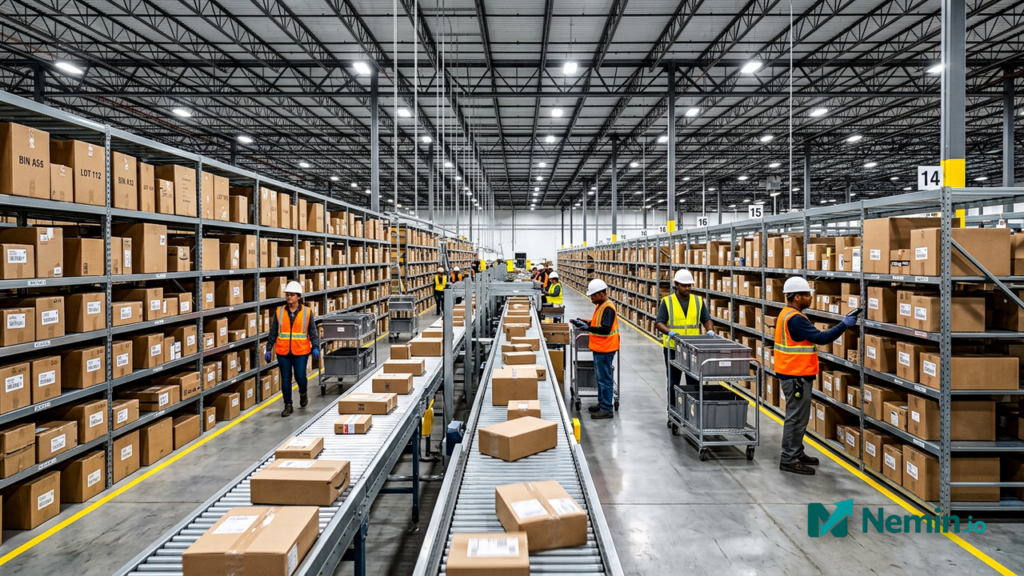
Fulfillment companies are third-party logistics providers that store your inventory, pick and pack every order, and ship it to your customers for a per-order fee plus storage. For a growing e-commerce brand, the best fulfillment companies combine fast two-day delivery coverage, transparent pricing, low error rates, and strong integrations with Shopify and other platforms. The five best fulfillment companies for growing businesses are ShipBob, ShipMonk, Red Stag Fulfillment, Fulfillment by Amazon, and eFulfillment Service, and this guide shows you how to choose between them.

When your store grows past a few orders a day, packing boxes in the spare room stops working, and that is the moment when fulfillment companies become the most important decision you will make as a business owner. The right partner ships faster, cuts your error rate, and frees your team to focus on products and marketing, while the wrong one turns happy customers into refund requests.
The e-commerce fulfillment space has matured quickly. Industry data shows that around 68 percent of U.S. shippers now use third-party logistics for at least part of their operations, and roughly 75 percent of e-commerce businesses outsource fulfillment to a specialist. Global third-party logistics revenue reached about $1.12 trillion in 2022 and is projected to grow toward $2.01 trillion by 2030, which tells you that fulfillment companies are no longer an experiment, they are the standard way to scale.
This guide names the five best fulfillment companies for growing businesses, compares them side by side, explains what they really charge, and gives you a decision framework so you can pick the provider that fits your order volume, product type, and budget.
What Are Fulfillment Companies?
Fulfillment companies, also called third-party logistics providers or 3PLs, run the operational side of e-commerce on your behalf. They receive your inventory, store it in warehouse facilities, pick items when a customer orders, pack them into the right boxes, print shipping labels, and hand the parcel to a carrier such as UPS, FedEx, or USPS. Many fulfillment companies also handle returns, kitting, subscription boxes, and custom packaging.
The difference between a fulfillment company and a simple shipping tool is physical inventory. A label printer does not hold your stock, but fulfillment companies actually store and move your product, which means they take on the warehousing and labor that most small teams cannot afford to build in-house.
What Fulfillment Companies Do Behind the Scenes
Every order that passes through a fulfillment company follows the same basic flow. The provider receives your shipment at the dock, checks it against your purchase order, and puts units into bins in the warehouse. When a customer places an order on your store, the provider’s system picks that order from the queue, sends a picker to the bin, packs the item with your branded inserts, weighs the parcel, and selects the cheapest carrier rate that meets your delivery promise.
Good fulfillment companies add reporting on top of that flow. You can see inventory counts in real time, track shipment status, and review accuracy rates, and most platforms sync with Shopify, WooCommerce, Amazon, and marketplaces so orders flow automatically without manual data entry. The best fulfillment companies make this data easy to read, so you always know where every order stands.
Why Growing E-Commerce Brands Outsource to Fulfillment Companies
Most growing brands start by shipping from home, and the numbers explain why that stops working. Industry research puts the per-order cost of in-house fulfillment around $4.00, while a third-party provider can handle the same order for roughly $2.50, and outsourced fulfillment consistently saves brands 20 to 30 percent on fulfillment expenses. The math improves further when you add the hours your team spends on post office trips, bubble wrap, and label printers.
There are five concrete reasons growing businesses move to fulfillment companies:
Faster delivery. Leading fulfillment companies place inventory close to customers, and networks like ShipBob reach a large share of the U.S. population within two days, which directly lifts conversion and repeat purchase rates.
Lower error rates. Professional fulfillment companies report accuracy around 99.8 percent, while a stressed owner packing at midnight makes mistakes that cost refunds and reviews.
Scalable labor. Fulfillment companies absorb order spikes without your team working overtime, which matters during holiday peaks and flash sales.
Better shipping rates. Providers negotiate volume discounts with carriers, and they can cut domestic shipping costs by 10 to 25 percent through zone-skipping and automated rate shopping.
Room to focus. When fulfillment companies own picking and packing, your team can spend its energy on product development, marketing, and customer experience, the activities that actually grow revenue.
The 5 Best Fulfillment Companies for Growing E-Commerce Brands
We evaluated the leading fulfillment companies on five criteria: order minimums, warehouse network, accuracy and guarantees, pricing transparency, and e-commerce integrations. Based on that comparison, these are the five best fulfillment companies for growing businesses in 2026.
1. ShipBob: The Best Fulfillment Companies Pick for Growing Brands Overall
ShipBob is the most popular choice among growing direct-to-consumer brands, and for good reason. The provider operates a network of more than 60 warehouse locations across the United States and abroad, including partner facilities, and that footprint delivers two-day shipping coverage to roughly 97 percent of the U.S. population.
ShipBob reports an error rate around 0.05 percent, integrates with more than 50 e-commerce platforms, and offers a clean dashboard where you can watch inventory move in real time. Its minimums are realistic for growing brands, about 400 orders per month in the United States with a monthly fulfillment and kitting minimum around $275, and pick-and-pack fees typically land between $0.99 and $1.50 per order.
Choose ShipBob when you sell lightweight products, sell across multiple channels, and want the widest warehouse coverage without managing several providers at once.
2. ShipMonk: Top Fulfillment Companies for Startups and Subscription Boxes
ShipMonk has built its reputation on flexibility and complex order types, and it is a favorite of startups, crowdfunding campaigns, and subscription box brands. The provider runs warehouses in the United States, Canada, and Europe, reports 99.9 percent accuracy, and has a monthly minimum around $250, which is lower than many competitors.
ShipMonk’s standout skill is kitting and batch processing. If you sell bundles, subscription boxes, or products that need assembly, ShipMonk combines the items before shipping, and it manages subscription cadences so repeat orders go out automatically. It integrates with more than 40 platforms and is a strong choice when your catalog includes many variants.
Choose ShipMonk when you run subscriptions, sell kits and bundles, or want a partner that can grow with a fast-moving startup catalog.
3. Red Stag Fulfillment: Best Fulfillment Companies for Heavy and High-Value Items
Red Stag Fulfillment is the specialist for heavy, fragile, and high-value products, and it backs its service with financial guarantees, which is rare among fulfillment companies. If Red Stag makes an error, it pays you $50 per mistake, and it guarantees zero shrinkage and on-time dispatch, with an error rate below 0.02 percent.
The trade-off is a smaller network. Red Stag runs two large warehouses in Knoxville, Tennessee, and Salt Lake City, Utah, and that pair still reaches about 96 percent of the U.S. population within two days. Its minimum is around 200 orders per month, and it handles oversized items without the weight limits that force other fulfillment companies to decline your product.
Choose Red Stag when you sell furniture, exercise equipment, electronics, or other products that need careful handling and insurance-grade accuracy.
4. Fulfillment by Amazon: The Best Fulfillment Companies Option for Amazon Sellers
Fulfillment by Amazon, usually called FBA, is the strongest fulfillment companies option when you sell on Amazon, because it makes your products Prime eligible. FBA stores inventory across more than 175 U.S. fulfillment centers, and Amazon handles picking, packing, shipping, customer service, and returns for your Amazon orders.
FBA has no order minimum, which makes it accessible to new sellers, but the fees are the highest of the five, typically $2 to $15 per unit depending on size, weight, and season, and Amazon charges storage fees for slow-moving inventory. Amazon Multi-Channel Fulfillment extends the same network to your own website, but its pricing and rules are less forgiving than dedicated e-commerce fulfillment companies.
Choose FBA when Amazon is your primary channel and Prime eligibility is a competitive advantage, and consider a dedicated provider for your own website.
5. eFulfillment Service: Budget-Friendly Fulfillment Companies for Early Growth
eFulfillment Service is built for brands that are growing but not yet ready for high minimums, and it is one of the friendliest fulfillment companies for early-stage sellers. It has no order minimum, no long-term contracts, and reported accuracy of 99.9 percent, which removes the biggest barrier for brands that are testing fulfillment for the first time.
The provider operates warehouses on the East and West Coasts of the United States, integrates with Shopify and WooCommerce among others, and keeps pricing simple, with pick-and-pack fees roughly in the $1 to $2 range per order. Setup is fast, and you can leave if the fit is wrong, which makes it a low-risk way for a growing brand to test third-party fulfillment.
Choose eFulfillment Service when you are below the minimums of larger providers, want to try outsourcing without a long commitment, or ship a straightforward catalog that does not need heavy kitting.

Fulfillment Companies Compared: Side by Side Table
This table summarizes the five best fulfillment companies so you can scan the differences quickly.
| Fulfillment Companies | Best For | US Warehouses | Accuracy | Order Minimum | Pick and Pack |
|---|---|---|---|---|---|
| ShipBob | Growing DTC brands overall | 60+ | 99.95% | 400 per month plus $275 fee | $0.99-$1.50 per order |
| ShipMonk | Subscriptions and kitting | 8-12 | 99.9% | About $250 per month | About $1.25 per order |
| Red Stag | Heavy and high-value items | 2 | Under 0.02% error | 200 per month | $2-$3 per order |
| Fulfillment by Amazon | Amazon sellers and Prime | 175+ | Not disclosed | None | $2-$15 per unit |
| eFulfillment Service | Early growth and low volume | 2 | 99.9% | None | $1-$2 per order |
The pattern in the table is clear. Fulfillment companies with the largest networks, like FBA and ShipBob, suit volume and speed, while specialists like Red Stag and ShipMonk win on guarantees and complex orders, and budget providers like eFulfillment Service lower the barrier to entry. Pick the column that matches your business, not the loudest marketing claim.
How to Choose Between Fulfillment Companies: A Decision Framework
Choosing between fulfillment companies comes down to four questions, and answering them honestly will narrow the field to one clear winner. Your answers point to different providers at different stages, which is why fulfillment companies publish such different minimums and fees.
How many orders do you ship per month? If you ship under 200, focus on fulfillment companies with no or low minimums, like eFulfillment Service. From 200 to 1,000, ShipMonk and ShipBob become realistic. Above 1,000, network size and negotiated carrier rates start to dominate the decision.
What are you selling? Heavy, fragile, or high-value products point to Red Stag. Subscription boxes and bundles point to ShipMonk. Amazon-native products point to FBA. Lightweight, standard items give you the widest choice of fulfillment companies.
Where are your customers? If most customers are in the United States, two or three well-placed warehouses are enough. If you sell globally, you need fulfillment companies with international locations, which favors ShipBob or ShipMonk.
What does the full contract look like? Compare setup fees, storage rates, returns processing, and minimums across fulfillment companies before you sign. A low pick-and-pack fee can be offset by high storage or returns costs, so ask for a sample invoice based on your real order profile.
What Fulfillment Companies Charge: Cost Breakdown
Pricing is where growing brands get surprised, because fulfillment companies rarely advertise a single number. The full cost is built from several components, and the average e-commerce brand pays $3 to $8 per order for complete fulfillment, with shipping making up the largest share.
Receiving. Fulfillment companies charge to unload and check your inbound inventory, typically $5 to $15 per pallet.
Storage. You pay for the space your inventory occupies, usually $15 to $40 per pallet per month, and slow-moving stock quietly inflates this line.
Pick and pack. The core service runs $2 to $5 per order, and this is where the comparison table above gets its range.
Shipping. Carriers charge based on weight and zone, and shipping often represents 50 to 70 percent of total fulfillment cost, so a provider with strong carrier discounts matters more than a cheap pick fee.
Returns. Processing a return costs $3 to $10, and online return rates can reach 20 to 30 percent for categories like apparel, which is why returns terms should be negotiated upfront.
A reasonable planning benchmark is 12 to 20 percent of product revenue for complete fulfillment including shipping. If your quote lands well outside that band, ask the provider to itemize each line, because fulfillment companies that hide costs in bundled pricing are usually the ones that surprise you later. Reputable fulfillment companies will happily explain every line item on a sample invoice.
Signs You Are Ready for Fulfillment Companies
You do not need a certain revenue number to hire fulfillment companies, you need the right conditions. If you recognize three or more of these signs, outsourcing is probably the next step.
You miss shipping deadlines. When orders pile up and packages leave late, fulfillment companies with dedicated pick teams fix the bottleneck immediately.
Your error rate is climbing. Wrong items and wrong addresses cost you reviews, and professional fulfillment companies run accuracy near 99.8 percent.
Your home is full of boxes. When inventory takes over living space, storage costs at fulfillment companies become cheaper than the chaos at home.
You dread the holidays. Seasonal spikes that terrify a small team are routine for fulfillment companies that staff for peaks.
You spend more time packing than selling. If the founder is the fulfillment department, the business has outgrown in-house shipping.
Mistakes Brands Make When Choosing Fulfillment Companies
Even smart owners make predictable mistakes when they pick fulfillment companies, and knowing them protects you. Avoiding these errors makes your search for fulfillment companies faster and cheaper.
Choosing on price alone. The cheapest fulfillment companies often have hidden storage fees, slower shipping, or weak support, and the total cost ends up higher than the advertised pick fee.
Ignoring minimums. Some owners sign with a provider whose order minimum they cannot meet, then pay fees for orders that never arrive.
Skipping the test batch. Sending a small shipment through the provider before committing reveals packing quality and communication, and skipping it is how surprises happen.
Overlooking returns. Fulfillment companies that charge heavily per return punish categories with high return rates, so read the returns line before signing.
Staying too long with a bad fit. The best fulfillment companies for your first year may be wrong at year three, and the decision should be reviewed as volume changes.

How to Switch to a Fulfillment Company Without Disrupting Orders
Moving to a new fulfillment company is easier than most owners fear, and a phased switch keeps orders flowing the whole time.
Start by ordering sample shipments from the shortlisted fulfillment companies and sending real products through each candidate, so you can compare packing quality, speed, and communication before you commit. Then sign with your chosen provider and ship a small test batch of inventory, perhaps 10 percent of your stock, and run it through the full order flow while your old process still handles the rest.
Once the test batch performs well, migrate the rest of your inventory in waves, and update your store’s shipping settings and product weights so the new provider’s system calculates rates correctly. Keep your old carrier accounts open through the transition, and watch accuracy reports closely for the first month. Most fulfillment companies make the switch easy, but your job is to verify every step instead of assuming.
Conclusion: The Fulfillment Companies That Fit Growing Brands
The five best fulfillment companies for growing businesses each solve a different problem. ShipBob is the best overall choice for growing direct-to-consumer brands that need wide two-day coverage. ShipMonk excels at subscriptions and kitting. Red Stag owns heavy and high-value items with financial guarantees. FBA is the best fulfillment companies path for Amazon sellers who need Prime, and eFulfillment Service is the low-risk entry point for early growth and the right choice for brands comparing fulfillment companies for the first time.
No single provider wins for every store, and that is the honest answer. Start by measuring your order volume, product type, customer locations, and total cost, then match those facts against the comparison table. Whichever fulfillment companies you choose, run a small test batch before you commit, verify accuracy and shipping speed in the first month, and revisit the decision as you scale, because the provider that fits you at 500 orders may differ from the provider that fits you at 5,000.
Outsourcing to the right fulfillment companies is one of the highest-leverage moves a growing e-commerce business can make, and with the framework in this guide, you can make that move with confidence.
Frequently Asked Questions
What are fulfillment companies?
Fulfillment companies are third-party logistics providers that store your inventory, pick and pack orders, and ship them to customers.
What is the best fulfillment company for a growing e-commerce business?
ShipBob is the most common choice for growing brands, but the best provider depends on your order volume, product type, and budget.
How much do fulfillment companies charge per order?
Most growing brands pay $3 to $8 per order for complete fulfillment, with shipping making up the largest share of the cost.
Do fulfillment companies have order minimums?
Yes, most do. eFulfillment Service has no minimum, while ShipBob and Red Stag require around 200 to 400 orders per month.
Can fulfillment companies handle subscription boxes?
Yes. ShipMonk specializes in subscription boxes, kitting, and batch processing for recurring orders.
What is the difference between FBA and other fulfillment companies?
FBA makes your products Prime eligible on Amazon but charges higher fees, while dedicated fulfillment companies serve your own website and other channels.
How do I switch to a fulfillment company without losing sales?
Send a small test batch first, then migrate inventory in waves and verify accuracy and shipping speed for the first month.
How fast do fulfillment companies deliver?
Leading providers reach about 96 to 97 percent of U.S. customers within two days, depending on warehouse locations.
Sources and Disclaimer
This guide draws on public industry data and provider disclosures, including third-party logistics market research, fulfillment cost surveys, and the published reviews and pricing pages of ShipBob, ShipMonk, Red Stag Fulfillment, Amazon, and eFulfillment Service. Figures such as order minimums, fees, accuracy rates, and warehouse counts change frequently, so verify current terms directly with each provider before signing a contract. The five providers named here were selected as representative options for growing businesses; other fulfillment companies may fit your specific products and volumes equally well. This article is informational and does not constitute a contract, a recommendation to sign with any specific provider, or financial advice.