
Few pieces of menswear are as versatile, polished, and reliable as blue navy suits for men. A well-fitted navy suit can work for weddings, business...
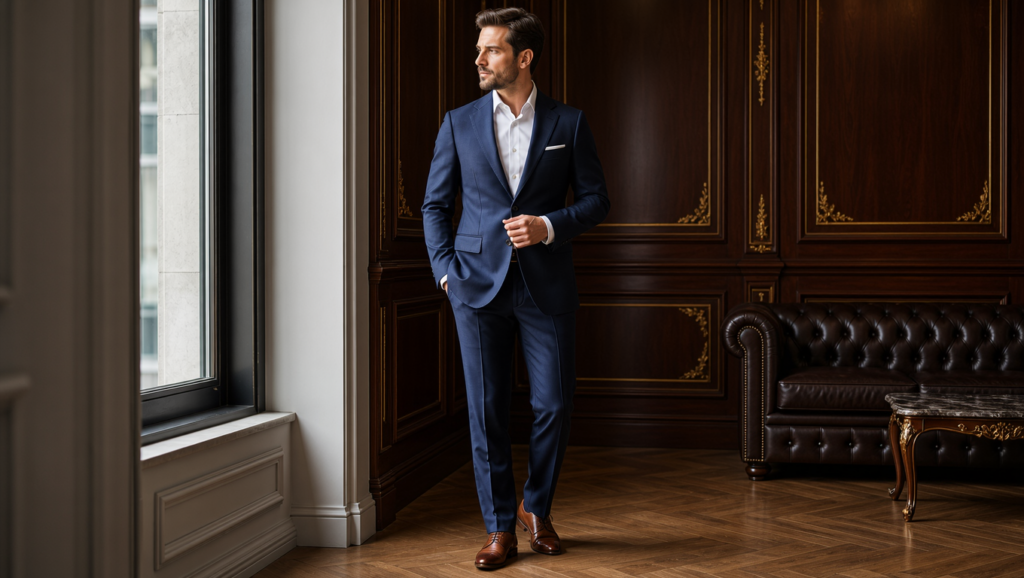
Few pieces of menswear are as versatile, polished, and reliable as blue navy suits for men. A well-fitted navy suit can work for weddings, business meetings, formal dinners, graduations, interviews, evening events, and many other occasions. Its strength comes from its balance: navy looks formal enough for serious settings, yet it feels softer and more adaptable than black. With the right shirt, shoes, accessories, and fit, one navy suit can create many different looks without feeling repetitive.
A navy suit is also a strong choice for men building a practical wardrobe. Instead of buying a different suit for every event, you can start with a well-made navy option and change the styling around it.
The result can move from business formal to relaxed elegance with only a few adjustments.
This guide explains what to look for when choosing a navy suit, how different fits and fabrics affect appearance, which colors pair well with navy, and how to style the suit for different occasions.
Why Navy Suits Are a Menswear Essential
Navy has remained a popular suit color because it works across seasons, settings, and age groups.
It creates a professional appearance without feeling overly severe.
Black suits often lean toward very formal events. Light blue suits can feel more seasonal or casual. Navy sits comfortably between those extremes.
That flexibility makes it useful for men who want one suit that can cover several situations.
A navy suit can look:
- Professional
- Formal
- Contemporary
- Traditional
- Minimal
- Relaxed
- Sophisticated
The final effect depends largely on the styling.
What Color Is Considered Navy Blue?
Navy is a deep shade of blue that can appear almost black in low light but reveals its blue tone more clearly in natural or bright lighting.
However, navy suits are not all identical.
Some lean toward:
- Deep midnight blue
- Classic navy
- Royal navy
- Dark cobalt
- Ink blue
- Blue-black
When choosing a suit, consider where you plan to wear it.
A very dark navy can work beautifully for formal occasions, while a slightly brighter navy may feel more modern for weddings and daytime events.
Why Blue Navy Suits for Men Are So Versatile
The versatility of navy comes from its ability to work with many shirt, tie, and shoe colors.
A single suit can be paired with:
- White shirts
- Light blue shirts
- Pale pink shirts
- Grey shirts
- Cream shirts
- Black shirts
- Patterned shirts
It also coordinates with brown, black, burgundy, and even some tan footwear.
This makes navy especially useful for men who want to create multiple outfits from a limited wardrobe.
How to Choose the Right Fit
Fit has a greater impact on appearance than almost any other feature.
An expensive suit that fits poorly can look less refined than a moderately priced suit that has been altered correctly.
The main areas to check include the shoulders, chest, waist, sleeve length, trouser rise, and trouser break.
Shoulder Fit
The shoulder seam should finish near the natural edge of your shoulder.
If the jacket extends too far beyond your shoulder, it may appear oversized.
If the shoulder seam sits too far inward, the jacket may look tight and create pulling around the upper arm.
Shoulder alterations can be difficult, so it is best to get this area right from the beginning.
Jacket Chest
The jacket should close without excessive tension.
When buttoned, it should sit smoothly across the chest.
Deep horizontal pulling lines can indicate that the jacket is too tight.
Too much loose fabric around the chest may mean it is too large.
Jacket Waist
A suit jacket should have some shape around the waist.
This creates a clean silhouette.
However, a jacket should not be so fitted that the fabric pulls around the button.
A subtle taper usually looks more natural and elegant than extreme shaping.
Sleeve Length
Suit jacket sleeves should generally allow a small amount of shirt cuff to remain visible.
Too-long sleeves can make the jacket appear oversized.
Too-short sleeves can make the jacket look incorrectly sized.
Minor sleeve adjustments are relatively common during tailoring.
Trouser Length
Trouser length changes the overall look of a suit significantly.
Traditional tailoring often uses a slight break, where the trouser rests lightly on the shoe.
Modern styling may use little or no break for a cleaner appearance.
Very long trousers can create excessive bunching around the ankles.
Slim Fit vs. Regular Fit vs. Modern Fit
Different suit cuts create different silhouettes.
Slim Fit
Slim-fit suits usually have:
- Narrower sleeves
- More waist suppression
- Slimmer trousers
- Higher armholes
- Cleaner lines
This style works well for men who prefer a contemporary look.
However, slim should not mean restrictive.
A suit should still allow comfortable movement.
Regular Fit
Regular-fit suits usually offer more room through the chest, waist, thighs, and legs.
They can create a traditional and comfortable appearance.
A properly tailored regular-fit suit can still look extremely sharp.
Modern Fit
Modern fit typically sits between slim and regular.
It provides some shaping without feeling too tight.
For many men, this offers a practical balance between comfort and contemporary style.
Single-Breasted vs. Double-Breasted Navy Suits
The jacket style also affects how formal and distinctive the suit appears.
Single-Breasted Suit
A single-breasted jacket is the most versatile option.
It generally has one column of buttons and works for almost every common suit occasion.
Two-button jackets are especially popular because they suit many body types.
This style is easy to wear for:
- Business
- Weddings
- Interviews
- Dinners
- Social events
Double-Breasted Suit
A double-breasted jacket has overlapping front panels and two visible button columns.
It creates a stronger, more traditional silhouette.
Double-breasted navy suits can look especially elegant for formal events and evening wear.
However, they are often more noticeable than standard single-breasted suits.
Choosing the Right Suit Fabric
Fabric affects comfort, appearance, durability, and seasonality.
Wool
Wool is one of the most common suit materials.
It offers:
- Good drape
- Breathability
- Structure
- Durability
- Year-round versatility
Light to medium-weight wool can work across several seasons.
For someone buying a first navy suit, wool is often a practical option.
Wool Blends
Wool may be blended with synthetic or natural fibers.
Blends can affect:
- Wrinkle resistance
- Stretch
- Weight
- Cost
- Texture
The best blend depends on how often you plan to wear the suit.
Linen
Linen creates a lighter, more relaxed look.
It works well for warm climates, outdoor weddings, and summer events.
However, linen wrinkles easily.
That natural texture is part of its appeal, but it may not suit highly formal business settings.
Cotton
Cotton suits are generally more casual than traditional wool suits.
A navy cotton suit can work well for:
- Daytime events
- Smart casual occasions
- Spring
- Summer
It often pairs well with loafers and open-collar shirts.
Stretch Fabrics
Some modern suits include a small amount of stretch fiber.
This can improve comfort and ease of movement.
Stretch may be particularly useful for men who travel frequently or wear suits for long periods.
Navy Suit Patterns to Consider
Not every navy suit needs to be completely solid.
Patterns can add visual interest while maintaining versatility.
Solid Navy
A solid navy suit is the most adaptable.
It works well for almost every formal or professional occasion.
If you are buying your first suit, solid navy is usually the easiest option to style repeatedly.
Pinstripe
A navy pinstripe suit creates a more traditional business appearance.
Thin vertical stripes can visually lengthen the body.
Pinstripes work especially well in professional environments.
Check Pattern
Subtle checks add personality.
Dark navy checks can remain relatively formal, while brighter contrasting checks tend to feel more casual or fashion-focused.
Textured Weaves
A textured navy fabric can provide depth without using an obvious pattern.
Examples include subtle twill, birdseye, or hopsack-style textures.
These can make a suit feel more distinctive while remaining versatile.
Best Shirts to Wear With a Navy Suit
The shirt creates the base of the outfit.
Choosing the right color can change the entire mood.
White Shirt
A white shirt is the safest and most formal choice.
It creates strong contrast with navy and works for:
- Weddings
- Interviews
- Business meetings
- Formal dinners
- Ceremonies
It also allows more freedom when choosing a tie.
Light Blue Shirt
Light blue creates a softer, tonal look.
The combination feels professional but slightly less formal than white.
This is an excellent everyday business pairing.
Pale Pink Shirt
Pale pink pairs very well with navy.
The contrast creates a refined and modern appearance without being overly bold.
It works especially well for weddings and social events.
Cream or Off-White Shirt
Cream gives navy a warmer feel.
It can work well for daytime events and relaxed formal occasions.
Black Shirt
A black shirt with a dark navy suit creates a sleek evening look.
However, it is less traditional and usually better for dinners, parties, or fashion-forward events than conservative business environments.
Best Tie Colors for Navy Suits
Navy suits provide a strong neutral base for ties.
Burgundy Tie
Burgundy creates a classic contrast with navy.
It works particularly well with a white or light blue shirt.
Navy Tie
A navy tie creates a monochromatic look.
Choose a tie with a slightly different texture or shade so the outfit does not appear flat.
Grey Tie
Grey offers a polished and professional appearance.
Silver-grey ties can work especially well for formal events.
Green Tie
Dark green or forest green adds subtle color while remaining sophisticated.
Patterned Tie
Small dots, stripes, geometric patterns, and subtle prints can add personality.
Try to keep the colors coordinated with the shirt and suit.
What Shoes Go Best With a Navy Suit?
Shoes have a significant impact on the overall formality of the outfit.
Brown Shoes
Brown leather shoes are among the most popular choices with navy.
Dark brown creates a formal and refined appearance.
Medium brown can feel slightly more relaxed.
Black Shoes
Black shoes create the most formal look.
They are suitable for:
- Formal business settings
- Ceremonies
- Evening events
- Conservative occasions
A dark navy suit with black shoes can appear particularly elegant.
Burgundy Shoes
Burgundy or oxblood shoes add depth and individuality.
They coordinate naturally with navy while remaining sophisticated.
Tan Shoes
Tan shoes create stronger contrast.
This pairing works best for daytime, summer, or less formal events.
Very light tan shoes may appear too casual for conservative business environments.
Loafers
Loafers can work with navy suits when the event is less formal.
Brown or burgundy loafers are particularly suitable for weddings, warm weather, and smart casual occasions.
Choosing the Right Belt
If you wear a traditional leather belt, match it closely to your shoes.
Brown shoes generally call for a brown belt.
Black shoes usually look best with a black belt.
The shades do not have to be identical, but they should coordinate.
Pocket Squares With Navy Suits
A pocket square is a simple way to add personality.
A white pocket square is the most classic option.
Other suitable colors include:
- Burgundy
- Light blue
- Cream
- Green
- Soft pink
Avoid matching your tie and pocket square exactly.
They should complement one another rather than look like a prepackaged set.
Navy Suits for Weddings
Navy is one of the strongest colors for wedding suits.
It photographs well and works during both daytime and evening celebrations.
For a classic wedding look, pair a navy suit with:
- White dress shirt
- Burgundy or patterned tie
- Brown leather shoes
- White pocket square
For a more relaxed warm-weather wedding, consider:
- Open-collar white shirt
- Brown loafers
- Minimal accessories
The dress code should always guide the final styling.
Navy Suits for Business
A navy suit is a standard choice in professional environments.
Its deep color creates authority without appearing as severe as black.
For a traditional business outfit, use:
- Navy suit
- White or pale blue shirt
- Conservative tie
- Black or dark brown shoes
- Simple watch
Avoid overly bright accessories in conservative workplaces.
Navy Suits for Job Interviews
For interviews, the goal is usually to look polished without distracting from the conversation.
A simple navy suit works very well.
Pair it with a white or light blue shirt.
Choose a conservative tie in burgundy, navy, or grey.
Wear polished black or dark brown shoes.
Keep accessories minimal.
The suit should look clean, well-fitted, and comfortable.
Navy Suits for Formal Dinners and Evening Events
For evening events, darker styling can make navy appear more dramatic.
Consider:
- Crisp white shirt
- Black tie
- Black leather shoes
- Minimal pocket square
For a more modern look, a black shirt without a tie can create a sleek appearance where the dress code allows it.
Navy Suits for Graduations
A graduation suit should be formal enough for photographs but comfortable enough to wear for several hours.
Navy works especially well because it looks good underneath many gown colors.
A simple white shirt and brown shoes can create a clean, youthful appearance.
Navy Suits for Summer
Navy can work throughout summer when the right fabric is selected.
Choose lightweight materials such as:
- Tropical wool
- Linen blends
- Lightweight cotton
Pair the suit with lighter accessories.
Loafers and open-collar shirts can make the outfit feel more seasonal.
Navy Suits for Winter
During colder months, heavier wool fabrics create warmth and structure.
Navy pairs naturally with:
- Charcoal
- Burgundy
- Dark green
- Camel
- Black
A wool overcoat can complete the outfit.
How to Wear a Navy Suit Without a Tie
A navy suit can look stylish without a tie.
The key is to make the outfit appear intentionally relaxed rather than unfinished.
Use a crisp shirt with the collar open.
Suitable options include:
- White shirt
- Light blue shirt
- Fine knit polo
- Clean crew-neck knitwear
Keep the rest of the outfit refined.
Can You Wear a T-Shirt With a Navy Suit?
Yes, but the setting matters.
A high-quality plain T-shirt can create a modern smart casual look.
White, black, cream, and grey are among the easiest colors.
Pair the outfit with clean loafers or minimalist shoes rather than highly formal footwear.
This style is not suitable for traditional business settings or events requiring formal dress.
How to Style Navy Suit Separates
One advantage of a navy suit is that the jacket and trousers can sometimes be worn separately.
Navy Jacket With Grey Trousers
This is a classic combination.
A navy jacket, grey trousers, white shirt, and brown shoes create an easy business-casual outfit.
Navy Trousers With a Blazer
Navy suit trousers may work with lighter jackets in grey, beige, or textured brown.
However, highly formal suit trousers sometimes look mismatched when separated from their jacket.
Navy Jacket With Chinos
A less structured navy jacket can work with beige, stone, or grey chinos.
This creates a relaxed smart casual look.
Accessories That Work With Navy Suits
Accessories should support the suit rather than overwhelm it.
Useful options include:
- Leather watch
- Simple cufflinks
- Pocket square
- Tie bar
- Minimal lapel pin
Avoid wearing too many statement accessories at the same time.
Watch Styles
Both metal and leather watches can work.
Brown leather straps coordinate naturally with brown shoes.
Black leather straps work well with black footwear.
Metal watches offer a neutral option.
How Tailoring Improves a Navy Suit
Even a suit that fits reasonably well off the rack can benefit from minor alterations.
Common tailoring adjustments include:
- Sleeve shortening
- Trouser hemming
- Waist suppression
- Trouser waist adjustment
- Leg tapering
Small improvements can dramatically change the silhouette.
The goal should be clean lines without restricting movement.
Common Mistakes to Avoid With Navy Suits
Even versatile clothing can look wrong when poorly styled.
Wearing an Oversized Jacket
Extra fabric around the shoulders and waist can make the suit appear dated or poorly fitted.
Choosing Trousers That Are Too Long
Excessive fabric around the ankles disrupts clean tailoring.
Overusing Accessories
Too many bold pieces compete for attention.
Wearing Scuffed Shoes
Shoes can affect the entire outfit.
Keep leather footwear clean and polished.
Ignoring Dress Codes
A casual navy linen suit may not suit a highly formal event.
Similarly, an extremely formal navy suit can feel excessive in a relaxed setting.
How to Care for a Navy Suit
Proper care helps a suit maintain its shape and appearance.
Use a Quality Hanger
A broad-shouldered hanger supports the jacket and helps preserve its structure.
Allow the Suit to Rest
Avoid wearing the same suit every day when possible.
Fabric benefits from time to recover between wears.
Brush Away Surface Dirt
A clothing brush can remove dust and small particles.
Avoid Excessive Dry Cleaning
Frequent dry cleaning can place stress on fabric.
Clean the suit when necessary rather than automatically after every wear.
Steam Minor Wrinkles
Gentle steaming can help remove wrinkles.
Avoid direct high heat unless the fabric care instructions allow it.
Store It Properly
Keep the suit in a breathable garment cover.
Avoid tightly sealed plastic storage for long periods.
Building a Wardrobe Around a Navy Suit
A navy suit becomes even more useful when your wardrobe includes compatible basics.
Consider owning:
- Two or three white shirts
- Two light blue shirts
- One pale pink shirt
- Dark brown leather shoes
- Black leather shoes
- Several neutral ties
- White pocket square
- Matching belts
These pieces can create numerous combinations.
Choosing Your First Navy Suit
If you are buying your first suit, prioritize versatility.
A strong first choice is usually:
- Solid navy
- Single-breasted
- Two-button jacket
- Medium-width lapels
- Flat-front trousers
- Moderate tailoring
- Lightweight or medium-weight wool
Avoid very unusual details if you want the suit to work for many occasions.
You can add more distinctive suits later.
Choosing a Second Navy Suit
If you already own a classic navy suit, your second option can offer more personality.
Consider:
- Double-breasted styling
- Subtle check pattern
- Textured fabric
- Lighter blue-navy tone
- Peak lapels
- Seasonal linen blend
This allows you to expand your wardrobe without moving too far away from a versatile color family.
How Many Navy Suits Does a Man Need?
The answer depends on lifestyle.
A man who wears suits only for weddings and occasional events may need only one.
Someone working in a formal professional environment may benefit from several.
Different navy suits can vary enough in fabric, texture, cut, and shade to avoid appearing identical.
For frequent suit wearers, rotating suits can also reduce wear.
How to Know if a Navy Suit Is Good Quality
Price alone does not determine quality.
Look at several practical details.
Check:
- Fabric feel
- Stitching
- Button attachment
- Lining
- Shoulder construction
- Seam consistency
- Trouser finish
- Overall drape
The suit should hang smoothly without unnecessary pulling or twisting.
Fit and construction are often more important than decorative details.
Why Navy Works Across Different Skin Tones
Navy is generally considered a flattering color because it creates a strong but balanced contrast.
Men with different complexions can adjust the shirt and accessories to suit their coloring.
For example, white shirts create high contrast.
Cream or light blue can create a softer appearance.
The flexibility of navy makes these adjustments easy.
Matching Navy With Other Colors
Navy coordinates naturally with many wardrobe colors.
Some of the strongest pairings include:
Navy and White
Clean, classic, and formal.
Navy and Grey
Professional and understated.
Navy and Brown
Warm and versatile.
Navy and Burgundy
Rich and sophisticated.
Navy and Green
Distinctive without being overly bold.
Navy and Pink
Fresh and modern.
These combinations allow one suit to serve many different styling needs.
Conclusion
Blue navy suits for men remain one of the most practical and versatile choices in a well-planned wardrobe. A good navy suit can move easily between business meetings, weddings, interviews, graduations, dinners, and other formal or semi-formal events simply by changing the shirt, shoes, tie, and accessories. The most important factors are fit, fabric, construction, and suitability for the occasion. A solid single-breasted navy suit is an excellent starting point for someone building a formal wardrobe, while patterned, textured, or double-breasted versions can add variety for experienced suit wearers. With proper tailoring, thoughtful styling, and good care, a navy suit can remain useful for years and provide a dependable foundation for many different looks.
Frequently Asked Questions
Are blue navy suits for men suitable for weddings?
Yes. Blue navy suits for men are a popular choice for weddings because they look formal, photograph well, and pair easily with white, light blue, pink, and other shirt colors.
What color shoes look best with a navy suit?
Dark brown, black, burgundy, and medium brown shoes all work well. Black creates a more formal look, while brown tends to feel slightly warmer and more versatile.
Can I wear a navy suit to a job interview?
Yes. A well-fitted navy suit is an excellent interview option. Pair it with a white or light blue shirt, a conservative tie, and polished black or dark brown shoes.
What shirt color works best with a navy suit?
White is the most versatile and formal choice. Light blue, pale pink, cream, grey, and black can also work depending on the occasion.
Can I wear a navy suit without a tie?
Yes. A navy suit can be worn without a tie for smart casual dinners, weddings, social events, and relaxed business settings where the dress code allows it.
Is navy better than black for a first suit?
For many men, navy is more versatile because it works for both daytime and evening events and pairs with a wider range of shirts, shoes, and accessories.
What is the best fabric for a navy suit?
Wool is one of the most versatile options because it drapes well, works across several seasons, and suits many formal and professional occasions.
How should a navy suit fit?
The shoulder seams should align with your natural shoulders, the jacket should close without pulling, the sleeves should reveal a small amount of shirt cuff, and the trousers should fall cleanly over the shoes.