
A good bug identifier has quietly become one of the most useful tools a British household can own. One moment something alien scuttles across the...
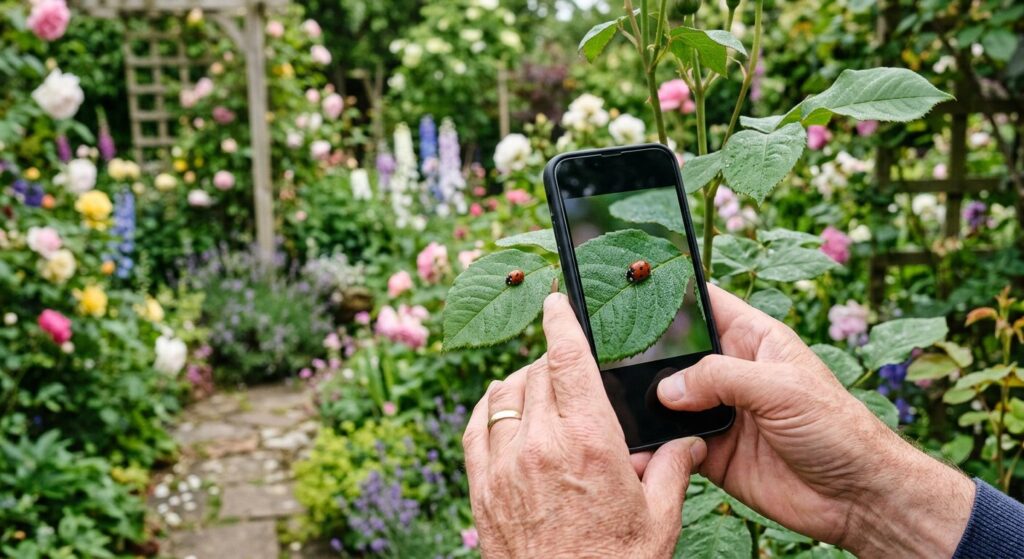
A good bug identifier has quietly become one of the most useful tools a British household can own. One moment something alien scuttles across the kitchen floor, lands on the washing line, or turns up in the loft, and the questions start immediately: what is it, does it bite, is it dangerous to the dog, and is the garden about to be eaten alive? For generations the only answers came from dusty field guides or anxious internet searches. Today, AI-powered photo identification can name thousands of species in under a second, and the best tools go further, connecting you to species profiles, bite reference tools, and communities of enthusiasts who verify the tricky cases. This guide walks through nine practical ways to identify British insects, spiders, and garden wildlife by photograph, how to judge whether an app’s answer is trustworthy, what the NHS-aligned advice says about bites and stings, and how a simple habit of photographing bugs turns into a genuinely rewarding hobby. Everything here is written for UK readers, from the species you will actually meet to the platforms that record British sightings.
Key Takeaways
- Britain hosts more than 24,000 insect species, plus spiders and other invertebrates, so almost every bug you photograph is a species even enthusiasts have never deliberately identified.
- AI bug identifier apps now recognise hundreds of thousands of species from a single photo; BugKnow, for example, covers more than 260,000 species and reports 98 percent accuracy on common species.
- The photo matters as much as the app: sharp focus, natural light, close framing, and a size reference dramatically improve results.
- Identification tools are informational, not medical: bites and stings rarely cause serious problems in the UK, but spreading redness, fever, or breathing difficulty always means seeking medical help.
- Community verification, where real people confirm or correct an AI answer, is the single best feature to look for in any identification app.
Why Bug Identification Matters More Than You Think
Most British insects are completely harmless, many are genuinely beneficial, and a small but important few demand action, from carpet beetle larvae quietly eating wool jumpers to wasp nests establishing themselves in the loft. Knowing which is which changes how you respond. Panic and a rolled-up newspaper are poor substitutes for thirty seconds of identification, and gardeners in particular lose beneficial insects, pollinators, and natural pest controllers to misidentification every summer.
Britain’s Hidden Biodiversity
The UK is richer in invertebrate life than most people realise: more than 24,000 insect species live here, alongside hundreds of spiders, and around 60 butterfly species and more than 250 bee species, including roughly two dozen bumblebees. The overwhelming majority are harmless, shy, and doing useful work pollinating crops and gardens or recycling organic matter. Only a small club of species actually affect our lives directly, which is why identification first, and action second, is the rule every naturalist would give you.
When Identification Really Matters
There are four moments when a reliable bug identifier earns its keep. First, bites and stings, when you need to know whether the culprit was a midge, a horsefly, or something that suggests a bigger problem nearby. Second, household pests, where carpet beetles, clothes moths, silverfish, and ants each demand a different response. Third, the garden, where distinguishing an aphid colony from a ladybird larvae bonanza decides whether you spray or celebrate. Fourth, genuine medical or allergic concern, where knowing what stung you helps healthcare professionals advise you quickly. There is also a quieter fifth case: reassurance. The vast majority of six-legged houseguests are doing no harm whatsoever, and a confident identification spares both the insect and the household a great deal of unnecessary drama.
9 Powerful Ways to Identify UK Bugs by Photo
1. Start With a Clear, Well-Lit Close-Up
Every identification, human or AI, begins with the photograph. Shoot in natural light where possible, tap to focus so the insect is sharp rather than atmospheric, and get close enough to fill the frame without shadowing your subject. Take several shots from different angles, top view, side view, and front if the bug obliges, because legs, antennae, and wing patterns carry the identifying details. Place a coin or ruler in one photo for scale; size separates species that look identical in isolation, and a soft, blurry, backlit snapshot is the most common reason an identification fails. Avoid harsh direct flash, which flattens colour and washes out the very patterns that distinguish species, and use your phone’s macro or close-focus mode if it has one. For skittish subjects, shoot first from a small distance and then edge closer, so you leave with something usable even if the insect departs mid-photoshoot.
2. Record the Context: Habitat, Location, and Season
A bug does not exist in a vacuum, and neither should its identification. Note where you found it, in the bathroom, under bark, on stored food, in the flower border, because habitat narrows candidates enormously. Season matters too: craneflies invade living rooms in autumn, wasps turn aggressive and thirsty in late summer, aphids explode in spring, and house spiders go wandering in September. Location refines it further; many species have distinct UK regional distributions, which is why some apps, BugKnow included, let you add your city or region to sharpen results. A rough British seasonal map helps too:
- Spring: queen bumblebees emerging, early aphids, mating swarms of small flying insects
- Early summer: bees at peak, dragonflies over ponds, the first chafer beetles
- Late summer: wasps turning to your drink, horseflies in the countryside, hoverflies hovering everywhere
- Autumn: craneflies indoors, house spiders on the move, ivy bees at the ivy
- Winter: clusters of dormant ladybirds in window frames, the occasional wandering spider in the bath
Identification is always easier when the calendar already tells you what is plausible.
3. Use an AI Bug Identifier App for Instant Answers
This is where modern identification becomes genuinely fun. Point your camera and today’s AI tools return a species name in under a second, along with facts about behaviour, habitat, life cycle, and impact on humans and pets. For UK readers wanting a capable free option, BugKnow identifies more than 260,000 species of insects, spiders, and other arthropods, reports 98 percent accuracy on common species and 85 percent on rarer ones, and offers unlimited free identifications with optional Pro extras such as bite reference tools and pest severity assessments. It is available for both iOS and Android, works from a saved photo as well as a live shot, and doubles as a digital field journal that saves and organises everything you identify. Under the bonnet, these tools are image recognition systems trained on enormous reference libraries of photographed species, which is why photo quality feeds so directly into result quality, and why the best apps show you the evidence, species profiles and similar species, rather than just a verdict. Whichever app you choose, remember that AI gives you a strong first answer, not gospel, which is exactly why the next two steps exist.
4. Cross-Check Against Species Profiles, Not Guesses
The difference between a good identifier and a cheap one is what happens after the match. A serious app links every result to a detailed species profile, so you can sanity-check the answer: does the described habitat match your bathroom, does the size range match the coin in your photo, does the behaviour description fit what you watched it do? Ten seconds of comparison catches most misidentifications, and species profiles are where identification quietly becomes knowledge, because you start recognising the patterns that separate families and species on your own. You do not need to learn Latin names overnight; simply noticing that lacewings, hoverflies, and ladybirds each have a family look builds the mental shelves on which every future identification sits.
5. Lean on Community Verification for the Tricky Cases
Roughly one identification in ten will be genuinely ambiguous, a teneral dragonfly, a spider with its legs tucked, a moth mimicking a wasp. The best answer then is not a better algorithm, it is people. BugKnow and similar platforms let you post a photo for community input, where experienced identifiers vote and comment until consensus emerges, and that consensus is usually correct even when the AI struggled. A little posting etiquette speeds things up: crop tightly, mention the location and date, give a size estimate, and say what you think it might be, because identifiers respond fastest to well-documented questions. For anything unusual, a second opinion from humans who have seen ten thousand specimens is worth more than any confidence score.
6. Learn the Lookalikes That Matter in Britain
A few UK lookalike pairs cause almost all the confusion, and learning them makes you instantly better at this. Hoverflies mimic bees and wasps so convincingly that they fool everyone for years; the giveaway is one pair of wings, huge eyes, and a hover rather than a dart. Honeybees, bumblebees, and wasps differ in shape and temperament once you know the silhouettes. Among spiders, the noble false widow earns its reputation as the UK’s most venomous spider, yet its bites are rare and typically no worse than a bee sting, while the spindly cellar spider that lives in your bathroom corner is entirely harmless. Behaviour is a free identification clue too: a fly that hovers motionless is almost never a wasp, a bee bumbling leisurely between flowers rarely needs panicking about, and anything grooming its wings on a windowsill is more likely a harmless lacewing than anything with a sting. Learning half a dozen of these pairs covers the vast majority of real-world identifications.
7. Assess Bites and Stings Sensibly
Britain is mercifully light on dangerous biting fauna, and the NHS position is reassuring: most insect bites and stings are uncomfortable rather than dangerous. The sensible routine is to wash the area with soap and water, apply a cold compress, and consider an antihistamine tablet or cream for itching, while avoiding scratching. Seek medical advice if symptoms worsen rather than improve, if redness spreads or pus appears, if you suspect a tick was attached for some time, or urgently for any signs of a severe allergic reaction such as swelling of the face or mouth, wheezing, or difficulty breathing. Photo-based bite reference tools can offer useful context about likely culprits, but they are informational aids, never a substitute for professional medical judgement.
8. Use Identification to Protect Your Home
Once you can name the insect, you can choose the right response. Carpet beetle larvae mean checking woollens and vacuuming dark corners. Silverfish signal damp; fixing the moisture beats spraying anything. Termanolo ants indoors in spring mean finding and treating the nest, not just the scouts on the worktop. A wasp nest in the loft is best left to professionals, while a single sluggish queen in March can simply be ignored or escorted out. Two household pests deserve special mention. Clothes moths and carpet beetle larvae both eat natural fibres, so irregular holes in jumpers, bare patches on rugs, or shed larval casings in wardrobes call for a deep clean, sealed storage of woollens, and moth or beetle traps rather than guesswork. And bedbugs, which have made a well-publicised comeback in UK cities, announce themselves through dark faecal spots along mattress seams and itchy bites in lines; they are not a hygiene failure, they are excellent hitchhikers, and early professional treatment is far cheaper than an established colony. Modern apps increasingly include pest severity assessment features that walk you through a few questions and return a low, moderate, or high activity reference rating with next steps, and that structured approach, identify, assess, then act, prevents both infestations and unnecessary pesticide use.
9. Turn Identification Into a Hobby Worth Keeping
The surprising endpoint of owning a bug identifier is that you start using it for pleasure. Save your sightings into folders by garden, season, or holiday destination, add notes, and watch your personal species list grow into a genuine field journal. Then take one more step and feed your records into the bigger picture: the UK’s biological recording culture is among the finest in the world, and platforms such as iRecord and national schemes for ladybirds, bees, and moths welcome verified public sightings that genuinely inform conservation science. Photographing the small wildlife of your garden stops being pest control research and becomes part of something larger, which is exactly how most entomologists started.
Meet the Usual Suspects in UK Homes and Gardens
Before you even open an app, recognising this short list covers most everyday encounters:
| Bug | Where You Will See It | What It Means |
|---|---|---|
| House spider | Bathrooms, autumn evenings | Harmless; simply part of the household |
| Carpet beetle larva | Wardrobes, skirting boards | Check woollens and vacuum thoroughly |
| Silverfish | Damp bathrooms and kitchens | Sign of moisture; fix the damp first |
| Garden ants | Kitchens in spring and summer | Track them back to the nest, then treat |
| Common wasp | Late summer, bins and picnics | Nests in lofts deserve professional removal |
| Cranefly | Living rooms in autumn | Completely harmless, however alarming it looks |
Learn these six and you will resolve most British household bug moments before an identifier app even opens, and know exactly when to reach for one.
Choosing a Bug Identifier App: What to Look For
App quality varies enormously, so judge candidates against this checklist before committing your summer to one:
- Species coverage relevant to Britain, ideally hundreds of thousands of species rather than a few thousand
- Stated accuracy, with realistic numbers for common and rare species rather than vague promises
- Detailed species profiles attached to every result, not just a name
- Community verification for disputed identifications
- A free tier that does not meter your curiosity, with sensible optional upgrades
- Photo-library uploads, not just live camera input
- Region or location settings that tailor results to the UK
- Sensible data practices, since identification apps handle your photos and, optionally, your location
An app that ticks these boxes, BugKnow among them, will handle virtually everything a British household or garden throws at it.
Frequently Asked Questions
Is there a free app that identifies bugs by photo?
Yes. BugKnow, for example, offers free, unlimited insect identification from photos on both iOS and Android, covering more than 260,000 species, with optional paid extras such as bite reference tools and pest assessments.
How accurate are AI bug identifier apps?
Good apps are highly accurate on common species; BugKnow reports 98 percent on common insects and 85 percent on rare ones. For ambiguous cases, community verification by experienced users is the most reliable confirmation.
Can an app identify spiders?
Yes, spiders and other arthropods are covered alongside insects by the larger identification databases, and clear photos of body shape, leg pattern, and web type usually produce a confident result.
Can a photo tell me what bit me?
Bite reference tools can suggest likely culprits based on visual patterns, which is useful context, but bites look alike and evolve over days, so treat app results as informational and seek medical advice for anything worsening.
What are the most common bugs found in UK homes?
The regulars are house spiders, carpet beetles, silverfish, clothes moths, ants, woodlice, and in late summer, wasps and craneflies, and nearly all are harmless nuisances rather than infestations.
Are UK house spiders dangerous?
No. Even the noble false widow, Britain’s most venomous common spider, rarely bites and its bite is typically no worse than a bee sting, while household stalwarts like the cellar spider are entirely harmless.
Conclusion
A reliable bug identifier changes your relationship with the small wildlife that shares every British home and garden. Instead of swatting first and wondering later, you photograph, identify in seconds, read a species profile, and know whether you are dealing with a harmless hoverfly, a beneficial ladybird larva, a false widow that merits calm respect, or a carpet beetle problem worth addressing this week. Start with better photos, add habitat and season to every identification, cross-check the profiles, and use community verification when the answer is genuinely uncertain. Choose an app with broad species coverage, honest accuracy figures, and a free tier, BugKnow is a strong example, and let curiosity do the rest. Within a month you will identify the usual suspects on sight, and within a year you will have a field journal most people would envy, plus a household that reacts to six legs with interest instead of panic.