
BODAQ interior film is changing how designers, hoteliers, and property managers think about renovation, and the reason is simple: it delivers the look of wood,...
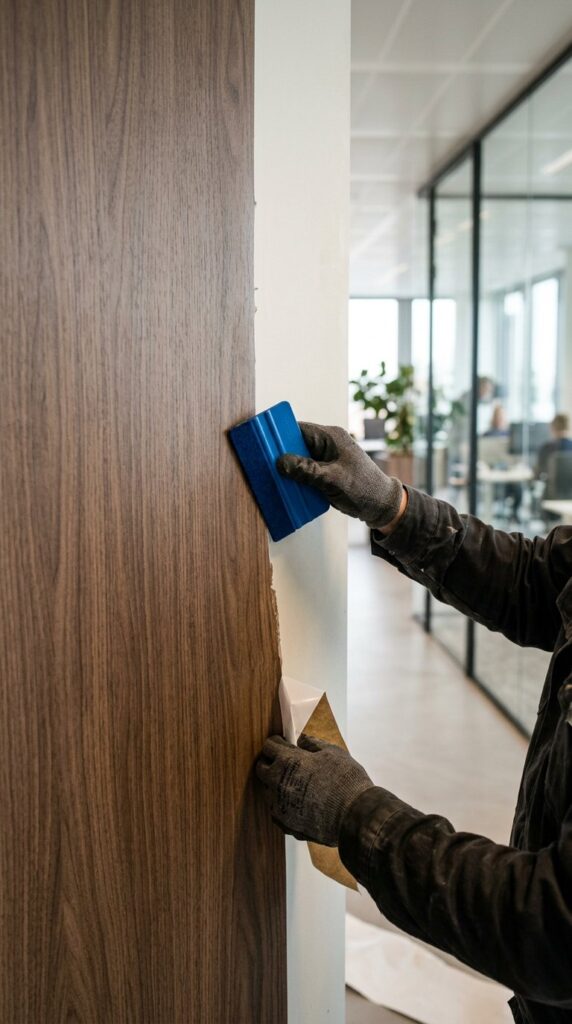
BODAQ interior film is changing how designers, hoteliers, and property managers think about renovation, and the reason is simple: it delivers the look of wood, marble, metal, leather, or textile without the demolition, downtime, or disposal that conventional remodeling demands. Manufactured by Hyundai L&C, this self-adhesive architectural film comes in more than 400 finishes and wraps directly onto existing walls, doors, columns, furniture, and ceilings, turning tired surfaces into design features in hours rather than weeks. A lobby that would close for a refit stays open; a wardrobe that would head to landfill gets a second life in walnut or linen texture. This guide explains exactly what BODAQ interior film is, where it performs best, and nine practical ways it transforms commercial and residential spaces, from cutting fit-out budgets to solving the curved-surface problems that defeat conventional materials. It also covers the technical questions serious specifiers ask, including fire-retardant certification, low-VOC credentials, adhesion technology, and application temperatures, so you can evaluate it as a working material rather than a passing trend. Whether you manage a hotel portfolio, run a fit-out company, or simply want to refresh one room without wrecking the budget, the nine approaches below show where this material earns its place.
Key Takeaways
- BODAQ interior film is a self-adhesive architectural film by Hyundai L&C, available in over 400 finishes that replicate wood, stone, metal, leather, and textile surfaces.
- It applies directly over existing sound surfaces, which makes renovation faster, cleaner, and a fraction of the cost of replacement, with minimal downtime for occupied spaces.
- The films are certified fire-retardant and manufactured to low-VOC, eco-conscious standards, which supports compliance in commercial projects.
- Stretchability and air-release adhesive technology let the film wrap flat, curved, and compound-curved surfaces such as columns, elevator doors, and reception desks.
- Best results come from matching the right film series to the surface and working through experienced dealers or trained installers.
What Is BODAQ Interior Film?
BODAQ interior film is a thin, flexible, self-adhesive decorative film manufactured by Hyundai L&C, the material science company behind a global family of surface brands. Each film carries a printed and embossed reproduction of a natural or engineered material, including wood grains, marble and stone, brushed and polished metals, woven textiles, and leather grains, and the embossing gives the surface a tactile texture that reads as real at any reasonable distance. The film arrives as rolls roughly 1.2 meters wide with a release liner; installers cut it to size, peel, position, and squeegee it onto the prepared substrate, and the air-release adhesive structure channels out trapped air so the finish lies flat without bubbles. Because it conforms under heat and pressure, it handles applications conventional laminates cannot reach: curved columns, compound-curved reception desks, elevator cabs, and door panels with profiled details.
How It Differs From Wallpaper and Laminate
The comparison questions come up in every project meeting, so they deserve direct answers. Wallpaper is a decorative paper or nonwoven product designed for walls only; it offers pattern but little texture depth, no stretch, and no meaningful role on furniture or doors. Laminate offers durability on flat horizontal surfaces but cannot bend around radii or profiles without visible edge treatments and specialist fabrication. Architectural film sits between and beyond them: wallpaper-like in installation speed, laminate-like in durability and cleanability, and unique in its ability to wrap three-dimensional shapes. That combination is what makes it a renovation tool rather than merely a decoration.
The Substrate Rule
One principle governs every successful film project: the film is a finish, not a repair. It adheres best to clean, sound, dry surfaces such as sealed wood, melamine, painted metal, glass, and rigid PVC, and it will faithfully reproduce the condition of whatever lies beneath, including damage. Cracked, flaking, or damp substrates need preparation or replacement first, and honest installers say so during the survey rather than after the wrap. Conditions matter at application time too: manufacturers specify working temperature ranges for the adhesive, typically somewhere in the mid-teens to high-twenties Celsius, and rolls should acclimatize in the space before use, which is one more reason professional crews survey the site before scheduling.
9 Powerful Ways BODAQ Interior Film Transforms Spaces
1. Refurbish Instead of Replace, at a Fraction of the Cost
The core economic argument for interior film is straightforward: wrapping an existing surface costs a fraction of fabricating and installing a new one, once you remove the labor, materials, disposal, and disruption from the ledger. A laminate reception desk with dated cherry veneer becomes a modern oak or concrete-look feature in a single shift, without ordering, joinery, or refinishing fumes. Fit-out budgets stretch dramatically when the bones are sound, and property teams increasingly treat wrapping as routine mid-life refurbishment rather than a compromise. The environmental arithmetic improves at the same time, because every door and desktop kept out of the skip is waste that never needs hauling or landfill space.
2. Re-Skin Walls, Doors, and Furniture With Realistic Wood and Stone
The design library is where BODAQ separates itself from generic films. The range spans warm oak and ash grains, deep walnuts, teak and eucalyptus, painted-wood effects, Carrara-style marbles, terrazzo, concrete and metal looks, soft fabric and leather textures, plus solid colors from white through navy, and even holographic accents for feature spaces. Because the finishes are printed from real material scans with matching embossing, a wrapped surface holds up to the close inspection that separates convincing from theatrical. Designers use the range to bring wood warmth to spaces where real timber would be impractical, such as humid poolside interiors or high-traffic lift lobbies, and to coordinate doors, wall panels, and furniture in one consistent grain direction across an entire floor. Samples close the gap between screen and surface: order physical swatches of the shortlisted codes and view them under the project’s actual lighting before committing, because the same walnut reads differently beneath warm residential lamps and cool retail downlights.
3. Cut Downtime in Hotels, Offices, and Retail Environments
For occupied commercial spaces, the schedule matters as much as the invoice. Traditional refits close rooms, cordon corridors with plastic sheeting, and generate noise and dust for weeks; film application is essentially quiet, odor-light, and dust-free, with most door and furniture work finished in hours and rooms returned to service the same day. Hospitality teams schedule floor-by-floor wrapping between check-out and check-in, retailers refresh storefronts overnight, and offices upgrade meeting rooms without losing a working day. The planning discipline is phasing: survey and sequence the spaces so crews always work in unoccupied zones, pre-cut films off-site where possible, and hand each area back finished and cleaned before the next begins, which turns a disruptive refit into a rolling program the building barely notices. In markets where hotel occupancy and footfall translate directly to revenue, avoiding closure is often the largest single saving in the entire project.
4. Advance Sustainability Goals Without Sacrificing Design
Refurbishment with film is inherently a reuse strategy: the embodied carbon and material already in the wall, door, or desk stay in place, and the film adds a thin layer of new material instead of an entirely new component. That means less demolition debris, fewer deliveries, and no landfill-bound furniture, which feeds directly into the waste and circularity metrics that corporate ESG reporting and green building certifications increasingly track. The supply chain benefits compound the case: rolls are lightweight compared with joinery, stone slabs, or doors, so shipping carries a smaller footprint and sites avoid the delivery congestion that heavy refits bring. The films themselves are engineered with low-VOC formulations and eco-certifications, supporting healthier indoor air during and after application, an advantage in occupied buildings. For organizations balancing sustainability commitments against the practical need to modernize interiors, wrapping existing assets is one of the few win-win options available.
5. Specify With Confidence on Fire Performance
Commercial interiors live and die by code compliance, and this is where architectural films separate into tiers of quality. BODAQ films are fire-retardant and certified, produced under the quality control standards expected for use in public offices, schools, healthcare settings, and hospitality projects, and the certifications are documented for specifiers rather than asserted in a brochure. Practical guidance: always request the current certification documents for the specific film codes in your schedule, confirm they satisfy the authority having jurisdiction in your project location, and file them with the O and M manual. A finish that cannot show its paperwork is a liability regardless of how it looks, and the reputable side of this industry expects the question.
6. Solve the Curved-Surface Problems Other Materials Cannot
Columns, arched door heads, curved reception desks, spiral balustrades, and elevator cabs defeat laminate and stymie painters, and they are precisely where film shines. Heat-activated conformability lets the material stretch into compound curves and wrap edge profiles without cracks or visible seams in the wrong places, and textured embossing keeps the result reading as solid material rather than sticker. Installers work the material with controlled heat and even pressure, coaxing it around radii that would crack rigid laminates on contact, and deep profiles get seam planning so joins hide along natural edges. Renovation teams use this capability to rehabilitate entire elevator interiors in occupied towers overnight, a job that otherwise means cab removal, fabrication, and weeks of lift downtime. If a project contains the phrase “no straight lines,” film belongs on the shortlist.
7. Keep Multi-Site Brands Visually Consistent
Franchise and retail brands live or die by consistency, and maintaining identical interiors across dozens of sites is brutal with conventional materials, since dye lots drift and local contractors improvise. Film solves the consistency problem because the same film code produces the same color and texture in every location, and lightweight rolls ship economically to any city. A brand can standardize the front desk wrap, wall accents, and door finishes across an entire portfolio, then execute refreshes site by site on a predictable schedule and budget. The same logic serves restaurant groups, clinic chains, and coworking operators that need their spaces recognizable without full refits every few years.
8. Protect Surfaces, Not Just Redecorate Them
A wrapped surface is a working surface, and modern architectural films are engineered for it: the wear layer resists scratches and common cleaning chemicals, the material is washable, and good films hold color under the interior lighting exposure of a normal fit-out cycle. Care is unexotic, a soft cloth, mild detergent, and no abrasive pads or solvents, which suits the housekeeping routines hotels and clinics already run. High-touch elements such as door push plates, lift panels, and counters take daily punishment, and a film finish keeps them presentable where paint would scuff and veneer would chip. When a heavily used area does show wear after years of service, the repair strategy is local: re-wrap that panel rather than refinishing the whole assembly. That maintainability is a quiet but genuine reason facility managers specify film in the first place.
9. Choose the Right Film and the Right Hands
Results track the quality of two decisions: the film selected and the installer who applies it. Match the series to the service, since wood and marble looks for feature walls, solid colors for large spans, textile and leather textures for acoustic-adjacent and touch surfaces, and always confirm the certifications for the specific code. Then vet the hands: experienced installers prepare substrates properly, plan seam positions out of sightlines, manage heat and stretch so patterns stay aligned, and detail edges cleanly, while inexperienced ones leave bubbles, lifted corners, and visible seams that no film quality can rescue. For genuine product, current catalogs, certification documents, and trained application support, source through the official channel: BODAQ interior film from the official BODAQ website connects specifiers and dealers directly to the Hyundai L&C product line, with a dealer program for companies that want to add professional wrapping to their service list. A material this dependent on craft rewards buyers who treat the installer as part of the specification.
How Interior Film Compares With the Alternatives
The decision gets easier side by side:
| Factor | Interior Film | Replacement / Refit | Repainting |
|---|---|---|---|
| Typical relative cost | Low, a fraction of replacement | Highest | Low to moderate |
| Downtime | Hours; spaces stay in service | Days to weeks of closure | Days plus odor and cure time |
| Waste generated | Minimal; existing substrate retained | High; demolition debris and landfill | Moderate; dust and material waste |
| Design range | 400+ wood, stone, metal, textile finishes | Limited by fabrication budget | Color only, no texture |
| Curved surfaces | Wraps flat, curved, and compound curves | Costly fabrication or impossible | Possible but no material look |
| Consistency across sites | Identical film codes everywhere | Drifts with dye lots and contractors | Drifts with paint batches |
For sound substrates that need a new look, film wins on speed, waste, and range; replacement retains its place for structurally failing surfaces, and paint for simple color changes.
Where Film Delivers the Most Value
Certain spaces return the investment faster than others, and experience points to a consistent shortlist:
- Hotel guest rooms and corridors: same-day refreshes between occupancy, with doors, headboards, and desk wraps renewed floor by floor.
- Elevator lobbies and cabs: overnight rehabilitation in occupied towers without taking lifts out of service for weeks.
- Retail and franchise interiors: identical film codes keep every branch on brand, and storefronts refresh overnight.
- Office reception and meeting rooms: the highest-visibility square meters in the building, wrapped without losing a working day.
- Residential kitchens and wardrobes: cabinet refacing by film delivers a new kitchen look for a fraction of refit cost and mess.
- Clinics, schools, and public buildings: certified fire-retardant finishes, minimal disruption, and low-odor application suit sensitive environments.
The common thread is sound structure, high visibility, and occupancy, which is exactly the combination film was engineered for.
Frequently Asked Questions
What is BODAQ interior film?
It is a self-adhesive architectural film by Hyundai L&C that reproduces the look and texture of wood, stone, metal, leather, and textile surfaces, applied over existing walls, doors, furniture, and ceilings for fast, lower-waste renovation.
Where can interior film be applied?
On sound interior surfaces including walls, doors, furniture, reception desks, columns, elevator interiors, and ceilings, in homes, offices, hotels, retail spaces, schools, and healthcare settings.
How long does interior film last?
Architectural films are engineered for years of commercial service, and actual lifespan depends on surface traffic, cleaning practice, and exposure, so ask the supplier for the expected service life and warranty on the specific film code.
Is BODAQ film fire rated?
BODAQ films are fire-retardant and certified, and specifiers should always request the current certification documents for their chosen codes and confirm compliance with the local authority’s requirements.
Can it be used on curved surfaces?
Yes. The film is stretchable and conforms with heat to curved and compound-curved surfaces such as columns, arches, and elevator cabs, which is one of its key advantages over laminate.
How is interior film different from wallpaper?
Wallpaper is a wall-only decorative product with limited texture, while architectural film is a durable, washable, stretchable finish that wraps furniture, doors, and 3D shapes as well as walls.
Conclusion
BODAQ interior film has earned its place in modern renovation by answering the questions that stall most fit-out projects: too much cost, too much downtime, too much waste, and too few options for difficult surfaces. A self-adhesive architectural film with more than 400 realistic finishes, certified fire performance, and low-VOC credentials turns the surfaces a building already owns into the design statement a brand needs, in hours and at a fraction of replacement cost. The nine approaches above, from overnight hotel refreshes to curved elevator cabs and multi-site brand consistency, are not theoretical; they are the everyday workload of a maturing global industry. Start with a substrate survey, choose certified film for the application, and put trained hands on the squeegee, and the results hold up to the closest inspection your project will face.