
If you’re dealing with boiler pilot light repair, you’re likely facing a boiler that won’t stay lit, won’t heat your home, or keeps shutting down...
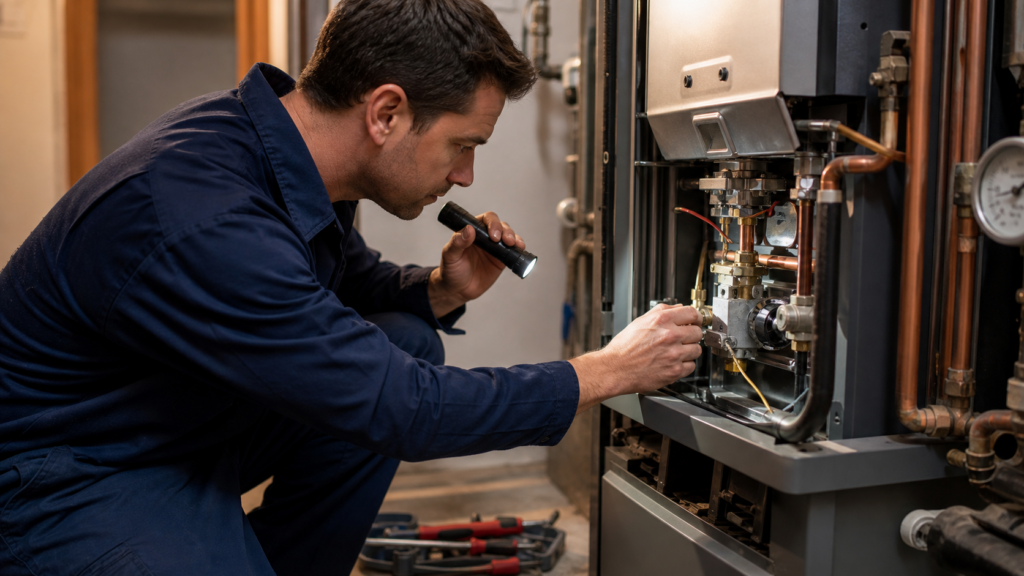
If you’re dealing with boiler pilot light repair, you’re likely facing a boiler that won’t stay lit, won’t heat your home, or keeps shutting down at the worst possible time. The pilot light is a small flame, but it plays a big role in older gas boilers by igniting the main burner when heat is needed.
The good news is that many pilot-light issues come from a few common causes—drafts, dirty pilot assemblies, or worn safety components. The key is to troubleshoot safely, know what you can handle as a homeowner, and recognize when you should stop and call a qualified technician.
Below is a complete guide to help you understand what’s happening, what to check, and how to reduce the chance of repeat failures.
First: Pilot Light Safety Rules You Should Follow
A boiler is a fuel-burning appliance. Treat every step as a safety task.
Stop and get help immediately if:
- You smell gas (a strong sulfur/rotten-egg odor).
- You hear hissing near the boiler or gas line.
- You suspect carbon monoxide exposure (headache, dizziness, nausea).
- The boiler area is flooded or electrical components are wet.
- The pilot area looks scorched, melted, or heavily sooted.
Basic safety steps before troubleshooting
- Turn the thermostat down so the boiler won’t call for heat while you work.
- Ensure the room is ventilated.
- Keep flammable items away from the boiler.
- Use a flashlight, not an open flame, for inspection.
If anything feels uncertain, it’s better to stop. A “simple relight” can become unsafe if there’s a gas control issue, venting problem, or damaged component.
What a Pilot Light Does in a Gas Boiler
In standing-pilot systems, the pilot is a small flame that stays on (or attempts to stay on) to ignite the main burners when the boiler needs heat.
A typical standing-pilot setup includes:
- Pilot burner/orifice: creates the small pilot flame
- Thermocouple or thermopile: senses the flame’s heat and proves it’s lit
- Gas valve: allows pilot gas flow and opens main burner gas when safe
- Draft hood/venting system: removes combustion gases safely
If any part of that chain fails, the system may shut the pilot off as a safety measure.
Common Symptoms (And What They Usually Mean)
Understanding the symptom helps you narrow the cause fast.
Pilot won’t light at all
Often caused by:
- Gas control set incorrectly
- No gas supply (shutoff closed, utility issue)
- Blocked pilot orifice
- Faulty igniter (if your unit has a piezo igniter)
Pilot lights but goes out when you release the button
Often caused by:
- Weak or failed thermocouple/thermopile
- Pilot flame not contacting the sensor properly (dirty or misaligned pilot)
- Loose thermocouple connection at the gas valve
Pilot stays lit but main burner won’t fire
Often caused by:
- Thermostat or control issue
- Gas valve problem
- Limit switch or safety lockout triggered
- Draft/venting issue causing unstable combustion
Pilot goes out intermittently (especially on windy days)
Often caused by:
- Drafts around the boiler
- Venting/chimney downdraft
- Dirty pilot assembly
- Low gas pressure or inconsistent supply
Step-by-Step: How to Relight a Boiler Pilot Light (General Approach)
Boilers vary by brand and age, so always follow the lighting instructions on the boiler’s panel. If the label is missing or unreadable, that’s a sign to be cautious.
Here’s the general process many standing-pilot boilers use:
1) Confirm the gas shutoff is open
Find the manual gas shutoff valve near the boiler. In many setups:
- Handle parallel to pipe = open
- Handle perpendicular to pipe = closed
If you’re unsure, do not force it.
2) Turn the gas control to OFF and wait
Set the gas valve knob to OFF and wait about 5 minutes.
This allows any accumulated gas to clear out.
3) Set to PILOT
Turn the knob to PILOT. Press and hold it (some valves require you to push down).
4) Ignite the pilot
- Use the built-in igniter button if present, or
- Use a long-reach lighter only if the manufacturer instructions allow it
You should see a steady flame at the pilot burner.
5) Keep holding the pilot button
Hold it down for 30–60 seconds (sometimes longer on older systems).
This gives the thermocouple time to heat up and signal the gas valve to stay open.
6) Release slowly
If the pilot stays lit, turn the knob to ON.
Then set the thermostat to call for heat and watch the main burners ignite.
If the pilot goes out when you release the button, skip repeated attempts and move to troubleshooting. Repeated relighting without addressing the cause can waste time and may be unsafe if there’s a venting or gas control issue.
Troubleshooting Checklist for Boiler Pilot Light Repair
Work from easiest/most common checks to more technical ones.
Check 1: Drafts and airflow around the boiler
A pilot flame can be blown out by air movement.
Look for:
- Open windows near the boiler
- A strong exhaust fan creating negative pressure
- Loose boiler room doors that slam shut and create gusts
- Nearby return air vents pulling air hard
Simple fixes:
- Close windows/doors during operation (if safe and appropriate)
- Reduce strong drafts in the boiler area
- Make sure the boiler has adequate combustion air per your setup
If the pilot goes out only on windy days, a venting/downdraft issue is possible and needs professional evaluation.
Check 2: Pilot flame quality (color and shape)
A healthy pilot flame is usually steady and mostly blue, and it should engulf the thermocouple tip.
Problems you might see:
- Small, weak flame: often a dirty pilot orifice or low gas flow
- Yellow, lazy flame: can indicate dirt, improper combustion air, or contamination
- Flame not touching the thermocouple: misalignment or blockage
If the flame is weak or misdirected, the thermocouple won’t stay hot enough, and the gas valve will shut the pilot off.
Check 3: Dirty pilot orifice or pilot assembly
Dust, lint, and debris can restrict the pilot opening, especially in utility rooms with laundry equipment.
What you can do (basic homeowner level):
- Turn the boiler off and allow it to cool
- Gently clean around the pilot area using a soft brush
- Avoid poking metal objects into tiny openings
- Do not disassemble gas components unless you’re trained
If cleaning the exterior doesn’t help, deeper cleaning usually requires partial disassembly and should be handled by a technician.
Check 4: Thermocouple problems (most common cause)
A thermocouple is a small sensor that generates a tiny electrical signal when heated by the pilot flame. If it’s weak, dirty, damaged, or not positioned correctly, the gas valve will not stay open.
Signs of thermocouple trouble:
- Pilot lights but dies the moment you release the pilot button
- Pilot stays lit only if you keep holding the button
- The thermocouple looks bent, cracked, or heavily oxidized
Basic checks you can do:
- Ensure the thermocouple tip sits directly in the pilot flame
- Check that the thermocouple nut at the gas valve is snug (not overtightened)
Replacing a thermocouple is common boiler service work, but if you’re not comfortable working near gas controls, schedule a professional repair.
Check 5: Thermopile systems (millivolt controls)
Some boilers use a thermopile (often larger than a thermocouple) to generate enough power to operate the gas valve and controls.
Symptoms can look like:
- Pilot stays lit but burner won’t reliably turn on
- Intermittent operation, especially after the system cycles
Thermopile testing typically requires a multimeter and knowledge of expected voltage ranges.
Check 6: Loose or corroded connections
Vibration, age, and corrosion can cause connection issues.
A technician may check:
- Thermocouple/thermopile connections at the gas valve
- Grounding (if applicable)
- Control wiring to the thermostat and safety devices
If you see corrosion or brittle wiring, don’t tug on it—have it serviced.
Check 7: Gas valve and safety control issues
If the gas valve is failing internally, you may experience repeated pilot outages or inability to keep the pilot lit despite a good thermocouple.
Red flags:
- Inconsistent pilot behavior despite a strong flame
- Clicking or irregular operation
- The pilot setting does not behave as expected
Gas valve replacement is not a DIY task for most homeowners.
Check 8: Venting and chimney problems (serious)
Poor venting can disrupt the pilot flame and create unsafe conditions.
Possible causes:
- Blocked chimney/flue (debris, nests, or deterioration)
- Downdraft due to wind or building pressure conditions
- Improper vent sizing or damaged vent connector
Warning signs:
- Soot around the boiler
- Strong odors, eye irritation, or combustion smell
- Pilot outage tied to windy weather
- Moisture issues around venting
Venting problems should be addressed by a qualified professional promptly.
Why Your Pilot Light Keeps Going Out: The Most Likely Scenarios
If you want the fastest “most probable” diagnosis, these are the top repeat offenders in boiler pilot issues:
- Thermocouple worn out or weak
- Dirty pilot orifice causing a small flame
- Pilot flame not aimed at the thermocouple
- Drafts or venting downdraft
- Loose connection at the gas valve
- Aging gas valve or control issues
Many homes see a combination, such as a slightly dirty pilot plus a weakening thermocouple.
When Boiler Pilot Light Repair Should Be Done by a Technician
Some tasks cross the line from “basic troubleshooting” to “safety-critical repair.”
Call a professional if:
- You relight it correctly and it still won’t hold
- You suspect venting problems or see soot
- The boiler is short-cycling or making unusual noises
- You’ve had repeated pilot outages in a short time
- The gas valve appears faulty or you’re unsure about controls
- You have an older boiler and you want a full combustion/venting check
A proper service visit often includes cleaning, combustion checks, vent verification, and testing safety controls—things that help prevent repeat issues.
Maintenance Tips to Prevent Future Pilot Light Issues
You can reduce the chance of pilot failures with a few habits.
Keep the boiler area clean
- Reduce dust and lint around the appliance
- Avoid storing items close to the boiler
- Keep combustion air openings unobstructed
Schedule periodic service
Standing-pilot boilers benefit from occasional cleaning and inspection:
- Pilot assembly cleaning
- Thermocouple/thermopile testing
- Burner and heat exchanger inspection
- Venting and draft checks
Watch for early warning signs
Fix small issues early:
- Pilot flame changing shape or color
- More frequent relighting needs
- Unusual odors near the boiler
- System acting differently during windy weather
Quick Q&A: Standing Pilot vs. Electronic Ignition
Some homeowners call it a “pilot light” even when the boiler uses electronic ignition.
Standing pilot
- Small flame stays lit most of the time
- Uses thermocouple/thermopile for safety proof
Electronic ignition (intermittent pilot or hot surface ignition)
- No constant pilot flame
- Ignition occurs only when heat is needed
- Different troubleshooting steps (sensors, igniters, control boards)
If you don’t see a constant small flame when the boiler is idle, you may have electronic ignition. In that case, “pilot light repair” might actually be an igniter or flame sensor issue.
Conclusion
Boiler pilot problems are common in older gas systems, and boiler pilot light repair, often comes down to flame quality, thermocouple performance, and airflow or venting conditions. Start with safe basics: confirm proper relighting steps, check for drafts, and look at the pilot flame shape and placement. If the pilot won’t stay lit, the flame looks weak, or you suspect venting issues, bring in a qualified technician to test components and verify safe operation.
6. FAQs
Why does my boiler pilot light keep going out?
Common causes include a weak thermocouple, a dirty pilot orifice, drafts near the boiler, or venting downdrafts. Boiler pilot light repair often starts with checking flame quality and sensor placement.
Can I do boiler pilot light repair myself?
You can often relight the pilot and check for drafts or obvious issues safely. If the pilot won’t hold, there’s soot, or you suspect venting or gas valve problems, it’s safer to call a technician.
What does a bad thermocouple look like?
A bad thermocouple may look corroded, bent, or cracked, and it often causes the pilot to go out as soon as you release the pilot button.
How do I know if the pilot flame is healthy?
A healthy pilot flame is steady, mostly blue, and it should directly heat the thermocouple tip. A small or yellow flame can point to cleaning or adjustment needs.
Is it dangerous if my pilot light keeps going out?
It can be, especially if the cause is a venting issue or combustion problem. Repeated outages, soot, or strong odors should be checked promptly.
How much does boiler pilot light repair usually involve?
The work commonly includes cleaning the pilot assembly, adjusting the flame, tightening connections, and replacing a thermocouple or thermopile if needed.
What if my boiler doesn’t have a standing pilot light?
If your boiler uses electronic ignition, the issue may involve an igniter, flame sensor, or control problem rather than a pilot. A technician can confirm the ignition type and diagnose accurately.