
The right brass door handles can change the character of an interior without requiring a major decorating project. Polished brass can create a bright, formal accent, satin...
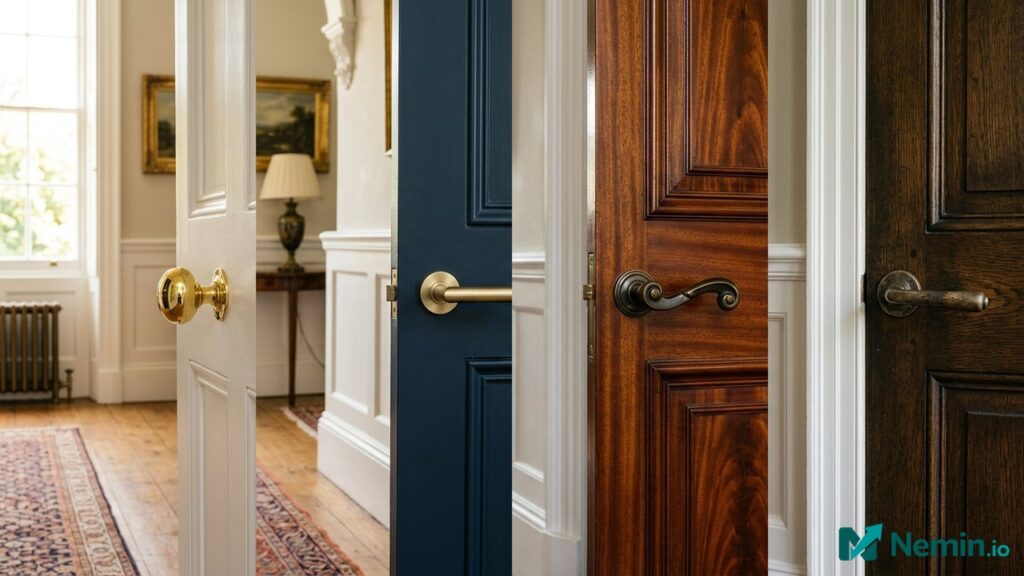
The right brass door handles can change the character of an interior without requiring a major decorating project. Polished brass can create a bright, formal accent, satin brass provides a softer contemporary look, while antique and aged finishes can complement period architecture and interiors built around natural materials. Choosing between them involves more than selecting the colour you prefer in an online photograph. The base material, protective coating, surface texture, door colour, nearby hardware, frequency of use and maintenance expectations all influence how brass door furniture looks after installation and how naturally it fits into the wider room.
Door handles are small compared with walls, floors and furniture, but they appear repeatedly throughout a property. This repetition gives hardware unusual visual influence. A carefully selected finish on several doors can connect different rooms without requiring identical decoration everywhere.
Brass also has a particularly broad design range. It can appear highly reflective and almost jewellery-like or dark, muted and deliberately aged. Two products both described simply as brass can consequently look completely different when installed.
This guide explains the principal brass door handles finishes, how solid brass differs from brass-plated hardware, which styles complement different interiors, and what to consider before replacing handles throughout a home or commercial property.
Why Brass Door Handles Remain So Popular
Brass has a long association with architectural hardware because it combines a distinctive warm colour with practical metalworking characteristics. Today, manufacturers use brass in traditional lever handles, knobs, contemporary minimal handles and highly decorative period designs.
Its visual versatility is particularly valuable. Warm metallic tones can complement timber, painted doors, stone, marble and many common interior colours without needing to dominate the room.
The popularity of brass door handles also reflects a broader return to warmer metal finishes in interior design. However, choosing brass simply because it is fashionable can lead to a finish that conflicts with the property. Architectural context and personal preference are more reliable guides than trend cycles.
Brass Door Handles Are Available in More Than One Gold Tone
The phrase brass finish sometimes creates the impression of one standard golden colour. In reality, brass hardware can range from bright yellow-gold to muted champagne, brownish antique tones and dark aged finishes.
Surface treatment changes how light interacts with the metal. Polishing creates reflection, brushing produces directional texture and chemical or applied ageing can darken recesses or the whole surface.
Always compare physical samples where possible because screen settings and product photography can make subtle finishes difficult to judge accurately.
Brass Door Handles Versus Other Hardware Finishes
Brass is only one choice among many architectural metals. Nickel, chrome, bronze-look, black and stainless-steel finishes each create a different effect.
| Hardware Finish | General Appearance | Often Works Well With |
|---|---|---|
| Polished brass | Bright, warm and reflective | Traditional, glamorous and statement interiors |
| Satin brass | Soft warm gold | Contemporary and transitional interiors |
| Antique brass | Darker and more varied | Period and heritage-inspired rooms |
| Aged brass | Naturally weathered appearance | Characterful and understated interiors |
| Polished chrome | Bright and cool | Modern bathrooms and contemporary rooms |
| Satin nickel | Soft silver-grey | Neutral modern interiors |
| Matt black | Graphic and strong | Industrial and minimalist spaces |
| Stainless steel | Clean and practical | Contemporary and commercial settings |
These associations are starting points rather than strict design rules.
9 Brass Door Handles Finishes Worth Considering
Manufacturers use finish terminology differently, so two products carrying the same name may not match exactly. This is particularly important if hardware is purchased from several suppliers.
Nine finishes and finish families are commonly worth comparing: polished brass, unlacquered polished brass, satin brass, brushed brass, antique brass, aged brass, burnished brass, darkened brass and PVD-style brass finishes. Availability depends on the manufacturer.
1. Polished Brass Door Handles
Polished brass door handles offer one of the brightest interpretations of the material. The reflective surface can create a formal, crisp appearance and is especially noticeable against dark painted doors.
Some polished brass products are lacquered or otherwise protected to slow visible tarnishing. Others are intentionally left unlacquered so the surface can change naturally through oxidation and handling.
Always check which type you are buying because maintenance expectations differ significantly.
2. Unlacquered Brass Door Handles
Unlacquered brass is selected specifically by many homeowners because it changes over time. Without a protective lacquer, exposure to air, skin oils and routine handling can gradually create a patina.
Frequently touched areas may evolve differently from protected sections of the handle. This variation is part of the intended aesthetic for many buyers rather than a defect.
If you want every handle to remain visually identical, an actively ageing finish may not be the most suitable choice.
3. Satin Brass Door Handles
Satin brass has a softer reflection than highly polished brass.
Its muted surface makes it popular in contemporary homes where warm metal is desired without a strong mirror-like shine. Satin brass can work especially well with neutral paint, dark timber and simple modern doors.
Maintenance instructions should still be checked because the satin effect can be created using different manufacturing processes.
4. Brushed Brass Door Handles
Brushed brass displays fine directional lines produced through surface finishing.
It may look similar to satin brass in online photographs, but brushed finishes often reveal more visible texture when viewed closely. The texture can make the handle feel more architectural and less formal than polished brass.
Do not assume brushed and satin brass from different manufacturers will match.
5. Antique Brass Door Handles
Antique brass usually describes a darker, deliberately aged appearance rather than hardware that is genuinely antique.
Colour can range from muted brown-gold to substantially darker tones, often with lighter highlights. It is frequently paired with traditional lever designs and detailed backplates.
Antique brass door handles can work beautifully in older properties, but they can also provide contrast within modern interiors.
6. Aged Brass Door Handles
Aged brass tends to emphasise a naturally worn or time-softened appearance.
The finish may include tonal variation intended to resemble brass that has developed character through years of use. Manufacturers define aged and antique differently, so examine samples rather than relying on the terminology.
This finish suits buyers who prefer brass without obvious brightness.
7. Burnished Brass Door Handles
Burnished finishes can combine areas of greater brightness with a softer overall surface.
The result often feels traditional but less uniformly dark than some antique options.
Because burnished is not a universal technical standard, check the manufacturer’s finish description and product sample.
8. Dark Brass Door Handles
Some brass finishes are treated to produce a deeper brown, bronze-like or almost blackened appearance while retaining warm metallic undertones.
These can provide a sophisticated alternative to solid matt black hardware.
Against light doors, dark brass door handles create clear contrast without the cooler character of chrome or steel.
9. PVD Brass Door Handles
Physical Vapour Deposition, commonly abbreviated as PVD, is a coating technology used on some architectural hardware to create durable decorative finishes.
A PVD brass-coloured handle may not necessarily have a visible surface of traditional solid brass behaving exactly like unlacquered brass. Its strength can lie in greater finish stability under suitable use.
Check the underlying material, coating specification and warranty rather than assuming every brass-coloured PVD product is constructed identically.
Polished Versus Satin Brass Door Handles
Polished and satin brass are among the most frequently compared finishes because both provide the classic warm brass colour while producing different levels of reflection.
Polished brass attracts more visual attention. Satin brass distributes light more softly and can appear calmer within a contemporary scheme.
Practical preference matters just as much as style.
Polished and Satin Brass Comparison
| Feature | Polished Brass | Satin Brass |
|---|---|---|
| Reflection | High | Low to moderate |
| Visual impact | Strong and decorative | Understated and refined |
| Style impression | Traditional, formal or glamorous | Contemporary and transitional |
| Fingerprints | Can appear readily on reflective surfaces | Often less visually obvious |
| Patina | Depends on protective finish | Depends on construction and coating |
| Dark doors | Creates strong contrast | Creates softer contrast |
| Light doors | Bright warm accent | Subtle warm accent |
| Maintenance | Finish-specific | Finish-specific |
Neither is objectively easier to maintain without considering the manufacturer’s protective treatment.
Solid Brass Door Handles Versus Brass-Plated Handles
One of the most important buying distinctions concerns material rather than colour.
Solid brass door handles use brass as the primary handle material, while brass-plated products use a thinner brass layer over another base metal. Some products instead use brass-coloured coatings or finishes without being brass plated in the traditional sense.
These constructions can differ in price, weight, wear characteristics and repairability.
How to Identify What You Are Buying
Read the product specification rather than relying on the words brass finish.
A listing saying satin brass could describe the colour while the handle itself is made from another base material. That is not inherently a problem if the construction is appropriate and accurately described.
Problems arise when customers assume a finish name guarantees solid-brass construction.
Brass Door Handles Material Comparison
| Construction | Main Characteristic | What to Check |
|---|---|---|
| Solid brass | Brass forms the main handle material | Finish treatment and warranty |
| Brass plated | Brass layer over another metal | Plating thickness and care |
| Brass-coloured PVD | Durable decorative coating on substrate | Underlying material and coating warranty |
| Lacquered brass | Brass protected by clear coating | Cleaning restrictions |
| Unlacquered brass | Exposed brass designed to patinate | Natural colour change |
| Brass-effect finish | Appearance resembles brass | Exact base material |
Material transparency makes long-term expectations much clearer.
Brass Door Handles and Patina
Patina is one of the defining characteristics associated with exposed brass.
When uncoated brass reacts with its environment, the surface can gradually darken and change character. Handling makes this process less uniform because oils and contact differ across the hardware.
Some people consider the resulting variation beautiful; others prefer a consistent factory finish.
Do You Want Brass Door Handles to Change Over Time?
Answer this question before selecting a finish.
If you want visible ageing, unlacquered or intentionally living finishes may be appropriate. If you prefer a stable appearance, look for products specifically designed to maintain their finish and follow the care instructions carefully.
No protective coating should be assumed to remain visually perfect forever under every level of use.
Choosing Brass Door Handles for Modern Interiors
Modern interiors often use simple lever shapes and compact roses rather than elaborate backplates.
Satin, brushed and restrained polished brass can introduce warmth without making the room feel traditional. Brass also creates useful contrast against monochrome or cool neutral palettes.
The handle shape should support the finish.
Brass With White Doors
White doors provide a neutral background that makes brass clearly visible.
Polished brass creates a brighter, more formal accent, while satin brass produces a softer look. Antique brass can introduce unexpected character, particularly when the room contains timber or vintage furniture.
Consider hinges and latches as part of the visual composition.
Brass With Black Doors
Black and very dark doors create strong contrast with warm brass hardware.
This pairing can work in contemporary, Art Deco-inspired and traditional schemes depending on the handle design.
Highly polished brass will become visually prominent, while aged finishes create a quieter contrast.
Brass With Grey Doors
Warm brass can balance cooler grey paint.
The precise effect depends on whether the grey has blue, green, brown or other undertones. Paint samples and hardware samples should therefore be compared in the same room.
Artificial evening light can alter the relationship further.
Brass Door Handles for Traditional Interiors
Period-inspired rooms often suit brass naturally because the metal has a long history in architectural hardware.
Lever handles on decorative backplates, traditional knobs and aged finishes can complement panelled doors, timber floors and heritage detailing.
Authenticity still requires some care. A Victorian, Georgian and Edwardian-inspired interior may call for different hardware proportions and details.
Antique Brass Door Handles for Period Homes
Antique finishes can integrate into older interiors without appearing excessively new.
However, “antique brass” does not mean historically accurate by itself. Handle shape, backplate, screws and lock furniture also influence the period effect.
Owners of listed or protected buildings should check whether restrictions or permissions apply before changing significant original architectural hardware.
Brass Door Handles for Transitional Interiors
Transitional design combines traditional and contemporary elements.
This makes brass particularly useful because the material can bridge classic door detailing with modern furniture and lighting.
A simple satin brass lever on a traditionally panelled door is a good example.
Avoid Overmatching Every Brass Finish
A room does not need the door handle, lamp, tap, cabinet pull and picture frame to be exactly identical.
Small variations can feel natural when the overall colour temperature and style remain compatible.
Problems usually arise when several almost-matching finishes sit immediately beside one another and make the difference look accidental.
Matching Brass Door Handles With Hinges
Hinges may be visible when doors are open, making finish coordination worth considering.
Matching brass hinges can provide a deliberate look, but their technical specification remains more important than decoration. The hinge must be appropriate for door weight, fire requirements and usage.
Do not replace specialist hinges solely to create a colour match without checking their function.
Fire Doors Require Particular Care
Fire doors rely on an assembly of tested or specified components.
Handles, hinges, latches, closers and other ironmongery may need to satisfy particular requirements. Changing hardware without considering the door’s certification or fire strategy can compromise performance.
Use appropriately qualified advice when specifying brass door handles for fire doors.
Matching Brass Door Handles With Locks and Latches
Lever handles rely on compatible latch or lock mechanisms.
Backset, spindle dimensions, door thickness and lock type should be checked before ordering. Handles that look correct aesthetically may not be compatible with existing door preparation.
Replacement projects are easier when existing measurements are recorded first.
Brass Door Handles for Bathrooms
Bathroom doors commonly require privacy locking.
A matching turn and release can create a consistent hardware finish. The mechanism should be easy to operate and suitable for emergency release where required.
In humid environments, check whether the selected finish is recommended for those conditions.
Brass Door Handles for Kitchens
Internal kitchen doors can use brass to connect with cabinet hardware, lighting or taps.
Exact matching is optional. A satin brass door handle can work beside darker aged cabinet pulls when the combination looks intentional.
If hands frequently carry food or grease, easy cleaning may influence the finish choice.
Consider Frequency of Touch
Door handles are high-contact objects.
Very reflective finishes may show marks more visibly, while textured surfaces can conceal some everyday fingerprints. Cleaning requirements depend on the protective coating.
Avoid strong chemical cleaners unless approved by the manufacturer.
Brass Door Handles for Bathrooms
Bathroom humidity can be more demanding than ordinary dry interiors.
Check whether the manufacturer recommends the particular brass door handles for bathroom use. Surface protection and base materials can influence resistance to tarnishing or corrosion.
Ventilation in the room also matters.
Brass Handles With Brass Bathroom Fittings
Matching door handles to taps can create visual consistency, but plumbing fixture finishes and door hardware often come from different manufacturers.
One brushed brass may be noticeably greener, warmer or darker than another.
Request samples where close matching matters.
Brass Door Handles for Bedrooms
Bedroom door handles usually experience moderate everyday use and offer considerable design freedom.
A simple lever can remain discreet, while a decorative backplate can contribute more strongly to the room.
Consider whether a privacy lock is genuinely required before installing unnecessary locking hardware.
Children’s Bedrooms
Handle design should be straightforward and durable.
Avoid hardware with unnecessarily sharp projecting elements in high-activity family spaces. Door function, finger safety and access needs should be considered alongside finish.
If a lock is fitted, understand how it can be opened in an emergency.
Brass Door Handles for Commercial Interiors
Brass is not restricted to residential properties.
Hotels, restaurants, boutiques and premium offices can use brass door handles to reinforce an interior identity. Commercial use generally creates higher traffic, making durability and maintenance more important.
Building, fire, accessibility and safety requirements must take priority over appearance.
Commercial Brass Door Handles Need the Right Specification
A decorative domestic lever may not suit a heavily used public door.
Check duty rating, door construction, accessibility requirements and compatible lock hardware. Where the door is fire-rated or forms part of an escape route, relevant specifications are particularly important.
Architectural ironmongery professionals can assist with complex schedules.
Brass Door Handles on Roses Versus Backplates
A lever on rose has a compact circular or square fixing plate behind the handle.
Backplate designs use a longer plate and can incorporate keyholes or lock furniture. Each creates a different visual character.
The choice may also depend on marks or existing holes left by old hardware.
Handle Style Comparison
| Handle Style | Visual Character | Practical Consideration |
|---|---|---|
| Lever on round rose | Minimal and versatile | Separate lock furniture may be needed |
| Lever on square rose | Contemporary | Alignment becomes visually important |
| Long backplate | Traditional or substantial | Can cover existing holes |
| Lever lock plate | Integrated lock opening | Must match lock centres |
| Lever bathroom plate | Integrated privacy function | Check mechanism compatibility |
| Brass door knob | Classic and compact | Grip and latch operation differ |
| Pull handle | Architectural and commercial | Not a replacement for every lever set |
Measure existing hardware before switching styles.
Brass Door Handles Versus Brass Door Knobs
Handles and knobs create different operating experiences.
Levers can often be easier to operate using a hand, elbow or limited grip, while knobs require rotational grip. Accessibility requirements may therefore influence the decision in certain buildings.
Aesthetic preference should not override usability.
When Brass Door Knobs Work Well
Door knobs can complement traditional interiors and panelled doors.
They need appropriate spacing from the door edge to prevent knuckles contacting the frame. Centre knobs used decoratively on some traditional doors may operate differently from ordinary latch knobs.
Clarify whether a knob is functional or purely decorative.
Brass Door Handles and Accessibility
Lever handles can provide straightforward operation for many users, but shape, return, mounting height and force all matter.
Commercial and public buildings may have specific accessibility standards.
Choose hardware according to the complete door requirement rather than assuming every lever is automatically accessible.
Practical Lever Design
A handle that curves back toward the door can reduce the risk of loose clothing catching on the end in certain contexts.
Projection and grip dimensions also affect usability.
For accessibility-sensitive projects, consult the applicable standards and professional guidance.
Measuring for Brass Door Handles
Replacing existing hardware becomes much easier when measurements are taken before purchase.
Door thickness, spindle dimensions, lock backset and existing fixing positions can all matter depending on the chosen product.
Do not assume every internal door uses identical hardware.
Brass Door Handles Measurement Checklist
| Measurement | Why It Matters |
|---|---|
| Door thickness | Determines hardware compatibility |
| Backset | Affects latch and handle positioning |
| Existing plate size | Important when covering old fixing marks |
| Spindle size | Must suit mechanism |
| Lock centres | Critical for integrated lock plates |
| Door edge clearance | Affects knob or lever usability |
| Rose diameter | Determines visual coverage |
| Handle projection | Influences clearance and ergonomics |
| Latch size | Must fit existing preparation |
Manufacturer specifications should ultimately determine compatibility.
Installing Brass Door Handles
Straightforward handle replacement may be achievable for experienced DIY users, but poor alignment can cause sticking, loose handles or damaged doors.
New installations require accurate drilling and chiselling for latches. Valuable timber doors deserve particular care because incorrect cuts are difficult to reverse.
Fire-rated or specialist doors should be handled according to their requirements.
Do Not Overtighten Fixings
Excessive tightening can damage certain roses, plates, finishes or door surfaces.
Follow installation instructions and use appropriate tools.
Protect polished brass door handles during fitting so tools do not scratch the finish.
Maintaining Brass Door Handles
Cleaning should begin with manufacturer instructions because different finishes need different care.
Unlacquered brass is intended to react naturally, while lacquered or coated hardware may be damaged by abrasive metal polish.
Do not assume a traditional brass-cleaning product is safe for every brass-coloured handle.
Brass Door Handles Cleaning Guide
| Finish | General Care Priority |
|---|---|
| Polished lacquered brass | Protect the clear coating |
| Unlacquered brass | Decide whether to retain or polish natural patina |
| Satin brass | Avoid abrasive polishing that changes texture |
| Brushed brass | Clean with respect to directional finish |
| Antique brass | Avoid removing intentional ageing |
| Aged brass | Preserve intended tonal variation |
| PVD brass | Follow coating manufacturer’s guidance |
| Brass-plated | Avoid aggressive products that can damage thin plating |
When uncertain, use only cleaning methods specifically approved by the product manufacturer.
Cleaning Unlacquered Brass Door Handles
Some owners enjoy patina and simply keep unlacquered handles clean without trying to restore the original shine.
Others prefer regularly polished brass. Both approaches can be valid when appropriate for the hardware.
Repeated polishing changes the appearance and can produce variation between frequently and infrequently maintained handles.
Patina Is Not Dirt
Natural oxidation should not automatically be interpreted as poor hygiene or damage.
The handle can be cleaned while retaining its developed surface character.
If you dislike patina, choose a finish designed for greater colour stability instead of repeatedly fighting the material’s intended behaviour.
Do Brass Door Handles Tarnish?
Exposed brass can change colour through oxidation and contact with its environment.
Lacquered, PVD-coated and other protected finishes may resist visible change differently, but performance varies with product, environment and use.
No generic finish label should be treated as a lifetime guarantee.
Coastal and Humid Environments
Salt air and high humidity can be more challenging for architectural hardware.
If brass door handles are being used near the coast, in bathrooms or on external doors, check the manufacturer’s environmental suitability and warranty exclusions.
Internal decorative hardware is not automatically appropriate for exterior exposure.
Internal Versus External Brass Door Handles
Exterior doors create additional requirements involving security, weather and durability.
A beautiful internal lever set should never be installed externally unless the manufacturer specifically approves the application.
Security hardware must also suit the door, lock and insurance requirements where applicable.
External Brass Door Handles Need More Than a Finish
Check weather resistance, fixing security, lock compatibility and product testing.
Exterior hardware can be exposed to rain, sunlight, pollution and temperature changes.
Choose the complete door hardware system first and the decorative finish within that suitable range.
Mixing Brass Door Handles With Other Metals
Mixed-metal interiors can look sophisticated when the variation is deliberate.
Brass may sit alongside black steel, chrome, nickel or bronze without every element needing replacement.
The key is repetition.
Use a Dominant and Supporting Metal
For example, brass door handles and cabinet pulls might become the dominant warm metal while black lighting provides a secondary contrast.
Repeating each finish more than once makes the combination look intentional.
Avoid introducing numerous unrelated metal finishes in a small room without a clear design reason.
Matching Brass Door Handles Throughout a Home
Using one handle throughout an entire property can create consistency, but it is not compulsory.
Different floors or rooms may justify variations, particularly in older houses that evolved over time.
A shared metal family can connect designs even when handle shapes differ.
Keep Adjacent Doors Consistent
Where several doors are visible simultaneously from one hallway, matching brass door handles often create the cleanest result.
More variation can be introduced in private rooms where hardware is not viewed together.
This provides cohesion without forcing every door in the property into one design.
Brass Door Handles and Paint Colours
Paint significantly influences how brass is perceived.
Against dark green, navy, burgundy or black, brass can appear rich and highly contrasted. Against cream, white or warm grey, it usually feels lighter and more understated.
Cooler wall colours can make brass appear warmer by comparison.
Test Finish Samples Against the Door
A small brass sample viewed under showroom lighting may look different in a north-facing hallway.
Place the sample against the actual door and view it in daylight and evening lighting.
This simple test can prevent expensive whole-house hardware mistakes.
How Much Do Brass Door Handles Cost?
Prices vary enormously according to base material, manufacturing quality, brand, finish, design and whether the item is produced at scale or by a specialist maker.
Solid brass architectural hardware generally belongs to a different price category from inexpensive brass-effect handles.
The total project cost should include more than the lever pair.
Brass Door Handles Budget Categories
| Cost Area | What to Include |
|---|---|
| Handle pair | Main visible hardware |
| Latch | Mechanism where not included |
| Hinges | Matching or appropriate functional hinges |
| Privacy turn | Bathrooms and selected rooms |
| Escutcheon | Keyhole detail where needed |
| Lock | Security or privacy mechanism |
| Door stop | Protect walls and hardware |
| Installation | Labour where professional fitting is used |
| Delivery | Supplier shipping costs |
| Spares | Useful for larger matching projects |
Request current supplier pricing rather than relying on fixed online averages.
Choosing Quality Brass Door Handles
Weight can sometimes provide clues about construction, but it is not a complete quality test.
Examine lever movement, springing, fixings, surface consistency and manufacturer information. Good hardware should feel mechanically controlled rather than loose.
Warranty terms can also reveal how the manufacturer expects the product to perform.
What to Check Before Buying
When comparing brass door handles, check:
- Whether the handle is solid brass or brass-effect
- Exact finish name and construction
- Whether the finish is lacquered, coated or living
- Door thickness compatibility
- Included spindle and fixings
- Latch or lock compatibility
- Internal or external suitability
- Fire-door suitability where relevant
- Warranty coverage
- Cleaning requirements
- Availability of matching hardware
- Availability of replacement units later
These practical details matter more than finish photographs alone.
Common Mistakes When Choosing Brass Door Handles
The first common mistake is believing every satin brass product will match every other satin brass product. Manufacturers use different alloys, coatings and surface treatments.
Another is purchasing the lever before checking the lock or latch.
A third is choosing a living finish and then being disappointed when it develops patina.
Avoid These Brass Door Handles Errors
When selecting brass door handles, avoid:
- Assuming brass finish means solid brass
- Mixing close but noticeably different finishes unintentionally
- Buying before measuring the door
- Ignoring existing fixing holes
- Using internal hardware externally
- Polishing lacquered brass with abrasive metal cleaner
- Treating intentional patina as a defect
- Replacing fire-door hardware without checking requirements
- Ignoring accessibility in public or shared buildings
- Choosing style without checking lock compatibility
- Assuming exterior brass never changes colour
- Ordering an entire property before viewing one sample
Testing one complete door first can be a sensible strategy for large projects.
How to Choose Brass Door Handles in Five Steps
Begin with the architecture and how the door is used. A heavily trafficked office door has different requirements from a lightly used bedroom door.
Next, choose the construction and finish behaviour you want, then check compatibility with the door and lock. Only after these details are confirmed should you order matching accessories.
Brass Door Handles Selection Guide
| Stage | Main Decision | Key Question |
|---|---|---|
| 1. Identify use | Internal, external or commercial | What performance is required? |
| 2. Choose style | Modern, traditional or transitional | What suits the door? |
| 3. Choose brass finish | Polished, satin, aged or another option | Should it patinate? |
| 4. Verify compatibility | Door, latch, lock and spindle | Will everything fit? |
| 5. Coordinate hardware | Hinges, turns and escutcheons | Does the complete set look intentional? |
This sequence helps avoid buying decorative hardware that cannot actually be installed correctly.
FAQ’s
Are brass door handles made from solid brass?
Some brass door handles are solid brass, while others use brass plating, PVD coatings or brass-effect finishes over another material. Check the product specification rather than relying on colour descriptions.
What finish is best for brass door handles?
There is no universal best finish. Polished brass creates a bright traditional statement, satin and brushed brass are softer, while antique or aged brass door handles provide greater character and tonal variation.
Do brass door handles tarnish?
Unlacquered brass door handles naturally develop patina, while lacquered, plated and PVD finishes may resist visible change differently. Environmental conditions and use influence long-term appearance.
Are satin brass door handles easy to maintain?
They can be relatively straightforward to maintain when cared for according to manufacturer instructions. Avoid abrasive polishing because it may alter the satin texture or damage a protective coating.
Can brass door handles be used in bathrooms?
Many can, but suitability depends on the exact material and finish. Check manufacturer guidance for humid environments and use appropriate ventilation in the room.
Should all brass door handles in a house match?
They do not have to match exactly, but consistency among doors visible together can create a more cohesive appearance. Different rooms can use related brass finishes when the variation looks deliberate.
Conclusion
Brass door handles can introduce warmth, character and visual consistency with surprisingly little change to the surrounding interior. Polished brass provides a bright decorative statement, satin and brushed finishes offer quieter contemporary warmth, while antique and aged brass door handles suit interiors where variation and character are part of the desired effect. Construction matters too, so always distinguish solid brass from plated, coated and brass-effect alternatives.
Before ordering brass door handles throughout a property, test the chosen finish against the actual doors and view it under both daylight and artificial light. Check measurements, latch compatibility, environmental suitability and whether the finish is designed to remain stable or develop patina. When appearance, function and maintenance expectations all align, brass hardware can become a small architectural detail that gives the entire interior a more considered finish.
Pingback: Black Screw Caps: 9 Powerful Finishing Touches for Builds