
Businesses that handle food, beverages, medicines, and temperature-sensitive products depend on reliable cooling systems to maintain product quality and safety. From restaurants and supermarkets to...
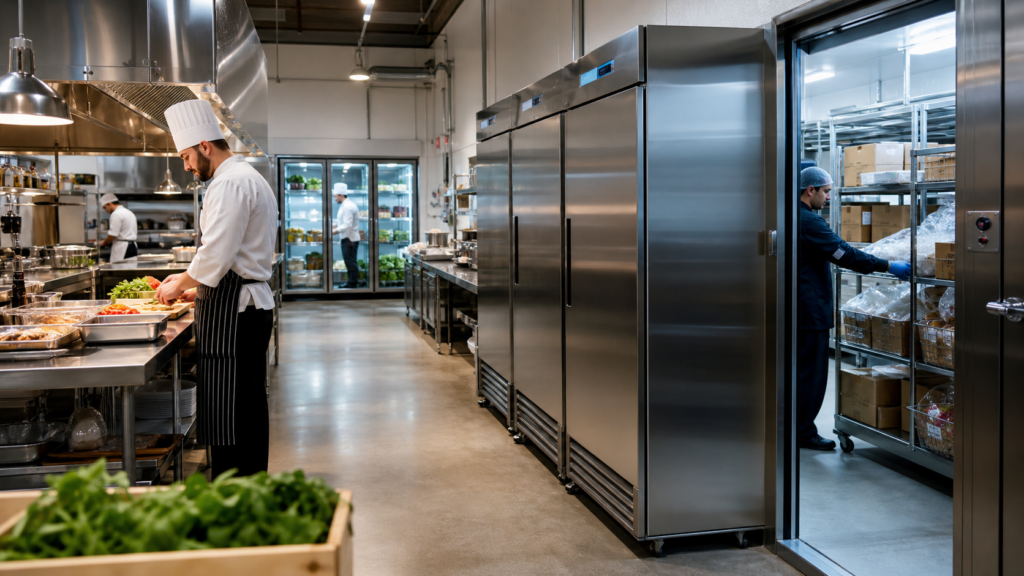
Businesses that handle food, beverages, medicines, and temperature-sensitive products depend on reliable cooling systems to maintain product quality and safety. From restaurants and supermarkets to warehouses and food processing facilities, the right cooling solution plays a critical role in daily operations. Commercial refrigeration equipment is designed specifically for professional environments where durability, storage capacity, temperature control, and consistent performance are essential.
Unlike residential refrigerators, commercial refrigeration systems are built to handle heavier usage, larger storage requirements, and continuous operation. These systems help businesses protect inventory, reduce waste, improve efficiency, and maintain proper storage conditions for perishable products.
Choosing the right refrigeration equipment requires understanding different system types, features, applications, and maintenance requirements. A well-planned refrigeration setup can improve workflow while supporting long-term business operations.
What Is Commercial Refrigeration Equipment?
Commercial refrigeration equipment refers to cooling systems designed for businesses and professional environments rather than household use. These systems are commonly used in restaurants, grocery stores, supermarkets, convenience stores, hotels, catering businesses, and food storage facilities.
Commercial refrigeration equipment includes various solutions such as:
- Reach-in refrigerators
- Commercial freezers
- Walk-in coolers
- Walk-in freezers
- Display refrigerators
- Beverage coolers
- Under-counter refrigeration units
- Ice machines
- Specialized cold storage systems
These units are designed to maintain controlled temperatures while handling frequent opening, closing, loading, and unloading throughout the day.
Why Businesses Need Commercial Refrigeration Equipment
Reliable refrigeration is essential for businesses that store products requiring controlled temperatures.
The right equipment helps businesses:
- Preserve product quality
- Reduce spoilage
- Improve food safety
- Organize storage areas
- Increase operational efficiency
- Support customer satisfaction
A refrigeration failure can result in damaged inventory, financial losses, and operational disruptions. Investing in quality equipment helps businesses avoid these challenges.
Types of Commercial Refrigeration Equipment
Different industries require different refrigeration solutions. Selecting the right type depends on storage requirements, available space, product type, and daily usage.
Reach-In Refrigerators and Freezers
Reach-in refrigerators are among the most common types of commercial refrigeration equipment used in restaurants, cafes, and food service businesses.
These units provide easy access to frequently used ingredients and products. They are available in different sizes, including single-door, double-door, and multi-section models.
Common uses include:
- Restaurant kitchens
- Cafeterias
- Hotels
- Convenience stores
Benefits include:
- Easy product access
- Efficient organization
- Compact design
- Fast retrieval during busy operations
Walk-In Coolers and Freezers
Walk-in refrigeration systems provide large storage spaces where employees can enter and organize products.
They are commonly used by businesses that need high-capacity cold storage.
Applications include:
- Restaurants
- Supermarkets
- Food warehouses
- Catering operations
Walk-in systems are ideal for storing large quantities of:
- Fresh produce
- Meat products
- Dairy items
- Frozen foods
- Beverages
Refrigerated Display Cases
Display refrigeration allows businesses to store products while making them visible to customers.
These systems are popular in:
- Grocery stores
- Bakeries
- Delis
- Beverage shops
Glass display refrigeration helps businesses showcase products while maintaining proper temperatures.
Beverage Coolers
Commercial beverage coolers are designed for businesses that sell chilled drinks.
They are commonly found in:
- Convenience stores
- Restaurants
- Cafes
- Retail shops
Features often include glass doors, adjustable shelving, and temperature controls.
Undercounter Refrigeration Units
Undercounter refrigerators are designed for businesses with limited space.
They fit below countertops and provide quick access to ingredients during food preparation.
They are useful for:
- Bars
- Small kitchens
- Coffee shops
- Food preparation areas
Commercial Ice Machines
Ice machines are another important category of commercial refrigeration equipment.
They are commonly used in:
- Hotels
- Restaurants
- Healthcare facilities
- Beverage businesses
They provide consistent ice production for daily operations.
Important Features of Commercial Refrigeration Equipment
When selecting refrigeration equipment, businesses should evaluate important features that affect performance and efficiency.
Temperature Control
Accurate temperature management is one of the most important factors.
Reliable temperature controls help maintain product quality and reduce the risk of spoilage.
Modern systems may include:
- Digital temperature displays
- Adjustable controls
- Monitoring systems
- Automatic alerts
Energy Efficiency
Commercial refrigeration operates for long hours, making energy efficiency important.
Energy-efficient equipment can help businesses reduce operating expenses while maintaining reliable cooling performance.
Important efficiency features include:
- Improved insulation
- Efficient compressors
- LED lighting
- Smart temperature management
Storage Capacity
Businesses should choose equipment based on their storage requirements.
A small restaurant may need compact refrigeration, while a large supermarket may require extensive cold storage systems.
Proper capacity planning helps prevent:
- Overcrowded storage
- Poor airflow
- Reduced cooling performance
Durability and Construction Quality
Commercial refrigeration equipment experiences heavy daily use.
Strong materials, quality components, and reliable construction help equipment perform effectively over time.
Stainless steel designs are commonly preferred because they are durable and easier to maintain.
Benefits of Using Quality Commercial Refrigeration Equipment
Better Product Protection
Reliable refrigeration helps businesses maintain product freshness and quality.
Proper temperature control protects sensitive items from spoilage.
Improved Food Safety
Maintaining correct storage temperatures is essential for businesses handling food products.
Commercial refrigeration helps create safer storage conditions.
Increased Operational Efficiency
Well-designed refrigeration systems improve workflow by keeping products organized and accessible.
Employees can work faster when storage areas are properly planned.
Reduced Product Waste
Spoiled inventory can create unnecessary costs.
Reliable refrigeration helps extend product life and reduce avoidable losses.
Better Customer Experience
Businesses that maintain fresh, high-quality products can provide better experiences for customers.
This is especially important in food service and retail environments.
Industries That Use Commercial Refrigeration Equipment
Commercial refrigeration solutions are used across many industries.
Restaurants and Food Service
Restaurants depend on refrigeration for storing ingredients, preparing meals, and maintaining food quality.
Grocery Stores and Supermarkets
Retail stores use refrigeration systems for displaying and storing:
- Fresh foods
- Frozen products
- Dairy items
- Beverages
Hotels and Hospitality
Hotels require refrigeration for kitchens, restaurants, bars, and guest services.
Healthcare Facilities
Some healthcare environments require controlled cooling solutions for temperature-sensitive products.
Food Processing and Distribution
Warehouses and processing facilities rely on large refrigeration systems to maintain cold storage throughout supply chains.
Factors to Consider Before Buying Commercial Refrigeration Equipment
Choosing the right equipment requires careful planning.
Understand Your Storage Needs
Before purchasing, businesses should evaluate:
- Product types
- Required temperature ranges
- Storage volume
- Available space
Consider Energy Consumption
Energy costs can significantly affect long-term operating expenses.
Businesses should compare efficiency ratings and operating requirements before making decisions.
Evaluate Maintenance Requirements
Regular maintenance helps extend equipment life and maintain performance.
Important maintenance tasks include:
- Cleaning condenser coils
- Checking seals
- Monitoring temperatures
- Inspecting components
Choose the Right Size
Selecting equipment that is too small can create storage problems, while oversized systems may waste energy.
The ideal solution matches business requirements.
Maintenance Tips for Commercial Refrigeration Equipment
Proper maintenance improves reliability and reduces unexpected failures.
Businesses should:
- Clean equipment regularly
- Check door seals
- Monitor temperature levels
- Keep ventilation areas clear
- Schedule professional inspections
Preventive maintenance helps identify issues before they become expensive repairs.
Future Trends in Commercial Refrigeration
The commercial refrigeration industry continues to evolve with improved technology and sustainability-focused solutions.
Future developments include:
- Smart monitoring systems
- Energy-efficient designs
- Advanced temperature controls
- Environment-friendly refrigeration technologies
Businesses are increasingly adopting smarter systems that provide better performance and operational visibility.
Conclusion: Choosing the Right Commercial Refrigeration Equipment
Commercial refrigeration equipment is a critical investment for businesses that depend on reliable temperature control. The right system helps protect products, improve efficiency, reduce waste, and support safe operations. By understanding different refrigeration types, important features, and maintenance requirements, businesses can select solutions that match their specific needs. A properly designed refrigeration setup provides long-term value and helps organizations maintain consistent performance.
FAQs
What is commercial refrigeration equipment?
Commercial refrigeration equipment includes professional cooling systems designed for businesses such as restaurants, supermarkets, warehouses, and food service facilities.
Why is commercial refrigeration equipment important?
It helps businesses store products safely, maintain quality, reduce spoilage, and improve operational efficiency.
What are the main types of commercial refrigeration equipment?
Common types include reach-in refrigerators, walk-in coolers, freezers, display cases, beverage coolers, and ice machines.
How is commercial refrigeration different from residential refrigeration?
Commercial systems are designed for heavier use, larger storage needs, and continuous operation compared with household refrigerators.
How can businesses improve refrigeration efficiency?
Businesses can improve efficiency through regular maintenance, proper temperature settings, energy-efficient equipment, and good storage practices.
How often should commercial refrigeration equipment be maintained?
Maintenance schedules depend on usage and equipment type, but regular inspections and cleaning are recommended to maintain performance.
Which industries use commercial refrigeration equipment?
Restaurants, supermarkets, hotels, healthcare facilities, food processors, and distribution centers commonly use commercial refrigeration systems.