
Commercial and industrial building envelopes endure severe environmental stressors, ranging from intense ultraviolet radiation and heavy rainfall to extreme temperature swings and high mechanical foot...
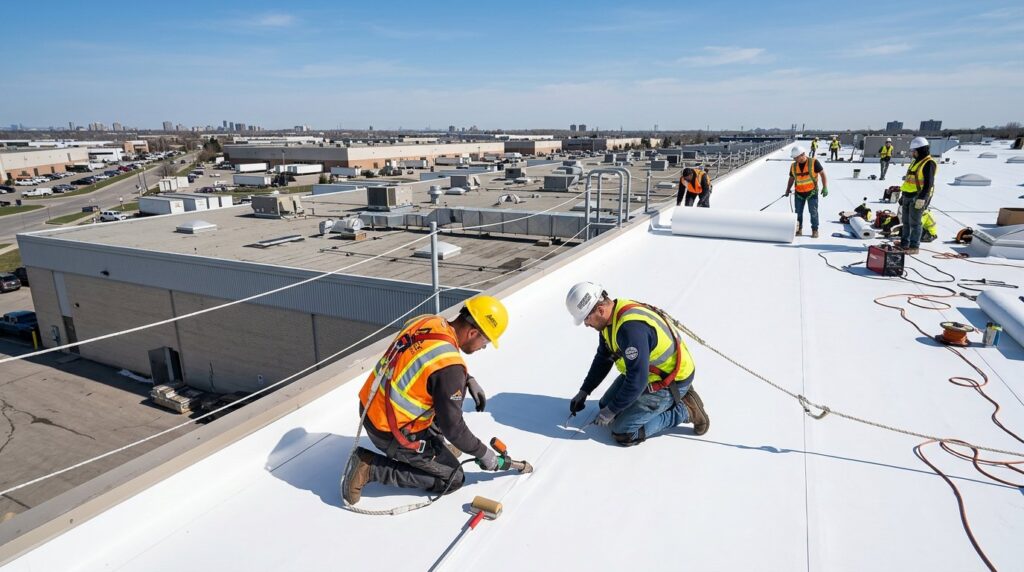
Commercial and industrial building envelopes endure severe environmental stressors, ranging from intense ultraviolet radiation and heavy rainfall to extreme temperature swings and high mechanical foot traffic. Partnering with PB Roofing provides building owners, facility managers, and property developers with dependable, high-performance commercial roofing solutions that safeguard valuable interior assets. Furthermore, implementing proactive asset management strategies prevents minor membrane vulnerabilities from escalating into catastrophic interior water damage.
Whether you oversee an expansive manufacturing plant, a regional distribution warehouse, an educational campus, or a multi-tenant commercial office complex, selecting the right roofing system is critical. In addition, navigating single-ply membranes, liquid-applied restorative coatings, and stringent building energy codes requires proven industrial expertise. Consequently, relying on the certified specialists at PB Roofing guarantees maximum structural durability, enhanced thermal efficiency, and long-term financial return on your commercial real estate investment.
Why Commercial Roof Asset Management with PB Roofing Protects Your Bottom Line
Commercial roof replacements represent significant capital expenditures that directly impact corporate balance sheets. When facilities partner with PB Roofing, they transition from stressful emergency repairs to predictable, proactive asset lifecycle management. In fact, structured preventative maintenance programs extend the functional service lifespan of commercial roofs by up to fifty percent.
Preventing Unplanned Facility Downtime
Water leaks penetrating industrial facilities threaten sensitive manufacturing machinery, high-value warehouse inventory, and employee safety. As a result, sudden roof failures disrupt daily commercial operations and lead to expensive production stoppages. Therefore, implementing routine diagnostic inspections eliminates structural vulnerabilities before moisture penetrates interior decking.
Maximizing Energy Efficiency and Sustainability
Aging, dark-colored roofing membranes absorb massive quantities of solar radiation, transferring heat directly into building interiors. Consequently, commercial HVAC chillers must run continuously at high loads, resulting in elevated utility expenses and accelerated equipment wear. For this reason, installing cool-roof reflective systems drastically reduces indoor cooling loads and shrinks corporate carbon footprints.
Core Commercial Roofing Systems and Membrane Technologies
Modern commercial roofing requires matching specific membrane chemistries to building architecture, chemical exhaust exposures, and regional climate conditions. During initial engineering evaluations, PB Roofing assesses several primary roofing assemblies to determine the optimal solution.
1. Thermoplastic Polyolefin (TPO) Single-Ply Systems
In contemporary commercial construction, TPO single-ply membranes represent one of the fastest-growing choices for commercial flat roofs due to their exceptional heat-welded seam strength and superior solar reflectivity. Specifically, bright white TPO membranes reflect up to eighty percent of solar rays, meeting strict modern energy conservation codes. Furthermore, TPO resists fungal growth, chemical exposure, and industrial atmospheric pollutants.
2. Ethylene Propylene Diene Monomer (EPDM) Rubber Roofing
In comparison, EPDM synthetic rubber delivers decades of proven weathering resistance, remaining highly flexible across extreme sub-zero winter temperatures and blistering summer heat. In addition, elastomeric EPDM membranes absorb structural building movement and thermal expansion without cracking or splitting, making them exceptionally reliable for expansive industrial footprints.
3. Polyvinyl Chloride (PVC) Chemical-Resistant Membranes
Alternatively, for commercial facilities with rooftop grease exhausts, chemical manufacturing emissions, or intense restaurant ventilation, PVC membranes provide superior chemical and fire resistance. Because PVC incorporates plasticizers and heat-welded seams, it forms an impervious, watertight barrier that resists harsh oils, acids, and standing water.
4. Modified Bitumen and Built-Up Roofing (BUR)
Similarly, multi-ply built-up asphalt and polymer-modified bitumen systems utilize alternating layers of reinforcing fabric and waterproof asphalt bitumen. Consequently, multi-ply assemblies provide extraordinary resistance to heavy roof foot traffic, hail impacts, and mechanical maintenance equipment.
Advanced Diagnostic Technologies in Commercial Roof Inspections
Identifying hidden moisture entrapment beneath commercial roofing membranes requires sophisticated non-destructive testing equipment. By working with PB Roofing, facility owners access cutting-edge diagnostic technologies that pinpoint subterranean moisture without damaging the roof surface.
Infrared Thermographic Aerial Scanning
Specifically, infrared thermal cameras detect temperature differentials between dry insulation and water-saturated roof sections as the building cools after sunset. Furthermore, high-resolution thermographic imaging produces precision moisture maps that delineate exact repair boundaries, preventing unnecessary whole-roof tear-offs.
Electronic Vector Mapping and Low-Voltage Leak Detection
In addition, electronic leak detection utilizes low-voltage electrical currents passed over conductive substrates to identify microscopic pinholes, seam breaches, and membrane punctures with millimeter precision. As a result, technicians resolve localized breaches rapidly during quality assurance inspections.
Core Sampling and Fastener Pull-Out Testing
Simultaneously, physical core sampling verifies insulation thickness, substrate attachment integrity, and underlying deck condition. Moreover, calibrated fastener pull-out testing confirms that the roof assembly meets local building code wind uplift requirements.
Fluid-Applied Roof Restoration vs. Full Tear-Off Replacement
When commercial roofing membranes begin to show signs of weathering, building owners often assume a complete, costly roof replacement is mandatory. However, specialized evaluations by PB Roofing frequently reveal that restorative coatings can renew the roof at a fraction of the cost.
Advantages of Fluid-Applied Silicone and Acrylic Coatings
- Eliminates the need for expensive, noisy tear-offs and avoids sending tons of roofing debris to local landfills.
- Creates a seamless, monolithic waterproof barrier over existing membranes, flashing joints, and rooftop penetrations.
- Restores high solar reflectivity, reducing internal cooling loads and qualifying for valuable energy efficiency rebates.
- Extends the functional service lifespan of the existing roof by ten to twenty years with renewable manufacturer warranties.
Scenarios Demanding Complete Structural Roof Tear-Offs
- Widespread structural moisture saturation exceeding twenty-five to thirty percent of the total roof insulation substrate.
- Severely corroded metal decking, rotted wood subfloors, or compromised structural concrete slabs beneath the membrane.
- Non-compliance with modern building code requirements that restrict the number of allowable roofing layers on a single building.
- Persistent, severe structural movement requiring complete re-engineering of perimeter edge metal and parapet flashings.
Step-by-Step Execution: The Commercial Roofing Project Lifecycle
Executing large-scale industrial and commercial roofing installations requires disciplined logistics, strict safety compliance, and certified craftsmanship. Engaging PB Roofing ensures transparent communication and seamless project delivery across every phase.
Phase 1: Comprehensive Site Assessment and Engineering Specification
To begin with, commercial roofing specialists inspect the property, perform non-destructive moisture surveys, and evaluate local municipal building codes and wind uplift criteria. Next, engineers draft comprehensive technical specifications and customized CAD installation details.
Phase 2: Material Staging, Logistics, and Safety Planning
Before work begins, project managers coordinate crane operations, material deliveries, and rooftop staging while establishing OSHA-compliant safety perimeters. Adhering to strict safety protocols protects building occupants, facility staff, and roofing technicians throughout construction.
Phase 3: Substrate Preparation, Insulation, and Membrane Installation
Afterward, certified technicians prepare the substrate, install high-density polyisocyanurate (polyiso) insulation boards, and fasten or adhere the primary waterproof membrane. Subsequently, robotic hot-air welders fuse membrane seams with continuous, computer-calibrated thermal precision.
Phase 4: Flashing Detailing, Rooftop Penetrations, and Edge Metal
Afterward, technicians meticulously detail all pipe boots, HVAC curbs, drains, scuppers, and perimeter parapet walls with heavy-duty flashing assemblies. In addition, installing pre-manufactured, code-tested edge metal systems secures roof perimeters against intense hurricane-force wind uplift.
Phase 5: Third-Party Manufacturer Inspection and Warranty Issuance
Finally, an independent technical inspector from the membrane manufacturer conducts a rigorous multi-point audit of all seams, flashings, and attachment points. Following successful verification, the manufacturer issues a comprehensive No Dollar Limit (NDL) warranty covering materials and labor for up to thirty years.
Essential Preventative Maintenance Protocols for Property Managers
Above all, practicing proactive roof asset management drastically minimizes emergency leak repair calls and maximizes corporate investment returns. Partnering with PB Roofing for structured maintenance ensures continuous performance.
- Schedule Bi-Annual Scheduled Inspections: Inspect commercial roofs every spring and autumn, and immediately following major hail or wind events.
- Clear Roof Drains, Scuppers, and Gutters: Remove organic debris, trash, and silt from internal roof drains to prevent heavy ponding water accumulation.
- Inspect Rooftop HVAC Equipment Curbs: Ensure third-party mechanical contractors do not puncture surrounding membranes or leave loose access panels on the roof.
- Maintain Detailed Maintenance Documentation: Log all rooftop inspections, service visits, and mechanical modifications to preserve manufacturer warranty coverage.
- Enforce Strict Rooftop Access Controls: Restrict rooftop access exclusively to authorized personnel and install designated rubber walk pads along high-traffic service pathways.
Frequently Asked Questions About Commercial Roofing and PB Roofing
What is a No Dollar Limit (NDL) commercial roof warranty?
Specifically, a No Dollar Limit (NDL) warranty is an exclusive manufacturer-backed guarantee that covers the full cost of labor and materials required to repair roofing defects and leaks for a specified period, without financial caps based on original installation price.
How often should a commercial flat roof receive professional inspection?
In general, commercial roofs should undergo comprehensive professional inspections at least twice a year, ideally in spring and autumn. Furthermore, facilities should schedule diagnostic inspections immediately following severe windstorms, hail events, or major rooftop HVAC overhauls.
Can a new commercial roofing membrane be installed over an existing roof?
In most jurisdictions, installing a roof recover is often permissible by building codes if the existing roof has only one layer and the underlying insulation substrate is dry and structurally sound. However, local building codes generally prohibit installing a third layer, necessitating a complete tear-off.
What causes commercial flat roofs to leak most frequently?
Above all, the most frequent causes of commercial roof leaks are degraded flashing around rooftop HVAC units, deteriorated expansion joints, and punctures caused by mechanical service technicians walking on unprotected membrane areas.
How does a cool roof membrane reduce commercial building operating costs?
In practice, cool roof membranes feature highly reflective white surfaces that deflect solar thermal energy away from the building envelope. Consequently, this lowers indoor temperatures, reduces HVAC electrical consumption by up to fifteen to twenty percent, and prolongs air conditioning equipment lifespans.
Conclusion
Sustaining a reliable, watertight commercial roofing system is vital for preserving structural integrity, safeguarding valuable corporate assets, and maintaining operational continuity. Collaborating with PB Roofing provides building owners and facility executives with industry-leading commercial roofing expertise, advanced non-destructive diagnostic tools, and long-term asset management strategies. By combining premium membrane engineering, meticulous flashing craftsmanship, and scheduled preventative maintenance, commercial properties achieve maximum energy efficiency and enduring peace of mind. In conclusion, investing in dedicated commercial roofing professionals ensures your facility remains fully protected against every climate challenge for decades to come.