
Modern commercial enterprises rely on uninterrupted, high-capacity electrical infrastructure to power heavy machinery, server networks, climate control systems, and automated operations. Engaging certified specialists for electrical...
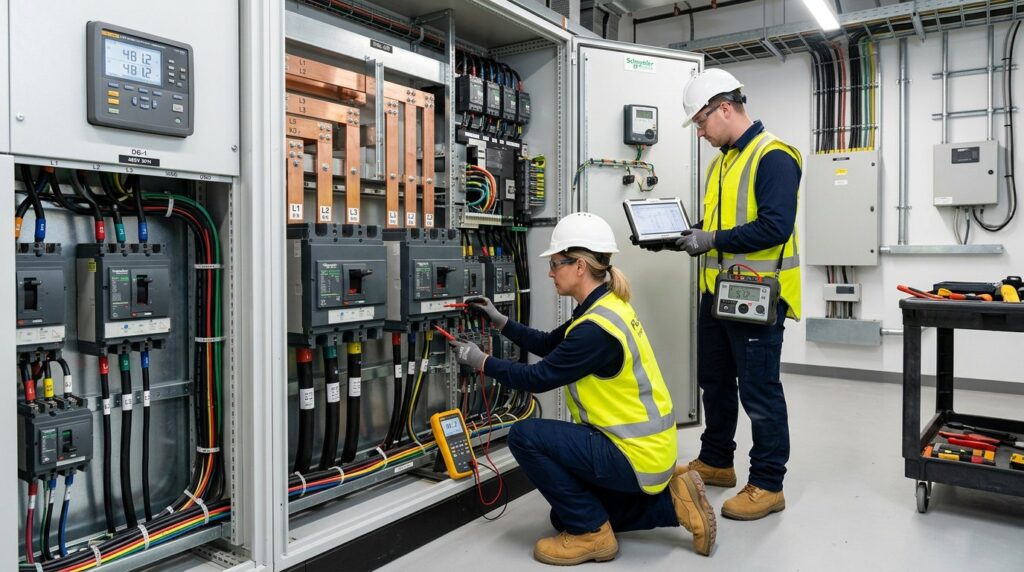
Modern commercial enterprises rely on uninterrupted, high-capacity electrical infrastructure to power heavy machinery, server networks, climate control systems, and automated operations. Engaging certified specialists for electrical commercial services provides business owners, facility managers, and commercial developers with dependable energy solutions that safeguard employee safety and maximize operational uptime. Furthermore, rapidly evolving statutory safety standards and energy conservation mandates make proactive electrical asset management essential for commercial properties.
Whether you operate an expansive industrial manufacturing plant, a high-density corporate office tower, a busy retail shopping complex, or a hospitality venue, selecting the right electrical contractor is paramount. In addition, navigating complex three-phase power distribution, switchboard thermal diagnostics, and emergency lighting compliance requires specialized commercial engineering expertise. Consequently, investing in dedicated electrical commercial services guarantees your enterprise maintains optimal power reliability, regulatory compliance, and maximum energy efficiency throughout the operational lifecycle.
Why Professional Electrical Commercial Services Protect Business Continuity
Electrical failures, power surges, and switchboard overloads present catastrophic operational and financial risks to modern enterprises. When organizations contract comprehensive electrical commercial services, they transition from reactive disaster mitigation to systematic, preventative power management. In fact, scheduled preventative electrical maintenance reduces sudden commercial power outages by up to sixty percent.
Eliminating Expensive Operational Downtime
Unscheduled electrical blackouts paralyze critical data servers, halt automated manufacturing assembly lines, and disrupt point-of-sale customer transactions. As a result, businesses suffer immediate revenue losses, corrupted digital databases, and damaged customer trust. Therefore, routine electrical audits and load balancing protect sensitive enterprise equipment from disruptive voltage fluctuations.
Ensuring Statutory Occupational Safety and Compliance
Commercial property owners bear strict legal duties under national electrical safety regulations to provide a hazard-free work environment. Consequently, failing to maintain certified residual current devices (RCDs), emergency evacuation lighting, and tested switchboards exposes businesses to severe regulatory penalties, increased insurance premiums, and potential liability claims. For this reason, partnering with certified commercial electrical contractors guarantees complete statutory compliance.
Core Capabilities Delivered by Commercial Electrical Contractors
Commercial electrical systems demand engineering tolerances and power capacities far exceeding standard domestic wiring. During comprehensive facility evaluations, certified providers of electrical commercial services deliver specialized technical solutions across several primary operational categories.
1. Three-Phase Power Distribution and Sub-Mains Cabling
In heavy industry, commercial facilities utilize heavy three-phase power supplies (415V) to drive industrial electric motors, heavy HVAC chillers, commercial refrigeration, and automated machinery. Specifically, electrical engineers calculate precise load requirements to design, balance, and install heavy-duty busbars, sub-mains cabling, and sub-distribution boards that prevent single-phase overloads.
2. Main Switchboard Upgrades and Metering Infrastructure
Above all, the main switchboard functions as the central nerve center of your commercial building’s electrical distribution network. Upgrading outdated switchboards with modern circuit breakers, integrated surge protection devices (SPDs), and smart digital power meters ensures balanced power distribution and prevents catastrophic electrical fires.
3. Commercial Office and Retail Fit-Outs
Simultaneously, modern commercial fit-outs demand flexible, high-density power and structured data cabling to support dynamic office workstations, conference room audiovisual systems, and architectural retail lighting. In addition, master electricians design modular floor boxes, power poles, and dedicated server room circuit pathways that accommodate future enterprise growth.
4. High-Efficiency Commercial LED Lighting Upgrades
In addition, lighting accounts for a substantial percentage of total commercial electrical consumption. Upgrading outdated fluorescent tubes and metal-halide high-bays to smart commercial LED luminaires with automated daylight harvesting and PIR motion sensors reduces facility lighting electricity expenses by up to seventy percent.
Advanced Diagnostic Technologies in Commercial Electrical Maintenance
Identifying hidden thermal stress and insulation degradation before catastrophic electrical arcing occurs requires advanced non-destructive diagnostic tools. By utilizing professional electrical commercial services, facilities access sophisticated testing methodologies that ensure continuous power integrity.
Infrared Thermal Imaging Switchboard Inspections
Specifically, thermographic infrared cameras detect localized hot spots caused by loose electrical connections, unbalanced phase loads, and failing circuit breakers during peak operational hours. Furthermore, non-invasive thermal imaging identifies dangerous thermal anomalies without requiring disruptive facility shutdowns.
RCD Safety Switch Testing and Injection Timing
Furthermore, Residual Current Devices (RCDs) protect workers from fatal electrical shocks by disconnecting power within milliseconds of detecting current leakage. Master electricians utilize precision digital timing equipment to verify that every commercial safety switch trips within mandatory statutory millisecond thresholds.
Emergency and Exit Lighting Statutory Testing
Equally important, statutory building codes require commercial properties to maintain battery-backed emergency evacuation lighting that illuminates escape pathways during blackouts. Technicians execute mandatory ninety-minute discharge tests, replace degraded battery cells, and document certification logs to satisfy municipal fire safety standards.
Power Quality Analysis and Harmonics Mitigation
Over time, non-linear electronic loads from computers, LED drivers, and variable frequency motor drives generate electrical harmonics that distort power waveforms and overheat neutral conductors. In response, power quality analyzers map harmonic distortions, enabling engineers to install active harmonic filters and power factor correction units.
Sustainable Energy Management: Reducing Commercial Utility Overheads
Rising commercial electricity tariffs demand proactive energy conservation and smart grid integration. Engaging specialized electrical commercial services allows business enterprises to lower operational overheads while achieving ambitious corporate sustainability targets.
Power Factor Correction (PFC) Integration
Specifically, inductive commercial equipment like air conditioning compressors and industrial electric motors draws reactive power, lowering the facility’s power factor and incurring expensive utility penalty surcharges. Installing automated Power Factor Correction capacitor banks aligns voltage and current waveforms, eliminating utility penalty fees and freeing up electrical transformer capacity.
Commercial Solar PV and Battery Energy Storage Systems (BESS)
In comparison, integrating rooftop commercial solar arrays with high-capacity battery energy storage allows enterprises to generate clean, on-site electricity and offset peak-demand utility rates. Furthermore, commercial battery systems provide instant backup power, ensuring continuous operation during localized grid outages.
Electric Vehicle (EV) Commercial Fleet Charging Infrastructure
Similarly, as corporate vehicle fleets transition to electric powertrains, commercial properties require dedicated EV charging stations equipped with dynamic load management. Consequently, smart charging infrastructure charges multiple vehicles simultaneously without overloading the building’s main switchboard.
Step-by-Step Execution: The Commercial Electrical Project Lifecycle
Delivering a large-scale commercial electrical installation or facility upgrade requires disciplined project management, strict safety protocols, and rigorous quality control. Partnering with a dedicated contractor for electrical commercial services ensures seamless progression from initial concept to final certification.
Phase 1: Engineering Discovery and Electrical Load Calculations
To begin with, commercial electrical engineers review architectural plans, assess existing electrical service capacity, and calculate maximum prospective fault currents. Next, engineering teams produce comprehensive CAD wiring schematics, single-line distribution diagrams, and regulatory submission documents.
Phase 2: Procurement, Safety Planning, and Site Mobilization
Before construction commences, project managers coordinate equipment procurement, secure necessary grid connection approvals, and establish Job Safety Environmental Analyses (JSEA). Adhering to strict occupational health and safety standards protects workers and building occupants throughout construction.
Phase 3: Cable Containment, Rough-In, and Switchboard Installation
Afterward, licensed commercial electricians install cable trays, conduits, and heavy sub-mains cabling before positioning prefabricated main switchboards and distribution panels. Subsequently, technicians execute precision terminations using calibrated torque tools to guarantee solid electrical contact.
Phase 4: Fit-Off, Luminaires, and Automated Control Commissioning
Afterward, technicians wire commercial power outlets, connect industrial equipment feeds, mount designer LED fixtures, and configure smart lighting automation protocols. In addition, technicians integrate emergency control systems and building management system (BMS) telemetry.
Phase 5: Comprehensive Commissioning, Testing, and Compliance Certification
Finally, master electricians perform exhaustive insulation resistance tests, earth loop impedance checks, and RCD validation testing across all circuits. Following successful verification, the electrical contractor issues formal Certificates of Electrical Safety (COES) and comprehensive compliance documentation.
Essential Preventative Maintenance Checklist for Facility Managers
Practicing proactive electrical asset management drastically reduces emergency breakdowns and prolongs infrastructure lifespans. Partnering with certified providers of electrical commercial services ensures reliable ongoing performance.
- Schedule Bi-Annual Switchboard Inspections: Perform visual inspections and thermographic scans every six months to catch loose terminal connections early.
- Execute Semi-Annual Emergency Light Audits: Conduct mandatory 90-minute battery discharge tests every six months to ensure complete emergency exit compliance.
- Test RCD Safety Switches Regularly: Perform push-button operational tests monthly and calibrated digital injection trip tests every twelve months.
- Review Energy Consumption Analytics: Analyze monthly power factor data and peak demand spikes to identify efficiency improvement opportunities.
- Maintain Clean, Restricted Switch Rooms: Ensure all electrical switchboard cupboards remain dry, well-ventilated, free from stored storage items, and locked to unauthorized personnel.
Frequently Asked Questions About Electrical Commercial Services
What is the primary difference between residential and commercial electrical work?
Specifically, commercial electrical systems operate at significantly higher voltages and three-phase power capacities (415V), utilizing specialized cable containment, heavy metal switchboards, and complex automated control systems designed to withstand continuous industrial operating loads.
How often does a commercial switchboard require infrared thermal scanning?
In general, commercial switchboards should undergo professional infrared thermographic scanning at least once a year during normal operating peak hours. Furthermore, heavy manufacturing plants and data centers often conduct quarterly thermal scans to prevent unpredicted downtime.
What causes low power factor in commercial buildings, and how is it corrected?
Specifically, low power factor is caused by inductive electrical equipment, such as HVAC compressors, fluorescent ballasts, and electric motors, which draw reactive power. Installing automated Power Factor Correction (PFC) capacitor banks corrects phase displacement, eliminating expensive utility penalty charges.
Why is emergency exit lighting compliance legally mandatory for businesses?
In statutory terms, emergency lighting is a mandatory life-safety requirement under national building and occupational safety codes. In the event of a fire or grid blackout, battery-powered emergency luminaires illuminate escape routes and exit doors, allowing occupants to evacuate the building safely.
How does upgrading to commercial LED lighting reduce maintenance expenses?
In practice, commercial LED fixtures offer operating lifespans exceeding 50,000 to 100,000 hours, which is five to ten times longer than legacy fluorescent or metal-halide lamps. Consequently, businesses eliminate frequent lamp replacement labor, scaffolding hire costs, and recurring bulb replacement expenses.
Conclusion
Maintaining a secure, high-capacity, and energy-efficient electrical system is fundamental to operational continuity, worker safety, and long-term commercial profitability. Engaging experienced master electricians for electrical commercial services equips your enterprise with the technical precision, engineering expertise, and regulatory compliance necessary to power modern commercial operations reliably. By combining custom switchboard engineering, advanced thermal diagnostics, and smart energy-saving upgrades, commercial facilities eliminate disruptive outages and achieve significant energy cost savings. In conclusion, investing in dedicated commercial electrical specialists ensures your facility’s power infrastructure remains dependable, fully compliant, and optimized for long-term commercial growth.