
Understanding different screws is essential for any DIY enthusiast, woodworker, contractor, or homeowner. Using the wrong screw can lead to weak joints, splitting wood, stripped...
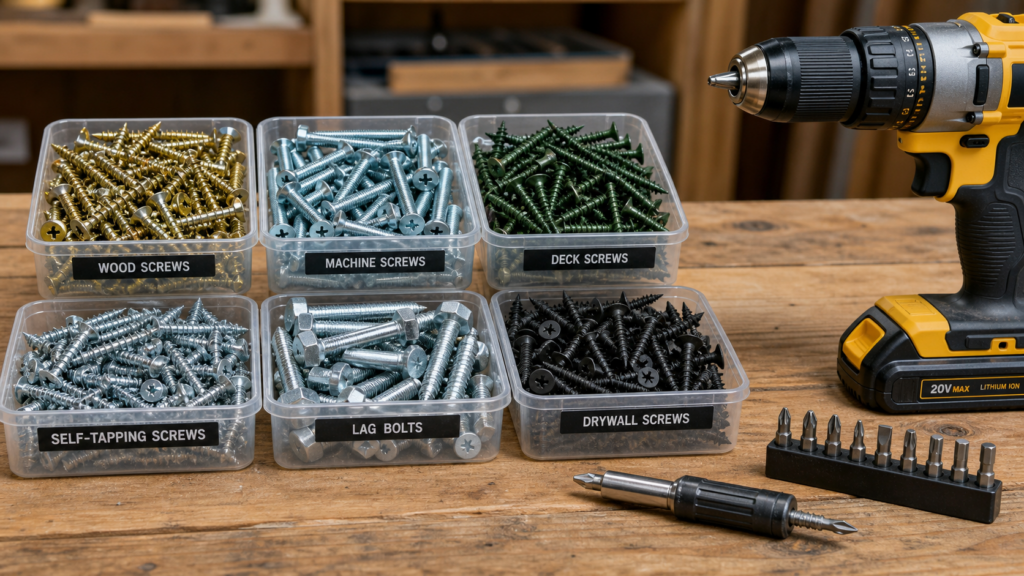
Understanding different screws is essential for any DIY enthusiast, woodworker, contractor, or homeowner. Using the wrong screw can lead to weak joints, splitting wood, stripped heads, or premature failure. With so many types, sizes, materials, and head designs available, knowing which screw to use for each application saves time, money, and frustration while delivering stronger, more professional results.
Why Different Screws Matter
Each screw is engineered for a specific purpose. Factors such as thread type, head style, material, and point design determine how well a screw performs in wood, metal, concrete, drywall, or composite materials. Choosing the correct screw improves holding power, prevents corrosion, and ensures a clean, professional finish.
7 Most Common Types of Screws and Their Uses
Here’s a breakdown of the different screws you’ll encounter most often:
1. Wood Screws
Designed specifically for wood. They have coarse threads and a sharp point for maximum grip. Available with flat, round, or oval heads. Best for furniture, decking, and general woodworking.
2. Machine Screws
Used with pre-threaded holes or nuts. They have uniform threads along the entire shank. Commonly used in metal fabrication, electronics, and machinery assembly.
3. Self-Tapping Screws
Cut their own threads as they’re driven into material. Ideal for sheet metal, plastic, and thin wood. Save time by eliminating the need for pre-drilling in many cases.
4. Deck Screws
Specifically made for outdoor decking and fencing. They feature corrosion-resistant coatings (often coated or stainless steel), coarse threads, and bugle heads that sink flush with the surface.
5. Lag Screws (Lag Bolts)
Heavy-duty fasteners with thick shafts and coarse threads. Used for structural connections, attaching beams, ledger boards, and heavy hardware to wood.
6. Drywall Screws
Designed for fastening drywall to studs. They have fine threads, sharp points, and bugle heads that create a clean dimple for easy finishing with joint compound.
7. Sheet Metal Screws
Short with sharp points and tight threads. Used to fasten thin metal to metal or wood. Available in hex washer head or flat head styles.
Screw Head Types and Drive Styles
The head style affects both appearance and driving method:
- Flat Head — Sits flush with the surface
- Pan Head — Slightly rounded, sits above surface
- Round Head — Traditional decorative look
- Bugle Head — Self-countersinking (common on drywall and deck screws)
- Hex Head — Driven with a socket or wrench (very strong)
- Torx (Star) — Excellent grip, reduces cam-out
- Phillips vs Square Drive — Square (Robertson) drive offers better torque and less stripping
Materials Used for Different Screws
- Carbon Steel — Strong and affordable (needs coating for outdoor use)
- Stainless Steel — Excellent corrosion resistance for outdoor and marine use
- Brass — Decorative and corrosion-resistant
- Zinc Plated — Good rust protection for indoor projects
- Ceramic Coated — Popular for deck screws due to superior weather resistance
How to Choose the Right Screws
Consider these factors:
- Material you’re fastening into
- Indoor vs outdoor exposure
- Load requirements
- Desired appearance (countersunk vs surface mounted)
- Corrosion resistance needed
Always choose screws that are slightly longer than the combined thickness of the materials being joined for maximum holding power.
Comparison Table of Different Screws
| Screw Type | Best Material | Head Style | Primary Use | Corrosion Resistance |
|---|---|---|---|---|
| Wood Screws | Wood | Flat / Oval | Furniture, cabinetry | Depends on coating |
| Deck Screws | Wood (outdoor) | Bugle | Decks, fencing, outdoor projects | Excellent |
| Machine Screws | Metal / Threads | Pan / Flat | Machinery, electronics | Good to Excellent |
| Self-Tapping | Sheet metal, plastic | Hex / Pan | Metal roofing, HVAC | Good |
| Lag Screws | Heavy wood | Hex | Structural connections | Good to Excellent |
| Drywall Screws | Drywall to wood | Bugle | Interior walls | Basic |
Pro Tips for Working with Different Screws
- Pre-drill pilot holes in hardwoods to prevent splitting
- Use the correct driver bit to avoid stripping screw heads
- Choose stainless steel or coated screws for outdoor applications
- Store screws in organized containers to prevent mixing types
- Keep a good variety of lengths and sizes in your workshop
Frequently Asked Questions
What are the most commonly used screws for home projects?
Wood screws, deck screws, and drywall screws are the most frequently used for general home improvement and woodworking.
What’s the difference between wood screws and deck screws?
Deck screws are specifically designed for outdoor use with superior corrosion resistance and bugle heads that sink flush without splitting the wood.
Should I use stainless steel screws outdoors?
Yes. Stainless steel or specially coated outdoor screws resist rust much better than standard zinc-plated screws in wet or coastal environments.
What size pilot hole should I drill?
The pilot hole should be slightly smaller than the screw’s shank but close to the root diameter of the threads.
Can I reuse screws after removing them?
It’s generally not recommended, especially with wood screws, as the threads lose holding power on the second insertion.
What’s the strongest type of screw?
Lag screws and structural screws (sometimes called construction screws) offer the highest shear strength for heavy loads.
Conclusion
Understanding the different screws available is fundamental to completing any project successfully and safely. By choosing the correct screw type, material, head style, and size for your specific application, you’ll achieve stronger joints, better finished results, and longer-lasting projects. Keep a well-organized selection of different screws in your workshop, and you’ll always have the right fastener ready when you need it. Taking time to select the proper screws is one of the simplest ways to improve the quality and durability of your work.