
Skin discolouration can be as subtle as a few marks left after spots or as noticeable as larger areas that appear darker, lighter, redder or otherwise different...
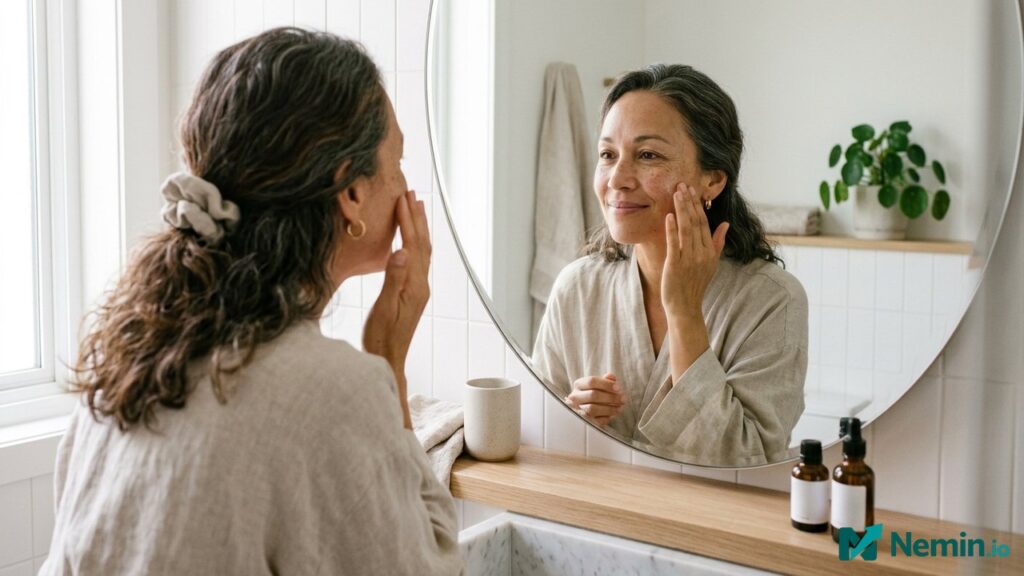
Skin discolouration can be as subtle as a few marks left after spots or as noticeable as larger areas that appear darker, lighter, redder or otherwise different from the surrounding skin. Looking in the mirror and noticing a change can naturally raise questions about what caused it, whether it will fade and which treatments are safe. Uneven pigmentation is common and can develop after inflammation, sun exposure, hormonal changes, injury or certain medical conditions, but discolouration is a description rather than a diagnosis. Some changes respond to consistent skincare and sun protection, while new, persistent or unusual colour changes deserve assessment by a qualified healthcare professional or dermatologist.
Confidence adds another layer to the subject. Beauty culture often treats even skin tone as something everybody should pursue, yet normal skin is rarely perfectly uniform. Freckles, birthmarks, scars, pigmentation and variations in tone can simply be part of how a person’s skin looks.
Wanting to reduce a mark is still a valid personal choice. The useful distinction is between choosing treatment because you prefer the appearance and feeling that visible skin variation somehow reduces your worth or requires aggressive correction.
This guide explains common types of discolouration, why they occur, which skincare ingredients may help certain pigmentation concerns and when a change should be assessed professionally rather than treated from a beauty shelf.
What Is Skin Discolouration?
Skin discolouration describes an area that differs in colour from the skin around it. It can appear darker, lighter, red, purple, brown or another shade depending on the underlying cause and the person’s natural skin tone.
The term covers many different processes. Hyperpigmentation involves areas becoming darker, whereas hypopigmentation or depigmentation involves reduced pigment. Red or purple changes can involve inflammation or blood vessels rather than melanin.
Because several conditions can look superficially similar, identifying the type of discolouration matters before choosing a treatment.
Discolouration Is a Symptom, Not One Condition
A dark mark left after acne does not have the same cause as a changing mole, melasma or a fungal skin condition. Likewise, redness from irritation should not automatically be treated with products designed to reduce melanin production.
Using the wrong treatment can waste money and potentially worsen irritation.
If you are uncertain what a new skin change represents, professional diagnosis is more useful than experimenting with increasingly strong active ingredients.
Common Forms of Skin Discolouration
| Type of Change | General Appearance | Possible Examples |
|---|---|---|
| Hyperpigmentation | Darker than surrounding skin | Post-inflammatory marks, melasma, sun-related pigmentation |
| Hypopigmentation | Lighter than surrounding skin | Changes after inflammation or certain skin conditions |
| Depigmentation | Marked pigment loss | Can occur in conditions such as vitiligo |
| Post-inflammatory redness | Red or pink marks | Often follows acne or irritation |
| Vascular colour change | Red, purple or visible vessels | Several vascular or inflammatory causes |
| Bruising | Blue, purple, green or yellow evolution | Trauma or other causes |
| Medication-related change | Variable pigmentation | Depends on medicine and individual |
| Localised changing lesion | New or changing colour within a spot | Requires appropriate assessment when concerning |
This table is illustrative and should not be used to self-diagnose.
9 Important Things to Know About Discolouration
Managing discolouration effectively begins by understanding its cause and accepting that different marks require different approaches. Products marketed for brightening cannot safely address every colour change.
Nine principles are especially important: diagnosis, sun protection, patience, inflammation control, gentle skincare, evidence-based active ingredients, realistic expectations, professional treatment when appropriate and knowing which warning signs require medical review.
1. Discolouration Has More Than One Cause
There is no universal pigment treatment.
Melasma can be influenced by hormones and light exposure, post-inflammatory hyperpigmentation follows skin inflammation, while lighter patches can arise through completely different processes.
Treatment should target the cause rather than the generic appearance of uneven colour.
2. Sunlight Can Make Some Discolouration More Noticeable
Ultraviolet exposure can stimulate pigmentation and make several forms of hyperpigmentation more persistent. Visible light may also be relevant in conditions such as melasma, particularly in darker skin tones.
Broad-spectrum sunscreen can therefore form an important part of managing many pigmentation concerns.
Sun protection should complement rather than replace appropriate medical assessment when a lesion itself is suspicious.
3. Pigment Often Takes Time to Change
Skin pigmentation rarely responds overnight.
Superficial post-inflammatory marks can gradually fade, while deeper or recurrent pigmentation may take considerably longer. Melasma in particular can be persistent and may recur.
Products promising dramatic permanent results within days should be approached cautiously.
4. Treating the Trigger Can Be as Important as Treating the Mark
Repeated acne, eczema or irritation can continually create new discolouration.
If someone concentrates entirely on fading old spots while inflammation continues, the overall appearance may not improve much.
Controlling the underlying skin problem can therefore be an essential part of pigment management.
5. Aggressive Skincare Can Make Discolouration Worse
Over-exfoliating, scrubbing and combining numerous strong active ingredients can damage the skin barrier and trigger irritation.
Inflammation itself can produce or worsen post-inflammatory pigmentation, particularly in people prone to it.
A faster-feeling routine is not necessarily a faster route to clearer skin.
6. Several Evidence-Based Ingredients Can Help Certain Dark Marks
Ingredients such as retinoids, azelaic acid, vitamin C, niacinamide and others can have roles in pigmentation-focused skincare depending on the condition and formulation.
Prescription treatments such as hydroquinone may also be used in appropriate circumstances under professional guidance, depending on country and patient.
No ingredient should be presented as universally appropriate.
7. Discolouration Looks Different Across Skin Tones
Inflammatory skin conditions can produce different visible colours depending on skin tone.
Post-inflammatory hyperpigmentation can be particularly persistent and prominent in darker skin, while redness may be less obvious visually despite active inflammation.
Clinicians experienced with a broad range of skin tones can provide more accurate assessment.
8. Professional Treatments Can Help but Carry Risks
Chemical peels, lasers, intense pulsed light and other procedures can be useful for appropriately selected pigmentation concerns.
They can also cause burns, irritation, worsening pigmentation or hypopigmentation if poorly chosen or performed.
The correct procedure depends on diagnosis, skin tone, treatment history and practitioner expertise.
9. Not Every Discolouration Needs Treatment
Some pigmentation is harmless and stable.
Freckles, birthmarks and long-standing colour variation may not need medical or cosmetic intervention unless the person wants treatment or a clinician identifies a concern.
Confidence does not require removing every visible difference from the skin.
Hyperpigmentation and Discolouration
Hyperpigmentation occurs when an area appears darker than surrounding skin. Increased melanin production or distribution can be involved, depending on the specific condition.
Common examples include post-inflammatory hyperpigmentation, melasma and certain sun-related spots.
Diagnosis still matters because apparently similar brown marks can require different management.
Post-Inflammatory Hyperpigmentation
Post-inflammatory hyperpigmentation, often shortened to PIH, can occur after acne, eczema, injuries or other inflammation.
The mark remains after the original problem has improved because pigment production changed during the inflammatory process.
Picking or squeezing spots can increase inflammation and potentially make residual marks more noticeable.
Discolouration After Acne
Acne can leave several types of marks.
Brown or greyish marks may represent post-inflammatory hyperpigmentation, while red or pink areas may represent post-inflammatory erythema. Indented or raised scars are structural changes rather than simply colour differences.
One acne patient can have more than one type at the same time.
Treat Active Acne Alongside Discolouration
A routine focused exclusively on old marks can become frustrating when new breakouts continually create more.
Appropriate acne treatment can reduce future inflammation and therefore reduce opportunities for additional marks.
Moderate, severe or scarring acne may benefit from professional medical treatment rather than relying only on cosmetic skincare.
Melasma and Facial Discolouration
Melasma commonly causes symmetrical areas of brown or grey-brown pigmentation, often on the face.
Hormonal factors, genetics and light exposure can contribute. Pregnancy and certain hormonal medications can be associated with melasma, although individual circumstances vary.
The condition can be persistent and recurrent.
Why Melasma Can Be Difficult to Treat
Even when pigmentation improves, ongoing light exposure or hormonal influences can contribute to recurrence.
Management may involve rigorous sun protection and topical treatment, with professional procedures considered in selected circumstances.
Because aggressive treatment can worsen pigmentation, gradual evidence-based management is preferable to repeatedly switching strong products.
Sun-Related Discolouration
Repeated ultraviolet exposure can contribute to uneven pigmentation and visible signs of photoageing.
Some people develop well-defined sun-related spots over time, while others notice broader uneven tone.
Any individual spot that changes suspiciously requires medical evaluation rather than automatic treatment as a cosmetic sun spot.
Prevention Is Easier Than Repeated Correction
Consistent sun protection can reduce repeated ultraviolet stimulation.
Protective clothing, shade and broad-spectrum sunscreen can work together.
No sunscreen provides unlimited protection, and reapplication needs depend on exposure, product instructions, sweating and water contact.
Red Discolouration After Acne
Not every acne mark is brown.
Post-inflammatory erythema can create persistent red or pink marks, particularly in lighter skin tones. Treating these with aggressive pigment-lightening products may not address the underlying vascular redness.
A dermatologist can help distinguish redness from melanin-related pigmentation when the appearance is unclear.
Discolouration Versus Acne Scarring
A flat coloured mark and an indented scar are different.
Pigment products may improve colour without rebuilding significant structural scarring.
Procedural treatments for scars should be chosen after professional assessment because scar type determines which approaches may be useful.
Dark Discolouration Around the Eyes
The appearance commonly called dark circles can involve pigmentation, visible blood vessels, shadowing from anatomy, thin skin or combinations of these factors.
This makes the under-eye area particularly difficult to treat with one generic brightening product.
The skin around the eyes is also delicate, so irritation should be avoided.
Be Careful With Strong Active Ingredients
Products appropriate for other facial areas may be too irritating close to the eyes.
Use formulations according to their intended area and instructions.
Sudden swelling, significant irritation or other concerning eye-area symptoms require appropriate healthcare advice.
Discolouration Around the Mouth
Darkening around the mouth can have several possible causes, including irritation and post-inflammatory changes.
Repeated licking, dermatitis, cosmetic reactions and other conditions may contribute in some individuals.
Do not assume it is simply sun damage.
Stop the Irritation Cycle
If a product repeatedly stings, burns or causes visible dermatitis, continuing it in the hope that the skin will “get used to it” may worsen the problem.
Simplifying the routine can help identify irritating products, but persistent symptoms should be professionally assessed.
Treat inflammation before aggressively targeting residual pigmentation.
Discolouration on the Neck
Neck pigmentation can result from several causes.
Certain patterns of darker, thickened skin can sometimes be associated with underlying metabolic or medical conditions and should not automatically be treated as cosmetic staining.
A clinician can determine whether further assessment is appropriate.
Avoid Harsh Scrubbing
Pigmentation is not necessarily dirt.
Repeatedly scrubbing darker skin can cause irritation and potentially worsen discolouration.
If ordinary gentle cleansing does not change the appearance, increasing abrasion is unlikely to address pigment produced within the skin.
Discolouration on the Hands
Hands receive frequent sunlight and environmental exposure.
Pigmentation may become more noticeable with cumulative sun exposure, while irritation from detergents or frequent washing can also affect skin appearance.
Protecting hands from excessive sun exposure can be useful.
New Spots Still Need Attention
Do not automatically label every hand spot as age-related pigmentation.
A new lesion that changes in size, shape, colour or symptoms should be assessed appropriately.
Dermatological warning signs apply regardless of whether a spot appears in a sun-exposed area.
Discolouration From Eczema
Eczema can leave colour changes after active inflammation subsides.
In lighter skin, redness may be more visually prominent, while darker skin tones can develop significant post-inflammatory hyperpigmentation or other colour changes.
Effective eczema management should focus on controlling the underlying condition as well as residual appearance.
Pigmentation Can Outlast the Rash
A person may think eczema is still active because the skin remains darker after itching and scaling have improved.
Persistent marks can take time to change.
If symptoms such as itching, pain, cracking or inflammation continue, the underlying dermatitis may still need treatment.
Discolouration After Injury
Cuts, burns, insect bites and other injuries can leave temporary or persistent pigmentation.
Healing skin also needs protection from unnecessary irritation.
Significant scars or burns should receive appropriate professional management.
Do Not Treat an Open Wound as Pigmentation
Brightening acids, retinoids and other cosmetic active ingredients should not be applied indiscriminately to unhealed wounds.
Allow the injury to heal according to professional guidance.
Pigmentation treatment, if needed, comes later.
Hormonal Discolouration
Hormonal changes can influence melanin production in certain conditions, particularly melasma.
Pregnancy, contraception and other hormonal circumstances may therefore form part of the medical history considered during assessment.
Do not stop prescribed hormonal medication solely because of pigmentation without discussing alternatives with the relevant healthcare professional.
Pregnancy Changes Skincare Choices
Some commonly used cosmetic and prescription ingredients are not recommended during pregnancy.
Anyone who is pregnant, breastfeeding or trying to conceive should check active skincare ingredients with an appropriate healthcare professional.
A product being available without prescription does not automatically make it suitable during pregnancy.
Skincare for Discolouration
A pigmentation routine does not need ten active products.
A gentle cleanser, suitable moisturiser and sun protection can provide the foundation, with one or more appropriate active ingredients introduced according to the condition.
Adding everything simultaneously increases the chance of irritation and makes it difficult to identify which product caused a reaction.
Simple Discolouration Skincare Framework
| Routine Stage | Purpose | Main Consideration |
|---|---|---|
| Gentle cleansing | Remove dirt and products | Avoid unnecessary stripping |
| Treatment | Target diagnosed concern | Choose appropriate active ingredient |
| Moisturiser | Support skin barrier | Select for skin type |
| Sunscreen | Reduce UV exposure | Broad-spectrum protection |
| Evening treatment | Support pigment or acne management | Introduce gradually when relevant |
| Monitoring | Track response and irritation | Give treatment realistic time |
| Professional review | Address persistent or unusual changes | Diagnosis before escalation |
A dermatologist may recommend a different routine according to the actual condition.
Sunscreen and Discolouration
Sun protection is one of the most broadly useful strategies for many forms of hyperpigmentation.
Broad-spectrum sunscreen protects against UVA and UVB exposure. For some pigmentation conditions, tinted sunscreens containing iron oxides may provide additional visible-light protection, depending on formulation.
The best sunscreen is one that provides appropriate protection and is used consistently.
How Much SPF Is Enough?
Dermatology and public-health organisations commonly recommend high-protection broad-spectrum sunscreen, often SPF 30 or above depending on circumstances and local guidance.
Application amount and reapplication matter alongside the SPF number.
People with specific skin conditions should follow advice from their dermatologist or other qualified professional.
Vitamin C for Discolouration
Topical vitamin C is widely used as an antioxidant and may help with aspects of uneven pigmentation.
Formulation matters because different vitamin C derivatives and concentrations behave differently.
Products can also degrade with light, air or time depending on formulation and packaging.
Introduce Carefully
Vitamin C can cause irritation in some people, particularly alongside other strong actives.
Start according to product directions and reduce unnecessary complexity.
More concentrated does not automatically mean better tolerated or more effective for every person.
Niacinamide and Discolouration
Niacinamide is a form of vitamin B3 commonly found in skincare.
It can support skin barrier function and may have a role in improving aspects of uneven pigmentation in certain formulations.
High concentrations are not necessary for every user and may irritate some skin.
Do Not Chase Concentration Numbers
Skincare marketing often treats the largest percentage as automatically superior.
Evidence, formulation and tolerability matter more.
A lower concentration used consistently can be preferable to a stronger product that repeatedly irritates the skin.
Azelaic Acid for Discolouration
Azelaic acid can have roles in acne, rosacea and pigmentation management depending on formulation and clinical context.
It can be particularly useful when discolouration exists alongside acne for some people.
Prescription and non-prescription availability differs by country and concentration.
Expect Gradual Change
Pigment improvement generally requires consistent use rather than frequent switching.
Follow product or medical instructions.
Persistent burning, severe redness or other significant reactions should prompt discontinuation and appropriate professional advice.
Retinoids and Discolouration
Retinoids influence skin-cell turnover and are used for acne, photoageing and certain pigmentation concerns.
Different retinoids vary substantially in strength and regulatory status.
They can also cause irritation, especially when introduced too aggressively.
Start With Tolerability
A dermatologist may recommend a particular retinoid based on the condition.
Sun protection remains important, and pregnancy-related restrictions need particular attention.
Never assume an ingredient suitable for a friend is appropriate for your skin.
Hydroquinone and Discolouration
Hydroquinone is a pigment-reducing ingredient used medically in some countries and circumstances.
Its availability and regulation vary internationally, and misuse can cause significant adverse effects.
It should not be treated as a casual long-term cosmetic product purchased from an unverified source.
Avoid Unregulated Skin-Lightening Products
Some illicit or poorly regulated lightening products can contain undeclared or inappropriate substances.
Purchase skincare through reputable channels and follow professional advice for prescription-strength treatments.
The goal should be treating a defined pigmentation concern, not attempting to change someone’s natural skin colour.
Chemical Exfoliation and Discolouration
Alpha hydroxy acids, beta hydroxy acids and other exfoliating ingredients can play roles in skincare.
Too much exfoliation can compromise the skin barrier and create inflammation, potentially worsening pigmentation.
Frequency and concentration should suit the person’s skin.
More Peeling Is Not More Progress
Visible peeling is not proof that pigmentation treatment is working.
Pain, significant burning or persistent redness is a reason to stop and reassess.
Healthy treatment should not require repeatedly injuring the skin.
Professional Treatments for Discolouration
Dermatologists and appropriately qualified practitioners may offer chemical peels, lasers, light-based treatments or other procedures for selected pigmentation concerns.
The correct treatment depends on the diagnosis and skin tone.
Some devices can worsen pigmentation when unsuitable settings or techniques are used.
Professional Treatment Comparison
| Treatment Category | Potential Use | Important Consideration |
|---|---|---|
| Chemical peel | Selected superficial pigmentation | Depth and skin type matter |
| Laser treatment | Particular pigmented or vascular concerns | Risk varies with condition and skin tone |
| Intense pulsed light | Certain pigmentation and vascular concerns | Not suitable for every skin type or condition |
| Microneedling | Selected scars and skin concerns | Requires appropriate indication and hygiene |
| Prescription topical therapy | Melasma or other diagnosed pigmentation | Medical supervision may be required |
| Combination treatment | Complex or recurrent pigmentation | Needs careful planning |
No procedure guarantees permanent clearance.
Discolouration in Darker Skin Tones
Skin of colour deserves particular attention because inflammation can produce persistent post-inflammatory pigmentation, and some procedures carry increased risk of additional pigment changes when poorly selected.
This does not mean darker skin cannot be treated successfully.
It means practitioner experience with the relevant skin tone and condition matters.
Ask About Relevant Experience
Before a laser, peel or other procedural treatment, ask whether the clinician regularly treats people with your skin tone and pigmentation concern.
Request a clear explanation of risks.
A practitioner should be willing to discuss the possibility of post-inflammatory hyperpigmentation or hypopigmentation where relevant.
Makeup and Discolouration
Makeup can provide temporary coverage for people who want it.
Colour correctors, concealers and foundations can reduce visible contrast without changing the underlying skin.
Wearing makeup is a choice, not an admission that natural skin needs hiding.
Choose Coverage Level for Yourself
Some people prefer full coverage, while others want skin texture and marks to remain visible.
Both are valid.
Remove makeup gently at the end of the day to avoid unnecessary irritation, particularly when acne or dermatitis is present.
Discolouration and Confidence
Changes in appearance can influence how someone feels, particularly when pigmentation is noticeable or has developed suddenly.
It is reasonable to seek treatment and also reasonable not to.
Confidence does not require pretending appearance never matters, but it can involve refusing to let one skin feature define the entire mirror.
Confidence Should Not Depend on Perfect Skin
Professional photographs, advertising and social media frequently show lighting, makeup, filters and retouching rather than ordinary close-up skin.
Comparing natural skin with edited imagery creates an unfair benchmark.
Normal skin contains pores, lines, tonal variation and texture.
When Discolouration Needs Medical Attention
A change should not automatically be treated cosmetically simply because it involves colour.
New or changing moles, unusual lesions, persistent unexplained colour changes, spontaneous bruising or pigmentation accompanied by other symptoms can require medical assessment.
Skin cancer can occur across skin tones.
Warning Signs Worth Checking
Seek appropriate medical advice for concerns such as:
- A new or changing mole or lesion
- Irregular changes in colour, border or size
- A spot that bleeds repeatedly without clear injury
- A lesion that does not heal
- Rapidly spreading unexplained discolouration
- Sudden extensive bruising
- Pigmentation accompanied by significant pain
- A widespread rash with systemic symptoms
- A sudden change after starting medication
- Significant pigment loss without known cause
This list is not exhaustive. If a skin change worries you, professional assessment is reasonable.
How Long Does Discolouration Take to Fade?
There is no universal timeline.
Cause, pigment depth, skin tone, ongoing inflammation, sun exposure and treatment all influence how quickly a mark changes. Some post-inflammatory marks improve gradually over months, while melasma can remain recurrent for years.
Patience matters, but indefinite self-treatment without improvement is not always useful.
Take Consistent Photographs if Helpful
Monthly photographs in similar lighting can make gradual change easier to see.
Daily mirror checking can make progress difficult to recognise and may increase anxiety.
Do not use tracking if it makes you more preoccupied with appearance.
Discolouration Mistakes to Avoid
One of the most common errors is using multiple strong treatments simultaneously.
Another is treating every brown mark as identical. The third is neglecting sun protection while spending heavily on pigmentation products.
Diagnosis and consistency are more useful than aggressive experimentation.
Avoid These Discolouration Errors
When managing discolouration, avoid:
- Scrubbing pigmented skin aggressively
- Picking acne lesions
- Starting several strong active ingredients at once
- Assuming every dark patch is sun damage
- Applying pigment treatments to open wounds
- Buying unregulated bleaching products
- Ignoring sunscreen when managing hyperpigmentation
- Expecting permanent melasma clearance from one treatment
- Using someone else’s prescription
- Continuing products that cause significant irritation
- Treating suspicious moles with cosmetic products
- Believing natural skin must be completely uniform
- Choosing laser treatment without discussing skin-tone-specific risks
A slower, targeted approach is usually safer than constantly escalating products.
Building a Discolouration Skincare Routine
Start with the diagnosis or most likely professionally assessed concern.
Then create the simplest routine capable of addressing it. This makes tolerance easier to monitor and reduces unnecessary ingredient overlap.
Give an appropriate treatment enough time before changing everything.
Discolouration Routine Plan
| Stage | Action | Goal |
|---|---|---|
| 1. Identify the concern | Distinguish pigment, redness or another change | Avoid treating the wrong problem |
| 2. Simplify skincare | Remove unnecessary irritants | Support barrier stability |
| 3. Protect from sun | Use appropriate broad-spectrum protection | Reduce UV-driven pigmentation |
| 4. Treat the trigger | Manage acne or dermatitis where relevant | Prevent new marks |
| 5. Add suitable active | Choose evidence-based treatment | Target existing discolouration |
| 6. Monitor irritation | Reduce or stop problematic products | Avoid inflammatory worsening |
| 7. Give it time | Track gradual change | Set realistic expectations |
| 8. Escalate appropriately | Seek dermatology review if needed | Access diagnosis or prescription treatment |
| 9. Maintain results | Continue appropriate prevention | Reduce recurrence |
Not every person needs all nine stages.
FAQ’s
What causes skin discolouration?
Discolouration can result from acne, inflammation, sun exposure, hormonal changes, injuries, medication or various skin and medical conditions. The appearance alone does not always reveal the cause.
Can discolouration fade naturally?
Some post-inflammatory discolouration gradually fades without intensive treatment, while conditions such as melasma can persist or recur. Sun exposure, skin tone and pigment depth influence the timeline.
What skincare ingredients can help discolouration?
Depending on the diagnosis, ingredients such as azelaic acid, retinoids, vitamin C or niacinamide may help certain pigmentation concerns. Prescription options may be appropriate under professional guidance.
Does sunscreen help with discolouration?
Broad-spectrum sunscreen can be particularly important for many forms of hyperpigmentation because ultraviolet exposure can stimulate or prolong pigmentation. Other protective measures such as shade and clothing can also help.
Can discolouration be removed permanently?
Not always. Some marks improve substantially, while recurring conditions such as melasma can return. Outcomes depend on the cause, treatment, skin type and ongoing triggers.
When should discolouration be checked by a doctor?
Seek professional assessment for new or changing lesions, unexplained rapid colour changes, persistent bleeding, non-healing spots, sudden widespread changes or any discolouration that causes concern.
Conclusion
Discolouration is an umbrella term for many different skin changes, which is why effective care starts by identifying what is actually happening. Post-acne pigmentation, melasma, redness, sun-related changes and lighter patches do not all respond to the same treatment. Gentle skincare, appropriate sun protection and targeted evidence-based ingredients can help certain concerns without creating the irritation that overly aggressive routines sometimes cause.
Confidence and discolouration can also exist together. Choosing to treat uneven pigmentation does not mean rejecting your natural appearance, and choosing not to hide it is equally valid. Pay attention to meaningful changes, seek professional assessment when something looks unusual and let skincare support your wellbeing rather than turning a perfectly uniform complexion into a requirement for feeling comfortable in the mirror.
Pingback: Wrinkle Removal in Dubai: 7 Proven Secrets for Youthful Skin