
A commercial display fridge has two equally important jobs in a grocery shop: keeping suitable chilled products within required temperature conditions and presenting them clearly enough for...
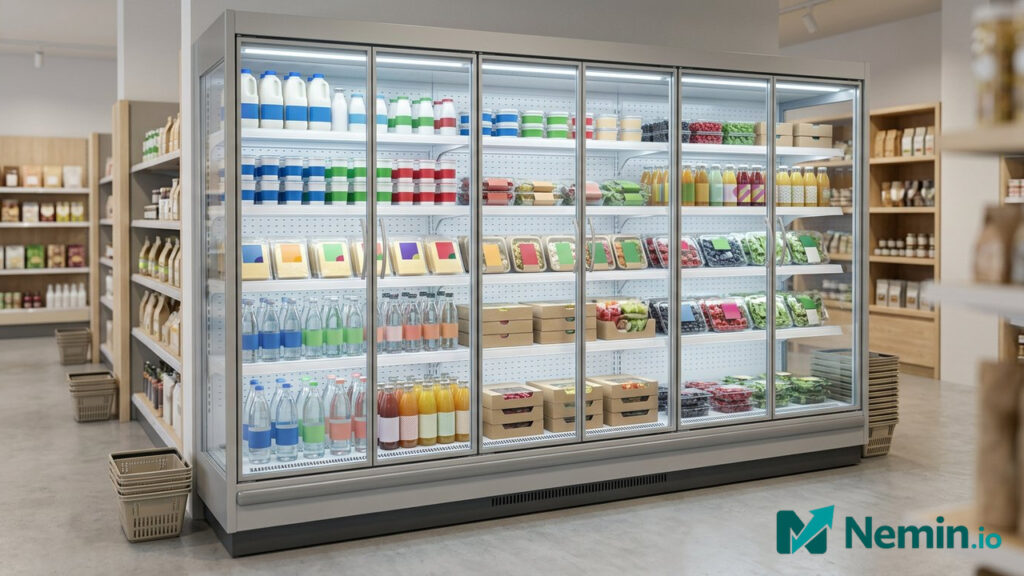
A commercial display fridge has two equally important jobs in a grocery shop: keeping suitable chilled products within required temperature conditions and presenting them clearly enough for customers to find and select efficiently. Unlike back-room refrigeration, display equipment sits directly inside the customer journey, so capacity, visibility, lighting, shelving, door configuration, energy consumption, airflow and placement can all influence day-to-day retail operations. Choosing correctly means looking beyond purchase price. The wrong cabinet can create awkward merchandising, unnecessarily high energy demand, difficult cleaning or insufficient usable capacity, while well-selected refrigeration can make chilled categories easier to manage and shop.
Commercial refrigeration is also one of the pieces of grocery equipment expected to operate for long periods with little tolerance for failure. A shelf can wait for repair; temperature-sensitive food may not. Reliability, maintenance access and appropriate temperature monitoring therefore deserve serious consideration.
Different grocery categories create different requirements. Chilled drinks, dairy products, packaged meat, prepared foods, desserts and grab-and-go products may not all have identical storage specifications. A cabinet should be selected according to the foods placed inside it and applicable food-safety requirements.
This guide explains the major display fridge types available to grocery retailers, how to compare capacity and energy use, where cabinets should be positioned and what maintenance practices can support reliable operation.
What Is a Commercial Display Fridge?
A display fridge is a refrigerated retail cabinet designed to keep appropriate products chilled while making them visible and accessible to customers or staff. Common formats include upright glass-door cabinets, open-front multidecks, countertop units and serve-over refrigerated counters.
The defining feature is product presentation. Shelves, glazing and lighting are arranged so shoppers can view merchandise without opening an opaque refrigerator or entering a stock area.
Commercial display equipment differs from ordinary domestic refrigerators because it is designed around retail use, repeated access, merchandising and commercial operating conditions.
Why a Display Fridge Matters in a Grocery Shop
Refrigerated products often occupy commercially important categories. Milk, chilled drinks, convenience foods, dairy items and various fresh products can bring customers into the shop repeatedly.
Good display refrigeration allows these products to be organised logically and replenished efficiently.
It also creates an important food-safety responsibility. Retailers need appropriate equipment, monitoring and procedures to ensure relevant chilled foods remain within required conditions.
Display Fridge Versus Standard Commercial Refrigerator
A commercial storage refrigerator and a retail display cabinet both provide refrigeration, but their design priorities differ.
| Feature | Display Fridge | Storage Refrigerator |
|---|---|---|
| Product visibility | High | Usually limited |
| Customer access | Often designed for direct shopping | Primarily staff access |
| Shelving | Merchandising-focused | Storage-focused |
| Lighting | Commonly integrated | Functional rather than promotional |
| Door design | Glass or open-front options | Often solid doors |
| Position | Sales floor | Kitchen or stock room |
| Main purpose | Chilling plus presentation | Efficient refrigerated storage |
| Replenishment | Frequent | Stock-oriented |
| Energy considerations | Influenced by glazing, doors and open access | Usually focused primarily on storage efficiency |
Most grocery shops need both visible merchandising refrigeration and suitable back-up cold storage.
9 Benefits of a Display Fridge for Grocery Retail
Refrigeration is a necessity for many product categories, but thoughtful display equipment can also improve how the store operates.
Nine major advantages include stronger product visibility, easier category organisation, improved customer access, flexible shelving, better stock awareness, more effective use of vertical space, integrated lighting, professional presentation and support for controlled chilled storage.
1. A Display Fridge Makes Chilled Products Easier to See
Visibility affects how quickly shoppers understand an assortment.
Glass doors or open merchandising faces allow customers to scan products before selecting them. Clear sightlines can be especially useful for drinks and grab-and-go products, where buying decisions may be made quickly.
Product arrangement still matters. A badly organised cabinet does not become easy to shop merely because its doors are transparent.
2. Shelving Creates Stronger Product Organisation
Adjustable shelves can help retailers accommodate products of different heights.
Milk bottles, canned drinks, dessert pots and prepared meals have very different packaging dimensions. Shelf flexibility can therefore increase usable merchandising space.
Avoid overloading shelves beyond manufacturer limits.
3. Customer Access Can Be Simple and Convenient
An appropriately selected display fridge lets shoppers access products without staff assistance.
Door handles, opening direction and aisle clearance all influence convenience. Open-front cabinets eliminate door opening but can have different energy and environmental considerations.
The correct format depends on shop layout and merchandising priorities.
4. Vertical Cabinets Use Floor Space Efficiently
Retail floor area is valuable.
Tall upright display cabinets use vertical space and can provide substantial shelf frontage without consuming the footprint of a wide horizontal counter.
However, total external dimensions should be compared with usable refrigerated volume and shelf dimensions rather than height alone.
5. Integrated Lighting Supports Merchandising
Modern cabinets often use integrated lighting to illuminate products.
Appropriate lighting can improve label visibility and make the interior easier to shop. Lighting should be designed for refrigerated equipment rather than improvised with unsuitable fixtures.
LED systems are widely used because of their efficiency and relatively low heat output compared with some older lighting technologies.
6. Stock Levels Become Easier to Monitor
Glass fronts make gaps in merchandise visible to employees as well as customers.
Staff can identify products requiring replenishment without repeatedly opening solid doors.
This can support more consistent presentation, although digital inventory systems remain necessary for accurate stock control in larger operations.
7. A Display Fridge Creates Professional Presentation
A clean, organised refrigerated display can contribute to customer perceptions of store quality.
Fingerprints, damaged shelf labels, condensation and poorly arranged stock can have the opposite effect.
Presentation therefore depends on daily maintenance as much as cabinet design.
8. Different Display Fridge Formats Support Different Products
Retailers do not need to force every chilled category into one type of equipment.
Tall glass-door cabinets can work well for drinks and packaged foods, while serve-over equipment can support staffed counters where the model is designed for the particular product category.
Matching equipment to merchandise improves both function and presentation.
9. Modern Refrigeration Can Support Energy Management
Commercial refrigeration can represent a significant energy load, so efficiency deserves attention.
Doors, modern controls, lighting and appropriate equipment selection can help reduce unnecessary consumption compared with unsuitable or poorly maintained equipment. Actual energy performance depends on the specific model and operating environment.
Check verified energy information and technical specifications rather than relying solely on terms such as eco or energy saving.
Display Fridge Types for Grocery Shops
No single cabinet format works for every retailer.
A small convenience shop may prioritise upright glass-door refrigeration, while a larger grocery business may use several multidecks, islands and specialist counters.
Start by mapping product categories and expected stock quantities.
Upright Glass-Door Display Fridge
Upright cabinets are among the most familiar grocery refrigeration formats.
They can offer strong vertical capacity while allowing customers to see products through glass doors. Single, double, triple and wider configurations are available depending on manufacturer.
Door placement helps retain cold air when the cabinet is not being accessed.
Open Multideck Display Fridge
A multideck generally provides several merchandising shelves behind an open front.
The primary advantage is immediate customer access, making it attractive for high-turnover grab-and-go categories.
Open-front refrigeration can have higher energy requirements than comparable closed-door configurations, depending on equipment design and operating conditions. Current energy specifications should be examined carefully.
Countertop Display Fridge
Countertop units are useful for smaller quantities of chilled drinks, desserts or other compatible products.
Their compact footprint makes them suitable for checkout zones and cafés within retail environments.
Small size does not remove food-safety requirements. Temperature control and product suitability still matter.
Serve-Over Display Fridge
Serve-over counters place a transparent refrigerated display between staff and customers.
They can be used for appropriate deli, dairy, meat or prepared-food applications when equipment specifications match the products.
Cross-contamination controls, hygiene and temperature procedures become particularly important where unpackaged foods are handled.
Choosing a Display Fridge by Product Category
The product should determine the refrigeration cabinet, not the other way around.
Different foods can have specific manufacturer storage instructions and legal food-safety requirements. Retailers should understand those requirements before specifying equipment.
Never use a cabinet outside its intended temperature or product application simply because products physically fit inside.
Product and Cabinet Planning
| Product Category | Common Display Priority | Important Check |
|---|---|---|
| Chilled drinks | Visibility and high access frequency | Capacity and door/open-front format |
| Milk and dairy | Strong shelving and replenishment | Required storage temperature |
| Packaged meat | Clear visibility and reliable refrigeration | Food-specific temperature requirements |
| Prepared meals | Front-facing merchandising | Shelf depth and product temperature |
| Desserts | Attractive presentation | Stable chilled conditions |
| Sandwiches | Quick access | Turnover and shelf configuration |
| Fresh chilled foods | Visibility and rotation | Correct product-specific storage |
| Grab-and-go | Convenience and placement | Traffic flow and replenishment |
Always follow applicable food regulations and supplier storage instructions.
Display Fridge Temperature Control
Temperature performance is one of the most important considerations when buying commercial refrigeration.
A display fridge should be designed for the temperature range required by the goods stored inside. The thermostat setting itself does not necessarily tell you the actual product temperature.
Air temperature can vary within a cabinet, particularly during frequent access or replenishment.
Food Safety Comes Before Merchandising
In the UK, food businesses must comply with applicable food-hygiene legislation and maintain appropriate temperature control for foods that require chilling.
Requirements can vary with food category and operational circumstances, so businesses should follow current Food Standards Agency guidance and their documented food-safety procedures.
Where specialist advice is needed, consult an appropriately qualified food-safety professional.
Monitor the Display Fridge Properly
Temperature-monitoring procedures should form part of the store’s food-safety management system.
This may include cabinet displays, independent checks or other monitoring arrangements suitable for the operation.
Keep appropriate records where required and respond promptly when temperatures fall outside acceptable limits.
Never Overfill a Display Fridge
Commercial cabinets depend on engineered airflow.
Packing merchandise into ventilation openings or beyond designated load lines can interfere with air circulation and temperature distribution.
Follow the manufacturer’s loading instructions even when additional stock could physically be squeezed onto a shelf.
Display Fridge Capacity and Dimensions
Retailers frequently focus on advertised litres, but usable merchandising space matters just as much.
Shelf depth, number of shelves, door divisions and internal components all influence actual product capacity.
External dimensions also need to fit through the building during delivery.
Measure Before Ordering
Measure the intended floor location, but also check:
- Entrance doors
- Internal doorways
- Corridors
- Corners
- Ceiling clearance
- Steps and thresholds
- Service access
- Electrical connection location
- Required ventilation clearances
- Space for customer access
- Door swing where relevant
- Loading and delivery access
Commercial refrigeration can be heavy, so safe handling should be planned professionally.
Display Fridge Size Guide
| Shop Requirement | Cabinet Direction | Main Consideration |
|---|---|---|
| Checkout chilled items | Countertop | Limited capacity but high visibility |
| Small convenience store | Single or double-door upright | Floor-space efficiency |
| Medium grocery section | Multi-door upright or multideck | Merchandising capacity |
| High-volume drinks | Large glass-door cabinet | Replenishment and shelf strength |
| Grab-and-go area | Multideck or suitable upright | Fast customer access |
| Staffed fresh-food counter | Serve-over unit | Hygiene and service workflow |
| Large supermarket | Multiple integrated units | Energy, capacity and store planning |
This is a planning framework rather than a substitute for manufacturer specifications.
Display Fridge Energy Efficiency
Commercial refrigeration operates for extended periods, making energy consumption an important lifetime cost.
Purchase price alone can therefore be misleading. A cheaper cabinet that consumes substantially more electricity may cost more over its operating life.
Compare verified technical data among models of similar capacity and application.
What Affects Energy Consumption?
Energy use can be influenced by cabinet design, door configuration, refrigeration technology, room temperature, maintenance, loading and customer access.
Dirty condensers, blocked vents and damaged door seals can reduce performance.
Store conditions matter too. Positioning refrigeration near strong heat sources can increase operating demand.
Doors Versus Open Fronts
Glass doors create a barrier between the refrigerated interior and shop air when closed.
Open multidecks offer immediate access but allow greater interaction between cold cabinet air and the surrounding environment.
Modern open cabinets can include technologies intended to manage this exchange, but retailers should compare actual model performance rather than assuming all cabinet types consume similar energy.
Display Fridge Refrigerant Choices
Commercial refrigeration uses refrigerants to transfer heat.
Environmental and regulatory considerations have driven significant changes in refrigerant technology, and current models may use refrigerants with different properties from older equipment.
Retailers should understand what the unit uses and what servicing requirements apply.
Servicing Requires Competence
Refrigeration systems should be serviced by appropriately competent technicians.
Some refrigerants have specific safety characteristics, and applicable regulations may determine who can work on certain systems.
Never modify refrigeration components without proper expertise.
Display Fridge Placement in a Grocery Shop
Location affects sales-floor flow, equipment operation and replenishment.
A display fridge should be visible and convenient without creating narrow aisles or blocking exits.
It also needs adequate ventilation and service access according to manufacturer requirements.
Avoid Heat Sources Where Possible
Direct sunlight, heating equipment and other heat-producing appliances can increase the thermal load around refrigeration.
Site design should consider these influences.
A refrigerator should never be placed where required ventilation grilles become blocked by walls, shelving or merchandise.
Think About Customer Journey
Frequently purchased essentials can draw customers through the shop, while chilled impulse products may perform well close to relevant complementary categories.
Merchandising strategy should still preserve clear circulation.
Do not create bottlenecks around heavy fridge doors or high-demand cabinets.
Display Fridge Merchandising
Good refrigeration gives retailers the framework for effective merchandising, but the cabinet still needs organised shelves.
Group products logically and use clear shelf labels.
Products should remain within designated load boundaries and should not block airflow simply to create the appearance of abundance.
Use Eye-Level Space Deliberately
Customers naturally notice products that are easy to see.
Retailers can position important or high-demand products at accessible heights while maintaining safe stocking practices.
Accessibility matters too. A store should not place every everyday essential on shelves that are difficult for many customers to reach.
Keep Facing Consistent
Front-facing products make a cabinet easier to scan and can reveal stock shortages.
Straightening stock during normal staff routines can maintain presentation without requiring elaborate visual merchandising.
Clean shelf edges and accurate price labels are equally important.
Display Fridge Lighting
Internal lighting should make products easy to identify without compromising refrigeration operation.
Many commercial units use LED systems because they can provide strong illumination efficiently.
Colour rendering can influence how fresh foods and packaging appear.
Do Not Use Lighting to Disguise Product Condition
Merchandising lighting should improve visibility, not misrepresent the condition of food.
Stock-management, date rotation and food-safety procedures remain essential.
A brightly lit cabinet is not evidence that its contents have been managed correctly.
Display Fridge Doors
Door design influences customer use, aisle space and energy performance.
Hinged doors require swing clearance, while sliding doors can reduce intrusion into narrow aisles. Self-closing mechanisms may help limit unnecessary open time.
Each design has trade-offs.
Door Configuration Comparison
| Door Type | Advantage | Consideration |
|---|---|---|
| Hinged glass | Broad access to cabinet | Requires aisle swing space |
| Sliding glass | Useful in tighter areas | Opening width may be reduced |
| Self-closing hinged | Helps prevent doors being left open | Mechanisms need maintenance |
| Open front | Immediate customer access | Energy performance requires careful evaluation |
| Staff-side access | Useful for certain counters | Requires service workflow planning |
Check accessibility and cleaning as well as appearance.
Display Fridge Shelving
Shelves need to support actual products safely.
Drinks can be surprisingly heavy when several rows are placed on one shelf. Never exceed published shelf load limits.
Adjustability can improve merchandising flexibility when product packaging changes.
Shelf Depth Matters
A shallow shelf may display only one or two rows of larger containers, requiring constant replenishment.
Very deep shelves can hold more but make stock rotation harder.
Compare shelf dimensions with representative products before ordering equipment.
Display Fridge Stock Rotation
Refrigeration does not replace inventory management.
Products still need date checks and appropriate stock rotation. Retail procedures may use first-expiry-first-out or another system suited to the product and operation.
Employees should be trained in the store’s documented process.
Avoid Hiding Old Stock
When replenishing, new products should not automatically be placed in front of older stock simply because it is quicker.
Poor rotation can increase food waste and create compliance problems.
Design shelving so staff can replenish efficiently while maintaining correct stock management.
Cleaning a Display Fridge
A clean cabinet improves hygiene, presentation and equipment performance.
Food spills, packaging debris and dust should not accumulate inside refrigeration. External handles and glass also receive frequent customer contact.
Follow the manufacturer’s cleaning instructions.
Display Fridge Cleaning Schedule
| Area | Cleaning Priority |
|---|---|
| Door handles | Frequent touch-point cleaning |
| Glass | Maintain clear product visibility |
| Shelves | Remove spills and debris |
| Shelf labels | Keep accurate and clean |
| Interior surfaces | Maintain hygiene |
| Drainage components | Inspect and clean as instructed |
| Door gaskets | Keep clean and check condition |
| Ventilation grilles | Keep unobstructed |
| Condenser | Service or clean according to manufacturer guidance |
| Floor beneath unit | Prevent debris accumulation |
Isolate equipment safely where required before maintenance and follow manufacturer instructions.
Display Fridge Maintenance
Preventive maintenance can identify worn components before they lead to major refrigeration failure.
Door seals, fans, temperature controls, drainage and refrigeration components all deserve appropriate inspection.
Maintenance frequency should follow manufacturer and service-provider recommendations rather than one arbitrary schedule.
Warning Signs That Need Attention
Possible signs of a problem include unusual noises, repeated temperature alarms, excessive condensation, damaged seals, unusual frost, persistent water leaks or a compressor that appears to run abnormally.
Do not wait for food to become warm before arranging an investigation.
A documented emergency process can help staff respond quickly when equipment fails.
What to Do If a Display Fridge Fails
Food safety comes first.
Staff should follow the business’s food-safety management procedures and current official guidance when chilled equipment cannot maintain suitable conditions.
Do not repeatedly open the cabinet to check products unnecessarily.
Have a Refrigeration Failure Plan
A grocery shop should know:
- Who staff contact for emergency refrigeration repair
- Where affected stock can be moved safely
- How product temperatures are assessed
- Who has authority to dispose of unsafe products
- How incidents are documented
- Whether insurance notification may be required
- Which alternative refrigerated storage is available
Staff should never sell food when its safety is uncertain simply to avoid financial loss.
New Versus Used Display Fridge Equipment
Used refrigeration can reduce upfront cost but requires careful inspection.
Age, service history, refrigerant type, energy consumption and availability of replacement parts can significantly influence value.
A very cheap used cabinet can become expensive if it is inefficient or repeatedly breaks down.
Display Fridge Purchase Comparison
| Factor | New Equipment | Used Equipment |
|---|---|---|
| Initial cost | Generally higher | Usually lower |
| Warranty | Typically stronger | May be limited or absent |
| Energy technology | Usually current | Depends on age |
| Condition | New | Must be inspected |
| Service history | Not applicable | Important to obtain |
| Parts availability | Usually good | Can be difficult for older models |
| Appearance | New retail presentation | May show wear |
| Finance options | Often available | Depends on supplier |
For used equipment, professional inspection can be valuable before purchase.
Display Fridge Warranty and After-Sales Support
Warranty terms deserve as much attention as the cabinet itself.
Ask whether labour, parts and call-outs are covered and what maintenance obligations must be followed to preserve the warranty.
Commercial downtime can be costly, so local service capability matters.
Ask About Parts Availability
A supplier offering an attractive cabinet at a low price may provide poor long-term value if replacement parts are difficult to obtain.
Ask who provides technical support and where parts are sourced.
For critical equipment, response time can matter substantially.
Display Fridge Noise
Refrigeration generates operational noise through compressors, fans and other components.
In a busy grocery store this may be barely noticeable, but noise can matter in smaller premium shops, cafés or mixed retail environments.
Technical specifications may provide acoustic information for some models.
Listen Before Buying When Possible
Showrooms can help retailers experience cabinet size, door operation, lighting and noise more realistically than online images.
Remember that several refrigeration units operating together create a different acoustic environment from one demonstration model.
Store design should consider the combined equipment load.
Display Fridge Ventilation
Refrigeration removes heat from inside the cabinet and releases it elsewhere.
Adequate ventilation around relevant components is therefore essential.
Required clearance depends on the specific model.
Follow Manufacturer Clearances
Do not push a cabinet tightly against a wall if its installation instructions require airflow around the rear, top or sides.
Restricted ventilation can reduce performance and potentially affect equipment life.
The technical manual should guide installation.
Display Fridge Electrical Requirements
Commercial cabinets can have different electrical requirements.
Never assume every unit can simply be connected to whichever socket is nearest.
Large installations may require electrical planning by an appropriately qualified professional.
Plan Electrical Capacity Early
Before equipment arrives, confirm:
- Required supply voltage
- Plug or hardwired connection requirements
- Circuit capacity
- Cable position
- Isolation requirements
- Number of cabinets on the circuit
- Manufacturer installation instructions
Avoid unsafe extension arrangements in permanent commercial installations.
Display Fridge Accessibility
Retail design should consider customers with different mobility and reach needs.
A product may technically be visible while remaining difficult to access.
Aisles should also remain appropriately clear around open fridge doors.
Balance Shelf Height With Product Demand
Popular essentials should not all be placed at extreme heights simply to maximise merchandising density.
Where practical, provide choices at accessible levels.
Accessibility requirements depend on jurisdiction and premises, so retailers should follow applicable standards and professional guidance.
Display Fridge for Drinks
Beverage merchandising creates high-volume refrigeration requirements.
Bottles and cans are heavy, so shelf load ratings matter. High customer access frequency also influences door and cabinet choice.
A dedicated drinks fridge can prevent beverages from consuming space required for more temperature-sensitive food categories.
Organise Drinks by Category
Water, soft drinks, juices, energy drinks and other beverages can be grouped logically.
Clear organisation helps customers find products quickly and makes replenishment simpler.
Where alcohol is sold, comply with applicable licensing and age-restriction requirements.
Display Fridge for Dairy Products
Dairy merchandising requires dependable temperature control and efficient stock rotation.
Milk and similar staples may turn over quickly, meaning shelves need to support frequent replenishment.
Package dimensions should influence shelf spacing.
Keep Expiry Management Visible
High-turnover stock can still be wasted when rotation is poor.
Train staff to check dates during replenishment rather than treating it as a separate occasional task.
Digital stock systems can supplement physical shelf checks but do not replace them entirely.
Display Fridge for Fresh and Prepared Foods
Ready-to-eat products can benefit from clear front-facing presentation.
However, food safety is particularly important for chilled items that support microbial growth if temperatures are not appropriately controlled.
Follow supplier and regulatory storage requirements.
Separate Categories When Necessary
Not every product should share a cabinet simply because its packaging fits.
Temperature requirements, allergen management, contamination risks and merchandising considerations can affect placement.
Your food-safety plan should guide these decisions.
Essential Equipment Around a Display Fridge
A grocery shop requires more than refrigeration.
The display fridge should form part of a coordinated retail system involving storage, shelves, checkout equipment and food-safety controls.
Grocery Shop Equipment Overview
| Equipment | Primary Purpose |
|---|---|
| Display fridge | Chilled merchandising |
| Back-room refrigerator | Reserve cold storage |
| Freezer | Frozen food storage |
| Ambient shelving | Dry grocery merchandising |
| POS system | Sales and inventory processing |
| Barcode scanner | Checkout efficiency |
| Weighing scales | Product sales where required |
| Trolleys and baskets | Customer convenience |
| Stock trolley | Replenishment |
| Temperature monitoring | Food-safety control |
| Security equipment | Loss prevention and site monitoring |
| Cleaning equipment | Hygiene and maintenance |
Equipment should be selected according to store scale and product range.
Common Display Fridge Buying Mistakes
One common mistake is purchasing the largest cabinet that fits the wall without calculating whether the shop can stock and sell the additional capacity.
Another is selecting by purchase price while ignoring electricity consumption.
Poor access planning can create delivery problems before the fridge even reaches the sales floor.
Avoid These Display Fridge Errors
When buying a display fridge, avoid:
- Choosing capacity without analysing product demand
- Ignoring verified energy performance
- Blocking ventilation openings
- Positioning equipment beside strong heat sources unnecessarily
- Overloading shelves
- Ignoring door-swing clearance
- Assuming every fridge suits every food category
- Buying used equipment without investigating condition
- Overlooking warranty exclusions
- Forgetting electrical requirements
- Failing to plan emergency refrigeration procedures
- Buying before measuring delivery access
A commercial cabinet is a long-term operating asset, not just another shop fixture.
How Much Does a Display Fridge Cost?
Display fridge prices vary widely by format, size, refrigeration technology, brand, efficiency, construction and service package.
Countertop units and large multi-door systems belong to very different price categories. Installation and delivery can add further costs.
For commercial decisions, total ownership cost is more meaningful than initial price.
Calculate Total Cost of Ownership
| Cost Category | What to Consider |
|---|---|
| Purchase | Initial equipment price |
| Delivery | Vehicle and handling charges |
| Installation | Electrical or technical setup |
| Energy | Expected ongoing consumption |
| Maintenance | Planned service costs |
| Repairs | Parts and technician call-outs |
| Cleaning | Staff time and materials |
| Downtime | Potential stock loss and lost sales |
| Warranty | Extent and duration of cover |
| Disposal | End-of-life handling |
A more efficient cabinet can justify a higher purchase price if lifetime operating costs are lower, but this should be calculated using credible data.
How to Choose a Display Fridge Supplier
A commercial refrigeration supplier should provide technical specifications, warranty information and clear delivery terms.
After-sales support is particularly important because refrigeration faults can threaten stock.
Look for established service arrangements rather than focusing solely on the sales process.
Questions to Ask Before Ordering
Ask the supplier:
- What temperature range is the cabinet designed to maintain?
- Which product categories is it intended for?
- What are the external and internal dimensions?
- What is the verified energy performance?
- Which refrigerant does it use?
- What electrical supply is required?
- Which installation clearances are necessary?
- What is each shelf’s load capacity?
- What warranty is included?
- Who performs warranty repairs?
- Are parts readily available?
- What maintenance schedule is recommended?
- Is installation included?
- How will the unit be delivered into the premises?
Get important specifications in writing.
Planning a Display Fridge Purchase Step by Step
Start with the products rather than the refrigeration catalogue.
Estimate sales volume and replenishment frequency, then calculate the useful capacity needed. Measure the sales floor and delivery path before comparing technical models.
Only after those checks should purchase price become a deciding factor.
Display Fridge Purchase Plan
| Stage | Main Action | Goal |
|---|---|---|
| 1. Define products | Identify chilled categories | Establish temperature needs |
| 2. Estimate volume | Review stock and sales | Determine capacity |
| 3. Measure premises | Check location and delivery route | Ensure physical fit |
| 4. Select format | Compare upright, multideck or counter | Match customer access |
| 5. Compare efficiency | Review verified energy data | Control operating cost |
| 6. Check installation | Electrical and ventilation requirements | Prevent setup problems |
| 7. Evaluate supplier | Warranty, service and parts | Improve reliability |
| 8. Plan merchandising | Shelves and product arrangement | Improve usability |
| 9. Establish monitoring | Temperature and food-safety procedures | Protect stock |
| 10. Plan maintenance | Cleaning and servicing | Support long-term performance |
This process reduces the chance of buying equipment that looks suitable but performs poorly in the actual shop.
FAQ’s
What is a display fridge used for?
A display fridge keeps appropriate chilled products refrigerated while presenting them visibly to customers. Grocery shops commonly use them for drinks, dairy products, prepared foods and other suitable refrigerated merchandise.
What temperature should a display fridge operate at?
The correct operating conditions depend on the food, cabinet and applicable food-safety requirements. UK businesses should follow current Food Standards Agency guidance, supplier instructions and their documented food-safety procedures.
Is a glass-door display fridge better than an open fridge?
Neither is universally better. Glass doors can improve thermal separation, while open cabinets offer immediate access. Compare merchandising requirements, energy performance and customer flow for the specific store.
How much electricity does a display fridge use?
Consumption varies greatly by cabinet size, design, refrigeration technology, doors, ambient conditions and usage. Compare verified model-specific energy data instead of relying on generic estimates.
Can I use a domestic refrigerator as a grocery display fridge?
Commercial retail environments generally require equipment capable of safely handling the intended load and operating conditions. Select appropriate commercial equipment and follow relevant food-safety requirements.
How often should a display fridge be maintained?
Follow the manufacturer’s recommended cleaning and servicing schedule. Staff should also monitor temperature, seals, airflow and visible condition routinely so developing faults can be investigated promptly.
Conclusion
A display fridge is both food-storage equipment and a major merchandising fixture, so choosing one requires more than comparing capacity and purchase price. Cabinet format, temperature performance, shelf configuration, customer access, energy consumption, ventilation and maintenance all affect how successfully refrigeration works inside a grocery shop.
The best display fridge is the one matched carefully to the products, sales volume and physical store environment. Measure before buying, compare verified energy information, protect airflow, establish temperature-monitoring procedures and choose a supplier capable of providing reliable after-sales support. With those foundations in place, commercial refrigeration can keep chilled stock organised, visible and ready for customers while supporting safer and more efficient grocery operations.
Pingback: Leather Lane Market: 9 Amazing Food Stops to Explore Today
Pingback: Custom Mens Aprons: 7 Best Designs for Work and BBQ Grilling