
Moving into a Dorchester nursing care home can change almost every part of a person's everyday environment, from where they wake up and eat breakfast to who...
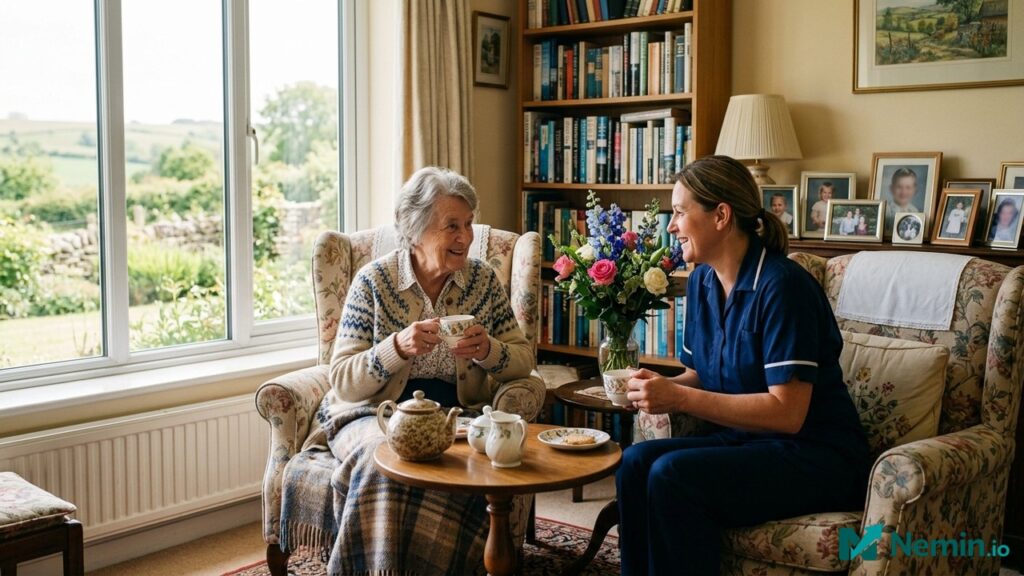
Moving into a Dorchester nursing care home can change almost every part of a person’s everyday environment, from where they wake up and eat breakfast to who helps with medication, mobility or personal care. Familiar daily rituals can provide valuable continuity during that transition because they preserve some of the ordinary choices and habits that existed before the move. A preferred morning drink, a favourite radio programme, an afternoon walk, regular family calls or a familiar bedtime routine may appear small compared with clinical nursing needs, yet these details can help staff understand the individual behind the care plan. In a well-run nursing home, routine should support the resident rather than require every resident to fit the same institutional timetable.
Daily rituals are not simply organised activities. They include ordinary habits that people often perform without thinking much about them. Someone may have read the newspaper with breakfast for 50 years, listened to music while getting dressed, taken tea without sugar at a particular time or spoken to a relative every Sunday evening.
When illness, frailty or disability makes independent living difficult, these habits do not necessarily stop being meaningful. The way they are maintained may need to change, but the preference itself can remain important.
This is where person-centred nursing care becomes especially relevant. Clinical expertise, medication management, safeguarding and physical support remain fundamental, but high-quality care also asks how the resident prefers to live from one day to the next.
What Is a Dorchester Nursing Care Home?
A Dorchester nursing care home is a residential care setting in or around Dorchester, Dorset, providing accommodation and personal care alongside nursing support for residents whose assessed needs require it. Nursing homes differ from residential-only care homes because registered nursing provision forms part of the service.
The exact support available varies by home. Some services may support people with complex physical conditions, mobility limitations or dementia, while others may have different admission criteria and clinical capabilities.
Families should therefore compare a Dorchester nursing care home according to the prospective resident’s actual assessed needs rather than relying on the broad nursing-home label alone.
Nursing Care and Everyday Life Should Work Together
Clinical needs can structure important parts of the day. Medication may need to be given at particular times, wounds may require treatment and mobility assistance may need trained staff or equipment.
However, these requirements do not mean every other aspect of the resident’s day needs to become standardised. Care planning can often incorporate personal preferences around waking, meals, clothing, rest, visitors and activities.
A good Dorchester nursing care home balances clinical consistency with individual flexibility.
Dorchester Nursing Care Home Versus Residential Care
The terminology can be confusing when families first investigate long-term care.
| Care Setting | Main Support | Suitable Questions to Ask |
|---|---|---|
| Residential care home | Accommodation and personal care | Can current daily needs be supported? |
| Nursing care home | Personal care plus registered nursing provision | Which nursing needs can the home manage? |
| Dementia care setting | Care adapted to cognitive needs | What specialist expertise and environment are available? |
| Nursing dementia care | Nursing plus dementia-related support | Can complex health and cognitive needs be managed together? |
| Respite care | Temporary care and accommodation | Is nursing support available during the stay? |
| End-of-life care | Comfort and symptom support where appropriately provided | What clinical and palliative-care arrangements exist? |
The right setting should be established through assessment rather than assumptions about age or diagnosis.
Why Daily Rituals Matter in a Dorchester Nursing Care Home
Rituals provide structure. They can mark the beginning of the day, create anticipation and connect one part of life with another.
The value is highly personal. One resident may find reassurance in attending a weekly religious service, while another values a morning crossword or watching a particular television programme. Neither routine is inherently more meaningful.
In a Dorchester nursing care home, learning these preferences can help staff create an environment that feels less anonymous and more connected with the resident’s existing identity.
Rituals Are Different From Rigid Schedules
A ritual is meaningful because it belongs to the person. A rigid institutional schedule exists primarily because it is convenient for the organisation.
The difference becomes visible in ordinary choices. If a resident has always preferred a later breakfast and their care needs allow that safely, a person-centred service should consider how that preference can be accommodated.
Operational routines remain necessary, but they should not unnecessarily remove individual choice.
Familiarity Can Support Adjustment
Moving into nursing care can involve leaving a long-term home, neighbourhood and familiar household rhythms.
Preserving selected routines can create continuity while everything else is changing. Family photographs, familiar furniture where permitted, favourite music and ordinary food preferences can also contribute.
These measures should not be presented as guaranteed treatments for distress or cognitive conditions. Their value lies in personal familiarity and quality of life.
7 Daily Rituals a Dorchester Nursing Care Home Can Support
A personalised routine does not require an expensive activity programme. Many meaningful rituals are simple and already familiar to the resident.
Seven areas are particularly worth exploring: morning routines, personal care, mealtimes, movement, hobbies, relationships and evening routines. Each can be adapted according to health, ability and personal preference.
1. Morning Rituals in a Dorchester Nursing Care Home
The way a person starts the day can influence how rushed or settled it feels.
Some residents prefer waking early, while others have never been morning people. A favourite tea, coffee, radio station or breakfast can make the first part of the day recognisable.
Where nursing requirements permit flexibility, staff can incorporate these preferences into care planning rather than assuming everyone should start the day identically.
2. Personal Care Can Preserve Familiar Choices
Washing and dressing are deeply personal routines.
Residents may have preferences concerning showers or baths, clothing, hair, shaving, cosmetics and the order in which they prepare for the day. Physical assistance should preserve as much choice and participation as practical.
A Dorchester nursing care home should also respect privacy and dignity throughout intimate care.
3. Mealtimes Can Anchor the Day
Food is connected with culture, memory and social routine.
A resident may have eaten porridge every morning, preferred the main meal at lunchtime or enjoyed tea and a biscuit every afternoon. These details can make care feel personal when they remain safe and nutritionally appropriate.
Dietary requirements, swallowing difficulties and medically advised restrictions must still be followed.
4. Regular Movement Can Become a Meaningful Ritual
Movement does not need to mean formal exercise.
For some residents, it may be a short walk in the garden, supported mobility around the home or prescribed exercises from an appropriate healthcare professional. The activity should reflect assessed ability and risk.
A regular time can make movement feel like part of everyday life rather than an isolated therapeutic task.
5. Hobbies Can Keep Personal History Visible
Reading, knitting, gardening, music, painting, puzzles or watching sport can all provide continuity.
Staff should learn which hobbies genuinely belong to the resident rather than assigning activities based solely on age. Someone who disliked crafts throughout adult life is unlikely to find them meaningful simply after moving into care.
The strongest Dorchester nursing care home activity programmes combine group opportunities with individual interests.
6. Family Contact Can Become Part of the Routine
Predictable visits and calls can help maintain relationships beyond the care setting.
A resident might look forward to a weekly visit from grandchildren or a regular evening telephone conversation. Technology can support remote contact when family members live farther away.
Family involvement should respect the resident’s preferences, privacy and the home’s visiting arrangements.
7. Evening Rituals Can Create a Familiar End to the Day
Bedtime routines can include television, reading, music, a preferred drink or a quiet conversation.
People also have different preferred bedtimes. Unless clinical or safety needs require otherwise, a nursing environment should avoid treating bedtime as one universal institutional event.
Familiar evening habits can help maintain continuity between life before and after the move.
Morning Routine in a Dorchester Nursing Care Home
Morning care often combines several practical needs, including medication, personal hygiene, dressing and breakfast.
The challenge is delivering necessary support without making residents feel processed through a schedule. Staff communication and familiarity with individual preferences become particularly important.
Care plans can document useful details so residents do not need to re-explain them constantly.
Small Details Can Matter
A person may prefer curtains opened before breakfast, while another wants privacy until they are fully dressed. One resident may enjoy conversation immediately after waking, while another prefers quiet.
These are not clinically complicated preferences, but they affect how personal the environment feels.
A Dorchester nursing care home that notices such details demonstrates person-centred care through ordinary practice.
Mealtimes in a Dorchester Nursing Care Home
Meals provide nutrition, but they can also create social structure and familiarity.
Residents should have appropriate choices while the home meets individual dietary requirements. Food quality, service atmosphere and assistance for people who need help eating are all important.
Families visiting a Dorchester nursing care home should ask how menus are planned and what happens if a resident dislikes the main options.
Different Residents Have Different Dining Preferences
Some residents enjoy busy communal dining rooms. Others prefer smaller groups or quieter meals.
A good home should understand these differences where practical.
| Dining Preference | Possible Person-Centred Response |
|---|---|
| Early breakfast | Provide suitable early option where available |
| Later breakfast | Accommodate a slower morning where practical |
| Vegetarian diet | Offer nutritionally appropriate choices |
| Religious diet | Discuss specific requirements individually |
| Small appetite | Consider appropriate smaller portions and support |
| Modified texture | Follow professional swallowing and dietary guidance |
| Favourite snack | Incorporate where suitable |
| Quiet dining | Explore an appropriate lower-stimulation setting |
Medical and food-safety requirements always take priority where necessary.
Tea, Coffee and Familiar Food Rituals
A cup of tea can represent much more than hydration. It can mark a conversation, an afternoon break or a habit associated with home.
Care staff who know exactly how a resident takes tea demonstrate that they know something about the person, not merely the room number.
That same principle applies to toast, favourite desserts or Sunday meals.
Food Preferences Should Be Updated
Taste can change with illness, medication, age and personal preference.
Care plans should therefore not become permanent assumptions. If someone who always loved tea begins refusing it, staff can ask whether the preference has changed rather than continually serving it because the original plan says so.
Persistent appetite changes may also warrant clinical attention.
Dorchester Nursing Care Home Activities Should Be Personal
A full activities calendar looks impressive, but quantity is not the same as meaningful engagement.
Residents have different personalities. Some enjoy quizzes and group music, while others prefer one-to-one conversation or independent reading.
A Dorchester nursing care home should consider whether activities reflect residents’ current and previous interests.
Group and Individual Activities
| Activity Style | Examples | Who It May Suit |
|---|---|---|
| Group social | Quizzes, coffee mornings and celebrations | Residents enjoying company |
| Creative | Painting, flower arranging and crafts | People interested in making things |
| Music | Listening, singing or visiting performers | Residents with musical interests |
| Physical | Supported movement or walking | Appropriate assessed abilities |
| Cognitive | Reading, discussion and puzzles | Residents enjoying mental stimulation |
| Practical | Gardening or baking-related activities | People valuing familiar tasks |
| Spiritual | Services, prayer or reflection | Residents who choose faith-based activity |
| Individual | Books, music and personal hobbies | Residents preferring quieter engagement |
| Community | Appropriate local trips | Residents able and willing to participate |
Participation should be invited rather than forced.
A Dorchester Nursing Care Home and Personal Identity
People do not stop being parents, partners, professionals, friends, artists, gardeners or sports supporters after entering nursing care.
Knowing someone’s history can shape conversation and daily choices. A retired teacher may enjoy discussing education, while a lifelong gardener may value opportunities to engage with plants.
This information can come from the resident and, where appropriate, family members.
Life Story Information
Life story work can help care staff understand important people, occupations, places and preferences.
It should be conducted sensitively. Some memories are private or painful, and residents should not be expected to turn their life story into entertainment for others.
Consent and dignity remain central.
Dorchester Nursing Care Home Support for Dementia
Daily rituals can be particularly relevant in dementia care because familiar patterns may provide useful cues and continuity for some residents.
Responses differ widely according to the person and progression of their condition. A routine that reassures one resident may frustrate another.
Individual observation is therefore more useful than universal dementia activity formulas.
Familiarity Without Infantilisation
Adults living with dementia remain adults.
Activities should not automatically become childlike simply because cognition has changed. Music, domestic tasks, gardening, art and conversation can be adapted while remaining age-appropriate and respectful.
A Dorchester nursing care home should focus on capability rather than defining someone entirely by diagnosis.
Flexibility Is Essential
A routine can be useful until it no longer works.
Someone may become tired at a different time or lose interest in an activity previously enjoyed. Staff should respond to the person in front of them rather than insisting on completing the planned activity.
Person-centred care is adaptive.
Sleep and Evening Routine in a Dorchester Nursing Care Home
Sleep patterns differ considerably between individuals.
A resident who always went to bed late may find a very early institutional bedtime unsettling. Another may genuinely prefer settling early.
Nursing needs and medication schedules can influence evening care, but preferences should still be considered where safe.
Supporting Better Night-Time Comfort
A familiar nightdress, reading material, music or preferred room lighting can form part of a bedtime routine.
Noise, temperature and unnecessary overnight disturbance can also affect rest.
Where sleep problems become persistent, clinical review may be needed instead of assuming the resident simply needs a stricter routine.
Personal Rooms and Familiar Rituals
A resident’s room can provide privacy and continuity within a communal environment.
Photographs, artwork, familiar furniture and personal objects may help the space feel recognisable, subject to safety and care-home policies.
Ask what can be brought before moving large furniture.
Room Personalisation Checklist
| Area | What to Consider |
|---|---|
| Photographs | Important relationships and memories |
| Furniture | Favourite chair or small approved pieces |
| Bedding | Familiar colours or textures where suitable |
| Books | Current reading and personal favourites |
| Music | Radio, speaker or approved device |
| Artwork | Familiar visual identity |
| Clothing | Easily accessible preferred outfits |
| Lighting | Comfortable reading or ambient light where permitted |
| Hobbies | Safe storage for meaningful activities |
| Technology | Tablet or phone for communication |
Personalisation should never obstruct clinical equipment, mobility or emergency access.
Dorchester Nursing Care Home Gardens and Outdoor Rituals
Outdoor access can be important for residents who have always spent time in gardens or local countryside.
A morning walk, afternoon tea outdoors or simply watching changing seasons can become part of the daily rhythm.
The garden needs to be genuinely accessible rather than merely attractive in marketing photographs.
Check Practical Outdoor Access
When visiting a Dorchester nursing care home, ask whether residents can reach the garden safely and how support is provided for people with limited mobility.
Look at path surfaces, seating, shade and access from the building.
Residents should not lose meaningful outdoor time solely because the garden requires an inconvenient route.
Connection With Dorchester and Dorset
A nursing home exists within a wider community.
Residents may have longstanding connections with Dorchester, nearby villages, places of worship, shops or local cultural life. Maintaining selected community links can preserve continuity.
Suitability depends on mobility, health, transport and personal interest.
Local Connection Can Be More Meaningful Than Generic Outings
Someone who has lived in Dorset for decades may value returning to a familiar place more than visiting an unfamiliar attraction.
Community outings should therefore consider personal history.
For residents unable to travel, local organisations, performers or community groups may sometimes bring activity into the home.
Family Rituals in a Dorchester Nursing Care Home
Family relationships can continue after a move into nursing care, although their practical form may change.
Regular Sunday visits, birthday traditions or watching a particular sporting event together can remain meaningful.
Families should discuss how visits fit with the resident’s preferences and care needs.
Families Should Not Feel Obliged to Become Staff
Relatives can remain partners, children, grandchildren and friends rather than becoming unpaid care workers during every visit.
Professional care should allow family relationships to retain their emotional role.
Where relatives want to assist with certain activities, this can be discussed with the care team.
Nursing Routines and Personal Rituals
Clinical care cannot always happen whenever a resident prefers. Medication, treatment and staffing can create necessary timing requirements.
The challenge is distinguishing genuine clinical necessity from organisational convenience.
A good Dorchester nursing care home should be able to explain why particular routines need fixed times and where flexibility remains possible.
Medication and Daily Rhythm
Medication schedules should follow professional prescribing and administration requirements.
Residents should not alter timings independently merely to fit preferred activities without appropriate clinical advice.
Care teams can sometimes coordinate routines around medication where safe and clinically suitable.
Choice and Consent in a Dorchester Nursing Care Home
Residents should remain involved in decisions about their care to the extent they are able.
Consent applies to personal care, treatment and many ordinary decisions. Capacity is decision-specific and should not be assumed absent simply because someone has a diagnosis such as dementia.
Applicable legal frameworks, including the Mental Capacity Act in England and Wales, guide decisions where capacity is genuinely in question.
Best Interests Does Not Mean Staff Preference
Where a resident lacks capacity for a particular decision, formal principles should guide any best-interest decision.
Known wishes, values and family or representative input can be relevant.
Complex decisions require appropriate professional processes rather than informal assumptions.
Choosing a Dorchester Nursing Care Home
Start with clinical suitability.
A beautiful home with excellent activities is not appropriate if it cannot safely meet the prospective resident’s nursing needs. Once suitable homes are identified, compare daily life, staffing, communication and personalisation.
Visit in person where practical.
Dorchester Nursing Care Home Comparison Guide
| Area | What to Ask |
|---|---|
| Nursing care | Which health needs can the home manage? |
| Staffing | How are staffing levels determined? |
| Continuity | Will residents regularly see familiar staff? |
| Care planning | How are personal routines recorded? |
| Activities | Are individual interests supported? |
| Dining | What choices and flexibility are available? |
| Dementia | What specialist support exists? |
| Family communication | How are updates provided? |
| Rooms | How much personalisation is permitted? |
| Outdoor access | Can residents use gardens easily? |
| Future needs | Can care adapt if health changes? |
| Fees | What is included and what costs extra? |
The answers should be specific rather than limited to general statements about person-centred care.
CQC and a Dorchester Nursing Care Home
The Care Quality Commission regulates registered health and social care services in England.
Families can use the CQC website to check current information about a particular Dorchester nursing care home, including inspection reports and regulatory status.
Read the details behind ratings rather than relying only on the headline judgement.
Inspection Dates Matter
A report reflects the service during a particular inspection period.
Check its date and any subsequent updates or regulatory action. Management, staffing and practices can change over time.
Use regulatory information alongside visits and conversations with the home.
Staff Continuity and Daily Rituals
Familiar staff can learn the small details that make personalised care easier.
They may recognise how someone normally communicates, what breakfast they enjoy and when a behavioural change is unusual.
High staff turnover can make this continuity harder, although staffing needs naturally change over time.
Ask About Handover Systems
No resident should depend on one staff member alone knowing important preferences.
Care plans, handovers and team communication should preserve useful information across shifts.
This allows a Dorchester nursing care home to maintain personal routines even when regular staff are off duty.
Dining, Hydration and Clinical Needs
Food routines become more complicated when residents have diabetes, allergies, swallowing difficulties or other health requirements.
Personalisation should work inside clinically safe boundaries.
A favourite meal can often be adapted, but not every request is safe in every medical situation.
Swallowing Difficulties Require Professional Assessment
Persistent coughing, choking or difficulty swallowing should not be handled by casually changing food texture.
Speech and language therapists and other appropriate professionals can assess swallowing where necessary.
The care home should follow prescribed texture and fluid recommendations accurately.
Accessibility in a Dorchester Nursing Care Home
A nursing home should support residents with varied mobility requirements.
Bedrooms, bathrooms, communal areas, gardens and dining rooms all need practical access.
Equipment should support independence where possible without turning ordinary living spaces into unnecessarily clinical environments.
Look at Real Movement Through the Home
During a visit, notice corridor width, lift access, seating opportunities and the route to outdoor areas.
A resident’s everyday experience depends on these connections.
Accessibility is more than having one ramp at the entrance.
Safety Without Removing Everyday Freedom
Nursing homes need to manage falls, medication, infection, fire safety and other risks.
Risk management should not automatically eliminate meaningful activities.
A resident who enjoys gardening may still participate with suitable support even if their mobility has changed.
Positive Risk Management
Positive risk management weighs the benefits of an activity alongside potential harm.
This approach can help preserve autonomy without ignoring safety.
Clinical judgement, resident wishes and appropriate assessment should guide individual decisions.
Dorchester Nursing Care Home Costs
Nursing-home fees vary according to the provider, room, assessed needs and funding arrangements.
Nursing support can affect costs differently from residential care, while specialist requirements may also influence fees.
Request a current written breakdown directly from each home.
Dorchester Nursing Care Home Cost Questions
| Cost Area | What to Confirm |
|---|---|
| Weekly fee | Standard amount and inclusions |
| Nursing needs | How changing needs affect fees |
| Room | Whether room type changes price |
| Activities | Which are included |
| Transport | Charges for appointments or outings |
| Hairdressing | Whether separately charged |
| Personal items | Toiletries and other expenses |
| Clinical extras | What is included in nursing provision |
| Deposit | Whether one is required |
| Fee increases | How increases are communicated |
| Notice | Contractual notice requirements |
| Funding | Which funding arrangements are accepted |
Do not compare nursing homes using the headline weekly fee alone.
Funding a Dorchester Nursing Care Home
Care funding in England can involve self-funding, local-authority support and, for eligible health needs, NHS-related funding arrangements.
Eligibility depends on individual assessment and current rules.
Families should check Dorset Council, NHS and GOV.UK information and consider specialist financial advice when substantial assets or long-term planning are involved.
NHS Continuing Healthcare
NHS Continuing Healthcare is a funding pathway for adults whose assessed needs meet the applicable criteria for a primary health need.
Eligibility is not based simply on having a diagnosis or living in a nursing home.
Use current NHS information and formal assessment processes rather than companies promising guaranteed eligibility.
Transitioning Into a Dorchester Nursing Care Home
Moving day should not be treated purely as logistics.
The resident is changing their home as well as their care arrangements. Familiar objects and routines can make the transition less abrupt.
Share useful information with staff before or during admission.
A Personal Routine Profile
Families and residents might provide details about preferred waking times, drinks, food, music, television, hobbies, clothing and important relationships.
This does not replace the formal clinical care plan.
It adds everyday context that can help staff understand what makes the person comfortable.
Daily Rituals and End-of-Life Nursing Care
When someone approaches the end of life, familiar routines can remain meaningful even as activity and communication reduce.
Favourite music, familiar voices, preferred lighting or spiritual practices may provide comfort where appropriate.
Care should follow the person’s wishes and clinical needs.
Family Presence
Some residents want family close, while others may prefer periods of quiet.
A Dorchester nursing care home providing end-of-life support should communicate clearly with relatives and coordinate with appropriate healthcare professionals.
Comfort and dignity remain the priorities.
Common Mistakes When Choosing a Dorchester Nursing Care Home
Families can understandably focus on décor because it is easy to observe during a tour. Staffing culture and daily practice are harder to assess but more important.
Another mistake is choosing based on activities without checking nursing capability.
A third is failing to ask how the home adapts if needs increase.
Avoid These Dorchester Nursing Care Home Errors
When comparing a Dorchester nursing care home, avoid:
- Choosing on interior design alone
- Ignoring current CQC information
- Assuming every nursing home manages the same clinical needs
- Focusing only on group activities
- Overlooking individual routines
- Treating dementia as one identical experience
- Ignoring outdoor accessibility
- Comparing fees without checking extras
- Assuming family members must provide routine care
- Failing to ask about changing needs
- Forgetting to discuss personal preferences before admission
- Assuming a highly scheduled day is automatically better care
Quality appears in ordinary interactions as much as formal facilities.
Building a Daily Routine in a Dorchester Nursing Care Home
A useful routine starts with what the resident already values.
Staff can identify fixed clinical requirements, then build personal preferences around them. The routine should remain flexible enough to change when the resident is tired, unwell or simply wants a different day.
A care plan is a guide rather than a script for every minute.
Example Person-Centred Daily Rhythm
| Part of Day | Possible Ritual | Personalisation |
|---|---|---|
| Morning | Tea and radio | Preferred drink and station |
| Breakfast | Familiar meal | Timing and dietary needs |
| Mid-morning | Personal care or activity | Choice and clinical requirements |
| Lunchtime | Communal or quieter meal | Social preference |
| Afternoon | Garden, hobby or rest | Energy and interests |
| Tea time | Favourite drink or snack | Personal tradition |
| Evening | Family call or television | Relationship and programme preference |
| Bedtime | Reading, music or quiet | Preferred settling routine |
This is only an example. Real routines should be created around the individual.
Why a Dorchester Nursing Care Home Should Notice Small Things
Large care decisions understandably receive significant attention, but residents experience daily life through small moments.
Whether someone gets their preferred cup, can reach their favourite book or has time to finish a conversation contributes to how the home feels.
These details also reveal whether staff know residents beyond clinical tasks.
Personalisation Should Be Routine, Not Exceptional
The strongest person-centred care does not require a special event every day.
It appears in ordinary decisions, respectful communication and staff remembering preferences.
That is where daily rituals become particularly valuable: they provide repeated opportunities for care to feel personal.
FAQ’s
What does a Dorchester nursing care home provide?
A Dorchester nursing care home provides accommodation and personal care alongside nursing support for residents whose assessed health needs require it. Exact clinical capabilities vary between homes.
Why are daily rituals important in a Dorchester nursing care home?
Familiar routines can preserve continuity, personal identity and everyday choice after moving into care. Their value depends on the individual rather than one standard routine for every resident.
Can residents personalise routines in a Dorchester nursing care home?
A person-centred Dorchester nursing care home should consider preferences around waking, meals, activities and bedtime where these can be accommodated safely alongside clinical requirements.
Does a Dorchester nursing care home provide dementia support?
Some nursing homes provide dementia-specific or dementia-aware nursing care, while others may not support every level of cognitive or clinical need. Families should verify current capabilities directly.
How do I choose a good Dorchester nursing care home?
Check clinical suitability first, then review CQC information, staffing, individual routines, activities, dining, communication, accessibility, fees and how staff interact with residents during a visit.
How much does a Dorchester nursing care home cost?
Fees depend on the provider, room, nursing needs and funding arrangements. Request current written prices and clarify which activities, services and clinical support are included.
Conclusion
A Dorchester nursing care home should provide the clinical expertise a resident needs while still leaving room for the ordinary habits that make daily life recognisable. Morning tea, familiar music, preferred meals, hobbies, outdoor time and regular family contact may appear simple, but they can help preserve identity and choice within a major life transition.
When choosing a Dorchester nursing care home, assess nursing capability, CQC information, staffing and fees alongside the rhythm of everyday life. Ask how staff learn residents’ preferences and how routines adapt as needs change. The strongest care does not make every day identical; it provides enough familiarity and flexibility for each resident to continue living in a way that remains meaningfully their own.
Pingback: Southampton Care Home: 7 Powerful Benefits of Slow Living