
High-stakes mergers, acquisitions, fundraising rounds, audits, and intellectual property licensing deals depend on sharing sensitive financial and legal records quickly without sacrificing confidentiality. Deploying a...
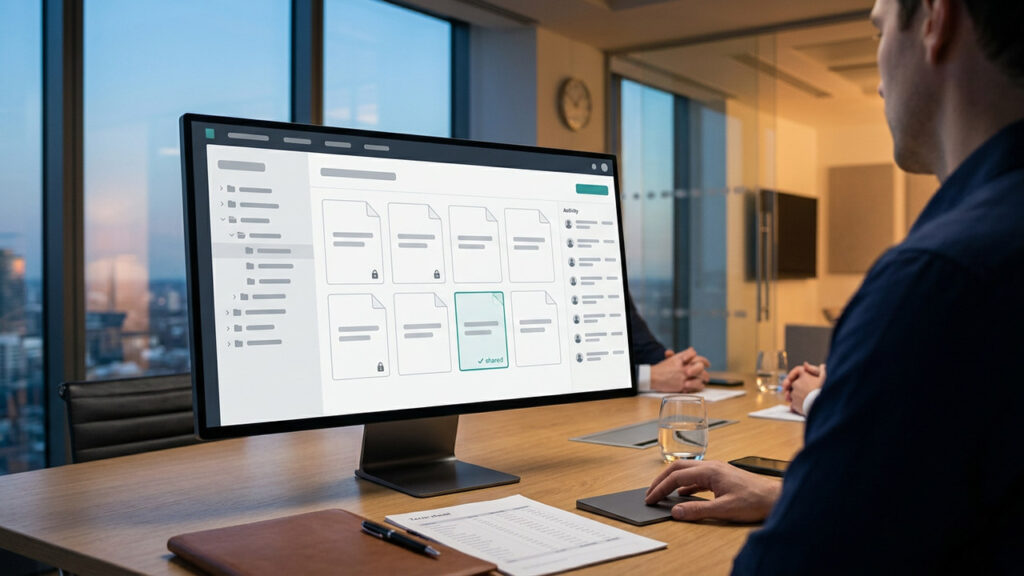
High-stakes mergers, acquisitions, fundraising rounds, audits, and intellectual property licensing deals depend on sharing sensitive financial and legal records quickly without sacrificing confidentiality. Deploying a secure due diligence data room replaces slow physical filing cabinets and risky email attachments with a controlled online repository where dealmakers, legal counsel, and auditors collaborate safely around the clock. Choosing the right due diligence data room accelerates review timelines, creates verifiable compliance trails, and gives administrators absolute authority over every document from upload through deal close.
Modern virtual data rooms combine bank-grade encryption, dynamic watermarking, fence view protection, AI-powered bulk redaction, and structured Q&A workflows to eliminate friction during complex transactions. Understanding how leading due diligence data room platforms compare on security controls, usability, pricing transparency, and customer support helps investment teams, founders, and corporate executives select the safest solution for every transaction stage.
What Is a Due Diligence Data Room and How Does It Work
A due diligence data room is a cloud-based virtual data room engineered specifically to store, organize, govern, and share confidential corporate records during high-value business scrutiny. Descended from physical deal rooms where buyers once traveled on-site to inspect paper binders under supervision, today’s virtual due diligence data room enables authorized participants across global timezones to examine thousands of files securely from any browser or mobile device.
Inside a well-structured due diligence data room, administrators organize documents into clear hierarchical categories, numbered folders, and nested subfolders covering corporate governance, audited financials, tax filings, intellectual property, customer contracts, and HR compliance. Automated index numbering, drag-and-drop bulk uploading, and full-text optical character recognition search allow legal and financial reviewers to locate specific clauses in seconds while every click, view duration, print attempt, and download is recorded permanently inside an immutable audit trail.
Online Due Diligence Data Room vs Physical Deal Rooms
Although both physical and virtual deal rooms aim to protect confidential transaction records, digital platforms outperform paper binders on speed, reach, cost, and forensic visibility. Physical rooms restrict reviewers to scheduled on-site visits, incur travel and printing overhead, and offer zero real-time visibility into which clauses buyers actually studied. A virtual due diligence data room lets multiple competing bidders evaluate materials simultaneously behind strict digital walls while surfacing live engagement analytics that signal true buyer intent.
Why Generic Cloud Drives Fail Formal Due Diligence Standards
Consumer file-sharing tools were built for casual everyday collaboration rather than adversarial M&A scrutiny or regulatory audits. They typically lack dynamic user-specific watermarks, fence view screenshot deterrence, remote file shredding after download, structured buy-side and sell-side Q&A routing, and granular document-level permission matrices, which are critical gaps that create severe data leak exposure during active deal negotiations when compared against a certified virtual data room.
Core Transactions Powered by a Due Diligence Data Room
Organizations of every size rely on a dedicated due diligence data room whenever third parties must verify confidential operational evidence.
- Mergers and acquisitions requiring separate bidder access groups, automated redaction of sensitive personal or customer identities, and audit-ready Q&A logs.
- Venture capital fundraising, private equity recaps, and initial public offerings where institutional investors inspect cap tables, cohort metrics, and IP assignments.
- Corporate audits, regulatory inspections, and legal litigation discovery demanding tamper-evident chain-of-custody records and fast expert document retrieval.
- Real estate portfolio sales, biotech clinical licensing, and strategic joint ventures involving hundreds of technical blueprints, permits, and compliance filings.
Comparing Top Due Diligence Data Room Providers in 2026
Selecting the best due diligence data room depends on transaction complexity, budget predictability, setup speed, and support responsiveness. Independent comparison benchmarks compiled across platforms such as Ideals, SecureDocs, Firmex, Datasite, Ansarada, Onehub, DealRoom, CapLinked, Citrix ShareFile, and Intralinks highlight how top solutions serve different deal profiles.
| VDR Provider | Avg. User Rating | Standout Due Diligence Capabilities | Best Deal Fit |
|---|---|---|---|
| Ideals | 4.8 / 5 (1,000+ reviews) | Fence view, 8 granular access controls, 15-min setup, 30-sec chat support | All-around M&A, SMB to enterprise deals |
| SecureDocs | 4.8 / 5 (100+ reviews) | Unlimited storage and users, flat-fee plans, 10-min setup, e-signature | Startups, fundraising, fast cost-predictable deals |
| Firmex | 4.7 / 5 (400+ reviews) | SOC 2, HIPAA, GDPR compliance, custom analytics, two-page PDF mode | High-volume legal, banking, regulated sectors |
| Datasite | 4.6 / 5 (390+ reviews) | Advanced Q&A routing, 24/7 support in 20 languages, mobile apps | Cross-border enterprise M&A and investment banks |
| Ansarada | 4.6 / 5 (280+ reviews) | Bulk AI redaction for 500+ files, buy-side and sell-side workflows | Complex sell-side M&A readiness and auctions |
| DealRoom | 4.3 / 5 (66 reviews) | Agile M&A lifecycle tracking, visual BI reporting, task assignments | Corporate development teams running post-merger integration |
| CapLinked | 4.2 / 5 (135+ reviews) | FileProtect DRM remote revocation, 256-bit AES, plugin-free viewer | Mid-market and Fortune 1000 asset sales |
| Intralinks | 3.8 / 5 (29 reviews) | AI document analysis, AI redaction, one-step M&A approvals | Large enterprise and institutional banking deals |
Essential Security Controls Every Due Diligence Data Room Must Include
Security architecture is the single most critical benchmark when evaluating any due diligence data room. Top platforms defend sensitive files both inside the browser and even after authorized downloads leave the platform.
| Capability Pillar | Must-Have Features | Why It Protects Your Deal |
|---|---|---|
| Enterprise Security | 256-bit AES encryption, TLS, MFA, fence view, remote shred, dynamic watermarks | Prevents unauthorized forwarding, screen captures, and post-exit leaks |
| Access Governance | Granular document permissions, bulk group invites, user access expiration | Keeps competing bidders strictly isolated inside approved folders |
| Document Management | Drag-and-drop bulk upload, auto-indexing, full-text OCR search, AI redaction | Cuts days of manual prep and removes PII across hundreds of files fast |
| Q&A Collaboration | Role-based Q&A threads, expert auto-assignment, approval workflows, notifications | Eliminates chaotic spreadsheets and speeds buyer clarification cycles |
| Audit and Analytics | Full timestamped audit trails, heatmaps, page-level viewing reports | Proves compliance legally and spotlights the most engaged bidders |
How AI Redaction and Smart Q&A Accelerate Deal Closings
Manually blacking out employee social security numbers, proprietary customer pricing, or trade secrets across thousands of contract PDFs used to stall due diligence preparation for weeks. Modern due diligence data room platforms deploy built-in AI redaction capable of masking sensitive terms across hundreds of files in one batch, while structured Q&A modules automatically route buyer questions to internal legal, tax, or engineering specialists for vetted approval before publishing answers.
Using Engagement Analytics to Gauge Genuine Buyer Intent
Beyond protecting documents, a data-rich due diligence data room gives sell-side advisors an intelligence edge. Page-by-page engagement dashboards inside leading virtual data rooms reveal which prospective buyers spend serious hours examining core customer contracts, revenue cohorts, and legal schedules versus casual browsers, helping negotiators prioritize closing focus on high-conviction offers.
Compliance Standards and Data Sovereignty Inside Modern Data Rooms
Cross-border acquisitions, healthcare transactions, and public-company audits force deal teams to satisfy overlapping regional privacy and security laws simultaneously. A certified due diligence data room removes infrastructure uncertainty by maintaining independent third-party attestations across ISO 27001, SOC 2 Type II, GDPR, HIPAA, and SSAE 16 security controls alongside regional server hosting choices.
Evaluating Encryption, Single Sign-On, and Disaster Recovery
Before uploading sensitive merger schedules or employee records into any virtual data room, legal counsel and IT security officers should confirm 256-bit AES encryption at rest, modern TLS protocols in transit, multi-factor authentication, single sign-on federation, and geo-redundant backup servers. Verifying data room security certifications upfront prevents last-minute infosec blocks from institutional buyers or corporate acquirers.
Running a Clean Pre-Deal Readiness Timeline
Rushing to assemble a due diligence data room after receiving an unsolicited acquisition offer almost always exposes missing IP assignments, unsigned vendor contracts, or inconsistent financial schedules that buyers exploit to discount valuation. Top deal advisors recommend launching virtual data room preparation three to six months early: audit corporate records in month one, standardize filenames and redact sensitive customer PII in month two, and run a mock legal review with internal counsel in month three so every folder answers investor questions cleanly on day one.
Best Practices for Setting Up a Clean Due Diligence Data Room
Even the strongest virtual data room software loses value if files are dumped into disorganized folders with cryptic filenames. Preparing a clean due diligence data room weeks ahead of formal buyer outreach signals operational maturity and frequently strengthens valuation multiples.
Recommended Folder Index Structure for M&A and Fundraising
Organizing your due diligence data room around a predictable numbered checklist lets accountants, attorneys, and investment committees navigate effortlessly from minute one across modern data room platforms.
- 01 Corporate and Governance containing charter documents, board minutes, cap tables, shareholder agreements, and organizational charts inside your due diligence data room.
- 02 Financial and Tax housing three to five years of audited financial statements, monthly management accounts, projections, debt schedules, and tax returns in the virtual data room.
- 03 Commercial and Customer Contracts compiling top customer agreements, SaaS cohort metrics, vendor contracts, and standard pricing schedules for fast data room review.
- 04 Intellectual Property and Technology detailing patents, trademarks, open-source software audits, architecture diagrams, and security certifications inside the due diligence data room.
- 05 Human Resources and Legal covering executive employment agreements, option plans, benefit policies, insurance coverage, and litigation disclosures governed by data room access rules.
Configuring Permissions, Watermarks, and Staged Disclosure
Apply the principle of least privilege inside every due diligence data room. During early non-binding bid stages, grant prospective buyers view-only access with dynamic watermarks displaying their email address, IP address, and timestamp while keeping highly sensitive customer names or source code locked inside a clean-team folder reserved strictly for finalists post-LOI. Staged disclosure inside a virtual data room protects trade secrets if an early bidder walks away.
Pros and Cons of Using a Virtual Due Diligence Data Room
Understanding both the major operational advantages and practical budgeting considerations of a due diligence data room helps deal teams select the right pricing tier and data room software configuration.
Pros of a Modern Due Diligence Data Room
- Tightens confidentiality across the due diligence data room through 256-bit encryption, granular access permissions, dynamic watermarks, fence view, and remote document revocation.
- Eliminates travel, courier, and physical room costs while enabling 24/7 global review inside a virtual data room across multiple simultaneous bidder teams.
- Accelerates deal timelines with automated index numbering, full-text search, AI bulk redaction, and role-assigned Q&A tracking built into top data room providers.
- Generates court-ready audit trails and bidder engagement analytics inside the due diligence data room that support compliance and smarter negotiation leverage.
Cons and Factors to Watch During Vendor Selection
- Legacy per-page pricing models from older data room providers can inflate bills unexpectedly during document-heavy M&A transactions unless teams confirm flat-fee or predictable storage tiers upfront.
- Overly complex enterprise data room software can slow first-time reviewers if the provider lacks intuitive navigation, browser viewing without plugins, and rapid 24/7 live support.
- Rushing due diligence data room preparation without consistent file naming and index review creates avoidable Q&A bottlenecks regardless of platform quality.
FAQ’s
What is a due diligence data room used for?
A due diligence data room is a secure online repository used during mergers, acquisitions, fundraising, audits, and legal transactions to share confidential financial, legal, and operational files under strict access controls and full audit tracking.
How secure is a virtual due diligence data room compared with Google Drive or Dropbox?
A virtual due diligence data room offers far stronger deal security than standard cloud drives by adding dynamic user watermarks, fence view anti-screenshot controls, granular view-only permissions, remote document shredding after download, SOC 2 or ISO 27001 compliance, and detailed forensic audit logs.
How long does it take to set up a due diligence data room?
Modern data room platforms like Ideals and SecureDocs can be configured in 10 to 15 minutes using drag-and-drop bulk uploads and automated folder indexing. Most preparation time goes toward gathering, naming, and redacting internal documents prior to inviting reviewers.
How much does a due diligence data room cost?
Pricing varies widely by model. Flat-fee virtual data room plans with unlimited users and storage typically start between $250 and $500 per month for straightforward deals, while enterprise M&A data room platforms priced by gigabytes, workspaces, or advanced AI workflows range from $600 to several thousand dollars monthly.
Can administrators revoke access after a document has been downloaded?
Yes, leading due diligence data room providers include digital rights management controls, often called remote shred or FileProtect, that let administrators expire or revoke access to encrypted files even after a reviewer has downloaded them locally.
When should a company start building its due diligence data room?
Founders and CFOs should organize an always-ready due diligence data room three to six months before starting formal fundraising or M&A outreach. Early preparation catches missing contracts or compliance gaps calmly and speeds deal closing once buyer interest peaks.
Conclusion
Deploying a reliable due diligence data room is one of the highest-leverage safeguards any company can implement before entering fundraising, M&A negotiations, or complex regulatory audits. By pairing enterprise-grade encryption, granular permission controls, AI redaction, and responsive 24/7 support with a clean folder hierarchy, deal teams eliminate avoidable security risks while projecting complete executive readiness.
Comparing independent virtual data room reviews on transparency, usability, security depth, and pricing fit ensures you choose a due diligence data room that keeps every confidential record protected and moves high-value transactions cleanly across the finish line.