
Timely electrical repair protects your household from hidden wiring hazards, unexpected power outages, and expensive appliance damage. Because most residential cables, junction boxes, and connections...
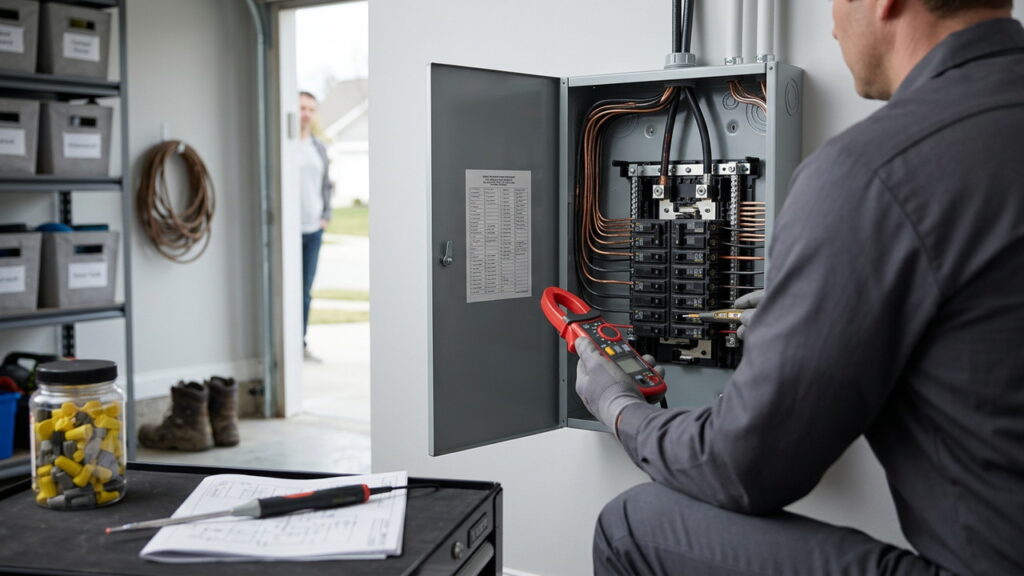
Timely electrical repair protects your household from hidden wiring hazards, unexpected power outages, and expensive appliance damage. Because most residential cables, junction boxes, and connections sit concealed behind drywall or inside ceiling cavities, minor faults such as loose terminals or degraded insulation often develop out of sight before noticeable symptoms appear.
Addressing an electrical repair properly requires knowing how to spot early warning signs, what safe checks you can perform from outside the panel, and when to bring in a licensed electrician. This guide explains common household faults, diagnostic steps, safety boundaries, cost factors, and contractor vetting so you can resolve issues safely and keep your wiring up to code.
Quick Summary of Safe Electrical Repair Planning
A safe electrical repair always starts with accurate fault identification and strict isolation of power at the main service panel. Symptoms like a dead outlet, a flickering ceiling fixture, or a tripping breaker are rarely isolated annoyances; they are diagnostic clues showing that a circuit is overloaded, a connection has loosened, or a protective device has detected current leakage.
While homeowners can safely check a tripped breaker, test a ground-fault reset button, or unplug heavy appliances to balance a circuit load, any electrical repair that involves opening a service panel, replacing damaged branch wiring, or working inside junction boxes belongs in the hands of a qualified professional. Following national wiring rules—such as the National Electrical Code (NEC) in the United States or BS 7671 in the United Kingdom—ensures every fix remains safe for decades.
Use this initial checklist before starting any electrical repair process
- Document the exact symptoms, including which rooms lost power, which appliances were running, and when the issue started.
- Check immediately for urgent danger signs such as acrid burning smells, buzzing outlets, scorch marks, or warm wall plates.
- Isolate the affected circuit at the breaker box if a fixture or receptacle shows signs of overheating or sparking.
- Never defeat safety devices by taping a circuit breaker open, installing an oversized fuse, or bypassing a ground wire.
- Verify that your chosen electrical repair contractor holds an active state or regional license along with general liability insurance.
- Request an itemized written estimate that clarifies diagnostic fees, replacement parts, permit costs, and workmanship warranties.
Warning Signs That Your Home Needs Prompt Electrical Repair
Residential electrical systems rarely fail without giving off audible, visual, or thermal clues first. Learning to recognize these early warning signals allows you to schedule a planned electrical repair during normal business hours rather than facing an emergency blackout or fire hazard late at night.
Homeowners sometimes ignore intermittent electrical quirks because power returns temporarily after wiggling a plug or flipping a switch. However, metal conductors expand when heated by current and contract as they cool, meaning a loose wire terminal inside a wall box will gradually worsen until a proper electrical repair restores a tight mechanical connection.
Tripping Breakers, Blown Fuses, and Overloaded Circuits
Circuit breakers and fuses are calibrated safety devices designed to interrupt power before overheated copper or aluminum wires can ignite surrounding building materials. When a breaker trips once because a high-wattage space heater and a microwave ran simultaneously on the same branch circuit, reducing the plug load may resolve the immediate issue without a mechanical electrical repair.
If the same breaker trips repeatedly under normal everyday loads, or trips the instant you reset it, the system needs a professional electrical repair diagnosis. Persistent tripping typically points to one of three underlying faults: a dead short where a hot wire touches a neutral or ground conductor, a ground fault where current leaks into an unintended path, or a weakened breaker mechanism that has lost its thermal calibration.
Modern homes also rely on Arc-Fault Circuit Interrupter (AFCI) and Ground-Fault Circuit Interrupter (GFCI) breakers or Residual Current Devices (RCDs) to detect dangerous arcing and moisture-related shock risks. When these sensitive devices trip, scheduling an electrical repair technician to test the branch wiring with an insulation resistance meter is far safer than assuming the breaker itself is defective.
Flickering Lights, Warm Outlets, and Burning Odors
Lights that dim briefly when a central air conditioner or refrigerator compressor starts up can indicate high motor inrush current or a shared circuit. By contrast, lights that flicker randomly across multiple rooms or brighten and dim unpredictably often point to a loose neutral connectionrequiring urgent electrical repair at the main panel or utility service drop.
Wall switches, dimmer plates, and receptacle covers should remain cool to the touch during normal operation. If you notice a warm faceplate, discolored ivory plastic turning brown, or a faint buzzing or crackling sound when you plug in a cord, internal arcing is generating heat across a worn contact and demands immediate electrical repair attention.
A fishy, acrid, or melting-plastic odor near an outlet, light fixture, or breaker cabinet is another unmistakable symptom of overheating insulation. Thermoset plastics used in electrical components release a distinct chemical smell when subjected to high temperatures, signaling that you should shut off the circuit breaker and arrange an electrical repair inspection right away.
Emergency Symptoms That Require Shutting Off Power Immediately
Certain electrical faults pose an immediate threat to life and property and cannot wait for a routine appointment window. If you see visible smoke, active sparks shooting from a receptacle, melted cord prongs, or water dripping into a ceiling light fixture or breaker panel, treat the situation as an emergency electrical repair.
If it is safe to approach your main distribution board without stepping in standing water, switch off the affected branch breaker or the main service disconnect and call an emergency electrician—or the fire department if smoke or charring is present. Never touch a wet electrical panel or use water on an energized electrical fire during an emergency electrical repair situation.
Common Residential Electrical Repair Projects Compared
Not every electrical repair involves the same tools, diagnostic time, or regulatory oversight. Comparing common household electrical jobs helps you understand why replacing a worn receptacle takes less than an hour while tracing an intermittent hidden wiring fault or upgrading a panel requires detailed testing and municipal inspection.
| Repair Type | Typical Symptoms | Primary Technical Cause | Recommended Service Level |
|---|---|---|---|
| Standard Receptacle or Switch Replacement | Loose plug prongs, cracked faceplate, or non-working wall switch | Worn internal brass contacts or failed mechanical toggle | Licensed electrical repair technician (or experienced homeowner where legally permitted with power locked out) |
| GFCI / RCD Outlet Failure | Bathroom, kitchen, or outdoor outlets dead and reset button will not latch | Moisture intrusion, downstream ground fault, or failed internal sensing board | Professional electrical repair diagnosis to verify ground continuity and line-load wiring |
| Circuit Breaker Replacement | Breaker feels spongy, runs hot, smells burnt, or will not stay in the ON position | Worn internal spring latch, bus-bar pitting, or sustained circuit overload | Licensed electrician only; requires opening an energized main service panel |
| Flickering or Dead Ceiling Fixture | Bulb changes do not restore light; fixture hums or flickers intermittently | Overheated socket tab, failed LED driver, or loose wire nut in ceiling box | Professional electrical repair to inspect junction box insulation and thermal limits |
| Partial House Power Loss | Half of the home’s 120V circuits die or 240V appliances stop heating | Dropped leg on the service entrance cable, main lug corrosion, or meter base fault | Urgent licensed electrical repair coordinated with the local electric utility company |
| Legacy Wiring Remediation | Brittle cloth insulation, two-prong ungrounded outlets, or warm aluminum joints | Aging knob-and-tube, degraded cloth cable, or oxidized aluminum branch wiring | Full licensed electrical repair and code-compliant rewiring or approved connector retrofits |
Outlet, Switch, and GFCI or RCD Protection Fixes
Receptacles and wall switches experience constant mechanical wear every time a plug is inserted or a light is toggled. Over years of use, the internal spring clips inside a standard outlet lose tension, failing to grip plug blades firmly and creating high-resistance hot spots that call for a straightforward electrical repair.
In kitchens, bathrooms, garages, basements, laundry rooms, and outdoor areas, building codes require ground-fault protection to prevent severe electric shock around water and grounded surfaces. A common electrical repair call involves a string of dead bathroom or garage outlets caused by a single tripped GFCI receptacle wired upstream on the “line” side of the circuit.
When a GFCI receptacle refuses to reset after you unplug all connected devices, the electrical repair technician checks three possibilities: power is not reaching the device from the panel, the line and load wires were reversed during a previous installation, or the internal printed circuit board inside the GFCI has failed after a voltage surge. Replacing worn devices with tamper-resistant, weather-resistant, or self-testing units brings the circuit up to modern safety standards.
Circuit Breaker Panel and Service Entrance Upgrades
The main electrical distribution panel—also called the breaker box, load center, or consumer unit—serves as the heart of a home’s power system. Many older residences still operate on 60-amp or 100-amp panels that were never designed to power modern heat pumps, induction ranges, home offices, and electric vehicle chargers simultaneously, making panel modernization a frequent electrical repair and upgrade project.
Certain historical breaker panels also carry well-documented safety vulnerabilities that warrant proactive electrical repair replacement even before a total blackout occurs. If a home inspector identifies an obsolete split-bus panel, a rusted fuse box with corroded terminals, or a legacy breaker brand known for failing to trip under overcurrent conditions, replacing the load center is a high-priority safety investment.
During a panel-related electrical repair, a licensed electrician inspects far more than the plastic breaker switches. They examine the copper or tin-plated aluminum bus bars for heat pitting, torque all neutral and ground bar screws to manufacturer specifications, verify the integrity of the grounding electrode system (ground rods and water-pipe bonds), and check the weatherhead and service entrance cable outside the home.
Legacy Wiring Remediation for Aluminum and Knob-and-Tube Systems
Homes built before the 1970s often contain wiring materials that require specialized electrical repair methods when modifications or faults arise. Houses constructed in the early twentieth century may still have active knob-and-tube wiring, which lacks an equipment grounding conductor and uses rubberized cloth insulation that becomes brittle and flakes off over decades of attic heat.
Homes built or wired during the late 1960s and early 1970s sometimes contain single-strand solid aluminum branch-circuit wiring for 15-amp and 20-amp receptacles and lighting. Because aluminum expands more than copper, creeps under screw pressure, and forms a resistive oxide layer when exposed to air, standard copper-only switches and wire nuts used on aluminum conductors create a serious overheating hazard without proper electrical repair remediation.
When performing an electrical repair on legacy aluminum branch circuits where a full home rewire is not immediately feasible, qualified electricians use strictly approved methods—such as CPSC-recommended COPALUM crimps or AlumiConn lug connectors—to pigtail short lengths of copper wire to the aluminum conductors. Never twist copper and aluminum wires together inside a standard wire connector during an electrical repair.
DIY Observations Versus Licensed Professional Electrical Repair
Knowing the exact boundary between safe homeowner troubleshooting and restricted licensed work protects both your physical safety and your homeowner’s insurance policy. Electricity gives no visual warning when a bare conductor is energized, and a single wiring mistake inside a wall box can remain hidden until a fault occurs months later.
In many jurisdictions, municipal building codes and statutory regulations—such as Part P of the Building Regulations in England and Wales or local state licensing laws in North America—legally restrict who can alter circuits, add new breakers, or perform electrical repair work in wet zones like bathrooms and outdoors. Checking local rules before picking up a screwdriver prevents code violations that complicate future property sales.
Safe Troubleshooting Checks Homeowners Can Perform Without Tools
Before calling an electrical repair company for a dead room or non-working appliance, you can run a few non-invasive checks that never expose you to live conductors. First, walk to your breaker panel and look for a handle sitting midway between ON and OFF, or fully in the OFF position; to reset a tripped breaker properly, push the handle firmly all the way to OFF until it clicks, and then flip it back to ON.
Second, if an outlet in a bathroom, kitchen, garage, patio, or basement has no power, search all those locations for a GFCI receptacle with a popped “Reset” button. A single GFCI device located in an upstairs master bathroom or a downstairs garage often protects three or four ordinary outlets in other rooms, so pressing that reset button can save you an unnecessary electrical repair service call.
Third, test whether the fault lies in the plugged-in lamp or appliance rather than the wall wiring. Unplug the suspect device and plug a known working table lamp into both the top and bottom sockets of the receptacle; if one half of the outlet works only when a wall switch is flipped, you have a switched half-hot outlet rather than a wiring failure requiring electrical repair.
Why Complex Wiring and Panel Work Require a Licensed Electrician
Once basic external checks are complete and a fault remains, professional electrical repair expertise becomes essential. Even when an individual branch breaker is switched off, adjacent circuits inside a multi-gang wall box or a ceiling rose can remain fully energized at 120V or 240V, and shared neutral wires on multi-wire branch circuits can carry lethal return current from another breaker phase.
Inside the main breaker cabinet, the heavy service entrance lugs at the top of the panel remain live with high-amperage utility power even after you switch the main breaker handle to OFF. Opening a dead-front panel cover without insulated protective gear, cat-rated voltage testers, and formal training exposes an untrained person to severe shock and arc-flash hazards during an attempted electrical repair.
Professional electricians bring specialized diagnostic instruments to every electrical repair visit. Using true-RMS digital multimeters, clamp ammeters, receptacle polarity and ground-loop impedance testers, thermal imaging cameras, and insulation resistance testers (megohmmeters), a technician can pinpoint a nicked cable inside a wall cavity without tearing down unnecessary drywall.
Understanding Electrical Repair Costs and Service Quotes
Pricing for a residential electrical repair depends on the time required to trace the fault, the cost of code-compliant replacement components, accessibility of the wiring path, and local permitting requirements. Understanding how contractors structure their billing helps you evaluate estimates fairly and avoid vague verbal quotes.
| Cost Category | How Contractors Bill It | Typical Scope Included | Questions to Clarify Upfront |
|---|---|---|---|
| Diagnostic and Call-Out Fee | Fixed trip charge or first-hour minimum rate | Travel to the property, initial circuit testing, and fault isolation | Ask whether the diagnostic fee is waived or credited toward the completed repair |
| Flat-Rate Upfront Task Pricing | Set menu price per specific repair task | All labor and standard materials for a defined fix, regardless of minor time overruns | Confirm exactly what happens if tracing the fault uncovers deeper hidden wiring damage |
| Time-and-Materials Hourly Billing | Hourly labor rate plus itemized parts markup | Open-ended troubleshooting for elusive intermittent faults or multi-item punch lists | Ask how minimum billing increments (such as 30-minute blocks) are calculated |
| Emergency After-Hours Service | Premium call-out fee and higher hourly rate | Immediate dispatch on nights, weekends, or holidays to restore critical power or make a hazard safe | Ask if the technician can perform a temporary safe isolation now and finish non-urgent work at standard rates |
| Permits and Municipal Inspection | Pass-through city fee plus contractor filing time | Official registration and third-party inspector sign-off for panel or circuit alterations | Verify that the contractor pulls the permit in their company name rather than asking the homeowner to file |
Diagnostic Call-Out Fees, Hourly Rates, and Flat-Rate Pricing
Most reputable electrical repair companies charge an initial diagnostic or service-call fee to cover licensed technician travel, fully stocked service vehicle overhead, and the first thirty to sixty minutes of systematic circuit testing. In electrical work, finding the exact hidden junction box where a wire has broken often takes more skill and time than tightening the final replacement connector.
Many residential contractors use flat-rate, upfront pricing books for electrical repair tasks. After the electrician completes the initial diagnosis and locates the problem, they present a fixed written price for the exact repair before performing the work, allowing you to approve the total cost without worrying about watching the clock.
Other contractors bill electrical repair work on a time-and-materials basis, charging an agreed hourly rate for the master or journeyman electrician plus the cost of breakers, outlets, boxes, and wire. Time-and-materials billing works well when you have a list of five or six small electrical repair tasks—such as replacing three dimmers, fixing a porch light, and securing a loose outlet—that can all be completed within a single two-hour visit.
Permits, Code Inspections, and Wall Access Variables
Physical access to your home’s wiring pathways has a major impact on the final price of an electrical repair. Running a replacement cable above an unfinished basement ceiling or through an open attic takes a fraction of the labor required to fish wires through insulated exterior walls, solid masonry, or finished two-story ceilings without attic access.
Clarify whether an electrical repair quote includes drywall patching and painting if the electrician must cut small access holes to reach a buried splice or install a new junction box. Most electricians cut neat, minimal access openings and secure the drywall plug back in place, leaving final plaster skimming and paint matching to a drywall finisher or the homeowner.
For larger electrical repair scopes—such as replacing a main breaker panel, repairing a damaged service mast, or rewiring an overloaded kitchen circuit—municipal building permits and official inspections are mandatory. Paying for a permitted electrical repair ensures an independent municipal inspector verifies wire gauge, breaker sizing, grounding, and workmanship.
Pros and Cons of Timely Electrical Repair Versus Delayed Maintenance
Homeowners occasionally debate whether a minor electrical symptom—like one non-working bedroom outlet or a slightly warm dimmer switch—can wait until a future remodeling project. Comparing the benefits of prompt professional service against the risks of postponement highlights why electrical faults should never be left to linger.
Pros of prompt professional electrical repair
- Eliminates hidden arcing and overheating at loose terminals before they can char wood framing or insulation.
- Protects sensitive electronics, smart appliances, and HVAC control boards from voltage drops and unstable neutrals.
- Restores full convenience to dead receptacles, lighting zones, and tripped kitchen or laundry circuits.
- Provides documented code compliance and inspection records that reassure home insurers and future property buyers.
- Identifies outdated components early so upgrades can be scheduled calmly rather than at emergency weekend rates.
Cons and risks of delaying electrical repair or attempting unqualified DIY fixes
- High-resistance connections grow hotter over time, steadily increasing the risk of an electrical fire behind walls.
- Amateur wiring mistakes—such as bootleg grounds, reversed polarity, or buried open splices—create invisible shock hazards.
- Unpermitted or uninspected electrical work can complicate homeowner’s insurance claims if a fault causes property damage.
- Minor component failures can cascade, causing a failing $20 breaker to burn and pit the main panel bus bar until the entire panel requires replacement.
Step-by-Step Guide to Managing a Home Electrical Repair Safely
When a circuit fails or behaves abnormally in your home, following a calm, structured process keeps everyone safe and gives your technician the exact information needed to solve the problem quickly. Use these seven steps to manage any residential electrical repair from initial discovery to final testing.
- Stop using the affected outlet, switch, or appliance immediately, and unplug sensitive electronics on that circuit if you can do so safely without touching warm or sparking components.
- Go to your main electrical panel, identify the labeled breaker controlling the affected area, and switch it to the OFF position if you noticed heat, buzzing, flickering, or burning odors.
- Write down a brief log of what happened prior to the fault, noting which appliances were running, whether rain or moisture was present, and which rooms or fixtures lost power.
- Perform safe external checks—such as looking for a tripped GFCI reset button in kitchens, bathrooms, or garages— only if there were no signs of heat, smoke, or arcing.
- Contact a licensed, insured electrical repair professional, describe your symptom log clearly, and ask for their diagnostic fee structure and earliest appropriate appointment window.
- Walk the electrician through the affected areas upon arrival, review their diagnostic findings and written flat-rate or itemized repair quote, and approve the scope before work begins.
- Test the repaired outlets, switches, and breakers alongside the technician once the electrical repair is complete, and keep the itemized invoice, test results, and any permit paperwork in your home maintenance file.
Keeping an updated, accurate circuit directory pasted inside your breaker panel door makes every future electrical repair faster and safer. Whenever an electrician maps out unlabeled breakers during a diagnostic visit, write the exact room and outlet locations clearly on the panel schedule.
How to Vet and Hire a Qualified Electrical Repair Contractor
Not every handyman or general remodeler is legally qualified or equipped to perform safe electrical repair work. Vetting a contractor’s credentials before they open your service panel ensures your home is serviced by a trained professional who understands load calculations, grounding rules, and current safety codes.
Verifying Licenses, Insurance, and Code Compliance
Always check that your electrical repair provider holds a valid state, provincial, or national electrical contractor license, or is registered with a recognized competent-person scheme where applicable. In most regions, you can verify a license number online in less than two minutes through the state licensing board or municipal building department registry.
Confirm that the company carries active commercial general liability insurance and workers’ compensation coverage for its technicians. Reputable electrical repair businesses gladly provide license numbers and insurance certificates upon request, protecting you from financial liability if an accidental injury or property damage occurs on site.
Look for contractors who guarantee that all electrical repair work will meet current national and local electrical codes. Code-compliant work means using properly sized junction boxes, securing cables with approved clamps, installing arc-fault or ground-fault protection where mandated, and never hiding spliced wires inside walls without an accessible cover plate.
Questions to Ask Before Signing a Work Authorization
Asking a few direct questions before approving an electrical repair estimate prevents misunderstandings over pricing and scope. Clear communication upfront separates thorough professionals from high-pressure sales operators.
- What is the exact root cause of this fault, and did your testing show any stress on the rest of the circuit?
- Does this written electrical repair quote include all diagnostic time, parts, taxes, and any required municipal permits?
- Will the technician performing the work be a licensed journeyman or master electrician, and is the repair backed by a written parts-and-labor warranty?
- Are there any optional upgrades listed on this estimate that can be separated from the immediate safety repair required today?
Preventative Habits That Reduce Future Electrical Repair Needs
Good everyday electrical habits reduce strain on your home’s wiring and lower the frequency of unexpected electrical repair calls. Start by testing your GFCI outlets and RCD breakers once a month using the built-in “Test” and “Reset” buttons to verify that their internal trip mechanisms have not seized up or failed after a power surge.
Avoid relying on extension cords, multi-plug cube adapters, or power strips as permanent wiring solutions for high-draw appliances. Space heaters, portable air conditioners, toaster ovens, microwaves, hair dryers, and irons pull heavy sustained current and should always plug directly into a dedicated wall receptacle rather than a power strip to prevent overheating and melted cords that lead to an electrical repair.
Consider scheduling a periodic whole-home electrical safety inspection—sometimes called an Electrical Installation Condition Report (EICR) in the UK or a comprehensive safety check in North America—every five to ten years, or whenever buying an older house. Having an electrician tighten panel lugs, inspect attic and crawlspace junctions, and install whole-home surge protection catches minor wear long before an urgent electrical repair disrupts your household.
FAQ’s
When does an electrical issue become an emergency electrical repair?
Any sign of burning smells, visible smoke, sparks, melted outlets, buzzing breaker panels, or water leaking into electrical fixtures is an emergency electrical repair. Shut off power at the breaker if safe to do so and call a licensed emergency electrician immediately.
Why did half the outlets in one room stop working while the breaker is still on?
Outlets in a room are often wired in a daisy-chain series or split across two different circuits, so a single loose wire connection inside one receptacle box or a tripped upstream GFCI outlet can cut power to downstream sockets. A professional electrical repair technician can trace the open neutral or hot wire safely.
Can I perform my own electrical repair on a wall switch or outlet?
While resetting a breaker or GFCI button is safe for any homeowner, opening electrical boxes carries serious shock and fire risks if wires are misidentified or loosely terminated. Many jurisdictions also require a licensed electrician for electrical repair work, especially in kitchens, bathrooms, and panels.
How much does a standard residential electrical repair cost?
The cost of an electrical repair depends on the diagnostic time needed to locate the fault, replacement parts, wall accessibility, and whether a municipal permit or after-hours dispatch is required. Always request an upfront written estimate after the technician completes the initial circuit diagnosis.
Why do my lights flicker when large appliances turn on?
Brief dimming when an air conditioner or motor starts can occur from normal startup current draw, but persistent flickering across multiple rooms can signal an overloaded circuit or a loose service neutral connection. Schedule an electrical repair inspection to check your main panel and utility connections.
Is it safe to reset a circuit breaker that keeps tripping?
You may reset a tripped breaker once after unplugging heavy appliances on that circuit to see if a temporary overload caused the trip. If the breaker trips again immediately or repeatedly under normal use, leave it OFF and book a licensed electrical repair service to find the short or ground fault.
Conclusion
Taking a proactive, safety-first approach to residential electrical repair keeps your household protected from preventable wiring fires, shock hazards, and sudden power disruptions. By paying close attention to early warning symptoms like warm outlets, flickering lights, and recurring breaker trips, you can isolate faulty circuits promptly and address small mechanical issues before they damage your main service panel or expensive appliances.
Always respect the boundary between simple external troubleshooting and licensed electrical work, never bypass protective breakers or ground-fault devices, and verify that every contractor you hire carries proper licensing and insurance. With code-compliant electrical repair practices and periodic safety inspections, your home’s electrical system will deliver reliable, hazard-free power for years to come.