
A Florence tour can take you from Brunelleschi's extraordinary dome and Michelangelo's David to medieval streets, Renaissance palaces, historic bridges and viewpoints overlooking the terracotta rooftops of...
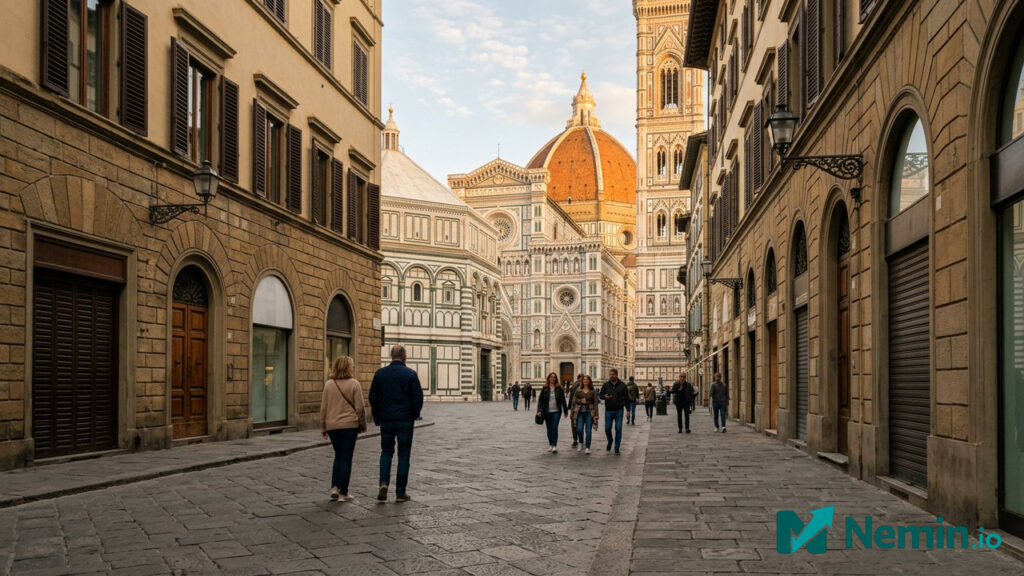
A Florence tour can take you from Brunelleschi’s extraordinary dome and Michelangelo’s David to medieval streets, Renaissance palaces, historic bridges and viewpoints overlooking the terracotta rooftops of Tuscany’s capital. Florence, known as Firenze in Italian, contains an exceptional concentration of art and architecture within a relatively compact historic centre, making much of the city rewarding to explore on foot. Yet the best visit involves more than moving quickly between famous attractions. Understanding the history behind Piazza del Duomo, allowing enough time for the Uffizi Gallery, exploring streets away from the busiest routes and experiencing Florentine food can turn a sightseeing itinerary into a much richer introduction to the city.
Florence played an enormously influential role in Renaissance art, architecture and intellectual life. Names associated with the city include Michelangelo, Leonardo da Vinci, Botticelli, Brunelleschi and the powerful Medici family, although Florence’s history extends well beyond any single period or dynasty.
The city’s popularity also creates practical challenges. Major museums can be busy, famous squares attract crowds and opening arrangements can change according to season, holidays or operational requirements. A successful itinerary therefore needs both historical curiosity and sensible planning.
This Florence tour guide explains what to see, how to structure your time, which attractions need advance preparation and how to discover a more complete version of Florence without turning the experience into a race.
Why Take a Florence Tour?
Florence rewards context. It is possible to walk past an extraordinary Renaissance building without understanding why its proportions, façade or historical function matters. A guided Florence tour can connect individual monuments with the people, politics and artistic developments that shaped the city.
Independent exploration can be equally enjoyable for travellers who prefer flexibility. A well-researched self-guided route allows you to stop for photographs, spend longer inside churches and museums or change direction whenever an interesting street appears.
The most effective approach depends on your interests. Art enthusiasts may prioritise expert museum guidance, while first-time visitors may gain more from a historical walking tour that introduces several neighbourhoods.
Florence Tour Options for Different Travellers
Florence tours come in many forms, so choosing by subject can be more useful than simply selecting the highest-rated general excursion.
| Florence Tour Type | Best Suited To | Main Experience |
|---|---|---|
| Historic walking tour | First-time visitors | Major squares, streets and city history |
| Renaissance art tour | Art enthusiasts | Artists, patronage and major works |
| Uffizi tour | Museum-focused travellers | Curated interpretation of the collection |
| Accademia tour | Michelangelo enthusiasts | David and related artistic context |
| Food tour | Culinary travellers | Florentine food traditions and local neighbourhoods |
| Private Florence tour | Families or specialist interests | Flexible pace and tailored itinerary |
| Architecture tour | Design and history enthusiasts | Churches, palaces and Renaissance architecture |
| Evening walking tour | Travellers avoiding daytime heat | Illuminated streets and quieter atmosphere |
Availability, routes and accessibility vary by operator, so check the current itinerary before booking.
Guided Versus Self-Guided Florence Tour
A guide can explain relationships between sites that are difficult to appreciate from individual plaques. This is particularly valuable in museums, where enormous collections can otherwise become overwhelming.
A self-guided Florence tour offers more freedom and can cost less. Travellers can combine both approaches by booking expert guidance for one museum or historical walk and exploring the rest of the city independently.
Neither method is inherently better. The strongest choice is the one that matches your travel style.
Start Your Florence Tour at Piazza del Duomo
Piazza del Duomo is the visual and historical heart of many first visits to Florence. The Cathedral of Santa Maria del Fiore dominates the square, accompanied by Giotto’s Campanile and the Baptistery of San Giovanni.
The cathedral complex rewards more than a quick photograph. Its different buildings, decorative programmes and construction history reveal centuries of Florentine ambition.
Plan carefully if you intend to enter multiple monuments because ticket types, opening hours and access procedures can change.
Cathedral of Santa Maria del Fiore
Florence Cathedral is immediately recognisable through its enormous dome and elaborate exterior.
Construction of the cathedral began before Filippo Brunelleschi created the engineering solution for the dome in the 15th century. The achievement became one of the defining architectural accomplishments associated with Renaissance Florence.
Entry conditions differ among parts of the cathedral complex. Consult the official Opera di Santa Maria del Fiore website for current ticketing and visitor information.
Brunelleschi’s Dome
Climbing the dome can provide both an architectural experience and expansive views of Florence.
The ascent involves many steps and confined passages, so it is not suitable for every visitor. Current reservations, ticket conditions and health or accessibility considerations should be checked before booking.
From portions of the route, visitors can gain an unusual perspective on the dome’s construction and interior decoration before eventually reaching the exterior viewing area.
Florence Tour Tip for Visiting the Duomo
Do not schedule the Duomo complex too tightly between other reservations. Security procedures, crowds and the physical effort of climbing can take more time than anticipated.
If a dome climb is important to your Florence tour, organise it before filling the rest of the day. Timed access can determine the structure of your itinerary.
Comfortable footwear is particularly useful when combining the climb with a full day of walking.
Giotto’s Campanile on a Florence Tour
Giotto’s Campanile stands beside the cathedral and creates one of Florence’s most distinctive architectural ensembles.
The bell tower offers another elevated perspective, including dramatic views toward Brunelleschi’s dome. Like the dome itself, reaching the upper levels requires a substantial stair climb.
Travellers who do not want to complete multiple demanding climbs may prefer to choose one elevated attraction rather than attempting every viewpoint.
Dome or Bell Tower?
The dome provides the experience of climbing through one of Florence’s greatest architectural achievements. The bell tower, by contrast, gives you the advantage of seeing the dome prominently in the skyline.
Your decision can therefore depend on whether architectural immersion or the classic dome view matters more.
Both require checking current visitor conditions through official sources.
Visit the Baptistery During Your Florence Tour
The Baptistery of San Giovanni stands opposite the cathedral and is among Florence’s historically significant religious buildings.
Its famous doors and long architectural history make it an important part of understanding the cathedral square as a whole rather than as a collection of disconnected attractions.
Conservation work can affect what is visible at different times. Current information is therefore valuable when planning a visit.
Slow Down in Piazza del Duomo
The square can feel hectic because so many visitors arrive with tight schedules.
Instead of immediately moving to the next attraction, walk around the complex and observe how the cathedral, campanile and baptistery relate spatially.
A Florence tour becomes more rewarding when monumental architecture is experienced from several angles rather than through one predetermined photograph.
Make the Uffizi a Priority on Your Florence Tour
The Uffizi Gallery is one of Florence’s essential destinations for travellers interested in art.
Its collections include major works associated with the Italian Renaissance as well as art from other periods. Botticelli is particularly strongly associated with the visitor experience, but reducing the Uffizi to one or two paintings understates the scale and importance of the collection.
Museum fatigue is real, so allow enough time without assuming that every gallery must be studied equally.
How to Approach the Uffizi Gallery
First-time visitors can identify a selection of priorities before arriving.
Rather than attempting to memorise every artwork, consider following the development of Renaissance painting, observing changes in perspective, human representation, religious imagery and patronage.
A specialist guide can be particularly useful here because historical context changes how individual works are understood.
Book From Reliable Sources
For major Florence attractions, verify tickets through official museum websites or clearly reputable authorised providers.
Unofficial ticket sellers may offer packages at different prices and with varying inclusions. Always understand whether you are purchasing standard admission, a guided tour or another service.
Opening hours, booking systems and admission policies can change, so evergreen travel advice should never substitute for current official information.
Florence Tour Planning Around the Uffizi
Avoid placing another fixed museum reservation immediately after the Uffizi. Large art collections require mental as well as physical energy.
After leaving, consider walking through Piazza della Signoria or stopping for lunch instead of entering another major museum straight away.
A balanced Florence tour creates contrast between intensive indoor sightseeing and relaxed exploration.
Piazza della Signoria and Palazzo Vecchio
Piazza della Signoria has served as a major centre of Florentine civic life.
Palazzo Vecchio dominates the square, while the surrounding sculptures and architecture create an open-air introduction to the city’s political and artistic history.
The nearby Loggia dei Lanzi contains important sculptures and is accessible directly from the piazza.
Palazzo Vecchio
Palazzo Vecchio remains one of the city’s defining civic buildings.
Its interiors reveal layers of Florentine government, Medici power and artistic decoration. Visitors interested in political history may find it especially rewarding because it provides a different perspective from the city’s religious monuments and art museums.
Check current access information before visiting because specific areas or routes may have separate requirements.
Why This Area Belongs on Every Florence Tour
Piazza della Signoria connects several major parts of central Florence. The Uffizi is adjacent, the Arno is only a short walk away and the route back toward the Duomo passes through some of the city’s most active streets.
Even travellers with limited time will likely pass through the square naturally.
Allow time to look at the architecture rather than treating it simply as a junction between attractions.
Cross Ponte Vecchio on Your Florence Tour
Ponte Vecchio is one of Florence’s most recognisable landmarks.
The bridge crosses the Arno and is famous for the shops lining its sides. Its current commercial identity is strongly associated with jewellery and goldsmiths, although the bridge’s history stretches much further back.
Walking across is free, but the experience can become crowded at popular times.
The Best View Is Not Necessarily From the Bridge
When standing on Ponte Vecchio, you cannot fully appreciate the bridge itself.
For photographs of its characteristic profile, viewpoints along the river or nearby bridges can provide a better perspective.
This illustrates a useful Florence tour principle: sometimes moving away from a famous landmark gives you the strongest view of it.
Explore Oltrarno on a Florence Tour
Oltrarno means the area beyond the Arno and encompasses neighbourhoods on the opposite side of the river from much of Florence’s heavily visited historic core.
Crossing Ponte Vecchio brings travellers toward areas associated with artisan traditions, churches, palaces and local neighbourhood life.
The district can provide a welcome change of pace after heavily concentrated sightseeing around the Duomo and Uffizi.
Santo Spirito
Piazza Santo Spirito and the surrounding streets offer an appealing environment for walking, eating and observing another side of Florence.
The Basilica di Santo Spirito is associated with Brunelleschi and deserves attention from architecture enthusiasts.
Market activity and local conditions vary by day, so do not build an itinerary around assumptions that a particular market will always be operating.
Artisan Traditions
Oltrarno is often associated with workshops and craft traditions.
Travellers interested in handmade goods should distinguish genuine craftsmanship from generic souvenirs. Look carefully at where products are made and ask respectful questions about materials and processes.
Purchasing directly from craftspeople can also make souvenirs more personally meaningful.
Add Palazzo Pitti to Your Florence Tour
Palazzo Pitti sits on the Oltrarno side of the river and became closely associated with Medici rule.
Today, the complex contains significant museum collections, while the Boboli Gardens extend behind the palace.
This combination makes the area suitable for travellers who want to move between indoor art and outdoor historic landscapes.
Boboli Gardens
The Boboli Gardens are an important example of historic Italian garden design.
Visitors should expect slopes and substantial walking rather than a small, flat city garden. Weather can significantly influence the experience.
In hot conditions, bring water and appropriate sun protection. Check current visitor rules and opening arrangements before arrival.
See Michelangelo’s David at the Accademia
The Galleria dell’Accademia is most famous for Michelangelo’s David, one of the defining works associated with Florence.
Seeing the sculpture in person allows visitors to appreciate scale, detail and physical presence that photographs cannot fully communicate.
The museum contains more than David, so allow time to consider the wider collection.
Include Context in Your Florence Tour
David originally had a civic context different from its current museum setting.
Learning why the sculpture was commissioned, where it stood and what it came to represent adds meaning to the visit.
A knowledgeable guide, museum resource or reputable art-history reference can help provide that context.
Plan the Uffizi and Accademia Sensibly
Visiting both major museums on the same day is possible, but it may be tiring.
Travellers with two or more full days can separate them, using each as the cultural centrepiece of a different day.
This allows the Florence tour to include food, neighbourhoods and outdoor sights rather than becoming an uninterrupted sequence of galleries.
Santa Croce on a Florence Tour
The Basilica of Santa Croce is another major landmark in Florence’s religious and cultural landscape.
It is associated with memorials and tombs of prominent Italians and contains significant artistic and architectural features.
The surrounding piazza also provides space to slow down after navigating narrower streets.
Why Santa Croce Deserves Time
Travellers sometimes prioritise the Duomo so heavily that other churches become afterthoughts.
Santa Croce offers a different historical perspective and demonstrates how much Florentine art exists outside dedicated museums.
Dress and visitor requirements may apply at religious sites, so check current guidance and behave respectfully when worship is taking place.
Santa Maria Novella and the Western Historic Centre
The Basilica of Santa Maria Novella is particularly convenient for travellers arriving near Florence’s main railway station, which shares its name.
Its façade and interior make it much more than a landmark to pass while checking into a hotel.
The surrounding district also connects easily with the central historic core.
Build a Walking Route Rather Than Backtracking
Florence’s compact centre rewards geographic planning.
Group neighbouring attractions together so that you spend less time crossing the same streets repeatedly. This also makes room for spontaneous stops at churches, shops and cafés.
A good Florence tour should feel like a journey through the city rather than a sequence of disconnected reservations.
Piazzale Michelangelo for a Classic Florence View
Piazzale Michelangelo offers one of the most famous panoramic views across Florence.
From this elevated position, the historic skyline spreads across the valley, with the Duomo particularly prominent.
It is popular around sunset, which means travellers seeking a quiet experience may prefer another time of day.
Walking to Piazzale Michelangelo
Walking uphill can be rewarding but requires appropriate footwear and a reasonable level of mobility.
Transport alternatives may be available depending on current services and your starting point.
Check routes shortly before travelling because public transport schedules can change.
Florence Tour Viewpoint Strategy
Sunset is beautiful, but it is not the only worthwhile time for panoramic photography.
Morning and daytime conditions can provide clearer architectural detail and potentially different crowd levels. Weather and seasonal light also affect visibility.
If photography matters to your Florence tour, leave enough flexibility to revisit a viewpoint under better conditions.
Discover Florentine Food During Your Florence Tour
Food should not be treated merely as fuel between museums.
Tuscan and Florentine traditions are part of the cultural experience, with dishes shaped by regional ingredients and historical culinary practices.
Menus vary by restaurant and season, so travellers should approach famous dishes as possibilities rather than mandatory items.
Foods Associated With Florence and Tuscany
| Food | What to Expect |
|---|---|
| Bistecca alla Fiorentina | Thick traditional Florentine-style steak, typically intended for sharing |
| Ribollita | Tuscan bread and vegetable soup with regional variations |
| Pappa al pomodoro | Rustic tomato and bread dish |
| Lampredotto | Traditional Florentine street food made from part of the cow’s stomach |
| Crostini toscani | Toasted bread commonly served with savoury toppings |
| Pecorino | Sheep’s-milk cheese strongly associated with Tuscany |
| Cantucci | Crunchy almond biscuits associated with Tuscany |
| Gelato | Widely available, with quality varying among shops |
Travellers with allergies or dietary restrictions should communicate requirements clearly rather than assuming ingredients from a dish’s appearance.
Consider a Florence Food Tour
A well-designed food tour can introduce local culinary traditions while providing neighbourhood context.
Look for tours that explain ingredients, producers and history rather than simply offering numerous tastings.
Check group size, dietary accommodation and exactly what is included before booking.
How Many Days Does a Florence Tour Need?
Florence can technically be sampled in one day, but rushing through a long list of major attractions can make the visit exhausting.
Two or three full days provide a more balanced introduction for many first-time visitors. Longer stays allow deeper museum exploration and day trips beyond Florence.
The right duration depends on interests and travel pace.
Florence Tour Itinerary by Trip Length
| Time Available | Realistic Priorities |
|---|---|
| 1 day | Duomo area, Piazza della Signoria, Ponte Vecchio and one major museum |
| 2 days | Add Accademia or Uffizi, Oltrarno and a major viewpoint |
| 3 days | Add Santa Croce, Palazzo Pitti, Boboli Gardens and slower neighbourhood exploration |
| 4 days | Deeper museums, churches, markets and artisan areas |
| 5 or more days | Relaxed Florence sightseeing plus possible Tuscan day trips |
Do not treat this as a rigid schedule. Museum interests, mobility and season can change what is realistic.
A 3-Day Florence Tour Itinerary
For many first-time visitors, three days creates a useful balance between famous landmarks and slower exploration.
Day one can focus on the Duomo and civic centre. Day two can centre on major art collections, while day three can explore Oltrarno and panoramic viewpoints.
Keep at least some unstructured time each day.
Day 1: Historic Florence
Begin around Piazza del Duomo and explore whichever cathedral monuments you have reserved. Continue toward Piazza della Repubblica and then Piazza della Signoria before reaching the Arno.
Cross Ponte Vecchio and wander briefly through Oltrarno before returning for dinner.
This route introduces Florence’s layout without demanding multiple major museum visits.
Day 2: Renaissance Art
Build the day around the Uffizi or Accademia, depending on reservation availability and personal interests.
If visiting both, create a substantial break between them. Use that interval for lunch, Santa Croce or relaxed walking.
Avoid filling every evening with reservations. Unplanned exploration is one of Florence’s pleasures.
Day 3: Oltrarno and the View From Above
Explore Palazzo Pitti, the Boboli Gardens or Santo Spirito according to your interests.
Later, make your way toward Piazzale Michelangelo for a panoramic view.
This gives the final day a different rhythm from museum-heavy central Florence.
Best Time for a Florence Tour
Florence can be visited year-round, but temperature, daylight, crowds and opening schedules change throughout the seasons.
Spring and autumn can provide pleasant walking conditions, though popular periods may still be busy. Summer can be hot and crowded, while winter may provide cooler weather and a different atmosphere.
No season guarantees quiet streets or perfect weather.
Summer Florence Tour Tips
Schedule demanding outdoor walking for cooler parts of the day where possible.
Carry water, use appropriate sun protection and build indoor breaks into the itinerary. Air-conditioning levels vary in historic buildings, so museums should not automatically be treated as perfectly cool retreats.
Advance planning becomes particularly useful during periods of heavy visitor demand.
Winter in Florence
Cooler temperatures can make extended walking more comfortable for some travellers.
However, shorter daylight and seasonal opening arrangements need consideration. Weather can also be wet.
Verify opening hours close to your trip, particularly around public holidays.
Getting Around During a Florence Tour
Walking is the most natural way to explore much of central Florence.
Many famous landmarks are relatively close together, and the streets themselves form part of the experience. Comfortable footwear is more valuable than trying to dress formally for sightseeing.
Public transport can be useful for locations outside the central walking area or for travellers with mobility considerations.
Driving in Florence
A car is generally unnecessary for sightseeing within the historic centre.
Florence also has restricted traffic areas, and entering controlled zones without appropriate authorisation can create problems or penalties.
Travellers arriving by rental car should research parking and access rules carefully before approaching central accommodation.
Florence Tour Costs and Budget Planning
The amount spent depends heavily on museum choices, accommodation, restaurants, private guides and day trips.
Walking through major piazzas and across Ponte Vecchio costs nothing, while museum admissions and specialist tours add to the budget.
Current prices should always be verified through official sources.
| Expense Category | Budget Consideration |
|---|---|
| Museums | Admission and reservation charges vary |
| Guided Florence tour | Group tours generally differ in price from private tours |
| Duomo attractions | Access depends on the selected ticket or pass |
| Food | Street food, cafés and restaurants cover a wide price range |
| Accommodation | Location and season strongly influence rates |
| Local transport | Walking can reduce transport needs |
| Day trips | Rail, buses, rental vehicles or organised tours add costs |
| Shopping | Artisan goods and luxury products vary significantly |
Build flexibility into the budget for attractions or meals discovered after arrival.
Florence Tour Mistakes to Avoid
The most common mistake is scheduling too many museums in one day. Florence’s art deserves attention, and several hours of continuous gallery viewing can become mentally exhausting.
Another mistake is seeing only the Duomo, Uffizi and Ponte Vecchio. These landmarks are important, but neighbourhoods such as Oltrarno add texture to the experience.
Travellers should also avoid assuming that every restaurant beside a famous attraction offers the best local food.
Do Not Ignore Reservations
Some major attractions can have limited timed availability.
If the Uffizi, Accademia or a Duomo climb is essential to your Florence tour, investigate reservations before arrival. Avoid leaving a must-see attraction entirely to chance during busy periods.
At the same time, do not reserve every hour. A city as walkable as Florence benefits from flexibility.
Accessibility When Planning a Florence Tour
Historic cities can present mobility challenges, including uneven paving, steps and buildings designed long before modern accessibility standards.
Accessibility varies by museum, church and monument. Some elevated attractions, particularly historic tower or dome climbs, may involve substantial stairs.
Check official accessibility information for each site rather than relying on generic travel descriptions.
Design a Florence Tour Around Individual Needs
Travellers with limited mobility can still experience major parts of Florence with careful planning.
Prioritise accessible museums, allow more transfer time and investigate suitable transport where needed.
A private guide familiar with accessibility requirements may also help create a route tailored to specific circumstances.
Florence Tour Etiquette and Responsible Travel
Florence is a living city, not an outdoor museum.
Residents share streets, transport and neighbourhood spaces with millions of visitors. Respecting private property, controlling noise and disposing of rubbish appropriately are basic but meaningful behaviours.
Religious sites also deserve particular consideration.
Dress and Behaviour in Churches
Some churches apply clothing or access requirements.
Speak quietly, respect areas reserved for prayer and avoid intrusive photography. Flash or photography restrictions may apply to particular artworks.
Always follow the instructions displayed at the site.
Choosing a Professional Florence Tour Guide
A knowledgeable guide can transform buildings and paintings into connected stories.
Before booking, examine the guide or operator’s qualifications, itinerary, group size, language and cancellation terms. In Italy, professional guiding is regulated, so travellers should favour properly authorised professionals where required.
Recent independent reviews can provide useful information about pacing and communication style.
Private or Group Florence Tour?
Group tours generally cost less per person and can be sociable. Private tours offer greater flexibility and may work especially well for families, accessibility requirements or specialised art interests.
Neither automatically provides better historical content.
Guide expertise and itinerary design matter more than group format alone.
Extending a Florence Tour Into Tuscany
Florence can serve as a base for exploring other Tuscan destinations.
Possible day trips include Siena, Pisa, Lucca and various towns or countryside areas. Travel times and transportation options vary significantly.
Avoid adding a day trip merely because it appears on a standard checklist. Florence itself contains enough to reward a longer stay.
Florence or Tuscany?
They do not need to compete.
A trip combining several days in Florence with time elsewhere in Tuscany can provide both urban Renaissance history and a broader view of the region.
If the total trip is short, however, excessive transfers can reduce actual sightseeing time.
How to Make a Florence Tour Feel Less Rushed
Choose priorities before arriving.
Decide which two or three experiences would make the trip satisfying even if nothing else happened. Book those where necessary and build other activities around them.
This approach prevents the itinerary from becoming an obligation to see everything.
Leave Space for Unexpected Florence
Some of Florence’s most enjoyable moments happen between famous attractions.
A quiet side street, small church, artisan shop or unexpected view across the Arno may never appear on a carefully constructed checklist.
A Florence tour should provide structure without eliminating discovery.
FAQ’s
What should a first-time Florence tour include?
A first Florence tour should generally include the Duomo area, Piazza della Signoria, Ponte Vecchio and at least one major museum such as the Uffizi or Accademia, with time for neighbourhood exploration.
How many days are enough for a Florence tour?
Two to three full days provide many first-time travellers with a balanced introduction. Longer stays allow deeper museum visits, slower neighbourhood exploration and potential Tuscan day trips.
Is a guided Florence tour worth it?
A guided Florence tour can be particularly valuable for Renaissance history, architecture and major museums because expert context helps connect artworks, buildings, patrons and historical events.
Can I do a Florence tour entirely on foot?
Much of central Florence is highly walkable, but individual mobility needs, weather and more distant destinations may make public transport or taxis useful.
Do I need to book Florence tour attractions in advance?
Advance booking is sensible for high-priority attractions such as major museums and certain Duomo experiences, particularly during busy periods. Always confirm current procedures through official sources.
What is the best time of year for a Florence tour?
There is no universally best season. Spring and autumn can offer comfortable walking weather, summer brings heat and strong demand, while winter provides cooler conditions and shorter daylight.
Conclusion
A Florence tour is most rewarding when Renaissance masterpieces, monumental architecture and famous museums are balanced with ordinary streets, Tuscan food and time beside the Arno. The Duomo, Uffizi, Accademia, Piazza della Signoria and Ponte Vecchio deserve their reputations, but Oltrarno, historic churches and panoramic viewpoints reveal additional layers of the city.
Plan the essential reservations before your Florence tour, then resist the temptation to schedule every remaining hour. Florence is compact enough to explore slowly and historically rich enough to reward attention. Give its art time, walk beyond the busiest landmarks and leave room for discoveries that no itinerary can completely predict.
Pingback: Hire a Nanny in Dubai 9 Essential Interview Questions