
Choosing a Yoga Certification Program requires more than finding an online course and passing an assessment. Prospective instructors need to understand what a credential actually represents, what...
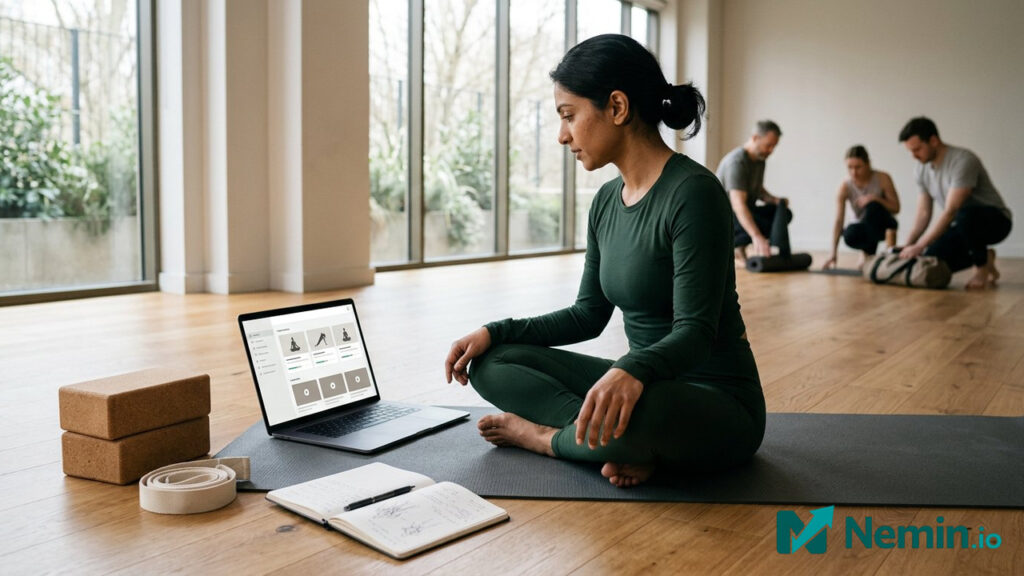
Choosing a Yoga Certification Program requires more than finding an online course and passing an assessment. Prospective instructors need to understand what a credential actually represents, what knowledge the training covers, whether employers or insurers will recognise it, and how it fits into the much broader education required to teach yoga safely and effectively. The American Sports and Fitness Association, commonly known as ASFA, offers an online yoga-related certification within its portfolio of fitness credentials. Its flexible digital format may appeal to fitness professionals seeking additional education, but anyone considering it should compare its current curriculum, prerequisites, renewal requirements and intended professional use with the expectations of the studios, employers, insurers or professional organisations where they hope to work.
Yoga instruction is a particularly important area in which to distinguish a certification exam from comprehensive teacher training. Teaching involves anatomy, communication, sequencing, observation, modification, professional boundaries and risk management, as well as practical experience working with people whose abilities and health circumstances vary.
An online certification can contribute to professional development, especially for someone who already works in fitness or wellness. It should not automatically be treated as equivalent to every other yoga teaching pathway simply because both use the term certification.
This guide examines ASFA’s Yoga Certification Program in that wider context. It focuses on the questions that matter when evaluating an online credential, while avoiding unsupported claims about guaranteed employment, income or universal industry acceptance.
What Is ASFA’s Yoga Certification Program?
ASFA is the American Sports and Fitness Association, an organisation offering online fitness certifications and continuing education across multiple specialisms. Its certification model is designed around remote study and assessment, making it accessible to professionals who prefer a self-paced format.
A Yoga Certification Program offered through this type of platform can provide structured study around yoga-related knowledge and its application within fitness instruction. Exact course names, materials, exam structures, prices and renewal policies can change, so applicants should verify current details directly with ASFA before enrolling.
The important question is not simply whether a certification exists. Prospective learners should determine what the credential qualifies them to demonstrate and whether that aligns with their intended teaching environment.
Who Might Consider an ASFA Yoga Certification Program?
An online yoga credential may appeal to personal trainers, group fitness instructors, wellness professionals and other practitioners who want to broaden their knowledge. It may also interest experienced yoga participants considering a move toward instruction.
These groups do not all begin from the same level. An established fitness professional may already understand anatomy, screening and client communication, while a new learner might need foundational education in all of these areas.
For that reason, the suitability of a Yoga Certification Program depends partly on what the learner already knows. Course length alone cannot determine professional readiness.
Understanding the Role of Online Certification
Online study provides flexibility because learners can often work through materials around employment, family and other commitments. It also makes specialist education available to people who do not live close to an appropriate training centre.
The limitation is that yoga is a physical teaching discipline. Written or online study cannot automatically reproduce every element of supervised practice, live feedback, teaching observation and hands-on experience.
A responsible learner should therefore identify any practical gaps and address them through additional education, mentoring or supervised experience when appropriate.
7 Benefits of Choosing a Yoga Certification Program
A carefully chosen program can provide structure to learning and help professionals organise knowledge that might otherwise be gathered from disconnected sources. It can also demonstrate that the learner has completed a defined assessment process.
Seven benefits are particularly relevant: flexible study, structured knowledge, professional development, expanded service possibilities, increased confidence with terminology, continuing education and a clearer pathway toward further training. These benefits depend on the individual course and should not be interpreted as guarantees of employment or professional status.
1. A Yoga Certification Program Can Offer Flexible Study
Online education can be attractive to working fitness professionals because it reduces the need to travel to fixed classroom sessions. Learners can generally organise study around their existing schedules, subject to any deadlines imposed by the provider.
Flexibility does not make the material effortless. Students still need enough time to understand concepts rather than rushing directly to an assessment.
When comparing programs, ask how long access to course materials lasts and whether there are limits on examination attempts or completion periods.
2. Structured Learning Creates a Clearer Framework
People can find enormous amounts of yoga information online, but random videos and articles do not necessarily form a coherent curriculum.
A Yoga Certification Program can organise material into a sequence, helping learners understand how topics relate to one another. This structure can be particularly useful when studying anatomy, movement principles and session design.
Before purchasing a course, review its syllabus carefully. A clear curriculum makes it easier to identify both what is covered and what still requires additional study.
3. Certification Can Support Continuing Professional Development
Fitness professionals often add specialist credentials as their careers develop. A yoga-related certification may complement existing personal training or group exercise qualifications.
Whether a particular credential counts toward formal continuing education requirements depends on the relevant employer, certification body or professional organisation.
Do not assume that every organisation will award continuing education credit for every program. Verify acceptance before enrolling if continuing education is your primary reason for taking the course.
4. It Can Broaden a Fitness Professional’s Knowledge
Yoga principles may complement other areas of fitness instruction, particularly around movement awareness, mobility, controlled breathing and structured bodyweight practice.
However, professionals should remain within their scope of competence. Completing one additional course does not qualify an instructor to diagnose injuries, provide medical treatment or make claims beyond their training.
A strong Yoga Certification Program should encourage appropriate professional boundaries rather than blur them.
5. Online Programs Can Reduce Geographic Barriers
A learner does not necessarily need to live near a major city to access online education. This is especially valuable for professionals in smaller communities or those with limited travel availability.
Geographic access should still be balanced with practical development. Learners may choose to combine online study with local classes, workshops or mentorship.
This blended approach can bring together digital convenience and practical observation.
6. Certification Can Encourage Professional Reflection
Studying for an assessment often makes experienced practitioners examine habits they previously took for granted.
Why is a particular movement included? What modification could be offered? How should instructions change for beginners? Which issues fall outside the instructor’s professional role?
A useful Yoga Certification Program encourages questions like these instead of treating yoga as a list of poses to memorise.
7. It Can Become One Stage in a Longer Education Pathway
Fitness education rarely ends with one certificate.
Professionals may later study specialist populations, anatomy, mobility, coaching methods or more extensive yoga teacher education. A certification can therefore function as a starting point or complementary qualification rather than a final destination.
This perspective helps learners approach education with realistic expectations.
What Should a Yoga Certification Program Teach?
Course content varies significantly between providers. Prospective students should examine the actual syllabus instead of choosing solely on price, convenience or marketing language.
A yoga-focused curriculum may address poses, terminology, sequencing, breathing practices, anatomy, safety and instructional principles. The depth given to each area matters.
A program that mentions anatomy in one short section is not necessarily equivalent to one that explores the subject in substantial detail.
Yoga Postures and Movement Principles
Learning the names of poses is only a beginning. Instructors need to understand how movements are performed, how instructions can be communicated and how individual differences influence execution.
Bodies vary in mobility, limb proportions, injury history and experience. One visual shape should not automatically become a universal standard for everyone.
The language of instruction should therefore support adaptation rather than force every participant toward an identical position.
Anatomy and Physiology
Anatomical education helps instructors understand joints, muscles, movement patterns and common limitations.
It also helps professionals recognise the boundaries of their expertise. Knowing basic anatomy is not the same as being qualified to diagnose musculoskeletal conditions.
When evaluating a Yoga Certification Program, inspect how much anatomy is included and whether the depth is appropriate for your intended role.
Breathing and Yoga Practice
Breath is an important element of many yoga practices, but techniques vary among traditions and teaching contexts.
Instructors should present practices responsibly and avoid unsupported medical claims. Participants with health conditions may require advice from qualified healthcare professionals before undertaking particular techniques.
A certification program should distinguish educational fitness instruction from healthcare treatment.
ASFA Yoga Certification Program and Online Learning
ASFA’s broader model is associated with online certification. For learners who prefer independent study, this can make professional development easier to fit around existing responsibilities.
Before registering, check the current course page for study materials, assessment rules, prerequisites, certification validity and renewal requirements. These details can change over time.
Independent study also requires self-discipline. Convenience is useful only when learners genuinely engage with the material.
Self-Paced Learning Advantages
Self-paced study allows learners to spend additional time on unfamiliar concepts rather than moving at the speed of a classroom group.
Experienced fitness professionals may progress quickly through familiar anatomy terminology while concentrating on yoga-specific subjects. Beginners may need substantially longer.
The objective should be comprehension rather than completing the Yoga Certification Program as quickly as possible.
Limitations of Fully Online Yoga Study
A digital course can test theoretical knowledge efficiently, but practical instruction includes skills that are difficult to evaluate through written assessment alone.
Teaching voice, demonstration, observation and real-time modification develop through practice. Working with actual participants also exposes instructors to questions and movement variations that may not appear in study materials.
Learners should consider how they will gain practical teaching experience if the selected course does not formally include it.
Yoga Certification Program Versus Yoga Teacher Training
These terms are sometimes used loosely, which can create confusion.
A short certification program may assess a defined body of knowledge, while a comprehensive teacher-training pathway may involve significantly more instructional hours, live teaching, philosophy, anatomy, practice and supervised development. Neither should be assumed equivalent without comparing the actual requirements.
The distinction becomes particularly important when an employer requires a particular type or duration of training.
| Training Consideration | Online Certification | Extensive Teacher Training |
|---|---|---|
| Study format | Often self-paced and remote | May be online, in person or hybrid |
| Practical teaching | Varies by provider | Commonly a substantial component |
| Assessment | Often knowledge-focused | May combine theory and practical assessment |
| Time commitment | Frequently shorter | Usually more extensive |
| Accessibility | High for remote learners | Depends on program structure |
| Cost | Often lower | Frequently higher due to greater instructional scope |
| Best use | Continuing education or complementary knowledge | Broader preparation for dedicated teaching |
| Recognition | Depends on employer and organisation | Also depends on specific credential and requirements |
Always compare specific programs instead of treating these categories as universally fixed.
Is the ASFA Yoga Certification Program Accredited?
Accreditation and certification terminology needs careful handling because several different types of recognition exist across education and fitness.
A certification provider may have relationships, approvals or recognition associated with particular organisations without being equivalent to an accredited university or a specialised yoga teacher-training registry. These distinctions matter.
Prospective students should review ASFA’s current accreditation or recognition statements directly and verify them with the relevant third party when recognition is important for employment or continuing education.
Verify Recognition Before Paying
Do not rely solely on the word accredited in advertisements or third-party articles.
Ask the organisation that matters to your career. If a gym is expected to employ you, ask that gym whether the certification is accepted. If an insurer requires a specific qualification, contact the insurer before purchasing the course.
This simple step can prevent expensive misunderstandings.
Yoga Certification Program Recognition Is Not Universal
The fitness and yoga industries do not operate under one worldwide credentialing system.
Requirements can vary among countries, states, facilities, insurers and professional organisations. A credential accepted for one position may not satisfy another organisation.
The safest approach is to work backwards from your intended professional role.
Who Can Enrol in a Yoga Certification Program?
Eligibility depends on the provider and individual course.
Some online certifications are designed for existing fitness professionals, while others may permit broader participation. Prospective learners should check age requirements, prerequisites and recommended prior knowledge on the current course page.
Meeting minimum enrolment requirements also does not necessarily mean a person is ready to teach independently.
Existing Fitness Professionals
Personal trainers and group fitness instructors may bring useful foundational knowledge into yoga education.
They may already understand exercise screening, communication, anatomy and basic programming. A Yoga Certification Program can then add a specialised layer to that existing professional foundation.
The exact scope of practice still depends on the professional’s full education and work environment.
Newcomers to Fitness Instruction
Someone without previous teaching experience should think carefully about the broader skills required to lead groups safely.
Studying yoga theory can be valuable, but classroom management, emergency procedures, participant communication and practical coaching also require development.
Additional foundational training may therefore be appropriate.
How Assessment May Work in a Yoga Certification Program
Online certification commonly uses digital assessment to evaluate whether students understand course material.
Question formats, passing requirements, retake rules and time limits vary by provider. These details should be confirmed directly with ASFA for its current Yoga Certification Program rather than relying on outdated third-party descriptions.
A passing score demonstrates successful completion of the defined assessment. It should not be interpreted as proof that an instructor has mastered every practical teaching situation.
Preparing for a Certification Exam
Study systematically rather than attempting to memorise isolated answers. Focus on understanding concepts and how they apply to real participants.
Useful preparation can include reviewing course materials, creating concise notes, revisiting anatomy, practising terminology and explaining concepts in your own words.
If you cannot explain a subject clearly without looking at the material, additional study may be worthwhile.
Safety Within a Yoga Certification Program
Safety should be central to any fitness education.
Yoga is often portrayed as universally gentle, but physical practices can still involve risks. Intensity, range of motion, balance demands and individual health circumstances all influence suitability.
Instructors should know when to modify, stop or refer a participant to an appropriately qualified healthcare professional.
Screening and Participant Communication
Before exercise begins, professionals should follow appropriate screening procedures for their setting.
Participants should be encouraged to communicate relevant concerns and avoid movements that cause problematic pain or symptoms.
A teacher should never pressure someone to reach a particular range of motion simply because others in the class can perform it.
Modifications Are Not One Size Fits All
A modification that helps one participant may not suit another.
Good instruction provides options without presenting them as medical treatment. Where a participant has a diagnosed injury, pregnancy-related considerations, significant medical conditions or post-operative restrictions, appropriate professional guidance may be necessary.
Yoga Certification Program Education Should Respect Scope of Practice
Yoga instructors are not automatically doctors, physiotherapists, dietitians or mental-health professionals.
A certification should not encourage professionals to make medical diagnoses or promise treatment outcomes outside their competence.
Respecting scope of practice strengthens professional credibility rather than limiting it.
Building a Career After a Yoga Certification Program
Completing certification is one part of developing a career. Instructors then need practical experience, professional relationships and an understanding of how potential employers evaluate qualifications.
Possible environments can include gyms, fitness studios, community programmes, wellness facilities and independent instruction, depending on local requirements and the instructor’s complete qualifications.
No credible Yoga Certification Program can guarantee employment.
Start With Practical Teaching Experience
New instructors may benefit from observing experienced teachers, practising class delivery and seeking constructive feedback.
Teaching family or friends informally is not a substitute for professional experience, but controlled practice can help develop verbal instruction and timing.
Where possible, mentorship from an experienced instructor can accelerate learning.
Build Professional Confidence Gradually
Confidence should come from competence rather than simply possessing a certificate.
Start with sessions that fit your knowledge and experience. Continue studying areas where you feel less prepared and maintain appropriate boundaries around complex participant needs.
Professional development becomes stronger when instructors remain willing to learn.
Yoga Certification Program Career Paths
Yoga-related education can complement several fitness and wellness roles.
The exact opportunities depend on qualifications, insurance, local requirements and employer expectations.
| Career Direction | How Yoga Knowledge May Contribute | Additional Considerations |
|---|---|---|
| Group fitness instructor | Adds yoga-inspired class options | Employer credential requirements |
| Personal trainer | Supports mobility and movement programming | Stay within training scope |
| Yoga instructor | Provides relevant subject knowledge | Practical teacher training may be expected |
| Wellness coach | Broadens movement awareness | Avoid medical or therapeutic claims |
| Online fitness instructor | Supports remote class development | Insurance and digital teaching considerations |
| Corporate wellness provider | Adds movement sessions to programmes | Client and venue requirements |
| Continuing education learner | Expands existing expertise | Verify professional education credits |
Career planning should begin with the requirements of the role rather than the title of the certificate.
Insurance After Completing a Yoga Certification Program
Professional liability insurance may be required or strongly advisable depending on where and how an instructor works.
Insurance providers can have specific qualification requirements. A course provider cannot necessarily determine whether an insurer will cover every graduate.
Contact potential insurers and explain the exact certification and services you intend to offer.
Employer Requirements Matter Too
A gym or studio may have its own minimum training standards independent of insurance requirements.
Some employers may accept a particular online certification as continuing education while requiring more comprehensive training for instructors leading dedicated yoga classes.
Verify these distinctions before relying on one credential for a career change.
Cost of a Yoga Certification Program
Online certification prices vary according to provider, included materials, examination structure and additional services.
ASFA may change pricing, offer promotions or package certifications differently over time. For that reason, fixed prices in evergreen articles can quickly become inaccurate.
Check the official course page for the current amount and exactly what the purchase includes.
Look Beyond the Headline Price
The lowest upfront cost is not automatically the best value.
| Cost Consideration | What to Verify |
|---|---|
| Course access | How long materials remain available |
| Study resources | Whether materials are included or separate |
| Examination | Whether assessment is included |
| Retakes | Whether additional attempts cost extra |
| Certificate | Digital or physical certificate availability |
| Renewal | Frequency and cost of recertification |
| Continuing education | Whether further credits are required |
| Insurance | Separate professional expense |
| Practical development | Potential workshops or mentoring |
| Additional training | Costs of broader teacher education if needed |
Evaluating total professional cost gives a more realistic picture than comparing enrolment fees alone.
How Long Does a Yoga Certification Program Take?
Completion time depends on the program and learner.
Self-paced online courses may allow experienced students to progress faster than scheduled classroom training. That flexibility should not encourage learners to rush through material simply to obtain a credential quickly.
Professional education is more useful when knowledge can be retained and applied.
Fast Completion Does Not Equal Mastery
Someone may be able to pass an online examination after concentrated study, but practical coaching skills develop through repetition and experience.
The question should therefore be not only “How quickly can I finish?” but also “What will I be prepared to do after I finish?”
That distinction is particularly important in a movement-based profession.
Continuing Education After a Yoga Certification Program
Strong instructors keep developing after initial certification.
Continuing education can include anatomy, coaching, accessibility, older-adult fitness, prenatal considerations, mobility and other areas relevant to the instructor’s work.
Choose additional education according to the people you actually teach rather than collecting certificates without a clear purpose.
Recertification Requirements
Certification organisations may require credentials to be renewed according to their policies.
Requirements can include renewal fees, continuing education or other conditions. Policies may change, so check the latest ASFA information rather than relying on older articles.
Record completion dates and requirements so renewal does not become an unexpected administrative problem.
Yoga Certification Program and Professional Ethics
Ethics should be part of professional fitness practice even when it is not the most visible part of a course.
Instructors hold positions of trust. They need appropriate boundaries, respectful communication, responsible marketing and careful handling of participant information.
Physical adjustments also require particular sensitivity and appropriate consent practices.
Avoid Unrealistic Wellness Claims
Yoga can be meaningful to many participants, but instructors should avoid promising that particular practices will cure diseases or replace medical care.
Claims should reflect evidence and professional scope.
A Yoga Certification Program should reinforce responsible communication so instructors can market their services without exaggeration.
Online Versus In-Person Yoga Certification Program Options
Neither format is universally best.
Online learning offers convenience and flexibility, while in-person education can provide immediate practical feedback and live interaction. Hybrid programs can combine elements of both.
Your choice should reflect existing experience and career goals.
When Online Study May Work Well
An online Yoga Certification Program may be particularly useful for an existing fitness professional who understands foundational coaching and wants structured specialist education.
It can also work for learners who need schedule flexibility or live far from training centres.
Supplementary practical development can strengthen the learning experience.
When In-Person Training May Be Valuable
Beginners may benefit significantly from supervised teaching and immediate feedback.
In-person instruction can make it easier for educators to observe demonstration, communication and class management.
Prospective dedicated yoga teachers should compare comprehensive practical training pathways before deciding that a shorter online credential alone meets their goals.
How to Compare ASFA With Other Yoga Certification Programs
Avoid comparing providers only by price or advertised completion time.
Create a list of professional requirements and evaluate each program against those criteria. Recognition, curriculum, assessment quality and practical education are more meaningful than marketing slogans.
The comparison should reflect where you intend to work.
| Comparison Factor | Question to Ask |
|---|---|
| Curriculum | Does it cover the knowledge I need? |
| Practical training | Will my teaching skills be observed or assessed? |
| Recognition | Will my intended employer accept it? |
| Insurance | Does it satisfy potential insurer requirements? |
| Study format | Does online, in-person or hybrid study suit me? |
| Assessment | How is competence evaluated? |
| Continuing education | What happens after certification? |
| Renewal | How is the credential maintained? |
| Support | Can learners obtain help with course questions? |
| Total cost | What expenses exist beyond enrolment? |
This approach helps separate genuine suitability from attractive advertising.
Is ASFA’s Yoga Certification Program Worth It?
The answer depends on what you expect the program to accomplish.
For an existing fitness professional seeking flexible, yoga-focused continuing education, an online ASFA credential may potentially fit well. For someone seeking comprehensive preparation as a dedicated yoga teacher, it is sensible to compare the course with broader teacher-training pathways and the requirements of intended employers.
Value is therefore individual rather than universal.
Define Your Goal Before Enrolling
Write down what you want to do after certification. If the goal is employment at a particular studio, ask that studio what credentials it requires before enrolling.
If the goal is expanding personal-training knowledge, review the curriculum to determine whether it addresses the subjects you want to develop.
A clear outcome makes a Yoga Certification Program much easier to evaluate.
Mistakes to Avoid When Choosing a Yoga Certification Program
One common mistake is assuming that every certification with a similar title has the same curriculum or industry recognition.
Another is selecting solely on speed. Convenient education can still be valuable, but quick completion should not become more important than genuine understanding.
Prospective instructors should also avoid assuming certification automatically provides insurance, employment or permission to provide healthcare services.
Do Your Due Diligence
Before paying for a Yoga Certification Program, verify current information directly.
Check the provider’s official course details, examine employer expectations and contact insurers where appropriate. If a third-party accreditation or approval is important, confirm it with the organisation supposedly providing that recognition.
These checks require little time compared with the consequences of purchasing a credential that does not meet your intended needs.
Getting the Most From a Yoga Certification Program
Treat the program as education rather than simply a test.
Take notes, practise explaining concepts aloud and connect theoretical material with your own movement experience. Where safe and appropriate, observe how experienced teachers communicate instructions and offer options.
Questions that arise during study can become useful areas for further professional development.
Create a Post-Certification Learning Plan
Before completing the course, decide what comes next.
You might pursue supervised teaching practice, additional anatomy education, mentorship or more extensive yoga teacher training. Existing professionals may instead integrate relevant knowledge carefully into their current fitness work.
A Yoga Certification Program delivers greater long-term value when it becomes part of an intentional education pathway.
FAQ’s
What is ASFA’s Yoga Certification Program?
ASFA offers online fitness education that includes yoga-focused certification options. Prospective learners should check ASFA’s official website for the current course title, curriculum, assessment structure and certification policies.
Is the Yoga Certification Program completely online?
ASFA is known for online fitness certification, but applicants should confirm the current format and requirements directly on the specific Yoga Certification Program page before enrolling.
Can a Yoga Certification Program make me a yoga instructor?
A certification can demonstrate completion of specific education, but teaching requirements vary by employer, insurer and location. Some positions may expect broader practical teacher training.
How long does a Yoga Certification Program take?
Completion time depends on the provider, program structure and learner’s existing knowledge. Self-paced study offers flexibility, but students should prioritise competence rather than finishing as quickly as possible.
Is a Yoga Certification Program useful for personal trainers?
It can be useful for trainers seeking additional yoga-related knowledge, provided the education complements their existing qualifications and they continue to work within their professional scope.
Should I verify a Yoga Certification Program before enrolling?
Yes. Check the curriculum, assessment, current pricing, renewal policies, recognition and practical training, then confirm acceptance with relevant employers or insurers when professional recognition is important.
Conclusion
A Yoga Certification Program can be a useful addition to a fitness professional’s education when its curriculum and intended purpose match clear career goals. ASFA’s online approach may appeal particularly to learners who value flexible study, but flexibility should be evaluated alongside content depth, practical experience, professional recognition and ongoing education.
Before choosing ASFA or another Yoga Certification Program, start with the role you eventually want to perform and work backwards from its requirements. Verify current course details, check employer and insurance expectations, and treat certification as one stage in continued professional development. That approach provides a stronger foundation for knowledgeable, responsible and confident yoga instruction.