
In the competitive world of modern furniture manufacturing and architectural millwork, the structural integrity of an entire cabinet, bed frame, or modular office desk often...
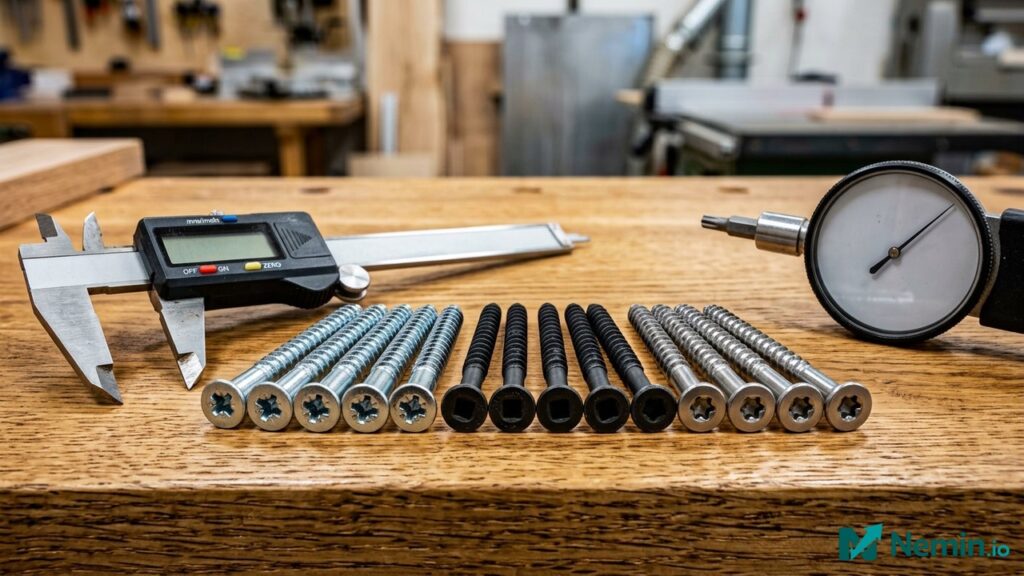
In the competitive world of modern furniture manufacturing and architectural millwork, the structural integrity of an entire cabinet, bed frame, or modular office desk often hinges on components measuring mere millimeters in diameter. High-performance furniture screws serve as the invisible backbone of woodworking, providing the clamping force, shear resistance, and dynamic joint stability required to withstand years of everyday mechanical stress. However, as global supply chains face cost pressures, sub-standard fasteners made from brittle, un-hardened scrap metals with defective thread profiles have flooded commercial markets.
When low-grade furniture screws fail, the consequences are severe: split wooden panels, stripped drive recesses on assembly lines, and wobbly furniture joints that degrade consumer brand trust. Establishing rigorous quality control for furniture screws across metallurgy, thread geometry engineering, heat treatment, and anti-corrosion surface coatings is essential. By understanding the mechanical science behind precision fasteners, commercial manufacturers and bespoke artisans can ensure that every furniture joint delivers uncompromising safety, strength, and decades of flawless performance.
What Are Furniture Screws and Why Is Quality Control Vital in Cabinetry?
Furniture screws are precision-engineered mechanical threaded fasteners designed specifically to join solid wood, plywood, medium-density fiberboard (MDF), and particle board with maximum pull-out and shear resistance.
| Fastener Anatomy | Engineering Specification | Functional Role in Furniture Joints |
|---|---|---|
| Drive Recess | Torx (TX), Pozidriv (PZ), or Robertson (Square) | Transfers rotational torque from power tools without slipping or cam-out |
| Head Architecture | Flat countersunk, pan head, washer head, or wafer | Sits flush with timber or clamps sheet surfaces without crushing wood fibers |
| Smooth Unthreaded Shank | Calibrated upper body matching pilot hole size | Pulls adjacent wood panels tightly together without “jacking” (thread bridging) |
| Thread Geometry | Deep, wide-pitch coarse threads with sharp crests | Bites deep into wood grain or porous core of particle board to resist pull-out |
| Gimlet / Slash Point | Type 17 self-drilling cutting flute or needle point | Slices wood grain cleanly upon entry, eliminating pre-drilling and panel splitting |
In modern woodworking assembly, choosing the right furniture screws is essential because wood products present distinct mechanical challenges. Unlike homogeneous steel, engineered wood materials like particle board and MDF consist of compressed wood particles and synthetic resin binders with low internal bond strength.
Unlike specialized furniture screws, generic drywall screws feature fine threads that tear through particle board fibers, offering virtually zero holding power. In contrast, specialized furniture screws feature wide thread diameters, deep thread depths, and heavy-gauge shanks that maximize thread engagement, ensuring that joined panels remain rigid under dynamic racking loads.
What Are the Main Types of Furniture Screws Used in Modern Woodworking?
When selecting furniture screws, different furniture construction methods, and wood substrates demand specialized fastener profiles.
| Furniture Screw Type | Defining Design Characteristics | Best Suited Wood Substrate | Primary Assembly Application |
|---|---|---|---|
| 1. Confirmat Screws | Stepped unthreaded shank, blunt tip, massive core | Particle board, MDF, melamine-faced chipboard | Ready-to-assemble (RTA) carcass cabinetry, European box construction |
| 2. Pocket Hole Screws | Washer head, self-tapping auger tip, fine/coarse | Hardwood face frames, softwood panels | Concealed 15-degree angled pocket joints, table aprons, face frames |
| 3. Euro Screws (Hinge Screws) | 5mm/6.3mm wide thread, flat countersunk head | 32mm System pre-drilled cabinetry holes | Mounting concealed European cup hinges and ball-bearing drawer slides |
| 4. Connecting Bolts & Sleeves | M4/M6 machine thread with mating female sleeve | Plywood, solid timber, particle board | Modular sectional sofa connections, architectural acoustic paneling |
| 5. Twinfast Wood Screws | Dual parallel threads, rapid driving pitch | Softwoods, medium-density timber | Rapid general furniture assembly, frame substructures, structural blocking |
| 6. Universal Torx Wood Screws | Serrated thread ribs, Type 17 slash, milling ribs | Hardwoods, dense exotic timbers, plywood | High-end custom bespoke cabinetry, architectural millwork, outdoor furniture |
1. Confirmat Furniture Screws: The Cabinetmaker’s Workhorse
Engineered specifically for 32mm European cabinet manufacturing, Confirmat furniture screws act as heavy-duty steel dowels that also provide clamping pressure. The oversized shank and deep, wide-pitch threads grip porous particle board cores, delivering exceptional right-angle joint stiffness that resists lateral racking forces.
2. Pocket Hole Furniture Screws: Flawless Face Frames
Pocket hole joinery utilizes specialized washer-head furniture screws driven at a 15-degree angle. The flat bottom of the washer head seats firmly against the flat pocket ledge without wedging, preventing the screw from over-penetrating and splitting the delicate wood joint.
How Thread Geometry, Pitch, and Shank Diameter Affect Holding Power
The mechanical holding strength of furniture screws in wood and composite substrates and composite boards is governed by the volume of compressed timber fibers captured between adjacent thread crests.
| Substrate Material | Recommended Thread Type | Thread Pitch & Depth Rule | Primary Mechanical Objective |
|---|---|---|---|
| MDF & Particle Board | Extra-Coarse Deep Thread (Wide Pitch) | Wide spacing between threads (2.5–3.5mm) | Captures loose core particles without stripping out |
| Dense Hardwoods (Oak, Maple) | Fine Thread (Narrow Pitch) | Tight thread spacing (1.2–1.8mm) | Pre-drilled pilot hole; prevents binding and head snapping |
| Softwoods (Pine, Fir, Cedar) | Coarse Aggressive Thread | Deep thread height with sharp 60-degree crest | Compresses soft wood tracheids to create high friction |
| Plywood (Veneer Core) | Twin-Lead / Hi-Lo Thread | Alternating high and low thread heights | Grips multiple cross-laminated veneer layers cleanly |
1. The Physics of Pull-Out Resistance
The ultimate pull-out force (Fmax) of furniture screws is determined by the shear strength of the wood substrate multiplied by the cylindrical surface area defined by the outer thread diameter (D) and penetration depth (L).
Selecting furniture screws with deep, razor-sharp thread profiles increases the effective shear cylinder area, allowing a short 30mm screw to achieve higher pull-out resistance than a smooth 50mm generic fastener.
2. The Type 17 Slash Point: Eliminating Panel Splitting
When driving furniture screws close to the edges of delicate hardwood or brittle veneered panels, hydraulic wedging forces naturally split the wood grain. Engineered furniture screws incorporate a Type 17 auger slash point—a precision-milled notch at the tip that cuts and evacuates wood fibers like a miniature drill bit, enabling fast driving with zero splitting.
Comprehensive Comparison: Confirmat vs. Pocket Hole vs. Generic Drywall Screws
Evaluating mechanical performance metrics illustrates why specialized furniture screws are mandatory for structural woodworking.
| Fastener Metric | Heavy-Duty Confirmat Screws | Precision Pocket Hole Screws | Low-Cost Generic Drywall Screws |
|---|---|---|---|
| Steel Metallurgy | C1022A Case-Hardened Carbon Steel | C1022A Heat-Treated Alloy Steel | Recycled low-grade brittle carbon wire |
| Tensile Core Strength | Maximum (Tough, ductile core resists shear) | High (Engineered for axial clamping) | Very Low (Snaps under minor lateral shear) |
| Head Pull-Through Resistance | Exceptional (Large diameter head/collar) | Maximum (Flat-bottom washer head) | Poor (Bugle head countersinks and sinks deep) |
| MDF / Chipboard Holding | Industry Gold Standard (5x hold of drywall) | Moderate to High | Unusable (Strips core after 2 rotations) |
| Drive System Efficiency | 4mm Hex / Pozidriv / Torx | #2 Robertson Square / Torx TX20 | Bugle Phillips (High cam-out risk) |
| Corrosion Resistance | 240–480h Salt Spray Zinc-Nickel | 500h+ Blue Kote / Zinc Phosphate | Basic 24h black phosphate (Rusts quickly) |
Why Drywall Screws Must Never Be Used in Furniture
While drywall screws are brittle, structural furniture screws undergo controlled tempering, case-hardened wire designed exclusively to hold lightweight gypsum board to soft timber studs. When subjected to lateral shear forces, low-grade screws fail where furniture screws excel—such as someone sitting on a bed frame or leaning against a bookcase—drywall screws snap violently at the neck with zero warning. Specialized furniture screws undergo controlled tempering to ensure the core remains ductile and bend-resistant under dynamic loads.
Metallurgical Quality Control: Core Hardness, Ductility, and Anti-Corrosion
The long-term reliability of furniture screws depends entirely on rigorous metallurgical processing during wire drawing, cold-heading, thread-rolling, and heat treatment.
| Metallurgical Property | Industry Testing Standard | Quality Control Target Specification | Structural Failure If Sub-Standard |
|---|---|---|---|
| Raw Material Steel Grade | Spectrographic Chemical Analysis | SAE 1022A / 10B21 Boron Carbon Steel | Weak tensile strength, inconsistent hardening |
| Surface Case Hardness | ASTM E384 Microhardness (Vickers) | HV 450 to HV 750 (Rockwell HRC 45–55) | Drive head strips out; threads crush upon driving |
| Core Ductility Hardness | ASTM E18 Core Hardness (Rockwell) | HV 270 to HV 390 (Rockwell HRC 28–38) | Screws become glass-brittle and snap under shear |
| Bending Deflection Angle | ISO 10666 Mechanical Bend Test | Must bend 15° to 45° without fracturing | Immediate head snapping during wood movement |
| Corrosion Resistance | ASTM B117 Neutral Salt Spray (NSS) | 96h (Indoor Zinc) to 500h+ (Outdoor Zinc-Ni) | Unsightly surface rust, chemical wood staining |
1. The Delicate Balance of Case Hardening and Core Ductility
Proper heat treatment during the manufacturing of furniture screws requires a two-step metallurgical process:
- Carburizing / Carbonitriding: Diffuses carbon into the outer surface to create a razor-hard skin (HV 550+), ensuring the sharp threads cut easily into hard wood fibers.
- Controlled Tempering: Re-heats the fastener to soften the internal core (HRC 32), creating a flexible, shock-absorbing steel core that bends under heavy loads rather than snapping.
2. High-Performance Surface Coatings
In everyday environments, furniture screws are exposed to indoor humidity, ambient cleaning chemicals, and natural wood acids (such as tannic acid in oak). Premium furniture screws are treated with advanced protective finishes:
- Yellow / Clear Trivalent Zinc: Eco-friendly, RoHS-compliant plating providing 96 to 120 hours of salt spray protection.
- Zinc-Nickel Alloy Plating: Provides over 480 hours of corrosion resistance, ideal for kitchen and bathroom cabinetry.
- Black Oxide & Black Phosphate: Non-reflective architectural finishes that blend seamlessly into dark stained timber and metal furniture frames.
Drive System Engineering: Why Torx and Pozidriv Outperform Phillips
The mechanical interface between the power tool driver bit and the screw recess dictates assembly line speed, tool wear, and operator ergonomics.
| Drive Recess Profile | Cam-Out Tendency | Torque Transmission Efficiency | Operator Ergonomics | Best Suited Woodworking Application |
|---|---|---|---|---|
| Torx / Star Drive (TX) | Zero (Vertical parallel sidewalls) | 100% (Direct mechanical lock) | Maximum (Requires zero downward pressure) | High-speed automated assembly lines, custom joinery |
| Pozidriv (PZ) | Low (Parallel ribs prevent cam-out) | 85% to 90% High Torque Transfer | Excellent (Deep, stable bit engagement) | European 32mm system cabinetry, Confirmat screws |
| Robertson (Square) | Zero (Tapered square wedge fit) | 90% to 95% High Torque Transfer | Excellent (Screw sticks to bit for one-handed use) | Pocket hole joinery, American cabinet face frames |
| Legacy Phillips (PH) | Extreme (Angled walls push bit outward) | Low to Moderate (Requires heavy push) | Poor (High operator fatigue, cam-out damage) | Outdated legacy hardware; avoid in modern production |
The Costly Plague of Driver “Cam-Out”
When driving furniture screws, the traditional Phillips drive was designed in the 1930s to slip out (cam-out) when torque exceeded limits, preventing over-tightening on early assembly lines. In modern furniture manufacturing, cam-out is a disaster: it strips the screw recess, damages pre-finished melamine surfaces, breaks expensive driver bits, and causes repetitive strain injury for factory workers.
Modern quality furniture screws utilize Torx or Pozidriv systems, allowing direct, slip-free torque transfer that speeds up assembly and extends bit lifespan by 500 percent.
Quality Control Testing Protocols for Factory Auditing of Furniture Screws
Professional cabinetmakers and hardware importers enforce quality control for furniture screws through rigorous testing protocols to audit fastener shipments before they reach assembly lines.
| Quality Control Test | Laboratory Equipment / Method | Testing Objective | Mandatory Pass/Fail Threshold |
|---|---|---|---|
| 1. Drive Torsional Strength | Digital Torsional Breaking Test Rig | Measures rotational torque required to snap shaft | Must exceed minimum breaking torque per DIN 7504 |
| 2. Wood Driving Performance | Automated Timber Driving Speed Rig | Measures time and insertion torque into standard timber | Drives flush into hardwood without stalling or stripping |
| 3. Dimensional Optical Gauging | Automated 360-degree Laser Sorting Machines | Checks shank diameter, thread pitch, and concentricity | Zero dimensional deviations beyond ±0.05mm tolerance |
| 4. Hydrogen Embrittlement Check | Extended Clamping Stress Test (24–48 Hours) | Detects post-plating trapped atomic hydrogen | Fasteners remain fully clamped under load with zero heads popping |
| 5. Coating Thickness Audit | X-Ray Fluorescence (XRF) Analyzer | Measures plating depth in micrometers (µm) | Minimum 5 to 8 µm uniform plating thickness |
- Step 1: Automated Optical Sorting: Leading manufacturing plants audit 100 percent of finished furniture screws through high-speed rotary glass tables equipped with optical laser vision cameras, ejecting defective fasteners with bent shanks, clogged drive recesses, or incomplete threads at speeds of 1,000 parts per minute.
- Step 2: Destructive Torsion and Drive Audits: Technicians audit batches of furniture screws by driving them into calibrated timber blocks, driving them into calibrated dense timber blocks while recording insertion speed, torque curve, and head deflection to guarantee mechanical consistency.
5 Common Fastening Mistakes and How to Avoid Them
When installing furniture screws, avoiding these common fastening errors ensures your furniture assemblies maintain maximum structural strength.
| Fastening Mistake | Underlying Cause | Consequence to Furniture | Correct Engineering Practice |
|---|---|---|---|
| 1. Jacking / Thread Bridging | Using fully threaded screws across two wood panels | Leaves permanent gap between joined panels | Use partially threaded screws with smooth upper shank |
| 2. Over-Torquing on Drill Clutches | Using high drill clutch settings on soft MDF | Strips internal wood core; screw spins loosely | Calibrate drill clutch to low/medium torque settings |
| 3. Omission of Pilot Holes in Hardwood | Driving thick screws into dense oak or maple | Snaps screw heads or splits expensive timber | Drill pilot hole matching inner root core diameter |
| 4. Using Incorrect Driver Bits | Using a Phillips bit in a Pozidriv screw head | Strips drive recess immediately upon driving | Always match PZ bits to PZ screws, and PH to PH |
| 5. Misaligned Pocket Hole Angles | Drilling pocket holes steeper than 15 degrees | Screw exits the side of the adjoining face frame | Use precision pocket hole jigs locked at 15 degrees |
Frequently Asked Questions
What makes specialized furniture screws different from standard wood screws?
Furniture screws feature specialized thread profiles (wide pitch and deep thread depth), unthreaded upper shanks to eliminate jacking, and modern non-slip drive recesses like Torx and Pozidriv tailored for engineered wood and cabinetry.
Why do Confirmat furniture screws provide superior holding in particle board and MDF?
Confirmat furniture screws have large shank diameters and deep, widely spaced threads that act as steel dowels, gripping the loose internal core of composite boards without crumbling the surrounding material.
How do I prevent stripped heads when driving furniture screws during assembly?
Prevent stripping by using furniture screws with Torx or Pozidriv drive systems, matching your driver bit size exactly, and setting your power drill clutch to an appropriate torque setting.
Do I need to pre-drill pilot holes when installing modern furniture screws?
Softwoods and composite boards often do not require pilot holes if using furniture screws with Type 17 slash points; however, dense hardwoods (such as oak, ash, and walnut) always require pilot holes to prevent splitting and head snapping.
What causes furniture screws to snap when driven into dense wood?
Screws snap due to brittle core metallurgy from improper heat treatment, lack of a pilot hole in dense hardwood, or excessive driving torque from impact drivers.
How are commercial furniture screws protected against rust and corrosion?
High-grade furniture screws receive electroplated zinc, zinc-nickel alloy, or black oxide surface coatings that pass rigorous 96- to 480-hour neutral salt spray (ASTM B117) corrosion tests.
Conclusion
In the demanding craft of modern cabinetry and commercial furniture manufacturing, the structural reliability of every joint is fundamentally defined by the quality of the fasteners holding it together. Investing in precision-engineered furniture screws—built from high-grade case-hardened carbon steel, engineered with deep-cut thread profiles, and protected by advanced anti-corrosion coatings—is the single most effective way to prevent joint loosening, split panels, and costly structural failures.
By establishing rigorous factory quality control benchmarks, selecting the right screw profiles for specific wood substrates, and utilizing slip-free Torx and Pozidriv drive systems, manufacturers and woodworkers can elevate assembly line efficiency while guaranteeing product longevity. Choose certified, high-tensile furniture screws today, audit your fastening specifications with care, and build furniture that stands the test of time with unshakeable strength and structural pride.