
Progressive overload in resistance training requires consistently challenging your muscular system with heavier loads and higher training volumes. However, during heavy pulling movements such as...
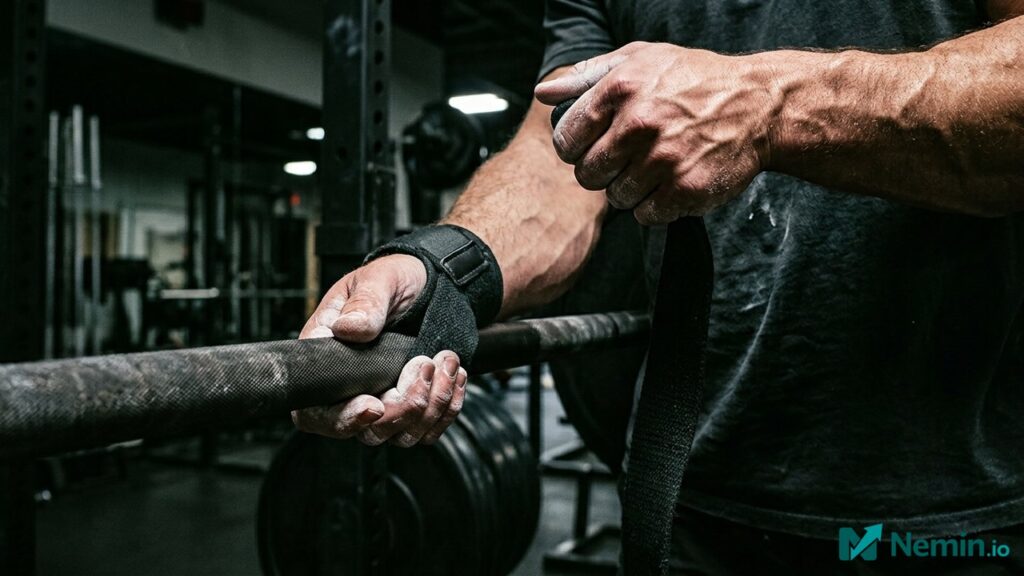
Progressive overload in resistance training requires consistently challenging your muscular system with heavier loads and higher training volumes. However, during heavy pulling movements such as deadlifts, barbell rows, and Romanian deadlifts, the relatively small flexor muscles in your hands and forearms frequently fatigue long before your powerful prime movers—the lats, glutes, and hamstrings—reach their true muscular stimulus. Deploying gym lifting straps provides a safe, mechanical reinforcement that locks your hands to the barbell or dumbbell, transferring load directly to your wrists and forearms. This allows athletes to train target muscle groups to genuine fatigue without losing control of the barbell due to sweaty palms or grip exhaustion.
What Are Gym Lifting Straps and How Do They Work?
Gym lifting straps are reinforced fabric or leather bands that wrap around an athlete’s wrists and loop tightly around a barbell, dumbbell, or cable attachment to eliminate grip friction failure.
| Connection Component | Functional Role | Biomechanical Benefit |
|---|---|---|
| Wrist Loop Cuff | Anchors strap securely around distal radius and ulna | Transfers load directly to the wrist structure |
| Reinforced Strap Body | Extends downward along the palm | Creates a high-friction bridge between hand and bar |
| Barbell Wrap Tail | Coils tightly against steel knurling | Offloads mechanical shear force from finger flexors |
When you pull a heavy weight, gravity constantly attempts to roll the bar out of your fingers. The friction created by wrapping gym lifting straps around the knurled steel bar counteracts this rotational torque.
Instead of relying solely on finger flexion force (the flexor digitorum superficialis and profundus muscles), the tensile strength of the strap distributes the weight across the entire wrist structure. According to research published by the National Strength and Conditioning Association (NSCA), mechanical grip aids reduce peak hand fatigue by up to 60 percent during multi-rep pulling sets, enabling significantly higher mechanical tension on the targeted back musculature.
When Is the Right Time to Start Using Gym Lifting Straps?
The right time to start using gym lifting straps is when your grip endurance or hand fatigue directly limits your ability to overload your primary pulling muscles on working sets.
Beginners often struggle with knowing whether they are ready for lifting accessories. Introducing gym lifting straps too early can slow down foundational grip development, while avoiding them entirely creates an artificial ceiling on full-body strength progression.
| Lifter Level | Primary Indicator for Using Gym Lifting Straps | Recommended Usage Frequency |
|---|---|---|
| Novice (0–6 Months) | Only if hand pain or torn calluses prevent safe exercise execution | Rare (Focus on raw grip development) |
| Early Intermediate (6–18 Months) | When grip gives out on deadlifts or rows before back/legs fatigue | Moderate (Last 1–2 heavy working sets) |
| Advanced Intermediate (18+ Months) | High-volume hypertrophy blocks, heavy Romanian deadlifts, shrugs | Regular (All top sets and drop sets) |
| Competitive Strength Athlete | Overload training, heavy rack pulls, high-rep accessory pulling | Strategic (Programmed per training block) |
The 4 Definitive Signs You Need Gym Lifting Straps
- Your target muscles are not fatigued, but your fingers slip open: If your lats, traps, or hamstrings feel fresh after a set of rows or Romanian deadlifts, but your fingers are unrolling from the bar, your grip is acting as a bottleneck.
- You are forced to rush through your reps: When you cut your range of motion short or accelerate your repetitions simply to re-rack the barbell before dropping it, gym lifting straps restore controlled eccentric tempos.
- You experience torn calluses or skin irritation: Heavy knurling can shear epidermal layers during high-volume training cycles. Utilizing gym lifting straps reduces direct friction against delicate hand calluses.
- Asymmetrical spinal twisting from mixed grip: Relying constantly on an alternate (over-under) grip can cause subtle rotational asymmetries and bicep tendon strain on the supinated arm. Gym lifting straps allow a balanced double overhand grip on heavy pulls.
Do Gym Lifting Straps Weaken Your Natural Grip Strength?
No, gym lifting straps do not weaken your natural grip strength if you use them strategically and continue performing warm-up sets and direct grip training without assistance.
The belief that using gym lifting straps automatically creates weak forearms is a persistent fitness myth. In practical strength training, your grip strength and your pulling strength progress at different rates. A lifter’s back and hip extensors can easily adapt to pull 400 pounds, whereas the human hand rarely possesses the crushing grip required to hold that same weight for 8 continuous repetitions without specialized grip training.
How to Maintain Maximum Raw Grip Strength While Using Straps
To ensure that your raw grip strength continues to develop alongside your major lifts, implement the three-tier progression model:
| Training Phase | Load Intensity | Grip Method | Primary Physiological Objective |
|---|---|---|---|
| Warm-Up Sets | 50% to 75% 1RM | Bare-hand double overhand grip | Builds foundational grip endurance and tendon strength |
| Top Working Sets | 80% or greater 1RM | Deploy gym lifting straps | Maximizes motor unit recruitment in prime movers |
| Post-Workout Finisher | Bodyweight or heavy loads | Farmer carries and plate pinches | Directly isolates forearm flexors and crushing grip |
- Perform all warm-up sets bare-handed: Use a double overhand grip without gym lifting straps for all warm-up sets up to 70–80 percent of your working weight.
- Reserve Straps for Top Sets: Put on your gym lifting straps only when you reach your heaviest compound work or high-repetition failure sets.
- Incorporate direct grip work: Perform dedicated forearm exercises at the end of your workouts, such as heavy farmer walks, plate pinches, dead hangs, and wrist curls.
The 3 Main Types of Gym Lifting Straps: In-Depth Comparison
Choosing the best style of gym lifting straps depends on your specific training discipline, whether you prioritize maximum holding security, fast bar release, or all-around versatility.
| Strap Style | Design Structure | Security Level | Bar Release Speed | Best Suited For |
|---|---|---|---|---|
| Lasso Straps | Loop around wrist with long tail | High | Moderate (Manual unwind) | Bodybuilding, general gym training, dumbbell rows |
| Figure-8 Straps | Dual loops that wrap under bar | Maximum (Locked-in) | Slow (Hands bound to bar) | Heavy powerlifting deadlifts, strongman events |
| Single Loop (Olympic) | Short, sewn closed loop | Moderate | Instant (Open hand drop) | Snatch, clean and jerk, dynamic Olympic weightlifting |
1. Lasso Gym Lifting Straps (Best for General Fitness and Bodybuilding)
Lasso straps are the most common and versatile gym lifting straps available. They feature a sewn loop at one end through which the free tail threads, creating an adjustable wrist cuff that stays firmly anchored during setup.
- Pros: Highly adjustable for any wrist circumference; long tail can wrap around the barbell two to three times for exceptional holding power; works equally well on barbells, dumbbells, and cable attachments.
- Cons: Requires two hands to wrap the second strap around the bar; manual unwind required to release.
2. Figure-8 Gym Lifting Straps (Best for Heavy Deadlifts and Strongman)
Figure-8 straps feature two large sewn loops resembling the number eight. The lifter slides their hand through one loop, passes the strap underneath the barbell, and slides their hand through the second loop before gripping the bar.
- Pros: Virtually impossible for the barbell to slip out of your hands; zero setup complexity; requires no rotational wrapping around the barbell knurling.
- Cons: Completely locks your hands to the barbell, making emergency drops impossible; cannot be used for Olympic lifts; bulky design does not fit standard dumbbell handles easily.
3. Single Loop / Olympic Gym Lifting Straps (Best for Weightlifting)
Single loop straps consist of a short, continuous fabric loop sewn flat at the ends. Designed specifically for competitive Olympic lifters, these gym lifting straps allow rapid bar release during failed snatches or cleans.
- Pros: Releases the barbell instantly when the lifter opens their fingers; prevents wrist and shoulder injuries during missed overhead lifts; compact and lightweight.
- Cons: Lower holding tension compared to lasso and figure-8 designs; requires precise hand positioning.
Material Guide: Cotton vs. Nylon vs. Leather Gym Lifting Straps
The material composition of your gym lifting straps determines their durability, skin comfort, sweat absorption, and tactile grip feeling against barbell knurling.
| Material | Durability | Skin Comfort | Sweat Absorption | Grip Bite on Bar Knurling | Lifespan |
|---|---|---|---|---|---|
| Cotton | Moderate | High (Soft on wrists) | Excellent | High | 1–3 Years |
| Nylon | Very High | Moderate (Can chafe skin) | Poor | Moderate | 3–5+ Years |
| Leather | Extremely High | High (Once broken in) | Moderate | Exceptional | 5–10+ Years |
1. Cotton Gym Lifting Straps
Cotton is the most popular choice for beginner and intermediate lifters. Cotton fibers provide immediate softness against the skin and absorb sweat effectively during intense workouts.
- Characteristics: Highly pliable, comfortable straight out of the package, excellent friction on standard gym knurling.
- Best Use Case: Athletes with sensitive skin or those training in warm gyms who need reliable moisture absorption.
2. Nylon Gym Lifting Straps
Nylon gym lifting straps are woven with high-density synthetic fibers engineered to withstand massive tensile loads exceeding 1,000 pounds without stretching or fraying.
- Characteristics: Minimal fabric stretch, virtually indestructible construction, smooth surface that can occasionally feel slick when damp.
- Best Use Case: Advanced powerlifters and strongman competitors pulling maximum poundages on heavy deadlifts.
3. Leather Gym Lifting Straps
Crafted from full-grain or top-grain cowhide, leather gym lifting straps provide a distinct tactile experience. While stiff initially, leather molds to the unique contours of the athlete’s wrists and barbell knurling over time.
- Characteristics: Unmatched longevity, natural bar adhesion, requires a break-in period of two to three weeks of consistent use.
- Best Use Case: Lifters seeking long-term equipment durability and a custom-molded feel for heavy pulling movements.
Which Exercises Benefit Most from Gym Lifting Straps?
Gym lifting straps should be applied selectively to movements where the primary objective is overloading large posterior chain muscles or achieving metabolic fatigue in back hypertrophy exercises.
| Exercise Category | Exercise Name | Should You Use Gym Lifting Straps? | Primary Physiological Reason |
|---|---|---|---|
| Compound Pulling | Conventional / Sumo Deadlift | Yes (Top heavy sets only) | Eliminates grip fatigue and prevents asymmetrical spinal rotation |
| Hamstring Isolation | Romanian Deadlift (RDL) | Yes (Highly recommended) | Allows continuous time-under-tension without finger slippage |
| Upper Back Hypertrophy | Barbell Bent-Over Rows | Yes | Keeps focus entirely on lat and rhomboid contraction |
| Lat Hypertrophy | Heavy Dumbbell Rows | Yes | Prevents grip failure on heavy unilateral rows |
| Trap Development | Barbell / Dumbbell Shrugs | Yes | Traps can handle far more weight than hand flexors can grip |
| Pulling Endurance | High-Rep Lat Pulldowns | Yes | Extends sets past forearm failure for maximum muscle growth |
| Pressing Movements | Bench Press / Overhead Press | No (Never) | Severe safety hazard; cannot dump bar in emergencies |
| Dynamic Movements | Power Cleans / Snatches | Conditional (Olympic straps only) | Never use lasso or figure-8 straps on clean catches |
Exercises Where Gym Lifting Straps Are Essential
1. Romanian Deadlifts (RDLs)
Romanian deadlifts require sustained isometric grip tension throughout extended eccentric phases. Because the barbell never rests on the floor between repetitions, the continuous time-under-tension rapidly exhausts the finger flexors. Using gym lifting straps ensures you can complete 10 to 12 slow, controlled reps to deeply stimulate the hamstrings and glutes.
2. Barbell and Dumbbell Rows
During rowing movements, lifters often subconsciously cheat by using arm momentum when their grip begins to fail. Gym lifting straps establish a solid connection to the weight, allowing lifters to pull with their elbows and achieve full scapular retraction.
3. Heavy Barbell Shrugs
The upper trapezius muscles are capable of elevating hundreds of pounds. Because human grip strength is rarely sufficient to support heavy overload for multiple sets of shrugs, gym lifting straps are an indispensable tool for complete trap development.
Exercises Where You Should Never Use Gym Lifting Straps
- Pushing Exercises (Bench Press, Overhead Press): Straps provide zero biomechanical benefit on pressing movements and introduce catastrophic risk if you lose balance of the bar over your chest or head.
- Bicep Curls: Using straps on arm curls removes necessary forearm engagement and offers no meaningful performance advantage.
- Cleans with Lasso Straps: Wrapping lasso or figure-8 straps on a barbell clean prevents your wrists from turning over into the front rack position, risking severe wrist sprains and fractures.
Step-by-Step Guide: How to Wrap and Secure Gym Lifting Straps Correctly
Improperly wrapping your gym lifting straps reduces their holding security and can lead to uneven lifting mechanics. Follow this standard four-step procedure for lasso-style straps.
| Step Number | Action Name | Proper Execution Method | Critical Checkpoint |
|---|---|---|---|
| Step 1 | Wrist Loop Alignment | Thread tail through loop and slide hand inside | Tail must point downward along palm toward thumb |
| Step 2 | Barbell Placement | Position palm over top of knurled bar | Allow tail to hang freely beneath the bar |
| Step 3 | Under-Bar Wrap | Reach beneath bar and wrap tail upward between bar and palm | Ensure strap lays flat without lumpy overlaps |
| Step 4 | Motorcycle Cinch | Rotate barbell inward while tightening grip | Cinch until strap is taut and close fingers over wrap |
- Thread and Align the Wrist Loop: Slide the long end of the strap through the sewn loop to create a wrist circle. Slip your hand through the circle so that the strap lies flat across the inside of your wrist. The long tail should point directly down along your palm toward your thumb.
- Position Your Hand Over the Barbell: Approach the barbell with a standard overhand grip. Place your palm directly on top of the bar, allowing the tail of the strap to drop down beneath the barbell shaft.
- Wrap the Strap Beneath the Bar: Reach under the barbell with your fingers and pull the strap tail around the bottom of the bar, bringing it back up between the bar and your palm. For maximum security, wrap the strap around the bar once or twice, ensuring the material lays flat without overlapping lumps.
- Cinch and Tighten the Setup: To eliminate slack, rotate the barbell inward like a motorcycle throttle while holding the wrapped strap securely against the knurling. Once the strap is tight against your wrist and the bar, close your fingers firmly over the wrapped material. Repeat the process with your non-dominant hand.
5 Common Mistakes Lifters Make with Gym Lifting Straps
Avoiding common operational errors ensures that your gym lifting straps enhance your training rather than hindering your progress.
| Mistake | Operational Risk | Practical Solution |
|---|---|---|
| Wrapping in the Wrong Direction | Strap unwinds instantly under load | Always wrap the tail in the opposite direction of your fingers |
| Using Straps on Warm-Up Sets | Weakens foundational raw grip capacity | Perform all sets below 75% 1RM bare-handed |
| Excessive Strap Overlapping | Creates a thick, uncomfortable grip handle | Wrap the strap flat across the bar with minimal overlap |
| Relying on Straps to Fix Bad Form | Increases lower back and spinal injury risk | Master barbell pulling mechanics before adding accessories |
| Using Figure-8 Straps for Dynamic Lifts | Inability to bail from missed lifts safely | Reserve figure-8 straps strictly for heavy deadlifts |
1. Wrapping in the Same Direction as Your Fingers
The strap tail must always wrap around the bar in the opposite direction of your fingers. If your fingers wrap over the top and down around the front, the strap must pass beneath the bar from front to back. Wrapping in the same direction causes the strap to unwind immediately when tension is applied.
2. Overlapping the Strap into a Thick Bundle
Wrapping a long lasso strap multiple times over the exact same spot creates an artificially thick barbell diameter, making the bar harder to hold. Spiral the strap slightly along the knurling so that the material remains flat and compact.
3. Neglecting Proper Barbell Knurling Contact
Do not wrap your gym lifting straps over the smooth center portion of a barbell. Always wrap directly over the textured knurling, which bites into the strap fabric to generate optimal friction.
Complete Programming Matrix: When to Wear Gym Lifting Straps
Integrate gym lifting straps into your weekly strength training splits using this structured programming reference guide.
| Training Goal | Target RPE / % 1RM | Rep Range | Strap Recommendation | Strategic Value |
|---|---|---|---|---|
| Maximal Strength | RPE 8.5–10 (85%+ 1RM) | 1–3 Reps | Highly Recommended on Top Sets | Prevents grip failure from limiting maximal motor unit recruitment |
| Hypertrophy | RPE 7.5–9 (65%–80% 1RM) | 6–12 Reps | Recommended on All Working Sets | Maximizes muscular tension and metabolic stress on lats/hamstrings |
| Endurance & Depletion | RPE 8–10 (50%–65% 1RM) | 15–20+ Reps | Essential | Prevents forearm burnout long before target muscle reaches failure |
| Technique & Speed Work | RPE 5–7 (50%–70% 1RM) | 2–5 Reps | Not Recommended | Preserves explosive bar feel and reinforces natural hand coordination |
Frequently Asked Questions
When should a beginner start using gym lifting straps?
Beginners should start using gym lifting straps when their grip endurance or hand fatigue directly prevents them from progressively overloading their back, glutes, or hamstrings on heavy pulling sets.
Do gym lifting straps make your forearms smaller or weaker?
No, gym lifting straps will not weaken your forearms as long as you perform your warm-up sets with a bare-handed grip and incorporate dedicated grip training exercises at the end of your workouts.
What is the difference between lasso and figure-8 gym lifting straps?
Lasso straps use an adjustable wrist loop with a single tail that wraps multiple times around the bar for versatile use, whereas figure-8 straps lock your hands directly to the barbell for maximum deadlift security without wrapping.
Are gym lifting straps allowed in competitive powerlifting meets?
No, standard powerlifting federations such as the IPF and USAPL prohibit gym lifting straps in official competitions, though they are fully permitted in strongman events and general strength training.
Which material is best for gym lifting straps?
Cotton is best for beginners due to its softness and sweat absorption, nylon is ideal for extreme tensile strength, and leather provides the greatest long-term durability and custom-molded grip.
Can you use gym lifting straps on dumbbells and cable machines?
Yes, lasso-style gym lifting straps work exceptionally well on dumbbells, lat pulldown bars, seated cable rows, and shrug handles to eliminate grip fatigue during upper back workouts.
Conclusion
Incorporating gym lifting straps into your training arsenal is one of the most effective strategies for breaking through strength plateaus and maximizing muscular development across your posterior chain. When used with disciplined intention—reserving them for heavy top sets and high-rep hypertrophy work while performing warm-ups bare-handed—straps eliminate grip limitations without hindering your natural forearm development.
By choosing the right strap style and material for your specific fitness goals and mastering proper bar wrapping techniques, you can lift heavier weights with superior control and safety. Take a structured approach to your accessory usage, prioritize progressive overload on your target muscle groups, and enjoy the transformative pulling gains that quality lifting straps provide.