
Standing beneath the world's highest mountain is very different from climbing it. Everest trekking allows ordinary trekkers with appropriate fitness and preparation to explore Nepal's Khumbu region,...
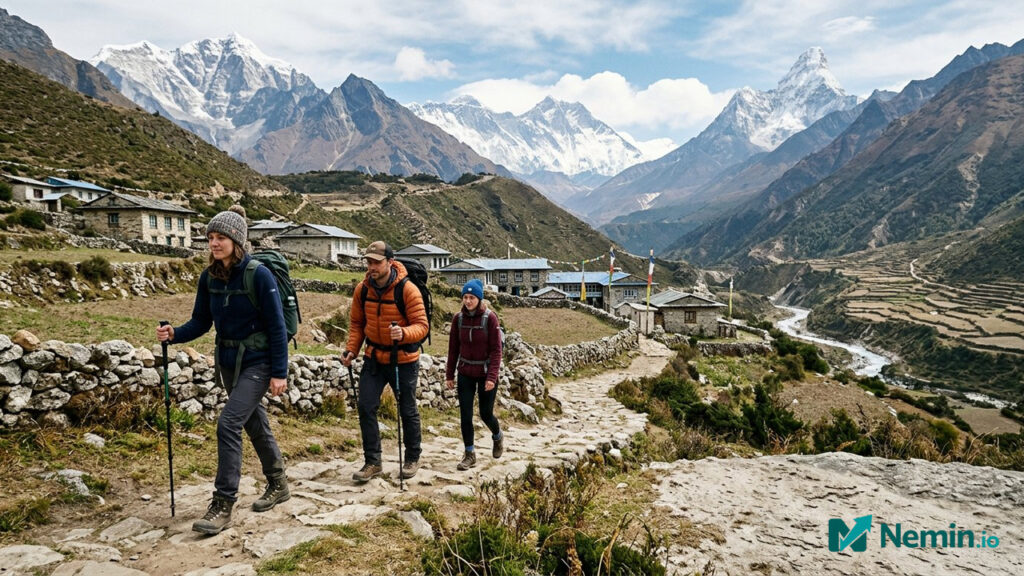
Standing beneath the world’s highest mountain is very different from climbing it. Everest trekking allows ordinary trekkers with appropriate fitness and preparation to explore Nepal’s Khumbu region, walk through Sherpa communities, visit monasteries and high-altitude settlements, cross dramatic Himalayan terrain, and potentially reach Everest Base Camp without attempting a technical ascent of Mount Everest. The journey is still physically demanding, however, largely because of altitude, repeated trekking days, changing weather, cold conditions, and remote mountain logistics.
The classic Everest Base Camp route reaches approximately 5,364 metres at base camp, while many itineraries also ascend Kala Patthar, commonly cited at roughly 5,545 metres, for panoramic mountain views. At these elevations, the availability of oxygen is substantially lower than at sea level, meaning acclimatisation becomes just as important as hiking fitness.
Everest trekking should therefore not be approached as a race to Base Camp. A person capable of running a fast marathon can still develop altitude illness, while a slower trekker following a sensible ascent profile may acclimatise well. Fitness helps someone perform the work; it does not provide immunity from altitude.
The region also offers much more than one route. Travellers can combine Everest Base Camp with Gokyo, traverse high passes, visit Ama Dablam viewpoints, choose shorter Khumbu itineraries, or use alternative approaches depending on available time and experience. The right trip is the one that fits the trekker rather than the itinerary receiving the most social-media attention.
This guide covers routes, training, permits, acclimatisation, weather, teahouses, food, packing, costs, guides, insurance, and responsible tourism so prospective visitors can plan Everest trekking using realistic expectations rather than treating the Himalayas like an ordinary walking holiday.
Current-information note: Nepal’s trekking regulations, permits, local fees, domestic flight arrangements, prices, trail conditions, weather, guide requirements, and insurance policies can change. Verify all important 2026 information through current Nepalese authorities, reputable trekking operators, airlines, insurers, and route-specific sources before departure.
What Is Everest Trekking?
Everest trekking generally refers to trekking within Nepal’s Everest or Khumbu region, although the phrase is frequently used specifically for the route to Everest Base Camp. Unlike an Everest summit expedition, the standard Base Camp trek does not normally require technical climbing equipment such as ropes, crampons, or ice axes when trail conditions are typical.
That does not make it an easy walk. Trekkers spend many days gaining and losing elevation, often on rough stone trails, suspension bridges, steep hills, and exposed high-altitude terrain where walking pace becomes progressively slower as elevation increases.
The landscape changes throughout the journey. Lower sections can include forests and cultivated settlements, while the upper Khumbu becomes increasingly sparse, rocky, cold, and dominated by glaciers and enormous Himalayan peaks.
Everest Trekking Is More Than Everest Base Camp
Base Camp receives much of the attention, but the Khumbu contains several established trekking possibilities. Gokyo provides a different perspective on the region, while experienced trekkers can consider high-pass itineraries that significantly increase physical and logistical demands.
Shorter journeys can explore areas such as Namche Bazaar and nearby viewpoints without continuing all the way to Base Camp. These routes can suit travellers with limited time, although shortened itineraries should not compress high-altitude ascent irresponsibly.
When comparing trips, consider maximum sleeping altitude, total ascent, trekking days, route difficulty, acclimatisation schedule, and expected daily hours rather than only the destination name.
1. Everest Trekking Requires Serious Respect for Altitude
Altitude is the defining medical challenge of most Everest-region itineraries. Lukla itself is already high compared with many travellers’ home environments, and the route continues upward toward settlements above 4,000 metres before reaching Base Camp.
As elevation rises, atmospheric pressure falls and less oxygen is available with each breath. The body responds through acclimatisation, but this process requires time and cannot be rushed simply through determination.
Trekkers can experience headache, fatigue, disturbed sleep, appetite changes, or other symptoms as they ascend. Any concerning symptoms should be reported to the guide rather than hidden for fear of disrupting the group.
Acute Mountain Sickness During Everest Trekking
Acute mountain sickness can develop after ascent to altitude and should be treated seriously. Symptoms can include headache alongside nausea, dizziness, unusual tiredness, sleep disturbance, or other problems.
More severe altitude illnesses, including high-altitude cerebral oedema and high-altitude pulmonary oedema, can become life-threatening. Neurological changes, severe deterioration, or breathlessness at rest require urgent evaluation and potentially immediate descent.
The appropriate response depends on symptoms and circumstances. Experienced guides and medical professionals should direct treatment rather than trekkers attempting to diagnose themselves from internet checklists.
Fitness Does Not Prevent Altitude Illness
This misconception is particularly dangerous. Strong athletes sometimes assume cardiovascular fitness means they can ascend faster than the itinerary allows, but physical conditioning and acclimatisation are different processes.
A fit person can certainly walk uphill more efficiently, yet they still need time to adapt physiologically. An itinerary with sensible elevation gain and acclimatisation days remains important regardless of athletic background.
Everest trekking rewards patience more reliably than speed.
2. Everest Trekking Needs a Sensible Acclimatisation Schedule
A good itinerary includes deliberate time for acclimatisation, particularly as sleeping altitude increases. Popular plans commonly include additional days around important settlements where trekkers can make controlled higher excursions and return lower to sleep.
These days should not automatically be removed because someone wants to save money or complete the trek faster. Time itself is one of the most important tools available for acclimatisation.
A longer itinerary also provides flexibility when weather, transport, minor illness, or fatigue affects the schedule. Extremely tight plans can create pressure to continue when rest would be more appropriate.
What Happens on an Everest Trekking Acclimatisation Day?
An acclimatisation day does not always mean complete inactivity. Trekkers may make a short climb to a higher viewpoint or nearby location before returning to the same settlement for another night.
This provides additional altitude exposure without immediately moving the sleeping elevation upward. The exact activity should depend on the itinerary and how individuals are feeling.
If someone is unwell, rest or a change in plan may be more appropriate. The phrase “climb high, sleep low” is a useful general concept, not a command that every sick person should climb higher for training.
Never Hide Symptoms
Group psychology can make people reluctant to admit headaches or nausea because they fear preventing others from continuing. This is poor risk management.
Guides can make better decisions when they have accurate information. Reporting symptoms early creates more options than waiting until someone becomes seriously ill.
No trekker should feel embarrassed about needing additional time or descent.
3. Everest Trekking Routes Should Match Your Experience
The standard Everest Base Camp trek is demanding but achievable for many healthy, prepared trekkers using an appropriate itinerary. Other routes increase difficulty significantly through longer distances, higher passes, more remote terrain, or additional altitude exposure.
Selecting the hardest route simply because it looks impressive online can reduce enjoyment and increase risk.
The first question should be how many consecutive trekking days you have previously completed. The second should be how your body has behaved at altitude, if you have relevant experience.
Classic Everest Base Camp Route
Many standard itineraries begin after transportation into the lower Khumbu and progress through major settlements toward Namche Bazaar, Tengboche-area locations, Dingboche, Lobuche, Gorak Shep, and Everest Base Camp, although exact overnight stops vary.
Kala Patthar is commonly incorporated because Everest itself is not necessarily the dominant visible mountain from every point at Base Camp. The viewpoint offers one of the trip’s best-known panoramas.
This route remains substantial even without technical climbing. Multiple days above 4,000 metres make acclimatisation and cold-weather preparation essential.
Gokyo and Everest Trekking
Gokyo routes visit a different part of the Khumbu and can include turquoise lakes and high viewpoints. Some itineraries connect Gokyo with the Base Camp corridor through high passes.
These combinations can be more demanding and may involve steeper, rougher, or more remote terrain. Weather and snow conditions can have a larger influence on route feasibility.
Travellers should compare route difficulty rather than treating every trip marketed under Everest trekking as equivalent.
4. Everest Trekking Training Should Begin Before Nepal
You do not need to become an elite athlete, but arriving with strong hiking fitness makes the experience considerably more manageable. Training also allows you to spend more energy appreciating the surroundings instead of merely surviving each day’s walk.
Walking uphill and downhill should form a substantial part of preparation where possible. Gradually increase duration, elevation gain, and consecutive walking days while using the footwear and daypack intended for Nepal.
Gym training can supplement outdoor conditioning through aerobic exercise, step-ups, lunges, squats, calf work, and appropriate core training. Consistency is more valuable than an extreme final month.
Train for Descents as Well as Ascents
Descending long stone trails creates substantial eccentric loading through the legs. People who train only by climbing stairs sometimes discover that their thighs and knees struggle more on the way down.
Include controlled downhill walking when possible. Trekking poles can reduce some perceived load and improve balance for many hikers, though correct technique matters.
If you have persistent knee, ankle, hip, heart, respiratory, or other health concerns, seek appropriate professional advice before committing to a high-altitude trek.
Train on Consecutive Days
One six-hour hike does not fully reproduce Everest trekking. The challenge is waking up the next morning and walking again, then repeating the process.
Occasionally train on back-to-back days. This helps reveal problems involving footwear, recovery, backpack fit, nutrition, and general endurance before those issues occur in the Himalayas.
Progress gradually to reduce injury risk.
5. Everest Trekking Depends on Reliable Footwear and Layering
The correct clothing system allows trekkers to adapt as the environment changes. Warm lower valleys can give way to cold, windy conditions at higher settlements, while vigorous uphill walking can generate substantial heat even when air temperatures are low.
Use layers rather than relying on one extremely thick garment. A typical system can combine moisture-managing base layers, insulating mid-layers, a warmer insulation jacket, and waterproof/windproof outer protection.
Carry rain protection even when travelling during a traditionally drier season. Mountain weather does not follow tourist brochures perfectly.
Footwear for Everest Trekking
The ideal footwear depends partly on season, trail conditions, ankle preference, and load. Many trekkers use supportive hiking boots, while some experienced hikers prefer lighter trekking footwear in suitable conditions.
Whatever you choose, test it extensively. New boots should not experience their first long walking day between Lukla and the next overnight stop.
Pay attention to heel movement, toe room during descents, width, sock compatibility, and waterproofing requirements. Feet can swell during extended walking.
Socks and Foot Care
Carry several pairs of quality trekking socks and keep at least one dry pair for evenings where practical. Moisture and friction can contribute to blister formation.
Treat hot spots early rather than walking until skin breaks. A small irritation on day two can become a major limitation several days later.
Bring blister treatment you already know how to use.
6. Everest Trekking Requires Smart Packing, Not Maximum Packing
Every additional kilogram eventually travels uphill. If a porter carries the main duffel, luggage limits still matter for ethical and logistical reasons, while trekkers generally carry their own daypacks.
Pack around functions rather than outfits. You need enough clothing to remain warm, dry, and reasonably hygienic, but not a completely new trekking outfit for every day.
A good packing system separates dry evening clothing from trekking layers and keeps critical insulation protected from rain or accidental water exposure.
Typical Everest Trekking Packing Categories
| Category | Useful Items |
|---|---|
| Clothing | Base layers, trekking trousers, fleece, insulation, waterproof jacket and trousers |
| Head/hands | Warm hat, sun hat, gloves, neck protection |
| Footwear | Tested trekking boots/shoes, socks, light lodge footwear |
| Sleep | Route-appropriate sleeping bag if needed |
| Trail | Daypack, trekking poles, headlamp, water containers |
| Sun | Sunglasses, sunscreen, lip protection |
| Health | Personal medicines, basic first aid, blister care |
| Electronics | Phone, power bank, camera, charging cables |
| Documents | Passport, permits where relevant, insurance details, emergency contacts |
| Organisation | Dry bags or liners for critical equipment |
The expedition operator should provide the final route-specific list. Cold-season and high-pass itineraries can require more substantial equipment.
Protect Critical Equipment
A pack cover can help in rain, but internal waterproofing is more reliable for essential gear. Use a waterproof liner or lightweight dry bags for sleeping equipment, spare insulation, documents, and vulnerable electronics.
Do not send essential medication exclusively in a porter duffel. Keep anything medically important with you during the trekking day.
Weight savings should come from removing redundancy rather than removing safety essentials.
7. Everest Trekking Weather Changes With Season and Altitude
Spring and autumn are commonly popular periods for the Everest region, but conditions vary from year to year and according to altitude. A warm day around Namche does not tell you what temperatures will be like near Gorak Shep.
Winter trekking can bring significantly colder temperatures and snow, while the monsoon period can create cloud, rain, transportation disruption, wet lower trails, and different visibility patterns.
Every season has trade-offs. The correct period depends on route, tolerance for cold or crowds, and available travel dates.
Spring Everest Trekking
Spring can bring established trekking activity and generally improving temperatures at lower elevations. Higher terrain can still remain cold, and snow conditions vary.
The Everest climbing season also creates a particular atmosphere around Base Camp during parts of spring, although expedition activity varies from year to year.
Travellers should not expect access to climbing expedition areas beyond what is appropriate or permitted.
Autumn Everest Trekking
Autumn is widely associated with stable trekking conditions and mountain visibility during suitable periods. It is also popular, which can make well-known routes and lodges busy.
Book appropriately where required, but retain flexibility because weather and domestic transport can still cause delays.
Popular season does not mean guaranteed conditions.
8. Everest Trekking Accommodation Is Usually Teahouse-Based
One reason the classic Everest Base Camp trek is accessible is the network of teahouses and lodges along much of the established route. These provide rooms and meals, reducing the need to carry camping equipment and complete food supplies.
Comfort generally becomes more basic as altitude increases. Rooms may be simple and often unheated, while communal dining areas can be warmer during parts of the evening.
Electricity, charging, hot showers, Wi-Fi, and other services may involve additional fees or become less reliable at higher elevations.
Sleeping During Everest Trekking
A sleeping bag is often useful even when blankets are available. The required warmth rating depends on season, elevation, accommodation, and individual cold tolerance.
Keep the bag dry throughout the trip. Wet insulation can be extremely difficult to dry at altitude.
Earplugs can also be useful in thin-walled lodges where trekkers wake early and groups arrive at different times.
Toilets and Showers
Facilities vary considerably. Lower settlements can provide relatively comfortable bathrooms, while higher locations may be much more basic.
Hot showers may be available at an additional price in some places, but frequent showering becomes less important as temperatures drop.
Carry compact hygiene supplies and realistic expectations.
9. Everest Trekking Food and Water Require Practical Planning
Teahouse menus commonly offer a range of meals, although selection can become more limited higher on the route. Food also becomes more expensive as transportation becomes more difficult.
Dal bhat is a well-known staple on Nepalese trekking routes, while noodles, rice, potatoes, soups, eggs, pasta, breads, and other meals can also be available depending on location.
At altitude, appetite may decrease. Eating enough to support sustained trekking can require conscious effort.
Drinking Water During Everest Trekking
Water arrangements vary. Options can include treated lodge water, boiled water, filtration, or chemical purification according to route and operator guidance.
Repeatedly purchasing single-use plastic bottles creates waste and may be restricted or discouraged in some areas. Refillable bottles plus a suitable treatment strategy are generally preferable where practical.
Ask the trekking company how they manage safe drinking water before departure.
Avoid Assuming Clear Water Is Safe
Mountain water can look pristine while still containing microorganisms. Appearance is not a microbiological test.
Use treatment methods suited to the water source and route. Filters, chemical treatment, UV systems, and boiling have different strengths and limitations.
For medical concerns around water treatment, seek authoritative travel-health advice.
10. Everest Trekking Insurance Must Cover the Actual Route
Travel insurance can be one of the most important administrative preparations. Standard policies may exclude trekking above specified elevations or restrict helicopter evacuation.
Check the maximum altitude on the policy against the itinerary’s highest point, including optional viewpoints such as Kala Patthar. If taking a high-pass route, ensure those elevations and activities fall within coverage.
Do not rely on a salesperson saying, “Yes, trekking is covered.” Obtain the relevant wording and understand exclusions.
Helicopter Rescue Is Not Guaranteed
Helicopters are used in Nepal for legitimate mountain emergencies, but flying depends on weather, visibility, aircraft availability, location, and logistics.
Insurance may also have requirements regarding assistance authorization or documentation. Understand the emergency process and give the operator your policy information.
Carry insurer contact details offline.
Declare Medical Conditions Correctly
Pre-existing condition rules vary. Omitting important information can affect coverage later.
If uncertainty exists, ask the insurer specifically and retain written confirmation.
The cheapest policy is poor value if it excludes the activity that creates the largest financial risk.
11. Everest Trekking Should Support Local Communities and Mountain Environments
The Everest region is not an outdoor theme park. It is home to communities whose economies, culture, infrastructure, and environment interact directly with tourism.
Guides, porters, lodge workers, cooks, transport workers, shop owners, and other local professionals make trekking possible. Their working conditions deserve attention when choosing an operator.
Very cheap trips can create financial pressure somewhere within the supply chain. Ask about porter weight limits, staff insurance, equipment, pay practices, and accommodation where the company can provide transparent answers.
Reduce Waste During Everest Trekking
Bring reusable water containers and minimize unnecessary packaging. Carry batteries and electronic waste out rather than leaving them in remote communities that may have limited disposal infrastructure.
Toiletries, wipes, plastic wrappers, and hygiene products should be managed according to local waste systems. The word “biodegradable” does not mean something should be left on a mountain trail.
Respect rules around religious sites, photography, wildlife, drones, and local customs. Ask permission when photographing individuals closely rather than assuming tourism creates automatic consent.
How Long Does Everest Trekking Take?
The classic Everest Base Camp journey is commonly planned over roughly two weeks or more when travel, acclimatisation, and return are included, though exact itineraries vary substantially.
Longer options can incorporate Gokyo, high passes, or additional contingency. Shorter itineraries exist, but saving days should not come at the expense of sensible acclimatisation.
The correct duration also depends on where the itinerary formally begins and ends. Some quoted trek lengths exclude days in Kathmandu or reserve days for domestic flight disruption.
Compare day-by-day schedules rather than package titles.
How Difficult Is Everest Trekking?
Everest trekking is physically demanding but does not normally require technical climbing on the standard Base Camp route. The challenge comes from altitude, duration, repeated ascent and descent, cold, rough trails, and fatigue.
A person comfortable walking for several hours on consecutive days has a useful foundation, but they should still train for elevation gain and carrying a daypack.
Mental resilience also matters. Cold mornings, basic facilities, poor sleep, changing plans, and altitude-related appetite reduction can affect motivation.
Difficulty is better understood as cumulative rather than concentrated in one technical obstacle.
Is Everest Trekking Suitable for Beginners?
A well-prepared beginner can potentially complete the standard Everest Base Camp trek using an appropriate itinerary and professional support. Previous multi-day hiking experience is highly beneficial, however.
Beginners should test equipment before travelling and train through repeated walking rather than relying entirely on general gym fitness.
They should also understand that reaching Base Camp is not guaranteed. Illness, weather, transportation, altitude, or personal circumstances can require changes.
A flexible mindset is as useful as strong legs.
Everest Trekking Permits in 2026
Permit requirements depend on the exact route and current Nepalese regulations. The Everest region can involve national-park and local-area requirements, while rules for guides and trekking arrangements can evolve.
Do not rely on an old price quoted in a travel blog. Verify current permits and fees through Nepalese authorities or a reputable licensed trekking company before travelling.
Ask whether permit costs are included in the package. Retain copies of important documents where appropriate.
The operator should also explain which identification is needed at checkpoints.
Everest Trekking Guide Requirements
Nepal has revised trekking policies over time, and guide requirements can differ between regions and routes. The Everest region has also had specific local arrangements that should be checked independently rather than generalized from rules applying elsewhere in Nepal.
For 2026, confirm the current requirements with authoritative Nepalese and Khumbu-region sources before assuming independent trekking is permitted or prohibited.
Even where independent travel is legally possible, a qualified local guide can provide substantial value through navigation, altitude observation, logistics, language, accommodation, weather interpretation, and emergency coordination.
Guide selection should prioritize competence rather than simply the lowest daily rate.
Everest Trekking Costs in 2026
There is no single accurate price because services differ enormously. A budget independent trek and a professionally organized private itinerary with extensive support are different products.
Typical cost categories can include:
- International airfare
- Nepal accommodation
- Domestic transport or flights
- Trekking permits
- Guide and porter services
- Teahouses
- Meals
- Water treatment
- Charging and Wi-Fi
- Showers
- Equipment purchase or rental
- Travel insurance
- Tips
- Personal snacks and drinks
- Emergency contingency
- Extra nights caused by delays
Obtain current written quotations and compare inclusions. A package that appears more expensive can offer better value if permits, meals, porters, domestic transport, and contingency support are included.
Flights and Transport for Everest Trekking
Many itineraries use air transport associated with the Everest region, but operations can be affected by weather and seasonal logistics. Departures may also use different airports depending on current arrangements.
Flight delays and cancellations are a normal planning risk rather than an extraordinary event. Do not schedule an international departure with no buffer after returning from the mountains.
Helicopter alternatives may be available in some circumstances but can be expensive and weather-dependent.
Always verify current flight and baggage information shortly before travel.
Everest Trekking and Kala Patthar
Kala Patthar is a popular high viewpoint because it can provide dramatic views of Everest and surrounding mountains under favorable conditions. It is also higher than Everest Base Camp itself.
The climb can feel disproportionately difficult because of altitude, particularly if attempted early in the morning after several high trekking days.
Warm layers, gloves, headlamp where starting in darkness, and wind protection can be important depending on conditions.
If altitude symptoms are worsening, the viewpoint is optional. A photograph is not worth ignoring medical warning signs.
Everest Trekking to Base Camp
Everest Base Camp is a working expedition location during portions of the climbing season as well as a trekking destination. Conditions and camp activity differ according to time of year.
Trekkers should follow local route guidance and respect restricted or operational climbing areas. Base Camp is situated on dynamic glacial terrain, so trail and access details can change.
Everest may not appear from Base Camp in the way first-time visitors expect because surrounding terrain affects the view.
The journey through the Khumbu is the experience; the Base Camp marker is one moment within it.
Everest Trekking vs. Island Peak Climbing
Everest trekking on the standard Base Camp route is primarily non-technical trekking, whereas Island Peak adds genuine mountaineering requirements at more than 6,000 metres.
Island Peak climbers may need crampons, harnesses, ropes, an ice axe, glacier travel, fixed-line techniques, and additional technical preparation.
A trekker who successfully reaches Base Camp is not automatically prepared for Island Peak.
However, Everest-region trekking can provide valuable altitude and expedition experience before pursuing technical Himalayan objectives.
Everest Trekking vs. Annapurna Trekking
Both regions offer world-class Himalayan experiences but differ in landscapes, logistics, cultural environments, elevations, and route structures.
The Everest region emphasizes the Khumbu, Sherpa communities, enormous glaciated peaks, and the cultural significance surrounding Mount Everest. Annapurna offers its own variety of landscapes and trekking formats.
Neither is objectively better. Trekkers should compare maximum altitude, available time, climate, scenery, crowd tolerance, budget, and desired difficulty.
Some travellers eventually choose both on separate trips rather than treating the decision as permanent.
Health Preparation for Everest Trekking
A pre-travel medical consultation can be useful, particularly for people with existing medical conditions or questions about altitude medication, vaccinations, or travel-health risks.
Do not stop regular medication or begin prescription altitude drugs based solely on another trekker’s experience.
Carry sufficient personal medication plus a buffer for potential delays. Keep critical supplies in hand luggage during international travel where appropriate and permitted.
Know the generic names of important medicines in case replacement becomes necessary.
Everest Trekking and Acetazolamide
Acetazolamide is used in altitude medicine in appropriate circumstances, including prevention or treatment strategies under professional guidance. It is not a substitute for a sensible ascent profile.
The medication can have side effects and may not be appropriate for every person.
Discuss individual suitability, timing, and dosing with an appropriate healthcare professional before the trip.
Never use medication to justify continuing upward despite dangerous symptoms.
Everest Trekking and Pulse Oximeters
A pulse oximeter can measure peripheral oxygen saturation, but readings at altitude require interpretation. Cold fingers, movement, circulation, device quality, and other factors can affect measurements.
Normal saturation values at high elevation differ from sea-level expectations, and there is no single number that determines whether an individual is safe to continue.
Symptoms and clinical condition are more important than obsessively comparing readings within a trekking group.
Use the device as additional information rather than a decision-maker.
Everest Trekking Photography
Cold temperatures reduce battery performance, so keep spare camera batteries relatively warm. Protect equipment from dust, snow, condensation, and abrupt temperature transitions.
Be considerate when photographing local residents, religious ceremonies, homes, and monasteries. Ask where photography is restricted.
Drones require specific attention because aviation, park, security, and local rules can apply. Do not launch a drone simply because another traveller has done so online.
Verify current permissions before carrying equipment whose intended use may be prohibited.
Internet and Electricity During Everest Trekking
Connectivity has improved across portions of the Khumbu, but service quality should not be assumed at every location. Weather and infrastructure can affect availability.
Charging can become more expensive at higher elevations because energy is harder to supply. Carrying a suitable power bank can reduce dependence on frequent charging.
Download travel documents, maps, insurance information, books, and entertainment before leaving reliable connectivity.
Tell family that communication may be intermittent so missed messages do not automatically create unnecessary alarm.
Solo Everest Trekking
Solo trekking introduces additional concerns involving navigation, altitude observation, emergencies, communication, and current legal or local guide requirements.
Even experienced solo hikers should verify current rules for the Everest region in 2026 rather than relying on past policies.
A guide provides more than route finding. Local professionals can help with accommodation, changing trail conditions, health observation, weather, language, transportation disruption, and emergency coordination.
The decision should be based on risk and current regulations rather than the idea that independent travel is inherently more adventurous.
Everest Trekking With a Porter
Porters can significantly reduce the load trekkers carry, but their work should be treated professionally and ethically.
Respect the operator’s weight limit rather than treating it as a target to exceed secretly. A lighter personal duffel improves working conditions and logistics.
Verify that the company provides appropriate insurance and working arrangements for staff where applicable.
Carry your own day essentials, because the porter may not remain directly beside you throughout the walking day.
Common Everest Trekking Mistakes
Rushing acclimatisation is one of the most serious mistakes. Overpacking is another, particularly when travellers carry several versions of the same clothing while forgetting important sun or waterproof protection.
New footwear, insufficient training, inadequate insurance, and an itinerary with no transport buffer can also create avoidable problems.
Some trekkers drink alcohol heavily at altitude, sleep poorly, or ignore early illness because they fear abandoning the trip. Conservative decisions are much easier when expectations are realistic before departure.
The mountain will still exist if circumstances require another attempt.
A Practical Everest Trekking Daily Routine
A typical trekking morning begins with packing, breakfast, checking weather layers, and preparing water. The main duffel may leave with the porter before the trekker, depending on the arrangement.
Walking should begin at a sustainable pace. Short breaks are generally more useful than repeatedly exhausting yourself and then stopping for long recovery periods.
After reaching the lodge, change into dry or warmer clothing, hydrate, eat, organize equipment for the next day, and report any health concerns.
Sleep becomes increasingly important as the cumulative workload rises.
Real-Time Everest Trekking Information to Verify in 2026
Before departure, verify the information that can change quickly rather than relying on a static guide.
Key checks include:
- Nepal visa requirements
- Current Everest-region permits and fees
- Guide requirements
- Sagarmatha National Park requirements
- Khumbu-area local regulations
- Current domestic flight arrangements
- Airline baggage limits
- Trail conditions and closures
- Weather and snowfall
- Teahouse availability
- Current trekking costs
- Insurance altitude limits
- Helicopter evacuation procedures
- Health and vaccination guidance
- Drone rules
- Currency and payment availability
Use authoritative government sources, Nepalese tourism and park information, current airline documentation, reputable local trekking operators, recognized travel-health sources, and written insurance policies. Social media can supplement current observations but should not be the only source for safety-critical decisions.
FAQ’s
1. How difficult is Everest trekking?
Everest trekking to Base Camp is physically demanding but normally non-technical. Altitude, repeated walking days, cold conditions, rough trails, and cumulative fatigue create most of the difficulty.
2. How long does Everest trekking take?
Everest trekking duration depends on the route, acclimatisation schedule, transport, and optional destinations. Standard Base Camp journeys commonly require around two weeks or more when sensible acclimatisation and travel are included.
3. What is the highest point during Everest trekking?
Everest Base Camp is approximately 5,364 metres, while many itineraries include Kala Patthar at roughly 5,545 metres. High-pass routes can introduce other substantial elevations.
4. Do beginners need a guide for Everest trekking?
Beginners can benefit substantially from a qualified local guide, particularly for altitude awareness, logistics, route conditions, and emergencies. Current legal or local guide requirements should also be verified before travel.
5. What should I pack for Everest trekking?
Everest trekking generally requires layered clothing, waterproof protection, tested footwear, a warm sleeping system where appropriate, sun protection, water containers, trekking poles, headlamp, personal medication, first aid, and travel documents.
6. What is the best time for Everest trekking?
Spring and autumn are widely used Everest trekking seasons, but exact conditions vary by year, route, altitude, and weather. Current forecasts and local route information should be checked before departure.
Conclusion
Everest trekking offers one of the world’s most recognizable mountain journeys without requiring travellers to become Everest climbers, but the route still deserves serious preparation. The standard journey to Everest Base Camp reaches elevations where altitude becomes a major physiological factor, while repeated trekking days, cold weather, changing conditions, rough terrain, and remote logistics create a challenge far beyond an ordinary hiking holiday. A successful Everest trekking plan therefore begins with a conservative acclimatisation schedule, progressive physical training, tested footwear, appropriate layers, reliable water and sun protection, and insurance that explicitly covers the route’s maximum altitude and activities.
The strongest itineraries also leave room for uncertainty. Weather can interrupt flights, altitude can affect extremely fit people, and changing trail conditions can require adjustments. Verify current 2026 permits, guide rules, domestic transportation, costs, insurance, trail conditions, and local requirements through authoritative sources before travelling. Choose operators that treat guides and porters responsibly, reduce unnecessary waste, and communicate honestly about risk rather than guaranteeing success. Most importantly, approach Everest trekking as a journey through the Khumbu rather than a race toward one Base Camp sign. The villages, monasteries, acclimatisation walks, mountain views, conversations, difficult mornings, and gradual movement into the high Himalayas are what make the experience extraordinary; reaching Base Camp is only one part of that much larger adventure.
Pingback: Journey to Everest Base Camp 5 Incredible Nepal Treks
Pingback: How to Increase Knitting 5 Brilliant Gadgets for Easy Stitches