
Maintaining a flawless, salon-grade manicure used to require frequent reapplications, lengthy drying times, and constant anxiety over chipped edges. Deploying hybrid nail polish has revolutionized modern nail...
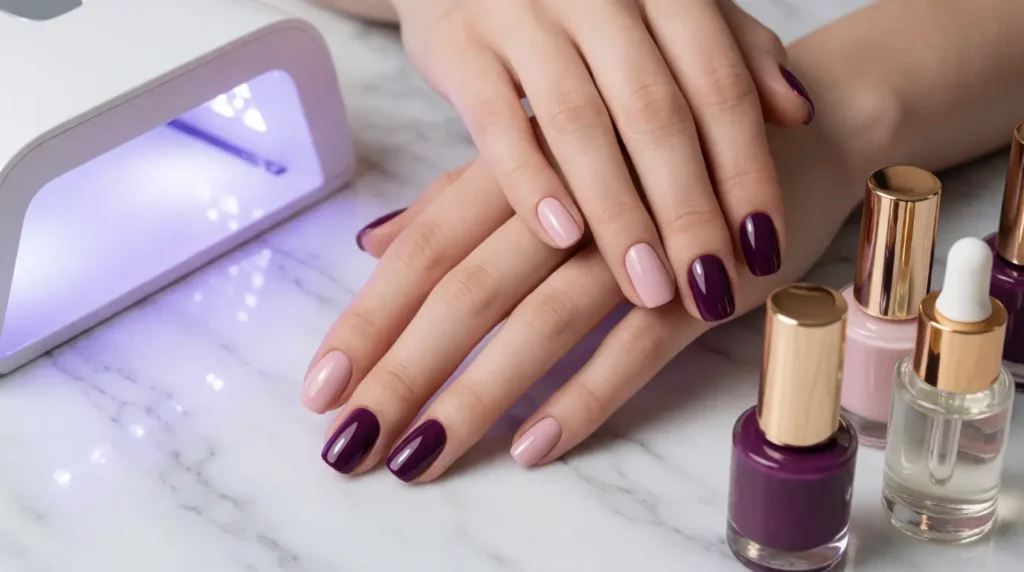
Maintaining a flawless, salon-grade manicure used to require frequent reapplications, lengthy drying times, and constant anxiety over chipped edges. Deploying hybrid nail polish has revolutionized modern nail care by merging the easy brush application of traditional nail polish with the enduring strength and instant curing of oligomer gel systems. When applied over properly prepared natural nails and cured under a calibrated UV/LED lamp, this specialized cosmetic formulation forms an ultra-flexible, chip-resistant polymer shield that retains mirror-like gloss for three to four weeks. Understanding the underlying chemistry, application techniques, and gentle removal protocols allows beauty lovers to achieve impeccable, long-lasting manicures at home without compromising nail plate health.
What Is Hybrid Nail Polish and How Does the Chemistry Work?
Hybrid nail polish is an advanced cosmetic coating formulated with a hybrid blend of traditional solvent-based nitrocellulose and light-cured acrylate oligomers that polymerize into a resilient cross-linked network under ultraviolet radiation.
| Chemical Component | Formulation Function | Performance Impact on Nails |
|---|---|---|
| Methacrylate Oligomers | Short-chain polymers that cross-link under UV light | Imparts structural hardness, flexibility, and chip resistance |
| Photoinitiators | Chemical compounds that absorb light wavelengths | Initiates the rapid free-radical polymerization reaction |
| Volatile Solvents (Ethyl Acetate) | Maintains fluid liquid suspension in the bottle | Allows thin, smooth, brush-on application identical to classic lacquer |
| Micronized Color Pigments | Cosmetic grade colorants and mineral mica | Delivers rich, streak-free opacity in one to two thin coats |
| Plasticizers & Adhesion Promoters | Increases elastic tensile compliance | Prevents brittle snapping and allows the polish to flex with natural nail movement |
While traditional lacquer dries exclusively, hybrid nail polish polymerizes instantly through solvent evaporation—a passive process where liquid ethyl acetate evaporates into the surrounding air over several hours, leaving behind a brittle resin film susceptible to smudging and chipping.
In contrast, hybrid nail polish undergoes a two-stage curing process. While volatile solvents evaporate quickly, the active photoinitiators inside the formula absorb specific light wavelengths (365nm to 405nm) emitted by UV or LED lamps. This exposure triggers an instantaneous chemical reaction known as free-radical addition polymerization, bonding liquid oligomers into a durable, flexible solid polymer matrix within 30 to 60 seconds.
Hybrid Nail Polish vs. Traditional Lacquer vs. Hard Gel: How Do They Compare?
Selecting the ideal hybrid nail polish and manicure medium requires evaluating differences in longevity, removal difficulty, structural strength, and natural nail impact.
| Manicure Classification | Average Wear Time | Curing Mechanism | Removal Method | Flexibility Level | Nail Damage Risk |
|---|---|---|---|---|---|
| Hybrid Nail Polish | 21 to 28 Days | 30–60s LED / 120s UV | Pure acetone foil soak-off (10–15 min) | High (Bends naturally with nail) | Very Low (When removed properly) |
| Classic Regular Lacquer | 3 to 5 Days | Air drying (1–2 hours full dry) | Non-acetone or standard remover wipe | Moderate to Low | Zero |
| Hard Builder Gel | 4 to 6 Weeks | 60s LED / 120s UV | Physical e-file or manual filing only | Low (Extremely rigid structure) | Moderate to High (If over-filed) |
| Dip Powder (Acrylic) | 14 to 21 Days | Chemical cyanoacrylate bonding | Acetone soak-off (20–30 min) | Very Low (Rigid and thick) | Moderate |
| Soft Gel Extensions | 21 to 30 Days | 60s LED full cure | Acetone soak-off (15–20 min) | Moderate | Low to Moderate |
Why Hybrid Nail Polish Is the Ideal Everyday Choice
While hard builder gels provide rigid strength for extreme nail extensions, they cannot be soaked off with acetone and must be physically filed down, risking natural nail plate thinning. Conversely, regular lacquer lacks the durability demanded by active lifestyles. Hybrid nail polish represents the optimal balance: delivering weeks of high-gloss resilience with the ability to soak off cleanly without mechanical abrasion.
Essential Equipment Checklist for Applying Hybrid Nail Polish at Home
To achieve professional, long-lasting results, assembling the appropriate salon-grade tools and chemical preparations is essential.
| Essential Tool / Product | Recommended Specification | Purpose in the Manicure Process |
|---|---|---|
| UV/LED Curing Lamp | Minimum 36W–48W dual-light (365nm + 405nm) | Guarantees complete through-cure of oligomer layers without under-curing |
| Nail Dehydrator & pH Prep | Isopropyl alcohol and ethyl acetate blend | Removes natural sebum, moisture, and temporary lipid films from the nail plate |
| Acid-Free Primer (Optional) | Methacrylic bonding agent | Creates a double-sided sticky molecular bridge for oily or lift-prone nails |
| Hybrid Base Coat | Flexible rubber base or classic hybrid base | Anchors color pigments safely to the keratin surface without staining |
| Hybrid Color Coat | Highly pigmented hybrid nail polish | Provides opaque, vibrant color coverage in thin layers |
| No-Wipe Hybrid Top Coat | High-shine scratch-resistant top coat | Seals the manicure in a glossy shield without leaving a sticky dispersion layer |
| Cuticle Pusher & Nipper | Surgical-grade stainless steel | Gently removes dead pterygium tissue from the proximal nail fold |
| 180/240 Grit Nail Buffer | Soft foam sponge buffer | Gently removes surface shine without thinning the dorsal keratin layer |
| Lint-Free Wipes | 100% cellulose or non-woven fiber wipes | Cleanses nail plates without depositing dust or lint fibers onto wet polish |
The 5 Essential Rules of Nail Plate Preparation
Over 80 percent of premature peeling and chipping in hybrid nail polish manicures and chipping in hybrid nail polish manicures is caused by improper nail plate preparation rather than product formulation flaws.
| Preparation Step | Anatomical Target | Critical Action Required | Common Mistake to Avoid |
|---|---|---|---|
| 1. Cuticle & Pterygium Clearing | Proximal nail fold and eponychium | Scrape away transparent dead skin glued to the nail plate | Applying polish over dead cuticle skin (causes immediate lifting) |
| 2. Gentle Shine Removal | Dorsal keratin layer | Lightly buff surface with a high-grit 240 sponge buffer | Aggressively filing with coarse grits (thins and weakens natural nail) |
| 3. Dust Elimination | Sidewalls and lateral nail grooves | Scrub thoroughly with a stiff nylon brush and lint-free wipe | Leaving microscopic filing dust behind beneath the base coat |
| 4. Chemical Dehydration | Surface lipid barrier | Apply pure dehydrator across the entire nail plate surface | Touching freshly dehydrated nails with bare oily fingers |
| 5. Acid-Free Primer Bonding | Free edge and perimeter zones | Apply a micro-thin layer of bonding primer at the tips | Flooding the cuticle area with excessive primer liquid |
1. Removing the Invisible True Cuticle (Pterygium)
Many beginners push back the visible proximal fold but fail to remove the thin, invisible layer of dead skin cells adhering directly to the nail plate. Because hybrid nail polish cannot bond to organic skin tissue, painting over cuticle remnants creates an air pocket that triggers rapid peeling within 48 hours.
2. Etching vs. Destructive Filing
You do not need to file down your natural nails to make hybrid nail polish adhere. Use a fine 240-grit foam buffer to gently remove the surface sheen, creating microscopic surface texture for mechanical interlocking without reducing nail plate thickness.
3. Rigorous Dehydration
Because natural nails excrete oils, preparing for hybrid nail polish requires thorough cleansing. Before applying hybrid nail polish, applying an alcohol-based dehydrator temporarily strips these lipids, allowing the base coat to establish maximum chemical adhesion.
Step-by-Step Application Protocol: Applying Hybrid Nail Polish for Maximum Longevity
Achieving a durable, mirror-smooth hybrid nail polish finish requires disciplined technique, thin layering, and precise edge capping.
| Application Layer | Target Layer Thickness | Recommended LED Cure Time | Technique Mastery Focus |
|---|---|---|---|
| 1. Hybrid Base Coat | Ultra-thin, transparent layer | 30 to 60 Seconds | Maintain a 1mm gap from cuticles; cap the free edge |
| 2. First Color Coat | Semi-sheer, streak-free thin layer | 60 Seconds | Focus on clean perimeter lines rather than full opacity |
| 3. Second Color Coat | Thin, fully opaque layer | 60 Seconds | Perfects color depth and evens out any minor streaks |
| 4. Hybrid Top Coat | Slightly fuller, self-leveling layer | 60 to 90 Seconds | Floats smoothly across color; seals all lateral edges |
| 5. Post-Cure Conditioning | Organic cuticle oil application | No Curing (Wait 60s post-lamp) | Restores moisture to surrounding skin and proximal fold |
| Manicure Phase | Layer Applied | Target Cure Time | Primary Application Goal |
|---|---|---|---|
| Phase 1: Foundation | Hybrid Base Coat | 30 to 60s LED | Micro-thin adhesion layer; caps free edge |
| Phase 2: Color Base | First Color Layer | 60s LED | Semi-sheer coat; establishes clean margins |
| Phase 3: Color Depth | Second Color Layer | 60s LED | Opaque coat; perfects tone and eliminates streaks |
| Phase 4: Gloss Seal | No-Wipe Top Coat | 60 to 90s LED | Scratch-proof armor; locks in mirror-like shine |
Step 1: Applying and Capping the Base Coat
Wipe excess product from your brush stem against the neck of the bottle until only a small bead remains on the brush bristles. Place the brush in the center of the nail, push gently toward the cuticle leaving a 1-millimeter gap, and glide smoothly toward the tip. Run the edge of the brush horizontally across the free edge of the nail to cap the tip, locking the natural edge against water penetration. Cure for 30 to 60 seconds under your LED lamp.
Step 2: Applying Two Ultra-Thin Color Coats
The most frequent error when applying hybrid nail polish is painting thick coats to achieve instant opacity. Thick coats block UV light from penetrating to the bottom of the layer, causing the polish to wrinkle, bubble, and peel. Apply the first coat thinly, cure for 60 seconds, and follow with a second thin coat to build rich, uniform color depth before curing again.
Step 3: Sealing with Top Coat
Apply a high-gloss, no-wipe hybrid top coat, ensuring you cover every millimeter of the color coat and thoroughly cap the free edge. Cure for a full 60 to 90 seconds. Allow the nails to cool for 60 seconds after removing them from the lamp before applying nourishing cuticle oil to the surrounding skin.
Lamp Physics: Understanding UV vs. LED Curing for Hybrid Nail Polish
Proper polymerization depends entirely on matching the chemical photoinitiators in your hybrid nail polish with the optical output of your curing lamp.
| Curing Lamp Technology | Emitted Light Wavelength | Average Curing Speed | Energy Efficiency | Heat Spike Sensation | Bulb Replacement Need |
|---|---|---|---|---|---|
| Modern Dual-Source LED | 365nm + 405nm (Narrow Band) | 30 to 60 Seconds | High (Consumes 24W–48W) | Low to Moderate (Gradual mode) | Never (50,000-hour lifespan) |
| Legacy Fluorescent UV | 320nm to 400nm (Broad Band) | 120 to 180 Seconds | Low (Consumes 36W–54W) | Very Low | Every 4 to 6 Months |
| Compact Mini Travel Lamps | 405nm only (Low Output) | 60 to 90s per single finger | Moderate | Very Low | Low Lifespan |
The Dangers of Incomplete Under-Curing
When hybrid nail polish is cured under an underpowered or incompatible lamp, the surface may feel dry to the touch while the underlying layers remain uncured and liquid.
Uncured monomers in improperly cured hybrid nail polish can migrate through porous nail plates into the bloodstream, increasing the risk of developing irreversible contact dermatitis and permanent acrylate allergies. Always use a curing lamp with at least 36 watts of dual-wave output to guarantee full through-cure polymerization.
Managing Polymerization Heat Spikes
When the oligomers in hybrid nail polish cross-link rapidly under intense LED light, the exothermic chemical reaction generates heat. If you experience a sudden burning sensation under the lamp, immediately remove your hand for three to five seconds until the sensation dissipates, then re-insert your hand. Many modern lamps feature a “Low Heat Mode” that ramps up light intensity gradually to prevent exothermic spikes.
Safe Removal Masterclass: Protecting Natural Keratin from Damage
Improper removal is the primary cause of nail damage associated with hybrid nail polish. Natural nail keratin is composed of roughly 100 to 150 cellular layers, requiring careful hybrid nail polish removal; forcefully peeling off gel strips away top dorsal layers, leaving nails thin, soft, and brittle.
| Removal Technique | Preservation of Natural Keratin | Time Required | Recommended Frequency | Safety Rating |
|---|---|---|---|---|
| Pure Acetone Foil Wraps | Exceptional (Preserves dorsal plate) | 10 to 15 Minutes | Every 3 to 4 Weeks | Gold Standard (10/10) |
| Steam Soak-Off Machines | High (Warm vapor accelerates breakdown) | 10 Minutes | Every 3 to 4 Weeks | Excellent (9/10) |
| Peel-Off Base Coat Systems | High (Zero chemical exposure) | 1 Minute | Weekly to Bi-weekly | Good for frequent color changers (8/10) |
| Manual Scraping & Peeling | Catastrophic (Rips off dorsal keratin) | Instant | Never | Destructive (0/10) |
The 4-Step Non-Destructive Foil Soak-Off Method
- Step 1: Break the Top Coat Seal: Take a 180-grit hand file and gently file across the surface of each nail until the shiny top coat is completely scuffed and matte. This allows acetone to penetrate directly into the color and base layers.
- Step 2: Saturate Cotton Pads with 100% Pure Acetone: To remove hybrid nail polish, cut cotton pads into small squares matching the size of your nails. Soak each pad in pure cosmetic acetone; avoid regular non-acetone polish removers, which cannot dissolve cross-linked hybrid polymers.
- Step 3: Wrap Tightly with Aluminum Foil: Place the saturated cotton pad over the hybrid nail polish and wrap aluminum foil tightly around your fingertip to trap body heat and prevent the acetone from evaporating.
- Step 4: Gently Slide Off the Softened Polish: After 12 to 15 minutes, remove the foil wraps. The soaked hybrid nail polish should appear swollen, flaked, and crumbly. Use an angled wooden orange stick to gently nudge the dissolved product off the nail. If any spots resist, re-wrap for another five minutes rather than forcing or scraping.
Troubleshooting Common Hybrid Nail Polish Problems
Understanding how to troubleshoot hybrid nail polish application errors ensures every manicure looks pristine and lasts for weeks.
| Common Manicure Issue | Primary Root Cause | Immediate Corrective Solution |
|---|---|---|
| Polish Peeling in Whole Sheets | Inadequate cuticle removal or oily nail plate | Thoroughly clear pterygium skin and apply alcohol dehydrator before base coat |
| Surface Wrinkling Under Lamp | Color coats applied too thickly | Apply ultra-thin color coats; cure for full 60 seconds per layer |
| Chipping Along Free Edges | Failure to cap the leading edge of the nail | Seal the tip of the nail with base, color, and top coat during application |
| Dull or Cloudy Finish | Touching or wiping top coat before it cools | Allow top coat to cool for 60s after curing before applying oils or lotions |
| Bubbles in Cured Polish | Shaking the bottle vigorously before painting | Roll the bottle gently between palms to mix pigments without introducing air bubbles |
| Lifting at the Sidewalls | Polish flooded onto surrounding skin or cuticles | Clean flooded cuticles with a clean brush dipped in alcohol before curing in the lamp |
Long-Term Nail Health: Maintaining Hydration and Keratin Strength
Consistently wearing hybrid nail polish does not have to harm your natural nails if you maintain disciplined hydration and nutritional practices between applications.
- Daily Cuticle Hydration: Apply jojoba-based cuticle oil daily around your hybrid nail polish manicure. Jojoba oil possesses a molecular weight small enough to penetrate both the surrounding eponychium and porous nail plate keratin, keeping the nail flexible and preventing brittle snapping beneath the polish.
- Scheduled Manicure Rest Periods: If your nails feel thin or flexible after several consecutive months of wearing hybrid nail polish, take a two-week hiatus to apply strengthening keratin treatments and rich vitamin E balms.
- Protective Barrier Against Household Chemicals: Harsh chemical household detergents, bleach, and hot dishwashing water degrade the acrylic bonds in hybrid nail polish and dehydrate the natural nail bed. Always wear rubber gloves during household chores.
Frequently Asked Questions
How long does a hybrid nail polish manicure typically last?
A properly applied hybrid nail polish manicure lasts between 21 and 28 days without chipping, peeling, or losing its high-gloss finish.
Does hybrid nail polish damage your natural nails?
No, hybrid nail polish does not inherently damage natural nails; nail damage is almost always caused by aggressive over-filing during prep or forcefully peeling the polish off during removal.
Can you cure hybrid nail polish without a UV or LED lamp?
No, hybrid nail polish contains photoinitiators that require specific UV or LED light wavelengths to polymerize; it will remain wet indefinitely without lamp curing.
Why is my hybrid nail polish lifting or peeling off after just a few days?
Premature peeling is usually caused by painting over dead cuticle skin on the nail plate, skipping the dehydration step, or touching the freshly prepared nail with oily fingers.
Is hybrid nail polish the same thing as gel polish?
Hybrid nail polish is a specific subcategory of gel polish that incorporates traditional solvent components for easier brush application, lighter natural flexibility, and faster acetone soak-off removal.
How do I stop my hybrid nail polish from wrinkling in the lamp?
To stop hybrid nail polish from wrinkling, apply ultra-thin color coats and ensure your curing lamp delivers sufficient wattage and calibrated 365–405nm light output.
Conclusion
Mastering the art of applying hybrid nail polish empowers you to achieve salon-quality, long-lasting manicures in the comfort of your own home. By uniting the effortless application of classic lacquer with the durable resilience of UV-cured polymers, hybrid formulas deliver weeks of mirror-like shine, vibrant color saturation, and complete chip resistance.
Achieving lasting results begins with meticulous nail plate preparation, thin and disciplined layering, and gentle, non-destructive soak-off removal techniques. Integrate these proven cosmetic practices into your beauty routine today, protect the structural integrity of your natural keratin, and enjoy flawless, high-performance nails that look immaculate week after week.
Pingback: Bulk Cosmetic Packaging 7 Powerful Oil Bottle Design Ideas