
Power interruptions can affect computers, servers, networking equipment, medical technology, security systems, and other sensitive electronics within seconds. A lithium-ion UPS provides backup power while...
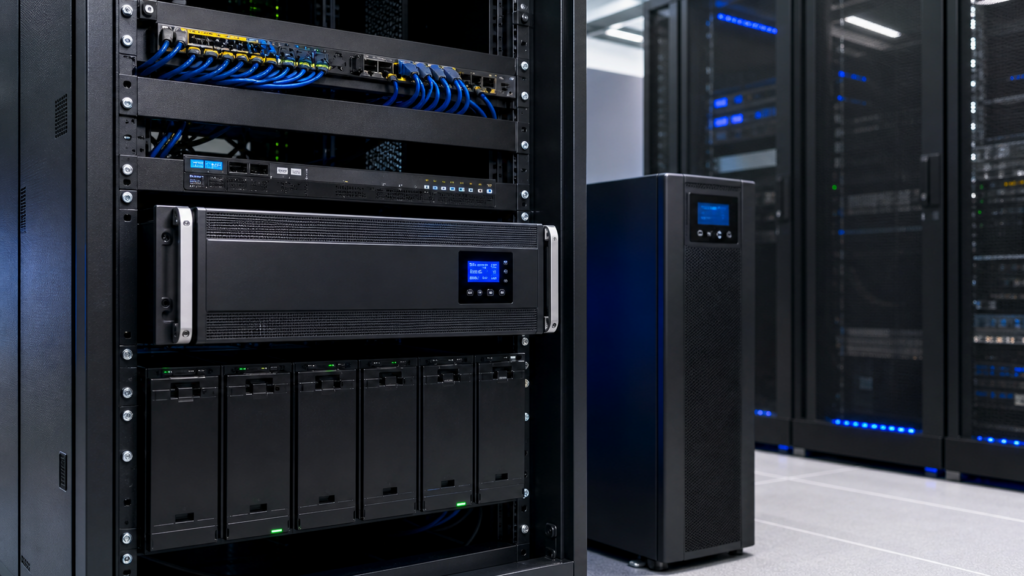
Power interruptions can affect computers, servers, networking equipment, medical technology, security systems, and other sensitive electronics within seconds. A lithium-ion UPS provides backup power while also helping protect connected equipment from certain power disturbances. As organizations depend more heavily on digital infrastructure, reliable power protection has become an important part of business continuity planning.
Traditional uninterruptible power supplies have commonly used lead-acid batteries, but lithium-ion battery technology has become an increasingly important option for modern power protection systems. Lithium-ion UPS solutions can provide a combination of backup capability, compact design, battery monitoring, and reduced battery replacement requirements.
The right UPS depends on the equipment being protected, required runtime, available space, power demand, installation environment, and operational requirements.
What Is a Lithium-Ion UPS?
A lithium-ion UPS is an uninterruptible power supply that uses lithium-ion batteries to provide backup energy when the primary electrical supply becomes unavailable or falls outside acceptable operating conditions.
A UPS can help keep connected equipment operating during short power interruptions and provide time for systems to shut down safely during longer outages.
Depending on the design, a UPS may also help protect equipment from issues such as:
- Voltage fluctuations
- Power interruptions
- Electrical disturbances
- Frequency variations
- Certain forms of electrical noise
A lithium-ion UPS combines these power-protection functions with a lithium-ion battery system.
How Does a Lithium-Ion UPS Work?
A typical online UPS continuously manages the incoming electrical power and provides conditioned output power to connected equipment.
When utility power is available, the UPS supplies power to the connected load while maintaining the battery in a charged state.
When utility power is interrupted, the battery provides energy to the UPS inverter.
The inverter then supplies electricity to connected equipment.
This transition allows critical systems to continue operating while the power problem is addressed or until an orderly shutdown can be completed.
Online double-conversion systems can provide particularly consistent output because incoming power is converted and regenerated before reaching connected equipment.
Lithium-Ion vs. Lead-Acid UPS Batteries
Lithium-ion and lead-acid batteries are two common battery technologies used in UPS systems.
Traditional lead-acid batteries have been widely used because they are familiar, established, and available in many configurations.
Lithium-ion batteries offer a different set of characteristics.
Battery Life
Lithium-ion batteries can generally support more charge and discharge cycles than traditional lead-acid batteries, depending on the battery chemistry, operating conditions, and system design.
This can influence long-term maintenance planning.
Size and Weight
Lithium-ion battery systems can offer a compact and relatively lightweight solution compared with some equivalent lead-acid configurations.
This can be useful in data centers and server rooms where rack space is limited.
Maintenance
Lithium-ion UPS systems can reduce the frequency of battery replacement compared with conventional battery technologies.
However, the complete UPS system still requires appropriate maintenance and monitoring.
Why Battery Technology Matters
The battery is one of the most important components of a UPS.
A UPS may remain connected to utility power for long periods without experiencing an outage.
However, when an interruption occurs, the battery must deliver energy immediately.
Battery performance can therefore directly affect the ability of the UPS to provide backup power.
For businesses, battery reliability can be particularly important because an unexpected failure may affect servers, applications, communications, or other critical equipment.
Advantages of Lithium-Ion UPS Systems
There are several reasons organizations may consider lithium-ion technology.
Longer Battery Service Life
Lithium-ion batteries can offer a longer service life than many conventional lead-acid battery configurations.
The actual lifespan depends on operating temperature, charging conditions, usage, battery chemistry, and system design.
Reduced Battery Replacement
Longer battery life can reduce how frequently replacement batteries are required.
This may reduce maintenance interruptions and simplify long-term planning.
Compact Design
Lithium-ion batteries can provide significant energy storage within a relatively compact footprint.
This is particularly useful where rack space or floor space is limited.
Lower Weight
A lighter battery system can make installation and handling easier in some environments.
Monitoring Capabilities
Modern lithium-ion UPS systems can include battery monitoring and management features that provide information about system status.
This can help operators identify potential issues before they become serious problems.
Lithium-Ion UPS for Data Centers
Data centers are among the most obvious applications for UPS systems.
Servers, storage systems, network equipment, and other infrastructure depend on continuous power.
Even a short interruption can cause:
- Server shutdowns
- Data loss
- Network interruptions
- Service disruptions
- Hardware issues
- Business downtime
A lithium-ion UPS can provide backup power and power conditioning for critical data center equipment.
Rack-Mounted Lithium-Ion UPS
Rack-mounted UPS systems are designed to fit within standard equipment racks.
This allows power protection to be installed alongside servers and networking equipment.
For example, a 3 kVA lithium-ion APC Easy UPS On-Line model is designed as a rack/tower system and provides double-conversion online operation with a pure sine-wave output. It has a 3,000 VA rating and 2,700 W rated power for the specified model.
Rack-mounted systems can be especially useful for:
- Server rooms
- Network closets
- Micro data centers
- IT departments
- Telecommunications installations
- Surveillance systems
Tower and Rack Convertible UPS Systems
Some UPS models can be installed in either rack or tower configurations.
This flexibility can be useful when equipment layouts change.
A rack configuration can make sense in a server environment, while a tower configuration may be more convenient in a small equipment room.
Choosing a convertible design can provide additional installation options.
Pure Sine-Wave Output
The output waveform is another important UPS consideration.
Sensitive electronic equipment can benefit from a clean and stable power supply.
Online UPS systems commonly use pure sine-wave output, which closely resembles utility power.
The APC Easy UPS On-Line lithium-ion model associated with the target product provides pure sine-wave output.
This makes the technology suitable for many sensitive electronic and IT applications.
Double-Conversion Online UPS
Double-conversion is a UPS topology designed to provide a high level of power conditioning.
The incoming AC electricity is converted into DC and then converted back into AC.
This process allows the UPS to regulate the output delivered to connected equipment.
Benefits can include:
- Stable output
- Voltage regulation
- Frequency regulation
- Power conditioning
- Protection from certain input disturbances
Double-conversion systems are commonly considered for critical equipment where power quality is important.
Lithium-Ion UPS for Server Rooms
Small and medium-sized server rooms can benefit from compact UPS systems.
A server room may contain:
- Servers
- Network switches
- Routers
- Storage equipment
- Security systems
- Communications hardware
A lithium-ion UPS can provide backup power while occupying limited space.
This can be particularly valuable where the room is already crowded with IT equipment.
Lithium-Ion UPS for Micro Data Centers
Micro data centers combine IT equipment, power systems, cooling, and physical infrastructure in smaller environments.
Because space is limited, equipment density matters.
A compact lithium-ion UPS can provide power protection without requiring a large battery room.
This can make the technology suitable for distributed IT environments.
UPS Systems for Telecommunications
Telecommunications equipment requires dependable electrical power.
A power interruption can affect communication services and connected infrastructure.
Lithium-ion UPS systems can support:
- Network equipment
- Communications systems
- Telecom cabinets
- Remote sites
- Edge computing infrastructure
The required UPS capacity depends on the connected load and expected runtime.
Lithium-Ion UPS for Surveillance Systems
Security cameras and surveillance systems may need to remain operational during electrical interruptions.
A UPS can protect:
- Cameras
- Network video recorders
- Switches
- Storage equipment
- Monitoring stations
Keeping these systems operational during an outage can help maintain visibility when electrical power is unavailable.
Lithium-Ion UPS for Healthcare IT
Healthcare environments depend heavily on electronic systems.
These may include:
- Computer systems
- Networking equipment
- Monitoring systems
- Communications equipment
- Data storage
- Security systems
A UPS can provide backup power for equipment that needs continuity.
Healthcare applications also require careful consideration of electrical standards, installation requirements, redundancy, and the criticality of each connected load.
UPS for Point-of-Sale Systems
Retail businesses rely on point-of-sale systems to process transactions.
A power interruption can interrupt payment processing and business operations.
A properly sized UPS can provide short-term backup power for:
- POS terminals
- Payment equipment
- Network hardware
- Routers
- Small servers
This can help reduce disruption caused by brief power interruptions.
How to Choose the Right Lithium-Ion UPS
Selecting a UPS should begin with understanding the equipment being protected.
Consider the following factors.
Power Capacity
Determine the total power demand of the equipment.
UPS capacity is commonly expressed in VA and watts.
The UPS should have enough capacity for the connected load while leaving appropriate operating headroom.
Runtime
Determine how long the equipment needs to remain operational.
Some applications only need enough runtime to bridge short interruptions.
Others may require enough time for a generator to start or for systems to shut down safely.
Installation Type
Decide whether you need:
- Rack-mounted
- Tower
- Rack/tower convertible
The choice depends on available space and equipment layout.
Battery Technology
Consider whether lithium-ion technology fits your maintenance, space, runtime, and lifecycle requirements.
Monitoring
Network management and monitoring can be important for IT environments.
An intelligent card slot or network management option can allow administrators to monitor UPS status remotely, depending on the model and installed accessories.
Understanding UPS Capacity
A UPS’s VA rating and watt rating are both important.
For example, the specified APC Easy UPS On-Line lithium-ion model has a 3,000 VA capacity and a 2,700 W rating.
The connected equipment should remain within the UPS’s supported limits.
Simply adding the wattage of devices is not always enough.
Some equipment can have high startup loads or different power characteristics.
Why Runtime Matters
UPS capacity and runtime are not the same thing.
Capacity determines how much electrical load the UPS can support.
Runtime determines how long the battery can supply that load.
Higher loads generally reduce runtime.
Additional battery packs can sometimes be used to extend runtime when the UPS model supports them.
The APC model associated with this article can support additional battery packs for extended runtime.
Extended Runtime
Some businesses need more than a few minutes of backup.
Extended runtime can be useful when:
- Generators require startup time
- Remote systems need longer protection
- Controlled shutdown takes time
- Critical operations must continue temporarily
- Power interruptions may last longer
The number and type of additional battery packs should be compatible with the UPS model.
UPS Monitoring
Monitoring can make power protection easier to manage.
A network-enabled UPS can provide information about:
- Input voltage
- Output voltage
- Battery status
- Load
- Runtime
- Alarms
- Operating mode
For larger IT environments, centralized monitoring can help administrators identify UPS conditions across multiple locations.
Automatic Bypass
Some online UPS systems include automatic and manual bypass functions.
A bypass can allow connected equipment to receive utility power under specified conditions when the UPS requires maintenance or encounters an internal fault.
The APC Easy UPS On-Line lithium-ion model referenced here includes internal automatic and manual bypass functionality.
The precise operating conditions depend on the system configuration.
Emergency Power Off
Emergency Power Off, or EPO, can provide a way to shut down the UPS output during an emergency.
This can be useful in facilities where emergency electrical procedures require remote power interruption.
EPO functionality should be installed and configured according to applicable facility requirements.
Battery Management
Battery management is important for maintaining UPS reliability.
Lithium-ion UPS systems can incorporate battery monitoring and management technology.
Regular monitoring can help identify:
- Battery health issues
- Abnormal temperatures
- Charging problems
- Capacity changes
- System alarms
Battery condition can change over time, so monitoring should remain part of the overall maintenance strategy.
Temperature and UPS Battery Life
Operating temperature can influence battery performance and lifespan.
Extreme heat can accelerate battery degradation.
For this reason, UPS systems should be installed in environments that meet the manufacturer’s temperature and ventilation requirements.
Keeping the equipment within its specified operating range can support reliable performance.
UPS Installation Considerations
Installation should be planned carefully.
Consider:
- Available rack space
- Floor loading
- Electrical connections
- Ventilation
- Cable routing
- Accessibility
- Environmental conditions
- Maintenance access
A qualified professional should handle electrical installation when required.
Maintenance Requirements
Lithium-ion UPS systems can reduce battery replacement frequency, but maintenance is still important.
Maintenance can include:
- Checking alarms
- Reviewing battery status
- Inspecting connections
- Monitoring load levels
- Checking environmental conditions
- Testing backup functionality
- Updating management software when appropriate
Maintenance requirements vary by manufacturer and model.
Lithium-Ion UPS and Business Continuity
A UPS is one part of a larger business continuity strategy.
Other components may include:
- Backup generators
- Redundant power supplies
- Network redundancy
- Data backups
- Disaster recovery systems
- Emergency procedures
The UPS provides electrical continuity, but it cannot replace a complete continuity plan.
Lithium-Ion UPS for Small Businesses
Small businesses may have critical equipment without the infrastructure of a large data center.
A UPS can protect:
- Servers
- Network equipment
- Point-of-sale systems
- Security systems
- Communications equipment
A lithium-ion model may be attractive where space and maintenance requirements are important considerations.
Lithium-Ion UPS for Enterprise Environments
Large organizations often operate many UPS systems across different locations.
They may prioritize:
- Remote monitoring
- High availability
- Scalable runtime
- Battery lifecycle
- Serviceability
- Network integration
- Standardized equipment
A lithium-ion UPS can be part of a broader enterprise power-protection strategy.
Common Mistakes When Choosing a UPS
Choosing Capacity Based Only on Current Load
Future equipment additions should also be considered.
Ignoring Runtime
A UPS may have enough capacity but insufficient battery runtime for the intended application.
Forgetting Physical Space
Rack depth, height, weight, and ventilation all matter.
Overlooking Monitoring
Remote monitoring can be valuable when equipment is located away from IT personnel.
Ignoring Maintenance
Even modern battery technology requires proper monitoring and maintenance.
Installing Without Professional Assessment
Electrical installations should follow applicable requirements and manufacturer instructions.
How to Calculate Basic UPS Requirements
Start by listing every device that needs backup power.
For each device, identify its approximate power consumption.
Add the loads together.
Then consider:
- Future expansion
- Startup demand
- Desired operating margin
- Required runtime
- Equipment compatibility
The final UPS should be selected based on manufacturer specifications and the actual electrical characteristics of the load.
UPS Load Management
Keeping a UPS within an appropriate load range can improve operational flexibility.
Avoid connecting unnecessary equipment to a UPS that is intended for critical loads.
For example, nonessential printers or office appliances may not need battery-backed power.
Prioritizing essential equipment can help maximize available runtime during an outage.
Lithium-Ion UPS and Sustainability
Battery lifecycle is increasingly important when organizations evaluate power infrastructure.
A longer-lasting battery can potentially reduce the frequency of battery replacement.
However, environmental performance depends on the entire lifecycle, including manufacturing, energy consumption, maintenance, recycling, and disposal.
Organizations should evaluate environmental information provided for the specific UPS model rather than making broad assumptions about all lithium-ion systems.
Battery Replacement Considerations
Although lithium-ion UPS batteries can have long service lives, they are not permanent.
Eventually, replacement may be required.
When replacement becomes necessary, use compatible batteries specified for the UPS model.
Battery replacement should be performed according to the manufacturer’s procedures and applicable safety requirements.
Lithium-Ion UPS for Edge Computing
Edge computing places IT equipment closer to where data is generated.
Examples can include:
- Retail locations
- Manufacturing facilities
- Remote offices
- Telecommunications sites
- Industrial environments
These locations may not have dedicated data center infrastructure.
Compact lithium-ion UPS systems can provide localized power protection for edge equipment.
Why Compact UPS Design Matters
Space is expensive and limited in many technical environments.
A compact UPS can help organizations protect more equipment without requiring a large dedicated battery area.
Rack-mounted designs can make efficient use of existing server cabinets.
Pure Sine Wave for Sensitive Equipment
Modern servers, networking equipment, storage systems, and other electronic devices can have sophisticated power supplies.
A pure sine-wave output can provide a clean AC waveform suitable for many sensitive electronic loads.
The exact compatibility should always be confirmed against the equipment manufacturer’s requirements.
The Role of a UPS During a Blackout
When utility power fails, the UPS immediately switches to battery operation.
Connected equipment continues receiving power for the available runtime.
During this period, users can:
- Restore utility power
- Start a generator
- Perform controlled shutdowns
- Transition systems to another power source
The UPS therefore acts as a bridge between normal power and the next stage of the continuity plan.
Surge Protection and Power Conditioning
UPS systems can provide more than battery backup.
Depending on their design, they can help regulate voltage and protect connected equipment from certain electrical disturbances.
This is especially useful for sensitive electronic systems that require stable power.
Selecting a Lithium-Ion UPS for a Server Rack
When selecting a rack-mounted model, check:
- UPS capacity
- Rack height
- Rack depth
- Weight
- Output connections
- Input connection
- Runtime
- Battery type
- Network management
- Expansion options
- Warranty
- Operating temperature
The APC Easy UPS On-Line model referenced in this article is designed for rack/tower installation and includes a multifunction LCD interface and an intelligent card slot.
Final Considerations Before Purchase
Before selecting a lithium-ion UPS, create a clear list of requirements.
Identify:
- Equipment load
- Required runtime
- Installation location
- Available space
- Output requirements
- Monitoring needs
- Expansion plans
- Maintenance expectations
- Budget
Then compare models based on their actual specifications rather than relying solely on the battery type.
Conclusion
A lithium-ion UPS can provide reliable backup power and power protection for critical electronic systems while offering advantages related to battery lifecycle, compact design, and maintenance planning. It can be useful for data centers, server rooms, telecommunications systems, surveillance equipment, healthcare IT, retail technology, and edge computing environments. Choosing the right system requires careful consideration of power capacity, runtime, installation format, monitoring, battery management, environmental conditions, and equipment compatibility. A properly selected and maintained UPS can become an important component of a broader business continuity strategy, helping critical systems remain available when utility power becomes unstable or unavailable.
FAQs
What is a lithium-ion UPS?
A lithium-ion UPS is an uninterruptible power supply that uses lithium-ion batteries to provide backup power to connected equipment during power interruptions.
What are the benefits of a lithium-ion UPS?
Benefits can include a longer battery service life, reduced battery replacement frequency, compact design, lower weight, and advanced battery monitoring capabilities, depending on the specific system.
Is a lithium-ion UPS suitable for servers?
Yes. Lithium-ion UPS systems can be used for servers, networking equipment, storage systems, and other IT infrastructure when the UPS capacity and electrical specifications are appropriate.
How long can a lithium-ion UPS provide backup power?
Runtime depends on the UPS capacity, battery configuration, connected load, and whether additional battery packs are installed. Higher loads generally result in shorter runtime.
What is a double-conversion lithium-ion UPS?
A double-conversion UPS converts incoming AC power to DC and then back to AC before delivering it to connected equipment. This design can provide consistent power conditioning and stable output.
Can a lithium-ion UPS be rack mounted?
Yes. Many lithium-ion UPS systems are available in rack-mounted configurations. Some models can also operate in either rack or tower configurations.
Does a lithium-ion UPS require maintenance?
Yes. Although lithium-ion technology can reduce battery replacement requirements, UPS systems still need appropriate monitoring, inspections, testing, and maintenance according to the manufacturer’s recommendations.
How do I choose the right lithium-ion UPS?
Consider the equipment’s power requirements, desired runtime, installation space, output connections, monitoring needs, battery expansion options, operating environment, and future capacity requirements before selecting a model.