
Handcrafted texture gives macrame dresses a distinctive look that sits comfortably between artisanal fashion, resort wear, festival styling, and modern bohemian design. Macrame is created through knotting...
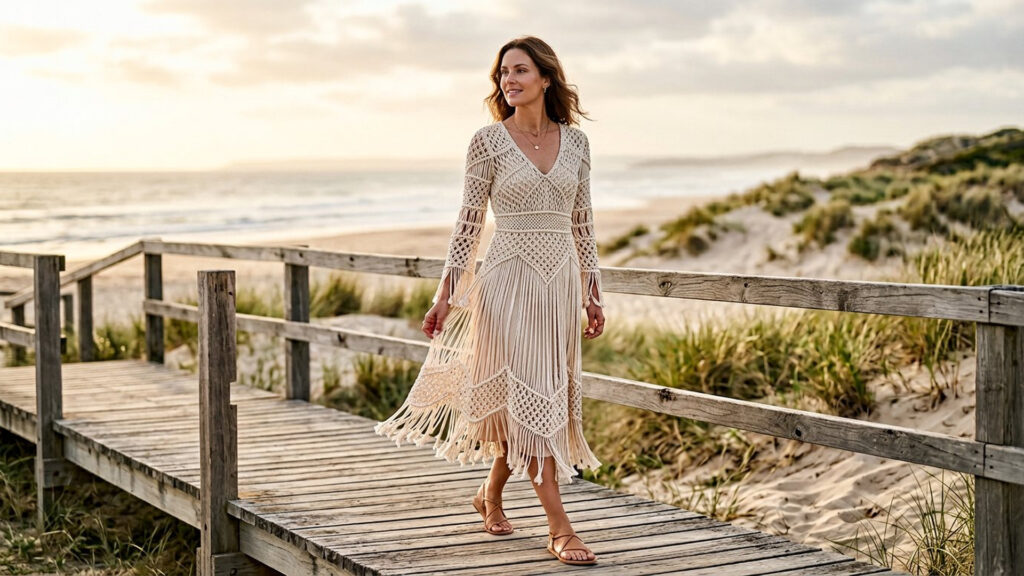
Handcrafted texture gives macrame dresses a distinctive look that sits comfortably between artisanal fashion, resort wear, festival styling, and modern bohemian design. Macrame is created through knotting cords or yarns rather than conventional weaving or knitting, producing open patterns, decorative structures, fringe, and dimensional details. Dresses can range from fully lined occasion pieces to highly open cover ups intended for layering over swimwear or clothing, so checking construction and transparency is essential before buying.
The appeal of macrame fashion lies largely in texture. Even a simple neutral dress can become visually striking when knots and negative space create the pattern.
However, the same construction that gives these garments their character also affects fit, weight, stretch, durability, laundering, and coverage. Understanding these differences can help you choose a dress that looks good while remaining practical for the way you intend to wear it.
What Are Macrame Dresses?
Macrame dresses are garments constructed wholly or partly using macrame knotting techniques or designed to imitate the appearance of traditional macrame.
Authentic macrame involves cords or threads knotted by hand or through suitable production methods to create patterns without relying on conventional woven fabric construction.
Common design characteristics include:
• Decorative knots
• Openwork patterns
• Fringe
• Geometric designs
• Floral inspired motifs
• Natural colored cords
• Layered textures
• Crochet like visual effects
• Lined and unlined sections
Macrame and crochet can look similar from a distance, but they are technically different textile processes.
Macrame vs Crochet Dresses
These terms are often used interchangeably in fashion listings, even though the construction methods differ.
Macrame Construction
Macrame primarily forms textile structures through knots.
Square knots, half knots, and other knotting patterns can create repeated decorative structures.
Crochet Construction
Crochet creates fabric using loops of yarn formed with a crochet hook.
The resulting garment can be open or dense depending on the stitch.
Check Product Descriptions Carefully
Some products marketed as macrame are actually crochet, lace, or machine produced textiles designed to create a similar appearance.
If traditional craftsmanship matters to you, ask the seller how the garment was made.
9 Macrame Dresses Styles to Explore
Different silhouettes make macrame adaptable to beachwear, casual outfits, events, and creative fashion.
1. Macrame Maxi Dress
A maxi dress emphasizes the flowing, textural quality of macrame.
Longer designs can feature open panels, fringe, side slits, or fitted knotwork through the upper body.
How to Style a Macrame Maxi Dress
Pair a lined neutral maxi with simple sandals and understated jewelry.
Because macrame already provides substantial visual detail, elaborate accessories are often unnecessary.
For a resort look, use a woven bag and natural material accessories.
2. Macrame Mini Dress
A shorter silhouette can make dense knotwork feel lighter.
Mini dresses are available in both lined fashion styles and more open beach cover up designs.
Always check garment length and lining measurements, as openwork can reveal substantially more than product photographs suggest.
3. Macrame Beach Dress
Beach dresses are among the most recognizable macrame styles.
They are commonly designed as swimsuit cover ups rather than standalone opaque garments.
Open construction allows the swimwear beneath to remain visible.
4. White Macrame Dress
White, ivory, cream, and natural cotton tones complement the handcrafted appearance particularly well.
These shades are popular for holidays, warm weather events, and bohemian styling.
Check Transparency
Even densely patterned white textiles can become more transparent under strong daylight.
If coverage matters, inspect lining details and test the garment in realistic lighting.
5. Black Macrame Dress
Black provides a more dramatic interpretation of the technique.
The contrast between skin, lining, and open knotwork can make geometric patterns particularly visible.
A black macrame dress can work for evening settings when its construction, lining, and accessories support a more polished look.
6. Sleeveless Macrame Dress
Sleeveless designs can range from fitted halter styles to relaxed tank silhouettes.
The armholes and neckline deserve careful attention because macrame edges can stretch differently from conventional fabric.
7. Long Sleeve Macrame Dress
Long sleeves create additional texture while allowing openwork to remain visible on the arms.
Depending on fiber and knot density, these garments can still be breathable despite providing more coverage.
8. Macrame Fringe Dress
Fringe adds movement to the lower hem, sleeves, or decorative panels.
It strongly reinforces the bohemian aesthetic.
Long fringe requires careful storage because strands can knot together.
9. Lined Macrame Dress
A lining can turn an otherwise transparent design into a more versatile garment.
Linings may cover the entire dress or only selected body areas.
Check lining fiber, length, color, attachment, and stretch.
How to Style Macrame Dresses
Macrame works best when the garment’s texture remains the central visual feature.
Casual Styling
For a relaxed daytime outfit, combine a simple macrame dress with flat sandals, sneakers, or understated boots depending on the season.
A denim jacket can provide useful contrast with the detailed textile surface.
Resort Styling
Neutral macrame fits naturally into resort wardrobes.
Consider:
• Flat leather style sandals
• Woven bags
• Minimal jewelry
• Sun hats
• Lightweight swimwear underneath open dresses
Sun protection should not be forgotten. Open macrame fabric does not necessarily provide meaningful ultraviolet protection across exposed skin.
Evening Styling
Choose a darker or fully lined dress with cleaner knotwork.
Metallic jewelry and structured footwear can shift the garment away from a purely beach inspired appearance.
Macrame Dresses for Festivals
Macrame has long been associated with bohemian and festival fashion.
Fringe, open textures, neutral tones, and handmade accessories can build a recognizable festival aesthetic.
Prioritize Practicality
Outdoor events can involve heat, dust, rain, mud, and extensive walking.
Check garment length and fringe placement so the dress does not repeatedly catch on footwear or the ground.
Layering for Festivals
Open macrame can be worn over fitted shorts, bodysuits, slips, or other clothing according to personal style and the event.
Layering also makes a highly open dress more adaptable to temperature changes.
Macrame Dresses for Weddings
Macrame can work in wedding related fashion, particularly for beach, destination, or bohemian events.
Macrame Wedding Dresses
Some bridal designs incorporate macrame inspired lace or genuine knotting as decorative panels.
Because large handmade sections can require substantial labor, true handcrafted designs can command higher prices.
Wedding Guest Styling
Before choosing white or cream, consider the wedding dress code and cultural expectations.
For guests, black, earthy colors, pastels, or other shades can provide the texture of macrame without resembling conventional bridal colors.
Macrame Dresses as Swimwear Cover Ups
Highly open macrame dresses are especially practical around pools and beaches.
Choose Suitable Fibers
Check whether the manufacturer considers the garment suitable for beach and pool environments.
Chlorine, saltwater, sunscreen, and repeated wetting can affect fibers and dyes.
Dry Garments Properly
Wet macrame can become heavy.
Follow care instructions regarding drying method because hanging a heavy wet garment can stretch some constructions.
Materials Used in Macrame Dresses
Fiber selection influences feel, weight, stretch, care, and durability.
Cotton
Cotton is strongly associated with traditional macrame because it is soft, flexible, and available in many cord constructions.
It can absorb substantial water and may feel heavier when wet.
Polyester
Synthetic fibers can provide strength, color stability, and different performance characteristics.
Quality depends on yarn construction and garment finishing rather than fiber name alone.
Viscose
Viscose can provide softness and drape.
It may require more delicate care, particularly when wet, depending on garment construction.
Blended Fibers
Blends combine material characteristics.
Always use the actual care label rather than assuming a macrame appearance indicates cotton.
How Should Macrame Dresses Fit?
Macrame behaves differently from tightly woven fabric.
Open knotwork can stretch under weight and movement.
Fitted Styles
A fitted dress should feel secure without placing excessive strain on individual knots.
Pay particular attention to shoulders, bust, hips, and seams connecting macrame to lining.
Relaxed Styles
Loose cover ups allow more flexibility in sizing but can still vary greatly in length.
Use Garment Measurements
Check:
• Bust
• Waist
• Hip
• Overall length
• Lining length
• Shoulder width
• Sleeve length
Compare these measurements with a garment you already own.
Choosing Macrame Dresses for Different Body Types
There is no body type that can or cannot wear macrame.
Instead, consider which silhouettes and pattern placement you personally prefer.
Pattern Scale
Large open knots create stronger contrast, while finer patterns can appear more delicate.
Strategic lining can also change how visible different portions of the knotwork appear.
Adjustable Designs
Tie backs, halter necks, belts, and adjustable straps can provide additional fit flexibility.
Make sure ties are designed to support the garment safely rather than functioning only as decoration.
Colors for Macrame Dresses
Natural cream remains strongly associated with macrame, but contemporary designers use a broad palette.
Neutral Colors
Cream, beige, tan, brown, black, and white highlight texture without adding substantial color competition.
Bright Colors
Orange, red, blue, green, and pink can transform macrame into a more contemporary statement.
Multicolor Designs
Multiple cord colors can create complex patterns.
Check whether dyes are colorfast according to manufacturer care information, especially before washing with other garments.
Handmade Macrame Dresses
A genuinely handmade macrame dress can require substantial skill and labor.
Signs of Handcrafting
Small variations in knot placement or tension can sometimes occur in handmade work.
These differences do not necessarily represent defects.
Ask the Seller
If handmade production is part of the product’s value proposition, ask where and how the garment was produced.
Handmade Does Not Automatically Mean Ethical
Labor conditions, fiber sourcing, wages, and environmental practices are separate questions.
Look for specific information when ethical sourcing matters to your purchase.
How to Wash Macrame Dresses
The garment’s care label should always take priority.
Hand Washing
Some delicate macrame dresses may require hand washing with a suitable detergent and controlled handling.
Avoid aggressive twisting or wringing.
Machine Washing
Only use a washing machine when the manufacturer permits it.
A protective laundry bag may be recommended for some garments, but follow the label.
Drying
Heavy wet knotwork can stretch.
Lay flat when instructed and reshape carefully to the garment’s intended dimensions.
Avoid Unnecessary High Heat
Heat can shrink natural fibers or affect some synthetic materials and decorative components.
Use only temperatures allowed by the care instructions.
How to Store Macrame Dresses
Long term hanging can place weight on shoulders and open structures.
Some garments may be better stored folded.
Prevent Tangling
Arrange fringe neatly before storage.
Avoid placing hooks, jewelry, zippers, or rough objects directly against the macrame.
Keep Storage Dry
Store clean garments in a dry environment away from prolonged direct sunlight.
Natural fibers can be vulnerable to staining, moisture, and pests when stored improperly.
How to Repair a Macrame Dress
Loose knots or broken cords should be addressed before further wear causes a larger opening.
Minor Loose Threads
Do not automatically cut a loose cord because it may be structurally connected to surrounding knotwork.
Examine how it forms part of the pattern.
Professional Repair
For expensive handmade dresses, a textile repair specialist or experienced macrame artisan may provide a more appropriate repair than ordinary garment alteration.
Buying Macrame Dresses Online
Online photographs can make openwork difficult to evaluate.
Examine Close Up Images
Look at:
• Knot consistency
• Lining coverage
• Edge finishing
• Fringe
• Closures
• Seams
• Strap construction
• Fabric composition
Zoomed images can reveal whether the garment matches your expectations.
Read the Product Description
Determine whether the item is true macrame, crochet, lace, or a macrame inspired fabric.
If construction matters, vague terminology warrants additional questions.
Check Return Policies
Fit can be unpredictable with open textiles.
Review returns before ordering, particularly for handmade or customized garments that may have special restrictions.
How Much Do Macrame Dresses Cost?
Prices can range widely.
Machine produced macrame inspired cover ups can be relatively accessible, while complex handmade dresses can require many hours of labor.
Factors Affecting Price
Cost can reflect:
• Fiber quality
• Hand labor
• Knot complexity
• Lining
• Designer branding
• Production location
• Custom sizing
• Decorative details
• Retail positioning
Price alone does not prove craftsmanship.
Sustainable Macrame Fashion
Macrame is sometimes marketed as inherently sustainable because of its association with handcraft and natural fibers.
The actual environmental impact depends on materials, dyes, manufacturing, transportation, labor, use, and longevity.
Look Beyond Marketing Terms
Useful information can include:
• Fiber composition
• Certified materials
• Manufacturing location
• Labor standards
• Dye processes
• Packaging
• Product durability
Buying a garment you will repeatedly wear may be more meaningful than purchasing solely because it carries an eco themed label.
Common Macrame Dress Buying Mistakes
The most frequent mistake is assuming an openwork dress provides the same coverage as an ordinary textile garment.
Other issues include:
• Ignoring lining length
• Confusing crochet with macrame
• Choosing by size label alone
• Forgetting garment weight
• Ignoring care requirements
• Buying long fringe for impractical settings
• Assuming every piece is handmade
• Overlooking return restrictions
• Hanging heavy wet macrame to dry
Checking construction before purchasing can prevent many problems.
Frequently Asked Questions
What are macrame dresses?
Macrame dresses are garments made wholly or partly with decorative knotting techniques that create textured patterns, open spaces, and sometimes fringe.
Are macrame dresses see through?
Many are partially or highly transparent because of their open knotwork. Some include full or partial linings, so check product photographs and specifications.
What do you wear under a macrame dress?
Depending on the design and setting, options can include a slip, bodysuit, fitted separates, or swimwear when the dress is specifically designed as a beach cover up.
Are macrame dresses good for the beach?
Open macrame designs can work well as swimwear cover ups. Follow care instructions regarding saltwater, chlorine, sunscreen, washing, and drying.
How do you wash a macrame dress?
Follow the garment’s care label. Delicate designs may require gentle hand washing and flat drying to reduce stretching or damage to the knotwork.
What is the difference between macrame and crochet dresses?
Macrame primarily creates textile structures by knotting cords, while crochet forms fabric through interlocking loops made with a crochet hook.
Conclusion
Macrame dresses combine distinctive knotwork, open textures, and handcrafted character with silhouettes ranging from beach cover ups to polished occasion pieces. Choosing the right design requires attention to lining, transparency, fiber content, fit, garment weight, and care requirements as well as appearance. Verify whether a product is genuine macrame when craftsmanship matters, since crochet and machine made openwork are sometimes labeled similarly. With appropriate layering and careful maintenance, a well chosen macrame dress can offer a versatile blend of bohemian texture and contemporary style.