
Custom apparel production depends on more than an attractive design. A print must be positioned accurately, transferred under appropriate conditions, remain visually consistent from one...
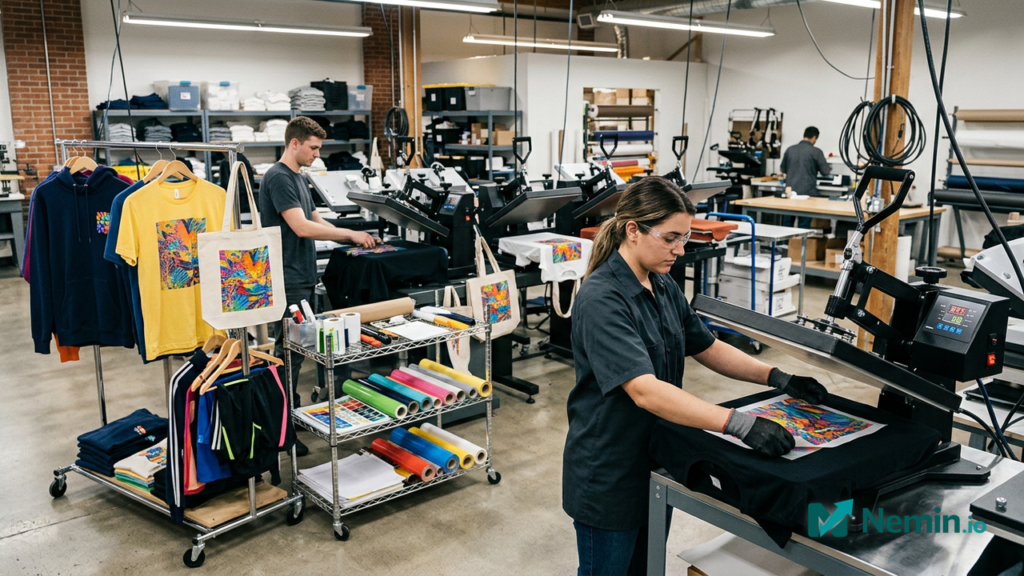
Custom apparel production depends on more than an attractive design. A print must be positioned accurately, transferred under appropriate conditions, remain visually consistent from one garment to the next, and withstand the intended use and care of the finished product. For print shops handling multiple products or growing order volumes, a multi heat press setup can improve workflow by providing more pressing capacity or specialized stations for different applications. Depending on the equipment, this may mean operating several presses, using a multi-station machine, or combining presses designed for garments and other compatible products.
The best configuration is not necessarily the machine with the most features; it is the one that delivers repeatable temperature, time, and pressure while matching the transfer method, substrate, production volume, workspace, and operator requirements.
What Is a Multi Heat Press?
The term generally describes a heat-press configuration designed to provide multiple pressing capabilities, stations, or production functions.
Depending on the manufacturer and equipment category, this could refer to a multi-station garment press, several presses arranged as one workflow, or multifunction equipment supplied with attachments for different printable products.
Heat presses use controlled heat and pressure for a specified period to bond or activate compatible transfer materials on a substrate.
Common transfer processes include heat transfer vinyl (HTV), sublimation on compatible polyester or coated materials, transfer papers, and various commercial heat-transfer systems. Direct-to-film (DTF) transfers are also commonly applied using heat presses according to the film, powder, ink, and transfer supplier’s specifications.
The press does not create the artwork itself; it performs a critical finishing or transfer stage.
Why Custom Apparel Businesses Use Multi Heat Press Solutions
A single press can be entirely adequate for a small operation. As order volume increases, however, the pressing stage may become a production bottleneck.
Operators might spend time waiting for one cycle to finish while additional garments are already prepared.
Adding capacity can separate production tasks. One station could process shirts while another handles hoodies or another compatible product. Shops can also reserve equipment for particular processes when their temperature and workflow requirements differ significantly.
The objective is higher productive capacity without sacrificing consistency.
1. Multi Heat Press Systems Can Increase Throughput
Multi Heat Press Capacity for Growing Print Shops
Throughput is the number of acceptable finished items that a shop can produce within a given period.
Additional pressing capacity can improve throughput when heat pressing is the actual bottleneck. While one garment is being pressed, another operator or station may prepare the next item.
This can be particularly valuable for event merchandise, team apparel, uniforms, school clothing, promotional products, and other batch orders.
More equipment does not automatically mean proportionally higher output. Workflow design, staffing, pretreatment, artwork preparation, transfer production, cooling, quality checks, and packing can become new bottlenecks.
Measure the complete workflow before investing.
2. Maintain More Consistent Heat Across the Platen
Temperature consistency is one of the foundations of reliable heat-transfer production.
A press may display the desired set temperature while portions of its platen behave differently. Significant temperature variation can contribute to incomplete bonding or uneven transfer results.
Professional shops should follow the equipment and transfer manufacturers’ calibration guidance and periodically verify performance with appropriate measurement methods.
Why Multi Heat Press Temperature Accuracy Matters
Different transfer systems require specific application conditions.
Rather than using one universal temperature for every product, operators should follow current instructions supplied by the transfer-material manufacturer.
Excessive temperature can damage certain fabrics, cause unwanted shine or dye-related problems, while insufficient heat can result in poor transfer performance.
Repeatability is more important than simply maximizing temperature.
3. Improve Pressure Control and Repeatability
Pressure works together with heat and dwell time.
Too little pressure may prevent a transfer from adhering properly. Excessive pressure can create other problems and may damage particular substrates or affect the finished appearance.
Some presses provide manual pressure adjustment, while pneumatic or other commercial systems may offer more controlled pressure mechanisms.
Multi Heat Press Pressure Settings
Operators should avoid relying purely on subjective descriptions such as “medium pressure” when equipment allows a more reproducible procedure.
Documenting machine settings for recurring products can reduce guesswork.
A production record can include the garment type, transfer material, time, temperature, pressure setting, peeling method, and any required second press.
This makes successful jobs easier to repeat.
4. Support Multiple Custom Apparel Applications
Heat-press production extends beyond standard cotton T-shirts.
Depending on the process and equipment, businesses may decorate:
- T-shirts
- Hoodies
- Sweatshirts
- Sportswear
- Workwear
- Tote bags
- Selected polyester garments
- Uniforms
- Other compatible textile products
Not every fabric or product is suitable for every heat-transfer method.
Operators should check fibre composition, coatings, seams, zips, buttons, moisture treatments, and heat sensitivity before pressing.
Testing an unfamiliar garment before a full production run can prevent expensive failures.
5. Improve DTF Production Workflows
DTF has become a widely used method for decorating a range of apparel.
A prepared DTF transfer is typically positioned on the garment and heat pressed according to supplier requirements. The carrier is then peeled using the specified hot-, warm-, or cold-peel process, and some workflows call for a finishing press.
Multi Heat Press for DTF Transfers
Additional pressing capacity can be useful when processing batches because transfer application and finishing can potentially be separated across stations.
However, DTF instructions vary by transfer supplier and material.
Operators should not assume that settings from one film, powder, ink system, or transfer supplier are appropriate for another. Test and document settings before committing to a large order.
6. Handle Sublimation More Reliably
Sublimation is different from surface-applied transfer methods.
Under appropriate conditions, sublimation dyes convert and migrate into compatible polyester fibres or specially coated substrates. Because the process depends on substrate compatibility, it is most effective on suitable polyester-rich materials or products manufactured with an appropriate coating.
Sublimation generally does not produce the same result directly on ordinary dark cotton garments.
A larger or dedicated pressing station can be useful for businesses that regularly handle sublimated apparel and compatible flat products.
Protective paper and careful handling can also help prevent unwanted ink transfer to the press or subsequent items.
7. Reduce Changeover Time Between Jobs
Production efficiency is often lost during setup rather than during pressing itself.
If one machine repeatedly moves between significantly different transfer processes, operators may need to adjust temperature, pressure, accessories, or workspace arrangements between jobs.
A multi-station or multi-press setup can reduce some of these changeovers.
For example, a shop could configure one press for its most common workflow while keeping another available for products requiring substantially different settings.
This approach is particularly useful when the order mix is varied.
8. Improve Print Placement and Quality Control
Multi Heat Press Workflow Standardization
Consistent placement is crucial when producing uniforms, branded apparel, or repeat orders.
Operators can use alignment guides, templates, positioning tools, and documented measurements to reduce variation.
Quality control should take place throughout production rather than only after the entire order has been completed.
A first-piece approval can check:
- Design position
- Transfer appearance
- Garment condition
- Application settings
- Color expectations
- Alignment
- Peeling result
Periodic checks during a long production run can catch issues before they affect large quantities of apparel.
9. Build a Scalable Custom Printing Workflow
Additional presses are most valuable when incorporated into a deliberate production layout.
Garments can move logically through preparation, alignment, pressing, cooling or peeling, inspection, folding, and packaging. Unnecessary movement between stations increases operator effort and can reduce throughput.
Scaling Production With a Multi Heat Press
Before purchasing equipment, businesses should estimate expected order volume, product mix, average press cycles, staffing, available electrical capacity, floor space, ventilation requirements, and peak demand.
A shop producing mostly small personalized orders may need a different configuration from a contract decorator processing hundreds of identical garments.
Scalability is about matching equipment to real demand, not simply acquiring the largest press available.
Manual, Automatic, and Pneumatic Press Options
Manual heat presses rely on the operator to close and release the press. They can be appropriate for low- to moderate-volume operations and often have fewer infrastructure requirements.
Automatic-opening models can release at the end of a timed cycle, reducing the risk of an operator leaving a garment under heat too long.
Pneumatic systems can offer repeatable pressure and lower manual closing effort but typically require appropriate compressed-air infrastructure.
The best option depends on volume, budget, operator ergonomics, maintenance capacity, and production requirements.
Clamshell vs. Swing-Away Heat Press Designs
Clamshell presses open upward from a hinge and typically require relatively little floor space. They are common in apparel-decoration environments.
Swing-away presses move the heated platen away from the lower work area, potentially providing more open access for positioning products. They generally require additional surrounding workspace.
Some businesses prefer drawer-style configurations that allow the lower platen to move away from the heat for loading.
Each design involves trade-offs in footprint, access, speed, operator preference, and workflow.
How to Choose a Multi Heat Press
Begin with what the business actually prints.
A shop producing mainly front and back T-shirts may prioritize dependable flat platens and fast garment loading. A company handling thicker garments may place greater value on pressure adjustment and interchangeable lower platens.
Key considerations include platen size, temperature consistency, pressure control, timer functionality, electrical requirements, equipment footprint, warranty, replacement parts, technical support, and serviceability.
Do not evaluate a machine only from its maximum temperature rating. Stable and repeatable operating performance matters more for production quality.
Safety Considerations for Heat Press Operations
Heat presses operate at temperatures capable of causing burns and should be treated as industrial equipment.
Machines should be positioned on stable surfaces with adequate clearance. Operators should receive training in safe loading, unloading, maintenance, and emergency procedures.
Electrical requirements must also be respected. Multiple high-powered presses can place substantial demand on circuits, so appropriate electrical planning may be necessary.
Work areas should remain organized to prevent transfer sheets, garments, cords, or other materials from contacting unsafe surfaces.
Always follow the equipment manufacturer’s safety instructions.
Maintenance for Consistent Printing
A heat press needs routine inspection to remain dependable.
Keep platen surfaces clean according to manufacturer instructions, inspect power cords and mechanical components, verify pressure behavior, and check temperature performance periodically.
Replace worn components when necessary.
If a press starts producing inconsistent results, investigate the equipment as well as the transfer and garment. A failing heating element or inaccurate temperature control can create defects that resemble material problems.
Maintenance records can help shops identify recurring issues.
Common Heat-Press Mistakes to Avoid
One common mistake is using the same temperature, time, and pressure for every material.
Another is beginning a large batch without testing the exact garment and transfer combination.
Poor placement procedures can also create inconsistent finished products even when the transfer itself is technically perfect.
Operators should additionally pay attention to garment moisture, seams, pockets, fasteners, and fabric sensitivity.
Finally, businesses should avoid increasing speed by shortening required processes unless testing and the transfer supplier’s instructions confirm the result remains suitable.
Efficiency should reduce wasted movement and idle time, not eliminate necessary application steps.
Frequently Asked Questions
1. What is a multi heat press?
A multi heat press generally refers to a multi-station, multifunction, or multiple-press setup used to increase capacity or support different heat-transfer applications.
2. Is a multi heat press suitable for DTF printing?
Yes, compatible heat presses can apply prepared DTF transfers. Exact temperature, pressure, dwell time, and peeling instructions should come from the transfer supplier.
3. Can a multi heat press be used for sublimation?
Suitable presses can support sublimation on compatible polyester or coated substrates. The correct substrate and process settings are essential.
4. What size heat press is best for apparel?
The appropriate platen size depends on typical garment sizes, artwork dimensions, production volume, available workspace, and the products a business plans to decorate.
5. Why are temperature and pressure important?
Heat, time, and pressure determine how a transfer interacts with the garment. Incorrect settings can contribute to poor adhesion, damaged fabrics, or inconsistent results.
6. How can businesses improve heat-press productivity?
Standardize settings, test products, organize workstations, use placement guides, maintain equipment, reduce unnecessary changeovers, and add pressing capacity when pressing is a proven bottleneck.
Conclusion
Custom apparel businesses achieve better results when pressing is treated as a controlled production process rather than a simple final step. A correctly selected multi heat press configuration can provide additional capacity, reduce workflow bottlenecks, support different transfer applications, and help operators maintain repeatable temperature, pressure, time, and placement standards. The benefits depend on matching the equipment to actual production needs and following the requirements of the garment and transfer manufacturer. Shops should test unfamiliar materials, document successful settings, perform routine quality checks, maintain their equipment, and plan electrical and workspace requirements before scaling. With a disciplined workflow behind it, additional heat-press capacity can help a custom apparel operation increase output without making consistency and product quality an afterthought.