
After an accident, a Personal injury lawyer in Lee’s Summit can evaluate how Missouri law may apply to your circumstances, communicate with insurers, preserve relevant evidence, calculate...
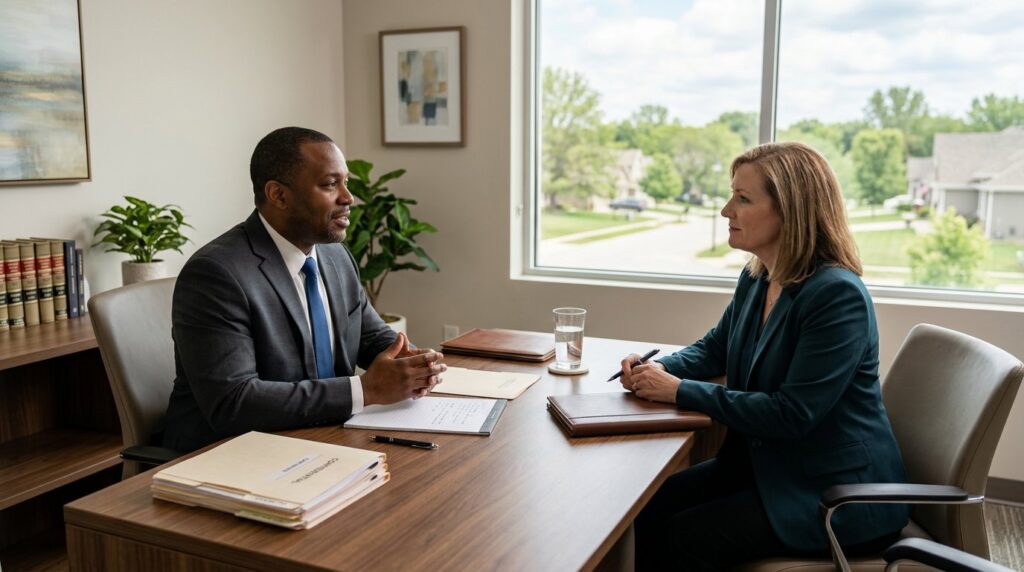
After an accident, a Personal injury lawyer in Lee’s Summit can evaluate how Missouri law may apply to your circumstances, communicate with insurers, preserve relevant evidence, calculate documented losses, negotiate a potential settlement, and file a lawsuit when appropriate. Personal injury cases can arise from motor vehicle crashes, unsafe property conditions, defective products, and other incidents involving alleged negligence or wrongdoing. Whether compensation is available, however, depends on the specific facts, evidence, applicable law, insurance coverage, and filing deadlines.
Lee’s Summit spans portions of Jackson and Cass counties and forms part of the Kansas City metropolitan area. An injury occurring there can raise questions about where a lawsuit should be filed, which parties may be legally responsible, and what insurance coverage applies.
Missouri personal injury law also contains procedural and substantive rules that can materially affect a claim. For that reason, generalized online information should not replace advice from a Missouri licensed attorney who has reviewed the individual case.
What Does a Personal Injury Lawyer in Lee’s Summit Do?
A personal injury attorney represents people seeking compensation for injuries allegedly caused by another party’s negligent or otherwise legally actionable conduct.
The lawyer’s role depends on the type and stage of the case.
Typical responsibilities can include:
• Investigating how an accident occurred
• Identifying potentially responsible parties
• Reviewing police or incident reports
• Preserving photographs and video evidence
• Obtaining relevant medical documentation with authorization
• Identifying applicable insurance policies
• Interviewing witnesses
• Calculating documented financial losses
• Working with qualified experts when necessary
• Communicating with insurance companies
• Preparing settlement demands
• Negotiating disputed claims
• Filing a lawsuit when warranted
• Conducting discovery
• Preparing a case for trial
Hiring an attorney does not guarantee a settlement or favorable verdict. Case outcomes depend on the evidence and law applicable to the individual claim.
When Should You Contact a Personal Injury Lawyer in Lee’s Summit?
Not every minor incident requires legal representation. However, early legal advice can be particularly important when injuries are substantial, fault is disputed, multiple parties are involved, or an insurer challenges the claim.
It may be useful to speak with an attorney when:
• An accident causes significant physical injury
• Medical treatment is ongoing
• You miss work because of the injury
• Another party disputes responsibility
• An insurance company denies or undervalues a claim
• Several vehicles or businesses are involved
• Commercial insurance may apply
• A governmental entity may be responsible
• The injured person is a minor
• The accident results in a death
• You are uncertain about a legal filing deadline
Cases involving public entities can be particularly time sensitive because special notice requirements or procedural rules may apply.
7 Key Benefits of Hiring a Personal Injury Lawyer in Lee’s Summit
Legal representation can provide practical advantages, although the importance of each depends on the particular case.
1. Evaluating Whether You Have a Viable Claim
An injury by itself does not automatically establish legal liability.
A lawyer can examine whether another person or organization owed a legal duty, whether that duty was breached, whether the conduct caused the injury, and whether legally recoverable damages resulted.
Negligence Must Generally Be Supported by Evidence
Evidence can include photographs, videos, witness accounts, medical records, business records, vehicle data, expert analysis, and other materials relevant to the event.
What evidence is admissible ultimately depends on applicable evidentiary rules and court decisions.
2. Dealing With Insurance Companies
Insurance companies investigate claims according to policy terms, applicable law, and their assessment of liability and damages.
An attorney can handle communications and respond to requests while protecting the client’s legal position.
Legal representation does not force an insurer to make a particular offer, but it can help ensure disputed issues are addressed through an organized claims process.
3. Documenting Damages
A personal injury claim can involve more than immediate medical bills.
Depending on the circumstances and applicable Missouri law, damages may involve medical expenses, lost income, reduced earning capacity, property losses, and certain noneconomic harms.
Each category requires appropriate evidence.
4. Preserving Important Evidence
Evidence can disappear with time.
Surveillance footage may be overwritten, physical conditions can change, vehicles can be repaired, and witnesses may become difficult to locate.
An attorney can identify evidence that should be requested or preserved.
5. Identifying Multiple Responsible Parties
Some accidents involve more than one potentially liable party.
A commercial vehicle crash, for example, can raise questions concerning drivers, employers, vehicle owners, contractors, maintenance providers, or product manufacturers depending on the facts.
Identifying responsible parties can also help determine available insurance coverage.
6. Negotiating a Settlement
Many civil claims are resolved without a trial.
A lawyer can develop a settlement position based on liability evidence, documented damages, applicable law, insurance information, and litigation risk.
The client ordinarily decides whether to accept a settlement after receiving legal advice.
7. Preparing for Litigation
When the parties cannot resolve a claim, filing suit may become necessary.
Litigation can involve pleadings, written discovery, depositions, motions, expert testimony, mediation, and potentially a trial.
A lawyer familiar with Missouri civil procedure can manage these stages while meeting applicable court requirements.
Types of Personal Injury Cases in Lee’s Summit
Personal injury is a broad category rather than a single type of lawsuit.
Car Accident Claims
Motor vehicle crashes are a common source of injury claims.
Legal disputes can involve driver negligence, traffic violations, insurance coverage, causation, comparative fault, and the nature and extent of injuries.
Evidence After a Car Accident
Depending on the crash, relevant evidence may include:
• Crash reports
• Scene photographs
• Vehicle damage photographs
• Witness information
• Medical records
• Dash camera footage
• Available surveillance video
• Electronic vehicle information where legally obtainable
• Employment records supporting wage loss
People should not put themselves at risk to gather evidence at a crash scene.
Truck Accident Cases
Crashes involving commercial trucks can introduce additional factual and regulatory issues.
Potential evidence might include driver records, company policies, inspection information, electronic data, cargo records, and maintenance documentation where relevant and legally discoverable.
These cases may involve federal motor carrier regulations as well as Missouri law.
Motorcycle Accident Claims
Motorcyclists can suffer serious injuries because motorcycles provide less physical protection than enclosed passenger vehicles.
Liability still depends on the evidence rather than assumptions about either the rider or another driver.
Pedestrian and Bicycle Accidents
Pedestrians and cyclists may be injured in collisions involving passenger vehicles, commercial vehicles, unsafe road conditions, or other hazards.
Visibility, right of way, speed, road design, and conduct immediately before the collision can become important factual questions.
Premises Liability Claims in Lee’s Summit
Premises liability concerns injuries associated with property conditions.
Examples can include certain falls, inadequate maintenance claims, falling objects, or other allegedly hazardous property conditions.
Slip and Fall Cases
A fall on another party’s property does not automatically make the owner legally responsible.
The claimant generally needs evidence satisfying the elements required under applicable premises liability law.
Relevant questions may concern the dangerous condition, notice, foreseeability, reasonable precautions, and the injured person’s own conduct.
Preserve Evidence of the Property Condition
If it can be done safely, photographs taken near the time of an incident can be useful because spills, ice, broken surfaces, lighting conditions, or other circumstances may later change.
Incident reports and witness contact information may also be relevant.
Wrongful Death Claims
Some accidents unfortunately result in death.
Missouri law governs who may bring a wrongful death action and what damages may potentially be available.
Because wrongful death statutes contain specific requirements, families considering legal action should obtain advice from a Missouri attorney regarding eligibility and deadlines.
Wrongful Death Cases Require Individual Analysis
There is no universal settlement value.
The circumstances of the death, evidence of liability, legally recognized damages, available insurance or assets, and applicable statutory rules all influence a case.
Missouri Negligence Law and Personal Injury Claims
Negligence cases generally require more than showing that an accident happened.
The plaintiff ordinarily must establish the legal elements applicable to the particular cause of action.
Comparative Fault in Missouri
Missouri generally follows a pure comparative fault approach in negligence cases.
Under comparative fault principles, a plaintiff’s recovery can be reduced according to the percentage of fault legally attributed to that plaintiff.
For example, if recoverable damages were determined to be $100,000 and a plaintiff were found 20 percent at fault, comparative fault principles could reduce the award to $80,000.
This is only a simplified illustration. Actual cases can involve disputed fault allocation and additional legal issues.
Why Fault Is Often Disputed
Parties may disagree about speed, visibility, warnings, property conditions, traffic signals, distraction, or other conduct.
Attorneys can use available evidence to develop arguments regarding responsibility.
Missouri Personal Injury Statute of Limitations
A statute of limitations establishes a deadline for filing a lawsuit.
Missouri’s general limitations period for many personal injury actions is often described as five years under Section 516.120 of the Missouri Revised Statutes.
That statement should not be treated as a deadline for every injury claim.
Exceptions Can Change Filing Deadlines
Different claims can have shorter or otherwise different deadlines.
Claims involving governmental entities, medical negligence, wrongful death, minors, particular defendants, or other circumstances can be governed by separate rules.
The date on which a cause of action accrues can also involve legal analysis.
Do Not Wait Until the General Deadline Approaches
Evidence can become harder to preserve long before a limitations period expires.
An attorney should determine the deadline applicable to the specific claim rather than relying on a generic online calculation.
What Compensation May Be Available?
Personal injury compensation is intended to address legally recognized losses rather than provide an automatic predetermined payment.
Available damages depend on the cause of action and evidence.
Medical Expenses
Recoverable medical damages may involve treatment related to the injury, subject to Missouri evidentiary and damages rules.
Documentation can include records, billing information, expert opinions, and evidence relating treatment to the accident.
Lost Income
When injuries prevent someone from working, properly documented lost earnings may form part of a claim.
Evidence can include payroll documents, employment records, tax information, or other financial records.
Reduced Earning Capacity
Serious injuries can sometimes affect a person’s future ability to earn income.
These claims can require vocational, medical, economic, or other expert evidence.
Pain and Suffering
Missouri law can permit recovery of qualifying noneconomic damages in appropriate personal injury actions.
The existence and value of these damages depend on the injury and supporting evidence rather than a universal formula.
Property Damage
Vehicle crashes can also involve repair, replacement, rental transportation, and other property related issues.
Property claims may sometimes proceed separately from the bodily injury portion.
How Much Is a Personal Injury Case Worth?
No lawyer can responsibly calculate an accurate settlement value from an accident type alone.
Two people involved in apparently similar crashes can have very different injuries, medical expenses, insurance coverage, income losses, and liability evidence.
Factors that can influence value include:
• Severity and duration of injuries
• Medical evidence
• Future treatment needs
• Lost earnings
• Effect on earning capacity
• Strength of liability evidence
• Comparative fault
• Available insurance coverage
• Applicable legal limitations
• Credibility and documentation
• Litigation risks
Online settlement calculators should therefore be treated cautiously.
What to Do After an Accident in Lee’s Summit
Health and safety should come before building a legal claim.
Seek appropriate emergency assistance and medical care when necessary.
Document What You Can Safely
When circumstances permit, preserve photographs, witness details, reports, medical records, receipts, and relevant communications.
Avoid obtaining evidence through trespassing, unsafe behavior, unauthorized account access, or other unlawful methods.
Report the Incident Appropriately
Motor vehicle crashes may need to be reported to law enforcement under applicable circumstances.
Property incidents should generally be reported to the appropriate property representative so an incident record can be created.
Keep Relevant Records
Save medical documentation, invoices, employment information, transportation costs, insurance letters, and other potentially relevant records.
Organized documents can make later evaluation more efficient.
Should You Speak With the Insurance Adjuster?
Insurance adjusters routinely request information while investigating claims.
Claimants should provide information that is legally or contractually required, but they should understand the context and implications of significant statements, authorizations, or settlement documents before agreeing to them.
Recorded Statements
Whether a person must provide a recorded statement can depend on the policy and circumstances.
For example, obligations when dealing with your own insurer may differ from interactions with another party’s insurer.
A lawyer can advise based on the actual policy and claim.
Medical Authorizations
Broad medical authorizations can provide access to information beyond treatment immediately associated with an accident.
Review what an authorization permits before signing and obtain legal advice when appropriate.
Personal Injury Lawyer Fees in Lee’s Summit
Many plaintiff side personal injury attorneys work under contingency fee agreements.
Under this arrangement, the attorney’s fee is generally tied to a recovery rather than charged as a standard hourly fee.
Understand the Written Fee Agreement
Contingency structures vary.
Before hiring an attorney, ask:
• What percentage applies?
• Can the percentage change if litigation begins?
• How are case expenses handled?
• Are expenses deducted before or after the fee calculation?
• What happens if there is no recovery?
• Who must approve significant litigation expenses?
• How are medical liens or reimbursement claims addressed?
The written agreement should answer these questions clearly.
How to Choose a Personal Injury Lawyer in Lee’s Summit
Do not select an attorney exclusively because of an advertisement or a claim about large settlements.
Focus on qualifications and communication relevant to your case.
Verify Missouri Licensure
Confirm that the attorney is licensed and in good standing through the appropriate Missouri attorney licensing resources.
Also determine who will actually handle the case after you hire the firm.
Look for Relevant Experience
A lawyer with experience involving the specific type of accident may already understand common evidence, insurance disputes, expert issues, and defense strategies.
Ask about experience rather than relying on broad statements such as aggressive or best.
Discuss Communication
Find out:
• Who will be your primary contact?
• How are updates normally provided?
• How quickly are questions typically addressed?
• Will you speak directly with an attorney when significant decisions arise?
Clear expectations can prevent communication problems later.
Be Wary of Guaranteed Results
No attorney can ethically guarantee a specific settlement or verdict in an ordinary contested personal injury matter.
Case outcomes depend on facts, law, evidence, negotiations, and potentially decisions by a judge or jury.
Questions to Ask a Personal Injury Lawyer
A consultation provides an opportunity to evaluate both the claim and the attorney.
Useful questions include:
• Have you handled cases involving this type of accident?
• What legal issues do you initially see?
• What additional evidence would you need?
• What filing deadlines could apply?
• Who will manage my case day to day?
• How does your contingency fee work?
• How are litigation expenses handled?
• What happens if settlement negotiations fail?
• Do you have relevant trial experience?
• How will you keep me informed?
A competent lawyer should be able to explain uncertainty rather than promising an outcome prematurely.
Settlement vs Trial
Many personal injury cases settle, but settlement is not appropriate in every dispute.
Negotiations can consider the strength of evidence, claimed damages, insurance limits, comparative fault, litigation expenses, and uncertainty associated with trial.
Benefits of Settlement
A negotiated resolution can provide certainty and avoid the time and expense associated with continued litigation.
Once a settlement is finalized and an appropriate release is signed, however, the claimant generally cannot simply reopen the same released claim because the outcome later feels insufficient.
When Litigation May Be Appropriate
Litigation may become necessary when liability is disputed, damages cannot be resolved, an insurer denies coverage, or negotiations do not produce an acceptable resolution.
Filing a lawsuit does not necessarily mean the case will ultimately go to trial.
How Long Does a Personal Injury Claim Take?
There is no standard timeline.
A straightforward claim with resolved injuries may proceed differently from a case involving surgery, disputed causation, several defendants, or complex litigation.
Why Some Claims Take Longer
Factors can include:
• Duration of medical treatment
• Availability of evidence
• Liability disputes
• Insurance coverage issues
• Expert analysis
• Court schedules
• Discovery disputes
• Settlement negotiations
• Trial scheduling
Resolving a claim before the medical outlook is sufficiently understood can make it difficult to evaluate future consequences accurately.
Local Considerations for Lee’s Summit Injury Claims
The correct venue and procedure depend on the circumstances.
Lee’s Summit is primarily located in Jackson County, with a portion extending into Cass County. The proper court for a particular lawsuit depends on Missouri venue law and case specific facts rather than simply the injured person’s preferred courthouse.
Local Knowledge Can Be Useful
A lawyer familiar with the Kansas City metropolitan area may understand local courts, medical providers, transportation routes, and common insurance practices.
Local familiarity can be useful, but it should complement rather than replace legal competence, relevant experience, and effective client communication.
Frequently Asked Questions
What does a Personal injury lawyer in Lee’s Summit do?
A personal injury attorney investigates claims, evaluates liability and damages, handles insurance communications, negotiates settlements, and litigates appropriate cases.
How much does a personal injury lawyer cost in Lee’s Summit?
Many personal injury attorneys use contingency fees, meaning the fee is tied to a recovery. Percentages, expenses, and other terms depend on the written agreement.
How long do I have to file a personal injury lawsuit in Missouri?
Many Missouri personal injury actions may fall under a five year general limitation period, but important exceptions exist. An attorney should determine the deadline for your specific claim.
Can I recover damages if I was partly at fault?
Missouri generally applies pure comparative fault in negligence cases, which can reduce compensation according to the plaintiff’s legally assigned percentage of responsibility.
How much is my Lee’s Summit personal injury claim worth?
Claim value depends on liability, injuries, medical evidence, financial losses, insurance coverage, comparative fault, and other case specific factors. There is no reliable universal formula.
Should I accept the insurance company’s first settlement offer?
A settlement should be evaluated based on documented damages, liability, future consequences, policy issues, and the release terms. Legal advice can help assess whether an offer is appropriate.
Conclusion
Choosing a Personal injury lawyer in Lee’s Summit requires careful consideration of Missouri law, relevant experience, communication, fees, and the specific circumstances surrounding an injury. A qualified attorney can investigate liability, preserve evidence, evaluate documented losses, negotiate with insurers, and pursue litigation when appropriate. Because legal deadlines and available claims vary, relying on a general limitation period or online settlement estimate can create unnecessary risk. Individual advice from a Missouri licensed attorney remains the most reliable way to evaluate a specific personal injury case.