
For contractors, HVAC companies, cleaning businesses, and startups entering the indoor air quality industry, professional air duct cleaning equipment provides the foundation for delivering reliable duct cleaning...
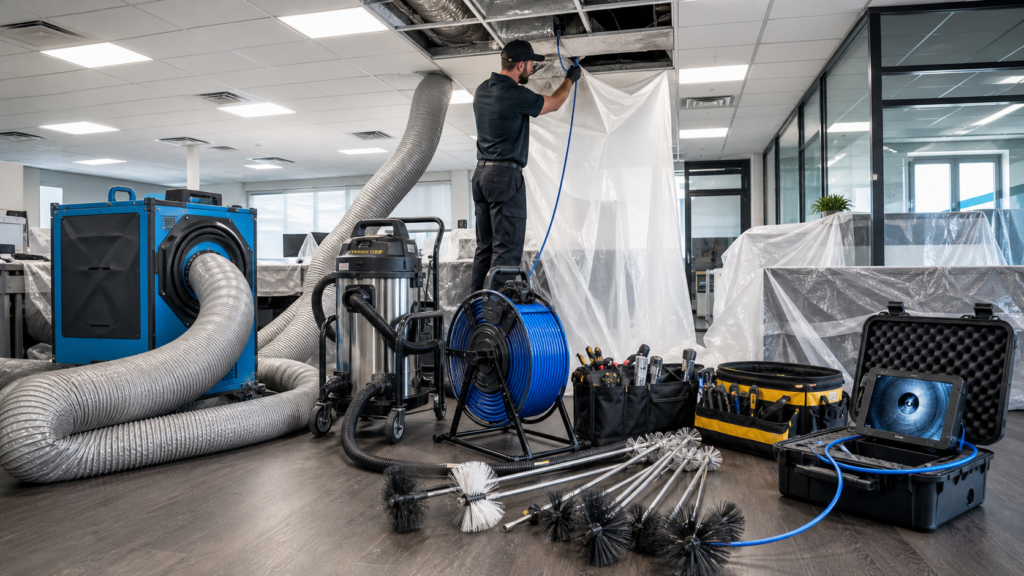
For contractors, HVAC companies, cleaning businesses, and startups entering the indoor air quality industry, professional air duct cleaning equipment provides the foundation for delivering reliable duct cleaning services in residential, commercial, and light industrial buildings. Air duct cleaning is not only about removing visible dust from vents. It requires the right combination of vacuum power, agitation tools, access equipment, filtration, inspection devices, hoses, containment methods, and technician training.
A properly equipped duct cleaning operation can clean supply ducts, return ducts, trunk lines, registers, grilles, and other accessible HVAC components more effectively than basic shop vacuums or improvised tools. Because duct systems vary in size, design, contamination level, and accessibility, contractors need equipment that can adapt to different job conditions. This is why choosing the right system matters before investing in air duct cleaning services.
Professional air duct cleaning equipment helps businesses work more efficiently, protect indoor spaces from dust spread, improve cleaning consistency, and build customer trust. However, equipment alone is not enough. Successful duct cleaning also depends on inspection, correct setup, negative pressure, safe agitation, debris collection, proper filtration, and clear communication with clients.
What Is Professional Air Duct Cleaning Equipment?
Professional air duct cleaning equipment refers to the machines, tools, and accessories used by trained technicians to inspect, loosen, remove, collect, and sometimes treat contaminants inside HVAC duct systems. These systems are designed for field use and are far more specialised than general cleaning tools.
A complete equipment setup may include a duct vacuum system, negative air machine, HEPA filtration, flexible hoses, rotary brushes, air whips, compressed air tools, inspection cameras, access tools, agitation devices, sanitizing sprayers, register cleaning tools, protective covers, and containment accessories.
The purpose of professional air duct cleaning equipment is to remove accumulated dust, debris, lint, pet hair, construction residue, and other loose contaminants from ductwork. In some cases, technicians may also use approved sanitizing or deodorizing products after mechanical cleaning, but chemical treatment should never replace proper debris removal.
For HVAC contractors, duct cleaning equipment can create an additional service line. For cleaning companies, it can expand indoor air quality offerings. For new entrepreneurs, it can become the foundation of a specialized service business.
Why Air Duct Cleaning Requires Specialized Equipment
Air ducts are enclosed systems. Dust and debris can collect deep inside trunk lines, bends, returns, and hard-to-reach sections. Basic vacuuming at the vent opening does not usually reach these areas. Therefore, specialized equipment is needed to access the system, dislodge contaminants, and pull debris toward a collection device.
Professional air duct cleaning equipment works by combining agitation and extraction. Agitation tools loosen contaminants from duct walls, while a vacuum or negative pressure system captures the dislodged material. Without strong extraction, loosened debris may remain in the duct or escape into the indoor environment.
Specialized equipment also improves control. During duct cleaning, technicians must avoid damaging ductwork, insulation, dampers, flex ducts, coils, wiring, or HVAC components. The right tools help apply the correct amount of force and keep the cleaning process safer.
In addition, professional equipment supports efficiency. A contractor with proper hoses, brushes, vacuum power, and access tools can complete jobs more consistently than someone relying on unsuitable tools.
Core Components of an Air Duct Cleaning System
A complete duct cleaning setup includes several tool categories. Each one plays a specific role in the cleaning process.
Duct Vacuum System
The duct vacuum system is the heart of many cleaning operations. It creates suction and negative pressure to pull loosened debris out of the ductwork. Vacuum systems may be portable or truck-mounted, depending on the business model and job type.
Portable duct vacuums are useful for residential work, apartments, smaller commercial properties, and locations where truck access is limited. Truck-mounted systems may provide strong extraction capacity for larger jobs, but they require vehicle access and longer hose runs.
When comparing vacuum systems, contractors should consider airflow, water lift, motor configuration, filtration, hose diameter, portability, debris capacity, and maintenance requirements.
Negative Pressure Equipment
Negative pressure helps control debris movement during cleaning. When the duct system is placed under negative pressure, loosened contaminants are pulled toward the vacuum collection point instead of spreading into occupied rooms.
This is especially important in homes, offices, schools, and commercial properties where customers expect clean, controlled work. Proper sealing, hose placement, and containment methods all affect negative pressure performance.
HEPA Filtration
HEPA filtration is important because fine particles can become airborne during duct cleaning. A vacuum system with effective filtration helps capture dust and particulate matter rather than redistributing it into the work area.
Contractors should follow manufacturer instructions for filter installation, cleaning, replacement, and maintenance. A clogged or poorly fitted filter can reduce performance and compromise containment.
Rotary Brush Systems
Rotary brushes are used to scrub duct walls and loosen stuck debris. They are especially useful in certain types of rigid ductwork where brushing can be performed safely. Brush size and stiffness should match the duct material and condition.
Using the wrong brush can damage duct lining or flexible duct. Therefore, technicians must select agitation tools carefully.
Air Whips and Compressed Air Tools
Air whips use compressed air to strike duct walls and push loosened debris toward the vacuum. They can be effective for dislodging dust and debris in trunk lines, branch ducts, and areas where brushing may not be ideal.
Air nozzles, skipper balls, and air guns may also be used to move contaminants through the duct system. These tools require proper technique because uncontrolled air movement can spread debris if vacuum containment is weak.
Inspection Cameras
Inspection cameras help technicians evaluate duct conditions before, during, and after cleaning. They can reveal dust buildup, debris, blockages, damaged ducts, moisture issues, pests, or disconnected sections.
Visual inspection also helps build customer trust. Before-and-after documentation can show what work was performed and whether additional HVAC repairs may be needed.
Access Tools
Access tools allow technicians to create safe entry points into the duct system when existing openings are not enough. These may include drills, access panels, cutting tools, plugs, and sealing materials.
Any access openings should be created carefully and closed properly after cleaning. Poor access work can damage duct performance or create air leakage.
Sanitizing and Deodorizing Equipment
Some duct cleaning jobs may include sanitizing or deodorizing after mechanical cleaning. Equipment may include sprayers, foggers, or application wands. However, products should be selected carefully and used only according to label directions.
Sanitizing should not be presented as a substitute for cleaning. Surfaces should be cleaned first so any treatment can reach the intended area more effectively.
How Professional Air Duct Cleaning Equipment Fits Into the Cleaning Process
A professional duct cleaning workflow usually follows a structured sequence.
Step 1: System Inspection
Before cleaning begins, technicians inspect the HVAC system. They check registers, returns, duct access, visible debris, system layout, equipment condition, and potential risks. Inspection helps determine which tools and methods are appropriate.
Step 2: Site Preparation
Technicians protect the property by covering floors, preparing work areas, sealing registers when needed, and setting up vacuum hoses. Good preparation reduces mess and improves customer confidence.
Step 3: Accessing the Ductwork
The technician accesses duct interiors through registers, grilles, end caps, or approved service openings. In some cases, additional access points are needed to clean trunk lines properly.
Step 4: Creating Negative Pressure
The vacuum system is connected and the ductwork is placed under negative pressure. This helps control dust and pulls loosened debris toward the collection system.
Step 5: Agitating Contaminants
Rotary brushes, air whips, skipper balls, or compressed air tools are used to loosen debris from duct surfaces. The technician works section by section to move contaminants toward the vacuum.
Step 6: Debris Collection
The vacuum captures loosened material into a collection bag, drum, or containment unit. Filtration helps prevent fine particles from escaping.
Step 7: Final Inspection
After cleaning, technicians may inspect the ducts again, clean registers, check work areas, and review findings with the client. Documentation can support transparency.
Portable Versus Truck-Mounted Duct Cleaning Equipment
Choosing between portable and truck-mounted equipment depends on the business model.
Portable Equipment
Portable professional air duct cleaning equipment is useful for contractors who need flexibility. It can be moved into homes, apartments, offices, high-rise buildings, and properties where vehicle access is limited. Portable systems can also reduce hose length, which may help maintain practical suction closer to the work area.
This type of system is often attractive to startups, HVAC contractors adding duct cleaning, and businesses serving residential or light commercial clients.
Truck-Mounted Equipment
Truck-mounted equipment may offer strong extraction capacity and larger debris handling. It can be suitable for bigger commercial jobs, heavy contamination, and operations where the vehicle can park close to the building.
However, truck-mounted systems may require higher upfront investment, vehicle integration, fuel costs, longer hoses, and more logistics planning.
Choosing the Right Option
There is no one-size-fits-all answer. Contractors should consider job types, property access, budget, expected workload, staffing, hose routes, and customer base before choosing equipment.
Important Specifications to Compare
When buying professional air duct cleaning equipment, contractors should avoid focusing on one number alone. A system’s real-world performance depends on several specifications working together.
Airflow
Airflow helps move debris through hoses and ducts. It is commonly measured in CFM. Higher airflow can support extraction, but performance also depends on hose length, duct resistance, and vacuum design.
Water Lift
Water lift measures suction strength. Strong water lift helps pull heavier debris and maintain suction through resistance. It should be considered alongside airflow, not separately.
Air Watts
Air watts combine airflow and suction into a useful performance indicator. This can help compare vacuum efficiency, although field conditions still matter.
Hose Diameter and Length
Hose setup affects performance. Longer hoses and smaller diameters can reduce effective suction. Contractors should match hose configuration to the job.
Filtration
Filtration quality affects dust containment and equipment protection. HEPA filtration is especially important when fine particles are a concern.
Portability
Weight, wheels, handles, size, and setup time matter in real work conditions. A powerful machine that is difficult to move may slow down crews.
Maintenance Requirements
Filters, motors, hoses, seals, brushes, and accessories require maintenance. Reliable equipment should be easy to service and inspect.
Benefits of Investing in Professional Equipment
Professional air duct cleaning equipment can provide several business benefits.
Better Service Quality
Proper equipment allows technicians to reach deeper duct sections, loosen debris more effectively, and collect contaminants with better control.
Greater Efficiency
A complete toolset reduces delays. Technicians spend less time improvising and more time completing structured cleaning steps.
Stronger Customer Trust
Customers are more likely to trust contractors who use professional equipment, explain the process clearly, and provide visual inspection or documentation.
Business Growth Potential
Duct cleaning can become a profitable add-on for HVAC companies, carpet cleaners, restoration businesses, and indoor air quality providers. With the right equipment and training, companies can serve both residential and commercial clients.
Safer Work Practices
The correct tools reduce the need for unsafe improvisation. Proper hoses, brushes, access equipment, and filtration help technicians work more professionally.
Training and Technique Matter
Even the best equipment performs poorly without training. Air duct cleaning requires knowledge of HVAC systems, airflow, duct materials, access methods, agitation tools, safety procedures, and contamination control.
Technicians should understand how to avoid damaging flexible duct, duct board, dampers, coils, and internal components. They should also know when cleaning is appropriate and when repair, replacement, or HVAC service may be needed instead.
Training also improves customer communication. Technicians should be able to explain the process, show findings, discuss limitations, and avoid unrealistic claims.
Common Mistakes When Buying Duct Cleaning Equipment
One mistake is choosing equipment based only on price. Low-cost equipment may seem attractive, but weak performance, poor durability, or limited support can reduce long-term value.
Another mistake is comparing only CFM. Airflow matters, but water lift, filtration, hose configuration, and field setup also affect results.
Some contractors buy equipment without considering their target jobs. A system suitable for small residential work may not match large commercial projects, while a heavy system may be impractical for apartments or tight access.
Another common error is ignoring training and support. Equipment suppliers that provide guidance, setup advice, and parts availability can be valuable for new businesses.
Finally, contractors should avoid making exaggerated claims to customers. Air duct cleaning can remove debris and improve system cleanliness, but it should not be promoted as a guaranteed cure for every indoor air quality issue.
Maintenance Tips for Duct Cleaning Equipment
Equipment maintenance protects performance and extends service life.
Clean or replace filters according to manufacturer instructions.
Inspect hoses for leaks, cracks, and blockages.
Check brush heads for wear.
Clean vacuum containers after use.
Inspect cords, switches, motors, and seals.
Keep inspection cameras clean and protected.
Store tools in organized cases.
Replace worn air whips, nozzles, and connectors.
Keep sanitizing equipment flushed and clean.
Test equipment before arriving on job sites.
A maintenance routine helps prevent breakdowns, protects customer appointments, and reduces downtime.
Who Should Invest in Professional Air Duct Cleaning Equipment?
Several business types can benefit from duct cleaning equipment.
HVAC contractors can add duct cleaning to existing service calls.
Cleaning businesses can expand into indoor air quality services.
Restoration companies can support post-construction or post-contamination cleaning.
Entrepreneurs can build a dedicated duct cleaning business.
Property maintenance companies can serve residential and commercial clients.
Commercial service providers can add HVAC hygiene support for offices, schools, and facilities.
Before investing, businesses should evaluate local demand, competition, pricing, training, staffing, marketing, and expected return on equipment cost.
SEO, AEO, and GEO Value for Duct Cleaning Businesses
For companies selling or using professional air duct cleaning equipment, digital visibility matters. Customers search for duct cleaning services, HVAC cleaning, air duct cleaning machines, negative air duct cleaning, HEPA duct vacuum, dryer vent cleaning equipment, and indoor air quality solutions.
Answer Engine Optimization works well when content directly answers customer questions, such as what equipment is used, how duct cleaning works, whether portable machines are effective, and why filtration matters.
Generative Engine Optimization benefits from clear definitions, structured sections, semantic keywords, and trustworthy explanations. Search engines and AI platforms can better understand content that explains equipment, process, benefits, limitations, and safety clearly.
FAQs
What is professional air duct cleaning equipment?
Professional air duct cleaning equipment includes vacuum systems, negative pressure machines, hoses, rotary brushes, air whips, inspection cameras, HEPA filtration, access tools, and sanitizing equipment used to clean HVAC ductwork.
Why is negative pressure important in duct cleaning?
Negative pressure helps pull loosened debris toward the vacuum collection system and reduces the chance of dust spreading into occupied rooms during cleaning.
Is HEPA filtration important for air duct cleaning?
Yes, HEPA filtration helps capture fine particles and supports better containment during extraction. Filters should be installed, cleaned, and replaced according to manufacturer instructions.
Can portable duct cleaning equipment handle commercial jobs?
Portable equipment can handle some commercial jobs when the system, hose setup, access strategy, and cleaning method match the HVAC system. Larger or more complex projects may require additional equipment or crew support.
What tools are used to loosen debris in ducts?
Common agitation tools include rotary brushes, air whips, compressed air nozzles, skipper balls, air guns, and hand brushing tools. The right tool depends on duct type and contamination level.
Is sanitizing always required after duct cleaning?
No, sanitizing is not always required. It may be considered after mechanical cleaning when appropriate, but any chemical product should be selected carefully and used according to label instructions.
How should contractors choose duct cleaning equipment?
Contractors should compare airflow, water lift, filtration, hose configuration, portability, durability, maintenance needs, training support, and the type of residential or commercial work they plan to perform.
Is air duct cleaning equipment worth it for a new business?
It can be worthwhile if there is local demand, a clear service plan, proper training, realistic pricing, and equipment matched to the intended workload. Businesses should evaluate costs and expected job volume before investing.
Conclusion
Professional air duct cleaning equipment is a critical investment for contractors and businesses that want to deliver reliable HVAC duct cleaning services. The right setup combines vacuum extraction, negative pressure, agitation tools, inspection equipment, HEPA filtration, access tools, and safe operating procedures. Together, these components help technicians remove debris more effectively, control dust movement, and provide a more professional customer experience.
Choosing equipment should be based on real job requirements, not one specification or the lowest price. Contractors should consider portability, airflow, water lift, filtration, hose setup, maintenance, training, and long-term business goals. With proper equipment, skilled technicians, and clear service standards, air duct cleaning can become a valuable service line for HVAC companies, cleaning businesses, restoration providers, and new entrepreneurs focused on indoor air quality and building maintenance.