
Choosing Ready mixed concrete in Richmond can simplify construction by providing concrete that is proportioned and mixed under controlled production conditions before being transported to a project...
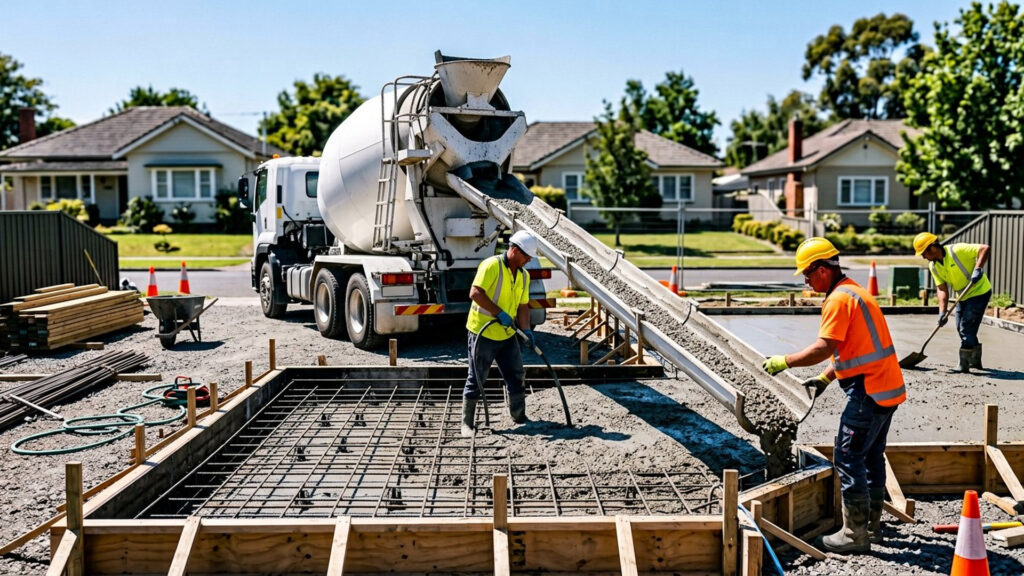
Choosing Ready mixed concrete in Richmond can simplify construction by providing concrete that is proportioned and mixed under controlled production conditions before being transported to a project in a mixer truck or other appropriate delivery equipment. Ready mixed concrete is widely used for foundations, slabs, driveways, footpaths, retaining structures and commercial construction, but ordering the right product requires more than estimating how many cubic metres or cubic yards are needed. Strength requirements, exposure conditions, workability, placement method, travel time, reinforcement, weather, site access and curing all influence the finished result. Because several places are named Richmond, local building requirements, units, supplier availability and specifications should always be confirmed for the exact project location.
What Is Ready Mixed Concrete in Richmond?
Ready mixed concrete is concrete manufactured at a batching facility according to a defined mix specification and delivered to the jobsite in a fresh, workable condition.
Its principal constituents generally include cementitious materials, aggregates and water. Chemical admixtures or supplementary cementitious materials may also be incorporated to achieve particular fresh or hardened concrete characteristics.
The material differs from dry bagged concrete mixed manually at a jobsite.
Centralized batching enables producers to control proportions and monitor production systematically, making ready mix particularly practical for projects requiring more concrete than can reasonably be mixed by hand.
The correct mix still needs to be specified for the application.
A residential driveway, structural foundation, industrial floor and decorative patio may have very different performance requirements.
9 Proven Benefits of Ready Mixed Concrete in Richmond
Ready mix can provide practical construction advantages when it is properly specified, delivered, placed and cured.
1. Ready Mixed Concrete in Richmond Provides Controlled Batching
Producing concrete through a batching facility allows constituent materials to be measured according to an established mix design.
This improves consistency compared with informal site mixing where proportions may vary between batches.
Consistency remains dependent on quality control, material properties, production equipment and compliance with the required specification.
For structural projects, engineers and contractors should verify that the supplied mix meets project documents and applicable standards.
2. Delivery Can Reduce Onsite Mixing Work
Mixing significant quantities of concrete manually requires space, equipment and labor.
Ready mix arrives prepared for placement.
Delivery of Ready Mixed Concrete in Richmond
A mixer truck can transport substantial volumes directly from the batching plant to the construction site.
Placement Still Requires Planning
Delivery does not remove the need for an organized crew, prepared formwork and an appropriate placement method. Once fresh concrete arrives, delays can affect workability and project execution.
3. Different Concrete Mixes Support Different Applications
Ready mix suppliers can produce concrete for a wide variety of requirements.
Specifications may address strength, workability, aggregate characteristics, exposure conditions or other performance needs.
A supplier can assist with available product options, but structural specifications should ultimately follow the project engineer or other qualified design professional where engineering is required.
4. Ready Mix Can Support Larger Concrete Pours
A truck based delivery system makes ready mix practical for slabs, foundations and other larger placements.
Multiple deliveries can be scheduled for projects requiring substantial volume.
Coordinating Large Concrete Pours
Delivery intervals need to match the placement rate.
Continuous Placement May Be Important
Unplanned delays between trucks can create construction difficulties and potentially unwanted joints. Contractors should coordinate sequencing with the supplier before placement begins.
5. Workability Can Be Specified for Placement Needs
Fresh concrete needs sufficient workability for the intended placement and consolidation process.
Slump is one commonly used measure of consistency or workability.
Higher slump should not automatically be achieved by adding uncontrolled water at the jobsite.
Excess water can alter important properties of the mix.
6. Concrete Pumps Can Improve Access
A mixer truck cannot always reach the exact placement area.
Concrete pumps can transport fresh concrete through hoses or pipelines to difficult locations.
Pumping Ready Mixed Concrete in Richmond
Pumpability should be discussed when ordering because mix characteristics need to be appropriate for the equipment and placement.
Pump Hire May Be Separate
Do not assume that the quoted concrete price includes pumping. Confirm concrete supply, pump services, labor and site setup separately.
7. Scheduled Delivery Can Improve Site Efficiency
Construction sites have limited working space.
Ready mix eliminates the need to store large quantities of cement and aggregate solely for onsite concrete production.
It can also reduce mixing related cleanup.
Efficient scheduling still requires accurate communication between contractor and supplier.
8. Quality Testing Can Be Incorporated
Projects may require fresh concrete testing and hardened concrete specimens according to applicable standards.
Testing requirements depend on project specification and jurisdiction.
Testing Ready Mixed Concrete in Richmond
Tests can provide evidence about specified properties when performed correctly.
Testing Does Not Correct Poor Placement
Even compliant concrete can perform poorly if formwork fails, reinforcement is incorrectly installed, concrete is inadequately consolidated or curing is neglected.
9. Local Supply Can Support Practical Delivery
Concrete is time sensitive.
Using a batching facility able to serve the Richmond project efficiently can reduce unnecessary transportation complexity.
Actual suitability depends on dispatch capacity, traffic, mix properties and project schedule.
The nearest supplier is not necessarily the best option if it cannot provide the required specification or reliable delivery sequence.
Understanding Concrete Mix Specifications
Concrete should be selected according to performance requirements rather than color or price alone.
Compressive Strength
Compressive strength is one of the principal properties specified for hardened concrete.
Depending on jurisdiction, it may be expressed in megapascals or pounds per square inch.
Ready Mixed Concrete in Richmond Strength Requirements
Required strength varies by application.
Never Guess Structural Concrete Strength
For structural foundations, walls, suspended slabs and other engineered components, use the strength and complete concrete specification stated by the qualified design professional.
Concrete Slump and Workability
Slump testing provides information about the consistency of fresh concrete.
The appropriate target depends on mix design and placement conditions.
A highly workable mix may make some placements easier, but workability should be engineered rather than improvised.
Adding Water at the Jobsite
Workers sometimes add water to make concrete easier to place.
This can change the designed water content and potentially affect strength, durability and other characteristics.
Use Approved Adjustments
Any onsite adjustment should follow the supplier’s procedures and project specification.
Record Material Changes
For controlled construction projects, additions and relevant test information should be documented as required.
Concrete Aggregates
Aggregates occupy a substantial portion of concrete volume.
They can include sand and larger stone particles.
Aggregate size, grading, shape and properties influence concrete behavior.
Maximum Aggregate Size
The suitable aggregate size can depend on reinforcement spacing, member dimensions and placement method.
Pumped Concrete
Pump equipment can impose additional mixture requirements.
Tell the Supplier How Concrete Will Be Placed
Ordering personnel should know whether the pour will use direct truck discharge, wheelbarrows, a pump or another placement method.
Admixtures in Ready Mixed Concrete
Chemical admixtures modify properties of fresh or hardened concrete.
Different products can affect workability, setting behavior, air entrainment and other characteristics.
Water Reducing Admixtures
These can improve workability without relying on the same degree of additional water.
Set Controlling Admixtures
Some admixtures influence setting time.
Weather and Placement Conditions Matter
The appropriate admixture strategy depends on project conditions.
Use Qualified Mix Design Advice
Do not add unapproved chemicals or products to delivered concrete.
Ready Mixed Concrete in Richmond for Foundations
Foundations transfer structural loads into the ground.
Their design depends on building loads, soil conditions and applicable codes.
Ready mix is commonly used for footings and foundation walls.
Foundation Preparation
Excavation, formwork and reinforcement should be completed before the truck arrives.
Inspection Requirements
Some jurisdictions require inspection before concrete placement.
Never Pour Before Required Approval
Confirm permit and inspection requirements with the relevant local authority and construction professionals.
Ready Mixed Concrete for Driveways
Concrete driveways require design decisions involving thickness, base preparation, reinforcement where specified, joints, drainage and finishing.
Vehicle loads influence requirements.
Driveway Concrete Strength
Do not assume one universal strength is suitable in every climate.
Freeze and Thaw Exposure
Cold climates can require particular durability specifications.
Exposure Conditions Matter
A qualified local supplier and project professional can identify mixes appropriate to Richmond’s specific climate and applicable standards.
Concrete for Patios and Footpaths
Patios and paths may not carry the same loads as vehicle areas, but subgrade preparation and drainage remain important.
Concrete needs adequate thickness and properly planned joints.
Decorative Concrete
Color, exposed aggregate and other finishes can create different appearances.
Samples Can Be Useful
Natural materials and curing conditions can create visual variation.
Color May Not Be Perfectly Uniform
Customers should understand reasonable material variation before choosing decorative concrete.
Ready Mix for Commercial Construction
Commercial projects often have formal concrete specifications, testing requirements and delivery schedules.
Suppliers may need to provide mix submittals or supporting documentation before placement.
Project Documentation
Delivery tickets provide useful batch information.
Inspection and Testing
Independent testing may be required.
Follow Contract Documents
Commercial projects should use approved mixes and testing procedures identified by the design team.
How to Calculate Ready Mixed Concrete Volume
Concrete quantity is calculated from the dimensions of the area being filled.
For a rectangular element, volume equals length multiplied by width multiplied by thickness, using consistent units.
Irregular shapes require separate calculations.
Order More Than Exact Theoretical Volume
Actual projects can consume more concrete than a perfectly calculated geometric volume because of excavation variation, uneven subgrade, form dimensions or incidental losses.
Avoid Guessing the Allowance
Appropriate additional volume depends on the project.
Confirm With Your Contractor and Supplier
An experienced professional can recommend an allowance based on actual site conditions.
What Happens if You Order Too Little Concrete?
Running short during a pour can create serious scheduling problems.
Another truck may not be immediately available.
This can increase the risk of unwanted interruption in placement.
Accurate measurement before ordering is therefore important.
If the project is complex or structural, rely on construction drawings and qualified professionals rather than rough visual estimates.
What Happens if You Order Too Much?
Excess fresh concrete needs an approved destination or disposal method.
Sending unused material back can involve fees or supplier policies.
Some projects prepare small secondary forms for appropriate nonstructural use of limited excess concrete, but this needs advance planning.
Never dump wet concrete or washout material into storm drains, waterways or other unauthorized locations.
Ready Mixed Concrete Delivery in Richmond
When requesting delivery, provide precise site and project information.
The supplier may need the project address, required volume, mix specification, desired delivery time and placement method.
Truck Access
Concrete mixer trucks are large and heavy.
Adequate access needs to be evaluated.
Ground Conditions
Soft soil, buried utilities, septic systems, landscaping or narrow driveways can restrict where a truck can safely travel.
The Driver Determines Safe Access
Do not pressure a driver to enter an unsafe area simply to reduce the distance concrete needs to be moved.
Concrete Pumping
A pump can be useful when direct truck access is impossible.
Several pump configurations exist for different project conditions.
Pump Setup
The site needs appropriate room for equipment and safe operation.
Overhead Power Lines
Boom equipment near electrical infrastructure presents serious hazards.
Site Safety Planning Is Essential
Qualified contractors and equipment operators should establish appropriate controls before setup.
Concrete Delivery Scheduling
Traffic and batching demand can affect delivery.
Book significant pours in advance where practical.
Morning Deliveries
Some contractors prefer early pours because they provide additional daylight for placement and finishing.
This is not universally necessary.
Weather Conditions
Heat, cold, wind and rain can affect concrete work.
Check the Forecast
Contractors should prepare appropriate hot or cold weather concreting measures rather than assuming normal methods suit all conditions.
Concrete Placement
Fresh concrete should be placed in a controlled manner.
Dropping or moving concrete improperly can contribute to segregation.
Consolidation
Concrete needs appropriate consolidation around reinforcement and within forms.
Avoid Underconsolidation
Voids can compromise appearance and potentially performance.
Avoid Improper Overworking
Placement methods should follow accepted concrete construction practices and project requirements.
Finishing Ready Mixed Concrete
Finishing creates the desired final surface.
The technique depends on the application.
A garage floor and exterior walkway, for example, may require different finishes.
Exterior Slip Resistance
Very smooth surfaces can become slippery when wet.
Broom Finishes
Broom finishing is commonly used for exterior flatwork where increased texture is appropriate.
Accessibility Requirements
Public and commercial paths may need to satisfy applicable slip resistance and accessibility requirements.
Concrete Curing
Curing is essential to concrete performance.
It involves maintaining appropriate moisture and temperature conditions so cement hydration can continue.
Why Curing Matters
Poor early curing can negatively affect concrete’s surface and long term properties.
Curing Methods
Methods can include water based approaches, coverings or curing compounds depending on specification.
Follow Project Requirements
The appropriate method and duration depend on materials, weather and applicable construction standards.
Concrete Cracking
Concrete can crack for several reasons.
Shrinkage, thermal movement, restraint, loads and ground movement can all contribute.
Control Joints
Joints are often intentionally incorporated to manage where shrinkage related cracking occurs.
Joint Timing and Spacing
Requirements depend on slab design and construction conditions.
No Contractor Can Responsibly Promise Crack Free Concrete Forever
Proper design, placement, joints and curing can manage cracking risk but cannot eliminate every possible crack.
Reinforcement
Concrete performs strongly in compression but is comparatively weak in tension.
Steel reinforcement or other engineered reinforcement can help carry tensile forces and manage cracking depending on the design.
Reinforcement Position
Reinforcement needs to remain in its specified position during placement.
Do Not Leave Reinforcement on the Ground
Simply placing reinforcing material beneath a slab does not ensure it will function as designed.
Follow Engineering Drawings
Structural reinforcement should be installed according to approved design documentation.
Ready Mixed Concrete in Richmond Cost Factors
The final price depends on more than concrete volume.
Factors can include:
• Required mix specification
• Ordered quantity
• Delivery distance
• Minimum load charges
• Additional waiting time
• Admixtures
• Decorative options
• Pumping
• Testing
• Weekend or after hours delivery
• Fuel or environmental charges where applicable
• Local market conditions
Request a current written quote for accurate project budgeting.
Short Load Concrete Charges
Small orders can carry additional costs because delivery equipment and travel requirements remain substantial even when the truck is not full.
A short load fee may therefore apply.
Compare Total Delivered Cost
Do not compare only a supplier’s base unit price.
Ask About Additional Charges
Waiting time, returned concrete and schedule changes may have separate fees.
Get Terms Before the Pour
Understanding charges in advance avoids surprises on delivery day.
Choosing a Ready Mixed Concrete Supplier in Richmond
Begin with the specification.
A suitable supplier must be capable of providing concrete meeting the project’s requirements.
Then consider production quality, service area and scheduling reliability.
Questions to Ask a Concrete Supplier
Useful questions include:
• Do you serve my exact Richmond location?
• Can you provide the specified concrete mix?
• What units do you sell in?
• What is the minimum delivery quantity?
• Do short load charges apply?
• How much notice do you require?
• Is pumping available or arranged separately?
• What is included in the delivered price?
• What waiting time charges apply?
• How is returned concrete handled?
• Which quality documentation is available?
• Can deliveries be sequenced for a larger pour?
Answers should align with the contractor’s placement plan.
Ready Mix Quality Control
Concrete producers can monitor constituent materials, batching and production.
Project specifications may require additional testing.
Slump Testing
Slump can provide information about fresh concrete consistency.
Compressive Strength Testing
Test specimens may be prepared and cured according to specified procedures before laboratory testing.
Test Results Need Correct Interpretation
A single result should be evaluated within the project’s applicable standards and acceptance criteria.
Use Qualified Professionals
Structural acceptance decisions should be made by those with appropriate engineering and testing expertise.
Concrete Safety
Fresh concrete can cause serious skin and eye injury.
Wet cementitious materials are alkaline and prolonged contact can result in chemical burns.
Workers should use appropriate personal protective equipment.
Suitable PPE
Requirements depend on work activities but can include protective gloves, boots, clothing and eye protection.
Remove Contaminated Material
Wet concrete trapped inside boots or clothing can remain against skin.
Follow Workplace Safety Guidance
Construction employers and workers should follow applicable occupational safety requirements and product safety information.
Concrete Washout
Concrete wash water is highly alkaline and contains suspended solids.
It should be contained and managed according to applicable environmental and site requirements.
Protect Stormwater Systems
Washout should not enter storm drains.
Plan Before Delivery
Provide an appropriate designated washout location where required.
Follow Local Environmental Rules
Disposal regulations differ by location, reinforcing the importance of identifying which Richmond the project is located in.
Sustainability and Ready Mixed Concrete
Concrete production has environmental impacts, including greenhouse gas emissions associated with cement manufacturing.
Some concrete mixes incorporate supplementary cementitious materials or other strategies designed to reduce particular environmental impacts while meeting performance requirements.
Lower Carbon Concrete Options
Availability depends on supplier and project specification.
Structural Performance Comes First
Material substitutions should satisfy engineering and durability requirements.
Request Verified Environmental Information
Environmental Product Declarations can provide standardized information about environmental impacts for applicable products.
Ready Mixed Concrete Standards
Applicable standards vary by country.
Concrete supplied in Richmond, Virginia may operate under different codes and standards from Richmond in British Columbia, Victoria or the United Kingdom.
Confirm the Jurisdiction
The phrase Richmond alone is insufficient for specifying regulated construction products.
Local Codes Control
Permits, structural requirements and inspection processes need to follow the authority with jurisdiction.
Tell the Supplier the Project Location
Providing the full address helps suppliers identify delivery feasibility and relevant product requirements.
Common Ready Mix Ordering Mistakes
Ordering the wrong volume is one of the most common problems.
Other mistakes include failing to mention pumping, inadequate truck access and not having the crew ready when concrete arrives.
Customers also sometimes order by strength alone without considering exposure, workability and other specification requirements.
A complete order should follow approved project documentation.
Frequently Asked Questions
What is Ready mixed concrete in Richmond?
Ready mixed concrete in Richmond is concrete batched at a production facility to a defined specification and delivered fresh to local construction sites for placement.
How much does ready mixed concrete in Richmond cost?
Prices depend on location, quantity, mix specification, delivery distance, pumping and additional charges. Request a current quote using your exact project address and requirements.
How much ready mixed concrete do I need?
Volume depends on length, width and thickness for regular shapes, with an appropriate project specific allowance for site variation. A contractor can verify quantities before ordering.
Can ready mixed concrete be used for driveways?
Yes. Ready mix is widely used for concrete driveways, but strength, thickness, base preparation, joints and exposure requirements should suit local conditions.
Does ready mixed concrete delivery include a concrete pump?
Not necessarily. Concrete supply and pump services are often separate. Confirm placement requirements and all associated costs before booking.
How far in advance should I order ready mixed concrete in Richmond?
Lead time varies with supplier capacity, season, volume and project requirements. Contact local suppliers early, particularly for large or time sensitive pours.
Conclusion
Ready mixed concrete in Richmond can provide controlled batching and efficient delivery for foundations, slabs, driveways, paths and commercial construction. Successful results depend on specifying the correct mix, ordering sufficient volume, preparing access and coordinating placement before the first truck arrives. Proper consolidation, finishing and curing remain essential after delivery, while structural work should follow approved designs and local building requirements. Because Richmond can refer to multiple locations, always confirm local standards, pricing and delivery conditions with the appropriate supplier and project professionals.