
Specialized deliveries are healthcare shipments that require more care than standard freight, including lab specimens, pharmaceuticals, medical supplies, and equipment. Specialized deliveries depend on trained couriers, temperature...
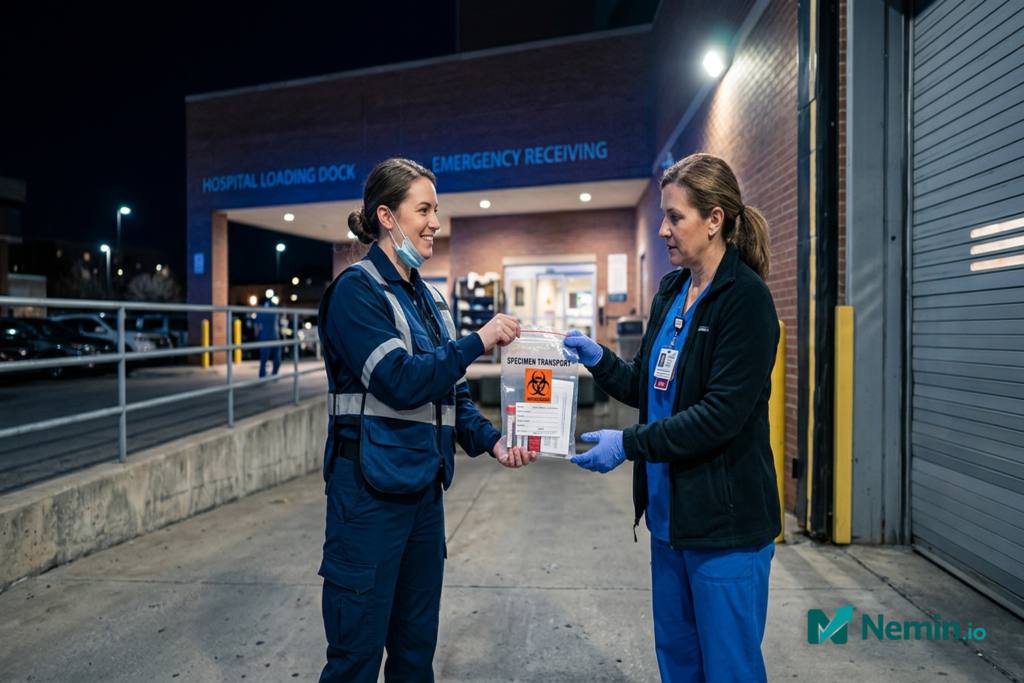
Specialized deliveries are healthcare shipments that require more care than standard freight, including lab specimens, pharmaceuticals, medical supplies, and equipment. Specialized deliveries depend on trained couriers, temperature control, chain of custody, and around the clock availability, which is why hospitals rely on a dedicated hospital courier for urgent deliveries. The healthcare cold chain market is worth tens of billions of dollars and growing, and these services are the engine that keeps patient care moving.
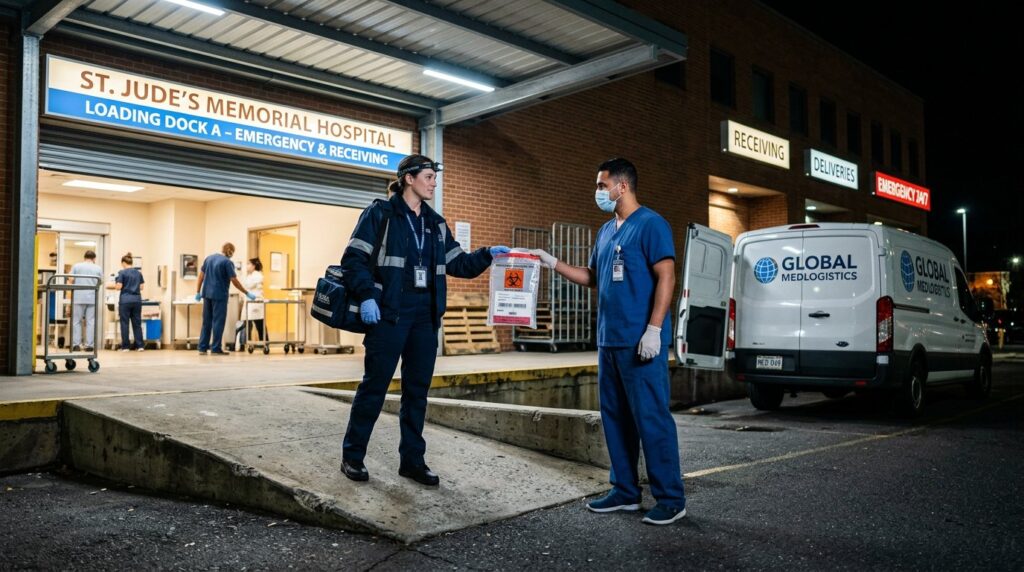
When a hospital needs a blood sample at the lab, a medication delivered to a patient floor, or a transplant organ moved across town, the clock is always running. Specialized deliveries are the logistics lifeline that keeps these urgent shipments moving, and they are fundamentally different from standard courier work. They require trained professionals, controlled conditions, and precise documentation, and this guide explains how they work, why hospitals depend on a hospital courier for them, and the ten best practices that make them reliable around the clock.
What Are Specialized Deliveries?
Specialized deliveries, explained simply, are shipments that need more than a driver and a van. In healthcare, they cover lab specimens, tissue, blood, urine, organs, medical supplies, equipment, prescription medications, vaccines, and other pharmaceutical products, and each carries its own handling requirements.
The distinction matters because they are not routine freight. A delayed specimen can affect testing, a mishandled medication can affect treatment, and a missed handoff can disrupt inventory and daily operations. That is why healthcare organizations depend on specialized transport instead of treating these shipments like standard courier work, and why they are managed within a controlled, accountable process.
The work also goes beyond transportation. In many cases, the courier supports timing, handling, documentation, and delivery confirmation throughout the process, including pickup from a lab, clinic, hospital, pharmacy, or care facility, followed by direct delivery to the next location. Depending on the shipment, the work may require temperature control, chain of custody protection, and scheduled delivery windows, which is why a hospital courier is often part of a broader healthcare logistics process.
Why Hospitals Depend on a Hospital Courier for Specialized Deliveries
Hospitals operate around the clock, and so must the logistics behind them. The case for specialized deliveries starts with patient care, because every urgent shipment connects directly to testing, treatment, and outcomes.
Specimens must move fast. Lab specimens have time limits, and prompt transport ensures samples reach the lab before they degrade, which keeps test results accurate and treatment on schedule.
Medications must arrive safely. Temperature sensitive drugs and vaccines require controlled conditions, and proper transport protects them from pickup to delivery, which preserves their effectiveness.
Organs and tissues are time critical. Transplants depend on precise timing, and coordinated transport manages the entire journey with chain of custody, which can be the difference between life and death.
Supplies keep departments running. Blood products, medical devices, and equipment move between facilities, and reliable transport keeps every department stocked and ready.
Documentation builds trust. Hospitals need a clear record of what moved, when it moved, who handled it, and when it was delivered, and the right transport provides that accountability, which supports compliance and patient safety.
The result is that hospitals depend on a hospital courier for specialized deliveries because patient care cannot wait for standard shipping, and around the clock coverage is essential.
What a Hospital Courier Does for Specialized Deliveries
A medical courier or hospital courier moves healthcare shipments from one location to another, but the role goes beyond transportation, and for this work, the courier is the accountable link in the chain.
The courier picks up from labs, clinics, hospitals, pharmacies, and care facilities, then delivers directly to the next point in the process. Depending on the shipment, the courier follows temperature requirements, protects chain of custody, and meets scheduled delivery windows, and the courier documents every step so there is a clear record.
For organizations moving diagnostic samples, a dedicated laboratory courier service handles the work, and for medications, pharmaceutical courier support manages shipments with the right training and equipment. A provider that understands medical logistics is more likely to have the right process, training, and equipment in place, and that is why the hospital courier role is not just about delivery, it is about managing shipments within a controlled, accountable process.
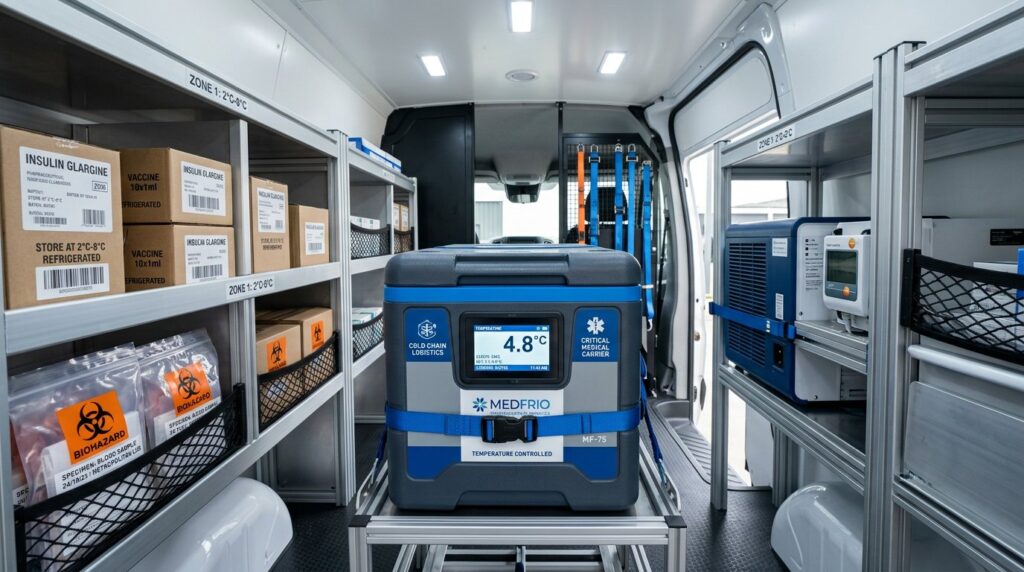
How Temperature Control Shapes Specialized Deliveries
Temperature control is one of the defining features of this work, and it explains why it demands specialized equipment and training.
Many specialized deliveries must stay within strict temperature ranges. Refrigerated shipments, such as vaccines and biologics, typically need 2 to 8 degrees Celsius, frozen shipments need colder conditions, and some advanced therapies need ultra low temperatures. Specialized deliveries use insulated containers, temperature monitors, and conditioned vehicles to protect these shipments, and any break in the chain can compromise the product.
The healthcare cold chain logistics market reflects how important temperature controlled specialized deliveries have become. The global market was valued in the tens of billions of dollars and is projected to grow at a strong rate through the next decade, with North America as a leading region, and temperature controlled transport is a major driver of that growth.
For hospitals, temperature control in specialized deliveries means vaccines stay effective, biologics arrive usable, and patient outcomes are protected. The temperature monitor is not optional in specialized deliveries, it is the difference between a shipment that works and one that does not.
Chain of Custody and Accountability in Specialized Deliveries
Chain of custody is another reason healthcare organizations depend on this service, and it is the documentation backbone that makes the work trustworthy.
In medical logistics, teams need a clear record of what moved, when it moved, who handled it, and when it was delivered, and specialized deliveries maintain that record at every handoff. This level of documentation matters because many shipments impact testing, treatment, compliance, and inventory control, and without clear records, it becomes harder to verify what happened during transit.
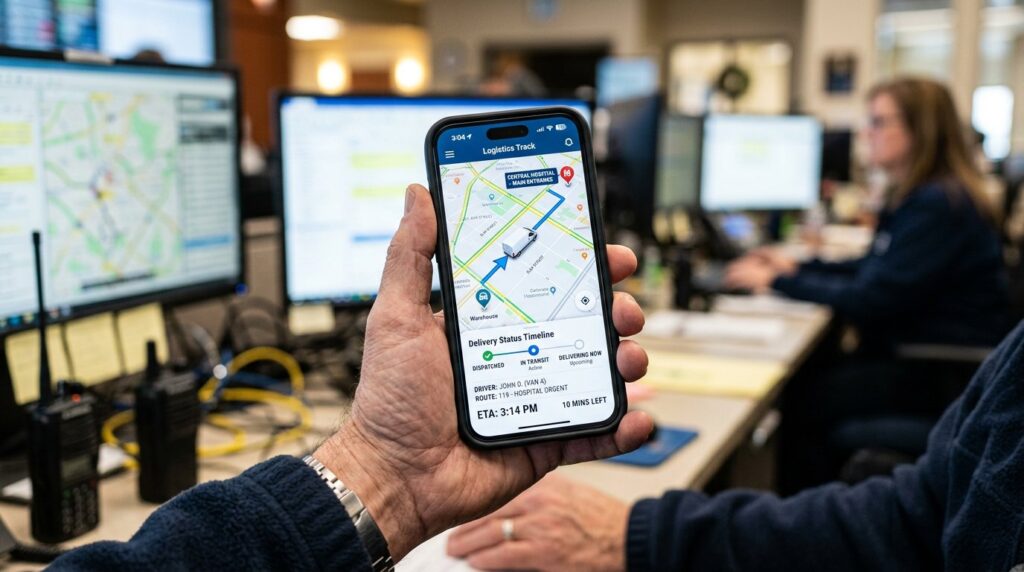
A hospital courier supports specialized deliveries by ensuring handoffs are tracked and delivery records are accurate, and modern logistics providers reinforce accountability with real time tracking technology. Tracking access, ETA notifications, and delivery confirmation are standard, and these functionalities help healthcare teams plan better and respond faster when schedules change.
For healthcare organizations, this accountability builds confidence in both the shipment and the overall process, which is why chain of custody is a pillar of the service.
The 10 Best Practices for Specialized Deliveries
These ten best practices make the service reliable, and each one matters for hospitals and patients.
1. Around the Clock Coverage in Specialized Deliveries
Hospitals never close, so the service must never stop. Around the clock availability is the first best practice, because urgent shipments can arrive at any hour, and a hospital courier that operates 24/7 keeps patient care moving through nights, weekends, and holidays.
2. Trained Couriers in Specialized Deliveries
The work requires more than general driving experience. Couriers are trained in handling requirements, temperature protocols, documentation, and healthcare facility procedures, and that training is what makes the work safe.
3. Temperature Controlled Transport in Specialized Deliveries
Temperature control is essential for many shipments. Insulated containers, monitors, and conditioned vehicles protect vaccines, biologics, and medications, and temperature controlled transport is a defining feature of the service.
4. Chain of Custody Documentation in Specialized Deliveries
Every handoff is documented, with a clear record of what moved, when, and who handled it. Chain of custody supports compliance, testing, and patient safety, and it builds trust with every shipment.
5. Real Time Tracking in Specialized Deliveries
Tracking technology gives hospitals visibility from pickup to delivery. Live tracking, ETA notifications, and delivery confirmation help teams plan, and real time tracking is a core tool.
6. Priority Handling for Urgent Specialized Deliveries
Some shipments are time critical, and priority handling ensures they move first. Dedicated vehicles and direct routes for urgent work minimize delays, which matters for organs, specimens, and emergency supplies.
7. Secure Handling and Packaging in Specialized Deliveries
The service protects sensitive materials with proper packaging, seals, and secure handling. Leak proof bags, cushioned containers, and tamper evident seals keep shipments safe from pickup to delivery.
8. Clear Communication in Specialized Deliveries
Communication is vital. Couriers, dispatchers, and healthcare teams stay in contact, and proactive updates keep everyone informed, which is how the work stays coordinated when schedules change.
9. Experience With Healthcare Facilities in Specialized Deliveries
A provider experienced with hospitals, labs, pharmacies, and clinics understands the workflows behind the service. Experience means knowing loading docks, delivery windows, and facility protocols, and it makes the work smoother and more reliable.
10. Compliance and Quality Control in Specialized Deliveries
Finally, the service follows documented standards, quality checks, and compliance requirements. Quality control catches issues early, and compliance keeps the work aligned with healthcare regulations.
Specialized Deliveries Real-Time Data and Statistics
This service sits at the center of a large and growing healthcare logistics market, and the numbers show why it matters.
| Metric | Figure |
|---|---|
| Global healthcare cold chain market 2025 | About 67.5 billion dollars |
| Global healthcare cold chain market 2026 | About 73.4 billion dollars |
| Global healthcare cold chain market 2035 | About 155.6 billion dollars |
| US healthcare cold chain market 2026 | About 48.49 billion dollars |
| US healthcare cold chain market 2031 | About 70.03 billion dollars |
| North American share of cold chain market | About 43 percent |
| Refrigerated segment share | About 45.8 percent |
North America leads the healthcare cold chain market, and the United States is the largest single market for temperature controlled specialized deliveries, driven by biopharma manufacturing, advanced regulatory enforcement, and growing demand for biologics and cell and gene therapies. Transportation is the largest function within this market, which shows how central specialized deliveries are to the healthcare supply chain.
How Specialized Deliveries Support Hospital Operations
The service is woven into daily hospital operations, and its impact shows up in testing, treatment, and patient care.
When a lab collects specimens, specialized deliveries move them to the lab where results are produced, and faster specialized deliveries mean faster diagnoses. When a pharmacy fills a medication, specialized deliveries carry it to the patient floor under the right conditions, and when a blood bank ships blood products, specialized deliveries protect them with temperature control and chain of custody.
Specialized deliveries also keep the supply chain moving between facilities. Hospitals, clinics, and reference labs exchange samples, supplies, and equipment every day, and specialized deliveries coordinate those movements so every site has what it needs. When transport is handled properly, teams reduce delays, protect sensitive materials, and keep workflows running smoothly.
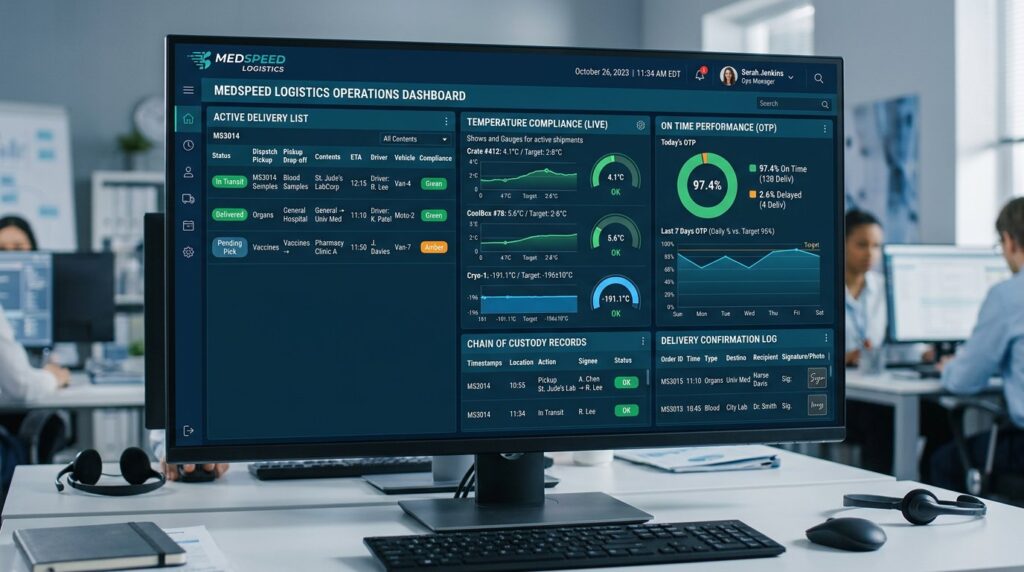
What to Look for in a Provider of Specialized Deliveries
Choosing the right provider for specialized deliveries is a high stakes decision, and healthcare teams should look beyond speed alone.
Trained drivers. The provider should have drivers trained in handling requirements, temperature protocols, and documentation, because training protects the shipments.
Temperature controlled options. The provider should offer temperature controlled transport, with monitored containers and conditioned vehicles for cold chain shipments.
Tracking and confirmation. The provider should support real time tracking, ETA notifications, and delivery confirmation, which gives hospitals visibility and accountability.
Healthcare experience. The provider should have experience working with hospitals, labs, pharmacies, and clinics, because experience with healthcare workflows makes the service reliable.
Around the clock service. The provider should operate 24/7, because urgent shipments happen at any hour, and round the clock coverage is essential.
Clear documentation. The provider should maintain chain of custody records for every shipment, because documentation supports compliance and patient safety.
For organizations looking to strengthen their medical delivery operations, providers like 24/7 Enterprises offer laboratory courier services, pharmaceutical courier support, and real time tracking technology designed to maintain reliability from pickup through delivery.
The Role of Technology in Modern Medical Transport
Technology has transformed how urgent medical shipments are managed, and it strengthens every step of the journey. Dispatching systems assign the nearest available driver, route optimization shortens travel time, and mobile apps keep couriers and hospitals connected in real time. Temperature sensors report conditions throughout transit, and digital records replace paper logs, which makes the whole process faster and more accountable.
For a hospital courier network, technology means visibility. Dispatchers see every vehicle on a map, hospitals see the status of their shipments, and drivers receive clear instructions and confirmations on their devices. When an urgent delivery is needed, the system matches the right courier with the right vehicle, which is critical for shipments that require temperature control or priority handling.
The human element remains essential. Technology supports the courier, but it does not replace careful driving, careful handling, and clear communication. The best networks pair modern tools with trained professionals, which is how urgent medical transport stays reliable at every hour of the day.
Common Scenarios That Require Specialized Deliveries
Specialized deliveries appear in more situations than most people realize, and each scenario shows why the service matters. A clinic sends a patient sample to a reference lab for a same day result, and specialized deliveries move it with temperature control and chain of custody. A pharmacy ships a specialty medication that must stay cold, and specialized deliveries protect it from the counter to the patient. A blood bank transfers units between hospitals, and specialized deliveries keep them within the required range.
Hospitals also rely on specialized deliveries for equipment. A ventilator loaned between facilities, a surgical tray sent for sterilization, or a diagnostic device moving to a satellite clinic all count as specialized deliveries, because they need careful handling and reliable timing. Even routine replenishment becomes specialized deliveries when the product is temperature sensitive or time critical.
The pattern across all these scenarios is the same. Specialized deliveries exist wherever a shipment is too important, too sensitive, or too urgent to trust to standard freight, and that is why healthcare teams build their logistics around specialized deliveries.
How to Build a Reliable Delivery Workflow
Building a reliable workflow for urgent medical transport starts with clear procedures. Hospitals and courier providers agree on pickup points, delivery windows, and contact protocols before a shipment moves, which removes guesswork on the day of delivery.
Standardized processes keep every shipment consistent. A defined checklist covers packaging, labeling, temperature checks, and documentation, and the same steps are followed whether the delivery is routine or urgent. Clear escalation paths ensure that any delay is reported immediately, so the hospital can adjust and the courier can respond.
Continuous improvement completes the workflow. Teams review delivery performance, measure on time rates, and learn from every exception, which turns experience into better procedures. A workflow that is documented, followed, and improved is the foundation of dependable urgent medical transport, and it is what hospitals expect from a professional partner.
Frequently Asked Questions
These are the questions hospitals and logistics teams ask most about specialized deliveries.
- What are specialized deliveries? Specialized deliveries are healthcare shipments that need more care than standard freight, including lab specimens, medications, supplies, and equipment.
- Why do hospitals need a hospital courier for specialized deliveries? Hospitals need a hospital courier because specialized deliveries require trained handling, temperature control, chain of custody, and around the clock availability.
- What do specialized deliveries transport? Specialized deliveries cover lab specimens, tissue, blood, organs, medications, vaccines, medical supplies, and equipment.
- How do specialized deliveries stay temperature controlled? Specialized deliveries use insulated containers, temperature monitors, and conditioned vehicles to protect temperature sensitive shipments.
- What is chain of custody in specialized deliveries? Chain of custody in specialized deliveries is a clear record of what moved, when it moved, who handled it, and when it was delivered.
- How fast are urgent specialized deliveries? Urgent specialized deliveries move within hours or minutes depending on priority, with dedicated vehicles and direct routes for time critical shipments.
- Can specialized deliveries be tracked in real time? Yes, most professional specialized deliveries include real time tracking, ETA notifications, and delivery confirmation.
- What should I look for in a specialized deliveries provider? Look for trained drivers, temperature controlled transport, tracking, healthcare experience, around the clock service, and clear documentation.
Conclusion
Specialized deliveries are the logistics lifeline that keeps hospitals running around the clock, and the data confirms their importance. The healthcare cold chain market is worth tens of billions of dollars and growing, North America leads the world in temperature controlled logistics, and this service connects every step of patient care, from specimens to medications to organs.
The ten best practices, including around the clock coverage, trained couriers, temperature control, chain of custody, real time tracking, and clear communication, make urgent medical transport reliable, and a professional hospital courier is the accountable link that holds the service together.
The honest picture matters too, because the service requires experience, equipment, and discipline, and hospitals that choose the right provider get the full benefit. Whether you manage a hospital, a laboratory, or a healthcare network, understanding specialized deliveries helps you protect patients and keep operations moving, and this guide gives you the foundation to use them well, because they are how urgent healthcare keeps moving, day and night.
Pingback: Yoga Certification Program: 7 Powerful Career Benefits