
Efficient hotshot trucking by Titan Worldwide Logistics is designed around moving time-sensitive freight with flexible equipment and coordinated transportation planning when a conventional freight schedule may not...
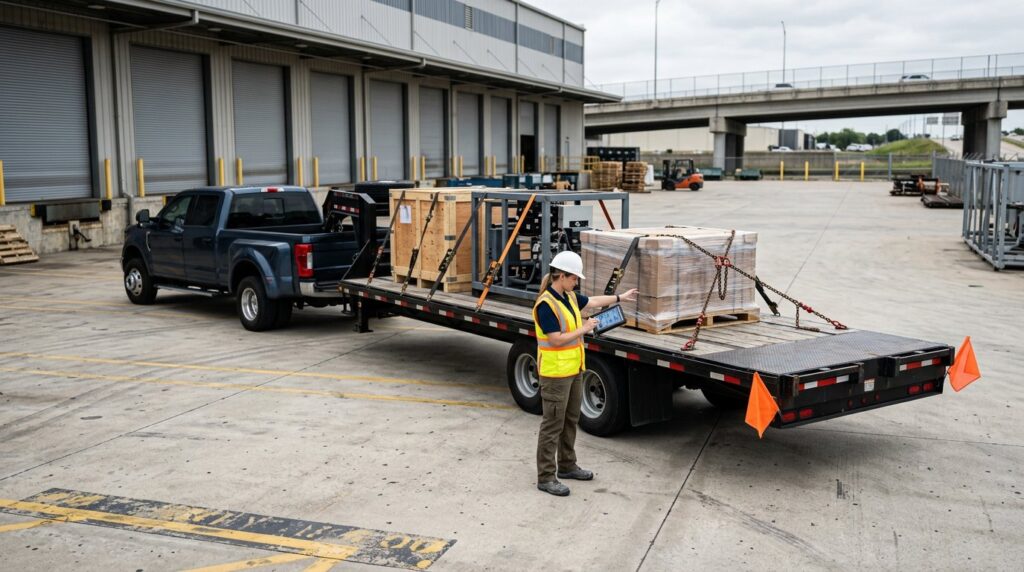
Efficient hotshot trucking by Titan Worldwide Logistics is designed around moving time-sensitive freight with flexible equipment and coordinated transportation planning when a conventional freight schedule may not fit the shipment’s requirements. Hotshot transportation commonly uses appropriately rated trucks and trailers for loads that need direct or expedited movement, such as machinery, construction materials, industrial components, replacement equipment, and project freight. Actual service availability, transit times, equipment, geographic coverage, and shipment requirements should be confirmed directly with Titan Worldwide Logistics when requesting a quote.
Speed is only one component of successful expedited transportation. A shipment also needs suitable equipment, a legally compliant carrier, accurate dimensions and weight, correct cargo securement, appropriate permits when required, and realistic routing.
For shippers, understanding these variables can make hotshot transportation easier to plan and reduce preventable delays after a truck has already been dispatched.
What Is Hotshot Trucking?
Hotshot trucking is a form of time-sensitive freight transportation commonly performed with heavy duty pickup trucks or other suitable power units pulling flatbed, gooseneck, or similar trailers.
It is frequently used for loads that require faster or more flexible movement than conventional freight arrangements can provide.
Typical cargo can include:
• Construction equipment
• Industrial components
• Machinery parts
• Oil and energy equipment
• Building materials
• Agricultural equipment
• Replacement components
• Fabricated metal products
• Project freight
• Urgent commercial shipments
The equipment selected depends on cargo dimensions, weight, securement needs, route, and applicable transportation rules.
How Efficient Hotshot Trucking Works
A hotshot shipment generally starts with detailed load information.
The logistics provider needs to understand exactly what is being transported before suitable equipment and routing can be determined.
Shipment Information
Shippers should be prepared to provide:
• Origin
• Destination
• Commodity
• Total weight
• Length
• Width
• Height
• Number of pieces
• Pickup requirements
• Delivery requirements
• Desired timing
• Loading method
• Unloading method
Photographs or technical drawings can sometimes help clarify unusual freight.
Equipment Selection
Once the shipment is understood, an appropriate truck and trailer can be identified.
The trailer must provide enough capacity and usable deck space for the load.
Legal Capacity Matters
A trailer being physically large enough does not prove that a shipment can be transported legally.
Axle limits, gross vehicle weight, equipment ratings, cargo placement, permits, and route restrictions can all affect feasibility.
7 Benefits of Hotshot Trucking With Titan Worldwide Logistics
Hotshot transportation can provide several practical advantages when matched appropriately to a shipment.
1. Support for Time-Sensitive Freight
Urgent replacement parts or project materials can create expensive downtime when they arrive late.
Hotshot services can provide a dedicated or expedited transportation option for suitable loads.
No responsible logistics provider should guarantee arrival times without considering distance, weather, regulations, driver requirements, traffic, loading delays, and other operational factors.
2. Flexible Equipment Options
Hotshot loads can use different trailer configurations according to freight requirements.
Potential equipment categories include flatbeds, goosenecks, and other suitable trailers.
Match Equipment to the Cargo
Equipment selection should account for:
• Weight
• Dimensions
• Center of gravity
• Loading method
• Securement
• Weather protection
• Delivery site access
Selecting the smallest possible trailer is not always the most efficient approach.
3. Direct Transportation
Some hotshot shipments can move directly between shipper and receiver without the freight passing through multiple terminals.
Reducing unnecessary handling can be useful for specialized or urgent cargo.
4. Flexible Pickup Planning
Smaller truck and trailer combinations may be able to access locations that present challenges for larger tractor trailers.
Actual accessibility depends on turning space, road conditions, loading infrastructure, local restrictions, and equipment dimensions.
5. Suitable for Industrial Freight
Hotshot transportation can work well for individual pieces of equipment and project-critical components that do not require a full conventional trailer.
6. Shipment Coordination
A logistics provider can coordinate equipment, carrier communication, routing, documentation, and delivery requirements.
This can reduce the administrative burden on the shipper.
7. Scalable Expedited Freight Planning
Businesses do not necessarily need dedicated hotshot assets sitting idle between urgent shipments.
Third-party logistics coordination can provide access to transportation capacity as needs arise, subject to market availability.
Hotshot Trucking vs Traditional Trucking
The main difference is not simply vehicle size.
Hotshot freight often emphasizes urgency, flexibility, and appropriately sized equipment.
Traditional Full Truckload
Full truckload transportation commonly uses tractor trailers for substantial loads.
It remains appropriate for many long-distance and high-volume shipments.
Hotshot Transportation
Hotshot configurations can suit smaller or specialized loads requiring relatively rapid dispatch or direct movement.
Which Is More Efficient?
Efficiency depends on the shipment.
Using a hotshot truck for freight better suited to a full-size tractor trailer can be inefficient, just as using a large trailer for one compact urgent component may be unnecessary.
Hotshot Trucking vs Less Than Truckload Shipping
Less than truckload, commonly called LTL, consolidates freight from multiple shippers.
LTL Advantages
Consolidation can provide cost-effective transportation for suitable palletized freight.
LTL Limitations for Urgent Freight
Freight may pass through terminals and be handled multiple times.
This can make LTL less suitable for some extremely urgent, oversized, or specialized shipments.
Hotshot Advantages
A dedicated hotshot movement can reduce intermediate handling and provide more direct routing when operationally feasible.
Hotshot Trucking Equipment
Trailer selection has a major influence on what can be moved.
Flatbed Trailers
Flatbeds provide an open deck that can support loading from the sides, rear, or above depending on the facility and cargo.
Loads exposed to weather may require approved covering solutions.
Gooseneck Trailers
Gooseneck designs connect over or near the rear axle area of an appropriate towing vehicle.
They are commonly associated with heavy duty hotshot transportation.
Specialized Equipment
Some loads require equipment beyond ordinary hotshot configurations.
A logistics provider should identify when step decks, removable goosenecks, enclosed trailers, or other specialized equipment are more appropriate.
Industries That Use Hotshot Trucking
Urgent freight needs occur throughout the economy.
Construction
Construction projects can depend on materials and equipment arriving in sequence.
A missing component can disrupt contractors, cranes, installation crews, or other scheduled work.
Hotshot transportation may help move qualifying urgent materials directly to a site.
Energy
Energy operations can require replacement equipment and specialized industrial components.
Transportation planning needs to account for remote locations, site access, and safety requirements.
Manufacturing
A failed production component can create operational downtime.
Expedited trucking may support delivery of replacement machinery parts or production equipment.
Agriculture
Farm equipment failures can become particularly time-sensitive during planting or harvest periods.
Hotshot freight can transport appropriate parts or machinery subject to size and weight requirements.
Automotive and Industrial Supply
Parts, tooling, fabricated components, and equipment can require expedited movement between suppliers and production locations.
Hotshot Freight for Construction Projects
Construction delivery sites can be more complicated than conventional warehouses.
Confirm Site Access
Before dispatch, determine:
• Road surface
• Gate dimensions
• Turning space
• Delivery hours
• Site contact
• Loading or unloading equipment
• Personal protective equipment rules
Incomplete site information can cause avoidable delays.
Crane and Forklift Availability
A truck driver should not arrive assuming the receiver can unload heavy freight manually.
Confirm whether a crane, forklift, telehandler, or other equipment will be available.
Hotshot Trucking for Oversized Loads
Some hotshot equipment can transport oversize freight, but regulatory requirements become more complex when legal dimensional or weight limits are exceeded.
Permits
Oversize or overweight shipments may require state or other governmental permits.
Requirements differ by jurisdiction and route.
Route Planning
Bridge clearances, weight restrictions, construction zones, local rules, and permit conditions can affect routing.
Oversize Freight Should Never Be Improvised
Accurate dimensions and weight are essential.
Understating cargo size can invalidate planning and create legal and safety problems after dispatch.
Cargo Securement in Hotshot Trucking
Cargo securement is fundamental to safe transportation.
Loads must be restrained in accordance with applicable regulations and equipment requirements.
Securement Equipment
Depending on the freight, carriers may use appropriate:
• Chains
• Binders
• Straps
• Blocking
• Bracing
• Edge protection
• Other approved securement equipment
The correct system depends on the commodity and applicable regulations.
FMCSA Requirements
In the United States, commercial cargo securement is governed by applicable Federal Motor Carrier Safety Administration regulations, alongside other relevant requirements.
Carriers are responsible for complying with the rules applying to their operations.
Hotshot Trucking Safety
Expedited does not mean exempt from safety requirements.
Commercial vehicles and drivers remain subject to applicable rules.
Driver Compliance
Depending on the operation, relevant requirements can involve licensing, hours of service, vehicle inspection, insurance, and operating authority.
Specific obligations depend on vehicle weight, cargo, geography, and other factors.
Vehicle Condition
Trucks, trailers, tires, brakes, lights, couplings, and securement equipment need appropriate inspection and maintenance.
A shipment arriving quickly is not efficient if unsafe practices create unnecessary risk.
Hotshot Logistics and Route Planning
Routing can influence both delivery time and cost.
Consider More Than Distance
The shortest map route may not be appropriate for a commercial shipment.
Planners can need to consider:
• Vehicle restrictions
• Weather
• Road construction
• Weight limits
• Oversize permits
• Delivery windows
• Fuel availability
• Driver hours
• Site access
Professional planning balances speed with legal and operational feasibility.
Real-Time Shipment Tracking
Modern logistics systems can provide shipment status or location information, depending on the carrier and technology.
Tracking Benefits
Visibility can help shippers:
• Prepare receiving teams
• Coordinate unloading equipment
• Communicate with customers
• Monitor delays
• Update project schedules
Tracking information should still be interpreted as an estimate rather than a guarantee of exact arrival time.
Titan Worldwide Logistics and Freight Coordination
When working with a logistics provider, shippers should understand whether the company acts as a carrier, broker, freight forwarder, or another type of transportation intermediary for the relevant movement.
These roles have distinct legal and operational meanings.
Carrier Vetting
When a logistics provider arranges third-party capacity, carrier selection is an important component of risk management.
Appropriate vetting can include operating authority, insurance, safety information, equipment suitability, and other relevant checks.
Communication
Time-sensitive shipments benefit from clear communication among the shipper, logistics provider, driver, and receiver.
Incorrect addresses or missing site contacts can erase time gained through expedited transportation.
Hotshot Trucking Rates
There is no universal hotshot trucking price.
Rates depend on the shipment and freight market.
Factors Affecting Cost
Pricing can depend on:
• Mileage
• Equipment
• Weight
• Dimensions
• Urgency
• Fuel
• Pickup location
• Destination
• Market capacity
• Permits
• Tolls
• Specialized securement
• Waiting time
• Additional stops
A current shipment-specific quote is therefore more useful than a generic rate per mile.
Cheapest Is Not Always Most Efficient
An exceptionally low quote may involve equipment or service that does not match the shipment requirements.
Evaluate total transportation value, risk, and reliability.
How to Request a Hotshot Trucking Quote
Providing complete information can improve both quote accuracy and dispatch speed.
Prepare Freight Details
Include:
• Commodity description
• Exact dimensions
• Accurate weight
• Piece count
• Pickup address
• Delivery address
• Contact information
• Requested dates and times
• Loading equipment
• Unloading equipment
• Special handling requirements
Mention immediately if the freight may be oversize or overweight.
Ask What the Quote Includes
Confirm possible accessorial charges, permit costs, fuel, waiting time, tarping, additional stops, and other applicable expenses.
How to Prepare Freight for Hotshot Transportation
The shipper should ensure freight is ready when the truck arrives.
Packaging
Packaging should be appropriate to the product, transportation mode, handling, and environmental exposure.
Accurate Weight
Use reliable weight information.
Incorrect weight can affect equipment selection and regulatory compliance.
Loading Plan
Determine in advance how the cargo will be placed on the trailer.
Weight distribution can affect axle loads and vehicle handling.
Tell the Logistics Provider About Unusual Cargo
Fragile equipment, machinery containing fluids, irregular shapes, high-value components, or cargo with special regulatory requirements should be disclosed before dispatch.
Weather and Hotshot Freight
Weather can affect transportation even when a shipment is urgent.
Severe Weather
Snow, ice, flooding, thunderstorms, high winds, and extreme heat can affect routing and safe driving.
Oversize loads may face additional weather restrictions under particular permits.
Protecting Cargo
Open deck freight may require appropriate protection from rain, snow, road contamination, or sunlight.
Discuss tarping or other protection requirements before booking.
Insurance and Hotshot Trucking
Commercial transportation can involve cargo insurance, carrier liability, and contractual allocation of risk.
These are not necessarily interchangeable concepts.
Ask About Coverage
For valuable freight, determine what protection applies and whether additional cargo coverage should be considered.
Review exclusions and limits.
Declare High-Value Shipments
Do not assume an ordinary freight arrangement automatically covers the full replacement value of unusually expensive equipment.
Ask for written clarification where value is significant.
Efficient Hotshot Trucking for Last-Minute Freight
Urgent shipments often begin with a problem: equipment fails, materials are missing, or a supplier falls behind.
Communicate the True Deadline
Tell the logistics coordinator when the freight genuinely needs to arrive and why.
This can help determine whether hotshot service is actually necessary.
Avoid Artificial Urgency
Expedited transportation generally costs more than standard freight.
If a shipment can move safely within a conventional schedule, that may provide better value.
How Businesses Can Improve Hotshot Efficiency
Shippers also influence transportation efficiency.
Maintain Accurate Freight Records
Store reliable dimensions, weights, loading requirements, and photographs for equipment that ships repeatedly.
Keep Site Contacts Current
Drivers need someone who can resolve gate, unloading, or delivery questions.
Track Performance
Measure:
• On-time pickups
• On-time deliveries
• Quote accuracy
• Damage incidents
• Communication quality
• Accessorial charges
These indicators provide better insight than price alone.
Choosing a Hotshot Logistics Provider
A good provider should ask detailed questions about the shipment before promising a solution.
What to Evaluate
Consider:
• Relevant freight experience
• Geographic coverage
• Equipment access
• Communication
• Shipment visibility
• Carrier qualification processes
• Insurance documentation
• Oversize capability
• Emergency support
• Pricing transparency
Verify current Titan Worldwide Logistics capabilities directly for the intended route and freight.
Common Hotshot Trucking Mistakes
Most avoidable problems begin before the truck moves.
Common mistakes include:
• Providing approximate dimensions
• Underestimating weight
• Booking the wrong equipment
• Ignoring oversize requirements
• Failing to confirm unloading equipment
• Providing incorrect site hours
• Assuming expedited means guaranteed
• Ignoring cargo protection requirements
• Comparing quotes with different scopes
• Failing to disclose unusual freight
Accurate information is one of the simplest ways to improve expedited transportation.
Frequently Asked Questions
What is hotshot trucking?
Hotshot trucking is time-sensitive freight transportation commonly using heavy-duty trucks and suitable trailers for loads requiring flexible or expedited movement.
Does Titan Worldwide Logistics provide hotshot trucking?
Titan Worldwide Logistics is associated with expedited and specialized freight coordination. Shippers should confirm current hotshot availability, equipment, and geographic coverage directly for their shipment.
What freight can move by hotshot truck?
Depending on equipment and legal limits, hotshot freight can include machinery, construction materials, industrial parts, agricultural equipment, and other commercial cargo.
How much does hotshot trucking cost?
Cost depends on mileage, equipment, weight, dimensions, urgency, market capacity, fuel, permits, accessorial services, and pickup and delivery conditions.
Can hotshot trucks carry oversized freight?
Some configurations can transport oversize loads when appropriate equipment, permits, routes, securement, and regulatory requirements are satisfied.
How can I get an accurate hotshot freight quote?
Provide exact dimensions, weight, commodity, addresses, timing, loading requirements, unloading requirements, and any special handling or oversize information.
Conclusion
Efficient hotshot trucking by Titan Worldwide Logistics can provide a flexible option for time-sensitive machinery, construction materials, industrial components, and other qualifying freight. Successful expedited shipping depends on accurate load information, suitable equipment, compliant cargo securement, realistic routing, and clear communication just as much as speed. Shippers should verify current service coverage, insurance arrangements, permitting requirements, and complete pricing before dispatch. With careful planning and coordinated execution, hotshot transportation can help businesses respond quickly when conventional freight schedules do not match an urgent delivery requirement.