
Vehicle roadside safety begins the moment a car, van, motorcycle, or other vehicle develops a problem. The priorities are to reduce exposure to moving traffic,...
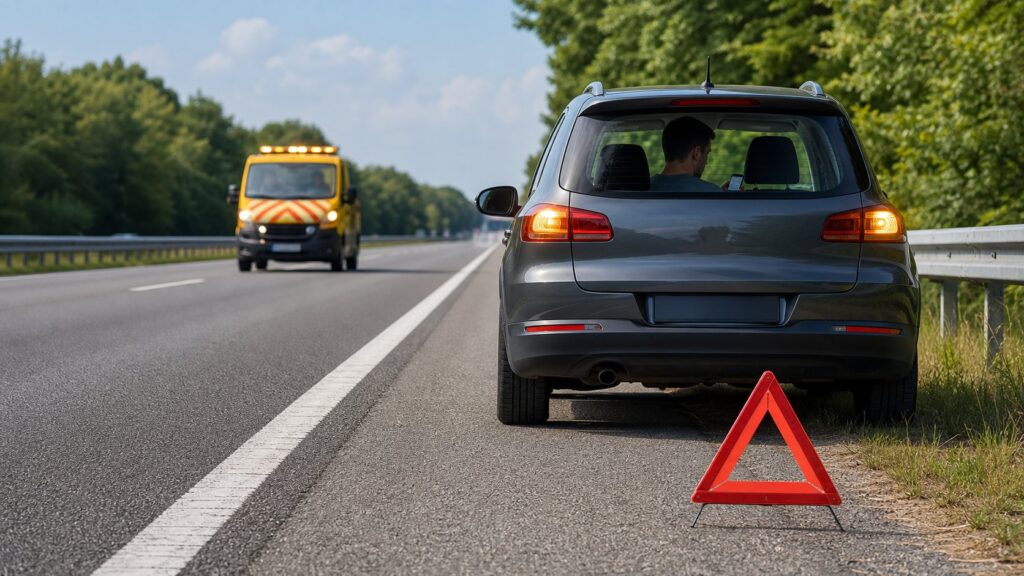
Vehicle roadside safety begins the moment a car, van, motorcycle, or other vehicle develops a problem. The priorities are to reduce exposure to moving traffic, make the vehicle visible, contact the right help, and choose the safest place for passengers to wait. In some situations the safest option is to leave through the side away from traffic and get behind a barrier. In others, especially when the vehicle is blocking a live lane or there is no safe escape route, everyone should remain inside with seat belts fastened until emergency responders give instructions.
A breakdown is stressful, but rushing into the road to inspect a tire, place a warning device, or accept help from a stranger can create greater danger. The correct response depends on the road type, traffic speed, visibility, weather, location, vehicle condition, and local rules.
This guide explains how to stay safe while waiting for roadside assistance, police, a tow operator, a mechanic, or emergency services. It is general information, not a substitute for local highway guidance, emergency instructions, or professional training.
Prepare before a roadside emergency
Vehicle roadside safety begins before the vehicle leaves home. Save the phone number for your roadside provider and local emergency service, keep a written copy in the glove compartment, and confirm what your insurance or membership covers. Share the vehicle’s registration, color, route, and expected arrival window with a trusted person on longer journeys.
Check that the phone, charger, warning device, flashlight, first-aid kit, spare tire or repair equipment, and required medication are accessible. Do not bury essential supplies beneath heavy luggage. Learn how to activate the hazard lights, parking brake, emergency call function, charging system, and fuel door before there is a problem.
If you drive across borders or regions, note the local emergency number and roadside rules. The advice for a motorway, desert road, mountain pass, or urban street may differ. Keep translation support or key phrases available if you may need help in another language.
A short preparation routine also helps passengers understand their roles. One person can manage the phone and location, another can supervise children or pets, and the driver can focus on positioning the vehicle. Roles should never require anyone to enter live traffic.
The first priority: get away from moving traffic
If the vehicle is still moving, signal, slow smoothly, and steer to the safest available location. A service area, parking area, emergency refuge, or wide shoulder is preferable to a narrow roadside.
Avoid curves, hill crests, bridges, soft verges, blind bends, and places hidden from approaching drivers. Use remaining momentum carefully if power is failing.
If the vehicle can be moved
Move only when the vehicle remains controllable. After a minor collision with no apparent injury, local law may require moving out of a travel lane. Photograph and exchange information after reaching safety unless responders say otherwise.
Apply the parking brake, select park or a suitable gear, and keep the vehicle as far from live traffic as possible.
If the vehicle cannot be moved
Turn on hazard lights and keep the belt fastened. Do not stand behind, in front of, or between the vehicle and traffic, and never ask passengers to push it on a busy road.
Call the local emergency number if it blocks a lane, creates collision risk, contains an injured person, smells of fuel, is smoking, or faces fire, flooding, falling rocks, wires, or another urgent hazard.
Follow local rules, not a universal shortcut
Roadside procedures differ. Some authorities advise exiting through the side away from traffic and waiting behind a barrier; other situations require occupants to remain inside.
Tell emergency operators exactly where the vehicle is and follow their instructions.
Make the vehicle visible without creating another hazard
Visibility helps drivers and responders recognize a problem, but equipment must be used safely.
Turn on hazard lights
Use hazard lights when safe and follow local rules for lighting in darkness or poor visibility. If the battery is weak, ask the operator how to preserve power.
Hazard lights do not make a high-speed roadside location safe; approaching drivers may be distracted or unable to see the vehicle in time.
Use warning triangles or flares carefully
Use reflective triangles, cones, flares, or other warning devices only when local rules allow and you can deploy them without entering danger. Some motorway authorities prohibit triangles.
Never use flames or sparks near fuel, vapors, a damaged battery, or flammable cargo. If fuel smells strong, move away and call emergency services.
Keep yourself out of the impact path
Do not stand in front of or behind the vehicle. A driver may not see it, may lose control, or may swerve across the shoulder.
If you exit, use the side farthest from traffic and move passengers away from the carriageway. Do not retrieve luggage from the traffic-facing side.
Use the hood or trunk only when safe
Raising the hood may signal a breakdown in some places, but it is not essential and can expose you to traffic or smoke. Hazard lights and a call for help matter more.
Decide whether to stay inside or leave
This is a key vehicle roadside-safety judgment, and no single instruction fits every road.
Staying inside may be safer when
Remain inside with belts fastened when the vehicle blocks a live lane, no safe route to a barrier exists, traffic is fast, the shoulder is narrow, walking is dangerous, or operators tell you to stay put.
Lock doors, keep windows mostly closed if needed, and watch traffic without opening the door. Tell the operator if a collision seems imminent.
Leaving may be safer when
If the vehicle is safely off the carriageway and a protected area is accessible through the side away from traffic, leaving may reduce exposure if another vehicle strikes it. Move everyone well away from the road.
Check for drops, water, debris, wires, and other hazards before crossing a barrier. Do not stand where the vehicle could be pushed into you.
Motorways and high-speed roads
On high-speed roads, use an emergency area, service station, or hard shoulder only as permitted. If safe, exit away from traffic, use accessible high-visibility clothing, and wait behind a barrier where advised.
If exiting is unsafe, stay belted inside and call emergency services. Do not walk along the carriageway without official guidance.
Ordinary streets and rural roads
On a quiet street, a nearby building may be safer than the vehicle, but consider traffic, lighting, weather, security, pets, children, distance, and phone coverage. Rural roads may have blind bends, livestock, or poor visibility.
Choose based on the location, not a fixed rule.
Call the right help and describe your location clearly
Contact the appropriate service as soon as you and the passengers are in the safest position available. Use the local emergency number for immediate danger and the roadside provider for a routine breakdown.
Information to provide
Tell the operator:
- The road name or number and direction of travel.
- The nearest exit, mile or kilometer marker, toll point, landmark, business, or intersection.
- Your GPS location or a map pin if available.
- The vehicle’s make, model, color, registration, and position on the road.
- The problem, such as flat tire, overheating, collision, no fuel, smoke, or loss of power.
- The number of passengers, children, older adults, disabled travelers, or pets.
- Weather, visibility, traffic speed, fuel smell, fire, wires, injury, or any other hazard.
Do not end the call until the operator has enough information and tells you what to do. If the signal is weak, send a text or location message only when safe, and conserve the phone battery.
Make your location easy to find
Use official road markers and fixed landmarks rather than saying only “near the city.” If the map location is uncertain, describe the last sign, intersection, bridge, or exit you passed. Keep the phone available for callbacks.
If a trusted person is monitoring the trip, tell them the vehicle’s location and the assistance provider’s estimated arrival time. Do not post a detailed live location publicly.
Protect passengers while waiting
The driver should take responsibility for the safe position of the vehicle, while another adult manages passengers when possible.
Children
Keep children buckled unless moving them to a clearly safer location or responders direct you. Do not allow play near the shoulder, walking between vehicles, or doors opening toward traffic.
Keep snacks, water, clothing, and medication accessible, and explain the waiting plan calmly.
Older adults and disabled travelers
Tell the operator about mobility, hearing, vision, communication, medical, or temperature-related needs. Do not force anyone over a barrier or along a long route; ask responders for guidance.
Pets
Keep animals in a carrier, harness, or on a lead away from traffic. Never open a traffic-facing door or let a frightened pet roam.
Personal security
If someone offers help, ask them to contact roadside assistance or police rather than accepting a ride or opening the vehicle. Keep doors locked if you feel unsafe and share little personal information.
If a person threatens or harasses you, call emergency services, use the horn or lights to attract attention when appropriate, and tell the operator your exact location. Trust your judgment; a roadside breakdown does not require you to accept help from an unknown person.
Manage weather, visibility, and environmental hazards
Heat, cold, rain, snow, wind, flooding, and poor visibility can make roadside waiting dangerous.
Heat
Keep water accessible and check children, older adults, pets, and people with medical conditions. Never leave a child or pet alone in a parked vehicle. Keep exhaust unobstructed and never run an engine in an enclosed space.
Cold and winter weather
Keep warm layers, blankets, gloves, and a flashlight accessible. Clear snow from the exhaust before running the engine, never run it in an enclosed space, and follow local advice to avoid travel.
Rain, flooding, and standing water
Do not walk through moving water or drive through a flood. Water can hide damage, carry people or vehicles, and cause loss of control. Move to higher ground when directed and report rising water.
Smoke, fire, or fuel smell
If there is smoke, fire, or a strong fuel smell, turn off the engine if safe, move away and upwind where possible, and call emergency services. Do not open a hot hood, use a flame, retrieve belongings, or return to a fire.
Downed power lines
If a power line falls on the vehicle, stay inside unless fire creates immediate danger. Warn others away and call emergency services. If escape is unavoidable, follow the operator’s instructions; it is a high-risk procedure.
Avoid risky roadside repairs
A tire or battery repair may be safe in a parking area but dangerous on a live shoulder.
Do not repair near traffic, in poor visibility, on an unstable surface or slope, without equipment, or without confidence. Never crawl under a vehicle supported only by a jack or stand in a lane to inspect damage.
Flat tires
After a tire failure, slow gradually and move safely if possible. A change on a narrow shoulder exposes you to traffic, so request a trained technician.
Overheating
Stop safely and turn off the engine. Never remove a hot radiator cap; pressurized steam or coolant can burn. Wait for professional advice and keep away from visible steam.
Battery or electrical problems
Use jump leads or a starter only as instructed and in a safe location. EVs and hybrids may have high-voltage systems; do not touch orange cables, damaged battery packs, or flooded electrical components.
Running out of fuel
Move off the travel lane if possible and call a provider. Do not walk along a high-speed road with a fuel container unless responders direct you; fuel vapors, traffic, and ignition sources add risk.
Prepare a roadside safety kit before problems occur
A small kit supports safer waiting, but it should be stored where passengers can reach it without standing in traffic. Consider carrying:
- Charged phone, car charger, and power bank.
- First-aid supplies and required medication.
- Flashlight or headlamp with spare batteries.
- Reflective vest, warning triangle, or approved warning device.
- Tire-pressure gauge, gloves, and basic tools.
- Jumper cables or an approved jump starter.
- Water, nonperishable food, and cups.
- Blanket, warm layers, rain protection, and towels.
- Paper map and written emergency contacts.
- Spare glasses, mobility supplies, child items, and pet supplies.
Check the kit before trips and replace expired or damaged items. It is not a substitute for vehicle maintenance or professional help.
What to do when help arrives
Stay visible without standing in traffic. Follow the operator’s instructions when a tow truck or police vehicle approaches; do not step into the roadway to wave it down.
Verify the provider’s name, technician, markings, or job reference. If it does not match, keep doors locked and contact the provider or police. Do not help unless the responder asks and it is safe.
Ask where the vehicle will go, what is covered, what costs apply, and for a receipt. Never ride inside a vehicle being towed.
Common roadside safety mistakes
Standing behind the vehicle
A person may be struck if another driver fails to stop or changes lanes. Move to a protected area or remain inside under local guidance.
Trying to push the vehicle
Pushing exposes passengers to traffic and can lead to loss of control. Call for help instead.
Opening doors toward traffic
A passing vehicle can strike an open door or a person stepping out. Use the far side and check the surroundings.
Walking for help without a plan
A short walk to a service station may be dangerous. Ask emergency or roadside services before leaving, especially on motorways, at night, in bad weather, or with children.
Using flares near fuel
Fuel leaks, vapors, damaged electrical systems, and dry vegetation can make flames dangerous. Follow local rules and use safer warning equipment.
Continuing to drive after a warning sign
Overheating, brake or steering faults, smoke, vibration, or tire damage can worsen quickly. Stop safely and get professional advice instead of forcing the vehicle to the next exit.
Assuming hazard lights make the vehicle safe
Hazard lights improve visibility but create no protective barrier. Stay out of traffic and remain alert.
Frequently asked questions about Vehicle roadside safety
1. Should I stay inside my vehicle while waiting for help?
It depends on the road and hazard. Stay inside with the belt fastened when exiting is unsafe; if you can safely reach a protected area away from traffic, follow local guidance and wait there.
2. What should I do if my vehicle breaks down on a highway?
Move as far from live traffic as safely possible, turn on hazard lights, call emergency or roadside services, and do not stand in front of or behind the vehicle. Follow the operator’s instructions.
3. Should I put a warning triangle behind my vehicle?
Only if local rules allow it and you can place it without entering danger. Never walk into a live lane or use a flame near fuel, electrical, or fire hazards.
4. What information should I give roadside assistance?
Give the road and direction, nearest marker or landmark, GPS location, vehicle details, problem, passenger count, and hazards such as traffic, fire, fuel smell, injury, or poor visibility.
5. Can I repair a flat tire on the roadside?
Only if the vehicle is in a genuinely safe location, the surface is stable, you have the correct equipment, and you understand the repair. On a narrow or fast-moving road, wait for a trained technician.
6. What should I do if someone stops to offer help?
Keep personal security in mind. Ask them to call the official roadside provider or emergency services, keep doors locked if you feel unsafe, and do not share unnecessary information or accept a ride without verification.
Conclusion
Staying safe beside a disabled vehicle is mainly about reducing exposure to moving traffic and resisting the urge to solve the mechanical problem immediately. Move to a safe location if possible, make the vehicle visible without entering danger, call the correct service with precise location details, and decide whether to remain inside or move behind a barrier according to the road and local instructions. Protect children, pets, older adults, and disabled passengers; respond carefully to fire, fuel, flooding, power lines, heat, and cold; and avoid repairs on a live shoulder. Hazard lights, a phone, and an emergency kit can help, but they do not replace distance from traffic or professional assistance. The safest outcome is not simply getting the vehicle moving again. It is ensuring that every person reaches a protected place while help is on the way.