
Unexpected water damage can disrupt daily life within minutes. A burst pipe, overflowing appliance, roof leak, or severe storm may leave standing water across floors...
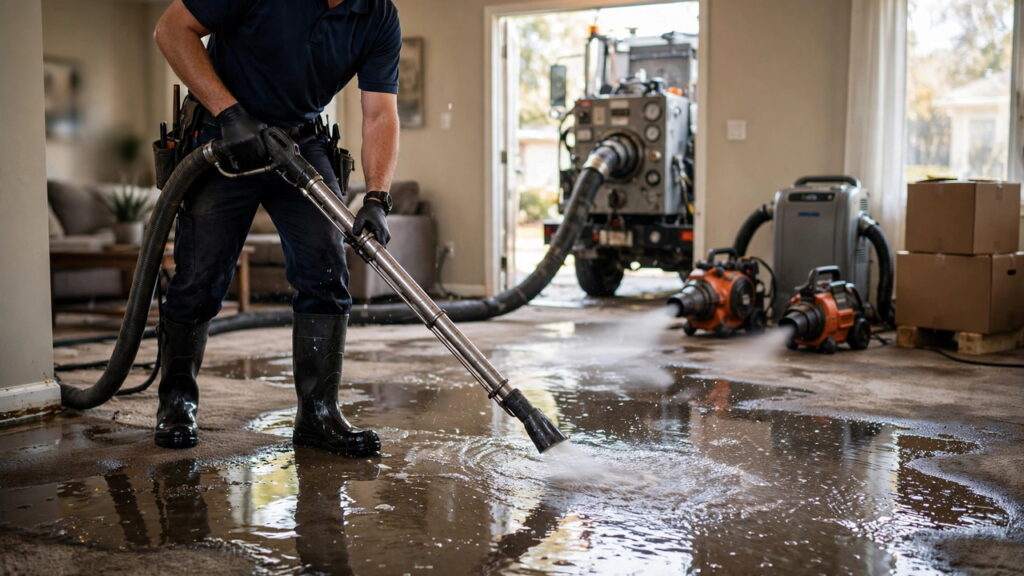
Unexpected water damage can disrupt daily life within minutes. A burst pipe, overflowing appliance, roof leak, or severe storm may leave standing water across floors and inside building materials. When moisture spreads into walls, carpets, and structural components, immediate attention becomes essential. Professional Water Extraction helps remove unwanted water, limit additional damage, and prepare affected areas for proper drying and restoration.
However, removing visible water is only the beginning of successful recovery. Moisture can remain beneath flooring, behind baseboards, and inside porous materials long after surfaces appear dry. Understanding water extraction methods, equipment, safety precautions, and restoration procedures helps homeowners and property managers make better decisions when dealing with unexpected water damage.
What Is Water Extraction?
Water-extraction is the process of removing unwanted standing water and excess liquid moisture from a building using specialized equipment and appropriate cleanup techniques.
The primary purpose of water extraction is to reduce the amount of water present after flooding, plumbing failures, appliance leaks, or other water intrusion events.
Water extraction is commonly performed as an early stage of water damage restoration. It helps prepare affected surfaces and materials for cleaning, structural drying, repairs, and eventual restoration.
Professional water extraction services may involve pumps, commercial extraction vacuums, weighted extraction tools, moisture meters, and other equipment selected according to the type and extent of water damage.
The extraction process depends on several factors, including water depth, contamination, affected materials, and how long the water has been present.
A successful water extraction project requires more than removing visible puddles. Restoration professionals must also investigate moisture that has migrated into building assemblies.
Why Water Extraction Is Important
Standing water can damage building materials, furniture, electrical systems, and personal belongings.
The longer materials remain wet, the greater the potential for deterioration, although the severity depends on the materials and conditions involved.
Water-extraction reduces the volume of liquid water that must otherwise be removed through evaporation.
This is important because drying equipment generally works more efficiently after standing water has been extracted.
Prompt water extraction can also help limit the spread of moisture into previously unaffected areas.
However, extraction alone does not guarantee that mold will be prevented or that damaged materials can be saved.
Appropriate cleaning, drying, contamination control, and repairs may still be necessary.
What Causes Water Damage That Requires Water Extraction?
Water can enter a property through many different sources.
Identifying the cause is essential because the origin of the water influences safety precautions, cleanup methods, and restoration decisions.
A professional water extraction team should investigate the water source before developing a cleanup plan.
Burst Pipes and Plumbing Leaks
Burst pipes are a common reason homeowners need emergency water extraction.
Plumbing failures may occur because of freezing temperatures, corrosion, excessive pressure, damaged fittings, or deteriorated materials.
A broken supply line can release substantial amounts of water before the problem is discovered.
Water-extraction should begin after the source has been controlled and the affected area is safe to enter.
If the leak continues, removing water without stopping the flow provides only temporary relief.
Appliance Malfunctions
Washing machines, dishwashers, refrigerators, and water heaters can leak when hoses, valves, connections, or internal components fail.
Some appliance leaks develop gradually, while others release water suddenly.
Water extraction may be necessary when moisture spreads across flooring or reaches nearby rooms.
Appliance-related water damage can also affect cabinets, wall cavities, and flooring underlayment.
These concealed areas should be assessed during restoration.
Storms and Heavy Rainfall
Severe rainfall may overwhelm drainage systems or allow water to enter through vulnerable building openings.
Basements, ground-floor rooms, and properties in low-lying locations may be particularly exposed.
Water extraction following storm flooding requires additional precautions because floodwater may contain sewage, chemicals, debris, or other contaminants.
Homeowners should not assume that outdoor floodwater is safe simply because it appears clear.
Roof Leaks
Damaged roofing materials, flashing defects, and blocked drainage systems may allow rainwater into a building.
Water can travel through attic spaces, ceiling assemblies, and walls before becoming visible.
Water extraction may be needed when roof leaks create pooling on floors or saturate absorbent materials.
However, the roofing defect must also be repaired.
Otherwise, repeated water intrusion can undermine drying and restoration efforts.
Sewage Backups
Sewage backups are among the more hazardous forms of indoor water damage.
Contaminated water can contain microorganisms and other substances that create health risks.
Water extraction involving sewage requires appropriate protective measures, containment, cleaning, and disposal procedures.
Porous materials exposed to sewage may need to be removed rather than cleaned.
Professional assistance is strongly recommended for sewage-related incidents.
Different Categories of Water Damage
Water extraction procedures depend partly on the contamination level of the water.
Restoration professionals commonly use water categories described in the ANSI/IICRC S500 Standard for Professional Water Damage Restoration.
These categories help guide decisions about cleaning, drying, and material removal.
Category 1 Water Damage
Category 1 refers to water originating from a sanitary source that does not present a substantial contamination risk at the time of release.
Examples may include certain clean supply-line failures.
However, Category 1 water can become contaminated after contacting dirty surfaces or remaining in the environment.
Water extraction professionals must assess current conditions rather than relying only on the original source.
Category 2 Water Damage
Category 2 water contains significant contamination and may cause discomfort or illness if people are exposed.
Examples can include certain appliance discharges or other water sources containing contaminants.
Water extraction involving Category 2 conditions requires suitable cleaning procedures and protective measures.
Materials that cannot be adequately cleaned may need removal.
Category 3 Water Damage
Category 3 water is grossly contaminated.
Examples include sewage, certain floodwaters, and other sources containing serious biological or chemical hazards.
Professional water extraction is especially important under these conditions.
Restoration work may require containment, specialized protective equipment, material removal, and thorough cleaning.
The water category can change as conditions develop, so an initial classification should not be treated as permanent.
The Complete Water Extraction Process
Effective water extraction follows an organized sequence.
Each stage helps identify hazards, control moisture, and prepare the property for restoration.
Although every situation is different, the following seven steps explain how professional water extraction generally works.
Step 1. Identify and Stop the Water Source
Before beginning water extraction, the source of water intrusion should be identified and controlled whenever possible.
For a plumbing leak, this may involve shutting off the building’s water supply.
For roof damage, temporary weather protection may be necessary.
Storm flooding can require waiting until external water conditions improve.
A water extraction company should not begin unsafe work while water continues entering an energized or structurally unstable area.
Electrical and structural hazards must be addressed first.
Step 2. Assess the Damage and Safety Risks
The next stage involves inspecting the affected property.
Water extraction professionals evaluate the water source, visible damage, affected materials, and potential contamination.
They may also look for electrical hazards, damaged ceilings, unstable flooring, or compromised building components.
Moisture meters and other instruments help identify areas requiring further investigation.
A proper assessment establishes the scope of extraction and drying work.
It can also identify situations requiring electricians, plumbers, structural engineers, or other specialists.
Step 3. Remove Standing Water
Standing water removal is the central stage of water extraction.
Depending on the situation, technicians may use submersible pumps, portable extraction units, or truck-mounted equipment.
Pumps are often useful when significant water depth is present.
Extraction vacuums and specialized tools can remove remaining water from suitable surfaces and materials.
The equipment must be selected for the conditions.
For example, ordinary household vacuum cleaners should not be used to collect water unless specifically designed for wet pickup.
Water extraction should proceed in a way that limits further damage and unnecessary contamination.
Step 4. Extract Moisture From Affected Materials
After visible water is removed, some materials may still contain substantial liquid moisture.
Carpets, padding, and certain flooring systems can retain water.
Specialized water extraction tools may remove recoverable liquid water from appropriate materials.
However, not every wet material can be restored.
The water category, duration of exposure, construction type, and material condition influence whether cleaning and drying are practical.
Water extraction professionals should determine which materials can remain and which require removal.
Step 5. Clean and Address Contamination
Water damage can leave behind dirt, residues, and contaminants.
Cleaning requirements depend on the water source and affected surfaces.
For contaminated water extraction projects, appropriate cleaning and removal procedures are essential.
Disinfectants may be used when justified, but they must be appropriate for the intended surfaces and applied according to product instructions.
Disinfection does not replace physical cleaning or the removal of unsalvageable materials.
A professional restoration plan should address contamination before the property is returned to normal use.
Step 6. Begin Structural Drying
Once water extraction has removed recoverable liquid water, structural drying becomes the next priority.
Restoration teams may use air movers, dehumidifiers, and controlled ventilation to encourage evaporation.
The correct drying strategy depends on temperature, humidity, material properties, and the amount of moisture remaining.
Air movement alone is not always sufficient.
Dehumidification helps manage moisture released into indoor air during drying.
Water extraction and structural drying work together, but they are separate restoration activities.
Step 7. Monitor Moisture and Complete Restoration
Professional water extraction should be followed by appropriate moisture monitoring.
Technicians may take readings from flooring, walls, framing, and other affected materials.
These measurements help determine whether drying objectives are being achieved.
Once the affected areas are sufficiently dry and clean, repairs can begin.
Restoration may involve replacing drywall, repairing flooring, reinstalling trim, or completing other building repairs.
The project is complete only when the remaining damage has been appropriately addressed.
Professional Water Extraction Equipment
Different water damage situations require different equipment.
A qualified water extraction company selects tools according to water volume, material type, contamination, and site accessibility.
Understanding common equipment helps property owners recognize what may be involved in the restoration process.
Submersible Water Pumps
Submersible pumps remove standing water from flooded spaces.
They are particularly useful when water depth is too great for efficient vacuum extraction alone.
Water extraction teams may use pumps in basements, crawl spaces, or other affected areas.
Pump selection depends on flow requirements, debris, access, and contamination.
Electrical safety must be considered whenever powered equipment is used around water.
Commercial Water Extraction Vacuums
Commercial extraction vacuums are designed to collect liquid water from suitable surfaces.
They may be portable or connected to larger extraction systems.
Water extraction professionals use these tools to remove water from floors and other accessible materials.
Certain carpet extraction systems apply pressure to improve liquid removal.
The effectiveness depends on the material and degree of saturation.
Air Movers
Air movers are commonly used after water extraction to support drying.
These devices increase airflow across wet surfaces, encouraging evaporation.
Their placement should account for affected materials and the drying environment.
Air movers do not physically collect standing water.
They are drying tools rather than substitutes for extraction equipment.
Industrial Dehumidifiers
Dehumidifiers remove moisture from indoor air.
During restoration, evaporating water can increase indoor humidity unless moisture is removed or appropriately exhausted.
Professional dehumidifiers help maintain conditions that support structural drying.
Water extraction teams may use refrigerant or desiccant dehumidification equipment depending on the environment.
Equipment selection should be based on actual drying requirements.
Moisture Meters
Moisture meters help assess moisture conditions in building materials.
Some devices use penetrating pins, while others provide noninvasive comparative readings.
A water extraction technician may use multiple instruments to evaluate different surfaces.
However, meter readings require interpretation.
Material composition, temperature, salts, and other factors can influence results.
A reading should not be treated as a universal measurement of whether every material is safe or dry.
Water Extraction vs Water Damage Restoration
Water extraction and water damage restoration are closely related, but they are not identical.
Water extraction focuses primarily on removing unwanted liquid water.
Water damage restoration covers the broader process of evaluating, cleaning, drying, repairing, and returning affected areas to an appropriate condition.
For example, a flooded office may require water extraction to remove standing water from the floor.
The restoration process may then involve removing damaged drywall, drying structural materials, cleaning affected surfaces, and replacing damaged finishes.
A water extraction company may provide the complete restoration service or work alongside other specialists.
Property owners should confirm what is included in the contractor’s scope.
Emergency Water Extraction and the First 24 Hours
The period immediately following water damage is important because moisture can spread rapidly.
However, there is no universal time limit that guarantees all materials can be saved.
The appropriate response depends on the source, extent, and conditions of the incident.
Prioritize Personal Safety
Before beginning emergency water extraction, identify possible electrical and structural hazards.
Do not enter a flooded area if electrical outlets, appliances, or wiring may be energized.
Avoid standing beneath sagging ceilings or entering spaces with visible structural instability.
If sewage or contaminated floodwater is present, avoid direct contact.
Professional assistance may be necessary before cleanup can begin.
Stop Additional Water Intrusion
If it is safe to do so, shut off the source of a plumbing leak.
For storm-related water damage, prevent additional intrusion only through safe and appropriate measures.
Emergency water extraction will be less effective while the source remains uncontrolled.
Do not enter moving floodwater or expose yourself to dangerous conditions to protect belongings.
Document the Damage
Photographs and videos can help record the condition of affected areas before cleanup.
Document damaged flooring, furniture, walls, appliances, and visible water levels when safe.
Water extraction contractors may also maintain moisture readings and work records.
These documents can be useful for insurance discussions and future repairs.
Arrange Professional Assistance
Significant flooding, sewage contamination, electrical hazards, and extensive structural saturation generally require professional evaluation.
A water extraction company can help assess the damage and recommend an appropriate cleanup approach.
For smaller incidents involving limited clean water, some cleanup may be manageable without professional equipment.
The decision should depend on safety and the ability to dry affected materials adequately.
DIY Water Extraction vs Professional Services
Not every water incident requires a full restoration crew.
However, the scale and contamination level of the problem determine whether DIY water extraction is reasonable.
When DIY Water Extraction May Be Suitable
A small spill involving clean water on a washable, nonporous surface may be manageable with household cleaning equipment.
For example, a limited amount of water on tile flooring can often be removed using towels or a wet-rated vacuum.
DIY water extraction is most appropriate when the water source is controlled, electrical hazards are absent, and moisture has not penetrated hidden assemblies.
The area must still be cleaned and dried.
If water has reached wall cavities, insulation, or inaccessible flooring layers, professional assessment may be necessary.
When Professional Water Extraction Is Necessary
Professional assistance is advisable for substantial standing water, sewage backups, contaminated floodwater, or widespread saturation.
A water extraction contractor may also be needed when moisture extends beneath flooring or into structural cavities.
Large-scale drying requires equipment, monitoring, and experience that most households do not have.
Professional water extraction is particularly important when occupants face additional health risks or the building has significant safety concerns.
Risks of Improper DIY Cleanup
Attempting water extraction without understanding contamination and moisture movement can create problems.
For example, drying the surface of a carpet does not establish that the padding or subfloor is dry.
Similarly, applying household disinfectant does not make sewage-contaminated porous materials safe.
Incomplete water extraction can leave hidden moisture that contributes to material deterioration and microbial growth.
Homeowners should avoid opening electrical equipment, removing structural supports, or disturbing potentially hazardous building materials without appropriate professional guidance.
How Much Does Water Extraction Cost?
Water extraction costs vary according to the amount of water, affected area, contamination, equipment requirements, and local labor rates.
There is no single price that accurately represents every restoration project.
A minor clean-water incident may involve limited extraction and drying.
Extensive flooding can require several days of specialized work, material removal, cleaning, and reconstruction.
A water extraction company should provide a written estimate based on the actual conditions.
Factors That Influence Water Extraction Pricing
Several factors determine the total project cost.
Water volume: Larger amounts of standing water may require more equipment and labor.
Affected area: Damage across multiple rooms can increase extraction and drying requirements.
Water category: Contaminated water may require additional protective measures, cleaning, and disposal.
Building materials: Hardwood, carpet, drywall, and insulation respond differently to water exposure.
Access limitations: Crawl spaces, basements, and confined areas may complicate water extraction.
Drying duration: The time required for drying depends on moisture conditions and affected materials.
Reconstruction: Repairs and replacement materials may be billed separately from extraction.
Property owners should compare the complete scope of work rather than relying only on an advertised starting price.
Is Emergency Water Extraction More Expensive?
Emergency service may involve after-hours labor, additional mobilization costs, or specialized equipment.
However, pricing structures vary between contractors.
Some water extraction companies include emergency availability in their standard service model.
Ask whether the estimate includes equipment rental, monitoring visits, disposal, and other associated charges.
A transparent estimate should identify significant exclusions.
Does Insurance Cover Water Extraction?
Insurance coverage depends on the policy, the cause of water damage, and applicable exclusions.
Some homeowners insurance policies cover certain sudden and accidental water damage events.
For example, damage resulting from an unexpected plumbing failure may be covered under specific policy conditions.
However, gradual leaks, maintenance-related problems, and external flooding may be treated differently.
Standard homeowners policies generally do not cover flood damage caused by rising surface water.
Separate flood insurance may be required for that risk.
Water extraction costs may be included in a covered water damage claim, but coverage is not automatic.
Policyholders should contact their insurance provider and review applicable policy terms.
What Documentation Is Helpful?
Maintain photographs, receipts, contractor estimates, and records of damaged property.
A professional water extraction company may provide documentation describing moisture conditions, equipment use, and completed work.
These records can support communication with the insurer.
However, a contractor cannot guarantee that an insurance company will approve a claim.
Coverage decisions depend on the insurance contract and circumstances.
Water Extraction and Mold Prevention
One of the main concerns after indoor flooding is microbial growth.
Mold can develop when suitable materials remain damp under favorable conditions.
The Environmental Protection Agency advises that wet materials should generally be dried within 24 to 48 hours when possible to help reduce the likelihood of mold growth.
This is guidance rather than a guarantee that mold cannot develop within that period.
Prompt water extraction helps reduce the amount of moisture available.
However, effective mold prevention also requires controlling humidity, drying materials, and correcting the original water problem.
Can Mold Grow After Water Extraction?
Yes. Mold may develop after water extraction if moisture remains in building materials or hidden spaces.
Dry-looking flooring or walls may still contain elevated moisture.
This is why professional water extraction is often followed by monitored structural drying.
If mold is already present, additional assessment and remediation may be necessary.
Water extraction alone does not remove established mold contamination.
How to Reduce Mold Risks
Control the water source and remove unwanted standing water promptly.
Dry affected materials using appropriate methods and monitor humidity conditions.
Remove materials that cannot be adequately cleaned and dried when necessary.
Water extraction professionals should also investigate concealed moisture where building conditions suggest water migration.
For extensive mold contamination or significant health concerns, qualified remediation assistance may be appropriate.
Water Extraction for Different Flooring Materials
Flooring type influences how water should be removed and whether the material can be restored.
A professional water extraction assessment considers both the visible flooring and the layers beneath it.
Carpet Water Extraction
Carpets can absorb considerable amounts of water.
Specialized water extraction equipment may remove liquid water from carpet fibers and certain underlying materials.
However, the water category and exposure conditions affect whether the carpet is salvageable.
Padding may require removal even when the carpet itself can be cleaned.
Restoration professionals should evaluate contamination, backing materials, adhesives, and the subfloor.
Hardwood Floor Water Extraction
Hardwood flooring can absorb moisture and undergo dimensional changes.
Water exposure may cause cupping, swelling, gaps, or other deformation.
Water extraction should remove standing water promptly, but drying must be managed carefully.
Rapid or uncontrolled drying can sometimes contribute to additional problems.
A restoration professional should assess the flooring construction and recommend suitable drying methods.
Tile and Concrete Surfaces
Ceramic tile and concrete may appear resistant to water, but moisture can affect underlying layers.
Water can move through joints, cracks, and adjacent building materials.
Water extraction should address accessible standing water and investigate surrounding assemblies where necessary.
Some concrete surfaces require prolonged drying before moisture-sensitive finishes can be installed.
The appropriate drying criteria depend on the intended materials and installation specifications.
Laminate and Engineered Flooring
Laminate and engineered wood products vary widely in moisture resistance.
Some products contain cores that swell when exposed to water.
Water extraction may remove surface water, but internal swelling or adhesive damage may remain.
Manufacturers’ instructions and the condition of the flooring should guide restoration decisions.
Replacement may be more practical when permanent damage has occurred.
Water Extraction in Basements and Crawl Spaces
Basements and crawl spaces can present additional challenges because of limited ventilation, groundwater intrusion, and difficult access.
Water extraction in these areas may require pumps, specialized hoses, and controlled drying equipment.
However, pumping out a flooded basement too quickly can be dangerous under certain groundwater conditions.
When outside groundwater remains high, the pressure difference between water inside and outside the foundation may threaten structural stability.
A qualified professional should evaluate these conditions before major pumping begins.
Basement Water Extraction
Basement flooding may result from plumbing failures, drainage problems, surface runoff, or groundwater intrusion.
Water extraction should address the immediate water accumulation and identify the underlying cause.
Repeated basement flooding may require drainage improvements, sump pump evaluation, or waterproofing work.
Extraction without source correction is unlikely to provide a lasting solution.
Crawl Space Water Extraction
Crawl spaces often contain exposed soil, insulation, utilities, and structural framing.
Water extraction can be difficult because access is restricted.
Moisture may also remain trapped in insulation or beneath vapor barriers.
Professional evaluation helps determine whether materials need removal and which drying methods are appropriate.
Workers must consider confined-space, electrical, contamination, and structural hazards.
Water Extraction for Commercial Properties
Commercial water damage can interrupt business operations and affect valuable equipment.
Offices, retail stores, restaurants, warehouses, and other facilities may require coordinated water extraction services.
The restoration strategy should account for occupant safety, building operations, and the affected electrical and mechanical systems.
Office Water Extraction
A plumbing failure in an office can damage carpeting, furniture, documents, and electronic equipment.
Water extraction may need to be scheduled around business operations.
However, safety and contamination requirements take priority over keeping the workspace open.
Restoration professionals may establish controlled work areas to limit unnecessary disruption.
Retail and Hospitality Properties
Retail stores and hospitality businesses often depend on uninterrupted customer access.
Water extraction may involve large floor areas and materials that require specialized cleaning.
A restoration plan should identify which areas are safe for occupancy.
Damaged electrical equipment and affected building systems may require separate professional assessment.
Warehouses and Industrial Facilities
Water damage in warehouses can affect stored inventory, equipment, packaging, and structural materials.
Water extraction teams may need industrial pumps and specialized access equipment.
The presence of chemicals, machinery, or electrical installations can create additional hazards.
Appropriate site-specific safety procedures are essential.
How Long Does Water Extraction Take?
The actual extraction stage may be relatively short for a small incident, while extensive flooding can require much longer.
However, water extraction duration should not be confused with total restoration time.
Removing standing water is often faster than drying moisture trapped inside materials.
The complete drying process may take several days or longer depending on conditions.
Water extraction companies should provide realistic expectations based on moisture readings and the building’s construction.
What Affects the Drying Timeline?
Several conditions influence how quickly materials dry.
The amount of absorbed moisture is important, but material composition also matters.
Temperature, humidity, airflow, and accessibility affect evaporation and moisture removal.
Water extraction reduces the initial moisture load, while drying equipment manages remaining moisture.
Restoration teams should monitor progress instead of assuming that every property will dry within a fixed number of days.
How to Choose a Professional Water Extraction Company
Hiring a qualified contractor is important because water damage restoration involves safety, contamination, and building science considerations.
A dependable water extraction company should explain its assessment process and recommend work based on the property’s actual conditions.
Look for Relevant Training and Experience
Ask whether technicians have training in water damage restoration and structural drying.
The Institute of Inspection, Cleaning and Restoration Certification (IICRC) provides professional training and certification programs.
The ANSI/IICRC S500 standard is a recognized reference for professional water damage restoration.
However, a certification does not guarantee that every project will be completed correctly.
Relevant experience, appropriate equipment, and sound procedures remain important.
Confirm Insurance and Business Credentials
Verify that the water extraction contractor carries appropriate insurance.
Business licensing requirements vary by location and the type of work involved.
Ask whether the company performs reconstruction directly or works with separate contractors.
A clear understanding of responsibilities can help prevent delays.
Request a Written Scope of Work
The proposal should describe the affected areas, planned extraction methods, drying equipment, and anticipated monitoring.
It should also identify material removal, cleaning, and reconstruction services where applicable.
A water extraction estimate may change if hidden damage is discovered.
The contractor should explain how additional work will be documented and approved.
Ask About Moisture Monitoring
Professional drying should involve appropriate measurements.
Ask the water extraction company how it determines drying progress and when equipment can be removed.
Reliable contractors should explain the basis for their decisions.
Claims that a property is completely dry without suitable assessment deserve further questions.
Common Water Extraction Mistakes to Avoid
Certain cleanup mistakes can increase damage or expose occupants to unnecessary hazards.
Understanding these problems helps property owners respond more effectively.
Waiting Too Long to Remove Water
Delaying water extraction can allow moisture to spread into additional materials.
Absorbent surfaces may become more difficult to restore as exposure continues.
Prompt action is valuable, provided the area is safe.
Using Unsafe Electrical Equipment
Ordinary household vacuums are not designed to remove water.
Using unsuitable electrical equipment around flooding can create shock hazards.
Water extraction should involve properly rated equipment operated according to safety requirements.
Ignoring Hidden Moisture
Removing visible puddles does not mean the building is dry.
Moisture may remain beneath flooring, inside walls, and around structural connections.
Water extraction should be followed by appropriate moisture assessment when the incident is extensive.
Failing to Address the Water Source
A leaking pipe, damaged roof, or drainage problem can cause repeated damage.
Water extraction provides temporary relief if the original problem remains unresolved.
Repairs to the source of intrusion should be part of the recovery plan.
Discarding Materials Without Documentation
Damaged belongings and building materials may need removal.
However, documenting the damage before disposal can be helpful for insurance and restoration records.
Safety and contamination requirements should take priority when handling hazardous materials.
Preventing Future Water Damage
Although not every water incident can be prevented, property maintenance can reduce certain risks.
Regular inspections and prompt repairs are especially valuable.
Maintain Plumbing Systems
Inspect accessible plumbing connections, hoses, and fixtures for leaks.
Replace deteriorated components according to manufacturer recommendations.
Consider appropriate leak detection devices and automatic shutoff systems where practical.
These measures may reduce the likelihood of incidents requiring emergency water extraction.
Maintain Roofs and Drainage
Keep gutters and drainage pathways functioning.
Inspect roofing materials and flashing after significant weather events when safe.
Correcting drainage problems can help limit water intrusion.
However, no maintenance program can eliminate every storm-related risk.
Monitor Basements and Utility Areas
Basements, laundry rooms, and mechanical spaces may contain equipment capable of releasing water.
Water alarms can provide early notification of certain leaks.
Sump pumps should be maintained and tested according to manufacturer instructions.
Backup power may be worth considering in locations vulnerable to outages during storms.
Understand Your Insurance Coverage
Review homeowners or commercial property insurance before a water emergency occurs.
Ask about water backup coverage, flood exclusions, deductibles, and claim procedures.
Knowing the policy limitations can help property owners plan for potential water extraction expenses.
FAQ’s
1. What is Water Extraction?
Water Extraction is the process of removing standing water and excess liquid moisture from buildings using pumps, commercial vacuums, and specialized restoration equipment.
2. How much does professional Water Extraction cost?
Water Extraction costs depend on water volume, affected materials, contamination, equipment, labor, and drying requirements. A property-specific estimate provides the most accurate pricing.
3. How long does Water Extraction take?
Small extraction jobs may take a few hours, while extensive flooding can take longer. Complete structural drying often requires additional days.
4. Can I perform Water Extraction myself?
Minor clean-water spills may be manageable with suitable equipment. Significant flooding, sewage contamination, hidden moisture, or electrical hazards require professional assessment.
5. Does Water Extraction prevent mold?
Prompt Water Extraction can reduce moisture and lower mold risks, but proper drying, cleaning, and source control are also necessary.
6. Does homeowners insurance cover Water Extraction?
Coverage depends on the cause of damage and policy terms. Some sudden plumbing incidents may qualify, while external flooding often requires separate flood insurance.
Conclusion
Water Extraction is an essential first step in recovering from indoor flooding and unexpected water damage. Removing standing water promptly can help limit moisture migration, protect salvageable materials, and prepare affected areas for cleaning and structural drying. However, effective recovery also requires identifying the water source, addressing safety hazards, and checking for moisture hidden inside building materials.
Whether the damage comes from a plumbing leak, appliance failure, or severe weather, choosing the right water extraction approach can make the restoration process more manageable. For extensive or contaminated damage, qualified professionals can provide appropriate equipment, moisture monitoring, and restoration guidance to help return the property to a safe and usable condition.