
Waterfront properties offer beautiful views and convenient access to rivers, lakes, canals, and coastal areas. However, protecting the shoreline requires careful planning, suitable materials, and...
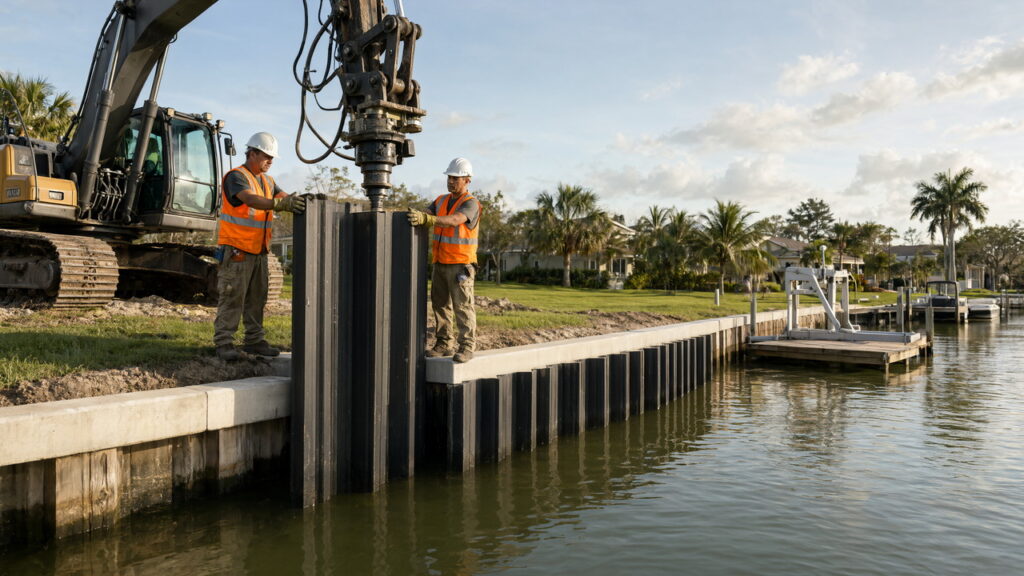
Waterfront properties offer beautiful views and convenient access to rivers, lakes, canals, and coastal areas. However, protecting the shoreline requires careful planning, suitable materials, and professional construction. An experienced bulkhead builder can help property owners understand erosion risks, evaluate existing shoreline conditions, and develop a retaining structure appropriate for the site.
Choosing the right contractor involves more than comparing installation prices. Soil conditions, water levels, structural design, drainage, permits, and maintenance all influence how well a waterfront bulkhead performs. Understanding these factors helps homeowners make informed decisions, avoid unnecessary expenses, and protect their property over time.
What Is a Bulkhead Builder?
A bulkhead builder is a construction professional or specialized contractor who installs, repairs, replaces, and maintains retaining structures along waterfront properties. These structures help hold back soil, stabilize shorelines, and reduce the loss of land caused by erosion and changing water conditions.
A waterfront bulkhead typically consists of a retaining wall made from materials such as vinyl, steel, timber, or reinforced concrete. Depending on the design, it may also include tiebacks, anchors, drainage components, protective caps, and supporting structural elements.
A qualified bulkhead builder evaluates how these components work together. Proper construction is important because a waterfront retaining wall must resist pressure from retained soil, groundwater, and environmental forces.
Bulkheads are commonly found around residential waterfront lots, canals, marinas, lakeside properties, and commercial shorelines. Their exact design depends on local environmental conditions, regulatory requirements, and engineering considerations.
What Does a Bulkhead Builder Actually Do?
A professional bulkhead builder may handle several stages of a shoreline protection project, from initial site assessment to final construction and inspection.
Typical services include:
- Inspecting existing waterfront bulkheads for damage or movement.
- Evaluating shoreline erosion and site accessibility.
- Coordinating engineering assessments and structural designs.
- Preparing construction estimates and project schedules.
- Helping arrange required permits and approvals.
- Installing timber, vinyl, steel, or concrete bulkheads.
- Replacing damaged sheet piling and structural components.
- Repairing drainage systems, caps, and anchoring assemblies.
- Coordinating inspections and completing site restoration.
Not every bulkhead builder provides engineering or permitting services directly. Some contractors work with licensed engineers, surveyors, environmental consultants, and other specialists.
Property owners should confirm which services are included in a proposal before signing a construction agreement.
Why Waterfront Properties Need Proper Bulkhead Construction
Waterfront land is continually influenced by water movement, soil conditions, rainfall, and changes in groundwater levels. Without appropriate shoreline protection, erosion can gradually remove soil and undermine nearby improvements.
A correctly designed bulkhead helps retain soil along the water’s edge. However, its effectiveness depends on the forces acting on the structure and the quality of its installation.
An experienced bulkhead builder considers these conditions before recommending materials or construction methods.
Shoreline Erosion and Soil Loss
Erosion occurs when water, waves, currents, or surface runoff transport soil away from a shoreline. The rate of erosion varies significantly between locations.
Properties exposed to boat wakes, changing water levels, or stronger currents may experience different conditions from sheltered waterfront lots.
A bulkhead builder assesses visible erosion patterns and considers whether a retaining structure is suitable for the site. In some locations, natural shoreline stabilization or a hybrid approach may offer a better solution.
Protection of Nearby Improvements
Waterfront properties may include patios, walkways, fences, landscaping, swimming pools, and docks close to the shoreline.
If retained soil moves or washes away, these improvements can become vulnerable to settlement or structural damage.
Properly designed bulkhead construction can help stabilize the land supporting nearby features. However, a bulkhead does not automatically protect every structure, especially when foundations or drainage systems have separate problems.
A qualified bulkhead builder should identify potential interactions between shoreline construction and nearby improvements.
Managing Soil and Groundwater Pressure
One of the most important functions of a waterfront bulkhead is resisting lateral earth pressure.
Soil behind a retaining wall creates horizontal loads. Water trapped within that soil can increase pressure against the structure.
A bulkhead builder must therefore consider drainage, groundwater conditions, and the proposed anchoring system.
Ignoring these factors can contribute to wall movement, cracking, deformation, or premature failure.
Types of Bulkheads a Bulkhead Builder May Recommend
Different bulkhead materials offer different advantages, limitations, and maintenance requirements.
The best choice depends on the waterfront environment, soil characteristics, structural loads, budget, and expected service conditions.
A reliable bulkhead builder should explain why a particular material is suitable rather than recommending the same solution for every property.
Vinyl Bulkheads
Vinyl bulkheads commonly use interlocking sheet piles to form a continuous retaining wall.
Vinyl is resistant to biological decay and does not rust like unprotected steel. These properties can make it attractive for certain freshwater and saltwater applications.
A bulkhead builder may recommend vinyl when the required structural capacity, installation conditions, and manufacturer specifications support its use.
However, vinyl does not perform identically across all products. Wall thickness, reinforcement, ultraviolet exposure, temperature, and structural loading can affect performance.
Some installations use composite systems that combine vinyl panels with other structural materials.
Vinyl bulkhead construction should be based on the actual engineering requirements rather than appearance alone.
Wooden Bulkheads
Timber bulkheads are traditionally used along lakes, canals, and other waterfront environments.
Wood can provide a natural appearance and may be practical for particular projects. However, its performance depends on timber species, treatment, environmental exposure, and construction details.
A bulkhead builder must account for deterioration caused by moisture, biological organisms, and repeated wetting.
Timber components may eventually require replacement because of decay, marine borers, or structural wear.
Treated wood is subject to product-specific use restrictions and environmental regulations. Contractors should select materials approved for the intended aquatic application.
Steel Sheet Pile Bulkheads
Steel bulkheads are used where engineering conditions require significant structural capacity.
Steel sheet piles can be driven into the ground to form an interlocking retaining wall. Their strength and installation characteristics make them suitable for some demanding waterfront projects.
A bulkhead builder may recommend steel for commercial shorelines, deeper retaining applications, or locations with challenging structural requirements.
However, steel can corrode, particularly in aggressive marine environments.
Protective coatings, corrosion allowances, or other engineering measures may be necessary.
Installation can also require specialized equipment, especially where heavy piling systems are involved.
Concrete Bulkheads
Reinforced concrete is another option for waterfront retaining structures.
Concrete bulkheads may be constructed using precast elements, cast-in-place sections, or combinations of structural components.
A bulkhead builder working with concrete must consider reinforcement, water exposure, construction joints, foundation support, and drainage.
Concrete can provide substantial structural capacity when properly designed and constructed.
However, cracking, reinforcement corrosion, settlement, and inadequate drainage can affect performance.
Concrete bulkhead construction may involve significant engineering and site preparation, particularly where access is limited.
How to Choose the Right Bulkhead Builder
Selecting a bulkhead builder is one of the most important decisions in a waterfront construction project.
Shoreline structures can be expensive to replace, and poor construction may create problems that are difficult to correct after installation.
The following seven considerations provide a practical framework for evaluating contractors.
1. Check Waterfront Construction Experience
General construction experience does not necessarily demonstrate expertise in marine retaining structures.
A bulkhead builder should understand shoreline soil conditions, water-level variations, marine construction equipment, and installation techniques.
Ask about projects completed under conditions similar to yours.
For example, a contractor experienced with sheltered freshwater canals may need additional expertise or equipment for an exposed coastal site.
Relevant project photographs, references, and descriptions can help establish whether the contractor has suitable experience.
2. Verify Licensing and Insurance
Construction licensing requirements vary by jurisdiction and the type of work performed.
A bulkhead builder may need a general contractor license, specialty marine construction authorization, or other applicable credentials.
Property owners should verify licensing through the relevant state or local authority.
Insurance is equally important. Ask for evidence of appropriate general liability and workers’ compensation coverage, along with any marine-specific coverage required for the project.
Coverage should be verified rather than assumed from statements in advertising materials.
3. Evaluate Engineering and Design Practices
A dependable bulkhead builder should recognize when professional engineering is required.
Engineering considerations may include retained soil height, soil strength, groundwater conditions, surcharge loads, anchor capacity, and expected water levels.
Nearby buildings, vehicle access, heavy equipment, or stored materials can introduce additional loads.
A contractor should not substitute informal assumptions for an engineered design when regulations or site conditions require one.
Ask whether plans will be prepared or reviewed by a properly licensed engineer.
4. Compare Material Recommendations
Different contractors may recommend different bulkhead materials for the same site.
A qualified bulkhead builder should explain the advantages and limitations of each proposed option.
Compare structural suitability, installation requirements, maintenance needs, and potential environmental impacts.
The cheapest initial material may not produce the lowest ownership cost.
Likewise, a more expensive material is not automatically better if it is unsuitable for the site’s conditions.
5. Review Previous Projects and References
Completed work can provide useful evidence of a contractor’s experience.
Ask the bulkhead builder for references from customers with comparable waterfront properties.
Where possible, look at projects that have been exposed to normal environmental conditions for several years.
Questions about communication, scheduling, unexpected costs, and warranty service can be particularly useful.
Online reviews may provide additional context, but they should not replace direct verification of experience and qualifications.
6. Request a Detailed Written Estimate
A professional bulkhead builder should provide a proposal that clearly describes the planned work.
The estimate should identify construction materials, approximate wall dimensions, demolition requirements, disposal arrangements, and site restoration.
It should also explain whether engineering, permitting, surveying, and inspections are included.
Ask how unexpected conditions will be handled.
For example, buried debris, unsuitable soil, damaged anchors, or restricted equipment access may change the construction approach.
A detailed proposal makes it easier to compare contractors fairly.
7. Understand Warranties and Maintenance Obligations
A warranty can be valuable, but its terms matter more than its advertised duration.
Ask the bulkhead builder what workmanship is covered, which materials have separate manufacturer warranties, and what exclusions apply.
Damage caused by unusual storms, vessel impact, unauthorized modifications, or neglected maintenance may fall outside warranty coverage.
Property owners should also ask about recommended inspections and maintenance procedures.
Clear expectations can help prevent disagreements after construction.
The Bulkhead Construction Process Explained
Understanding the construction process helps property owners evaluate schedules, recognize important milestones, and communicate with their contractor.
Although installation methods vary, most waterfront retaining wall projects follow several broad stages.
Initial Site Inspection
The bulkhead builder begins by examining the shoreline and identifying visible problems.
This assessment may include measuring the approximate wall length, reviewing accessibility, inspecting nearby improvements, and identifying signs of erosion.
Existing structures may show leaning, cracked caps, displaced panels, or soil loss.
The initial inspection helps determine whether repair, replacement, or further investigation is appropriate.
Surveying and Engineering Assessment
A property survey may be necessary to establish boundaries and the proposed wall location.
Depending on the project, an engineer may evaluate soil conditions, retaining heights, anchoring requirements, and external loads.
A bulkhead builder should coordinate these findings with the construction plan.
This stage is particularly important when replacing an older bulkhead because the original structure may not meet current design or regulatory requirements.
Permits and Environmental Approvals
Waterfront construction often affects regulated areas.
Depending on the location, approvals may be needed from municipal authorities, state environmental agencies, and federal regulators.
In the United States, certain activities involving waters of the United States may require authorization from the U.S. Army Corps of Engineers under applicable federal laws.
State and local requirements can also apply.
A bulkhead builder should identify the relevant approval process before construction begins.
Owners should not assume that replacing an existing wall automatically eliminates permit requirements.
Removal of Existing Structures
When an old bulkhead must be replaced, the contractor may need to remove damaged panels, caps, anchoring components, or other structural elements.
Demolition must be planned carefully because removing a retaining wall can temporarily destabilize soil.
A bulkhead builder may use temporary support, staged removal, or other engineered methods where necessary.
Debris should be managed according to applicable environmental and disposal requirements.
Installation of New Bulkhead Components
The installation method depends on the selected material and design.
Sheet piling may be driven, vibrated, pressed, or installed using other appropriate techniques.
A bulkhead builder must control alignment, depth, and connections while accounting for actual ground conditions.
If the design includes tiebacks or anchors, their installation should follow the engineering documents.
Proper construction also requires attention to transitions, corners, penetrations, and connections with adjacent structures.
Drainage, Backfilling, and Finishing
Once the primary wall is installed, the contractor completes necessary drainage and backfill work.
Backfill material and placement methods can affect pressure against the wall.
A bulkhead builder should follow the engineered drainage and compaction requirements rather than simply placing available soil behind the structure.
Final work may include installing a cap, restoring disturbed landscaping, and repairing affected access areas.
The completed project should be inspected as required by the applicable plans and permits.
How Much Does a Bulkhead Builder Cost?
Bulkhead construction costs vary substantially by location, site conditions, material selection, and project complexity.
There is no reliable universal price that applies to every waterfront property.
Some contractors provide preliminary estimates per linear foot, but these figures may not include the full cost of engineering, permits, demolition, anchoring, and restoration.
A bulkhead builder should explain the basis of any quoted price.
Factors That Influence Bulkhead Installation Costs
Several project characteristics can increase or decrease the final construction expense.
Wall length and height: Longer walls generally require more materials, while taller retaining structures may involve greater engineering demands.
Material selection: Vinyl, timber, steel, and concrete have different material and installation costs.
Soil conditions: Weak soils, buried obstructions, and unusual groundwater conditions can complicate construction.
Water access: Barges, specialized equipment, or restricted shoreline access can affect labor and mobilization expenses.
Existing damage: Removing a deteriorated wall or stabilizing adjacent land may add work.
Permits and engineering: Surveys, environmental evaluations, design services, and inspections may be required.
Site restoration: Landscaping, walkways, fences, and docks affected by construction may need repair or replacement.
A bulkhead builder should identify these considerations during the estimating process.
Why the Lowest Quote May Not Be the Best Choice
Two estimates may appear to describe the same project while including different levels of work.
One bulkhead builder might include engineered anchors, drainage improvements, disposal, and final restoration.
Another may quote only basic wall installation.
Without comparing the scope of work, the lower figure can be misleading.
Request itemized descriptions and clarify exclusions before selecting a contractor.
The goal is to compare complete, technically appropriate solutions rather than prices alone.
Bulkhead Repair Versus Complete Replacement
Not every damaged bulkhead requires complete replacement.
In some situations, a qualified bulkhead builder can repair localized deterioration while retaining structurally sound components.
However, repair suitability depends on the condition of the entire retaining system.
When Bulkhead Repair May Be Appropriate
Minor defects may sometimes be addressed without rebuilding the entire shoreline wall.
Examples include limited cap damage, isolated component deterioration, or certain drainage problems.
A bulkhead builder should determine whether the defect is local or a symptom of a larger structural issue.
For instance, replacing a cracked cap may not solve a problem caused by failing anchors or significant wall movement.
Repair decisions should address the underlying cause.
When Replacement May Be Necessary
Complete replacement may be appropriate when a bulkhead has widespread deterioration or substantial structural damage.
Warning signs include major leaning, extensive sheet pile failure, repeated soil loss, or significant anchor problems.
A bulkhead builder may recommend engineering assessment when the wall appears unstable.
The condition of the surrounding land also matters.
If the existing structure no longer provides adequate support, delaying necessary work can increase the complexity of future repairs.
Can a New Bulkhead Be Installed in Front of an Old One?
In some circumstances, contractors install a new retaining structure near an existing wall.
However, this approach is not suitable for every property.
A bulkhead builder must evaluate available space, property boundaries, soil conditions, structural requirements, and environmental restrictions.
The relationship between the old and new structures also requires engineering consideration.
Installing a new wall without addressing unstable soil or concealed deterioration can create additional problems.
Common Signs Your Waterfront Bulkhead Needs Attention
Recognizing deterioration early can help homeowners arrange inspections before damage becomes more extensive.
A bulkhead builder can evaluate visible defects and determine whether further investigation is necessary.
Leaning or Bulging Walls
A retaining wall that moves toward the water may be experiencing excessive pressure, deteriorated anchors, or inadequate structural support.
Movement does not reveal the exact cause by itself.
A bulkhead builder should assess the wall’s condition before repairs are selected.
Significant movement warrants prompt professional evaluation, especially where people or nearby structures could be affected.
Sinkholes and Soil Settlement
Depressions behind a bulkhead can indicate soil migration, poor backfilling, drainage problems, or other subsurface conditions.
Small holes may become more serious if soil continues escaping.
A bulkhead builder should investigate where material is going rather than simply filling the visible depression.
Repeated settlement is particularly important because it may indicate an unresolved structural or drainage problem.
Cracks and Damaged Caps
Bulkhead caps help connect or protect portions of some retaining wall systems.
Cracking, displacement, or exposed reinforcement may indicate deterioration.
Not every crack means structural failure, but the pattern and severity matter.
A qualified bulkhead builder can identify whether the damage is cosmetic, localized, or associated with movement elsewhere in the structure.
Rust, Rot, and Material Deterioration
Steel corrosion, timber decay, and damaged connections can weaken structural components.
Material deterioration may be concentrated near changing water levels or other exposure zones.
A bulkhead builder should examine accessible components and identify areas requiring closer inspection.
Surface appearance alone may not reveal the full structural condition.
Bulkhead Builder and Seawall Contractor Differences
The terms bulkhead builder and seawall contractor are sometimes used interchangeably.
However, bulkheads and seawalls can serve somewhat different engineering purposes.
A bulkhead primarily retains soil along the waterfront, although it may also experience wave forces.
A seawall is generally designed to protect shorelines or coastal infrastructure against wave action and related erosion.
The distinction depends on the project and local terminology.
A bulkhead builder may install both types of structures, but experience with one does not automatically establish expertise in the other.
For locations exposed to substantial waves, storm surge, or coastal flooding, additional engineering considerations may apply.
Property owners should describe their actual site conditions rather than relying entirely on the contractor’s job title.
Environmental Considerations in Bulkhead Construction
Waterfront construction can affect aquatic habitats, shoreline vegetation, sediment movement, and water quality.
A responsible bulkhead builder should consider these effects alongside property protection requirements.
Traditional vertical retaining walls can alter the natural shoreline environment.
In some locations, environmental agencies encourage or require consideration of alternatives such as living shorelines.
What Is a Living Shoreline?
A living shoreline uses natural or nature-based features to stabilize suitable waterfront areas.
Depending on the location, it may include native vegetation, marsh creation, oyster reefs, biodegradable materials, or other appropriate stabilization measures.
The National Oceanic and Atmospheric Administration provides educational guidance on living shorelines and their potential benefits.
Living shorelines are not suitable for every location, particularly where space constraints, strong wave forces, or specific infrastructure requirements create limitations.
A bulkhead builder working with coastal engineers and environmental specialists can help evaluate available options.
Reducing Construction Impacts
A carefully managed project should minimize unnecessary disturbance to surrounding land and water.
Depending on permit conditions, construction controls may address sediment movement, debris, protected habitats, and equipment access.
A bulkhead builder should understand the environmental requirements that apply to the site.
Work schedules may also be restricted during certain periods to protect aquatic species or sensitive habitats.
These requirements vary by jurisdiction and should be confirmed before construction.
How Drainage Affects Bulkhead Performance
Drainage is one of the most important considerations in waterfront retaining wall construction.
Water trapped behind a bulkhead can increase pressure against the structure.
Heavy rainfall, groundwater movement, and surface runoff may contribute to these conditions.
An experienced bulkhead builder should evaluate how water moves through the property and how the proposed design manages it.
Weep Holes and Drainage Systems
Some retaining wall systems use weep holes, drainage layers, filters, or other methods to manage groundwater pressure.
However, drainage details must match the structural design and soil conditions.
A bulkhead builder should not automatically add openings without considering soil retention and filtration.
Improper drainage details can allow soil particles to escape, potentially contributing to settlement behind the wall.
Engineered drainage solutions help balance water pressure management with soil stability.
Surface Water Management
Rainwater flowing from roofs, patios, and driveways can affect the area behind a bulkhead.
Downspouts and drainage outlets should not discharge in ways that unnecessarily erode soil or overload the retaining system.
A bulkhead builder may coordinate with drainage specialists when site runoff presents a significant concern.
Managing water above and below the ground can help protect the shoreline structure.
How Long Does a Bulkhead Last?
Bulkhead service life depends on its material, structural design, environmental exposure, installation quality, and maintenance history.
There is no single lifespan that accurately applies to every project.
A bulkhead builder may discuss expected service life based on manufacturer information, engineering assumptions, and experience with comparable installations.
However, these expectations should not be treated as guarantees.
Factors That Affect Bulkhead Longevity
Different environmental conditions influence deterioration.
Saltwater exposure can accelerate corrosion in susceptible metals. Timber may face decay or marine organism activity, while concrete performance depends partly on reinforcement protection and exposure conditions.
A bulkhead builder should account for these risks during material selection.
Structural loading also matters.
Changes to landscaping, nearby construction, heavy equipment use, or drainage can introduce conditions different from those originally anticipated.
A wall that was appropriate when installed may need reassessment after major property modifications.
Maintenance That Supports Long-Term Performance
Regular observation helps property owners identify developing problems.
Inspect the waterfront area for unusual movement, settlement, exposed components, drainage changes, and visible material deterioration.
A bulkhead builder can recommend an inspection schedule based on the site’s exposure and structural characteristics.
Additional inspections may be appropriate after severe storms, flooding, vessel impacts, or unusual water-level events.
Avoid drilling into, attaching heavy loads to, or altering structural components without professional approval.
Questions to Ask Before Hiring a Bulkhead Builder
A contractor interview should establish whether the proposed work is suitable for the property.
Homeowners can use the following questions to guide discussions:
- How much experience do you have with similar waterfront conditions?
- Will the project require a licensed engineer or geotechnical assessment?
- Which bulkhead materials do you recommend, and why?
- Who is responsible for obtaining permits and arranging inspections?
- Does your estimate include demolition, drainage, anchors, and restoration?
- How will you protect nearby structures and landscaping?
- What happens if unexpected soil conditions are discovered?
- Can you provide recent references from comparable projects?
- What warranties apply to materials and workmanship?
- What maintenance should I expect after installation?
A trustworthy bulkhead builder should answer these questions clearly and explain when additional professional evaluation is needed.
Be cautious of contractors who dismiss permitting, promise that a wall will never fail, or recommend construction without understanding the site’s conditions.
Mistakes to Avoid During Bulkhead Installation
Waterfront construction involves structural and environmental risks that are easy to underestimate.
Avoiding common planning mistakes can improve project outcomes.
Choosing Materials Based Only on Price
An inexpensive material may not meet the required structural capacity or exposure conditions.
A bulkhead builder should evaluate engineering suitability before comparing price differences.
Long-term maintenance and potential replacement costs deserve consideration alongside installation expenses.
Ignoring Drainage Problems
Even a strong retaining wall can experience problems when groundwater and runoff are poorly managed.
Drainage should be incorporated into the project design rather than considered after construction.
A knowledgeable bulkhead builder will examine the relationship between soil pressure, water movement, and structural performance.
Starting Construction Without Required Permits
Unpermitted waterfront work may lead to enforcement actions, delays, fines, or removal requirements.
A bulkhead builder should clarify which approvals are necessary before equipment arrives.
Property owners should retain copies of relevant permits and approved plans.
Overlooking Property Boundaries
Waterfront boundaries can involve unusual legal and surveying considerations.
The apparent waterline does not always establish the legal property boundary.
A bulkhead builder should work from appropriate survey information when wall placement affects property limits.
Legal or surveying professionals may be needed to resolve boundary questions.
Neglecting Post-Construction Inspections
Completing installation does not eliminate the need for future observation.
Shoreline conditions can change, and materials deteriorate over time.
A bulkhead builder should explain maintenance responsibilities and identify warning signs that require attention.
Choosing a Bulkhead Builder for Different Waterfront Locations
Not all waterfront properties face the same conditions.
A contractor’s recommendations should reflect the specific environment.
Residential Canal Properties
Canal properties may experience limited natural wave action but still face boat wakes, groundwater pressure, and fluctuating water levels.
A bulkhead builder should evaluate vessel activity, existing structures, and local waterway requirements.
Limited access between neighboring homes can also affect equipment selection.
Lakefront Properties
Lakefront conditions vary with shoreline exposure, seasonal water levels, and local soil characteristics.
Some sites may benefit from conventional retaining structures, while others may support natural stabilization approaches.
A bulkhead builder should consider erosion patterns and the property’s intended use before recommending construction.
Coastal Waterfront Properties
Coastal sites may experience saltwater exposure, tides, wave forces, and storm-related hazards.
A bulkhead builder working in these environments should understand the additional structural and regulatory considerations involved.
Coastal flood protection may require broader planning beyond the bulkhead itself.
A retaining wall should not be assumed to prevent storm-surge flooding or eliminate erosion risks.
How to Prepare Your Property for Bulkhead Construction
Preparation can reduce scheduling problems and help contractors work efficiently.
Before construction, confirm the approved work area, equipment access, and any restrictions affecting the property.
A bulkhead builder may need access through the yard, driveway, neighboring property, or waterway.
Temporary removal of fences, landscaping, or other obstacles may be necessary.
Property owners should also identify irrigation systems, drainage lines, electrical connections, and other utilities near the work area.
The contractor should follow applicable utility-location procedures before excavation or drilling.
If docks or boat lifts are close to the proposed work, their protection or temporary removal should be discussed in advance.
A bulkhead builder should explain how the construction sequence may affect waterfront access.
Clear communication about noise, equipment movement, working hours, and site restoration helps establish realistic expectations.
Why Professional Engineering Matters for Bulkhead Construction
A waterfront retaining wall is more than a visible barrier between land and water.
Its structural performance depends on components that may be partially or completely hidden after installation.
These can include embedded sheet piling, anchors, deadmen, reinforcement, and drainage assemblies.
A bulkhead builder should recognize that the adequacy of these elements depends on engineering calculations and site conditions.
Structural Loads and Stability
Designers may need to assess lateral earth pressure, hydrostatic pressure, surcharge loads, and relevant environmental forces.
Stability considerations can include wall bending, anchor resistance, embedment depth, and overall soil stability.
A bulkhead builder should construct the system according to the approved design.
Unauthorized field changes can alter how the retaining structure transfers loads.
Quality Control During Installation
Construction quality involves more than making the finished wall look straight.
Installation depth, component alignment, connection details, material condition, and backfill procedures can affect performance.
A qualified bulkhead builder should follow documented plans and applicable inspection requirements.
Where testing or special inspections are specified, those activities should be completed and recorded.
Appropriate documentation can also help future contractors understand how the structure was built.
FAQ’s
1. What does a bulkhead builder do?
A bulkhead builder installs, repairs, and replaces waterfront retaining walls that stabilize shorelines and help protect land from erosion.
2. How much does it cost to hire a bulkhead builder?
Costs depend on wall dimensions, materials, soil conditions, access, engineering, and permits. A site-specific written estimate provides the most useful pricing information.
3. What is the best material for a waterfront bulkhead?
Vinyl, timber, steel, and concrete can all be suitable. The best material depends on structural requirements, environmental exposure, maintenance needs, and budget.
4. Do I need a permit to build a bulkhead?
Many waterfront projects require local, state, or federal approvals. Requirements depend on the location, waterway, project scope, and applicable regulations.
5. Can a bulkhead builder repair a leaning seawall?
Some problems can be repaired, but significant leaning may indicate structural instability. A professional assessment is necessary to determine whether repair or replacement is appropriate.
6. How long does bulkhead construction take?
Project duration varies with permitting, engineering, wall length, materials, weather, and site accessibility. The contractor should provide a realistic schedule after evaluating the property.
Conclusion
Hiring the right bulkhead builder is an important part of protecting a waterfront property. A suitable contractor combines relevant construction experience with appropriate engineering, reliable materials, clear estimates, and an understanding of local environmental requirements. Comparing these factors helps property owners select shoreline protection that fits their specific conditions.
A successful waterfront project also requires attention to drainage, permits, construction quality, and future maintenance. Whether you are installing a new retaining wall or replacing a deteriorated structure, working with a qualified bulkhead builder can help you make informed decisions and support the long-term stability of your shoreline.