
Rising to 6,189 metres in Nepal's Khumbu region, Island Peak—locally known as Imja Tse—offers trekkers an opportunity to progress from high-altitude hiking into a genuine...
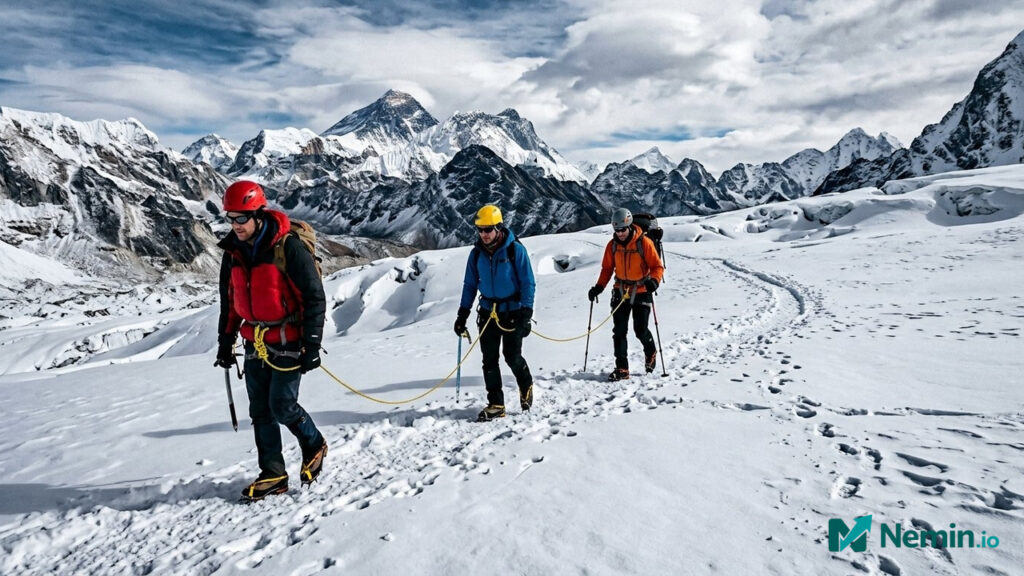
Rising to 6,189 metres in Nepal’s Khumbu region, Island Peak—locally known as Imja Tse—offers trekkers an opportunity to progress from high-altitude hiking into a genuine mountaineering objective. Island Peak Climbing typically combines an approach through the Everest region with acclimatisation, glacier travel, crampon use, rope systems, a demanding summit day, and exposure to the thin air of a 6,000-metre Himalayan peak. That makes the mountain far more serious than the phrase “trekking peak” can sometimes suggest.
The expedition appeals partly because the journey itself passes through some of Nepal’s best-known Himalayan landscapes. Depending on the itinerary, climbers may travel through the Khumbu’s villages and trekking routes before continuing toward the Imja Valley and the mountain. Longer itineraries can incorporate additional acclimatisation objectives or Everest Base Camp before the climbing phase.
Yet Island Peak should not be treated as merely an Everest-region trek with crampons added at the end. The final climb can involve darkness, cold, snow and ice, roped glacier travel, crevasse hazards, fixed ropes, steep terrain, rapidly changing weather, and physical effort at an altitude where substantially less oxygen is available than at sea level.
Conditions also change from season to season and year to year. Glacier movement can alter crevasses and route characteristics, while snow, temperature, wind, and fixed-line arrangements can influence the technical demands climbers encounter. An old trip report should therefore never be treated as a precise description of current conditions.
Successful preparation needs to address fitness, mountaineering skills, acclimatisation, equipment, permits, guiding arrangements, emergency planning, insurance, and realistic decision-making. Reaching the summit is an objective; returning safely is the requirement.
This guide explains what prospective climbers need to know about Island Peak in 2026, including route structure, difficulty, preparation, summit strategy, equipment, costs, risks, and the circumstances in which turning around is the correct mountaineering decision.
Current-information note: Nepal’s permit requirements, fees, guiding rules, local regulations, insurance requirements, route conditions, flight schedules, and climbing arrangements can change. Verify current 2026 information through Nepal’s relevant tourism and mountaineering authorities and a reputable licensed expedition operator before booking or travelling.
What Is Island Peak Climbing?
Island Peak is the English name historically given to Imja Tse, a mountain in Nepal’s Everest region. At approximately 6,189 metres, it sits well above ordinary trekking altitude and requires mountaineering techniques for the standard climbing route under typical conditions.
The name “Island Peak” came from the mountain’s appearance when viewed from within the surrounding Himalayan landscape. Today, both Island Peak and Imja Tse are commonly used when referring to the objective, although official or local documentation may use the latter.
Island Peak Climbing is frequently marketed as an introductory Himalayan climbing expedition. “Introductory” is relative: it means the peak can serve as a first 6,000-metre climbing objective for suitably prepared people, not that someone with no fitness, acclimatisation, skills, or qualified support can safely walk to the summit.
Island Peak Climbing vs. a Normal Himalayan Trek
A conventional lodge trek primarily requires hiking fitness, altitude management, weather preparation, and strong judgment. Island Peak introduces additional technical variables, including crampons, harnesses, ropes, ice axe use, glacier travel, fixed-line systems, and mountain-specific hazards.
The consequences of mistakes also change. Slipping on a village trail is different from slipping on steep snow or ice while connected to a climbing system, while hidden crevasses introduce hazards that do not exist on normal trekking paths.
This is why pre-climb instruction and appropriately qualified leadership matter. Equipment is useful only when a climber understands how and when to use it.
1. Island Peak Climbing Requires Respect for 6,189 Metres of Altitude
Altitude is one of the defining challenges of the expedition. Island Peak’s summit is high enough that every climber experiences substantial physiological stress, regardless of fitness level.
Atmospheric pressure falls as altitude increases, reducing the amount of oxygen available with each breath. The body responds through acclimatisation processes, but those adaptations take time and vary between individuals.
Excellent cardiovascular fitness can make the physical work easier, but it does not make someone immune to acute mountain sickness. Even experienced athletes can become ill when ascending too quickly.
Acclimatisation Before Island Peak Climbing
A sensible itinerary gains altitude gradually and provides time for the body to adapt. Many expedition plans include acclimatisation days and higher daytime excursions followed by sleeping lower where appropriate.
The exact schedule should be designed around the full itinerary rather than a generic formula. Where someone slept the previous night matters more physiologically than simply knowing the highest point reached during the day.
Climbers should tell guides about symptoms honestly. Concealing headaches, nausea, dizziness, unusual fatigue, coordination problems, breathlessness at rest, or other concerning symptoms to protect summit ambitions can increase risk.
Serious Altitude Illness
Acute mountain sickness can progress in some cases to potentially life-threatening conditions, including high-altitude cerebral oedema or high-altitude pulmonary oedema. Severe neurological changes or breathing problems at rest require urgent attention.
Descent can be the critical treatment for serious altitude illness. Supplemental oxygen, medications, evacuation, and other interventions may also be used by appropriately trained teams depending on the situation.
No summit is worth continuing upward with symptoms that make descent medically necessary.
2. Island Peak Climbing Needs More Fitness Than Ordinary Trekking
Island Peak demands endurance over many consecutive days rather than one isolated burst of fitness. Climbers first need to reach the mountain while adapting to altitude, then complete a summit day that can involve many hours of sustained movement.
Training should therefore combine aerobic endurance, uphill conditioning, leg strength, muscular endurance, balance, and experience carrying the type of backpack expected during the expedition.
The strongest preparation is specific. Hiking uphill repeatedly with a pack provides more relevant adaptation than relying entirely on gym machines, although indoor training can contribute significantly when mountains are inaccessible.
Training Timeline for Island Peak Climbing
A structured preparation period of several months can be appropriate for many climbers, depending on starting fitness and mountaineering experience. Someone already hiking regularly has a different baseline from someone beginning from inactivity.
Training progression should be gradual enough to reduce injury risk. Trying to compensate for limited preparation with very high training volume during the final few weeks can result in overuse injuries immediately before departure.
Include recovery days. Fitness develops through stress followed by recovery, not through continuous exhaustion.
Strength Training for Island Peak Climbing
Useful movements can target legs, hips, core, and general stability. Squats, lunges, step-ups, loaded carries, calf work, and appropriate core exercises can contribute when performed with suitable technique.
Descending strength deserves attention as well. Trekkers often train for climbing uphill while overlooking the repetitive eccentric loading created by long descents.
A qualified coach or healthcare professional can provide individualized advice for people with previous injuries, medical conditions, or uncertainty about exercise suitability.
3. Island Peak Climbing Requires Basic Mountaineering Skills
Climbers should understand the equipment they will use before reaching technical terrain. A short skills session immediately before summit day can refresh knowledge, but it should not be the first moment someone has ever touched crampons or a harness.
Depending on current conditions and operator procedures, relevant abilities can include moving efficiently in crampons, using an ice axe, understanding rope attachment, operating an ascender on fixed lines, descending using the team’s system, and travelling appropriately on glaciated terrain.
The exact technical demands of Island Peak Climbing vary with snow and glacier conditions. Route changes can make historical difficulty descriptions inaccurate.
Crampon Skills for Island Peak Climbing
Crampons change how climbers walk. Poor foot placement can cause someone to catch spikes on trousers, gaiters, rope, ice, or another foot.
Practice should include flat terrain, ascending, descending, traversing, and maintaining balanced foot placement. Boots and crampons must also be compatible.
Do not assume that any crampon attaches safely to any boot. The binding system, boot stiffness, welts, and intended use all matter.
Rope and Fixed-Line Skills
Fixed ropes may be used on steeper sections, with climbers operating equipment under guide instruction. Efficiently handling an ascender while wearing gloves requires practice.
Climbers should also understand that attaching to a rope does not eliminate risk. Incorrect clipping, poor technique, congestion, damaged equipment, or bad judgment can still create dangerous situations.
Follow the system established by the expedition’s qualified mountain professionals rather than copying techniques from another team’s social-media video.
4. Island Peak Climbing Depends on the Right Season and Weather
Nepal’s main trekking and climbing periods are commonly associated with spring and autumn, but precise conditions vary between years. Weather systems, snow accumulation, wind, temperature, and route condition can alter the practical climbing window.
Spring can offer established expedition activity across the Everest region, while autumn can provide another widely used trekking and climbing period. Winter and monsoon conditions introduce substantially different challenges.
A month described online as “the best time” does not guarantee stable summit weather during your specific itinerary.
Weather on Island Peak Climbing Summit Day
Conditions can deteriorate rapidly at altitude. Strong wind, snowfall, cloud, extreme cold, or poor visibility can turn an otherwise manageable climb into a significantly more dangerous objective.
Experienced guides use current forecasts together with direct mountain observations. Forecasts are valuable but remain predictions, particularly in complex high mountain terrain.
Build weather contingency into the itinerary where practical. An expedition with no flexibility can create psychological pressure to attempt the summit in conditions where waiting or turning around would be wiser.
Temperature Matters
Even in popular climbing seasons, summit day can be very cold, particularly during a pre-dawn start. Wind can increase heat loss dramatically and expose weaknesses in gloves, boots, face protection, or layering.
Test the complete clothing system before the trip. A warm jacket that fits perfectly over a T-shirt may become restrictive when worn over several mountain layers.
5. Island Peak Climbing Requires the Correct Technical Equipment
Technical gear should be selected according to current operator requirements and mountain conditions. Climbers should not build the equipment list solely from an old online article because rental availability and route requirements can change.
Typical categories can include mountaineering boots, crampons, harness, climbing helmet, ice axe, appropriate carabiners, an ascender, descending equipment, and other personal safety hardware specified by the guiding team.
Some equipment may be rented in Nepal, depending on size, availability, quality, and operator arrangements. Safety-critical rented gear should be inspected carefully and fitted properly.
Mountaineering Boots for Island Peak Climbing
Ordinary lightweight trekking shoes may not provide the required warmth, stiffness, or crampon compatibility for the climbing portion. The exact boot specification depends on season and conditions.
Boots should be fitted well before the expedition and tested while wearing the socks intended for summit day. Foot swelling, cold, and long descents can expose fit problems that are not obvious in a shop.
Do not attempt a major high-altitude summit day in completely untested footwear.
Helmet, Harness, and Hardware
Climbing equipment should be designed for its intended mountaineering use and meet appropriate recognized safety standards where relevant. Inspect equipment for damage before use.
Harness fit should be checked with the clothing layers worn on the mountain. Thick insulated clothing can significantly alter how equipment fits compared with testing it over ordinary indoor clothing.
Ask the operator what they provide, what they rent, and what climbers must personally bring before purchasing equipment.
6. Island Peak Climbing Demands a Reliable Clothing System
Clothing should accommodate both high-output climbing and long periods of exposure. Climbers can become very warm while moving uphill and cold quickly during stops or when wind increases.
A layered system allows adjustment. This usually includes moisture-managing base layers, insulating mid-layers, a substantial high-altitude insulation layer, and weather-resistant outer shells appropriate to forecast conditions.
Avoid relying on cotton for cold technical mountain conditions because moisture retention and slow drying can create problems.
Gloves for Island Peak Climbing
Hands are vulnerable to cold, particularly while handling metal equipment. A layered glove system can provide more flexibility than one pair.
Depending on conditions, climbers may use lighter gloves for dexterity and warmer insulated gloves or mitts for severe cold.
Carry backup hand protection where the operator recommends it. Losing or saturating the only warm pair high on the mountain can become a safety issue.
Head and Face Protection
Warm headwear, sun protection, neck covering, and face protection may all be useful during different parts of the climb. Helmet compatibility needs to be considered.
Sunglasses with suitable ultraviolet protection are essential, particularly around snow and ice. Appropriate glacier eyewear may be recommended based on route and conditions.
A spare pair of suitable eye protection can be valuable because snow blindness is a serious risk.
7. Island Peak Climbing Is Safer With a Conservative Summit-Day Strategy
Summit day commonly begins very early because teams need adequate time to climb and descend while managing weather and route conditions. Exact departure times vary according to season, route, team, and guide judgment.
The climb is not complete at the summit. In mountaineering, a substantial proportion of risk remains during the descent, when climbers are tired and concentration may be lower.
Manage energy accordingly. Arriving at the summit completely exhausted leaves too little reserve for returning safely.
Turnaround Times on Island Peak Climbing
Professional teams may establish a turnaround time based on weather, pace, route condition, and available daylight. Climbers should respect it even when the summit appears frustratingly close.
Turning around can be the correct decision because of slow pace, deteriorating weather, altitude symptoms, equipment problems, cold injury risk, route congestion, or guide assessment.
Reaching a geographic point is never more important than preserving the team’s ability to return.
Eat and Drink Before You Feel Desperate
Cold and altitude can reduce appetite even while energy expenditure remains high. Carry accessible food that you know you can tolerate during strenuous activity.
Hydration systems can freeze in low temperatures, so insulated bottles or other cold-weather strategies may be preferable. Operator advice should reflect expected summit conditions.
Do not experiment with unfamiliar energy supplements for the first time on summit day.
8. Island Peak Climbing Requires Serious Glacier Awareness
Glaciers are dynamic environments. Crevasses open, close, move, and become covered by snow, while seasonal conditions can change the route over time.
This is one reason current guide knowledge matters so much. A GPS track from an expedition several years earlier is not sufficient navigation for current glacier hazards.
Teams may travel roped according to conditions and guiding procedures. Climbers need to maintain appropriate spacing, follow instructions, and avoid casually wandering away from the established route.
Crevasses During Island Peak Climbing
Crevasses can be obvious open gaps or hidden beneath snow bridges. Their visibility and stability can change according to temperature and recent snowfall.
Do not approach a crevasse edge for a photograph. Snow around openings can be unsupported, and apparent ground may not be as stable as it looks.
Qualified guides assess route conditions and manage the team’s travel system. Individual climbers should not override those decisions based on what another group appears to be doing.
Glacier Change and Island Peak Climbing
Himalayan glaciers are changing over time, making route descriptions especially sensitive to date. Technical sections, access, and objective hazards can evolve.
When researching the climb, check the publication date of trip reports. Current operator updates are more valuable for immediate route conditions than a detailed description written ten years ago.
Historical information can help understand the mountain, but it should not dictate real-time decisions.
9. Island Peak Climbing Permits and Regulations Must Be Current
Climbing Island Peak requires compliance with Nepal’s current permit and regional entry requirements. The exact documents and fees can depend on current regulations and itinerary.
Historically, the peak has fallen within Nepal’s trekking-peak administration framework, but travellers should verify the current authority, climbing permit, park or local entry fees, guide requirements, and associated documentation for 2026.
A reputable operator normally helps coordinate these arrangements, but climbers should still understand what has been purchased in their name.
Check What the Island Peak Climbing Package Includes
Ask whether the quoted expedition price includes permit fees, domestic transport, guiding, porter services, accommodation, food, technical equipment, airport transfers, insurance for staff where applicable, and other major costs.
A low package price may exclude several required items, while a more expensive package could include them.
Compare complete itineraries and services rather than the headline price alone.
Keep Permit Documents Accessible
Operators may manage group documents, but travellers should retain copies of important personal paperwork where appropriate.
Passport details should be kept secure. Avoid casually posting photographs of permits or boarding passes containing personal information on social media.
10. Island Peak Climbing Insurance Needs the Correct Altitude and Activity Cover
Standard travel insurance can exclude mountaineering or restrict trekking above a particular elevation. Island Peak’s 6,189-metre summit makes these exclusions extremely important.
Check whether the policy covers the specific activity, maximum altitude, guided mountaineering, helicopter rescue, medical evacuation, hospital treatment, trip interruption, and other risks relevant to the itinerary.
Do not rely on the term “adventure travel insurance” without reading the actual wording.
Helicopter Evacuation and Island Peak Climbing
Helicopters can play an important role in emergencies in Nepal, but availability depends on weather, location, flight conditions, logistics, and other factors. A helicopter should never be treated as guaranteed instant rescue.
Insurance claims can also require documentation and appropriate authorization. Understand the insurer’s emergency contact process before travelling.
Store policy details offline and give relevant information to an emergency contact at home.
Pre-Existing Conditions
Insurance policies can handle pre-existing medical conditions differently. Declare information accurately and obtain appropriate confirmation of coverage where required.
A policy that later rejects an expensive claim because relevant information was omitted can create significant consequences.
11. Island Peak Climbing Is About Safe Decision-Making, Not Just the Summit
Mountain culture can place enormous psychological value on reaching the top. Social media intensifies this because summit photographs are visible while cautious turnaround decisions rarely receive the same attention.
Good mountaineering reverses that priority. The objective is to climb while preserving enough physical and logistical margin to descend safely.
A person who turns around because of illness, weather, excessive cold, or pace has not necessarily failed. They may have made the strongest decision of the expedition.
Summit Success Rates Need Context
Be cautious about operators advertising very high Island Peak Climbing success percentages without explaining how the figure was calculated. Success can depend on weather, client fitness, acclimatisation, route condition, itinerary length, and whether only summit attempts are counted.
A high summit percentage does not independently establish safety quality. Operators should also be evaluated according to leadership, acclimatisation, staff treatment, emergency procedures, equipment, communication, and conservative decision-making.
The best guide is not necessarily the person most willing to take clients upward.
Typical Island Peak Climbing Itinerary
Itineraries vary substantially, particularly depending on whether Everest Base Camp or another acclimatisation objective is included. Many journeys begin with travel into the Khumbu before progressing gradually toward higher villages and the Imja Valley.
A conceptual itinerary might move through lower Khumbu settlements, include acclimatisation days, continue toward Dingboche or Chhukung, establish the Island Peak climbing phase, reach base camp or a designated staging area, make the summit attempt, and then descend through the trekking route.
The exact sequence should follow the operator’s current plan and route logistics. Do not choose an itinerary solely because it reaches the summit in the fewest days.
Additional acclimatisation time can be more valuable than saving a day.
Island Peak Climbing With Everest Base Camp
Combining Everest Base Camp with Island Peak is popular because the trekking route can provide additional altitude exposure before the climb. Depending on itinerary design, climbers can visit Everest Base Camp and potentially other high points before travelling toward Island Peak.
This makes for a longer expedition and requires enough energy reserve for the climbing phase. Treating Everest Base Camp as the “main event” can lead some travellers to arrive at Island Peak already physically depleted.
Training and pacing should reflect the complete journey rather than only summit day.
The operator should also explain how the combined itinerary supports acclimatisation and what adjustments are available if someone becomes unwell.
How Difficult Is Island Peak Climbing?
Difficulty should be divided into physical, technical, and altitude components. A climb can involve moderate climbing techniques but remain extremely demanding because those techniques are performed after days of trekking and at more than 6,000 metres.
Route conditions affect technical difficulty. Snow and ice conditions, crevasses, fixed ropes, and glacier characteristics can change what climbers encounter.
Someone comfortable with basic rope work at low altitude can still struggle significantly when performing the same tasks while cold, tired, and hypoxic.
Training should therefore develop both technical familiarity and physical endurance.
Is Island Peak Climbing Suitable for Beginners?
Island Peak can be suitable as an early Himalayan mountaineering objective for fit individuals receiving appropriate instruction and professional support. That does not make it suitable for someone arriving without preparation.
A beginner should ideally have substantial trekking fitness and some prior experience at altitude. Familiarity with crampons, ice axe use, harnesses, and fixed-line systems before Nepal can reduce the amount of new information being learned under stress.
Those uncertain about readiness can take a mountaineering skills course before booking. Skills learned in a controlled lower-altitude environment are easier to absorb than techniques introduced at high camp.
Discuss previous experience honestly with the expedition operator so they can assess suitability.
Island Peak Climbing Gear Checklist
The precise equipment list should come from the current operator, but the main categories can be organized clearly.
| Category | Typical Island Peak Climbing Equipment |
|---|---|
| Technical | Helmet, harness, compatible crampons, ice axe, ascender, approved connectors and descending equipment as specified |
| Footwear | Insulated or otherwise suitable mountaineering boots, trekking footwear, appropriate socks |
| Clothing | Base layers, fleece/mid-layer, insulated jacket, waterproof shell, shell trousers, warm trousers |
| Hands/head | Liner gloves, insulated gloves/mitts, warm hat, sun hat, neck/face protection |
| Eyes/skin | High-quality UV-protective sunglasses, goggles if required, sunscreen, lip protection |
| Trekking | Daypack, trekking poles, headlamp, water containers, dry bags |
| Sleep | Route-appropriate sleeping bag and other items specified by the operator |
| Health | Personal first aid, blister supplies, prescribed medicines |
| Electronics | Phone, power bank, cables, camera equipment where desired |
| Documents | Passport, permits/copies where appropriate, insurance and emergency information |
Do not treat this table as the final technical list. Conditions and operator systems determine exact required hardware.
Packing for Island Peak Climbing
Keep critical summit equipment separated from ordinary trekking clothing so it can be checked systematically before moving higher. Missing one small technical component can create a much larger problem at base camp.
Waterproof sleeping equipment and insulation carefully. Duffels transported by porters or animals can still encounter snow, rain, dust, or rough handling.
Pack lightweight but not recklessly. Removing a spare casual shirt is very different from removing essential hand insulation or weather protection.
The expedition operator’s luggage limits should be respected, including limits intended to protect porter welfare.
Food and Hydration During Island Peak Climbing
The approach trek usually offers food according to the accommodation and expedition arrangement, while climbing days may rely more heavily on portable high-energy foods.
Altitude can reduce appetite. Bring some familiar snacks that remain easy to eat when tired, but do not overload the entire trek with food that is readily available locally.
Hydration should be maintained consistently. Drinking excessive quantities purely because of altitude is not a substitute for acclimatisation and can also create health problems.
Use thirst, normal hydration practices, guide advice, and medical guidance rather than forcing extreme fluid targets.
Island Peak Climbing and Acclimatisation Days
An acclimatisation day does not necessarily mean lying in bed all day. Many itineraries use controlled higher excursions before returning to a lower sleeping elevation.
The exact approach should account for symptoms, itinerary, and guide judgment. Rest can still be appropriate when someone is fatigued or unwell.
Avoid treating acclimatisation days as spare schedule days that can be removed simply to shorten the expedition.
At high altitude, time is part of the safety strategy.
Island Peak Climbing Summit Day Expectations
Summit day can begin in darkness and involve a transition from rocky or mixed terrain onto snow and glacier environments depending on current conditions. Climbers may need to add crampons, harness equipment, rope attachments, and additional layers as terrain changes.
Pace should remain sustainable. Racing at altitude can exhaust energy reserves early and make later technical movement less controlled.
The summit itself can be exposed and cold. Photographs should be efficient rather than delaying other teams or increasing exposure unnecessarily.
The descent requires continued concentration, particularly on technical sections. The psychological celebration should wait until the team has safely returned to lower terrain.
Island Peak Climbing Safety Risks
Major risk categories can include altitude illness, cold injury, falls, crevasses, rock or ice fall, weather, dehydration, fatigue, equipment problems, and route congestion.
Risk cannot be eliminated completely from mountaineering. It can be reduced through preparation, qualified leadership, conservative route decisions, appropriate equipment, acclimatisation, and honest communication.
Avoid judging safety solely by whether previous clients reached the summit without incident. A risk-management system should be visible before something goes wrong.
Ask the operator how emergencies are handled.
Choosing an Island Peak Climbing Operator
Price is important, but it should not be the only selection criterion. Guiding quality, acclimatisation schedule, staff experience, emergency planning, equipment, staff welfare, permits, group size, communication, and included services deserve equal attention.
Ask how guides are selected and trained, how weather decisions are made, whether supplemental oxygen or emergency equipment is carried where appropriate, and how evacuation is coordinated.
Review the itinerary carefully. Extremely compressed schedules can reduce cost while also reducing flexibility.
A reputable operator should be comfortable telling a prospective client that their current experience or fitness is insufficient.
Island Peak Climbing Cost in 2026
There is no single reliable price because packages vary greatly. A climb incorporated into a longer Everest Base Camp itinerary will have different economics from a shorter Island Peak-focused expedition.
Costs can include international travel, Nepal accommodation, domestic transportation, permits, guiding, porters, food, climbing equipment, rentals, insurance, tips, charging, showers, Wi-Fi, snacks, and personal expenses.
Some package prices cover most trekking costs while others exclude substantial items. Ask for an inclusion and exclusion list before comparing operators.
Current quotes from reputable operators are more useful than an old average copied across travel websites.
Domestic Flights and Island Peak Climbing
Everest-region itineraries commonly involve transportation logistics that can be affected by weather, visibility, airport operations, season, and operator arrangements.
Mountain flights can be delayed or cancelled. Build schedule flexibility around international connections rather than booking a tight return flight immediately after the planned trek completion.
Baggage restrictions on domestic flights can be lower than international airline allowances. Verify current limits before packing.
Travel insurance should also be reviewed for relevant disruption coverage.
Island Peak Climbing and Responsible Tourism
Expeditions depend heavily on local guides, porters, lodge owners, cooks, logistics staff, and mountain communities. Their working conditions should matter when selecting an operator.
Extremely cheap prices can create pressure somewhere in the supply chain. Ask about porter weight limits, staff equipment, insurance, accommodation, and wages where the operator can provide transparent information.
Reduce disposable waste, refill water where safe systems exist, and carry non-biodegradable rubbish according to local practices.
Mountain tourism is more sustainable when visitors treat local communities as partners rather than scenery.
Common Island Peak Climbing Mistakes
A major mistake is underestimating the mountain because it is called a trekking peak. Another is prioritising gym fitness while doing little real uphill endurance training.
Climbers may also arrive with new boots, misunderstand how their technical equipment works, select an itinerary with inadequate acclimatisation, or hide altitude symptoms because they fear missing the summit.
Another mistake is assuming insurance automatically covers a 6,189-metre climb. Policy altitude and mountaineering exclusions need explicit checking.
Perhaps the most dangerous mistake is treating turning around as failure rather than an ordinary mountaineering decision.
Preparing Mentally for Island Peak Climbing
Mental preparation is not about convincing yourself that you will definitely summit. A more useful mindset accepts uncertainty.
Weather can change. A teammate can become ill. Your own acclimatisation may be slower than expected. The route may become unsafe.
Prepare to follow guide decisions even when they conflict with months of personal expectations.
Mountain judgment improves when the summit is treated as conditional rather than guaranteed.
Real-Time Island Peak Climbing Information to Verify in 2026
Before departure, verify current information rather than assuming conditions described in an older guide remain unchanged.
Important checks include:
- Current Island Peak permit requirements and fees
- Nepal visa requirements
- Current guide or operator regulations
- Sagarmatha-area entry requirements relevant to the itinerary
- Current route and glacier conditions
- Fixed-rope arrangements
- Weather and snow conditions
- Domestic transportation and flight arrangements
- Baggage limits
- Accommodation availability
- Insurance altitude and mountaineering coverage
- Rescue procedures
- Current operator inclusions
- Technical equipment requirements
- Any health or entry rules relevant to Nepal
Use official Nepalese authorities, reputable licensed expedition operators, current meteorological information, airline documentation, and the insurer’s written policy wording.
FAQ’s
1. How difficult is Island Peak Climbing?
Island Peak Climbing is physically demanding because the summit reaches 6,189 metres and the route typically involves mountaineering techniques, glacier travel, cold conditions, and a long summit day. Current route conditions affect technical difficulty.
2. Is Island Peak Climbing suitable for beginners?
Island Peak Climbing can suit fit climbers relatively new to Himalayan mountaineering when they have adequate trekking preparation, basic technical training, appropriate acclimatisation, and qualified professional guidance.
3. How long does Island Peak Climbing take?
Island Peak Climbing itineraries vary according to approach route, acclimatisation schedule, whether Everest Base Camp is included, weather contingency, and transportation. Avoid selecting an itinerary solely because it is shortest.
4. What equipment is required for Island Peak Climbing?
Island Peak Climbing commonly requires suitable mountaineering boots, crampons, helmet, harness, ice axe, fixed-line equipment specified by the operator, warm layers, waterproof shells, gloves, eye protection, and standard high-altitude trekking equipment.
5. What is the best season for Island Peak Climbing?
Spring and autumn are commonly used Island Peak Climbing periods, but weather, snow, wind, glacier conditions, and route status vary each year. Current forecasts and operator advice should guide the final decision.
6. Do I need insurance for Island Peak Climbing?
Yes, appropriate coverage is highly important. Confirm in writing that the policy covers guided mountaineering to at least the expedition’s maximum altitude, together with relevant medical treatment and evacuation provisions.
Conclusion
Island Peak Climbing is an excellent progression from high-altitude trekking into Himalayan mountaineering, but its accessibility should never be confused with simplicity. At 6,189 metres, climbers must combine endurance, careful acclimatisation, appropriate technical skills, reliable equipment, cold-weather management, and conservative decision-making while operating in an environment where weather and glacier conditions can change quickly. A strong Island Peak Climbing itinerary gives the body time to adjust to altitude rather than simply attempting to reach the mountain as quickly as possible.
Preparation should begin months before departure with progressive endurance and strength training, tested footwear, basic crampon and rope skills, and a realistic assessment of previous mountain experience. Climbers should verify current permits, route conditions, technical-equipment requirements, guide arrangements, domestic travel, insurance, and costs using authoritative 2026 information rather than relying on old expedition reports. Most importantly, Island Peak Climbing should be approached with the understanding that summit success is conditional. Weather, health, pace, altitude, or route safety can all justify turning around, and a responsible expedition treats that decision as good mountaineering rather than failure. The mountain provides the objective, but safe return remains the measure that matters most.
Pingback: Roaring Adventure Dreams: 7 Powerful Tanzania Safari Thrills